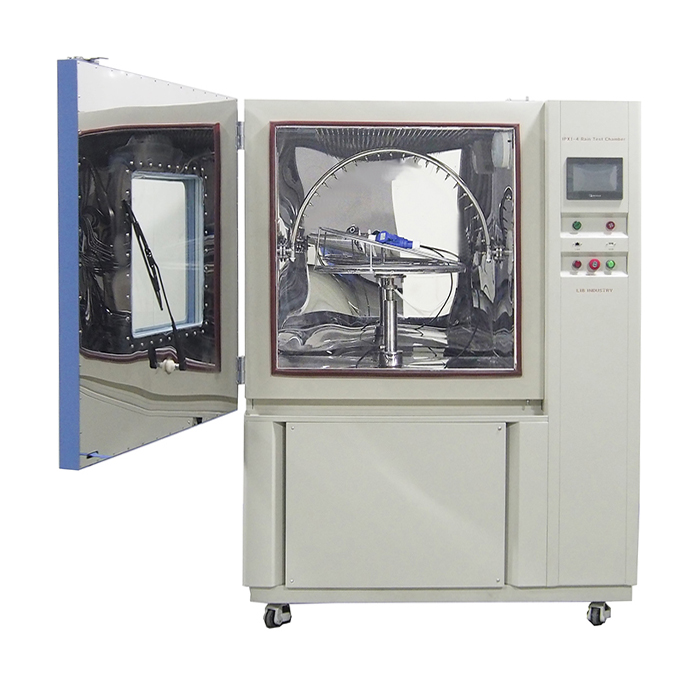
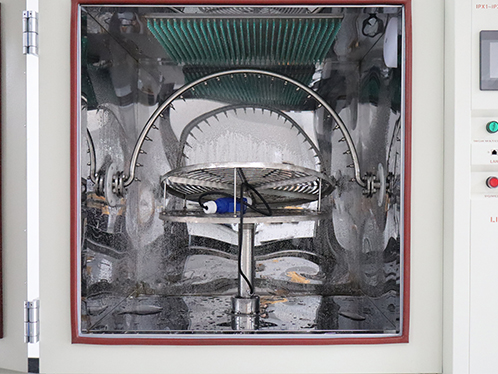
Water exposure is one of the most common environmental challenges for modern products. From outdoor lighting and automotive electronics to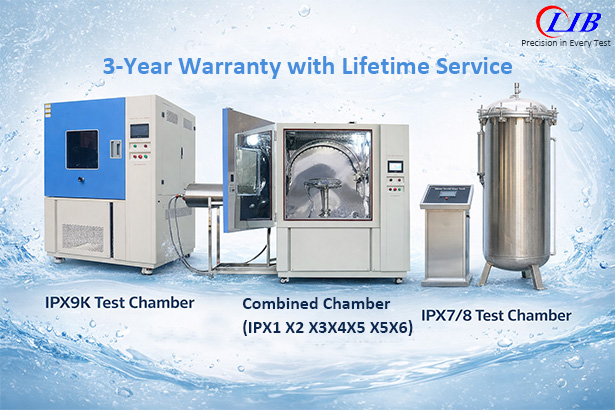 communication equipment, manufacturers must ensure that their products can withstand rain, moisture, and harsh weather conditions. A rain test chamber provides a controlled environment that simulates rainfall, allowing engineers to evaluate waterproof performance, detect potential leaks, and verify compliance with international protection standards.
Many companies rely on rain and environmental testing equipment to validate product durability before marketrelease. One of our lighting industry clients shared this feedback after installing their rain test chamber: “So far the chamber is still in good condition but not so much working due to the test object is only in-house.” — Suttipong F., Thailand. This kind of positive feedback shows how a reliable environmental test chamber can support internal product validation and long-term testing needs in industries such as lighting and electronics.
This article explains how a rain test chamber works, including its main components, operating principles, waterproof testing processes, and the different types of tests used to verify product performance under simulated rainfall conditions.
You will find that every rain test chamber uses several key parts to create realistic rain conditions. These components work together to simulate B.different rainfall scenarios for product testing. Here is a table that shows the main parts and their functions:
Component | Function |
|---|---|
Solenoid Valve | Controls water flow by adjusting switching frequency and opening for accuracy and stability. |
Holding Tank | Prepares water to the desired temperature before it is sprayed. |
Pump | Delivers water at the proper pressure to simulate rainfall. |
Motorized Manifold | Rotates spray arms to distribute water evenly. |
You also see nozzles, spray arms, and control panels in a typical testing chamber. These parts help you adjust the spray pattern, pressure, and temperature. This flexibility lets you match the conditions your product might face in the real world.
Tip: Always check the condition of seals, connectors, and enclosures before and after testing. This helps you spot leaks or weaknesses early.
The working principle of a rain test chamber centers on creating controlled, repeatable rain conditions. You start by filling the holding tank with water. The tank can heat or cool the water to match the temperature you need. A pump then moves the water at the right pressure into the spray system.
Here is how the main parts work together:
The holding tank stores and adjusts the temperature of the water.
The pump pushes the water through the system at the required pressure.
Control solenoids manage the spray volume and pressure, giving you precise control.
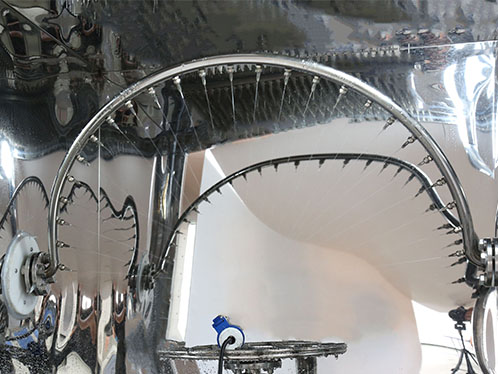
The motorized manifold rotates the spray arms, which helps distribute the water evenly and simulates rainfall from different angles.
You can use adjustable valves on the spray arms to fine-tune the spray pattern. This working principle allows you to simulate anything from a light drizzle to a heavy downpour. You can even add fans to mimic wind-driven rain, making the test even more realistic.
The working principle of the rain test chamber ensures that you get consistent and repeatable results. You can test products under the same conditions every time. This is important for comparing results and meeting industry standards.
Rain test chambers use this working principle to help you check for leaks, seal failures, and other problems. You can test avionics enclosures, cable assemblies, and antenna systems. The chamber lets you detect issues like seal degradation, insulation damage, or water pooling. You can use leak detection, continuity testing, and visual inspection to find these problems.
By understanding the working principle of a rain test chamber, you can set up accurate and reliable tests. This helps you make sure your products will perform well in wet conditions.
You use a rain test chamber to create controlled rain conditions that mimic real-world weather. This equipment helps you evaluate how products respond to different types of water exposure. You can adjust the chamber to simulate a wide range of rainfall intensities. For example:
You can set the chamber to produce a light drizzle at 1-2 mm/hour.
You can increase the intensity to simulate a heavy storm, which can exceed 100 mm/hour.
The chamber's nozzle design plays a key role in how accurately you can replicate natural rainfall. Effective nozzles distribute water evenly, so every part of your product receives the same exposure. Adjustable nozzles let you create different weather scenarios, which is important for durability testing. Uniform water distribution ensures you get reliable results and can trust your performance assessments.
You can also use the chamber to simulate different rain scenarios. The table below shows some common rain intensities and water exposure situations you might test:
Rain Intensity/Scenario | Description |
|---|---|
Steady Moderate to Heavy Rainfall | Simulates prolonged, uniform-intensity rain to evaluate resistance to continuous water penetration. |
Multi-Angle and Multi-Directional Spray | Mimics natural wind-driven rain from all directions, assessing waterproof performance on all sides. |
High-Intensity Rain and Water Jet Impact | Simulates high-flow, high-pressure water jets for evaluating water resistance under extreme conditions. |
Extended Simulation for IPX7/X8 Immersion Tests | Supports tests for temporary or continuous immersion to check for harmful water ingress. |
Note: Simulating a variety of rain conditions helps you identify weaknesses in your product’s design before it reaches the market.
Waterproof testing in a rain test chamber follows a structured process. You need to make sure each step is done correctly to get accurate and repeatable results. Here is a typical process you might follow:
Preparing for Waterproof Testing: Set clear goals based on how you plan to use the product. Choose the right test standards for your industry.
Setting Up the Test Environment: Make sure the chamber is stable. Check all power and water lines. Calibrate flow meters for accuracy.
Loading and Positioning the Specimen: Place your product in the chamber. Center it under the nozzles to ensure full exposure.
Running the Test Cycle: Start the test. Monitor the pressure and flow. Watch for any unusual behavior.
Monitoring During the Process: Use real-time data to spot problems as soon as they happen.
Analyzing Results: After the test, inspect your product for leaks. Compare the results to your chosen standards. Decide if the product meets your requirements.
You use waterproof testing to check both water resistance and durability. The rain test chamber lets you control rainfall intensity and droplet size. You can even simulate different environments, such as rain or snow. High-precision sensors monitor water pressure and flow rate, so you know your tests meet international standards.
Rain test chambers help you find weak points in your product's design. By exposing your product to controlled rain, you can see how it holds up over time. This process helps you create more reliable and durable products. Many manufacturers use these chambers to validate their products and ensure they meet all IPX protection levels.
Tip: Always review your test results carefully. Even small leaks or failures can lead to bigger problems in real-world use.
By following a structured waterproof testing process, you can trust that your products will perform well in wet conditions. This approach helps you deliver safe, high-quality goods to your customers.
When you use a rain test chamber, you can perform several types of tests to evaluate how your product handles different water exposure scenarios. Each test helps you understand how your product will perform in a controlled test environment that simulates real-world conditions.
The drip test checks how well your product resists water that falls as droplets. You can use this test to see if water enters your product when it is tilted or used at an angle. The table below shows common drip and spray tests you might use in a test environment:
Test Type | Description |
|---|---|
IPX2 – 15° Inclined Drip Test | Tests water ingress at a 15° tilt, simulating conditions like tilted installation or handheld use. |
IPX3 – Spray Water Test | Simulates heavy rain by spraying water at angles up to 60° for 5 minutes, assessing protection against water entry. |
IPX4 – Splash Water Test | Evaluates durability against splashes from all directions, ensuring comprehensive exposure to water. |
You can use the drip test to find weak points in seals or enclosures. This helps you prevent corrosion and improve product reliability.
The spray test exposes your product to water sprayed at different angles and pressures. You can adjust the test environment to match the rainfall rate and spray angle you need. The table below lists key parameters you should monitor during a spray test:
Parameter | Value |
|---|---|
Spray Angle | Up to 60° |
Rainfall Rate | ~5.1 mm/min |
Test Duration | 5 ~ 10 min |
You can also measure total water flow for different spray types:
Spray Type | Total Water Flow (L/min) |
|---|---|
IP×3 | 1.1 L/min at ±60°, R:400mm |
IP×4 | 1.8 L/min at ±180°, R:400mm |
You can use the spray test to check for corrosion and ensure your product can handle rain from all directions.
The immersion test places your product directly in water. This test environment helps you see if water penetrates the material when fully submerged. The table below compares the immersion test with other common tests:
Test Type | Methodology | Purpose |
|---|---|---|
Immersion Test | Submerging the material in water | Directly assess water penetration |
Water Spray Test | Spraying water to simulate rain | Simulate rain exposure |
Water Jetting Test | Using jets of water to mimic rain conditions | Test material's resistance to water exposure |
You can use the immersion test to check for leaks and ensure your product meets strict waterproofing standards.
You should always follow international standards when you set up your test environment. The table below shows a common procedure used in rain test chambers:
Procedure | Objective | Key Parameters | Applications |
|---|---|---|---|
Procedure I – Rain and Blowing Rain | Simulate rain driven by wind to evaluate water-tightness and operational integrity | Rainfall Rate: 1.7 mm/min (±0.5 mm/min), Wind Speed: 18 m/s (±10%), Water Temperature: 18°C to 27°C, Test Duration: Minimum 30 minutes per face | Outdoor electronics, sensors, vehicle-mounted gear |
ISO 20653 is a key standard for testing enclosures against high-pressure water jets and dust. You can also use standards like IEC 60529 and ASTM B117 to make sure your products are safe and durable. These standards help you get reliable results and protect your products from damage in harsh conditions.
Following these protocols ensures your test environment matches real-world challenges and helps you deliver products that last.
You gain a clear advantage when you use rain test chambers to improve product durability. These chambers help you identify design flaws, such as weak seals or materials that age quickly. You can make adjustments to boost waterproof performance based on test results. Rigorous testing builds consumer trust in product durability. You see how products handle real-world wet conditions and make targeted improvements. Rain chamber testing lets you find waterproofing vulnerabilities during development. Products with strong waterproof performance attract outdoor sports enthusiasts and offer higher value in the market.
You spot design weaknesses early and improve water resistance.
You validate water resistance claims, which builds consumer confidence.
Consistent testing ensures products withstand water exposure.
Rain test chambers help you deliver products that last longer and perform better in harsh environments.
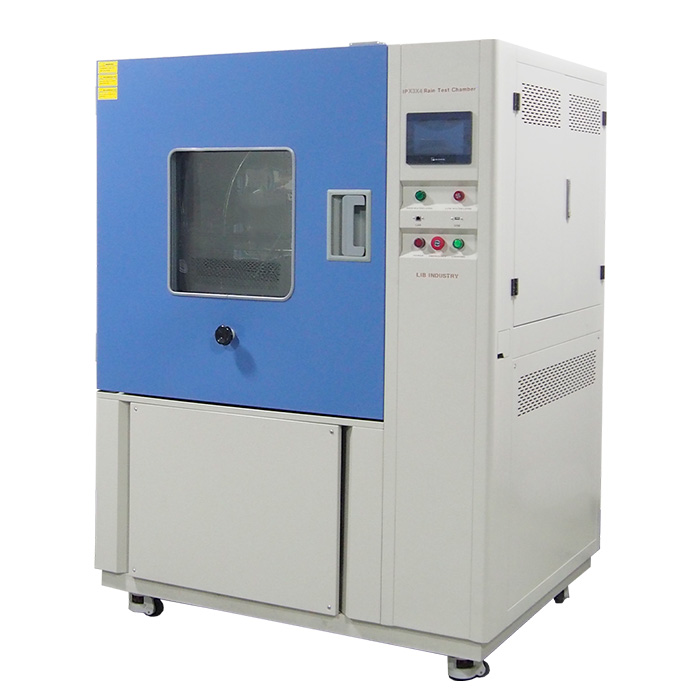 |
| ||
| Model | R-800C | R-1200C | |
| Internal Dimensions (mm) | 900*900*900 | 1400*1400*1400 | |
| Overall Dimensions (mm) | 1120*1460*1660 | 1600*1950*2100 | |
| Interior Volume (L) | 720 | 2740 | |
| Parameter | Drip tray size (mm) | 600*600 | 900*900 |
| Spraying Hole Diameter | φ0.4mm | ||
| Hole Spacing | 50 mm | ||
| Swing Angle of Oscillating Tube | 0 ~ ±180° (Adjustable) | ||
| Turntable Rotation Speed | 1r/min (Adjustable) | ||
| Oscillating Tube Radius | 400mm | ||
| Water Pressure Control | Flow meter | 600mm | |
| Structure | Controller | Programmable color LCD touch screen controller | |
| Build-in Water Tank(mm) | Ethernet connection, PC Link, USB | ||
| 370*375*950 | |||
| View Window Size(mm) | 475*475 | ||
| Water supply system | Water tank, booster pump, Automatic water supply, Water purification system | ||
| Safety Device | Over-temperature Protection; Over-current Protection; Water Shortage Protection; Earth leakage Protection; Phase Sequence Protection | ||
Robust Workroom |
Oscillating tube |
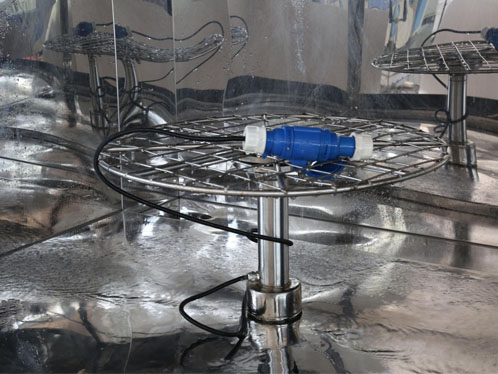
Turntable and power supply for sample |
Rain test chambers play a key role in helping you meet industry standards. You use these chambers to confirm waterproof performance and verify compliance with regulations. Automation and AI technology enhance the accuracy and efficiency of testing. You can check IP ratings and ensure products meet environmental requirements. Consistent testing supports quality control and helps you maintain product performance. You rely on these chambers to validate waterproof performance and durability claims.
Standard | Purpose | Application |
|---|---|---|
IEC 60529 | IP rating verification | Electronics, outdoor devices |
ISO 20653 | High-pressure water jet testing | Automotive, machinery |
ASTM B117 | Corrosion resistance | Construction, marine |
Meeting standards protects your products and ensures reliable performance in wet conditions.
Many industries depend on rain test chambers to guarantee waterproof performance and product reliability. You see these chambers used in automotive, electronics, aerospace, defense, construction, marine, renewable energy, and telecommunications. In the automotive sector, you test car exteriors and evaluate seals in windows and doors. Electronics manufacturers use rain chambers to simulate rain and verify waterproof performance for devices and outdoor cabinets. Construction companies test building materials for durability and water resistance. Renewable energy companies check inverters and controllers for waterproof performance. Telecommunications providers test infrastructure for waterproof performance and long-term reliability.
Automotive: Test water resistance of exteriors and seals.
Electronics: Simulate rain, verify IP ratings, and assess durability.
Construction: Evaluate materials for waterproof performance and safety.
Renewable energy: Test controllers and inverters for waterproof performance.
Telecommunications: Check outdoor cabinets and infrastructure for waterproof performance.
Rain test chambers help you maintain product quality, safety, and performance across many industries.
Rain test chambers give you a reliable way to check product durability and waterproof performance. You can simulate real-world rain, meet industry standards, and prevent failures.
You identify design weaknesses early.
You validate water resistance claims.
You boost product reliability and consumer confidence.
Application Area | Description |
|---|---|
Aerospace | Test reliability under simulated rain conditions. |
Electronics | Ensure electronic components withstand water exposure. |
PCB Testing | Combine dust and rain tests for complete evaluation. |
You should consider rain test chambers for your testing needs. They help you deliver products that last and earn customer trust.
You use a rain test chamber to check the waterproof performance of products. This equipment helps you see if your items can resist water in different conditions. You get reliable results for product durability and safety.
Y:ou place your product inside the chamber. You set the rainfall intensity and direction. You run the test and inspect for leaks. This process gives you reliable results for verification of waterproof grade and product reliability.
You need waterproof testing to prevent water damage in electronics. This process ensures your devices work safely in wet conditions. You also confirm the verification of waterproof grade and improve reliability.
You follow standards like IEC 60529 for waterproof test procedures. These standards help you achieve reliable results and ensure product reliability. You use them for consistent waterproof performance.
You can use a rain test chamber for many waterproof grades. You adjust the test settings to match the required waterproof level. This flexibility supports a wide range of products and applications.
If you are planning waterproof or IP testing for your products, LIB Industry can provide reliable rain test chamber solutions tailored to your application.
Contact LIB Industry today to discuss your testing requirements and find the right chamber for your laboratory.