


With the continuous expansion and widespread use of batteries, the safety of batteries is becoming more and more important. After they are produced, battery manufacturers must conduct strict safety tests on them to ensure the safety of batteries and reduce potential safety hazards and accidents. But what exactly are them? LIB INDUSTRY will introduce the durability tests and related test standards for batteries.
As battery applications continue to expand across electric vehicles, consumer electronics, energy storage systems, and industrial equipment, safety and reliability have become more critical than ever. From thermal runaway risks to vibration damage and environmental stress, manufacturers must ensure that every battery leaving the factory meets strict performance and safety standards. Reliability testing is no longer optional—it is essential for compliance, market access, and brand reputation.
Recently, one of our international clients praised LIB's battery testing chamber for its precise temperature control, stable performance, and reliable long-term operation. The chamber enabled accurate thermal cycling and high-temperature endurance tests, helping their R&D team significantly improve battery safety validation efficiency. Designed for extreme condition simulation, LIB’s environmental test chambers provide the controlled environments required to meet global battery reliability standards.
Why do Batteries Need Reliability Test Before Leaving the Factory?
Batteries today power an enormous range of devices—laptops, medical instruments, aerospace systems, mobile phones, cordless power tools, children's electric toys, and more. Looking ahead, batteries will also serve as the core power source driving electric and hybrid vehicles. Given how central batteries have become, ensuring their safety has turned into a critical concern throughout the development process. The issue gained widespread attention back in 2006, when a wave of Sony-manufactured lithium batteries in notebook computers was recalled following reports of explosions. Since then, similar incidents involving mobile phones—including Apple iPhones—have continued to surface. These events underscore why rigorous battery testing isn't optional anymore; it's become an essential part of bringing any battery-powered product to market safely.
This issue can be examined from three distinct angles:
1. From the Perspective of Battery Manufacturers
Functioning as OEMs for power battery production, battery manufacturers must run their products through extensive testing to fully understand their performance characteristics. A helpful analogy: just as individuals might take IQ assessments, personality evaluations, or fitness tests to better understand their own strengths and guide personal decisions, battery makers need equally thorough insight into how their products behave under various conditions. This data becomes the foundation for building accurate battery management algorithms.
2. From the Perspective of Vehicle Manufacturers
As the end users of power battery technology, automakers carry the responsibility of confirming that the batteries they select can reliably meet performance expectations across the entire lifespan of the vehicle—not just at launch, but throughout years of real-world use.
3. From the Perspective of Certification Bodies
Acting as gatekeepers for the market, certification organizations rely on established standards and regulatory frameworks to screen out products that fall short on safety, environmental responsibility, or cost-effectiveness. Through structured testing methods, these bodies work to identify and block substandard or outdated products before they ever reach consumers.
What are the Standards for Battery Reliability Test?
Widely Referenced International Battery Testing Standards
These standards are primarily issued by a handful of key organizations: the International Electrotechnical Commission (IEC), the International Organization for Standardization (ISO), Underwriters Laboratories (UL), the Society of Automotive Engineers (SAE), along with various European regulatory bodies.
1. International Standards
IEC's contributions to power battery standards center around IEC 62660-1:2010 and IEC 62660-2:2010.
ISO, meanwhile, has developed a three-part series—ISO 12405-1:2011, ISO 12405-2:2012, and ISO 12405-3:2014—covering high-power batteries, high-energy batteries, and safety performance criteria respectively. These standards were created to give manufacturers a menu of test items and methodologies to choose from during development.
2. Standards from the United States
UL 2580:2011, titled Batteries for Electric Vehicles, focuses on assessing how batteries hold up under abuse conditions and how effectively they safeguard people when such abuse leads to failure. A revised version of this standard was released in 2013.
SAE maintains one of the most extensive and well-established standards frameworks in the automotive sector.
SAE J2464:2009, Safety and Abuse Testing for Rechargeable Energy Storage Systems for Electric and Hybrid Electric Vehicles, was among the earliest comprehensive abuse-testing references adopted across North America and internationally. It spells out the applicable scope for each test, specifies what data should be captured, and even recommends sample quantities needed for testing.
SAE J2929:2011, Safety Standards for Electric and Hybrid Vehicle Propulsion Battery Systems, built upon earlier power battery standards to establish safety benchmarks covering two scenarios: normal operating conditions and abnormal conditions that could arise while an EV is being driven.
SAE J2380:2013, Vibration Testing of Electric Vehicle Batteries, remains a widely referenced standard for battery vibration testing. It was developed using statistical data gathered from real-world vehicle road testing, which gives its methodology strong relevance to actual driving conditions and makes it a valuable reference point.
3. Standards from Other Organizations
The U.S. Department of Energy (DOE) oversees national energy policy, manages the energy sector, and funds research into energy-related technologies. Back in 2002, the U.S. government launched the "FreedomCAR" initiative, which subsequently produced testing manuals for hybrid electric vehicle battery systems as well as abuse-testing protocols for energy storage systems used in electric and hybrid vehicles.
Germany's VDA (Verband der Automobilindustrie) was established to bring consistency to standards across the domestic auto industry. Among its published standards is VDA 2007, Battery System Testing for Hybrid Vehicles, which addresses performance and reliability testing specifically for hybrid vehicle battery systems.
The Economic Commission for Europe's ECE R100.2, formally titled Uniform Provisions Concerning the Approval of Vehicles with Regard to Specific Requirements for the Electric Power Train, lays out targeted requirements for electric vehicles across four key areas: rechargeable energy storage systems, functional safety, and hydrogen emissions. Its second section introduces newly added requirements focused specifically on the safety and reliability of rechargeable energy storage systems.
 |
Battery Temperature & Humidity Chambers |
Thermal Abuse Test Chamber for simulating overheating and thermal runaway of lithium-ion cells/battery, modules, and packs, featuring reinforced safety design with smoke detection and fire suppression. Complies with major international standards including IEC 62660-2, IEC 62133, UL 2580, UL 1642, UL 1973, UL 2054, and SAE J2929. |
|


What Reliability Tests do Batteries Need to do?
1.Temperature shock and cycle test
This test primarily evaluates changes in battery integrity due to exposure to extreme and sudden temperature changes, such as expansion and contraction of battery components when a vehicle enters or exits a heated or refrigerated garage during transport. During temperature shock and cycling tests, the battery is subjected to two temperature limits, high and low, and held at each temperature limit for a specified time. The temperature shock and cycle tests described in standards and regulations have different maximum temperature limits. The lower temperature limit of all standards and regulations is -40°C (IEC62660-2 has a minimum temperature of -20°C in the case of live operation), although the upper temperature limit is different.

2.Thermal Stability Test
This test mainly evaluates the stability of the battery at high temperature to identify the battery thermal runaway start temperature or the stability at high temperature. During the test, the temperature of the battery is sequentially increased at a step of 5°C/min, raised to the specified temperature and maintained for 30 minutes, or until major damage to the battery occurs.
The standard SAEJ2464:2009 is more stringent, not only requiring a heating rate of 5°C/min, but also maintaining a temperature of 30 minutes at each temperature step, and requiring a maximum temperature of 300°C (higher than the maximum operating temperature of the battery) until the temperature reaches 300°C or Self-heating occurs (greater than 1.0°C/min). It is used to evaluate the thermal runaway start time and thermal stability of the battery.
Other standards evaluate the performance of the battery at high temperatures, and the goal is not to reach a thermal runaway condition, but to evaluate the thermal stability of the battery at that temperature. The battery is sequentially increased from room temperature at a step of 5°C/min to 130°C, and placed at this temperature for 30 minutes.
3.Aging test
The performance of batteries after high-temperature aging is more stable. Most battery manufacturers adopt high-temperature aging operation methods in the production process. The temperature is 45-50 degrees Celsius for 1-3 days, and then shelved at room temperature.
Potential adverse phenomena of batteries will be exposed after high-temperature aging: such as voltage changes, thickness changes, and internal resistance changes are all direct tests of the comprehensive indicators of safety and electrochemical performance of these batteries.
Battery Reliability Test Methods and Cases
Battery Temperature & Humidity Chambers | 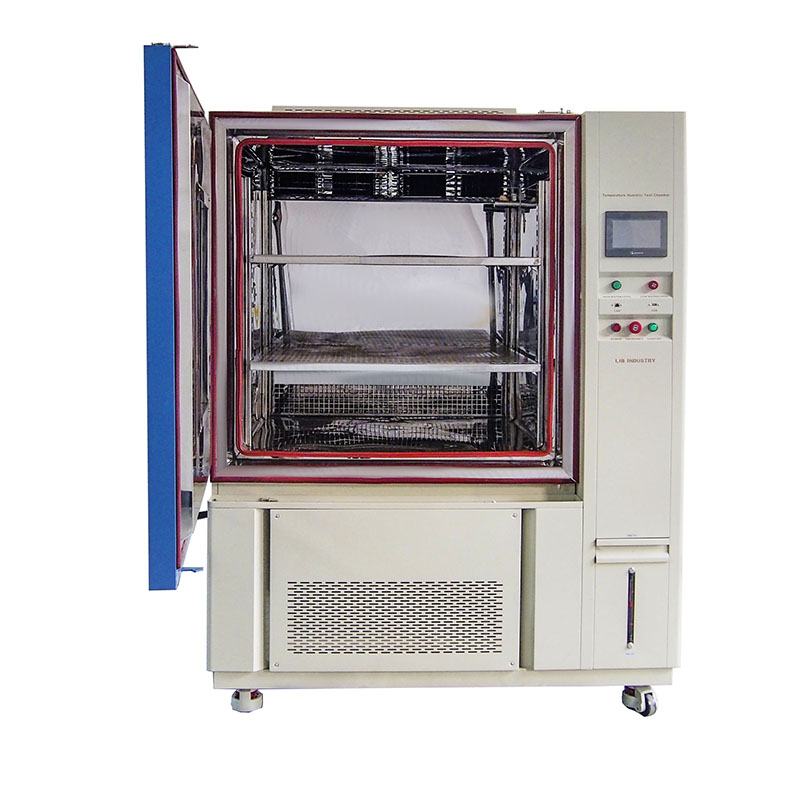  | ||||
Temperature range | -20℃ ~+150 ℃ | ||||
Low type | A: -40℃ B:-70℃ C -86℃ | ||||
Humidity Range | 20%-98%RH | ||||
Temperature deviation | ± 2.0 ℃ | ||||
Heating rate | 3 ℃ / min | ||||
Cooling rate | 1 ℃ / min | ||||
Controller | Programmable color LCD touch screen controller, Multi-language interface, Ethernet , USB | ||||
Refrigerant | R404A, R23 | ||||
Exterior material | Steel Plate with protective coating | ||||
Interior material | SUS304 stainless steel | ||||
Standard configuration | 1 Cable hole (Φ 50) with plug; 2 shelves | ||||
Timing Function | 0.1~999.9 (S,M,H) settable | ||||
| Explosion-Proof Design | explosion-proof door chains, explosion-proof viewing window, smoke detector, and fire suppression sprinkler system Explosion-proof enclosure | ||||
|
| 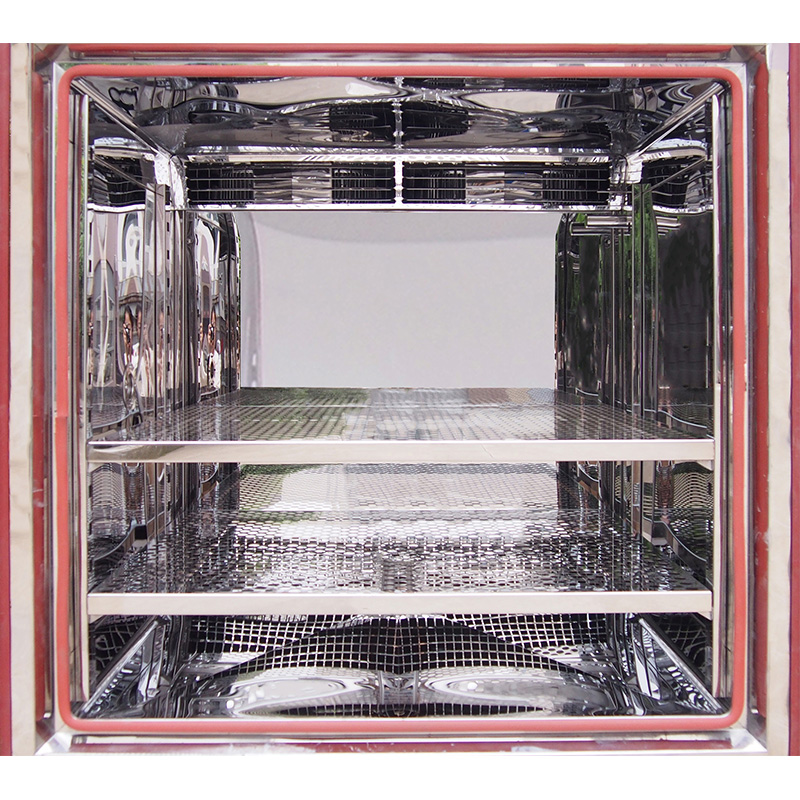 |  |
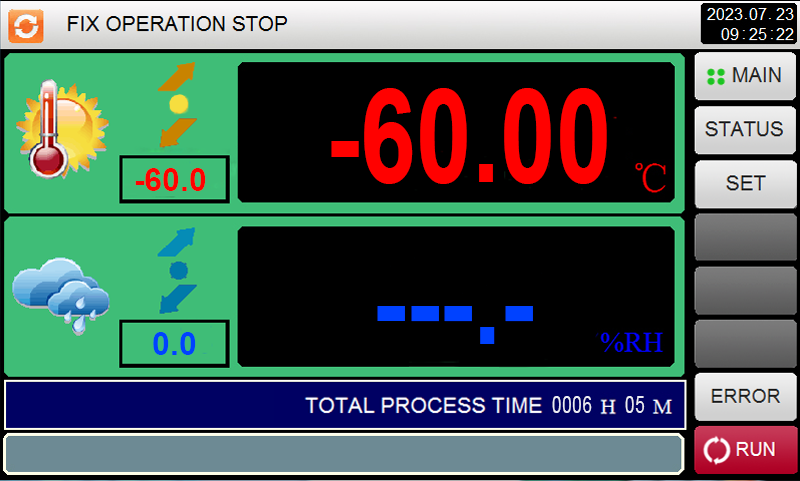
Touch screen controller | Smoke and Gas Interlock Detection | Robust Anti-Corrosion Workroom | Integrated Power Access hole |

Short circuit test:
1) At 25°C, put a single battery in the environmental test chamber and let it stand for 30 minutes to ensure that the overall temperature of the single battery is consistent with the temperature in the environmental test chamber;
2) Perform short-circuit excitation to the single battery in step 1), the short-circuit resistance is10min;
3) Record the voltage, short-circuit current and temperature changes of the short-circuit battery, and test the state and weight of the single battery before and after the experiment.
Overcharge test:
1) At 25°C, put a single battery in the environmental test chamber and let it stand for 30 minutes to ensure that the overall temperature of the single battery is consistent with the temperature in the environmental test chamber;
2) Excite the single battery in step 1) by overcharging, the overcharging current is 1C, and the overcharging time is 90 minutes;
3) Record the voltage and temperature changes of the overcharged battery, and the state and weight of the single battery before and after the test.
Heating test:
1) At 25°C, put a single battery in the environmental test chamber and let it stand for 30 minutes to ensure that the overall temperature of the single battery is consistent with the temperature in the environmental chamber;
2) Heating the single battery in step 1), the heating temperature is 130°C, and the heating time is 60 minutes;
3) Record the voltage and temperature changes of the heating battery, and test the state and weight of the single battery before and after the experiment.
The needed equipment:temperature and humidity test chamber, Thermal shock test chamber, Drying oven.
Requirements: Test for no leakage, no venting, no open circuit, no rupture, no explosion and no fire.
Thermal cycling Purpose: This test evaluates the sealing integrity of cells and batteries and their internal electrical connections, and tests the temperature of use cycle test.
Test procedure: Store cells or batteries at a temperature of 72°C for at least 6 hours, then store them at -40°C for at least 6 hours, and the switching time between the two temperatures should not exceed 30 minutes. Each cell or battery should be tested for 10 hours. Cycle, and then stored at room temperature for 24 h. For large batteries and cells, the storage time at the test temperature should not be less than 12h.
Requirements: No leakage, no exhaust, no open circuit, no rupture, no explosion and no fire during the test IEC 62660-2 Reliability and Abuse Test of Lithium Batteries for Electric Vehicles High Temperature Endurance: Batteries are heated in a natural convection or forced convection oven , the temperature of the oven is raised to 130°C at a speed of 5±2/min, and the battery is operated at this temperature for 30 minutes.
Temperature Cycling. This test is designed to characterize the thermal durability of a battery by alternating exposure to low and high temperature environments to induce expansion and contraction.
Put the battery into the test chamber for 5 cycles, and observe for 1 hour after the end. The U11642 lithium battery standard heating test sample is heated in a natural convection or forced convection oven. The temperature of the oven is raised to 130°C at a rate of 5±2°C/min and maintained for 10 minutes.
Summary and Our Service
Batteries have become an essential part of everyday life. Batteries are widely used in various industries, so battery pack, battery module and cell testing is critical to user safety. With the popularization of electric vehicles, the demand for the safety of electric vehicle batteries will also increase. Performing full life cycle and capacity testing is a critical step in verifying battery safety and durability. When you choose LIB INDUSTRY, you will work with our professional team with comprehensive knowledge in battery performance testing and other advantages:
● Our experts lead the way in battery testing and continue to support you along the entire value chain from component to final product, keeping you ahead of the competition.
● During the R&D process, our testing services will support you in making technical decisions that best serve your design goals, while also having a long-term impact on battery performance.
● Our equipment opens up the possibility of quality improvement and reduces the risk of recalls and warranty claims after the product has been placed on the market.
● Our testing solutions are effective, reducing your product development time and getting products to market faster.
● Ensure the performance of your batteries with our battery reliability testing services, and our tests can make the difference between your commercial and practical success.
Ensure your batteries meet global safety and reliability standards with professional testing solutions. Contact LIB Industry today to discuss your battery testing requirements and accelerate your product's path to market.


