Views: 0 Author: LIB Team Publish Time: 2026-09-29 Origin: Site


A plastic garden chair turns chalky after two summers. A car bumper coating loses its shine in three years. A white window frame slowly turns yellow. Sunlight causes all of this, and UV light does most of the damage even though it makes up only about 5% of the sunlight that reaches the ground.
This article explains whether UV Resistance Environmental Testing Devices can test plastics and coatings, why LIB Industry is a reliable supplier, which standards apply, and how to choose between UV and xenon arc equipment.
LIB Industry provides UV weathering testing solutions for plastics, coatings, automotive parts, and other materials exposed to sunlight. An Australian customer who purchased a LIB Industry UV Resistance Environmental Testing Devices recently shared their experience: “Works perfectly fine now.” This direct feedback reflects the chamber's performance in actual customer use and adds practical proof to its testing reliability.
Outdoor exposure takes years to show cracking, yellowing, chalking and gloss loss. If you wait for real
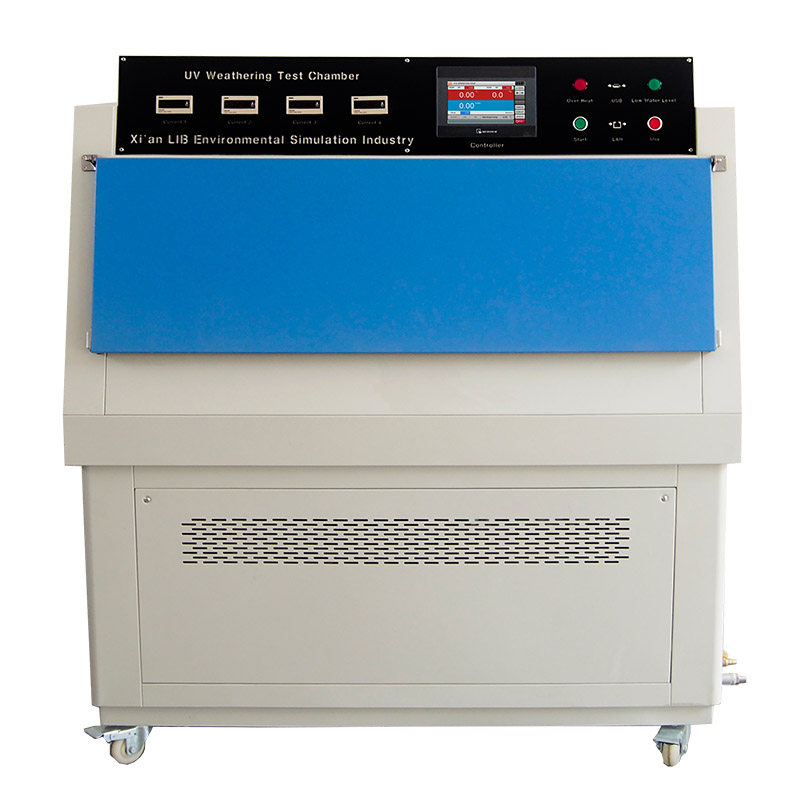
weather, your product may already be on the market when the problem appears. UV Resistance Environmental Testing Devices shorten that wait. A 1000 hour test lasts about 42 days, and it can show the same kind of damage that natural weather causes over a much longer period.
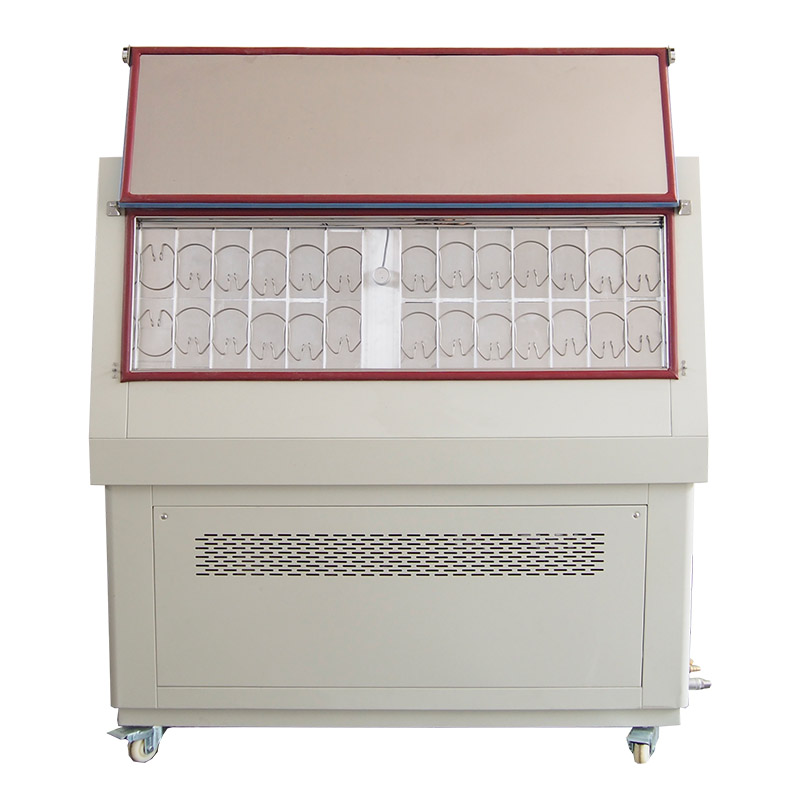
This equipment uses fluorescent lamps of 40 W. The UVA-340 lamp copies sunlight in the short UV range, the UVB-313 lamp is harsher and speeds up damage, and the UVB-351 lamp suits materials behind window glass. The spectrum of these lamps stays stable for up to 5,000 hours, so results from month one and month five can be compared fairly.
Temperature reaches 90 °C ±2 °C and humidity reaches 95% RH or higher. Ten spray nozzles add rain, with 0.8 to 1.0 ml per 80 cm² per hour. One shelf holds 52 flat specimens, so you can test many formulas at the same time. The irradiance is controlled from 0.15 to 5 W/m² at 340 nm or 313 nm, and the equipment runs on 380 V 50 Hz power.
LIB Industry was established in 2012 and follows ISO 9001 quality management. It serves customers in more than 60 countries through 29 distributors and 4 overseas service centers. Every equipment order includes a 3 year warranty and lifetime maintenance.
Big names trust LIB Industry. CERN, Apple, Mercedes-Benz, BYD, Siemens Gamesa, Nidec and the University of Sydney have all bought from LIB Industry, and many of them came back for a second order. Testing labs such as TÜV SÜD, Intertek and Kiwa also use its equipment for daily work. That record shows the equipment works well over many years.
| Standard | Applies To |
|---|---|
| ASTM G154 | Fluorescent UV exposure of nonmetallic materials |
| ASTM D4587 | Paints and related coatings |
| ASTM D4329 | Plastics |
| ISO 4892-3 | Plastics |
| ISO 16474-3 | Paints and varnishes |
| SAE J2020 | Automotive exterior materials |
| IEC 61215 MQT 10 | UV preconditioning of solar modules |
Xi'an Jiaotong University bought this UV Resistance Environmental Testing Devices for material research. The team praised its light stability, because the same lamp output gave repeatable results from one batch to the next. They later recommended LIB Industry to senior classmates at other universities.
The test steps are simple. Here is ASTM G154 Cycle 1, which is often used for plastics.
1. Cut samples into flat panels and mount up to 52 of them on the specimen holders.
2. Install UVA-340 lamps and set the irradiance to 0.89 W/m² per nm at 340 nm.
3. Run 8 hours of UV at a black panel temperature of 60 °C.
4. Run 4 hours of condensation at 50 °C.
5. Repeat the cycle for 500 to 2,000 hours.
6. Measure gloss with ASTM D523 and color change with ASTM D2244, then compare with an untested panel.
ASTM D4587 for coatings uses the same rhythm of 4 hours of UV at 60 °C and 4 hours of condensation at 50 °C. ASTM D4329 Cycle A for plastics uses UVA-340 lamps with these same settings. ISO 4892-3 Cycle 1 uses 8 hours of UV at 60 °C, 4 hours of condensation at 50 °C and 0.76 W/m² per nm at 340 nm. For solar modules, IEC 61215 MQT 10 requires 15 kWh/m² of UV between 280 and 400 nm at a module temperature of 60 ±5 °C. At least 5 kWh/m² of that must fall between 280 and 320 nm.
The university chose this equipment for several reasons.
Safe. It meets CE and IEC requirements and has over-temperature and low-water protection, so tests can run day and night with confidence.
Accurate. Sensors track temperature, humidity and irradiance in real time, and the irradiance is held steady during the whole test.
Good value. The lamps are easy to buy and quick to replace, so running cost stays low.
Customizable. Special specimen holders for unusual shapes are made free of charge, and other custom needs can also be met.
Worry free. LIB Industry gives a 3 year warranty and lifetime service. The engineers are skilled and patient, and they answer questions quickly.
Easy to learn. On-site training is available, so new operators can start quickly. The interior materials also resist corrosion from constant spray and condensation, which keeps the equipment in good shape for years.
| Item |
|
|
|---|---|---|
 |  | |
| Light source | Fluorescent UV lamps | Xenon arc lamp |
| Spectrum | UV only, about 295 to 400 nm | Full sunlight, 290 to 800 nm |
| Main standards | ASTM G154, ASTM D4587, ISO 4892-3 | ASTM G155, ISO 4892-2 |
| Irradiance under ASTM | 0.89 W/m² per nm at 340 nm, ASTM G154 | 0.35 W/m² per nm at 340 nm, ASTM G155 |
| Irradiance under ISO | 0.76 W/m² per nm at 340 nm, ISO 4892-3 | 0.51 W/m² per nm at 340 nm, ISO 4892-2 |
| Temperature | 60 °C black panel | 63 to 65 °C |
| Best for | Fast ranking of plastics and coatings | Color and full sunlight matching |
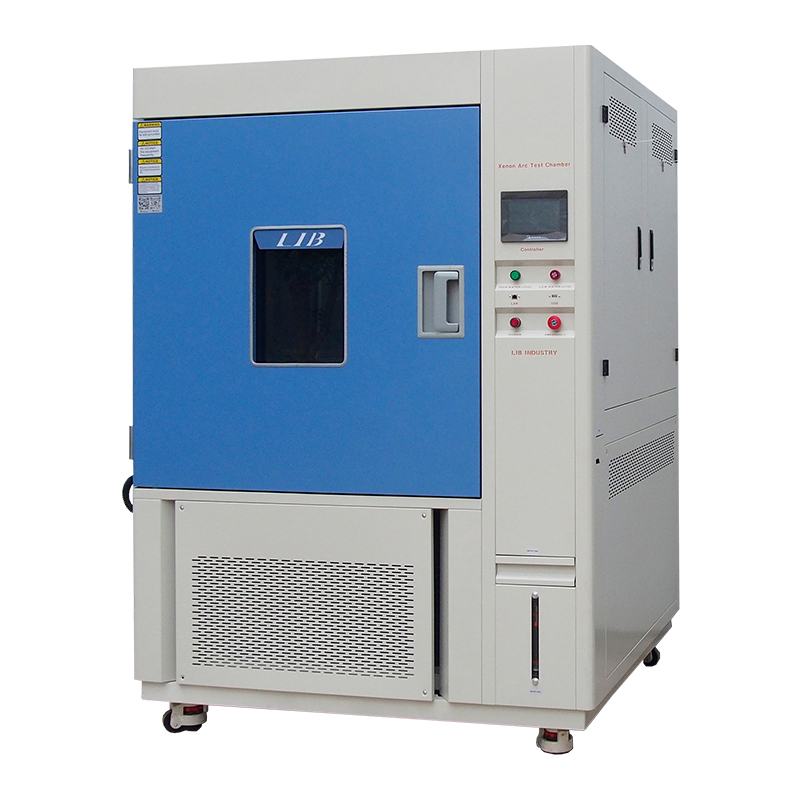
Choose UV equipment when you need fast, low cost screening of gloss, cracking and chalking. It is a good first step when you compare many formulas. Choose xenon arc equipment when visible light and heat also affect your product, such as dyed textiles, interior trim and colored coatings. Many customers use both, with UV equipment for quick screening and xenon arc equipment for final approval. LIB Industry also supplies xenon models that reach -40 °C, such as the XL-S-750C, which Electricité de France chose for cable testing under EN 50483-6.
| LIB Popular Xenon arc and Weathering Test Chamber for Aging tests | ||
Full-Spectrum Sunlight Simulation, |
Fast UV Degradation Testing, |
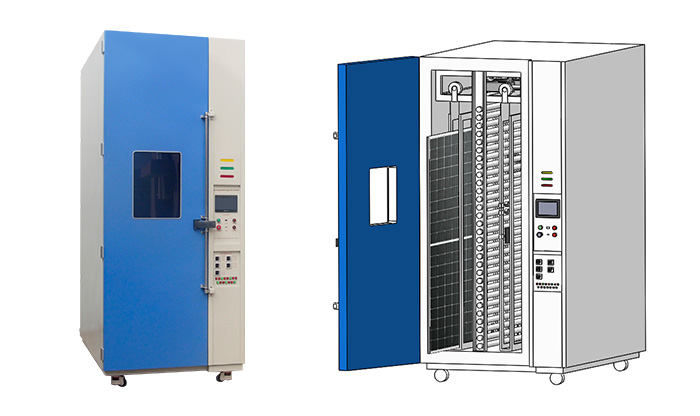
UV Preconditioning Chamber For PV Solar Panel IEC-Compliant PV Preconditioning, |
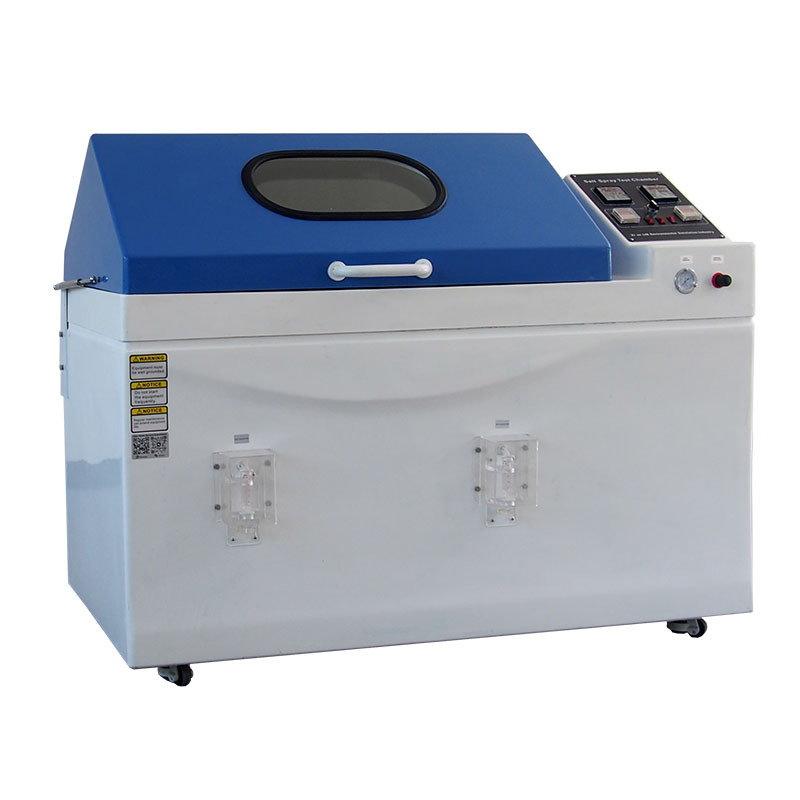
ASTM B117 Fog Corrosion Salt Spray Test Cabinet ASTM B117 Compliance Testing, Trusted Corrosion Resistance Evaluation |
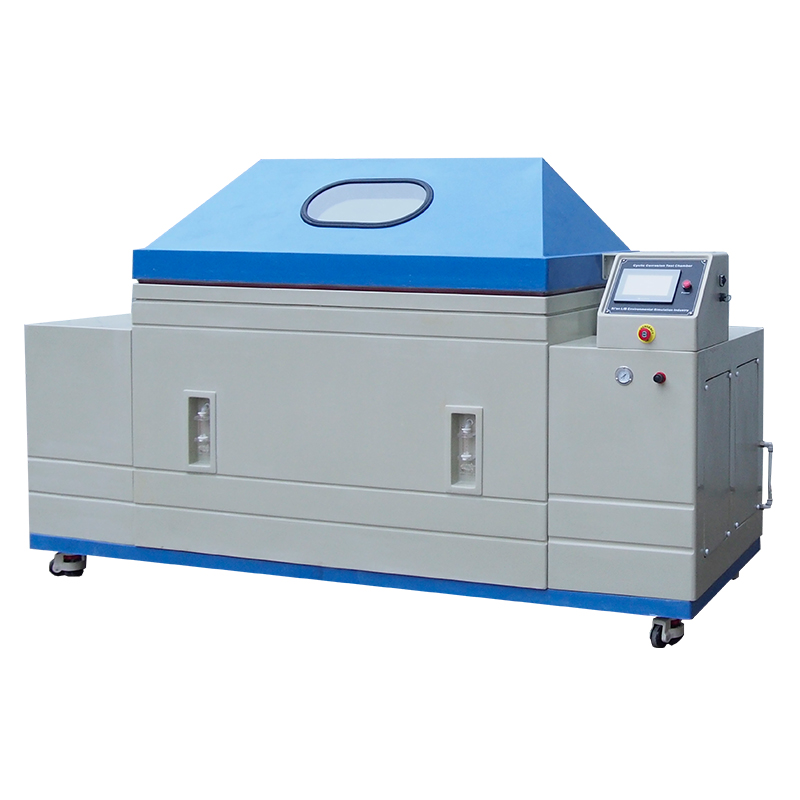
Cyclic Salt Spray Corrosion Chamber (CCT Chamber) Real-World Corrosion Cycling, |
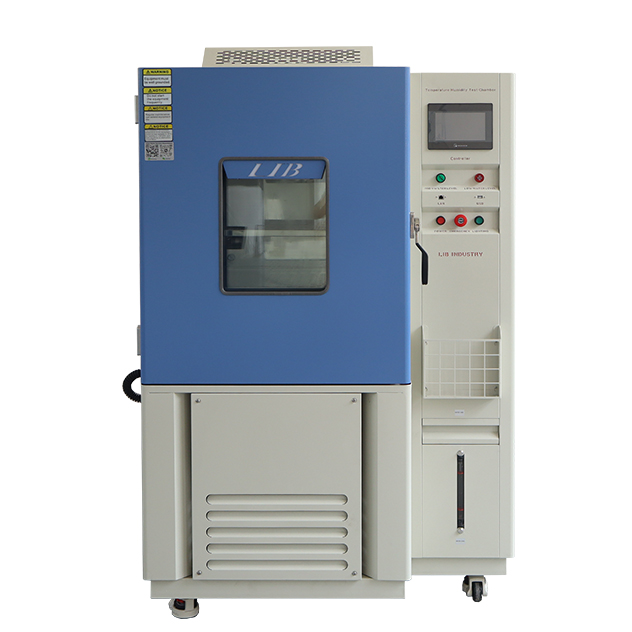
Temperature and Humidity Test Chamber Precision Environmental Control, Reliable Testing Performance |
Q1: Can this equipment test both plastics and coatings?
Yes. It follows ASTM G154, ASTM D4329 and ISO 4892-3 for plastics, and ASTM D4587 and ISO 16474-3 for coatings.
Q2: How long does one test take?
Most tests run 500 to 2,000 hours, which is about 21 to 83 days.
Q3: How often should lamps be replaced?
The lamps keep a stable spectrum for up to 5,000 hours. They are easy to buy and simple to change.
Q4: How many samples can I test at once?
One shelf holds 52 flat specimens. Special holders can be made for other sizes and shapes.
Q5: How is the equipment shipped?
It is packed in wooden export cases and sent by sea or air. If your door is too narrow, LIB Industry can split the equipment into modules and reassemble it on site. It did this for the National University of Singapore, whose lab door was only 1.5 m wide.
Q6: What after-sales service is included?
You get a 3 year warranty, lifetime maintenance, four overseas service centers, and online or on-site training.
Contact LIB Industry today to get a free customized UV testing solution for your plastics and coatings.