Views: 0 Author: LIB Team Publish Time: 2026-11-13 Origin: Site


UV testing suits rapid screening of physical durability under short-wave UV. 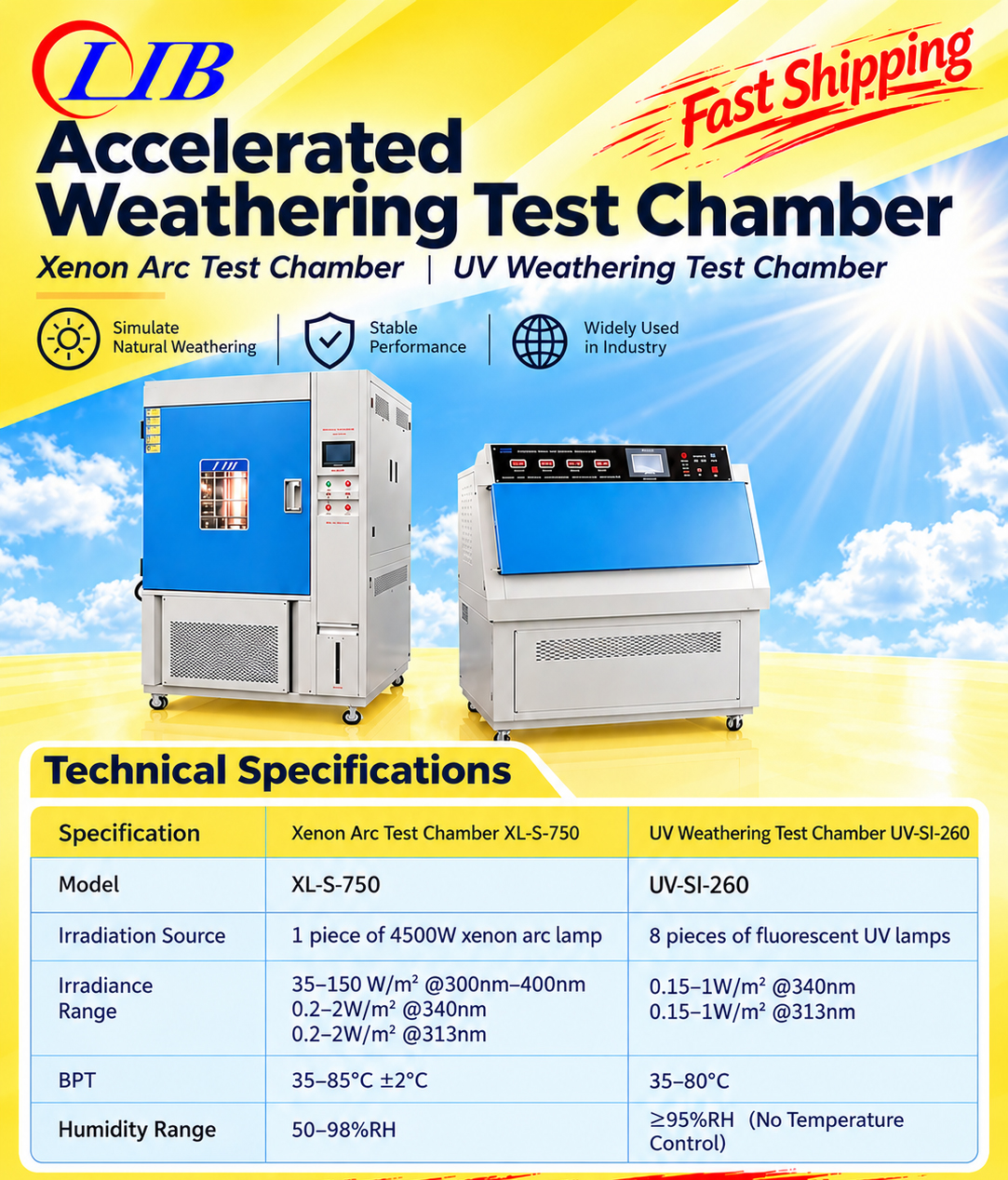 Xenon arc testing remains essential for realistic full-spectrum simulation, including color fade. This distinction drives every sound decision in uv vs. xenon arc weathering.
Real-world performance matters, too. A Russian university using LIB's Weathering Test Chamber shared its feedback: "Good afternoon! We are satisfied with the purchase; there have been no complaints about the equipment. Thank you!" This positive feedback reflects the importance of reliable equipment in laboratory weathering tests. The stakes are practical. A mismatched method consumes lab time and budget. It can also miss the failure mode that matters most for the product. Accelerated weathering testing only pays off when the light source matches the question.
This comparison weighs both technologies side by side. It covers spectrum, moisture, standards, and cost. A decision framework then links material, failure mode, and budget to the right method. Teams working with coatings and plastics can apply that framework directly. Careful weathering testing starts with the correct chamber.
UV testing quickly checks physical durability like cracking and gloss loss.
Xenon arc testing realistically simulates full sunlight for color fade and appearance.
Choose the moisture method—condensation or spray—to match real service conditions.
Follow industry standards like ASTM G154 for UV and ASTM G155 for xenon arc.
Use a tiered program: UV screens many samples, xenon arc confirms the best ones.
The light source defines what each chamber can reveal. Fluorescent UV lamps emit concentrated short-wave UV, mostly in the range that drives polymer degradation. This narrow band accelerates physical damage. It does not reproduce visible light or infrared energy.
A xenon arc lamptells a different story. The burner emits the full spectrum of sunlight, spanning UV, visible and infrared wavelengths. Optical filters then trim the output to approximate terrestrial solar radiation. This design lets the chamber expose color shift, yellowing, and gloss change alongside chemical degradation.
The major differences between xenon-arc and fluorescent-UV devices start here. One device isolates the damaging waveband. The other recreates the whole solar environment. Neither approach is superior in isolation. Each answers a different question about material performance.
Historically, carbon arc weathering served as the first full-spectrum reference. Modern filtered xenon-arc and fluorescent-UV (FL-UV) devices have largely replaced it in laboratory practice. The underlying logic survives, though. Spectrum coverage determines which failure modes a test can detect.
Irradiance determines how much light energy reaches the test specimen. Both UV and xenon arc chambers provide irradiance control, but their measurement ranges and applicable standards differ.
Xenon Arc Test Chambers typically offer an irradiance range of 35–150 W/m², measured over a specified wavelength band, such as 300–400 nm. This allows users to adjust light intensity for different xenon weathering test requirements.
Fluorescent UV Test Chambers typically offer an irradiance control range of 0.3–20 W/m², commonly measured at 340 nm or 313 nm, depending on the lamp and test standard.
These values are not directly comparable because they may refer to different wavelength bands and measurement points. The correct irradiance setting should follow the applicable test standard, such as ASTM G155 for xenon arc testing or ASTM G154 for fluorescent UV testing.
When selecting a test chamber, check the required wavelength, irradiance level, and control method specified by your test standard rather than comparing irradiance values alone.
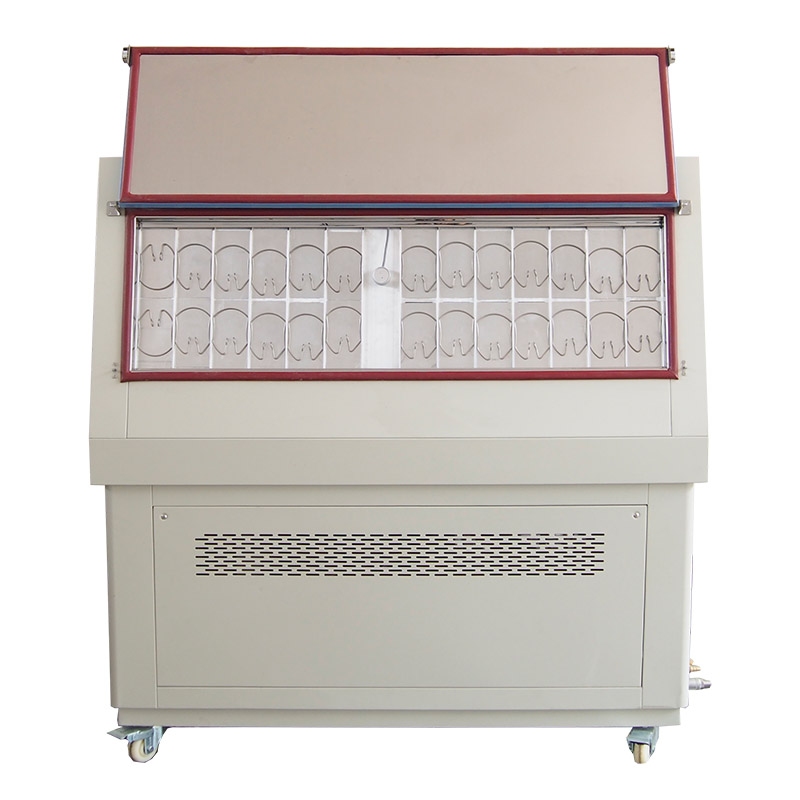
Fluorescent UV chambers concentrate their output in the short-wave band that drives most polymer degradation. A tester such as the QUV pairs fluorescent uv lamps with a condensation system, and the combination delivers results quickly. Visible effects often appear within days rather than months. That speed makes the method economical for routine screening.
The preferred applications follow directly from this design. Teams use UV chambers to screen surface degradation: cracking, chalking, gloss loss, and blistering. Accelerated weathering of this kind ranks candidate formulations fast, so only the strongest move forward. Coatings formulators rely on it to compare resin systems before committing to long-term studies. Plastics suppliers use it to rank stabilizer packages under intense short-wave exposure.
The narrow spectrum carries a real cost. Fluorescent lamps emit little visible or infrared energy, so the chamber cannot reproduce the full solar environment. Color shift, yellowing, and metamerism depend on visible light, and this method cannot evaluate them reliably. A sample may pass a UV screen and still fade outdoors.
Interpretation also demands care. Short-wave intensity runs higher than natural sunlight, which can push degradation along pathways that rarely occur in service. Correlation to real-world performance therefore requires caution. The method answers physical durability questions well. It does not substitute for full-spectrum appearance testing, and teams should pair it with xenon arc work when color matters.
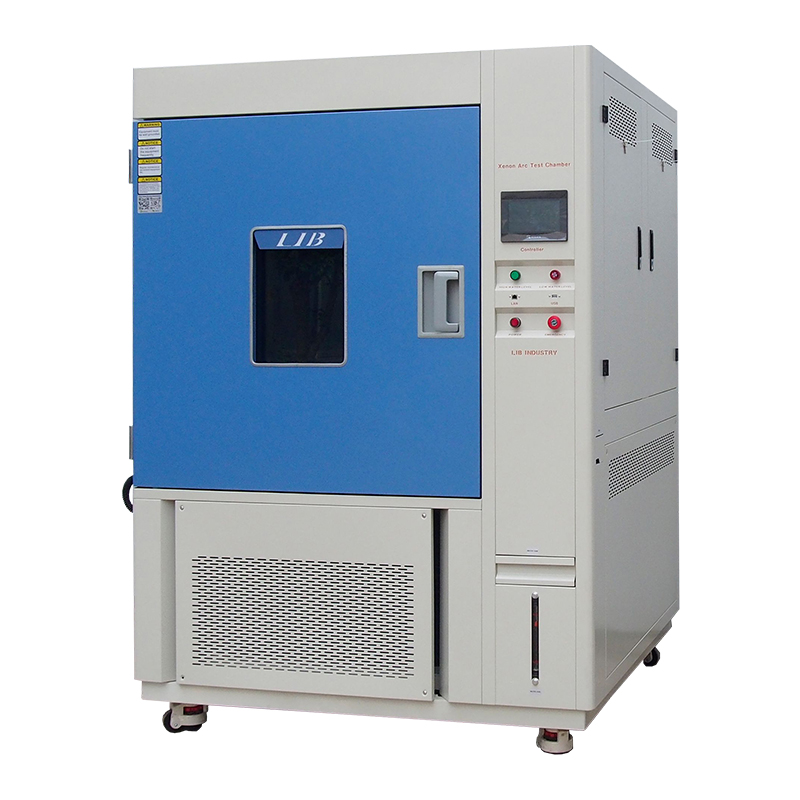
A xenon arc tester houses a xenon gas lamp that replicates the full spectrum of natural sunlight. The burner emits ultraviolet, visible, and infrared energy in one continuous output. Optical filters then shape that output to approximate terrestrial solar radiation. This design separates the method from narrow-band UV chambers. A xenon arc lamp reproduces the full spectrum of sunlight, so the specimen experiences a realistic solar environment rather than an isolated waveband.
The preferred applications follow from that spectrum. Teams use xenon arc testing to evaluate color and appearance changes, including fade, yellowing, and gloss shift. Lightfastness studies of pigments and dyes depend on visible light, and only a full-spectrum source supplies it. Formulators also run xenon arc exposures to judge the effectiveness of light stabilizers and UV absorbers. Results may take weeks, depending on the material and the governing standard. Long duration reflects the realistic irradiance levels these xenon-arc weathering devices apply.
Time and cost set the main boundaries. A full-spectrum run consumes more chamber hours than a UV screen, and scheduling pressure grows when many candidates compete for one instrument. Teams should reserve xenon arc testing for questions that demand spectral realism. Routine ranking of physical durability rarely justifies the longer cycle.
Interpretation also requires discipline. Filter selection and irradiance control vary across xenon-arc platforms, so results from different laboratories may not align directly. Analysts should confirm the filter type and test conditions before comparing data sets. Full spectrum sunlight simulation remains the method's core value, and that value holds only when the test parameters stay documented and consistent.
A side-by-side view sharpens the choice. The table below condenses the technical ground covered so far. Each row maps a decision variable to the two chamber families. Readers can scan it before committing lab resources.
Variable | ||
|---|---|---|
 |  | |
 |  | |
Light source | Fluorescent lamps emitting concentrated short-wave UV | Xenon gas lamp emitting UV, visible, and infrared, shaped by optical filters |
Best for | Screening physical durability: cracking, chalking, gloss loss, blistering | Color and appearance change, fade, yellowing, lightfastness, stabilizer effectiveness |
Correlation | Fast ranking of formulations; caution needed because intensity exceeds natural sunlight | Realistic full-spectrum simulation; filter and irradiance settings must be documented for cross-lab comparison |
| Irradiance Range | 0.3~20 W/㎡ | 35~150 W/㎡ |
Relative cost | Lower per test hour; results often visible in days | Higher per test hour; runs may take weeks depending on material and standard |
Governing standards | ASTM G154 | ASTM G155 |
The cost row deserves a plain reading. Neither method is cheap in absolute terms, and the comparison is relative. A UV chamber consumes fewer instrument hours per candidate, so screening many formulations stays affordable. Xenon arc testing carries a higher hourly burden, and that burden buys spectral realism. Teams should treat the difference as an allocation question, not a verdict.
Correlation is the row that trips up new users. Fluorescent UV data ranks materials well against each other. It predicts outdoor service less reliably, because the short-wave intensity runs above natural sunlight. Xenon-arc weathering tracks real solar exposure more closely, yet filter selection still varies across platforms. Analysts comparing data sets from different laboratories should confirm filter type and irradiance conditions first.
The standards row closes the loop. ASTM G154 defines the fluorescent UV practice, and ASTM G155 defines the xenon arc practice. Industry specifications often name one method outright. A supplier who quotes results without citing the governing standard leaves the buyer unable to verify the test.
One practical note on reading the table: the rows interact. A team that needs fast answers on gloss loss and also needs color data faces a split decision. The uv vs. xenon arc weathering question rarely resolves to a single winner in that case. A tiered program, covered later, handles it. For now, the table gives a compact reference for matching method to failure mode, budget, and specification.
ASTM G154 sets the practice for operating fluorescent UV lamps in accelerated weathering testing chamber. The standard defines lamp types, irradiance control, condensation cycles, and specimen mounting. It gives laboratories a common language, so a result from one qualified lab means something to another. Teams that screen plastics for cracking or gloss loss typically work under this practice.
Related documents extend the family. ISO 4892-3 covers fluorescent UV exposure for plastics at the international level, and ASTM D4587 applies the same principle to paints and coatings. A formulator comparing a new coating against an incumbent should confirm which of these documents the customer's specification names. The choice of lamp type and cycle length changes the result, and the standard fixes those variables.
ASTM G155 governs xenon arc apparatus and its operation. The standard addresses filter selection, irradiance calibration, black panel temperature, and wetting cycles. These parameters decide how closely a xenon arc run tracks natural sunlight. Analysts who skip the calibration steps lose the spectral realism that justifies the longer test.
International and industry documents build on this base. ISO 4892-2 specifies xenon arc exposure for plastics, and SAE J2527 covers automotive exterior materials. A supplier quoting xenon arc testing results should cite the exact standard and filter combination used. Buyers can then verify the work against their own specification.
Industry specifications often dictate the method outright. An automotive OEM may require SAE J2527, while an architectural coating spec may name ASTM G154. Confirm the required standard before booking chamber time. That single check identifies the exact, compliant accelerated weathering method and prevents a costly rerun.
The failure mode should drive the method choice. A team that expects surface cracking, chalking, or gloss loss can screen candidates with a UV chamber. Short-wave lamps target exactly those degradation pathways, and the results arrive fast enough to rank formulations. A product where color carries commercial weight needs a different answer. Fade, yellowing, and pigment shift depend on visible light, and only a full-spectrum source supplies it. Xenon arc testing fits that requirement.
Sample shape adds a practical constraint. Flat panels mount easily in either chamber. Complex three-dimensional parts, curved sections, and assembled components often demand custom fixtures. Xenon arc chambers tend to accommodate larger specimen racks, which helps when the part cannot be cut down. Teams should confirm mounting capacity before booking time.
Stabilizer studies point toward the full-spectrum option as well. Formulators judging a UV absorber or hindered amine package need realistic irradiance across the whole solar band. A narrow-band screen can mislead here, because it overweights one waveband. The decision framework therefore starts with one question: does appearance matter to the customer? A yes moves the program toward xenon-arc weathering.
Cost and schedule shape the second tier of the decision. A UV chamber consumes fewer instrument hours per candidate, so broad screening stays affordable. Results often appear within days. Xenon arc runs may stretch to weeks, and the hourly burden runs higher. Neither fact makes one method better. Each fits a different stage of development.
A tiered program often resolves the tension. Teams screen a wide field of formulations under UV, then advance the survivors to xenon arc exposure for color and appearance confirmation. This sequence spends accelerated weathering budget where it buys the most information. It also mirrors how many specifications are written, with a fast screen followed by a realistic confirmatory run.
Industry specifications can override the framework entirely. An automotive exterior spec may name SAE J2527, while an architectural coating document may cite ASTM G154. A plastics program might reference ISO 4892-2. ASTM G155 governs the xenon arc practice, and a buyer should confirm the cited standard before any chamber time is booked. That check settles most disputes early.
One caution applies to every program. A weathering test answers only the question its spectrum and moisture cycle can reach. Teams should match the method to the failure mode, document every parameter, and treat accelerated testing as a ranking tool rather than a guarantee of service life. Used that way, the uv vs. xenon arc weathering choice becomes a straightforward engineering decision rather than a gamble.
The choice follows the failure mode. UV chambers deliver fast, targeted screening of physical durability, while xenon arc testing supplies full-spectrum realism wherever color and appearance carry weight. Readers should start from the failure mode and the industry specification, then confirm the method against ASTM G154 or ASTM G155 before booking chamber time.
That sequence settles most uv vs. xenon arc weathering debates early. Where both concerns apply, a tiered program lets each method do its strongest work: UV screens the field, and xenon arc confirms the survivors. Teams that plan the sequence once will reuse it across every formulation cycle.
| LIB Industry Popular Weathering Test Chamberfor Aging tests | ||
Full-Spectrum Sunlight Simulation, |
Fast UV Degradation Testing, |
UV Preconditioning Chamber For PV Solar Panel IEC-Compliant PV Preconditioning, |
ASTM B117 Fog Corrosion Salt Spray Test Cabinet ASTM B117 Compliance Testing, Trusted Corrosion Resistance Evaluation |
Cyclic Salt Spray Corrosion Chamber (CCT Chamber) Real-World Corrosion Cycling, |
Salt Fog and SO2 Corrosion Chamber Multi-Environment Corrosion Simulation, Accelerated Industrial Durability Testing |
A UV chamber targets cracking, chalking, and gloss loss directly. Short-wave lamps concentrate the energy that drives those physical failure modes. Results arrive quickly, so formulators can rank candidates early. Color-critical products still need a full-spectrum check.
UV screening often shows visible effects within days. Xenon arc runs may stretch to weeks, depending on the material and the governing standard. Teams should plan chamber schedules around that difference.
ASTM G154 defines the fluorescent UV practice. ASTM G155 governs xenon arc operation. Related documents include ISO 4892-3 and ASTM D4587 for UV work, plus ISO 4892-2 and SAE J2527 for xenon arc exposure. Industry specifications often name one method outright.
Yes. A lab can use both methods in the same testing program. First, use a UV chamber to quickly test multiple samples and identify those with better UV resistance. Then, use a xenon arc chamber to test the selected samples under full-spectrum sunlight and check for color fading and other appearance changes. This approach saves time and testing costs while providing a more complete evaluation of material weathering resistance.
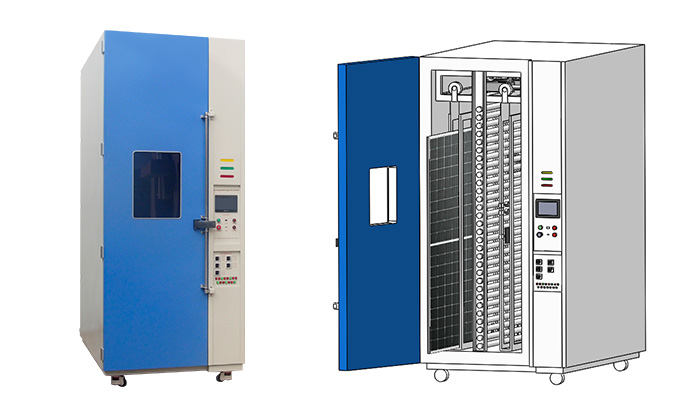
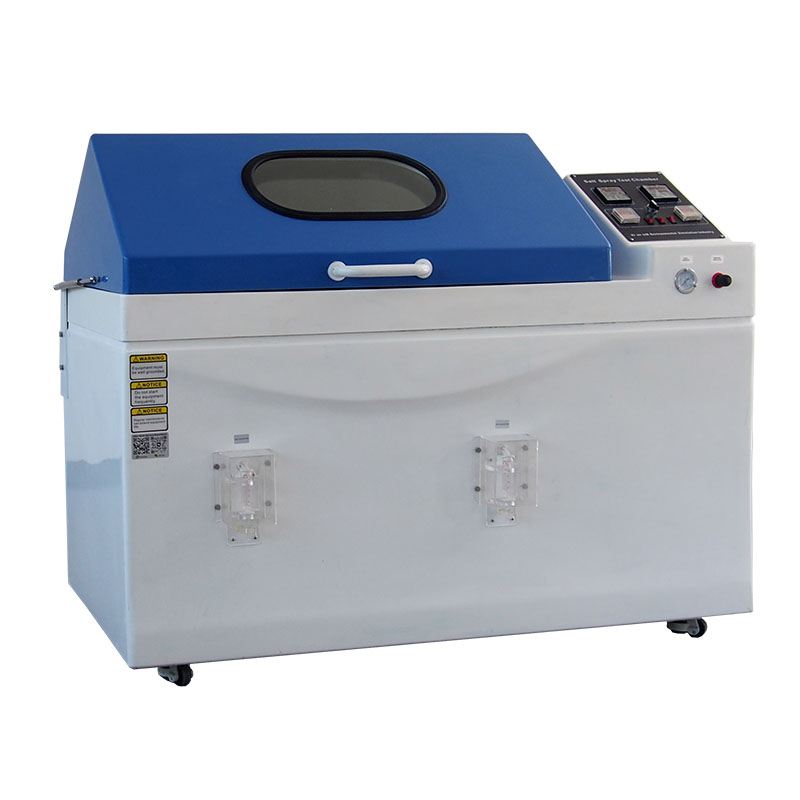
If you're looking for a reliable weathering test chamber, whether it's a Xenon Test Chamber for full-spectrum sunlight simulation, a Fluorescent UV Test Chamber for rapid UV degradation testing, a UV Preconditioning Chamber for PV Solar Panels for solar module testing, or a Cyclic Salt Spray Corrosion Chamber for combined weathering and corrosion evaluation, feel free to contact LIB Industry.
Our team is ready to discuss your target testing standards, sample dimensions, irradiance requirements, temperature range, and test cycles. We'll help you select the right equipment for your materials and laboratory testing needs.