Views: 0 Author: LIB Team Publish Time: 2026-11-16 Origin: Site


The right corrosion test method depends on the specification. Engineers balance three forces: realism, cost, and standards compliance. For example, Ike, a customer in the United States whose team specializes in coating testing, shared feedback after installing LIB Industry's S-250 salt spray test chamber: "Yes, we installed the chamber and used it already. It works fine with no issues." His feedback reflects how salt spray testing supports practical coating evaluation in daily laboratory work.
Salt spray and cyclic corrosion testing are complementary tools, not rivals. Each method has a legitimate place in a validation program. A continuous fog test answers different questions than an alternating wet-dry cycle. The salt spray vs. cyclic corrosion testing debate often misses this point. This comparison examines principles, standards, strengths, limitations, and selection criteria. Readers can then match a method to their exact needs. Some programs need the fog test; others need alternating cycles. The specification, not habit, should drive that decision.
Salt spray testing uses a continuous fog and is fast and affordable for routine quality checks.
Cyclic corrosion testing mimics real-world wet and dry cycles and gives a better prediction of field performance.
Choose salt spray for specification compliance and batch screening, and cyclic testing for new designs and high-risk parts.
Many programs use salt spray first to screen samples, then cyclic testing to validate the survivors.
Matching the test method to your specification saves money and prevents costly field failures.
The answer to the salt spray vs. cyclic corrosion testing question starts with the quality goal. Engineers must match the exact quality goal while keeping equipment spending in check. A corrosion specification defines what the part must survive in service. The test method must prove that claim without wasting budget. Choosing the right method means reading the specification first and the equipment catalog second. The method serves the specification, not the other way around.
Three factors drive test method selection criteria. The first factor is realism and correlation. How well does the lab result predict field performance? A method with strong correlation gives engineers confidence in service-life estimates. The second factor is cost. This covers equipment, chamber time, operator hours, and sample throughput. The third factor is standards compliance. The specification usually names a standard, and that standard narrows the field quickly.
These factors rarely point in the same direction. A highly realistic method may cost more per sample. A low-cost method may correlate poorly with service conditions. Engineers weigh the three factors against the risk profile of the product. A safety-critical bracket deserves more realism than a decorative trim piece. The balance shifts with each program.
Salt spray is not obsolete. The continuous fog test remains a fast, standardized, and auditable tool. It suits routine quality control and specification compliance. Auditors recognize the method, and labs run it with little variation. Cyclic corrosion is not overkill either. Alternating wet and dry phases reveal failure modes that a steady fog cannot reproduce. Painted panels, fasteners, and coated parts often show different behavior under cycling.
Each method fits a different stage of a validation program. Salt spray screens incoming materials and confirms batch consistency. Cyclic testing validates new designs and predicts service life. The right test method depends on the question the program asks. A test choice that ignores this staging wastes money or misses risk. Programs often use both methods in sequence.
Neutral salt spray testing places specimens inside a controlled chamber. The chamber delivers a continuous salt fog at a fixed temperature. Industry references commonly cite a 95-degree fog for this exposure. A nozzle atomizes the saline solution into fine droplets. The fog settles on the sample surface and stays there for the full test duration. This steady exposure creates a uniform corrosive environment around every part. Operators position samples at a set angle so the fog coats each surface evenly.
Two standards dominate this method. ASTM B117 defines the continuous fog procedure for salt spray testing in the United States. ISO 9227 provides the international counterpart for neutral salt spray testing. Both standards specify the fog composition, chamber conditions, and specimen placement. Labs that follow either document produce results that auditors and customers recognize. A specification that names one of these standards removes ambiguity from the test plan.
The method offers clear advantages. Neutral salt spray testing runs fast compared with natural exposure. The procedure is standardized, so results stay consistent across labs. Equipment and operating costs remain low. Operators find the test simple to run and simple to audit. These traits make salt spray a practical tool for routine coating testing and batch screening. High-volume programs can process many samples without complex programming. LIB Industry's neutral salt spray test chambers provide stable, uniform salt fog conditions and easy-to-use operation, helping coating manufacturers perform consistent corrosion resistance tests in accordance with ASTM B117 and ISO 9227.
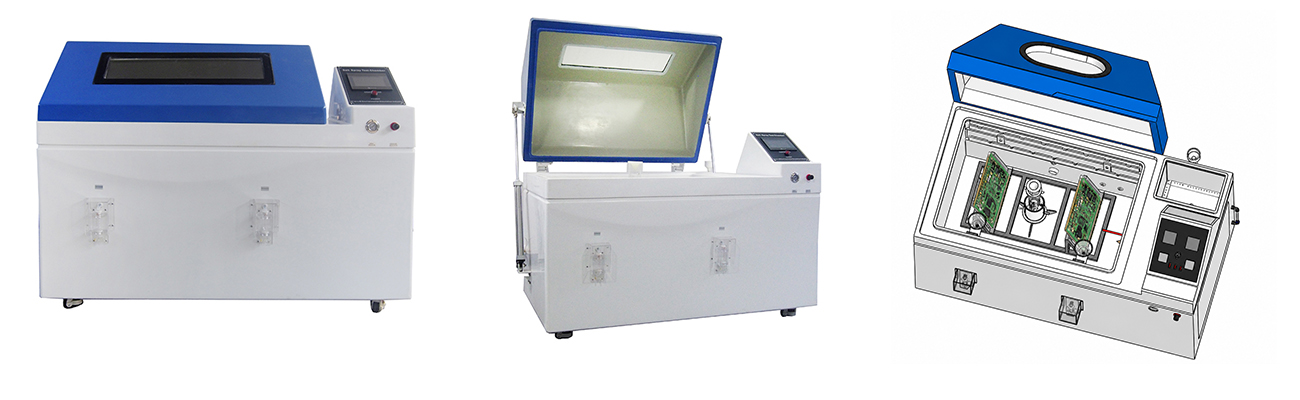 | ||||||
| Model | S-150 | S-250 | S-750 | S-010 | S-016 | S-020 |
| Internal dimensions (mm) | 590*470*400 | 1000*640*500 | 1100*750*500 | 1000*1300*600 | 900*1600*720 | 1000*2000*800 |
| Overall dimensions (mm) | 1460*760*1140 | 1850*960*1350 | 1950*1030*1350 | 2000×1300×1600 | 2300×1300×1700 | 2700×1300×1900 |
| Interior Volume (L) | 110 | 320 | 410 | 780 | 1030 | 1600 |
| Temperature Range | Ambient ~ +60 ℃ | |||||
| Temperature Fluctuation | ± 0.5 ℃ | |||||
| Temperature Deviation | ± 2.0 ℃ | |||||
| Humidity Range | 95% ~ 98% RH | |||||
| Salt Fog Deposition | 1~2ml / 80cm2 · h | |||||
| Spray Type | Continuous / Periodic | |||||
| Salt Fog Collected | Fog collector and fog measure cylinder | |||||
| Air Preheating | Saturated air barrel | |||||
| Spraying System | Atomizer tower and Spray nozzles | |||||
| Controller | PID controller | |||||
| Safety Device | Humidifier Dry-combustion Protection; Over-temperature Protection; Over-current Protection; Water Shortage Protection; Earth leakage Protection | |||||
| Material | Glass fiber reinforced plastics | |||||
| Standard Configuration | 6 round bars and 5 V-shaped grooves | |||||
| ||||||
The method also carries a real limitation. A continuous fog does not accurately simulate the real-world environment that parts see in service. Field conditions include wet and dry cycles, temperature swings, and varying humidity. The steady fog ignores all of these variables. Correlation with field performance is therefore limited. Engineers should treat salt spray results as a screening signal, not a service-life prediction. A part that passes the fog test may still fail in a coastal or de-icing environment. The gap between lab fog and field exposure grows for coated and painted parts.
Cyclic corrosion testing replaces the steady fog with a programmed sequence. The chamber alternates salt spray with humidity, drying, and heat phases. Some programs add other conditions, such as condensation or freeze steps. This sequence mimics actual atmospheric variation. A part on a vehicle or a bridge sees wet mornings, dry afternoons, and seasonal temperature swings. The cyclic corrosion test reproduces that rhythm inside the lab. Operators program each phase, and the chamber moves through the full sequence automatically.
Several cyclic corrosion test standards define these programs. ASTM G85 covers modified salt spray tests with cycling variations. SAE J2334 specifies a cyclic corrosion test for automotive materials. VDA 233-102 provides a German automotive benchmark with defined salt, humidity, drying and temperature stages. These documents belong to the family of common cyclic corrosion standards. A specification that names one of them gives the lab a clear program to follow.
The method delivers realism that steady-state testing cannot match. Alternating temperature, humidity, salt spray, and drying cycles reflect how parts actually age. The chamber compresses months of field exposure into a shorter window, so results arrive faster than natural outdoor testing. Cycling also reveals complex failure modes. Coatings may blister, creep at scribes, or fail at edges only when wet and dry phases alternate. An advanced cyclic corrosion test can expose these mechanisms before a product reaches the field. This makes cyclic corrosion valuable for coating testing and new-design validation. LIB Industry's cyclic corrosion test chambers support programmable salt spray, humidity, temperature, and drying cycles, allowing coating manufacturers to simulate complex corrosion conditions and evaluate coating durability under different environmental stresses.
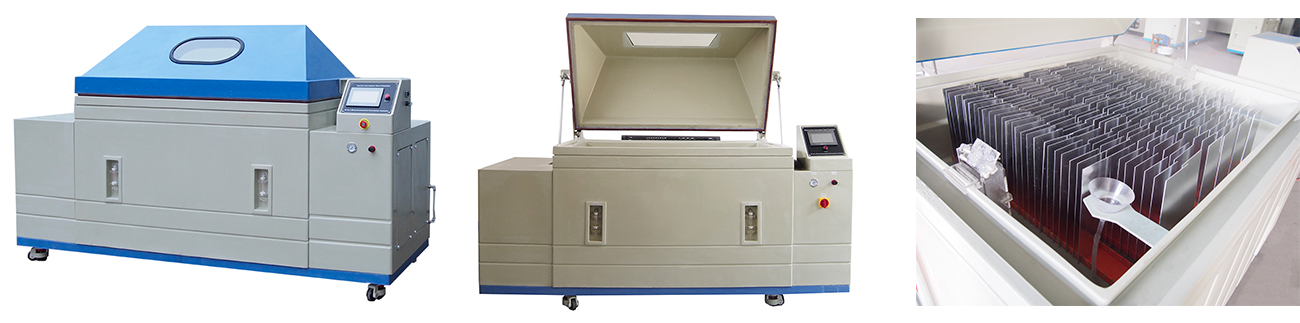 | |||
| Model | SC-010 | SC-016 | SC-020 |
| Internal dimensions (mm) | 1300*1000*600 | 1600*900*720 | 2000*1000*800 |
| Overall dimensions (mm) | 2000*1300*1600 | 2300*1300*1700 | 2700*1300*1900 |
| Interior Volume (L) | 780 | 1280 | 1800 |
| Temperature Range | +10 ℃ ~ +90 ℃ | ||
| Temperature Fluctuation | ± 0.5 ℃ | ||
| Temperature Deviation | ± 2.0 ℃ | ||
| Humidity Range | 30% ~ 98% RH | ||
| Humidity Deviation | + 2%, - 3% | ||
| Salt Fog Deposition | 1~2ml / 80cm2 · h | ||
| Cooling system | Mechanical compression refrigeration system | ||
| Humidifier | External isolation, stainless steel surface evaporation humidifier | ||
| Water supply system | Water purification system | ||
| Air Preheating | Saturated air barrel (31Liter) | ||
| Spraying System | Atomizer tower and Spray nozzles | ||
| Salt Fog Collected | Fog collector and fog measure cylinder | ||
| Controller | Programmable color LCD touch screen controller, Ethernet connection | ||
| Air Circulation | Centrifugal wind fan | ||
| Safety Device | Humidifier Dry-combustion Protection; Over-temperature Protection; Over-current Protection; | ||
| Water Shortage Protection; Earth leakage Protection | |||
| Material | Glass fiber reinforced plastics | ||
The method carries trade-offs. Equipment costs more than a basic fog chamber. Programming and operation demand more skill, and each program needs careful setup. Interpretation takes longer because multiple failure modes appear at once. Engineers must weigh these costs against the value of realistic data. For high-risk parts, the added realism justifies the investment.
A side-by-side view clarifies where each method fits. The table below summarizes the main differences across six dimensions. Readers can then weigh the salt spray vs. cyclic corrosion testing options against their own program goals.
Dimension | ||
|---|---|---|
 |  | |
Environment | Continuous salt fog at a fixed temperature, commonly a 95-degree fog | Alternating salt spray, humidity, drying, and heat phases |
Real-world correlation | Limited; steady fog ignores wet-dry and temperature swings | Stronger; cycling mirrors atmospheric variation |
Typical applications | Routine quality control, batch screening, specification compliance | New-design validation, coating performance, service-life prediction |
Duration | Shorter test cycles | Longer programs with multiple phases |
Cost | Lower equipment and operating cost | Higher equipment, programming, and interpretation cost |
Operational needs | Simple to run and audit | Skilled programming and careful setup |
The salt spray vs. cyclic corrosion testing comparison starts with the environment. Neutral salt spray testing surrounds the specimen with a constant fog. A programmed sequence of wet, humid, dry, and warm stages surrounds it in the other method. That sequence mirrors the conditions a part meets in service. A coated bracket on a vehicle sees road spray, drying sun, and overnight condensation. The fog test captures only the spray. The cycling test captures the full rhythm.
Correlation follows from that difference. Salt spray testing gives a screening signal. Engineers use it to confirm batch consistency and coating quality. Cyclic corrosion testing gives a stronger link to field performance. The method exposes failure modes that a steady fog cannot trigger, such as scribe creep and edge blistering. A part that passes the fog test may still fail at a scribe line under cycling. The gap between lab fog and field exposure grows for coated and painted parts.
Applications reflect this split. Salt spray suits high-throughput screening and specification compliance. Cyclic corrosion suits new-design validation and realistic service-life prediction. When comparing different testing methods, teams should ask which question the program needs answered. A supplier audit needs a fast, recognized result. A new platform needs a realistic forecast.
Duration favors salt spray. A continuous run finishes faster than a multi-phase program. Cost follows the same pattern. A basic fog chamber costs less to buy and operate. A cyclic corrosion test demands more capable equipment and more operator time. Programming each phase adds setup hours before the first sample enters the chamber. Budget planners should count chamber time, operator hours, and sample throughput together.
Operational needs widen the gap. Salt spray is simple to run and simple to audit. Cyclic programs require careful phase programming and longer interpretation. Multiple failure modes appear at once, so engineers spend more time reading results. Training matters more, and chamber maintenance grows with the added complexity.
Neither method wins on every dimension. The salt spray vs cyclic corrosion testing decision depends on the program's goal. A routine audit fits the fog method. A high-risk part fits cycling. Teams evaluating corrosion resistance should treat the cyclic corrosion test vs salt spray test question as a staging decision, not a contest. Many programs run salt spray first and cyclic corrosion second. That sequence captures the strengths of both methods.
Each industry applies salt spray testing to different questions. Automotive teams use it to screen brackets, fasteners, and trim before a full validation program begins. Infrastructure programs test galvanized steel, bridge hardware, and coastal structural components against recognized benchmarks. Electronics manufacturers check enclosures, connectors, and plated contacts for basic corrosion resistance. Aerospace programs often pair fog exposure with other environmental stresses. Battery and materials labs use the method to compare coatings and surface treatments across supplier batches.
The staging logic stays consistent across sectors. Salt spray suits basic audits and specification compliance. A supplier qualification or incoming inspection needs a fast, recognized result. Cyclic corrosion Test Chamber suits new-design validation, where engineers need a realistic forecast of service life. A new coated fastener design deserves cycling. A routine batch check does not. Teams should match the method to the program stage, not to habit.
Sector standards narrow the choice quickly. The table below lists representative documents by industry. Readers should confirm the exact revision and acceptance criteria in their own specification before testing.
Sector | Representative Standard |
|---|---|
Automotive | SAE J2334; ASTM B117 for fog-based screening |
Infrastructure and coatings | ISO 9227; ASTM B117 |
Electronics | ASTM B117; IEC 60068-2-52 for cyclic salt mist |
Aerospace | ASTM B117; ASTM G85 for cyclic variants |
Batteries and materials | ASTM B117; ISO 9227 for neutral fog exposure |
Neutral salt spray testing remains the entry point for most of these programs. A lab that runs ASTM B117 or ISO 9227 produces results customers and auditors recognize. Coating testing often starts with a fog screen and moves to cycling when the specification demands field correlation. Engineers should read the sector standard first and let it define the method, duration, and pass criteria.
Neutral salt spray testing earns its place in four common situations. The first is routine quality control. A plant that receives coated fasteners every week needs a fast, repeatable check. The fog chamber delivers that check without complex programming. The second situation is specification compliance. Many contracts name ASTM B117 or ISO 9227 directly. A lab that runs the named method satisfies the clause and produces results the customer accepts.
Basic audits form the third situation. An auditor recognizes the continuous fog method and trusts its output. The procedure varies little between labs, so results travel well across suppliers. High-throughput screening is the fourth. A materials team comparing twenty coating samples needs a quick ranking. Salt spray testing processes those samples in one batch and flags the weak candidates early.
These four uses share a trait. Each one asks a simple pass-or-fail question about consistency. None of them asks how a part will age over a decade of service. Teams should reserve salt spray for that screening role and resist stretching it further.
Cyclic corrosion testing justifies its higher cost in three situations. New product validation tops the list. A redesigned bracket or a new coating system needs a realistic forecast. The cyclic corrosion test alternates wet, humid, dry, and warm phases, so it mirrors the rhythm a part meets outdoors. Realistic service-life prediction is the second situation. Engineers who must estimate how long a coating survives benefit from that added realism.
Complex failure detection is the third. Some defects appear only when conditions change. Scribe creep, edge blistering, and coating undercutting need wet-dry cycling to develop. A steady fog can miss all three. The cyclic corrosion test vs salt spray test question therefore turns on the failure mode under study. A program hunting simple corrosion gets a fog screen. A program hunting interactive failure modes needs cycling.
Equipment choice follows the method. LIB Industry supplies both salt spray and corrosion chambers, along with customized environmental solutions. Teams that must match hardware to a chosen method can source either option from one manufacturer. That single source simplifies procurement and keeps service support consistent across a validation program.
The salt spray vs. cyclic corrosion testing decision rewards a staged plan. Screen with fog, then validate with cycling. The salt spray vs cyclic corrosion testing choice then becomes a sequence rather than a contest. Readers who follow that sequence capture the strengths of both methods and protect the budget at the same time.
| LIB Industry's Popular Environmental Chamber for Automotive Test | |||
 |  |
| 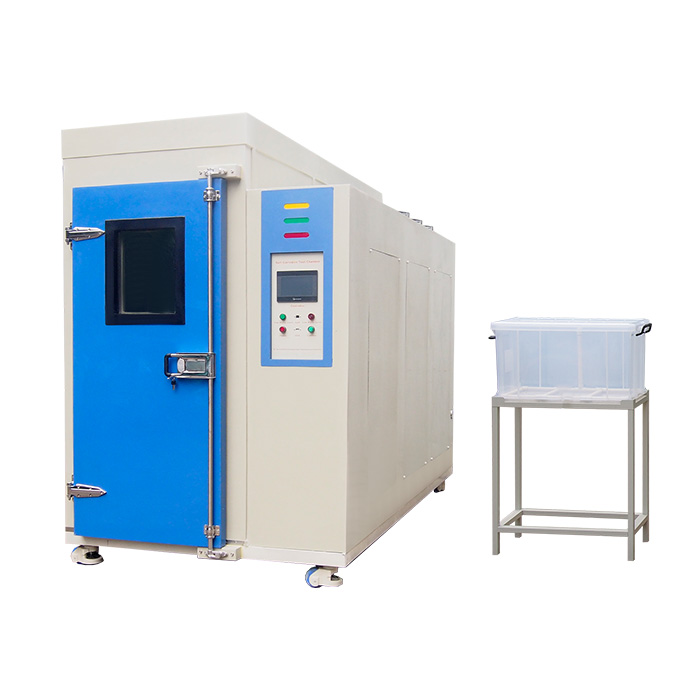 |
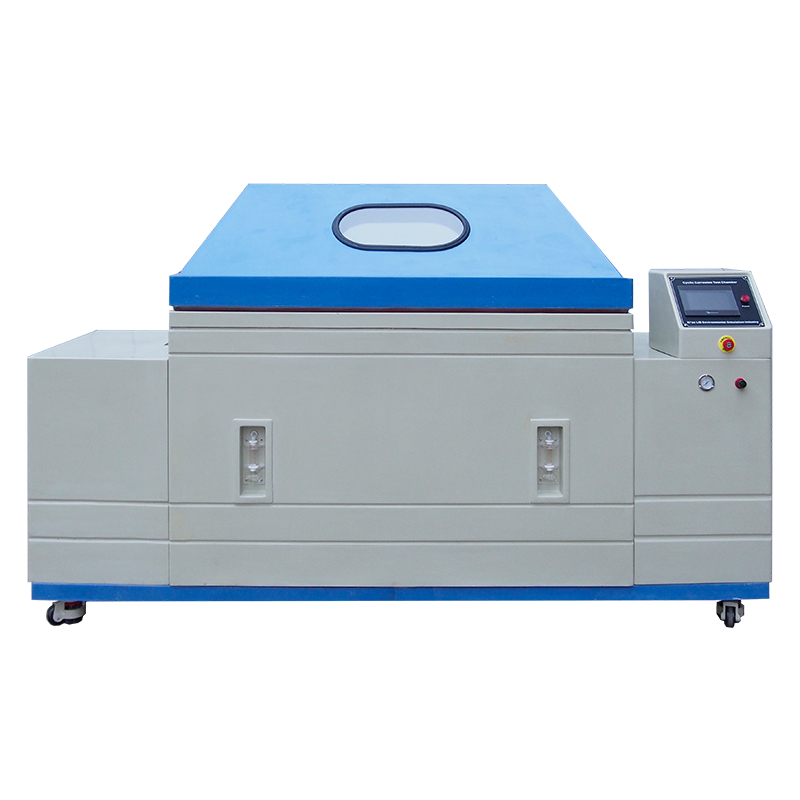
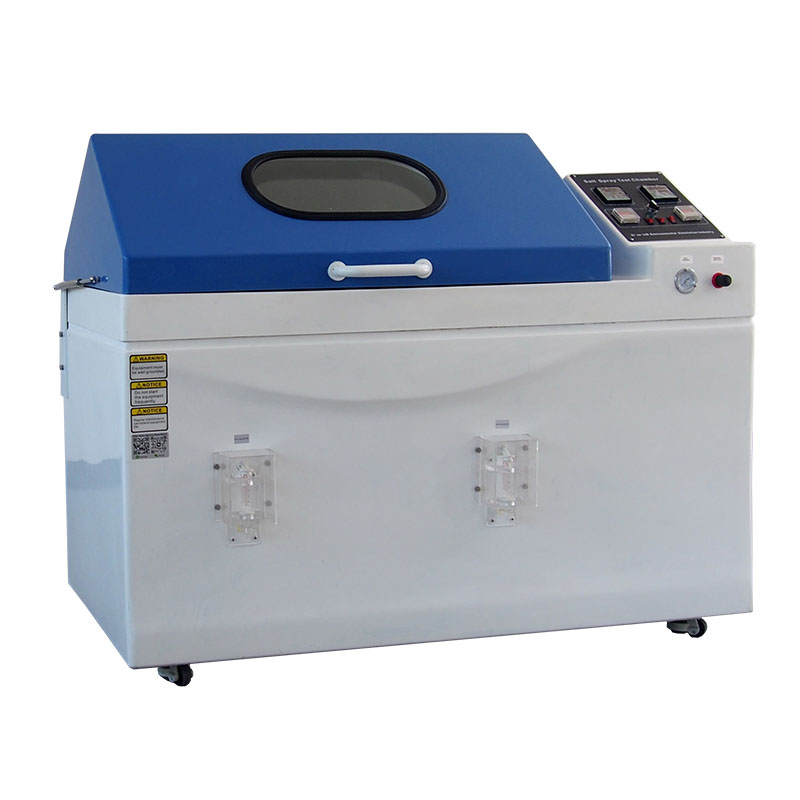
Cyclic Salt Spray Corrosion Chamber Realistic Wet-Dry Corrosion Simulation, Accelerated Corrosion Testing for Long-Term Durability | ASTM B117 Basic Fog Corrosion Salt Spray Test Cabinet Reliable Salt Fog Exposure Testing, Accurate Corrosion Resistance Evaluation | Salt Spray and Sulfur Dioxide Climatic Chamber Simulate Acid Rain and Industrial Pollution, Advanced SO₂ Corrosion Testing Solution | Walk-in Salt Spray Corrosion Chamber Large-Capacity Corrosion Testing Space, Ideal for Oversized Components and Assemblies |
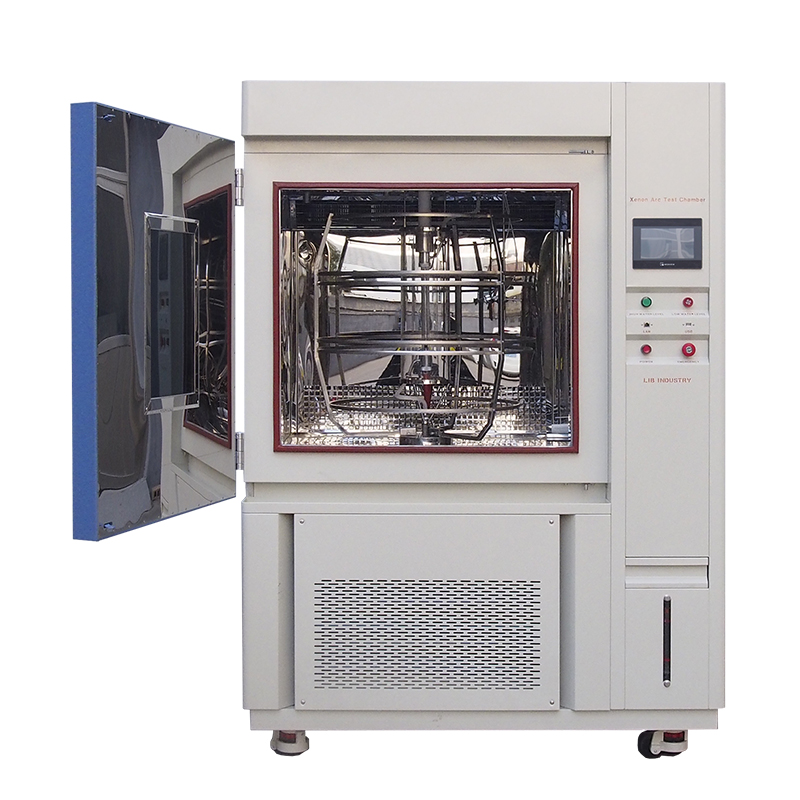 |  |  |  |
ASTM G155 G151 Accelerated Weathering Xenon Test Apparatus Full-Spectrum Sunlight Simulation, Accelerated Outdoor Weathering Analysis | UVA 340 Fluorescent Lamp Light Fastness Test Instrument Precise UV Aging Performance Testing, Reliable Material Durability Verification | Temperature Humidity Test Chamber Stable Environmental Conditioning, Accurate Temperature and Humidity Control | Compact Mini Temperature Stability Climatic Test Chamber Space-Saving Laboratory Solution, High-Precision Climate Simulation in a Compact Design |
LIB Industry, formally LIB Environmental Simulation Industry, has manufactured environmental test chambers since 2012 from its base in Xi'an, China. The company builds salt spray and corrosion test chambers alongside a broader portfolio of environmental simulation equipment. That range covers temperature and humidity chambers, thermal shock systems, weathering chambers, and dust and water ingress equipment. A lab that runs both fog screening and cycling can therefore equip an entire validation program from one supplier.
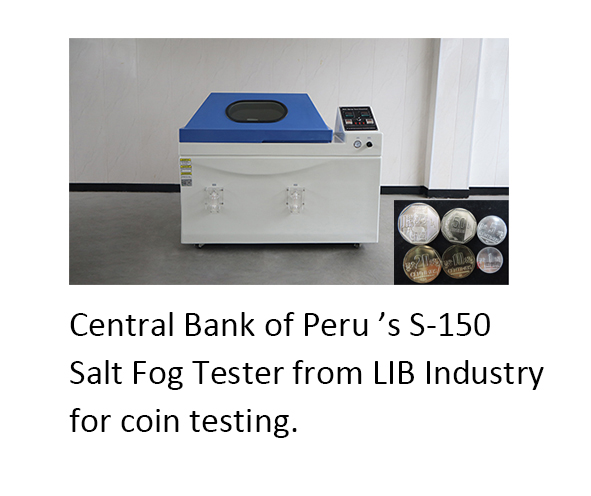
A cyclic corrosion chamber must execute a programmed sequence of salt spray, humidity, drying, and heat phases without drift. LIB designs its corrosion and salt spray chambers to hold those conditions through each stage of a program. Operators set the phase order, dwell times, and transition points before a run begins. The chamber then moves through the full sequence automatically, so every sample meets the same exposure profile.
Customization extends the hardware to unusual work. LIB builds chambers sized for large or awkward specimens that standard cabinets cannot accept. The company supports each installation with commissioning, operator training, and ongoing maintenance. Global agents and service centers provide after-sales support across regions, which keeps response times short for international customers.
Throughput shapes the equipment decision as much as capability does. A high-volume screening program needs chamber capacity that matches its sample count. LIB supplies cyclic corrosion test chambers in configurations that suit both routine batch work and longer validation runs. Maintenance planning follows the same logic. Regular service keeps fog delivery and phase transitions within tolerance, and trained operators catch drift before it spoils a batch.
Standards compliance anchors the whole purchase. Buyers should confirm that a candidate chamber can hold the conditions named in their specification, whether that document cites ASTM B117, ISO 9227, ASTM G85, or SAE J2334. LIB positions its equipment for these recognized corrosion programs and supports customers through consultation and application analysis before the order. Matching chamber capability to the named standard protects the lab from results that auditors will not accept.
The decision logic stays simple. Teams choose salt spray for routine quality control and specification compliance. They choose cyclic corrosion testing for new product validation and realistic service-life prediction. The specification, the industry standards, and the cost of a wrong corrosion prediction should drive the final call.
Readers who still weigh salt spray vs. cyclic corrosion testing can settle the question with one review. The LIB Industry team helps engineers confirm the best-fit method against their own test specifications. That conversation turns the salt spray vs cyclic corrosion testing choice into a clear, defensible plan. Cyclic corrosion programs and fog screens both have a place. A short expert review shows which one fits.
Yes. Many programs screen with salt spray first and validate with cycling second. The fog test flags weak candidates quickly. Surviving samples then move into a cyclic program for realistic service-life data. This sequence captures the strengths of both methods and protects the test budget.
No. A continuous fog ignores wet-dry cycles, temperature swings, and humidity variation. A coated part can clear the fog test and still blister at a scribe line outdoors. Engineers should treat a pass as a screening signal, not a service-life forecast.
The specification usually names the standard, and that document settles the method. Automotive work often cites SAE J2334. Coating programs reference ASTM B117 or ISO 9227. Electronics may follow IEC 60068-2-52. Readers should confirm the exact revision and acceptance criteria before testing.
Standard cabinets suit routine samples. Custom chambers accept oversized or awkward parts that will not fit a conventional cabinet. LIB Industry builds customized corrosion and salt spray chambers for these cases, with installation, commissioning, and operator training included.
Service does not end at delivery. LIB Industry provides installation, commissioning, operator training, maintenance, and technical assistance. Global agents and service centers keep response times short for international customers. Regular service keeps fog delivery and phase transitions within tolerance.
If you're looking for a reliable corrosion testing chamber, whether it's a Neutral Salt Spray Test Chamber for routine coating evaluation and ASTM B117 testing, a Cyclic Corrosion Test Chamber for realistic wet-dry corrosion simulation, or a Salt Spray and Sulfur Dioxide Test Chamber for industrial atmosphere corrosion testing, feel free to contact LIB Industry.
Our team is ready to discuss your testing standards, sample dimensions, coating materials, corrosion requirements, and test cycles. We'll help you select the right equipment for your products and laboratory testing needs.