Views: 0 Author: Site Editor Publish Time: 2026-06-26 Origin: Site


Dust testing plays a critical role in verifying long-term product reliability. Manufacturers across the electronics, automotive, and defense sectors rely heavily on these evaluations. They ensure sensitive internal components can survive and function in harsh, real-world environments. Without rigorous testing, microscopic particles easily compromise mechanical systems and short-circuit delicate circuit boards.
Utilizing non-compliant or inaccurate testing equipment introduces severe financial and reputational risks. Companies frequently face unexpected warranty claims, widespread product recalls, and outright compliance failures during external audits. These costly missteps erode consumer trust and can devastate a manufacturer's bottom line.
Moving from theoretical testing requirements to practical equipment procurement requires a deep understanding of industry regulations. This article clarifies how specific global standards dictate the exact hardware, software, and operational specifications of your equipment. You will learn how to match your compliance goals with the correct capabilities when selecting LIB reliable Dust Test Chamber.
1. Standard-Specific Hardware: Purchasing decisions must align with specific standards (e.g., IEC 60529, MIL-STD-810); an IP Dust Test Chamber built for consumer electronics may not meet the high-velocity requirements of military sand testing.
2. Critical Specs: Key differentiators in chambers include negative pressure capabilities (vital for IP6X), dust agitation methods (settling vs. blowing), and precise airflow control.
3. Compliance Verification: Reliable chambers require transparent, exportable data logging to prove adherence to standard-specific temperature, humidity, and duration parameters during audits.
Relying on uncalibrated or generic testing chambers often leads to dangerous "false passes." A false pass occurs when equipment fails to suspend particulates uniformly. This creates dead zones where the test specimen experiences artificially clean air. Engineers might sign off on a design, believing it resists ingress perfectly. Later, these products fail rapidly in actual dusty environments. Proper adherence to standards eliminates these dead zones. It guarantees consistent particulate exposure across every surface of the product.
Strict adherence to international ingress protection (IP) standards unlocks access to highly regulated global markets. Tier-1 automotive supply chains and Department of Defense (DoD) contracts mandate irrefutable proof of compliance. You cannot enter these lucrative sectors using proxy data or sub-standard simulation methods. A certified testing process provides the documentary evidence required by international buyers. It demonstrates due diligence and engineering competence. This compliance directly translates into a competitive market advantage.
You must define procurement success beyond mere equipment acquisition. True success relies on verifiable, repeatable, and audit-ready test execution. Buying a chamber means purchasing a capability, not just a steel box. The equipment must execute complex test profiles flawlessly every time. Auditors will scrutinize your data logs. Therefore, your success criteria must prioritize data integrity, sensor accuracy, and strict alignment with relevant international test protocols.
To fully understand equipment requirements, we must examine the specific global standards dictating these tests. Different industries utilize vastly different testing philosophies. We have summarized the primary differences in the chart below.
| Standard | Target Industry | Test Medium | Agitation Method | Special Requirements |
|---|---|---|---|---|
| IEC 60529 | Consumer Electronics | Talcum Powder | Circulating/Settling | Negative pressure for IP6X |
| ISO 20653 | Automotive | Arizona Sand, Cement | High-turbulance circulation | Heavy abrasive resistance |
| MIL-STD-810 | Defense & Aerospace | Silica Flour, Sand | High-velocity blowing | Extreme temperature integration |
The IEC 60529 standard focuses primarily on protection against solid foreign objects. It heavily dictates the design of commercial electronics. This framework outlines the requirement for specialized testing equipment using circulating talcum powder. Talcum provides a very fine, uniform particulate profile. The standard clearly differentiates between "dust-protected" (IP5X) and "dust-tight" (IP6X) classifications.
For IP5X, a product must function even if some powder penetrates the enclosure. However, IP6X demands absolute sealing. To verify IP6X, the standard requires specific vacuum and negative pressure conditions. You must physically draw air through the device under test to simulate breathing effects caused by thermal cycling. This mandates sophisticated internal pumping mechanisms.
ISO 20653 expands significantly on IEC methodologies. It applies specifically to road vehicles and automotive supply chains. Vehicles operate in much harsher environments than indoor electronics. Therefore, this standard introduces different dust mediums. You will frequently test using Arizona desert sand or specific Portland cement mixtures. These materials simulate real-world road conditions.
Using these mediums requires specialized chamber agitation systems. Portland cement and Arizona sand possess much higher densities than talcum powder. They also present severe abrasion risks. The equipment must feature robust internal components capable of handling denser, highly abrasive particulates without suffering premature mechanical failure.
Defense contractors follow MIL-STD-810. Method 510 specifically separates testing into two distinct categories. The first category focuses on Sand, involving particles ranging from less than 150 up to 850 micrometers. The second category focuses on Dust, using particles smaller than 149 micrometers. This strict segregation ensures accurate battlefield simulation.
This standard requires highly specialized chambers capable of generating high-velocity "blowing dust and sand." It moves far beyond simple "settling dust" simulations. Furthermore, MIL-STD testing combines these high air velocities with extreme temperature variations. The equipment must blast abrasive sand at high speeds while maintaining precise thermal profiles.
| Model | DI-800 | DI-1000 | DI-1500 | DI-2000 |
| Internal Dimension (mm) | 800*1000*1000 | 1000*1000*1000 | 1000*1500*1000 | 1000*2000*1000 | |
| Overall Dimension (mm) | 1040*1450*1960 | 1330*1450*1960 | 1330*1950*1990 | 1330*2450*1990 | |
| Useful Volume (L) | 800 | 1000 | 1500 | 2000 | |
| Temperature Range | Ambient ~ +50℃ | ||||
| Humidity Range | < 30% RH | ||||
| Normal Wire Diameter | 50um | ||||
| Nominal Width of a Gap Between wires | 75um | ||||
| Fight Time | 0 ~ 99H59M | ||||
| Blowing Time | 0 ~ 99H59M | ||||
| Specimen Power Outlet | Dust-proof socket 16A | ||||
| Vacuum System | Equipped with a pressure gauge, air filter, pressure regulator, connecting tube | ||||
| Controller | Programmable color LCD touch screen controller, Ethernet connection | ||||
| Door Lock | Electromagnetic lock | ||||
| Safety Device | Over-temperature Protection; Over-current Protection; | ||||
| Earth Leakage Protection;Phase Sequence Protection | |||||
| Exterior Material | A3 Steel Plate with protective coating | ||||
| Interior Material | SUS304 stainless steel | ||||
| Observation Window | Interior lighting, double-layer thermo stability silicone rubber sealing | ||||
| Standard Configuration | Sample shelf, dust wiper, talcum powder(5kgs) | ||||
Dust Circulation & Agitation Mechanisms
Different standards require entirely different methods of particulate suspension. You must carefully evaluate compressed air systems versus mechanical blowers. IEC standards typically require a steady, circulating environment. Specialized mechanical blowers or vibrating funnels usually achieve this by creating a controlled "settling" environment. Gravity plays a large role as particles fall over the test specimen.
Conversely, military standards require violent, directional "blowing" forces. These applications demand powerful, variable-frequency drive blowers. They force particulates through targeted baffles at specific wind speeds. Your choice between settling or blowing mechanisms directly impacts the core architecture of the equipment.
If you intend to test for IP6X compliance, your chamber requires a highly capable internal vacuum system. You cannot simply place an object in a dusty environment and hope for the best. You must assess the integration of internal vacuum pumps. The system needs high-precision flow meters and digital pressure gauges.
These components simulate the necessary pressure differentials. By pulling a maximum vacuum of 2 kPa on the device under test, you expose every microscopic seal vulnerability. The system must automatically monitor and regulate this extraction rate over several hours. Without this integrated capability, true IP6X certification remains impossible.
Chamber design implications vary wildly based on the testing medium. IEC testing primarily utilizes non-conductive talcum powder. Talcum poses few wear issues but easily clogs standard filters. It requires dedicated shaker mechanisms to prevent caking in the lower hopper.
On the other hand, highly abrasive silica and quartz sand used in MIL-STD testing quickly degrade standard stainless steel interiors. Chambers built for abrasive mediums require specialized internal coatings. Fans and impellers need hardened alloys. Additionally, the exhaust and filtration requirements scale up significantly. You must capture heavy abrasive dust before it damages internal machinery or escapes into your laboratory.
Moisture represents the greatest enemy of consistent particulate testing. If humidity rises, dust clumps together. Clumping alters particle size distribution and invalidates the test. Therefore, chambers must handle integrated temperature and humidity controls flawlessly.
To meet specific standard preconditions, the internal environment typically requires active dehumidification. You must keep relative humidity well below 25% for most fine powders. The chamber uses robust heaters and environmental management systems. They stabilize the internal climate before any agitation begins. This prevents condensation from forming on the test specimen and ruining the integrity of the procedure.
| LIB Popular Dust and Water Test Equipment | |||
| 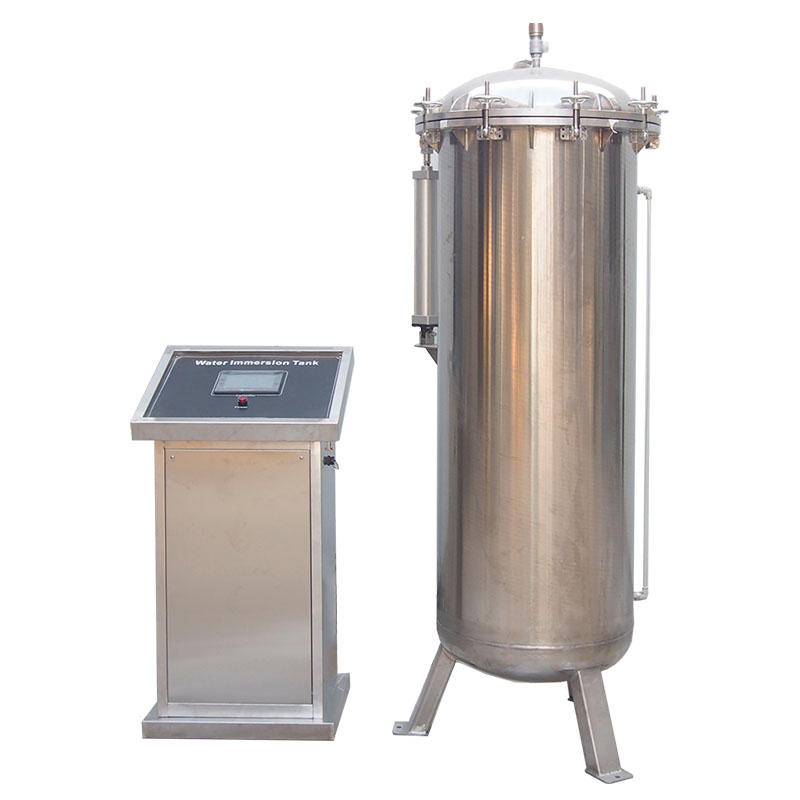 | 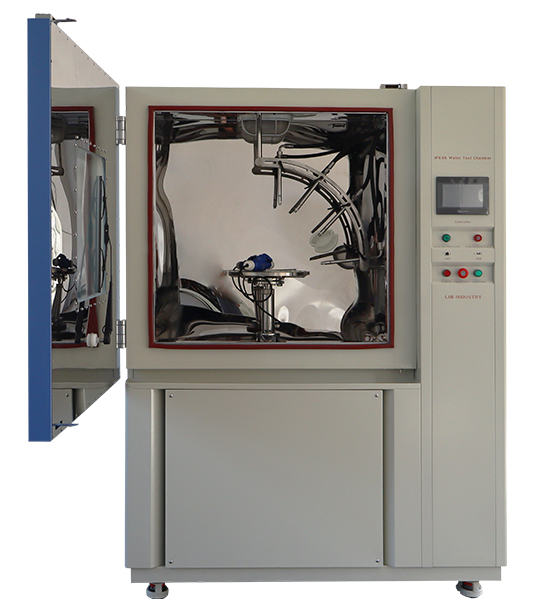 | 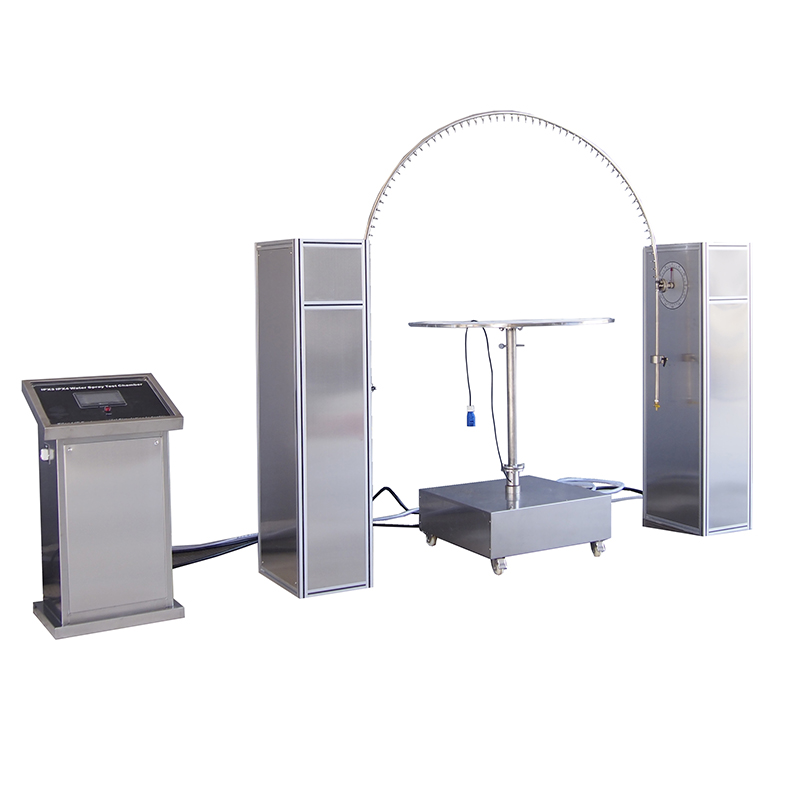 |
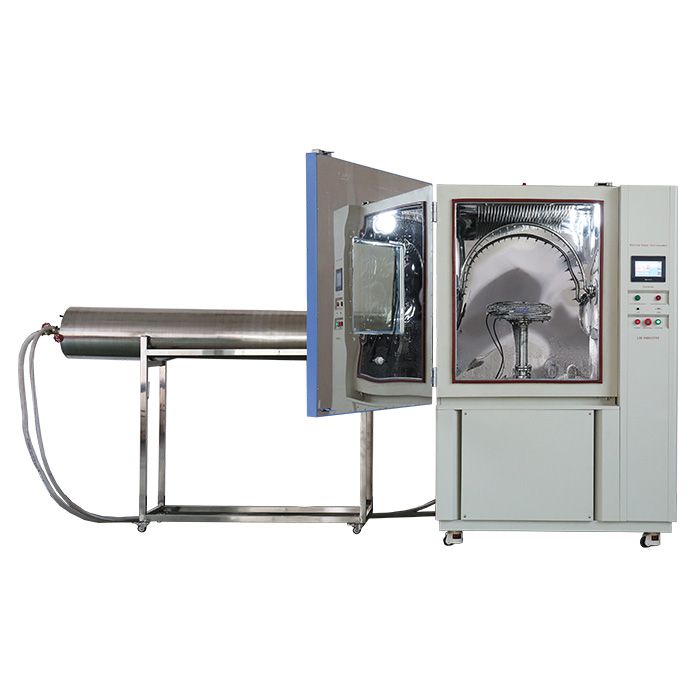
Combined Chamber(IPX1 X2 X3 X4 X5 X6) Multi-level IP testing, Space-saving design | IPX7 IPX8 Water Immersion Test Equipment Deep water simulation,Long-duration immersion | IPX9K High Pressure Water Spray Test Chamber 88°C hot water jets, High-pressure spray testing | Whole Set of IP Test Equipment-No Housing Type Easy sample loading, flexable |
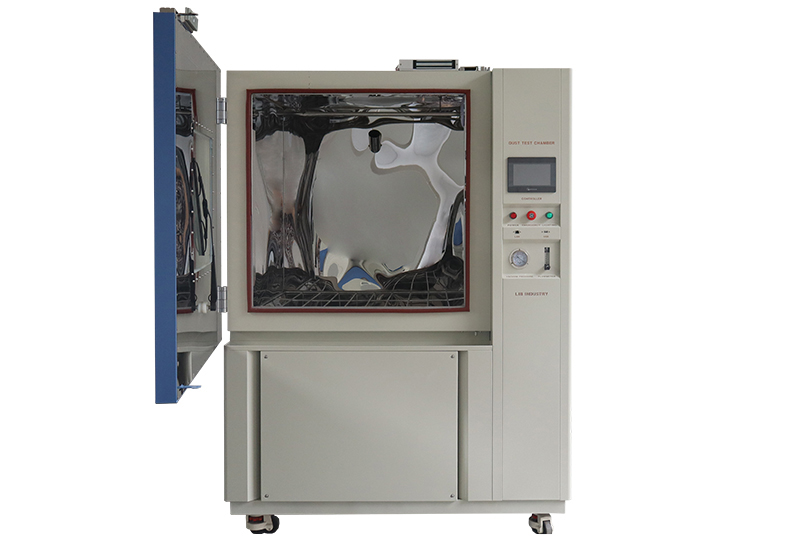 | 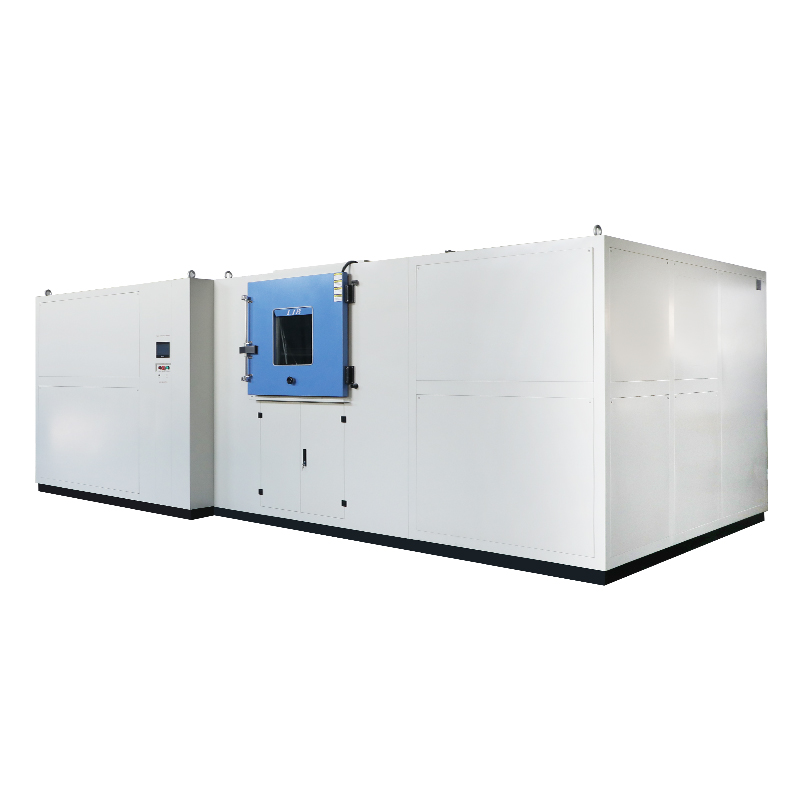 | 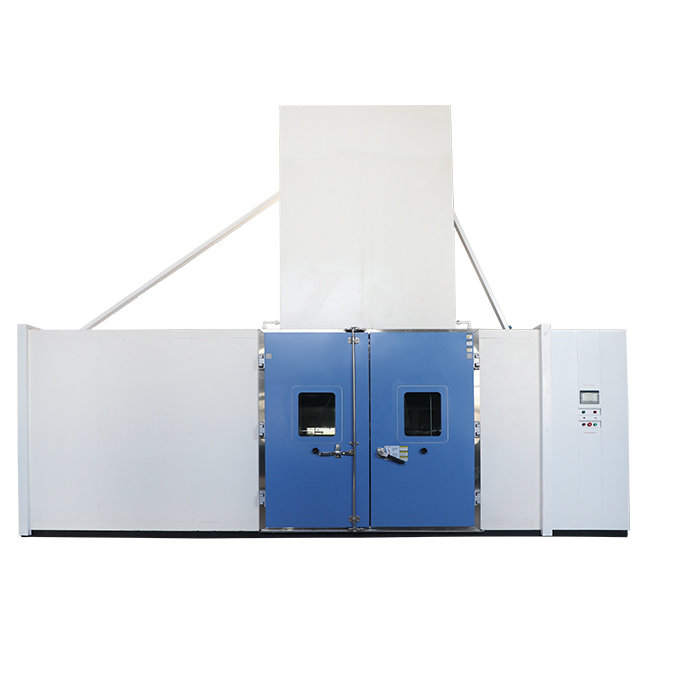 | |
IP5X/6X Sand and Dust Test Chamber Controlled dust circulation, IEC 60529 compliance | MIL-STD-810 Sand and Dust Test Chamber Harsh dust simulation, Defense and aerospace testing | Harsh water simulation, Defense and aerospace testing | |
Modern compliance relies entirely on data. When sourcing Dust Test Chambers, you must deeply assess the Programmable Logic Controller (PLC) and Human-Machine Interface (HMI). Look for automated, non-manipulatable data logging features. Auditors expect to see raw, unaltered logs proving you maintained exact parameters throughout the test cycle.
The best systems offer remote monitoring capabilities. Engineers can track pressure drops or temperature shifts from their desks. The interface must provide easy data export via USB or network connections. This simplifies compliance reporting and accelerates the certification process.
Working with fine particulates poses notable health and safety hazards. You must evaluate the dust recovery systems and cleanout mechanisms. Poorly designed equipment requires operators to manually shovel toxic powders, exposing them to respiratory risks. High-quality systems feature automated extraction systems and lower collection bins for safe disposal.
Assess additional health and safety features carefully. Moving dust generates massive amounts of static electricity. This creates a severe explosion hazard. You must ensure the equipment features rigorous anti-static grounding. Look for sealed door interlocks that prevent accidental opening during active cycles. Finally, HEPA exhaust filtration remains mandatory to protect laboratory air quality.
A testing protocol holds no value if the internal sensors drift out of specification. You must scrutinize vendor requirements regarding calibration. The manufacturer must provide ISO 17025 traceable calibration certificates upon delivery.
This traceability applies to airflow sensors, digital pressure transducers, and internal temperature probes. Furthermore, evaluate how easily technicians can recalibrate these sensors annually. Hidden sensors or proprietary software locks often force you to hire expensive OEM technicians. Open-access calibration ports save significant time and resources.
Off-the-shelf dimensions rarely fit specialized products. You must assess the manufacturer's ability to customize chamber volume and payload capacity. However, simply enlarging a box creates new engineering problems.
If a vendor increases the interior volume, they must redesign the blower layout. Otherwise, they compromise airflow uniformity. A skilled vendor uses computational fluid dynamics to guarantee uniform particulate distribution around bulky items. Evaluate their engineering portfolio. Ensure they understand how custom shelving or heavy payloads alter internal fluid dynamics.
Many buyers underestimate the hidden installation demands of large environmental equipment. You must identify facility readiness early in the process. Standard laboratory environments rarely support heavy industrial machinery without modifications.
Examine your HVAC exhaust requirements immediately. High-velocity sand testing generates significant thermal loads and requires dedicated exhaust routing. Furthermore, verify your floor load capacities. Large stainless steel systems filled with sand weigh thousands of pounds. Finally, verify your facility's compressed air supply. IP6X testing and pneumatic cleaning systems demand high CFM ratings with completely dry, oil-free air.
Navigating the specification spectrum requires strict discipline. Buyers often fall into the "over-spec" trap. Buying a massive, MIL-STD capable system solely for basic consumer IP testing represents an unnecessary capital drain. You will pay for high-velocity blowers and heating arrays you never activate.
Conversely, the "under-spec" trap proves equally dangerous. Companies often attempt to retrofit a basic enclosure to meet harsh automotive ISO standards. They swap talcum for abrasive sand, which quickly destroys the weak internal fans. Align your purchase exactly with your realistic, documented requirements. Do not over-engineer, but never compromise on mandated performance thresholds.
To move from evaluation to procurement, follow a structured approach. Implement these specific actions to narrow down your options efficiently:
Audit internal testing volume and size constraints.
Map current and future (3-5 year) compliance requirements.
Request vendor-specific documentation on dust recovery rates and sensor tolerance specifications.
The required standard ultimately dictates the necessary architecture of your testing equipment. Successful procurement relies on aligning hardware capabilities directly with IEC, ISO, or MIL-STD mandates. You cannot force an incompatible machine to produce valid compliance data. From vacuum integration for IP6X to specialized agitation for military testing, every component must match your regulatory goals.
We strongly recommend prioritizing verifiable data-logging capabilities and safe maintenance protocols. Focus on precise environmental control and sensor accuracy over basic aesthetic or superficial features. Reliable data forms the foundation of all engineering defense during compliance audits. Your equipment must protect your operators while executing flawless, repeatable test profiles.
Take proactive steps today. Encourage your buying committees to consult directly with environmental testing application engineers. Bring your specific test standard requirements and payload dimensions to the very first vendor conversation. This ensures you procure an accurate, capable, and enduring testing solution for your laboratory.
A: While some high-end, highly customized chambers can alternate environmental parameters, combining all standards remains difficult. The physical differences in test mediums—such as fine talc versus highly abrasive quartz sand—require vastly different internal materials. Furthermore, the required air velocities for military blowing sand differ significantly from commercial settling dust. Dedicated, standard-specific chambers usually prove more practical, reliable, and cost-effective.
A: Settling dust chambers suspend particles using gentle circulation. Gravity causes the powder to slowly settle over the test specimen. This simulates general industrial or indoor environments. Blowing dust chambers use powerful fans to force particulates at high speeds directly onto the product. This simulates harsh outdoor weather and aggressive wind, requiring complex motor and baffle designs.
A: Replacement frequency depends entirely on the specific standard and internal conditions. For example, IEC standards generally limit talcum powder usage to 20 tests. You must replace the powder if it suffers from moisture contamination, clumping, or particulate degradation. Routine visual inspections and strict humidity controls extend the useful life of the testing medium.
A: No. Negative pressure via an integrated vacuum system is specifically mandated only for IP6X testing. The IP6X "dust-tight" designation requires pulling air through the device to find micro-leaks. However, IP5X "dust-protected" testing for Category 2 enclosures relies purely on ambient particulate exposure. It does not strictly require active vacuum extraction.
Contact LIB Industry today for expert guidance on selecting a Dust Test Chamber that meets your compliance standards, testing objectives, and long-term reliability requirements.