


In aerospace applications, reliability is essential. Components must endure harsh conditions such as vacuum, extreme temperatures, and vibration during missions. Environmental testing helps verify product performance, ensure qualification, and evaluate long-term durability. With aerospace systems becoming more precise, compact, and long-lasting, advanced environmental simulation testing is increasingly important.
Recently, a customer using the LIB environmental test chamber (as shown in the image) shared positive feedback after conducting reliability validation tests. They praised the equipment's stable temperature control, uniform airflow system, and precise programmable controller, which ensured consistent performance throughout long-duration testing. The stainless-steel interior, adjustable shelves, and user-friendly interface made operation efficient and reliable. This successful application once again demonstrates how LIB environmental test chambers provide dependable support for high-standard aerospace testing environments.
Environmental Test in the Aerospace Field
The performance and service life of aerospace products are closely linked to the reliability of every stage throughout design, manufacturing, validation, and testing. Among these factors, the dependability of electronic components is particularly critical, as they form the foundation of the entire aerospace system. Since aerospace equipment is typically difficult or impossible to repair once deployed, even the malfunction of a single small component can lead to mission failure or the loss of the entire system. Decades of aerospace development and operational experience have repeatedly demonstrated the importance of component reliability.
Today, the aerospace industry is entering a new era of rapid advancement. Following major achievements in manned spaceflight and space exploration programs, a new generation of aerospace systems is being developed and manufactured. These advanced products demand higher standards for electronic components, not only in terms of performance and diversity, but also in reliability, durability, miniaturization, and energy efficiency. As aerospace technologies continue to evolve, electronic components are expected to deliver longer operational life, lower power consumption, and greater stability under increasingly demanding conditions.
Reliability test in the aerospace field should theoretically include:
1.altitude
2.thermal shock
3.vibration
The basic principle is to simulate the environmental variables encountered by aerospace vehicles in flight or space operation on Earth or related variable factors generated in actual operation for reference definition, the method mainly uses the set value for relevant verification.
Altitude Test
LIB Altitude Chambers are designed to reproduce high-altitude environmental conditions by combining precise temperature control with adjustable pressure simulation. These chambers enable manufacturers to evaluate product performance and reliability under conditions that closely resemble real operating environments encountered during air transportation, aviation, and space-related applications.
Altitude testing is particularly essential for aerospace and defense industries, where equipment must operate reliably under extreme low-pressure and vacuum conditions. To meet complex testing requirements, LIB chambers can integrate multiple environmental factors such as temperature, humidity, altitude, and vibration into a single combined test environment, providing comprehensive simulation for advanced reliability verification.
To accommodate different testing demands, LIB offers customizable chamber configurations with both reach-in and walk-in designs. Chamber dimensions can be tailored according to the size and capacity requirements of the customer, making the system suitable for testing everything from small electronic components to large aerospace assemblies.
| Product model | A-1000 |
|
| Internal dimensions | D 1500 W 1000 H 970 mm | |
| External dimensions | D 2050 W 1300 H 2200 mm | |
| Temperature range | —40℃ to +150℃ | |
| Humidity range | 20% ~ 95% (more than 50Kpa can be controlled) | |
| Temperature fluctuation | ≤ ±0.5℃ | |
| Temperature deviation | ≤ ±2.0℃ | |
| Temperature uniformity | ≤ 2.0℃ (under normal pressure and no load) | |
| Heating rate | 3℃/min | |
| Cooling speed | 2℃/min | |
| Pressure range | Atmospheric pressure to 0.5kPa | |
| Pressure deviation | ± 2Kpa | |
| Depressurization time | Atmospheric pressure to 0.5k ≤30min | |
| Pressure enclosure | Manganese steel, surface spray treatment | |
| Other outer wall materials | Double-sided galvanized steel plate, surface spray treatment | |
| Inner wall material | SUS304 stainless steel plate | |
| Vacuum system | Vacuum pump, air pumping regulating valve, inflation regulating valve |

|
| 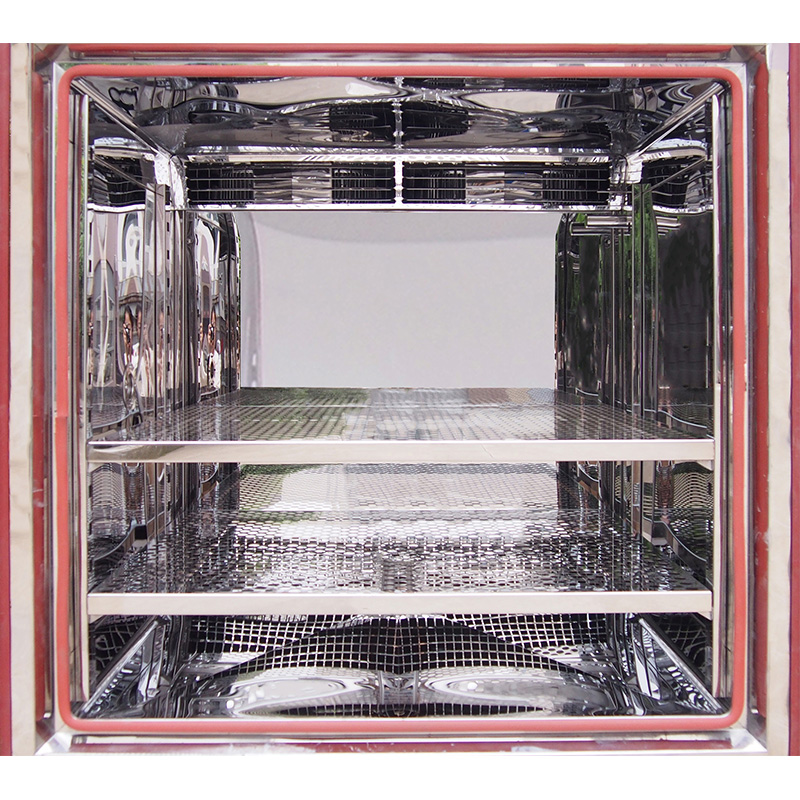 | 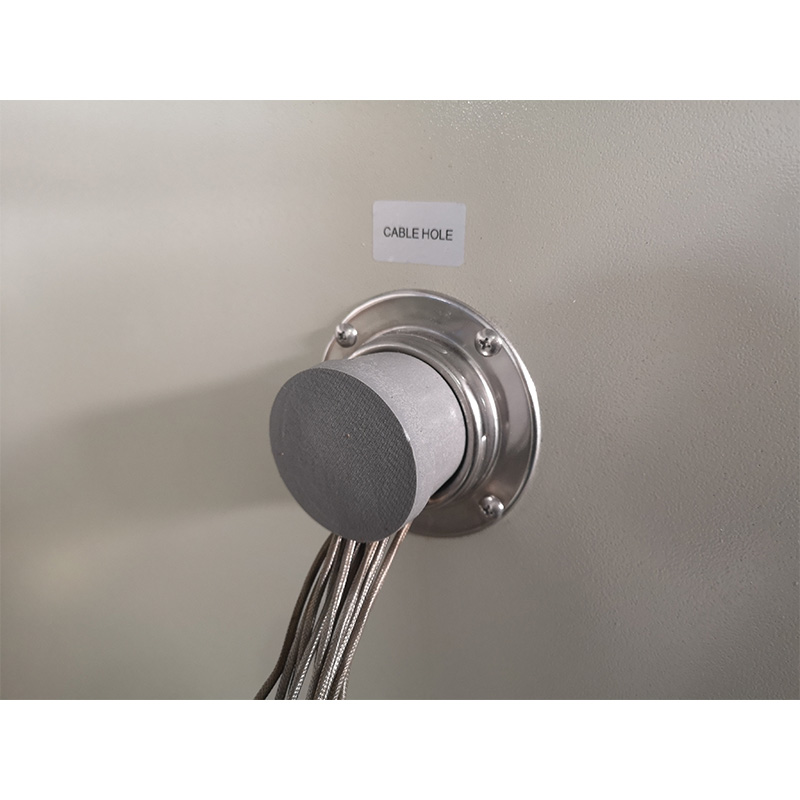 |
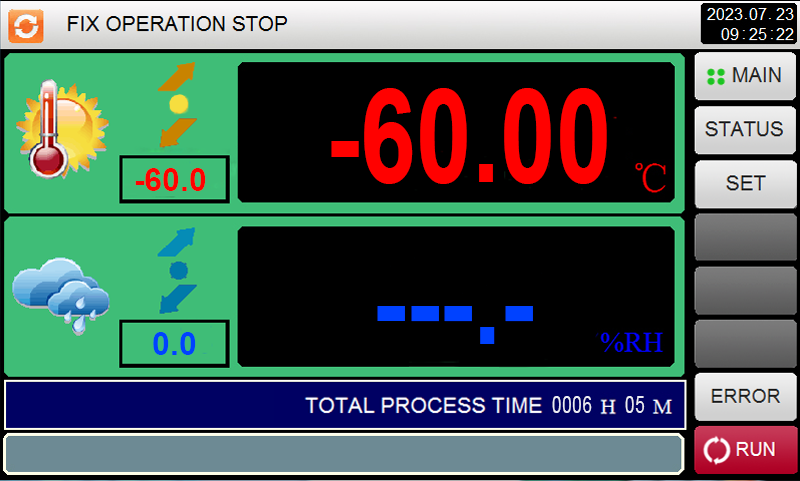
Touch screen controller | The compressor | Robust Anti-Corrosion Workroom | Integrated Power Access hole |

Under natural atmospheric conditions, air pressure decreases progressively as altitude increases. For example, at an elevation of around 5,000 meters, atmospheric pressure is approximately 50% of the standard sea-level pressure. At 16,000 meters, it falls to nearly one-tenth, while at about 31,000 meters, the pressure is reduced to roughly one-hundredth of sea-level conditions. These extreme low-pressure environments can significantly affect the performance and structural integrity of aerospace products and electronic systems. Therefore, altitude test chambers are used to create controlled low-pressure conditions for evaluating product reliability and safety in aerospace applications.
Test Method
During testing, the specimen is placed inside the chamber, where the internal pressure is gradually reduced to the level required by the applicable testing standard. The chamber maintains the specified pressure condition for a defined period to evaluate the product’s behavior and operational stability.
Altitude testing is mainly used to assess the ability of components, equipment, and complete systems to withstand low-pressure environments encountered during storage, transportation, and actual operation. It is particularly suitable for products transported in aircraft cargo compartments, equipment operating in high-altitude regions, and aerospace products exposed to sudden cabin decompression or rapid pressure loss scenarios. The test helps determine how low-pressure conditions and rapid pressure changes may influence product performance, sealing capability, electrical operation, and overall reliability.
Thermal Shock Test
The temperature shock test is a process of assessing whether the appearance of the equipment and the electrical performance of the equipment will be affected or fail when it is subjected to the rapid changes in the surrounding atmospheric environment.
Name | Thermal Shock Tester |
|
Model | TS-500 | |
Inner dimensions of test room | 650*650*500mm | |
Volume of test room | 211L | |
Load of test room | 50kg | |
Upper limit preheat temperature | +220℃ | |
Heating time | Ambient temperature to ~ + 200℃, within in 30 minutes. | |
Lower limit pre-cool temperature | -75℃ | |
Cooling time | Ambient temperature to ~ -70℃, within in 30 minutes | |
High temperature exposure range | Ambient temperature +20 to +200°C | |
Low temperature exposure range | –65 to -5°C | |
Recovery time | Within 15 minutes | |
Temperature fluctuation | ≤±0.5℃ | |
Temperature deviation | ≤±3 ℃ | |
Controller | Programmable color LCD touch screen controller | |
Cooling system | Mechanical compression refrigeration system | |
Exterior material | Steel Plate with protective coating | |
Observation window | Interior lighting , double-layer thermo stability silicone rubber sealing |


This test should be used when a sharp change in temperature may occur around the equipment. It is used to evaluate the impact of sudden temperature changes on the devices, structure and appearance of the equipment. Typical situations are as follows:
1)The conversion of equipment between high and low temperatures.
2)Quickly raise the equipment from the high temperature environment on the ground to the low temperature environment at high altitude.
3) Drop equipment from the protective casing of the aircraft that is hot at high altitude and low temperatures.
Several important factors in temperature shock test:
1.Exposure Conditions
The test temperature should be determined according to the geographical location and field data of the equipment in the actual application process, and the test temperature can also be determined according to its most extreme non-operating temperature requirements. The relevant standard specifies the high and low temperature test temperatures of 70 °C and -55 °C respectively.
High temperature: The high temperature that may occur in the working and storage geographic area where the equipment is actually used. The measured value is preferred, and if there is no measured value, the ground high temperature extreme value condition is selected.
Low temperature: The lowest temperature at which the aircraft is used during its air flight (affected by the environmental conditions surrounding the equipment, the flight conditions and the performance of the on-board environmental control system). The measured value is preferred, if there is no measured value, the extreme low temperature at high altitude is selected.
2. High and Low Temperature Duration
The purpose of this test is to determine the effect of rapid temperature changes on the equipment, therefore, the duration of the specimen's exposure to extreme temperatures should be the actual working time of the equipment or the time when the temperature is stable. The duration specified in the relevant standards is generally 1h.
The determination of the duration of the test (times of shocks) should be determined according to the situation encountered during the actual application of the equipment. Therefore, it can be divided into the following impact tests
1) Unidirectional temperature shock based on constant extreme temperature, for equipment with little possibility of exposure to unidirectional temperature shock, at least one shock under each corresponding condition;
2) Single-cycle shock based on constant extreme temperature, equipment that may only be exposed to temperature shock environment once;
3) Multi-cycle shock based on constant extreme temperature, when more frequent exposure of the device is expected, there is little data available to confirm the specific number of shocks.
3. Conversion Time
The relevant standards require that the conversion time is as short as possible, and there is no reasonable reason, and the conversion time is required to be no more than 1min to achieve the maximum temperature shock effect. Sometimes due to the size of the specimen and other reasons, it is necessary to use the transportation equipment to complete the transfer, the conversion time may exceed 1min, when the conversion time exceeds 1min, the reasonableness of the exceeded time should be explained.
4. Temperature Change Rate
The relevant standards stipulate that for the temperature shock test, the product is required to be quickly converted between high and low temperature boxes, and the conversion time is less than or equal to 5min.
LIB 2-zone hot cold thermal shock test chamber is available in small capacity and large capacity to meet different testing requirements. Test can be performed during thermal shock testing from -70 to +200°C. The specimen automatic transferred from cold chamber to hot chamber by basket. The basket slides vertically and smoothly through rails, to make the specimen is exposed to the two chambers.
Vibration Test
In the aerospace field, vibration testing is extremely important because equipment operating in space is difficult or impossible to repair once deployed. Satellites, spacecraft, and airborne systems must therefore be thoroughly validated on the ground before launch. Environmental testing programs often require multiple stresses to be applied simultaneously, making combined-condition testing a key part of aerospace product development.
Spacecraft vibration testing is a critical component of aerospace environmental engineering and is widely used to verify whether aerospace systems can survive the severe dynamic conditions experienced during launch. During rocket ascent, factors such as engine operation, POGO effects, engine ignition and shutdown, and stage separation generate intense vibration loads. These dynamic forces may lead to structural deformation, loosened connections, or even damage to onboard components and systems. Decades of aerospace testing experience have shown that ground-based vibration testing is essential for ensuring the environmental adaptability and operational reliability of spacecraft.
Vibration resistance is equally important for aircraft, drones, and flight-control systems. Modern aerospace equipment contains numerous sensitive sensors and electronic modules, including inertial measurement units (IMUs). Excessive vibration can interfere with signal accuracy and data transmission, potentially affecting navigation stability and flight control performance. In addition, vibration may loosen screws, connectors, or internal modules, threatening the structural integrity and safety of the entire system. Continuous vibration during transportation, takeoff, landing, or flight operations can also reduce image stability and operational precision in aerial applications. For these reasons, vibration durability has become a major consideration in aerospace and unmanned flight technology.
LIB THV Series vibration chambers integrate temperature, humidity, and vibration testing into one combined environmental simulation system. The system combines a temperature humidity chamber with an electrodynamic vibration shaker, enabling comprehensive reliability testing under multiple environmental stresses. LIB provides customized solutions for testing products ranging from small electronic components to large aerospace assemblies. Chamber dimensions, temperature and humidity ranges, as well as vibration table configurations, can all be tailored according to customer requirements. From system design and manufacturing to installation, commissioning, and operator training, LIB offers complete one-stop environmental testing solutions.
| Model | THV-1000 |
| |
| Internal Dimension (mm) | 1000*1000*1000 | ||
| Overall Dimension (mm) | 1800*4600*2600 | ||
| Interior Volume | 1000L | ||
| Parameter | Temperature Range | -50℃ ~ +150 ℃ | |
| Temperature Fluctuation | ± 0.5 ℃ | ||
| Temperature Deviation | ± 2.0 ℃ | ||
| Humidity Range | 30% ~ 98% RH | ||
| Humidity Deviation | ± 2.5% RH | ||
| Cooling Rate | 5 ℃ / min | ||
| Heating Rate | 5 ℃ / min | ||

Summary
Environmental testing is conducted to verify the functional reliability and durability of products throughout their intended service life, including conditions encountered during operation, transportation, and storage. The purpose of these tests is to expose products to controlled natural or simulated environmental conditions in order to evaluate how external factors influence product performance, stability, and lifespan.
By recreating environmental stresses such as high temperature, low temperature, humidity, and rapid temperature changes, environmental test chambers help manufacturers understand how products will behave in real-world applications. Accelerated environmental simulation allows potential weaknesses or failures to appear in a shorter period of time, supporting product validation during research, development, design, and production stages. This process is essential for confirming whether a product can achieve its expected quality, performance, and reliability targets before entering the market.
Environmental testing also helps engineers analyze the effects and mechanisms of environmental factors on materials, components, and complete systems, providing important data for reliability assessment and lifecycle prediction. LIB specializes in environmental simulation technology and provides advanced environmental test chambers along with customized testing solutions. With extensive industry experience, LIB is capable of supporting a wide variety of testing applications and helping customers solve complex environmental reliability challenges efficiently and professionally.
Need to perform environmental test for your product? Contact LIB Industry now.


