Views: 0 Author: Site Editor Publish Time: 2026-07-27 Origin: Site


Product failures caused by environmental stress cost manufacturers millions in recalls and lost consumer trust. You simply cannot afford to skip rigorous climatic testing in today's highly competitive market. Before releasing any new product, engineering and QA teams must prove it can survive extreme real-world climates, harsh transit conditions, and long-term storage. Without exposing prototypes to intense heat, freezing cold, and creeping moisture, hidden design weaknesses remain completely undiscovered.
Fortunately, a temperature and humidity chamber serves as a critical piece of reliability testing infrastructure to solve this exact problem. These specialized systems allow you to simulate precise climatic conditions and expose latent flaws early in the design cycle. By reading this comprehensive guide, you will understand how these chambers operate, which industry testing standards they support, and how to select the perfect environmental testing system for your laboratory.
Temperature and humidity chambers simulate extreme environmental conditions to test product reliability, accelerate aging, and identify failure points.
Core applications span electronics, aerospace, pharmaceuticals, and automotive industries, often dictated by stringent ASTM, IEC, or MIL-STD standards.
Chamber selection requires balancing required temperature/humidity ranges, interior volume (benchtop vs. reach-in), and the precision of the control sensors.
Investing in an environmental test chamber reduces time-to-market and mitigates the financial risks associated with post-launch product failures.
An enclosed, highly controlled space forms the absolute heart of environmental testing. Engineers use these systems to observe the specific effects of intense heat and moisture. They apply these atmospheric stress factors to raw materials, individual components, or fully assembled products. Real-world environments remain highly unpredictable. This unpredictability causes severe performance degradation over time.
When left unchecked, unpredictable environments wreak havoc on manufactured goods. Unprotected metals undergo rapid oxidation and corrosion. Engineering polymers suffer severe material degradation and embrittlement. Creeping moisture creates dangerous electrical shorts inside delicate printed circuit boards. Furthermore, moving parts experience physical mechanical binding under rapid thermal expansion.
A reliable environmental test chamber prevents these nasty surprises. It provides repeatable, verifiable, and carefully documented stress testing. You need this empirical data to validate product lifespan and prove overall durability to stakeholders. While industry professionals often use the terminology interchangeably, subtle technical differences exist. An environmental test chamber serves as a broader category. It might simulate vibration, high altitude, salt spray, or dust. Conversely, a temperature and humidity chamber specifically controls both thermal dynamics and precise moisture levels concurrently.
We see these simulation systems deployed across highly regulated industries worldwide. Each sector brings unique environmental challenges and strict compliance mandates.
Electronics & Semiconductors: Engineers test for long-term solder joint reliability and conformal coating integrity. They frequently run rigorous damp heat testing to check for destructive moisture ingress. Microchips must survive extreme thermal cycling profiles without suffering micro-cracks in their substrate.
Pharmaceuticals & Packaging: Medical laboratories conduct strict ICH stability testing routines. They determine exact drug shelf-life based on these empirical results. Furthermore, they validate packaging barrier properties to ensure medicines remain entirely safe during global transit.
Automotive & Aerospace: Vehicle components face brutal outdoor conditions. Testing teams simulate rapid freeze-thaw cycles and severe cabin humidity extremes. They also replicate intense under-hood thermal conditions to prevent catastrophic engine sensor failures.
Compliance & Authoritativeness: Organizations must meet specific regulatory frameworks before launching a product. These recognized standards include MIL-STD-810 for defense products, IEC 60068 for consumer electronics, and various ASTM testing protocols. These testing chambers provide the exact atmospheric control needed to pass external audits.
Best Practice: When mapping your product application to a specific chamber, secure your required industry testing standards first. These authoritative documents explicitly dictate your necessary temperature ramp rates and precise humidity tolerances.
Let us explore the internal mechanics of advanced climate simulation. Creating rapid, stable atmospheric changes requires highly sophisticated engineering.
1. Temperature Control: The system utilizes robust mechanical refrigeration. For ultra-low temperature requirements, manufacturers install cascading compressors utilizing specialized refrigerants. High-wattage electric heating elements balance the cooling side. Together, they rapidly cycle internal temperatures up and down to match your programmed profile.
2. Humidity Generation: The equipment must inject moisture into the air accurately. It accomplishes this via vapor generators, ultrasonic atomizers, or heated water baths. The resulting steam mixes perfectly with the internal air stream to raise the relative humidity.
3. Dehumidification: Removing moisture proves just as critical as adding it. Internal cooling coils create a targeted dew point to condense water directly out of the air. For ultra-low humidity testing profiles, engineers employ desiccant air dryers to strip lingering moisture from the environment.
4. Precision Measurement: Advanced electronic sensors monitor everything continuously. Highly sensitive capacitive sensors and chilled mirror hygrometers feed live data back to PID (Proportional-Integral-Derivative) controllers. These smart controllers maintain spatial uniformity. They also utilize advanced algorithms to prevent unwanted condensation from forming directly on your test subject.
Common Mistake: The accuracy of your test relies entirely on sensor health. Standard capacitive humidity sensors drift over time. You must schedule routine calibration protocols to maintain test integrity and avoid generating false pass/fail data.
Advanced temperature and humidity chambers utilize cascading refrigeration and vapor injection to precisely simulate harsh environments.
You might wonder if you truly need both capabilities for your laboratory testing. Understanding the distinct differences helps optimize your testing workflow.
Temperature-only chambers work perfectly for basic thermal shock testing. They handle aggressive thermal cycling exceptionally well. You should use them when testing materials completely unaffected by ambient moisture. Excellent examples include certain bare metal components or simple mechanical brackets. Because they lack a water system, they feature reduced mechanical complexity and require fewer routine maintenance interventions.
Combined temperature and humidity chambers prove absolutely essential for assessing complex environmental failure modes. You need them to accurately test for galvanic corrosion, polymer swelling, and adhesive degradation. They remain completely mandatory for modern electronics reliability testing, where moisture causes immediate catastrophic shorts.
Follow a clear decision logic. Do not over-specify your laboratory equipment. If your failure modes remain strictly thermally driven, a temperature-only unit streamlines your operational workflow. If moisture ingress presents any legitimate risk factor to your product, a combined chamber becomes completely mandatory.
Tip: If your current project only requires heat, consider your future engineering needs. You can often purchase a temperature-only chamber pre-configured internally for a future humidity system retrofit.
| Feature Focus |
|
|
|---|---|---|
| Primary Use Cases | Thermal shock, basic aging, metal fatigue | Corrosion testing, PCB reliability, packaging validation |
| System Complexity | Streamlined (compressors and heaters only) | Complex (adds vapor generators and dehumidification coils) |
| Maintenance Needs | Minimal (standard refrigeration checks) | Moderate (water quality checks, sensor calibration) |
| Infrastructure Required | Standard electrical power | Electrical power plus purified water supply/drainage |
Proper physical sizing determines your long-term testing success. Selecting the wrong interior volume directly compromises temperature uniformity and restricts airflow.
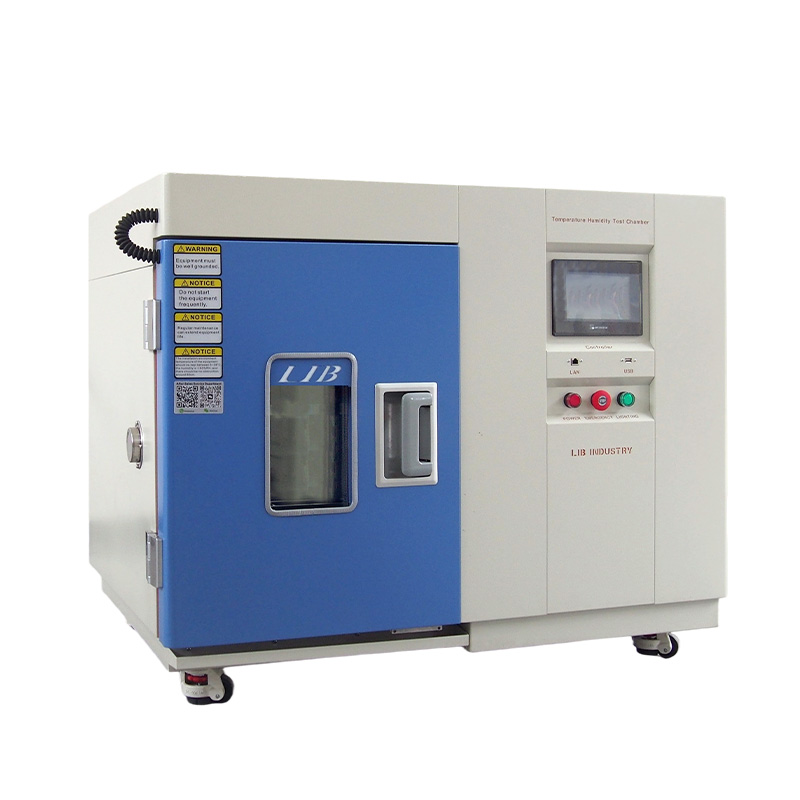
Benchtop Chambers: These compact units feature a very small physical footprint. They typically offer 1 to 4 cubic feet of interior testing space. Fast-paced R&D labs favor them heavily. They work beautifully for testing small individual components, such as naked PCBs or delicate optical sensors. They fit easily into busy laboratories hampered by limited floor space.
Reach-In Chambers: These represent the undisputed industry standard for continuous QA/QC batch testing. They generally range from 8 to 30+ cubic feet. They give you much broader temperature ranges and significantly faster thermal change rates. You can comfortably accommodate larger batches of finished products simultaneously.
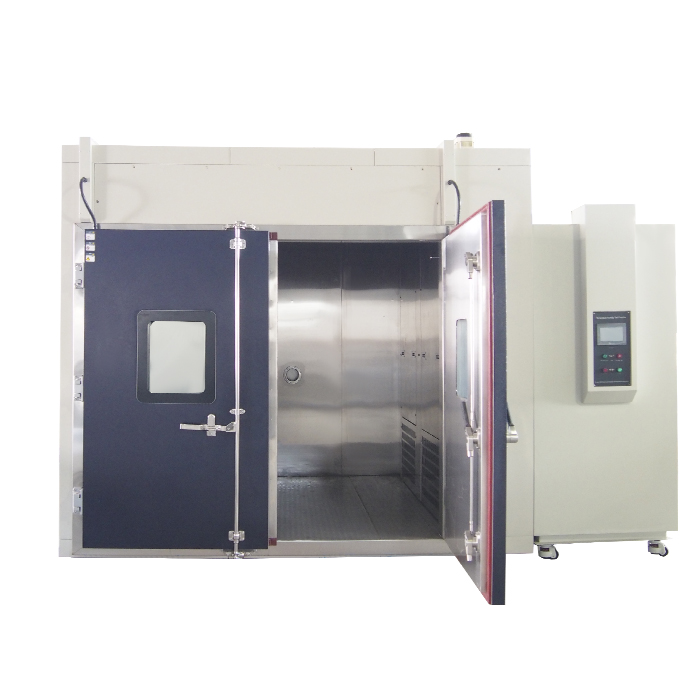
Walk-In / Drive-In Chambers: Manufacturers custom-build these massive structural rooms. They design them specifically for large-scale industrial assemblies. You will routinely see full automobiles, massive solar panels, or heavy satellite components tested inside these rooms.
Crucial Sizing Rule: Do not size a chamber based solely on your product's exterior dimensions. You must ensure at least 30% of the internal volume remains completely empty around the test subject. This empty buffer space allows proper forced airflow. Without it, you cannot maintain strict temperature uniformity across the product surface.
| Chamber Type | Estimated Internal Volume | Ideal Product Types |
|---|---|---|
| Benchtop | 1 to 4 cu. ft. | Microchips, small PCB assemblies, individual sensors |
| Reach-In | 8 to 32 cu. ft. | Laptops, medical devices, automotive sub-assemblies |
| Walk-In | 300+ cu. ft. | Server racks, defense equipment, whole vehicles |
| LIB Popular Temperature Humidity Chambers | |||
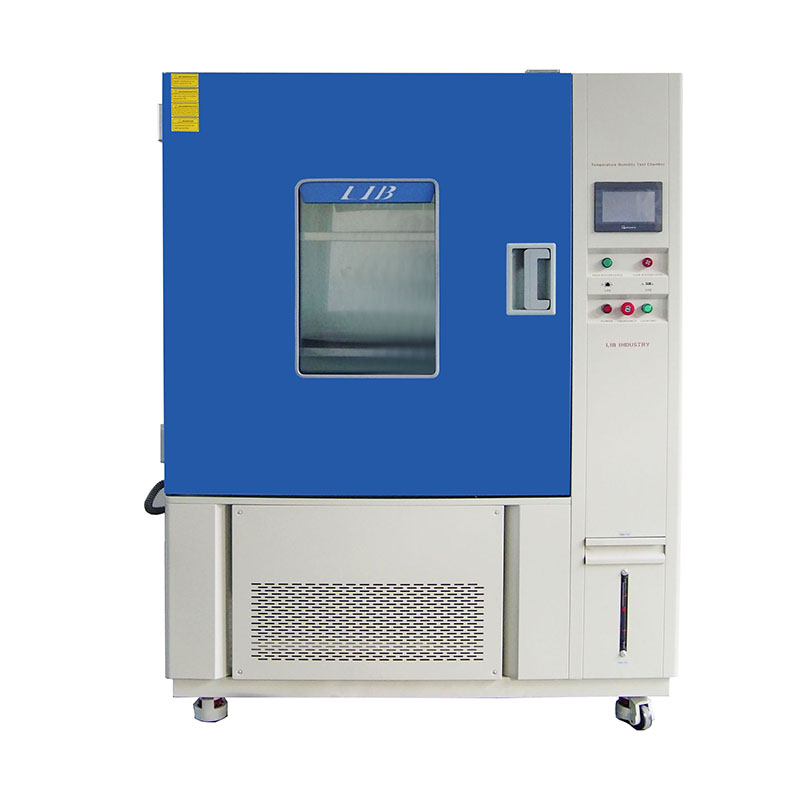
Standing temperature humidity chamber Precise climate simulation, Reliable long-term stability testing |
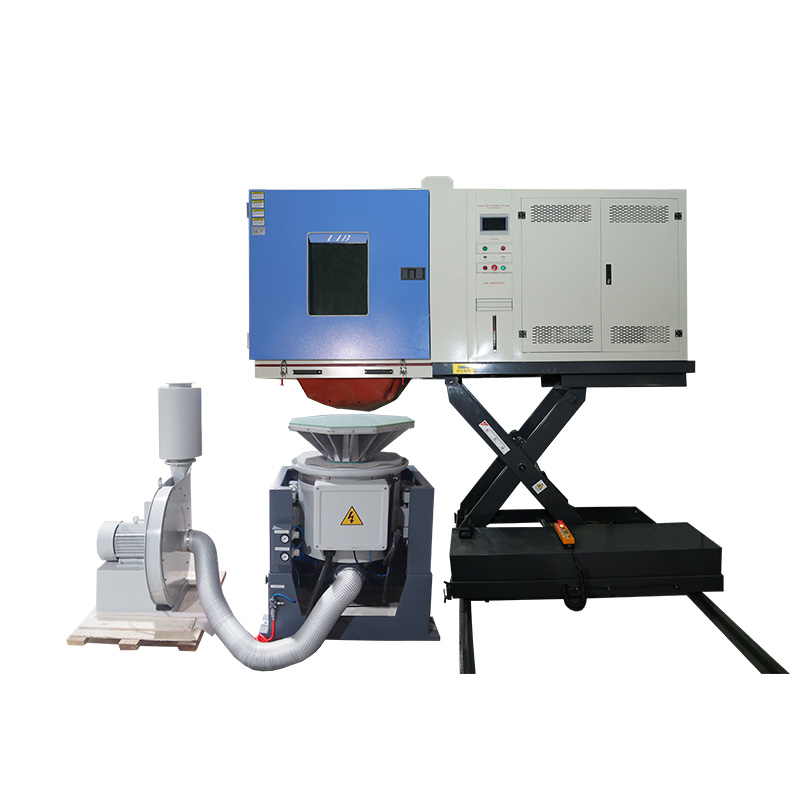
Combined Climate and Vibration Chamber Simulate temperature, humidity, and vibration stresses in one test |
Small temperature humidity chamber Compact footprint design, High-accuracy environmental control |
Walk-In temperature humidity chamber Large-capacity testing space, Ideal for oversized products |
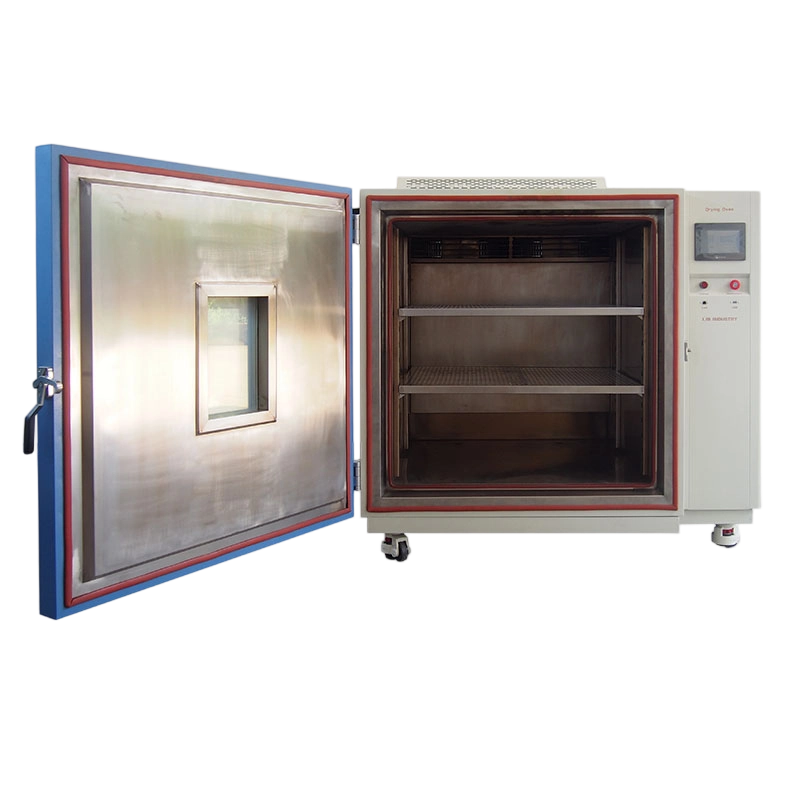
Industrial High-Temperature Vacuum Drying Oven Uniform heat distribution, Efficient material drying |
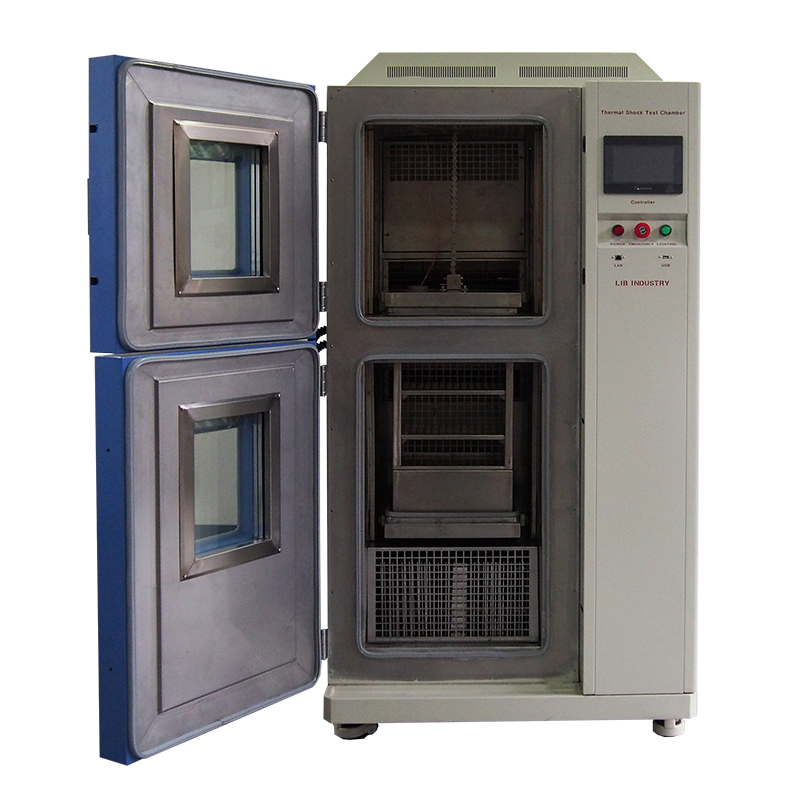
Extreme thermal stress simulation, Fast failure detection capability |
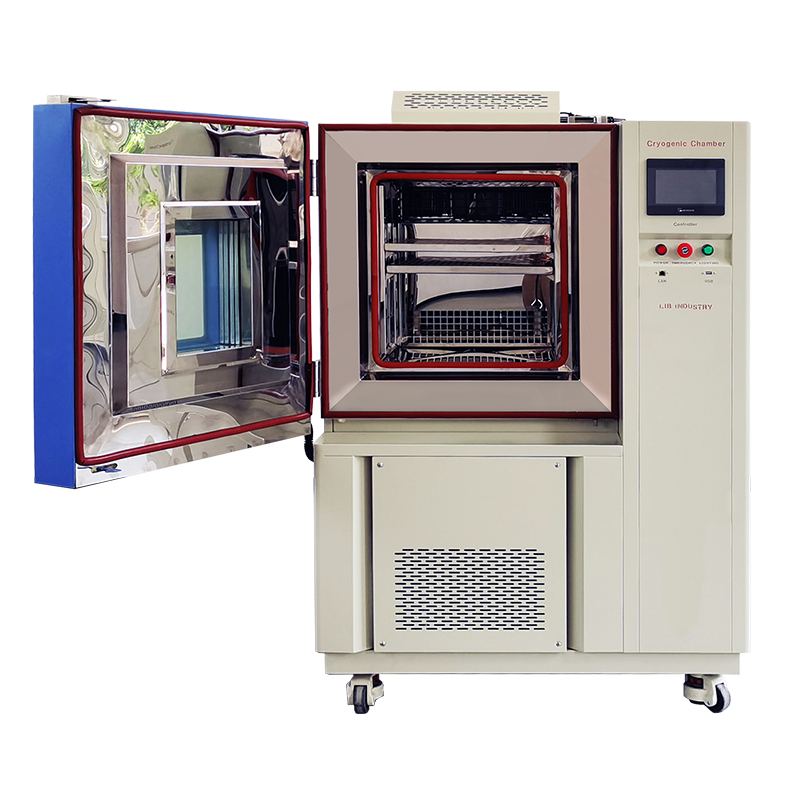
Ultra-low temperature performance, Reliable cold resistance evaluation |
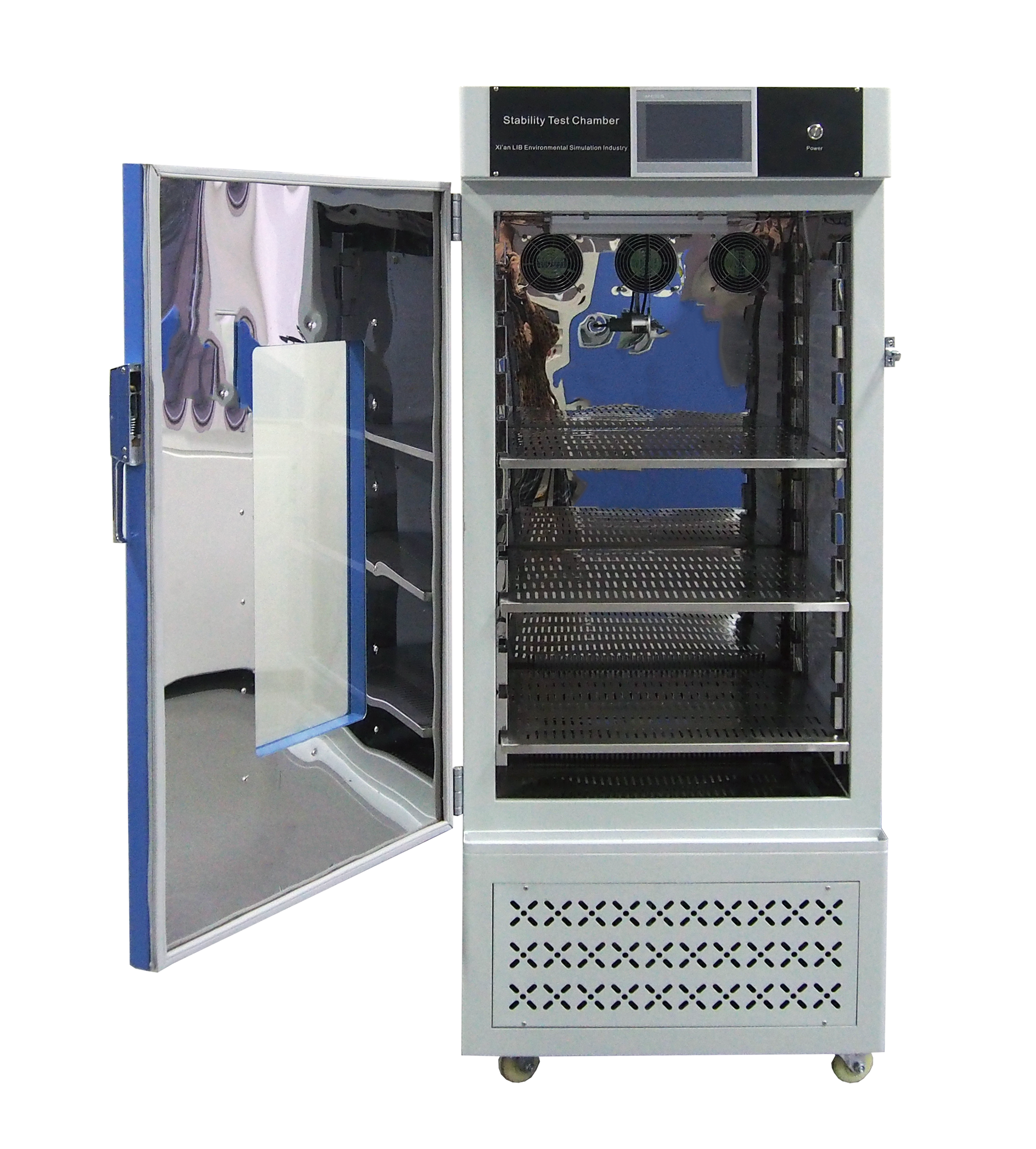
ICH-compliant stability testing, Precise temperature and humidity control |
Evaluate testing equipment based on hard engineering metrics rather than broad marketing claims. You must verify several operational parameters before integrating a unit into your facility.
Performance Specifications: Verify the required temperature and humidity ranges immediately. Pay close attention to the machine's "dew point limitation" map. This critical psychrometric chart shows exactly what atmospheric combinations the machine can actually achieve without stalling. Also, check the specific temperature change rate, measured in degrees Celsius per minute.
Live Load Capacity: You must evaluate how much actual heat your active test product generates while running. We refer to this thermal output as the live load. The chamber's mechanical cooling system must successfully offset this live load while simultaneously maintaining your target testing temperature. If the compressor lacks sufficient power, your test will fail to reach the programmed setpoint.
Data Logging & Connectivity: Modern testing compliance requires flawless documentation. Ensure the control software integrates smoothly with your lab's existing data acquisition networks. You need highly secure, tamper-proof reporting functionality to satisfy stringent regulatory auditors.
Facility Integration and Maintenance: Factor in the physical demands of the equipment on your building. Review your laboratory's electrical power drops and cooling water availability. Verify your structural floor loading capacity for much heavier models. Plan proactively for routine preventative maintenance and mandatory sensor calibration schedules.
Tip: Always ask the manufacturer for a psychrometric performance chart specific to their exact model. This engineering document proves definitively whether the system can achieve your required temperature and humidity combinations without error.
A high-quality temperature and humidity chamber functions as far more than basic laboratory testing equipment. It operates as a vital risk-mitigation asset. It thoroughly protects your brand reputation and prevents dangerous, highly public field failures.
Base your final procurement decision on three fundamental pillars. First, closely examine your strictest industry testing standard. Second, accurately measure the physical footprint and thermal live load of your products. Finally, evaluate the long-term operational viability of the equipment within your specific facility constraints.
Take proactive steps today. Consult directly with an environmental testing specialist. Review your exact thermal testing profiles together. Always run a comprehensive live-load calculation before finalizing any specific chamber size or compressor configuration.
A: Standard commercial ranges often span from -70°C to +180°C. Humidity control typically operates between 10% and 98% Relative Humidity (RH). However, achievable combinations depend heavily on the specific model's dew point limitations.
A: Standard temperature and humidity chambers do not. However, highly specialized hybrid chambers, such as AGREE chambers or altitude chambers, combine precise climatic control with mechanical vibration shakers or deep vacuum systems.
A: To prevent severe mineral buildup and delicate sensor damage, chambers require highly purified water. You must strictly supply demineralized, deionized (DI), or reverse osmosis (RO) water to the vapor generation system.
A: Most authoritative industry standards and ISO compliance frameworks dictate annual or bi-annual calibration. You must regularly verify the accuracy of the temperature and humidity sensors to ensure completely valid test results.
Whether you need a standard climate chamber or a customized environmental testing system, our engineering team can assist you in selecting the ideal solution based on your test profile, product characteristics, and performance requirements.
Contact LIB Industry today to discuss your temperature humidity testing needs and build a reliable testing solution for your product validation process.