Views: 0 Author: Site Editor Publish Time: 2026-05-15 Origin: Site


Product failures in the field carry massive financial consequences. Warranty claims skyrocket when hardware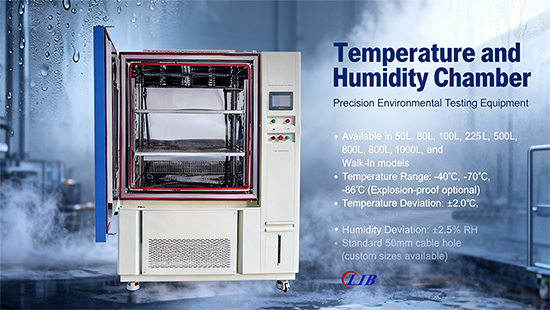 malfunctions. Brand damage lingers for years after a major recall. Compliance penalties threaten your market presence if you fail regulatory audits. You must expose latent design flaws long before mass production begins.
A Temperature Humidity Test Chamber solves this critical problem. It acts as a highly controlled environmental simulation unit. It artificially recreates extreme climatic conditions inside a secure workspace. Engineers use it to validate product
durability under severe physical stress.
A recent customer feedback from Norway on LIB's TH-100 Temperature Humidity Test Chamber highlighted stable and reliable operation in daily use. The customer wrote: “Hi Tina, everything is proceeding smoothly now. The machine is operative, but I have one question: I set a program for 100 cycles, but when the cycles were completed, the program did not stop automatically and I had to stop it manually. Am I missing something in the cycle/program setup?” This feedback reflects active real-world use and confirms the chamber’s stable performance in long-cycle testing environments.
Choosing the correct testing configuration remains critical for your engineering team. You need highly accurate hardware to execute HALT (Highly Accelerated Life Testing) and HASS (Highly Accelerated Stress Screening) protocols. In this guide, you will learn how these chambers operate. We will explore core internal mechanics, facility utility requirements, and strict sizing principles. You will discover exactly how to evaluate this equipment for long-term operational success.
1. Reliability equals ROI: Environmental testing reduces downstream warranty costs by exposing vulnerabilities like electrochemical migration and thermal fatigue early.
2. Validation is mandatory: Selecting a chamber isn't just about hardware; it requires strict adherence to industry validation protocols (IQ/OQ/PQ) and data integrity standards (e.g., FDA 21 CFR Part 11).
3. Sizing matters: Effective testing requires precise air circulation; factoring in the standard "1/6 airflow rule" is critical when determining interior volume.
4. Hidden costs dictate TCO: Facility requirements (power, high-purity water) and maintenance directly impact the Total Cost of Ownership beyond initial CapEx.
You cannot isolate environmental threats in the real world. Temperature and humidity test chamber act together. They synergize to exponentially accelerate material degradation. A product might survive extreme heat alone. It might survive high humidity alone. Combine them, and the product fails rapidly. We must simulate these combined stressors in a laboratory setting.
This combined testing exposes highly specific failure modes.
① Thermal Fatigue: Rapid temperature fluctuations cause continuous thermal expansion and contraction. Materials expand at different rates. This mechanical stress rips solder joints apart on printed circuit boards (PCBs).
② Electrochemical Migration: High humidity introduces moisture to electronic components. When you apply voltage across moist circuits, metal ions dissolve. They form dendritic growth across the board. This causes catastrophic electrical short circuits.
③ Material Embrittlement: Cold temperatures make plastics and rubbers brittle. Subsequent humidity exposure introduces micro-cracks into the weakened material structure.
You cannot sell products in major markets without proven reliability data. Global regulators demand rigorous testing evidence. A Constant Temperature Humidity Test Chamber ensures you meet these mandatory industry standards.
Different sectors rely on very specific testing frameworks. The defense and aerospace sectors require MIL-STD-810G compliance. This standard dictates how equipment withstands extreme global climates. Consumer electronics manufacturers depend on IEC 60068. It outlines testing procedures for electronic assemblies. The pharmaceutical industry strictly follows ICH Q1A and Q1B guidelines. These protocols govern the accelerated stability testing of new drug substances.
You must frame the chamber as a vital risk-mitigation asset. It protects your enterprise from liability. It is never just a laboratory expense. Proper environmental testing guarantees your market access remains uninterrupted.
Modern chambers utilize highly sophisticated thermal control mechanisms. Engineers primarily choose between two dominant cooling technologies. You must match the technology to your specific testing application.
Compressor-based refrigeration systems handle extreme performance demands. They excel at rapid thermal shock testing. LIB Constant Temperature Humidity Test Chamber utilize cascade refrigeration loops to push temperatures down to -70°C quickly. They thrive under heavy thermal loads. However, compressors consume significant electricity and generate ambient lab noise.
Thermoelectric or Peltier cooling provides a different approach. These systems use solid-state technology. They pass electrical current through semiconductor junctions to transfer heat. They are highly eco-friendly. They operate with almost zero noise. They do not handle rapid temperature ramps well. They remain ideal for long-term, stable ICH stability testing in the pharmaceutical sector.
Feature | Compressor-Based Systems | Thermoelectric (Peltier) Cooling |
|---|---|---|
Best Application | HALT, HASS, extreme thermal stress | Long-term ICH stability, steady-state |
Temperature Range | Extremely wide (-70°C to +150°C) | Narrower, typically near ambient |
Ramp Rate | Very fast (up to 15°C/minute) | Slow and gradual |
Noise Level | High (mechanical compressor noise) | Ultra-low (solid-state operation) |
Energy Efficiency | Lower during steady state | Extremely high during steady state |
Generating humidity is only half the challenge. You must control moisture levels with pinpoint accuracy. Laboratories generally use one of two humidity generation methods.
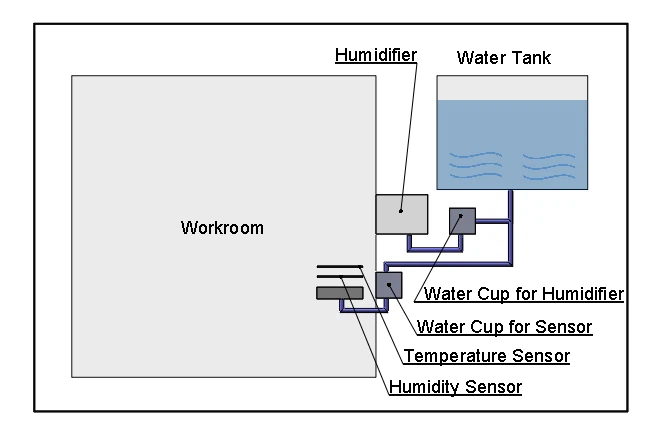
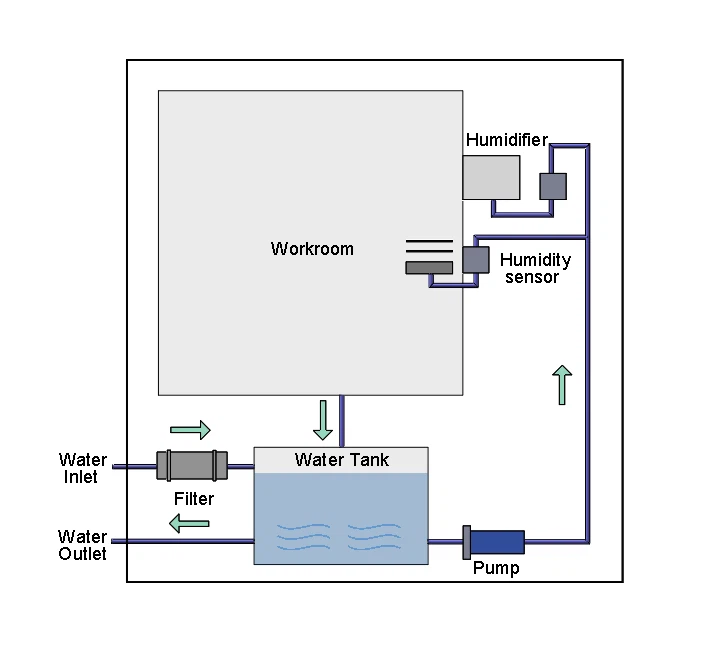
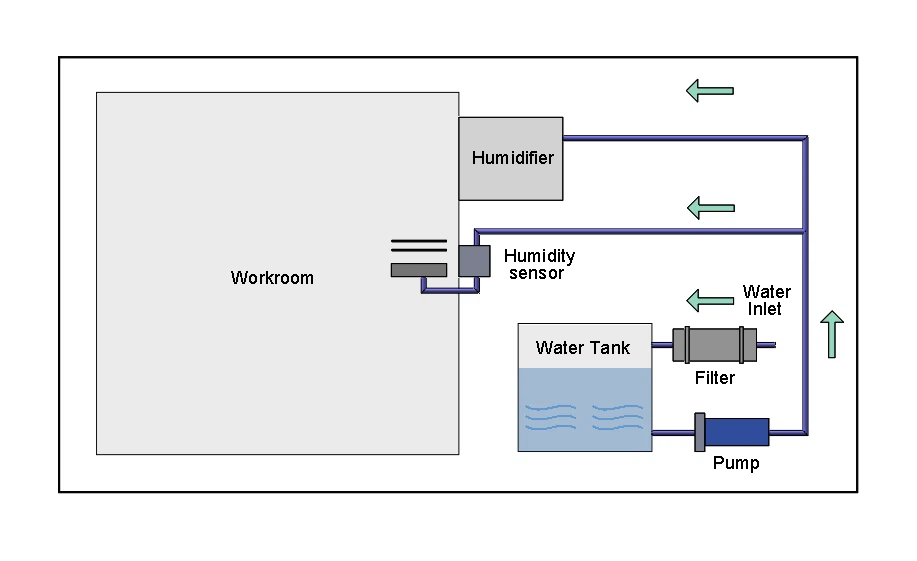
Steam generators boil water internally. They inject pure water vapor into the workspace. This method guarantees excellent saturation and rapid response times. Alternatively, atomizer and ultrasonic systems use high-pressure nozzles. They fracture water drops into a fine, cold mist. This method consumes less energy but requires rigorous water filtration to prevent nozzle blockages.
Advanced chambers utilize the "Two-Temperature Method." This technique relies on dry-bulb and wet-bulb psychrometrics. The system manipulates the physical dew point directly. It mixes controlled dry air with precise moisture vapor. This allows engineers to execute rapid climatic transitions. You maintain ultra-precise moisture levels. Most importantly, you avoid pooling excess condensation on your valuable test samples.
Sensors mean nothing if the internal air remains stagnant. Effective testing requires aggressive, perfectly balanced air circulation. You must prevent localized "dead zones" where air stops moving. Dead zones cause uneven temperature distribution.
Premium test units use double-sided airflow architectures. High-velocity fans push conditioned air through specialized plenums. Baffled airflow designs then force this air evenly across the entire workspace. This engineering ensures spatial and temporal uniformity. Spatial uniformity guarantees the top shelf matches the bottom shelf. Temporal uniformity ensures the temperature remains completely flat over time. Every single test sample receives identical environmental stress.
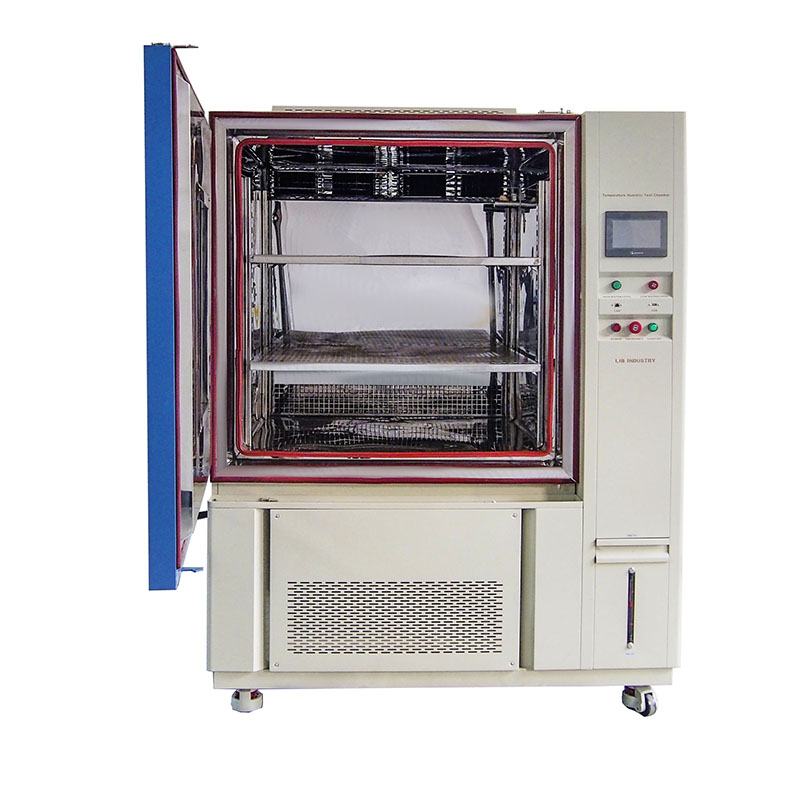 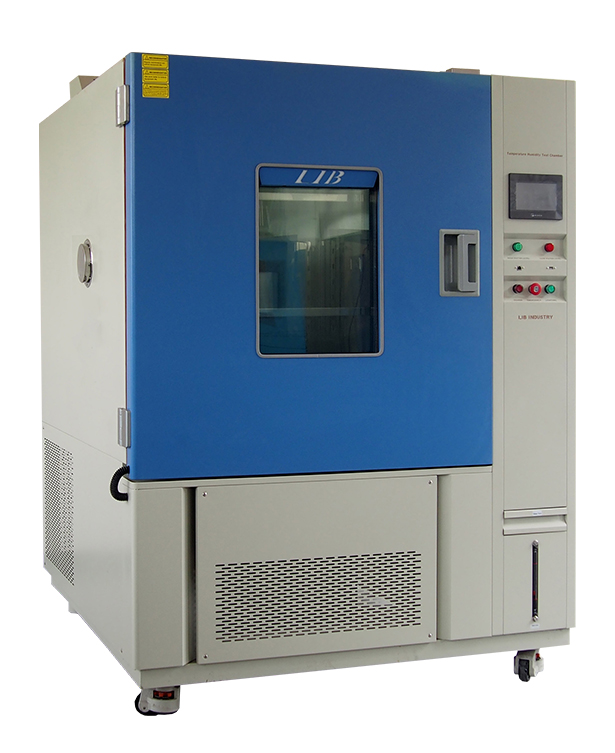 | |||||
Temperature range | -20℃ ~+150 ℃ | ||||
Low type | A: -40℃ B:-70℃ C -86℃ | ||||
Humidity Range | 20%-98%RH | ||||
Temperature deviation | ± 2.0 ℃ | ||||
Heating rate | 3 ℃ / min | ||||
Cooling rate | 1 ℃ / min | ||||
Controller | Programmable color LCD touch screen controller, Multi-language interface, Ethernet , USB | ||||
Refrigerant | R404A, R23 | ||||
Exterior material | Steel Plate with protective coating | ||||
Interior material | SUS304 stainless steel | ||||
Standard configuration | 1 Cable hole (Φ 50) with plug; 2 shelves | ||||
Timing Function | 0.1~999.9 (S,M,H) settable | ||||

Under-sizing a chamber ruins test data. Novice buyers often purchase equipment based solely on the physical dimensions of their product. This is a critical mistake. Test samples cannot touch the interior walls. They cannot block the internal air vents.
Best Practice: Always follow the "1/6 airflow rule." You must maintain at least one-sixth of the total workspace width, depth, and height as empty clearance around your samples.
If you cram products into a small space, you choke the blower fans. The air cannot circulate. The PID controller of LIB Constant Temperature Humidity Test Chamber will register the correct temperature at the sensor, but the product in the center remains insulated. You will record passing grades for products that never actually experienced the target stress.
You must evaluate your performance thresholds strictly against your realistic needs. Over-specifying equipment wastes capital. Under-specifying equipment invalidates your testing protocols.
Evaluate the necessary temperature ranges first. Standard industrial testing spans from -70°C to +150°C. Relative humidity bandwidths typically operate between 10% to 95% RH. Do not pay for extreme -70°C limits if your product only requires testing at -20°C.
Assess the required ramp rate carefully. The ramp rate measures the temperature change in degrees Celsius per minute (°C/min). A standard ramp rate is 2°C to 3°C per minute. HALT testing might demand 10°C to 15°C per minute. Higher ramp rates require significantly larger compressors. They demand massive heaters. They draw massive amounts of electrical power. Choose your ramp rate based purely on your published testing standard.
Your test is only as reliable as your data logs. Evaluate the accuracy of the main PID (Proportional-Integral-Derivative) controller. The controller continuously calculates the error between your desired setpoint and the actual internal environment. It automatically applies precise corrections to the heaters and compressors.
Ensure the included software meets tamper-proof logging standards. In pharmaceutical and medical device manufacturing, data integrity is legally binding. Regulators require strict adherence to FDA 21 CFR Part 11. The software must enforce user authentication. It must maintain an unalterable audit trail. It must track every parameter change, alarm condition, and user login chronologically.
Many facilities purchase large chambers only to realize their building cannot support them. You must address utility constraints during the initial procurement phase.
① Power Supply Constraints: Address the gap between standard laboratory outlets and industrial power requirements. Rapid-cycle chambers utilize massive heaters to achieve fast ramp rates. LIB Constant Temperature Humidity Test Chamber utilize dual-compressor cascade systems. They often require 480V, 3-phase high-voltage power. You must verify your facility's electrical panel capacity. Upgrading building power retroactively delays testing for months.
② Water Quality Demands: Highlight the strict requirement for high-purity water. You can never connect standard tap water to a humidity system. Tap water contains calcium, magnesium, and other dissolved solids. These minerals rapidly calcify heating elements. They destroy ultrasonic atomizers entirely.
③ Common Mistake: Using unregulated water sources. Systems strictly require demineralized or ultra-pure water. The water conductivity must stay between 1 and 20 µS/cm. Install a dedicated Reverse Osmosis (RO) or Deionized (DI) water filtration system directly upstream of the equipment.
You must factor preventative maintenance intervals into your operational workflow. Routine maintenance guarantees your testing remains legally defensible.
① Routine Calibration: PID sensors drift over time. You must calibrate temperature and humidity probes annually against NIST-traceable standards.
② Component Upkeep: Condenser fins gather dust. Blower motors require periodic inspection. Humidifier pans require manual cleaning to prevent biofilm buildup.
③ Refrigerant Management: Check system pressures bi-annually. Low refrigerant levels cause the compressor to work harder, leading to premature mechanical failure.
Sustainability and future-proofing represent massive operational factors. Environmental regulations evolve constantly. The EPA AIM Act strictly mandates the aggressive phasedown of older hydrofluorocarbon (HFC) refrigerants. Do not buy equipment utilizing obsolete chemicals. Prioritize systems utilizing low-GWP (Global Warming Potential) refrigerants. R-449A stands out as an excellent, compliant modern alternative. Designing around environmental compliance completely avoids forced equipment obsolescence.
Matching the physical configuration to your workflow optimizes laboratory floor space. Manufacturers categorize equipment into four primary tiers.
Benchtop models represent the smallest footprint available. They typically offer internal volumes ranging from 1.5 to 8 cubic feet.
① Best for: R&D departments, academic laboratories, and startup environments.
② Ideal Test Subjects: Small electronic components, individual PCBs, mobile phones, and pharmaceutical blister packs.
③ Advantage: They plug into standard 120V/240V outlets. They fit easily on standard laboratory tables. They solve severe spatial constraints.
Reach-in models act as the workhorse of the reliability industry. They range from 10 cubic feet up to 100 cubic feet.
① Best for: Standard production batch testing and continuous QA/QC screening.
② Ideal Test Subjects: Laptop computers, telecom server blades, automotive sub-assemblies, and large battery packs.
③ Advantage: They roll on heavy-duty casters. They offer wide temperature ranges and fast ramp rates. They accommodate heavy physical loads on reinforced internal shelving.
Walk-in chambers offer massive testing environments. Engineers build them using insulated modular panels.
① Best for: Heavy manufacturing, automotive OEMs, and aerospace integrators.
② Ideal Test Subjects: Fully assembled electric vehicles, large telecom racks, solar panels, and satellite components.
③ Advantage: Personnel can physically walk inside to inspect products during active testing. They handle massive heat loads generated by operating machinery.
AGREE stands for the Advisory Group on Reliability of Electronic Equipment. These chambers integrate directly with electro-dynamic shakers.
① Best for: Combined environmental and physical vibration testing.
② Ideal Test Subjects: Defense electronics, avionics, and missile guidance systems.
③ Advantage: They feature a removable floor. The chamber lowers perfectly over a vibration table. You simulate temperature, humidity, and intense physical shaking simultaneously.
 |  |  | |
|---|---|---|---|
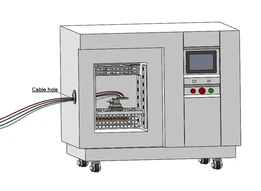 |  |  | |
| Name | Small temperature humidity chamber | Standing temperature humidity chamber | Walk-In temperature humidity chamber |
| Capacity | TH-50: 800x1050x950 mm TH-80: 900×1100×1000mm | Capacity: 100L; 225L; 500L; 800L; 1000L | >20m³ |
| Throughput | Ideal for small components, sensors, boards | Subassemblies or mid-volume batches | Bulk testing of items or vehicles as a whole |
| Energy Saving | Automatic Moisture Circulation in Humidity System
| Automatic Moisture Circulation in Humidity System
| Automatic Moisture Circulation in Humidity System
|
| Operational Cost | Lowest | Medium | Highest |
| Standards Coverage | Full IEC / ISO / ASTM compliance | ||
| Noise Level | ≤ 65 dBA | ||
Procuring reliable environmental testing equipment requires a highly structured decision framework. You must constantly balance your testing extremes against your facility realities. Do not demand 15°C/minute ramp rates if you lack 480V 3-phase power. Do not buy a massive walk-in unit if you only test microchips. Follow the 1/6 airflow rule rigidly when calculating your volume requirements.
Advise your procurement team to prioritize data integrity and ongoing validation support. Ensure the manufacturer provides comprehensive IQ/OQ/PQ protocols. Specify modern, energy-efficient refrigerants like R-449A to comply with impending environmental legislation. By prioritizing precision control over the baseline sticker price, you guarantee highly accurate testing. You empower your engineering team to catch critical design flaws early. Ultimately, you secure profound long-term reliability for your entire product pipeline.
A: Thermal shock chambers move products rapidly between two extreme temperature zones (hot/cold) in seconds using an automated elevator basket. This rapid transfer induces sudden, severe physical stress. Humidity chambers typically utilize a single static zone. They simulate gradual climatic changes and maintain steady-state stability over long periods.
A: Installation Qualification (IQ), Operational Qualification (OQ), and Performance Qualification (PQ) represent systematic validation steps. They are legally required in pharma and medical sectors. They document that the chamber is installed correctly, operates to precise specifications when empty, and maintains strict control limits under a full physical test load.
A: No. Standard tap water contains heavy minerals. These minerals will rapidly calcify internal heating elements and permanently block atomizer nozzles. Industrial humidity systems strictly require filtered, deionized (DI), or reverse-osmosis (RO) water. Operators must maintain specific micro-Siemen (µS) conductivity limits, usually between 1 and 20 µS/cm.
A: With rigid adherence to maintenance schedules, regular controller calibration, and proper water quality management, high-grade industrial chambers routinely operate effectively for 10 to 15 years. Replacing wearable components like door seals and maintaining clean condenser fins significantly extends the mechanical lifespan of the compressor systems.
Contact LIB Industry today to get technical support, program setup guidance, and tailored Temperature Humidity Test Chamber solutions to improve your testing efficiency and reliability validation.