Views: 0 Author: Site Editor Publish Time: 2024-11-08 Origin: Site


Today's products routinely face abrupt shifts in temperature—during manufacturing, in transit, and throughout everyday use. Verifying reliability under these conditions is essential, which is why thermal cycling test chambers exist: they simulate repeated swings between hot and cold extremes in a controlled setting. This allows engineers to assess how well materials withstand thermal stress and to identify weaknesses that could lead to failure before a product ever reaches the market.
LIB Industry's temperature cycling chambers offer stable, precise, and repeatable performance for thermal testing. With reliable control systems and flexible design options, they support manufacturers in improving product quality and optimizing material performance across aerospace, automotive, electronics, and defense industries.
Temperature cycling chambers are designed to reproduce rapid and repeated shifts between high and low temperatures in a
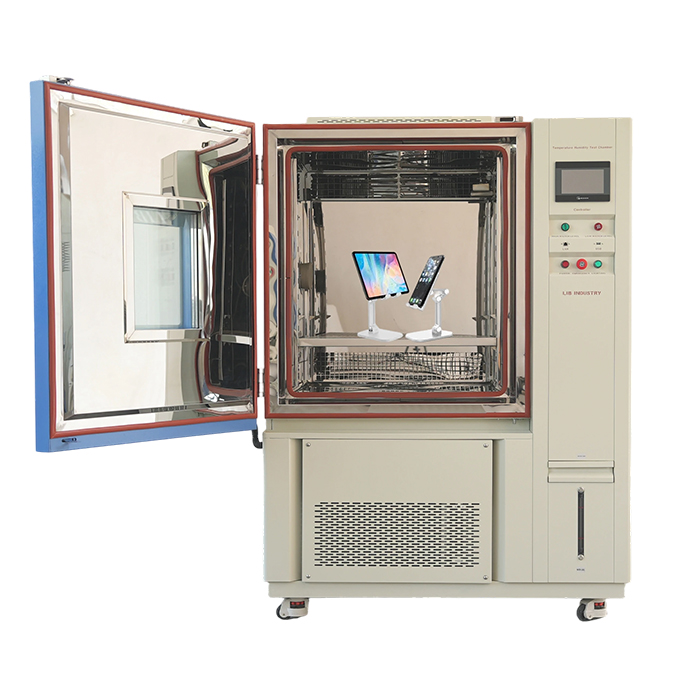
controlled environment. By continuously switching between heating and cooling conditions, they simulate the thermal stresses that products face in real applications such as aerospace systems, automotive components, and electronic devices.
When a material is exposed to changing temperatures, its physical structure responds in two opposite ways:
1. Thermal Expansion
Under high temperatures, atoms within the material gain energy and vibrate more intensely. This increased movement causes the material to expand. If the expansion is restricted or uneven, internal stress may develop, potentially leading to deformation or micro-cracks.
2. Thermal Contraction
When temperatures drop, atomic motion slows down, and the material contracts. This shrinkage can also introduce stress, especially in layered or composite structures where different materials contract at different rates.
Inside a temperature cycling chamber, the testing process typically follows a repeated sequence:
1. Heating Stage
The chamber quickly raises the temperature to a preset high level. The test sample expands under thermal energy, and tensile stress may form within the structure.
2. Cooling Stage
The system then rapidly transitions to a low-temperature condition. The sample contracts, generating compressive stress and potentially revealing weak points in the material.
3. Repeated Cycling
This heating and cooling sequence is continuously repeated for multiple cycles. Over time, the material is exposed to accumulated thermal fatigue, which helps identify long-term reliability issues that would not appear in single-condition testing.
Repeated thermal expansion and contraction can gradually weaken materials, leading to cracking, delamination, or performance degradation. Temperature cycling chambers help engineers detect these failure risks early by accelerating environmental stress in a controlled way.
By analyzing how products respond to repeated thermal shocks, manufacturers can improve material selection, structural design, and overall product durability before real-world deployment.
| ||
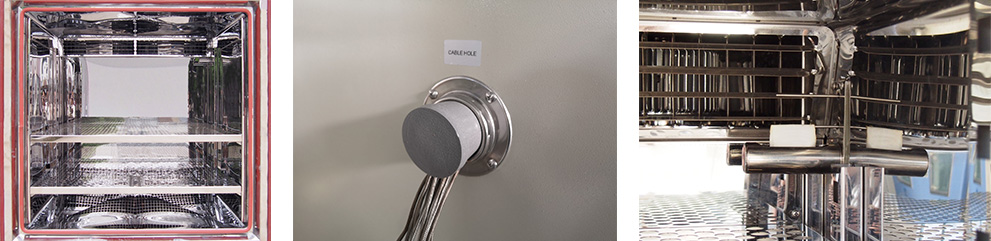
| Robust Workroom | Cable Hole for sample power | Temperature and Humidity Sensor |
Temperature cycling chambers can be used to simulate a wide range of extreme environmental conditions, beyond simple temperature fluctuations. This includes:
1. Thermal Shock: Rapid temperature changes can induce thermal shock in materials, leading to cracking, delamination, or other forms of failure.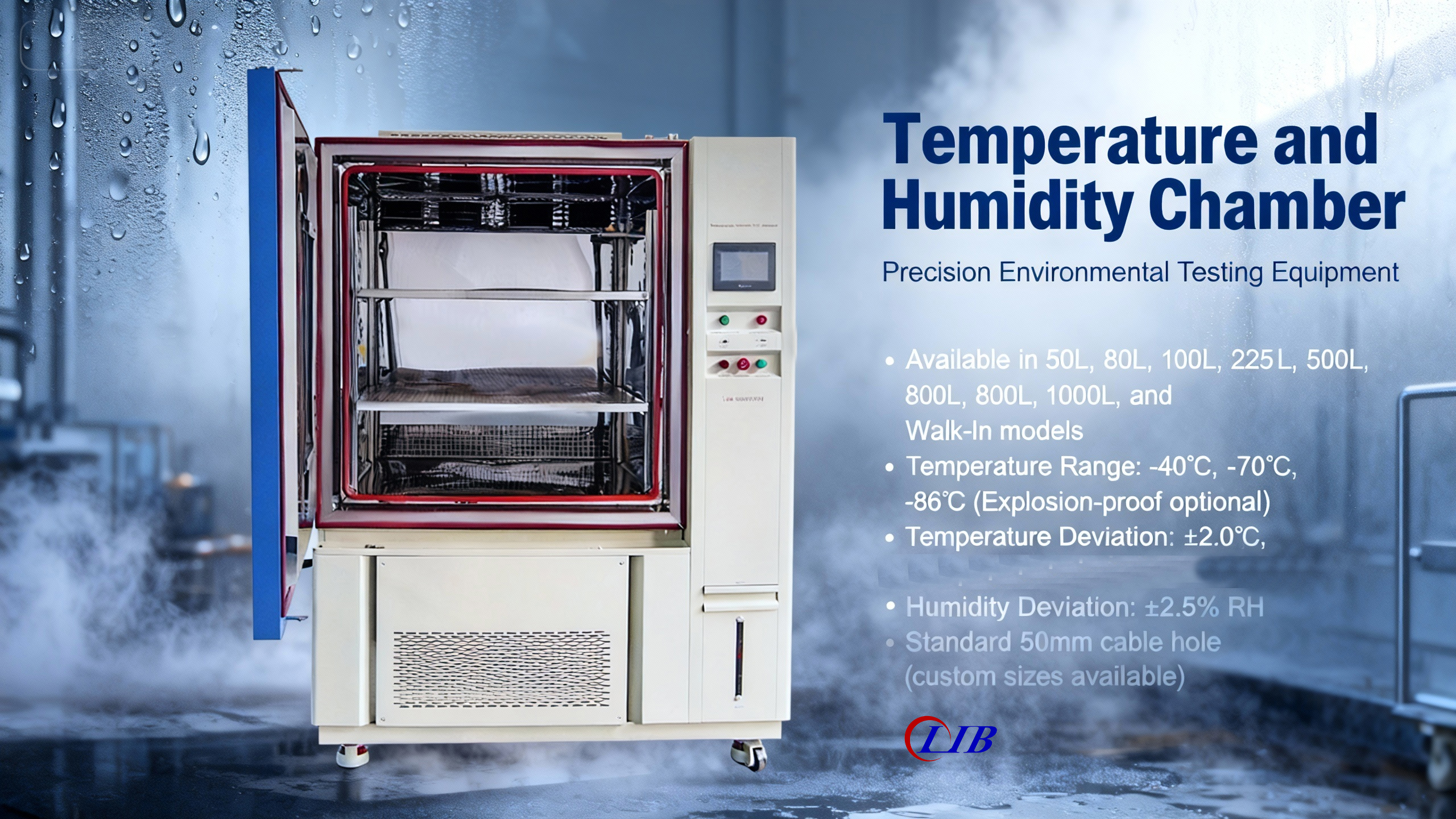 Temperature cycling chambers can be used to simulate thermal shock conditions to assess the susceptibility of materials and products.
2. Temperature Gradient: Creating temperature gradients within the test chamber can simulate real-world conditions where different parts of a product are exposed to varying temperatures. This is particularly relevant in applications such as electronics and aerospace, where components may experience significant temperature differences.
3. Thermal Cycling with Vibration: Combining temperature cycling with vibration testing can simulate the effects of mechanical stress and thermal fatigue, which are common in many industries.
4. Temperature Cycling with Humidity: Simulating both temperature and humidity fluctuations can assess the performance of products in environments with high humidity, such as tropical regions or marine environments.
Temperature cycling chambers are essential tools for testing aerospace and defense components, which are often exposed to extreme temperature conditions during operation. Some specific applications include:
1. Aircraft components: Testing the durability of aircraft components, such as wings, fuselages, and engines, under extreme temperature variations.
2. Spacecraft components: Evaluating the performance of spacecraft components, including electronics, materials, and structures, in the harsh environments of space.
3. Military equipment: Assessing the reliability of military equipment, such as weapons, vehicles, and communication systems, under extreme temperature conditions.
By simulating these extreme environmental conditions, temperature cycling chambers can help ensure the safety, reliability, and performance of aerospace and defense products.
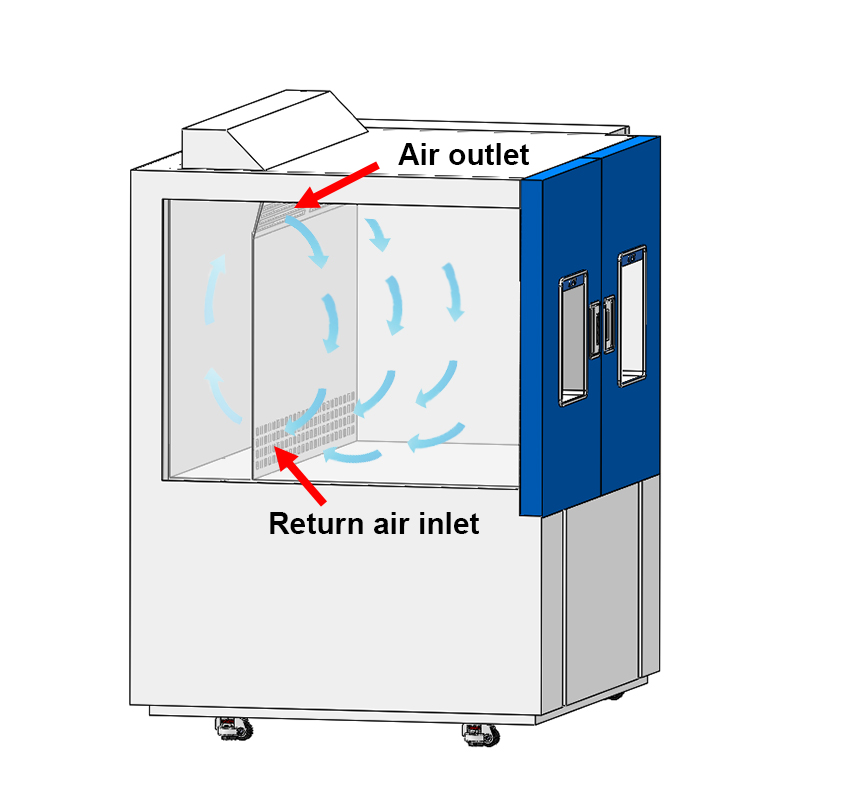
Temperature cycling chambers can be integrated with other testing equipment, such as vibration shakers and humidity chambers, to simulate complex environmental conditions. This combined testing provides valuable insights into the performance and reliability of products in real-world environments. By combining temperature cycling with vibration testing, manufacturers can assess the effects of both thermal and mechanical stress on products, which is particularly relevant for components subjected to both temperature fluctuations and mechanical vibrations. Additionally, simulating both temperature and humidity fluctuations can help evaluate the performance of products in environments with high humidity, such as tropical regions or marine environments, where corrosion or moisture-related damage is a concern.

When temperature cycling is combined with other forms of stress testing, such as vibration or humidity testing, a synergistic effect can occur. This means that the combined stresses can have a more severe impact on product performance than either stress alone. For example, a product may be able to withstand vibration testing at a specific temperature but fail when subjected to both vibration and extreme temperature fluctuations.
Thermal shock is one of the most significant risks in temperature cycling tests. When materials are exposed to abrupt temperature transitions, internal stresses can develop rapidly due to uneven expansion and contraction. This may result in cracking, layer separation, or structural failure, especially in brittle materials or multi-layer composites. To reduce these effects, engineers often control the ramp rate of temperature change, select materials with better thermal stability, and apply preconditioning steps to stabilize specimens before testing begins. In some cases, introducing short stabilization periods between cycles can also help reduce sudden stress accumulation.
In addition to thermal shock, repeated cycling can lead to material fatigue over time. Even if a material survives initial cycles, continuous expansion and contraction may gradually weaken its structure. To manage this, testing programs may adjust cycle counts based on material type, incorporate rest intervals for stress relaxation, and perform preliminary screening tests to estimate long-term durability. These strategies help improve the relevance of test results while preventing unnecessary over-stressing of samples.
Reliable temperature cycling results depend heavily on strict control of testing conditions. One of the most important steps is regular calibration of the chamber’s temperature control system to ensure accuracy over time. Equally important is verifying temperature uniformity inside the chamber, as uneven distribution can lead to inconsistent sample behavior.
Standardizing specimen preparation is another key factor, since variations in size, placement, or material handling can introduce unnecessary deviations in results. A stable and reliable data logging system should also be used to capture real-time temperature and response data for later analysis.
Furthermore, applying statistical evaluation methods helps identify patterns and reduce uncertainty in test outcomes. Establishing and strictly following standardized operating procedures (SOPs) ensures that every test is conducted under the same conditions, significantly improving repeatability and comparability of results across different experiments or laboratories.
Advances in materials science are continuously introducing new substances with improved thermal and mechanical properties, which directly impact how temperature cycling tests are performed and interpreted. For example, materials with higher thermal conductivity allow heat to distribute more quickly and evenly, reducing thermal gradients and enabling faster stabilization during testing. This can improve test efficiency while also revealing more realistic thermal response behaviors.
At the same time, materials with enhanced resistance to thermal shock can better withstand rapid temperature transitions without cracking or delamination, making them more suitable for harsh environments such as aerospace and automotive systems. In addition, modern thermal barrier coatings are increasingly used to shield substrates from extreme heat exposure, reducing thermal stress and extending the service life of test specimens under repeated cycling conditions. These innovations are reshaping how durability and reliability are evaluated in environmental testing.
Artificial intelligence (AI) and machine learning (ML) are increasingly being integrated into temperature cycling and broader environmental testing processes. These technologies help optimize test conditions by analyzing historical performance data and recommending more efficient temperature profiles or cycle parameters.
Predictive maintenance is another key advantage, where AI systems can identify early signs of equipment wear or instability, allowing technicians to address issues before failures occur. Additionally, automated data processing and visualization tools improve the speed and clarity of test result interpretation, reducing manual workload and human error.
In more advanced applications, AI-driven automation enables adaptive testing systems that adjust parameters in real time based on specimen response, improving both accuracy and consistency across test cycles. As a result, testing becomes not only more efficient but also more intelligent and data-driven.
Temperature cycling chambers remain fundamental tools for evaluating material performance under extreme thermal stress. A solid understanding of testing principles, combined with awareness of evolving materials and technologies, allows engineers and researchers to design more reliable and meaningful experiments.
With continued progress in advanced materials, AI integration, and sustainable engineering practices, temperature cycling technology is expected to become more precise, automated, and environmentally efficient. These developments will further enhance the ability to predict real-world product behavior and support the creation of more durable, high-performance systems across multiple industries.
Ready to take your product testing to the next level? Contact LIB Industry today to discuss your specific requirements, schedule a live demonstration, or explore customized solutions. Let us help you ensure durability, reliability, and compliance for your materials and products under extreme temperature conditions.