
Views: 0 Author: Site Editor Publish Time: 2026-09-21 Origin: Site


Every year, the global industrial sector faces substantial losses from the continuous degradation of metal surfaces. Harsh environments do not forgive inadequate corrosion protection. From salt-covered winter highways to highly saline offshore platforms, exposed metals remain under constant chemical attack.
For manufacturers, verifying surface resilience is an essential part of product development. Coatings, paints, galvanization, and other protective systems must be tested before products reach the field. Controlled environmental simulation allows engineers to compress long-term corrosion damage into a much shorter laboratory period.
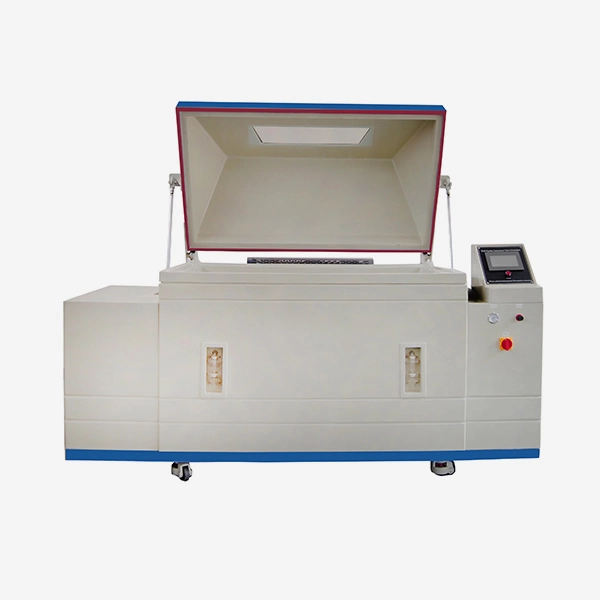
LIB Industry provides salt spray and corrosion testing equipment for automotive, marine, coating, metal, and industrial quality-control applications, helping laboratories reproduce controlled corrosive environments for comparative testing.
Accelerated Environmental Simulation: Purpose-built laboratory chambers reproduce harsh corrosive environments within hundreds or thousands of test hours.
Automotive Industry Focus: Testing helps evaluate damage caused by road salts, temperature fluctuations, moisture, and coating defects.
Maritime Industry Focus: Marine coatings require stringent corrosion evaluation because of continuous exposure to saltwater and airborne chlorides.
Static vs. Cyclic Testing: Continuous salt fog and cyclic corrosion testing serve different quality-control and R&D purposes.
Equipment Selection Matters: Chamber construction, capacity, atomization, temperature control, and automation directly influence test repeatability.
Corrosion testing requirements continue to evolve as industries adopt new materials and coatings.
In the automotive sector, the transition toward electric vehicles has introduced complex mixed-material structures. Lightweight aluminum or magnesium battery enclosures may be combined with high-strength steel components, creating additional galvanic corrosion risks.
Testing is therefore no longer limited to evaluating a single coating layer. Manufacturers increasingly need to assess complete protection systems across multiple substrates.
The maritime sector is also changing. Environmental regulations have encouraged the replacement of older anti-fouling coatings with lower-toxicity and biocide-free alternatives. These newer formulations must still provide sufficient durability under continuous marine exposure.
As coating technologies evolve, reliable laboratory corrosion testing becomes increasingly important for validating performance before commercial deployment.
A salt spray corrosion test chamber creates a controlled, accelerated corrosive environment for evaluating coated metals, finishes, fasteners, automotive components, and marine materials.
Rather than waiting years for natural corrosion to develop, laboratories use controlled temperature, salt concentration, and atomization to accelerate degradation.
The basic principle of salt fog testing involves producing a fine saline mist inside an enclosed chamber.
A typical test uses a 5% sodium chloride solution. Compressed air forces the solution through an atomizing nozzle, producing fine droplets that settle uniformly on the test specimens.
The chamber is generally maintained at approximately 35°C for standard neutral salt spray testing.
Saturation towers can also preheat and humidify compressed air before atomization. This helps stabilize fog generation and reduces salt crystallization within the spray system.
LIB Industry salt spray test chambers use corrosion-resistant construction and controlled atomization systems designed for repeatable laboratory corrosion testing.
Continuous salt spray testing does not reproduce every outdoor environmental condition exactly. However, it remains one of the most widely used comparative corrosion methods.
Its primary advantage is repeatability.
If a manufacturer changes:
Paint supplier
Coating formulation
Plating chemistry
Passivation
Curing temperature
the old and new specimens can be exposed under identical conditions.
This provides a practical basis for comparing corrosion resistance between materials, suppliers, or production batches.
Automotive components operate in environments that combine road salts, moisture, heat, mechanical abrasion, and temperature cycling.
Corrosion testing is therefore widely used for automotive coatings, fasteners, chassis parts, brackets, and body components.
The vehicle underbody is particularly vulnerable to corrosion.
During winter conditions, components may be exposed to:
Sodium chloride
Calcium chloride
Moisture
Gravel
Freezing and thawing cycles
An automotive coating corrosion test helps evaluate whether galvanization, e-coats, primers, and protective underbody coatings maintain sufficient barrier protection.
This is especially important where dissimilar metals are used in the same assembly.
Exterior coatings must provide both appearance and corrosion protection.
One common evaluation method intentionally scratches or scribes the coating down to the metal substrate.
The damaged specimen is then exposed to the corrosive environment.
Technicians observe whether corrosion spreads beneath the surrounding coating.
This process helps evaluate:
Coating adhesion
Barrier protection
Cathodic delamination
Corrosion creepage
Smaller corrosion spread around the scribe generally indicates stronger protective performance.
Testing also applies to smaller automotive parts such as:
Nuts
Bolts
Brake components
Suspension brackets
Clips
Mounting hardware
These components may appear minor, but corrosion-related failure can affect mechanical performance and vehicle safety.
Salt spray testing helps compare coatings such as zinc plating, zinc-nickel, passivation, and zinc-flake systems.
Marine environments represent some of the most aggressive natural corrosion conditions.
Ship components, offshore platforms, and coastal structures are continuously exposed to saltwater, high humidity, and chloride-rich air.
Ship hull coatings must provide a durable barrier between the metal substrate and the marine environment.
A marine coating test can help compare:
Epoxy primers
Polyurethane topcoats
Protective marine paints
Anti-corrosion systems
New anti-fouling formulations
The objective is to identify coating failure, blistering, underfilm corrosion, and loss of adhesion before the coating is placed into long-term service.
Offshore structures may operate in highly corrosive C5-M environments.
Structural steel, fasteners, brackets, and equipment housings therefore require heavy-duty protective systems.
Extended laboratory corrosion testing helps engineers compare coating systems and support maintenance planning for assets located in difficult-to-access offshore environments.
One of the most important equipment decisions is whether a laboratory requires traditional continuous salt spray testing or more advanced cyclic corrosion testing.
A standard salt spray chamber maintains a continuous saline fog environment.
This type of equipment is widely used because it is:
Relatively simple to operate
Suitable for routine quality control
Compatible with widely recognized standards
Useful for production batch comparison
Traditional salt spray testing remains appropriate for galvanization checks, coating comparison, fastener evaluation, and many routine QA applications.
A cyclic corrosion chamber alternates between different environmental conditions.
Typical phases may include:
Salt fog
High humidity
Drying
Elevated temperature
These cycles reproduce repeated wetting and drying that may correlate more closely with some automotive service conditions.
Automotive OEM specifications increasingly use cyclic protocols for R&D and component validation.
| Feature / Specification | Standard Salt Spray Chamber | Cyclic Corrosion Chamber |
|---|---|---|
| Primary Function | Continuous salt fog exposure | Alternating fog, dry, and humidity cycles |
| Typical Standards | ASTM B117, ISO 9227 | SAE J2334, OEM cyclic procedures |
| Temperature | Commonly 35°C or 50°C depending on test | Variable according to programmed cycle |
| Humidity Control | High humidity / saturated salt fog environment | Controlled humidity across different phases |
| Best Application | Routine QC, plating checks, coating comparison | Automotive R&D and OEM cyclic testing |
The correct equipment depends on the required test standard rather than simply choosing the more complex system.
Corrosion test data is only meaningful when the laboratory follows clearly defined procedures.
Two common continuous corrosion standards are ASTM B117 and ISO 9227.
ASTM B117 defines operating requirements for salt spray apparatus, including factors such as:
Salt concentration
Temperature
pH
Atomization
Fog collection rate
For neutral salt spray testing, a 5% sodium chloride solution is commonly used, while chamber temperature is maintained around 35°C.
The collected solution should remain within the required pH range, and the fog collection rate is generally maintained at approximately 1.0 to 2.0 mL per hour per 80 cm².
ISO 9227 also covers widely used methods including:
NSS
AASS
CASS
Automotive manufacturers may additionally use cyclic standards such as SAE J2334 or proprietary OEM test procedures.
Marine coating evaluation may involve requirements associated with ISO 12944 and other relevant coating specifications.
Before selecting equipment, laboratories should identify the exact standards required by their customers, products, and industries.
Corrosion testing does not end when the exposure cycle finishes.
Post-test inspection is essential for interpreting coating performance.
After exposure, specimens may be rinsed carefully to remove residual surface salt without damaging corrosion products or loose coating.
If the specimen contains an intentional scribe, technicians can measure rust creepage extending outward from the damaged area.
A smaller corrosion spread generally indicates stronger protective coating durability.
Other common observations include:
Blistering
Red rust
White corrosion
Coating delamination
Adhesion loss
Surface discoloration
Additional adhesion testing may also be performed after corrosion exposure when required by the applicable test procedure.
Selecting a salt spray or cyclic corrosion chamber requires careful attention to equipment design.
Because the chamber continuously contains corrosive saline environments, corrosion-resistant construction is essential.
FRP is commonly used because it provides strong resistance to saline and acidic environments while also offering good thermal insulation.
LIB Industry salt spray test chambers use corrosion-resistant construction designed for long-term environmental testing.
Chamber size should match the specimen dimensions and expected laboratory workload.
Typical configurations may range from smaller laboratory chambers to larger floor-standing or customized systems.
Before purchasing, consider:
Largest specimen dimensions
Number of simultaneous specimens
Required spacing
Future testing requirements
Selecting sufficient capacity helps avoid overcrowding, which may affect fog circulation.
Modern salt spray systems can use digital controllers to regulate and monitor operating parameters.
Useful functions include:
Temperature control
Test timing
Automatic water replenishment
Automatic salt solution supply
Alarm functions
Data recording
Automation reduces operator intervention during long-duration corrosion tests and helps maintain more stable conditions.
Uniform salt fog distribution is fundamental to reliable testing.
Quartz atomizing nozzles are commonly used because of their chemical resistance and ability to produce stable fine mist.
Correct atomization helps laboratories maintain the required fog fallout rate across the chamber.
LIB Industry supplies environmental test chambers for automotive, coating, marine, metal, electronics, and industrial applications.
For corrosion testing, available solutions can support:
Neutral salt spray testing
ASTM B117-based testing
ISO 9227 applications
Coating comparison
Fastener evaluation
Automotive component testing
Marine coating development
LIB Industry can also help users evaluate chamber capacity and configuration according to specimen dimensions and target test procedures.
When selecting equipment, laboratories should clearly define whether they require traditional continuous salt fog testing or more advanced cyclic corrosion capability.
Whether you are evaluating a marine epoxy, testing an EV battery enclosure, or checking a production batch of galvanized fasteners, corrosion resistance should be verified before the product reaches the field.
Salt spray and cyclic corrosion chambers provide controlled environments for comparing coatings, identifying weaknesses, and supporting production quality control.
The appropriate system depends on the required standard, specimen type, exposure method, and testing objective.
For laboratories or manufacturers planning to upgrade their corrosion testing capabilities, LIB Industry provides salt spray corrosion test chamber solutions for automotive, marine, coating, fastener, and industrial testing applications.
If you are unsure which chamber capacity or corrosion testing method is suitable for your application, contact LIB Industry for technical consultation. Share your specimen dimensions, target standard, test cycle, and application requirements, and our team can help you evaluate a suitable corrosion testing solution.
The duration depends on the component and applicable OEM standard.
Some basic evaluations may run for several hundred hours, while exterior body panels, undercarriage components, and advanced coatings may require significantly longer exposure.
The correct duration should always follow the relevant customer or OEM test procedure.
Generally, a standard salt spray chamber is designed for continuous salt fog exposure.
True cyclic corrosion testing requires equipment capable of automatically transitioning between different phases such as:
Salt fog
Drying
Controlled humidity
If an OEM specification requires cyclic corrosion, a dedicated cyclic corrosion chamber is typically more appropriate.
Marine environments combine high humidity with continuous chloride exposure.
Saltwater and airborne chlorides can penetrate coating defects and accelerate corrosion of metal substrates.
Laboratory testing helps manufacturers compare coating systems before long-term deployment in marine environments.
NSS uses a neutral sodium chloride solution.
AASS uses acetic acid to create a more acidic environment.
CASS adds copper chloride to an acidic solution and typically operates at a higher temperature, creating a more aggressive corrosion environment.
Each method is designed for different coating systems and testing requirements.
Calibration typically involves checking:
Chamber temperature
Salt fog collection rate
Solution concentration
pH
Spray distribution
Collection funnels can be placed at different locations inside the chamber to verify that fog fallout remains within the required range.
ASTM B117 commonly uses a 5% sodium chloride solution prepared with purified water.
For neutral salt spray testing, the collected solution should also remain within the specified pH range.
Laboratories should follow the exact solution preparation requirements defined by the applicable standard rather than using approximate concentrations.


