Views: 0 Author: LIB Team Publish Time: 2026-09-30 Origin: Site


Can one tiny dust particle damage your electronics? In some applications, even microscopic particulate ingress can affect circuit performance, heat dissipation, optical components, seals, or moving mechanical parts.
Protecting electronic components, mechanical assemblies, and industrial equipment from particulate matter is therefore an important part of product reliability testing. The expansion of electric vehicles, ruggedized electronics, outdoor IoT equipment, and telecommunications infrastructure has further increased demand for accurate dust ingress testing.
Choosing the right equipment requires an understanding of IP ratings, chamber size, vacuum requirements, particulate media, and control systems. For laboratories evaluating IP5X, IP6X, and other particulate protection requirements, LIB Industry provides dust test chamber solutions for electronics, automotive components, industrial products, and outdoor equipment.
A customer from a testing service center in Thailand shared their experience with the DI-800 Dust Test Chamber, saying, “Thank you for support. and for dust tester is good equipment.” This direct feedback highlights the customer's positive experience with the equipment and support provided by LIB Industry.
Strict Compliance Is Key: Equipment should match the required IP5X, IP6X, IEC 60529, or other applicable testing standard.
Chamber Size Matters: The specimen should leave sufficient internal space for proper airflow and particulate circulation.
Vacuum Capability Is Important: Certain IP6X procedures require negative pressure inside the test specimen.
Select the Right Test Medium: Fine talcum powder is commonly used for standard ingress testing, while more aggressive applications may require abrasive sand or road dust.
System Integration Matters: Dust testing should fit into the broader environmental reliability and laboratory testing process.
Evaluating how effectively an enclosure protects internal components from solid foreign particles is an important part of product development.
This is especially relevant for:
Consumer electronics
Automotive components
Telecommunications equipment
Industrial controls
Aerospace systems
Outdoor electrical products
The Ingress Protection code classifies an enclosure's resistance to solids and water. When evaluating solid particle protection, the first digit of the IP rating determines the relevant protection level.
| IP Rating | Protection Level | Testing Implication |
| IP5X | Dust Protected | Limited dust ingress may be permitted, but it must not interfere with normal product operation. Vacuum conditions depend on the applicable test category. |
| IP6X | Dust Tight | No dust ingress is permitted under the specified test conditions. Vacuum testing may be required according to the applicable procedure. |
IEC 60529 defines test methods intended to improve repeatability between laboratories. For standard dust testing, talcum powder concentration and particle characteristics must follow the applicable procedure. This helps ensure that results from different laboratories can be compared more consistently.
LIB Industry dust test chambers can support common IP dust testing requirements with controlled particulate circulation, vacuum capability, and programmable operation.
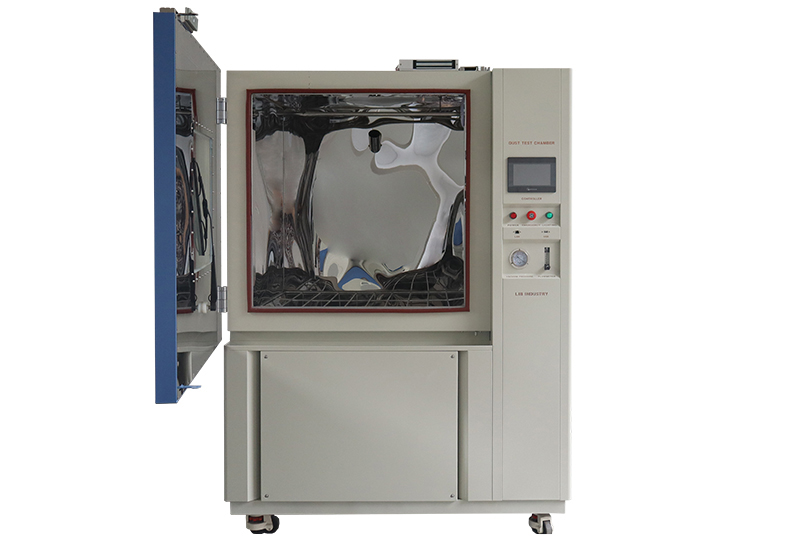
A dust test chamber combines particulate circulation, airflow control, and, when required, vacuum pressure. The chamber typically includes a funnel-shaped lower section that collects the test powder.
Blowers or agitation systems then circulate the powder back into the workspace. This creates a dense particulate environment around the Device Under Test. For standard IP testing, fine talcum powder is commonly used because its small particle size helps reveal weaknesses in:
① Seals
② Gaskets
③ Cable entries
④ Housing joints
⑤ Covers
⑥ Ventilation interfaces
The circulation system is designed to prevent excessive settling and maintain consistent exposure throughout the test. For certain IP6X procedures, a vacuum pump is connected to the internal cavity of the test specimen. The resulting negative pressure encourages surrounding air and dust to enter through any weak sealing points. This provides a controlled method for evaluating whether the enclosure maintains the required dust protection level.
Choosing suitable equipment requires matching the chamber's technical capabilities to the laboratory's actual test requirements.
One common purchasing mistake is selecting a chamber that only barely fits the test specimen. Adequate free space is required for particulate circulation. If the specimen occupies too much of the internal workspace, it may create dead zones that prevent dust from reaching all surfaces uniformly.
When selecting chamber capacity, consider:
Maximum specimen dimensions
Number of specimens per test
Specimen weight
Required spacing
Future product sizes
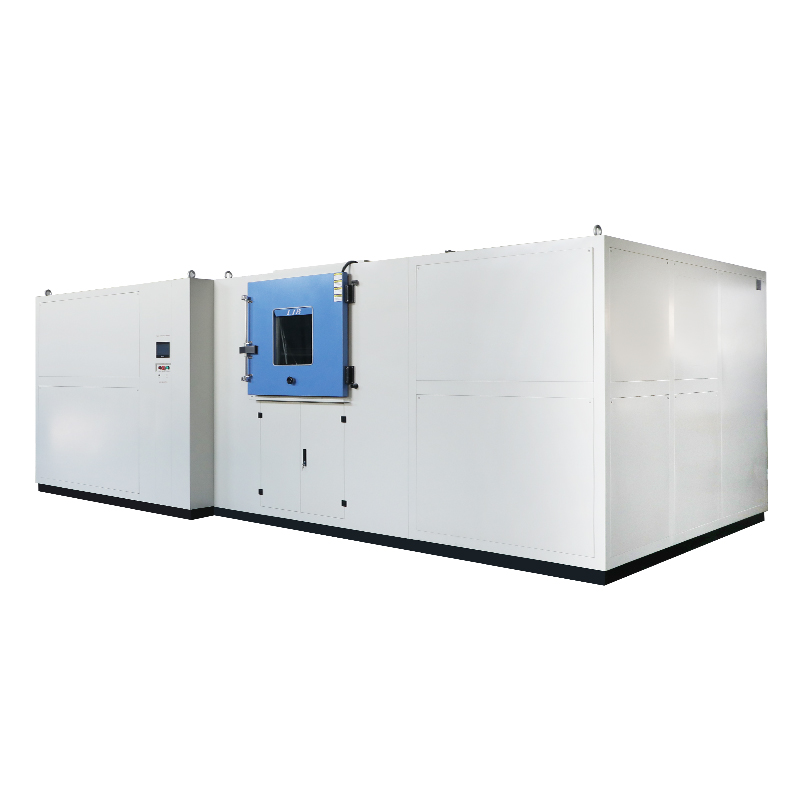
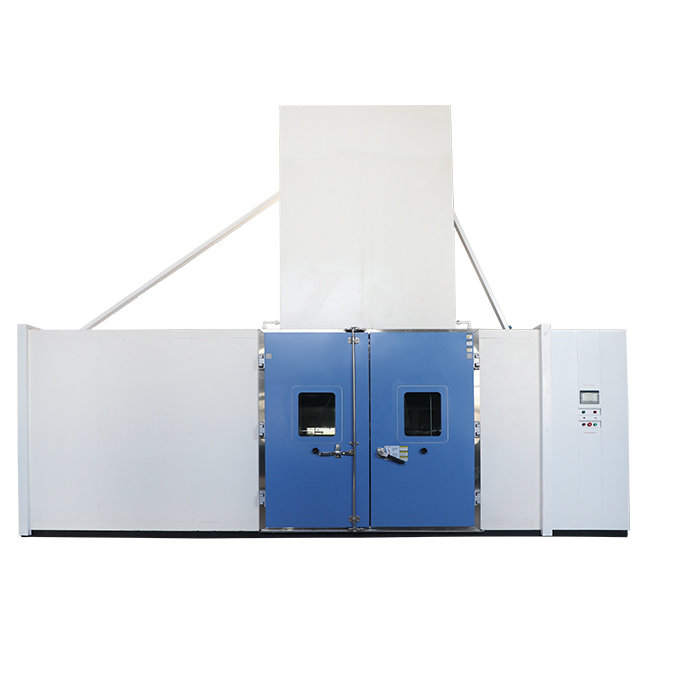
As a practical guideline, many laboratories prefer the Device Under Test to occupy only a limited portion of the available chamber volume. For medium-sized electronics and components, a chamber such as an 800-liter configuration may be suitable, while larger assemblies may require customized or walk-in systems.
When evaluating an IP dust test chamber, vacuum capability should be reviewed carefully if IP6X or other negative-pressure procedures are required.
The system may need:
Vacuum pump
Digital pressure gauge
Flow measurement
Connection port
Programmable vacuum control
Accurate monitoring helps laboratories maintain the required negative pressure and extraction rate during the test.
Talcum powder can absorb moisture from ambient air. When this happens, the powder may clump and no longer circulate correctly. A suitable chamber may therefore incorporate heating around the collection hopper or internal circulation system to help keep the powder dry. Effective recovery systems also help return settled powder to the circulation loop without excessive manual handling.
Modern laboratories increasingly rely on automated test control. A PLC and touch-screen interface can allow technicians to set parameters such as:
Test duration
Dust circulation intervals
Vacuum pressure
Heating
Blower operation
Automated operation helps reduce manual variation and makes long-duration testing easier to manage.
LIB Industry offers dust test chamber configurations with programmable controls designed to support repeatable laboratory operation.
| LIB Popular Dust and Water Test Equipment | |||
| 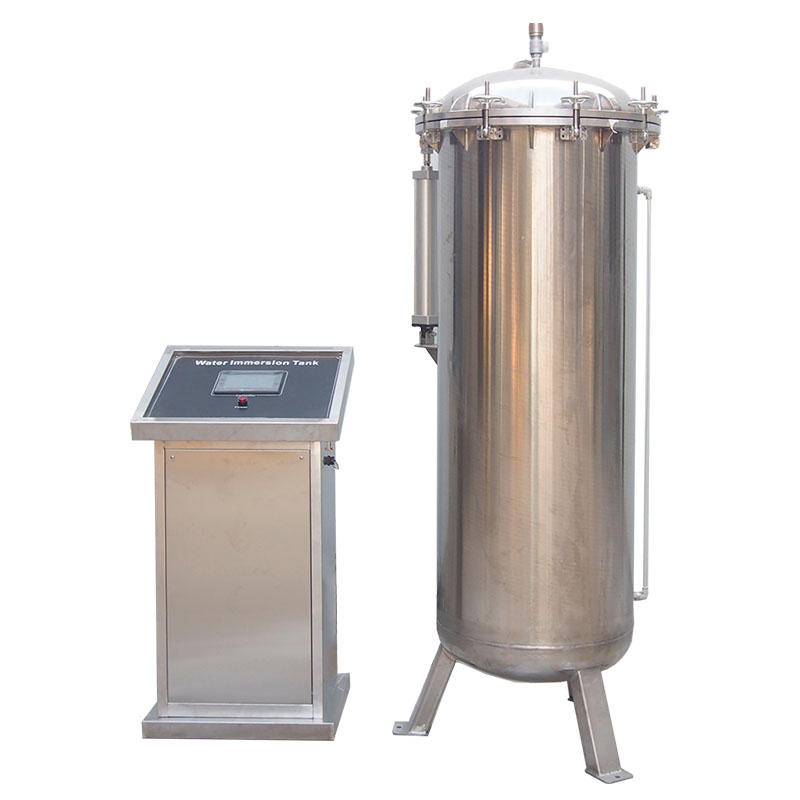 | 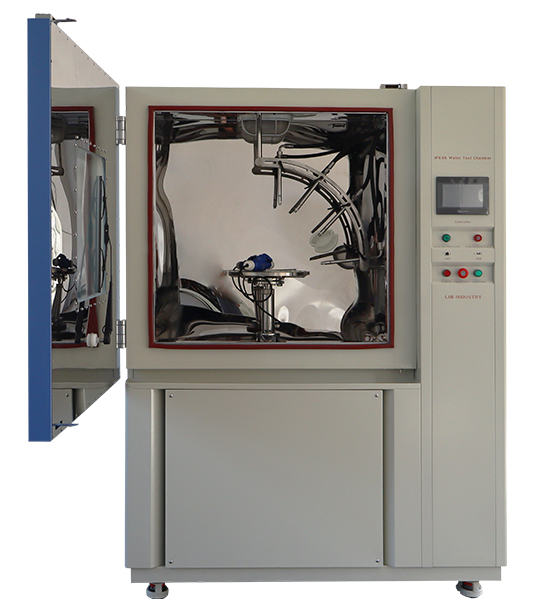 | 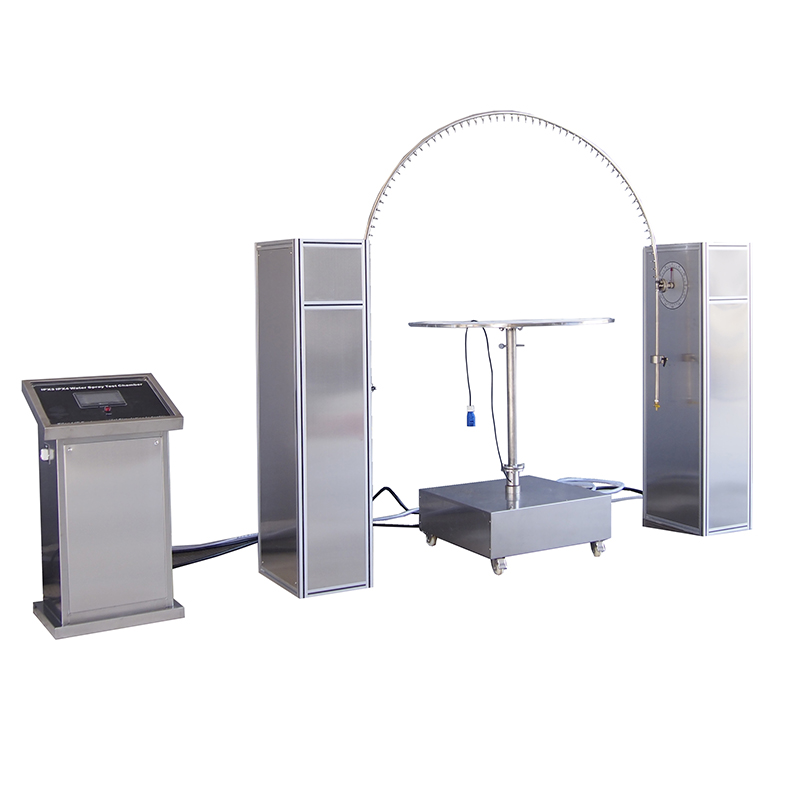 |
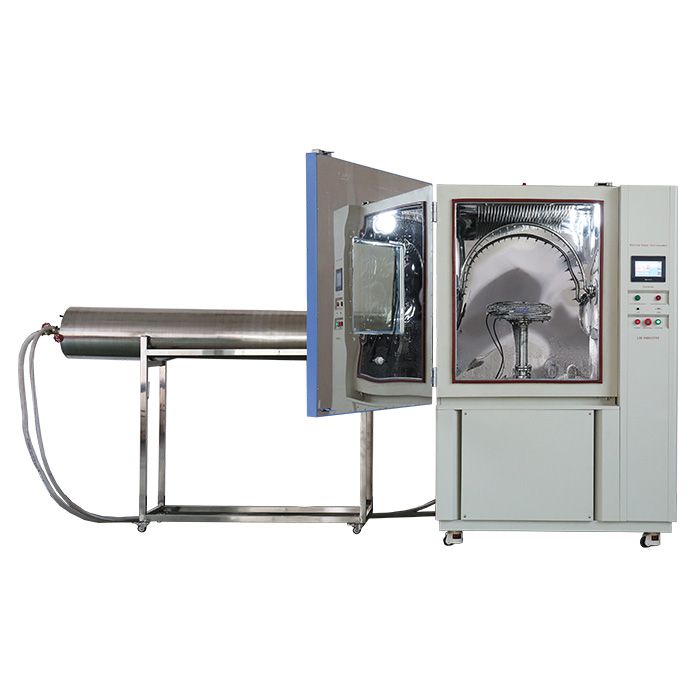
Combined Chamber(IPX1 X2 X3 X4 X5 X6) Multi-level IP testing, Space-saving design | IPX7 IPX8 Water Immersion Test Equipment Deep water simulation,Long-duration immersion | IPX9K High Pressure Water Spray Test Chamber 88°C hot water jets, High-pressure spray testing | Whole Set of IP Test Equipment-No Housing Type Easy sample loading, flexable |
 |  |  | |
IP5X/6X Sand and Dust Test Chamber Controlled dust circulation, IEC 60529 compliance | MIL-STD-810 Sand and Dust Test Chamber Harsh dust simulation, Defense and aerospace testing | Harsh water simulation, Defense and aerospace testing | |
Not all particulate testing uses the same medium. The correct choice depends on the required standard and real-world operating environment.
Fine talcum powder is commonly used for standard ingress protection testing.
Typical applications include:
Consumer electronics
Household appliances
Indoor lighting
Industrial controls
Electrical enclosures
The primary objective is to determine whether fine particles can penetrate the product enclosure.
Products used in harsher environments may require more aggressive particulate exposure.
Applications can include:
Defense equipment
Off-road vehicles
Agricultural machinery
Construction equipment
Aerospace components
Standards such as MIL-STD-810 may require blowing dust or blowing sand procedures using higher airflow velocities and more abrasive materials.
These conditions differ significantly from standard IEC 60529 testing.
Abrasive sand testing requires stronger chamber construction and more wear-resistant airflow components.
Beyond basic specifications, equipment construction and usability affect long-term test reliability.
Observing the specimen during testing can help engineers identify failures or unusual operating behavior.
Because suspended dust can quickly cover the viewing window, high-quality dustproof equipment may include a tempered glass window with a cleaning or wiping system.
Internal lighting also helps improve visibility during testing.
The internal workspace should use durable, corrosion-resistant materials.
SUS304 stainless steel is commonly used because it provides:
① Good durability
② Easy cleaning
③ Corrosion resistance
④ Suitable mechanical strength
For more abrasive sand testing, stronger or more wear-resistant materials may be required.
Fine particulate material can create laboratory contamination and respiratory concerns.
The chamber should therefore include effective sealing around:
Doors
Access ports
Cable interfaces
Dust collection points
Maintenance access should also be designed so operators can remove and replace test media with minimal exposure.
LIB Industry dust chambers incorporate enclosed particulate circulation and recovery designs intended to support safer routine operation and maintenance.
Dust testing is often one part of a broader reliability program. A product may pass an ingress test when new but perform differently after experiencing thermal stress, vibration, humidity, or mechanical aging.
For example, repeated thermal expansion and contraction can affect:
Rubber seals
Adhesive joints
Enclosure interfaces
Plastic housing dimensions
Performing dust testing after thermal cycling may reveal sealing weaknesses that were not present during the initial test.
For this reason, laboratories may combine dust evaluation with other environmental test chamber procedures as part of a sequential reliability plan.
Selecting environmental test equipment is a long-term investment.
Several common mistakes can reduce equipment usability or compromise test results.
Underestimating Product Size: Insufficient chamber space can restrict particulate circulation and create inaccurate exposure conditions.
Ignoring Utility Requirements: Electrical supply, compressed air, ventilation, and installation space should be confirmed before ordering.
Forgetting Calibration Documentation: Pressure gauges, flow meters, temperature sensors, and timing systems should be verified according to laboratory quality requirements.
Overlooking After-Sales Support: Replacement parts, technical support, calibration assistance, and maintenance guidance affect long-term equipment availability.
Selecting the Wrong Dust Medium: A standard talcum powder chamber should not automatically be assumed suitable for aggressive blowing sand procedures.
Before purchasing, buyers should clearly communicate their target standard, product size, required test medium, and laboratory utilities to the equipment supplier.
LIB Industry provides environmental testing equipment for electronics, automotive, industrial, telecommunications, and product reliability applications.
Dust test chamber solutions can support testing requirements including:
IEC 60529
IP5X
IP6X
Electronics enclosure testing
Automotive component testing
Industrial product testing
Outdoor equipment evaluation
Depending on the application, available configurations can include:
Dust circulation systems
Vacuum control
Heating
Programmable PLC operation
Specimen supports
Dust recovery
Customized chamber dimensions
For larger or unusually shaped specimens, LIB Industry can also evaluate customized solutions according to product dimensions and testing requirements.
Choosing the right dust testing equipment starts with understanding the required IP rating and test standard.
Laboratories should then evaluate:
Chamber volume
Specimen dimensions
Vacuum capability
Dust circulation
Test medium
Heating
Control systems
Calibration support
Maintenance requirements
A properly matched system helps manufacturers generate repeatable test data and identify sealing weaknesses before products enter the market.
For laboratories planning to establish or upgrade dust ingress testing capabilities, LIB Industry provides dust test chamber solutions for electronics, automotive components, industrial equipment, and other applications.
If you are unsure which chamber size, vacuum configuration, or dust testing method is suitable for your product, contact LIB Industry for technical consultation. Share your specimen dimensions, required IP rating, applicable test standard, and test medium, and our team can help you evaluate a suitable testing solution.
The first digit represents protection against solid objects and dust. IP54 uses a first digit of 5, corresponding to dust-protected performance. IP65 uses a first digit of 6, indicating dust-tight protection. The second digit relates to water protection and requires a separate water ingress test according to the applicable procedure.
Start by measuring the width, depth, and height of the largest specimen or batch.
The chamber should provide enough additional space for dust to circulate freely around the product.
Avoid selecting a chamber where the specimen occupies most of the usable internal volume.
Replacement frequency depends on the test standard, test medium, contamination, and operating conditions.
Talcum powder should be replaced if it becomes:
Damp
Heavily clumped
Contaminated
Unable to circulate properly
Laboratories should follow the applicable standard and internal SOP for replacement intervals.
Yes, many dust test chambers can support both levels if they include the required vacuum system and controls. The exact operating procedure differs between IP5X and IP6X, so the chamber configuration should be checked against the applicable standard.
An IP dust chamber generally uses fine powder such as talcum to evaluate particulate ingress.
A blowing sand chamber uses more abrasive particles and higher airflow velocities to simulate harsher environments.
Blowing sand testing may evaluate both enclosure sealing and physical surface abrasion.
A dry and reasonably stable laboratory environment is recommended. Excessive ambient humidity can cause fine powder to absorb moisture and agglomerate.
The equipment should also be installed according to the manufacturer's requirements for:
Electrical supply
Ventilation
Compressed air
Maintenance clearance
Floor loading
Looking for a dust test chamber for IP5X, IP6X, or particulate ingress testing? LIB Industry provides controlled dust testing solutions for electronics, automotive components, industrial equipment, telecommunications products, and outdoor equipment. Available options include IP5X/6X Sand and Dust Test Chambers and MIL-STD-810 Sand and Dust Test Chambers for different particulate testing requirements.
The right chamber depends on your IP rating, specimen size, test medium, vacuum requirements, applicable standard, and laboratory conditions. Share your specimen dimensions, required IP rating, test standard, and testing medium with LIB Industry, and our technical team can help you select a suitable dust testing solution.
LIB Industry Technical Team — Technical information, dust ingress testing methods, product specifications, and application guidance.