Views: 0 Author: Site Editor Publish Time: 2026-09-15 Origin: Site


A steel bracket left near the coast can show visible rust in a matter of months, while the same part sitting in a dry warehouse might last for years without a mark. That gap between lab predictions and real field life is exactly what pushes engineers to look for a test method that copies the weather itself, not just one part of it.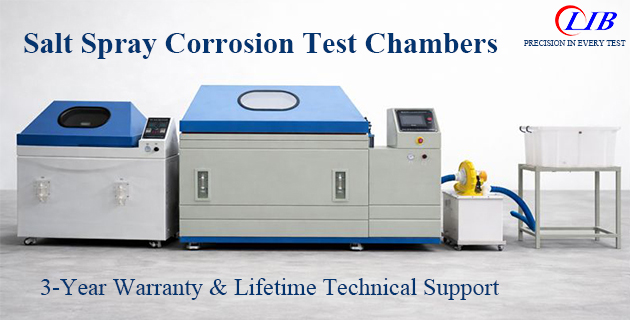
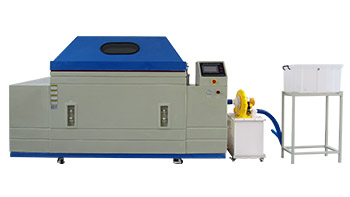
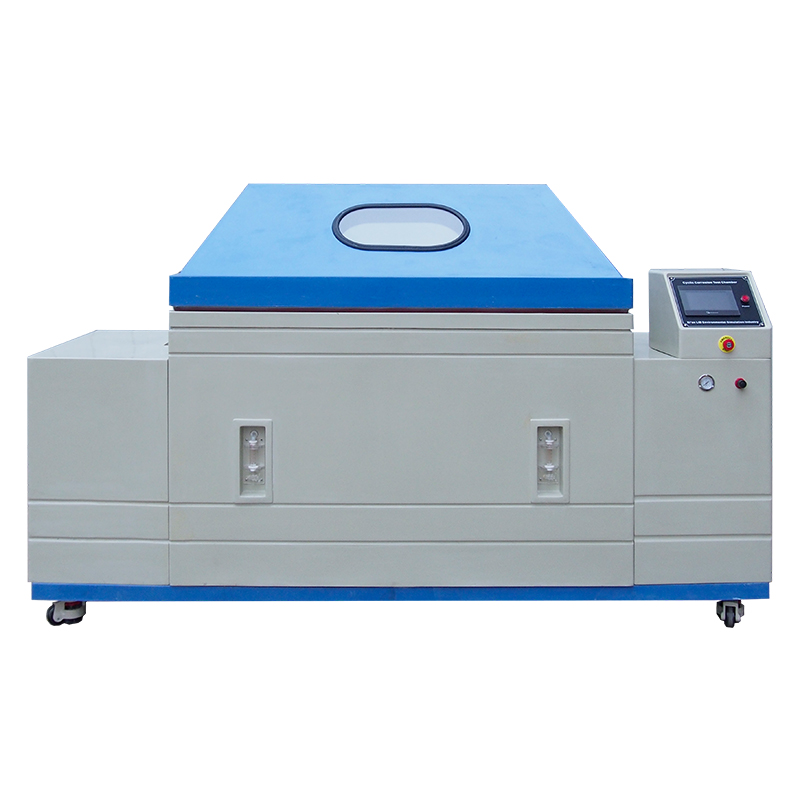
LIB Industry's Cyclic Salt Spray Corrosion Chamber is designed for long-term, automated corrosion testing under changing environmental conditions. After running the chamber for month-long tests over six months, a UK customer shared: “Everything seems to be running well and the machine is performing as expected.” The customer also confirmed that they had found “no issues other than those previously discussed.”
This article walks through how LIB Industry's Cyclic Salt Spray Corrosion Chamber recreates that changing weather inside one automated system, lists the standards it is built to meet, and breaks down the exact steps of an ASTM G85 test cycle.
LIB Industry's equipment runs four phases in sequence: salt fog, high humidity, temperature cycling, and drying. A 5% NaCl solution, mixed to a 5 ± 1% mass ratio at pH 6.5–7.2, is pushed through quartz nozzles at 83 kPa, giving a steady deposition rate of 1–2 mL per 80 cm² per hour. A stirring function in the salt water tank keeps the concentration even. Once the fog phase ends, the equipment raises humidity to as high as 98% RH to hold moisture on the sample surface, then shifts into a temperature cycle between 10 °C and 90 °C, with fluctuation kept within ±5 °C and deviation within ±2 °C. A final drying phase blows warm, dry air across the samples so salt crystals form and any weak points in a coating, such as cracking or peeling, become visible. PT‑100 Class A sensors track every phase, holding temperature within ±0.5 °C and humidity within ±2% RH.
Because labs report results to customers around the world, the equipment is built to satisfy standards from multiple regions rather than a single national spec.
| Standard | Applicable To |
|---|---|
| ASTM B117 | General neutral salt spray testing of metals and coatings |
| ISO 9227 | NSS, AASS, and CASS test methods for coatings and plated parts |
| ASTM G85 | Cyclic corrosion testing, widely used in automotive qualification |
| SAE J2334 | Automotive sheet steel and body-panel corrosion testing |
| DIN 50021 | German industrial and automotive corrosion testing |
| JIS Z 2371 | Japanese metal and coating corrosion testing |
| EN 60068-2-52 | Electronics and component-level salt mist testing |
| BS 5466 / NFX 41002 | British and French corrosion testing of metallic materials |
A typical ASTM G85 program run on this equipment follows a repeatable pattern, so operators can set it once and let it run unattended:
Salt fog spray — 5% NaCl solution atomized through the quartz nozzles at 1–2 mL/80 cm²/hr, with the fog generator's saturator held at 47 ± 1 °C.
Wet exposure hold — chamber temperature maintained at 35 ± 2 °C while the fog settles on the sample surface.
Humidity soak — RH raised to 95–98% for several hours so moisture works into any surface defect.
Drying phase — warm, low-humidity air drops RH below 30%, evaporating surface water and letting salt crystallize on the sample.
Cycle repeat — the sequence repeats automatically, with total test length set anywhere from a few days up to 21 days depending on the material and the standard being followed.
A Korean manufacturer recently used LIB Industry's Cyclic Salt Spray Corrosion Chamber to run repeated stability tests on metal parts headed for export, and the feedback afterward was strongly positive. The team pointed to how the equipment held its cycle-to-cycle numbers steady test after test, with results that lined up with ASTM G85, ISO 9227, and CE and IEC safety requirements at the same time. Safety was a recurring theme in their notes: over-temperature protection, water-shortage sensing, and a fail-safe door lock meant unattended multi-day runs never became a risk to the lab. They also called out the value for the price, since one piece of equipment covered salt spray, humidity, and temperature testing that would otherwise need separate machines.
What kept the relationship going, though, was everything around the equipment itself. LIB Industry built a custom sample rack for their parts at no extra charge, backed the unit with a three-year warranty and lifetime technical support, and sent an engineer for on-site training so operators felt confident from day one. When questions came up later, the after-sales team was patient and technically sharp rather than reading from a script. The glass-fiber-reinforced interior has held up under continuous acidic exposure without any sign of wear, which the customer noted as one more reason the equipment earns its keep over years of daily use.
| LIB Popular Environmental Chamber for Metal and Paints | |||
 |  |
| 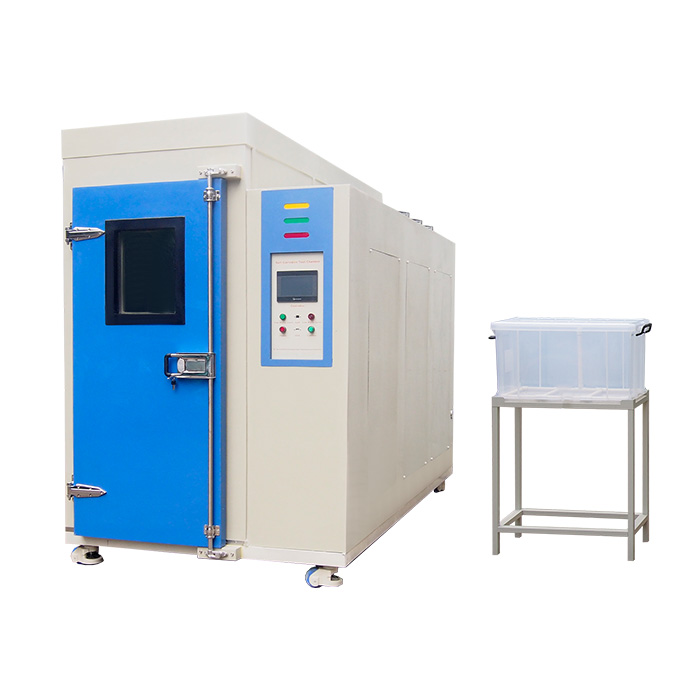 |
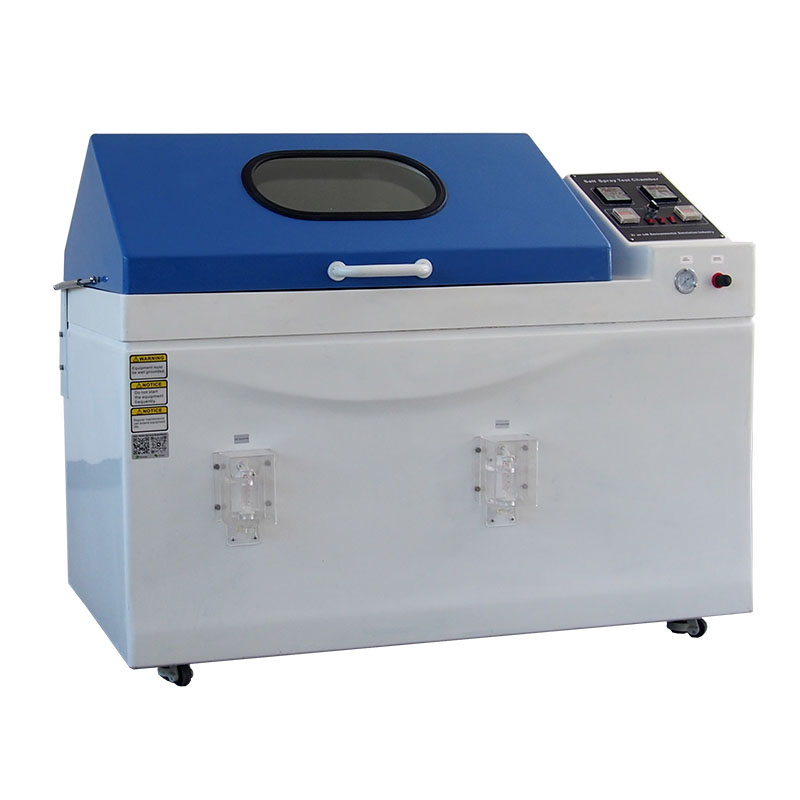
Cyclic Salt Spray Corrosion Chamber Realistic Wet-Dry Corrosion Simulation, Accelerated Corrosion Testing for Long-Term Durability | ASTM B117 Fog Corrosion Salt Spray Test Cabinet Reliable Salt Fog Exposure Testing, Accurate Corrosion Resistance Evaluation | Salt Spray and Sulfur Dioxide Climatic Chamber Simulate Acid Rain and Industrial Pollution, Advanced SO₂ Corrosion Testing Solution | Walk-in Salt Spray Corrosion Chamber Large-Capacity Corrosion Testing Space, Ideal for Oversized Components and Assemblies |
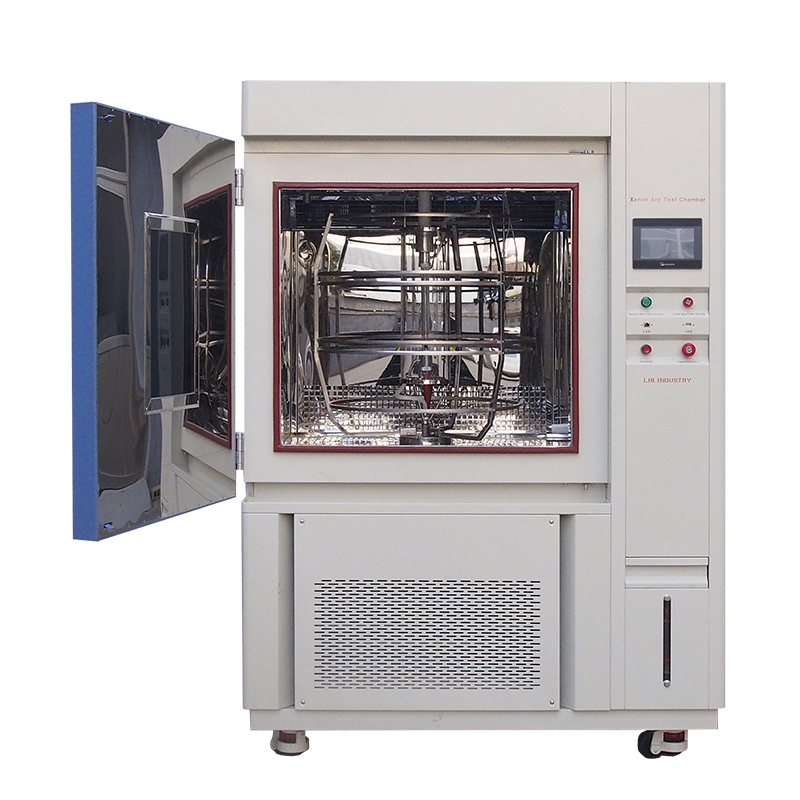 | 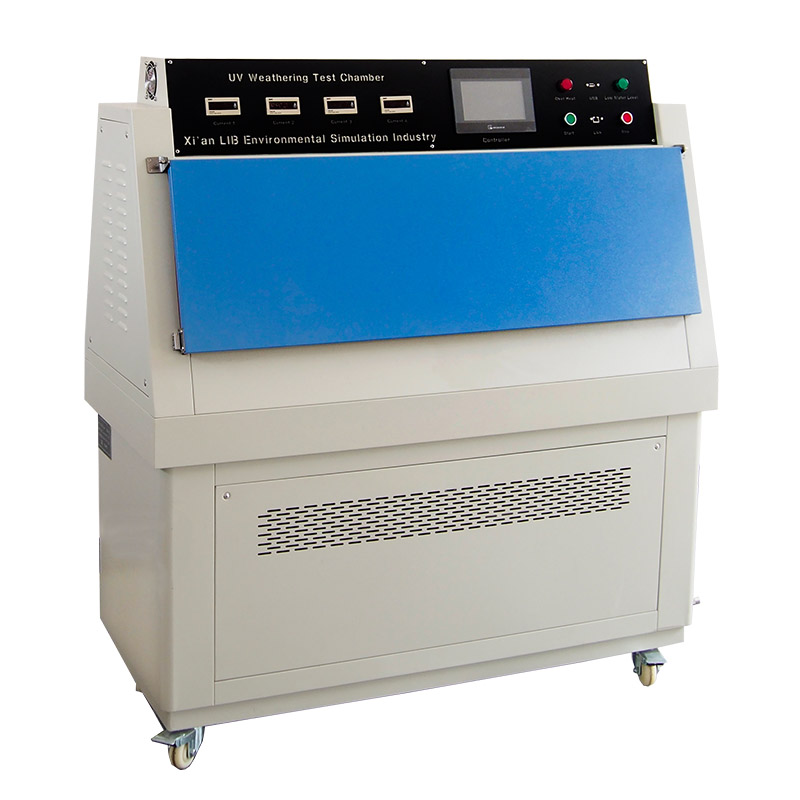 | 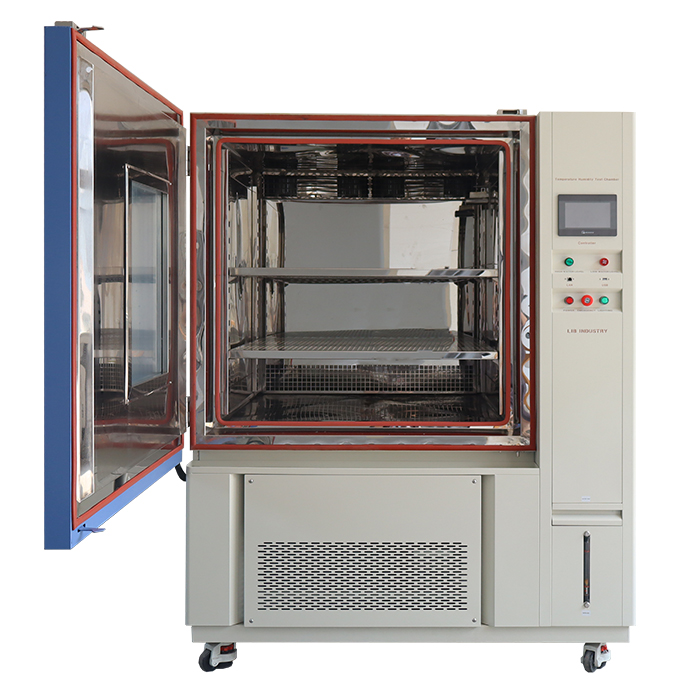 |  |
ASTM G155 G151 Accelerated Weathering XenonTest Apparatus Full-Spectrum Sunlight Simulation, Accelerated Outdoor Weathering Analysis | UVA 340 Fluorescent Lamp Light Fastness Test Instrument Precise UV Aging Performance Testing, Reliable Material Durability Verification | Temperature Humidity Test Chamber Stable Environmental Conditioning, Accurate Temperature and Humidity Control | Compact Mini Temperature Stability Climatic Test Chamber Space-Saving Laboratory Solution, High-Precision Climate Simulation in a Compact Design |
Both machines run wet-dry-hot cycles, but they answer different questions. The standard cyclic equipment recreates coastal and de-icing-salt exposure. The SO₂ gas version adds an acidic pollutant gas to the mix, matching conditions found near industrial plants, tunnels, and heavy traffic.
| Parameter |
Cyclic Salt Spray Corrosion Chamber |
|
|---|---|---|
| Core standards | ASTM B117, ISO 9227, ASTM G85 | ASTM G85 Annex A4, ISO 6988, ISO 3231, DIN 50018, JIS Z2382, GB/T 10125 |
| Temperature range | 10 °C–90 °C, fluctuation ±5 °C, deviation ±2 °C | +10 °C–+90 °C, fluctuation ±0.5 °C, deviation ±2.0 °C |
| Humidity range | 30%–98% RH | 30%–98% RH, deviation +2%/−3% |
| Gas control | Not included | SO₂ concentration held at 25 ± 5 ppm, ±0.1% FS |
| Typical cycle length | Hours to several days per program | 8 cycles up to 21 days, mixing SO₂, humid soak, and drying |
| Best suited for | Automotive body parts, general coatings, electronics housings | Fasteners, connectors, plated metals near industrial or acidic atmospheres |
If the product will spend its working life near the ocean or on salted roads, the standard cyclic equipment gives the field-relevant answer without added complexity. If the application involves industrial pollution, tunnels, or any environment where sulfur compounds speed up corrosion, the SO₂ gas version is the one that matches real conditions. Some labs running both automotive and industrial-hardware qualification choose to keep one of each, since the standards and gas control requirements do not overlap.
Q1: What after-sales support comes with the equipment?
Every unit includes a three-year warranty, lifetime technical support, and 24/7 multilingual service, along with on-site training for operators when needed.
Q2: How long does shipping take once an order is placed?
Standard configurations ship on regular production lead times. Custom internal volumes or added viewing windows typically add 7–12 days, and the LIB Industry team coordinates closely to keep delays to a minimum.
Q3: Can the equipment be customized for a specific lab space or sample type?
Yes. Internal dimensions, sample racks, and fixturing can be built to match unique part geometries, and this customization is provided at no extra charge.
Q4: Does the equipment need special installation or utility connections?
The equipment needs a stable power supply, a water source for the humidification and spray systems, and drainage for condensate. LIB Industry provides installation guidance and can arrange on-site setup support.
Q5: Can one program switch between different standards without reconfiguring the equipment?
Yes. The touchscreen controller stores up to 120 programs with 100 steps each, so operators can switch between ASTM B117, ISO 9227, or ASTM G85 cycles without changing any hardware.
Choosing a cyclic corrosion test chamber depends on your test standard, corrosion environment, sample size, and required exposure cycle. LIB Industry provides environmental corrosion testing solutions for different applications, including a Cyclic Salt Spray Corrosion Chamber for automated wet-dry corrosion testing, a Salt Spray Test Chamber for standard salt fog exposure, and a Salt Spray and Sulfur Dioxide Climatic Chamber for testing under acidic industrial pollution conditions.
Share your required test standard, corrosion environment, sample size, chamber volume, temperature and humidity range, cycle sequence, and any special sample fixture requirements. Based on these factors, the LIB Industry team can help identify the appropriate cyclic corrosion testing configuration for your application.
LIB Industry Technical Team (info@lib-industry.com) - Technical information, testing methods, product specifications, and application guidance for cyclic corrosion chambers, salt spray testing, and environmental reliability testing.