
Views: 0 Author: Site Editor Publish Time: 2026-10-29 Origin: Site


The global transition toward renewable energy is heavily underpinned by the assumption that solar installations will operate efficiently for decades. Consumers and utility operators alike expect a 25-to-30-year lifespan from their solar assets. However, how do manufacturers actually guarantee that these intricate electronic assemblies will survive relentless exposure to harsh weather?
In engineering, reliability means sustained performance without degradation over time, which is distinctly different from simply working flawlessly on day one. To bridge this gap, an environmental test chamber serves as the foundational piece of equipment. It acts as a localized time machine, simulating decades of environmental stress quickly and effectively.
In this comprehensive guide, you will learn exactly which tests prevent catastrophic failures and how testing infrastructure safeguards renewable energy investments.
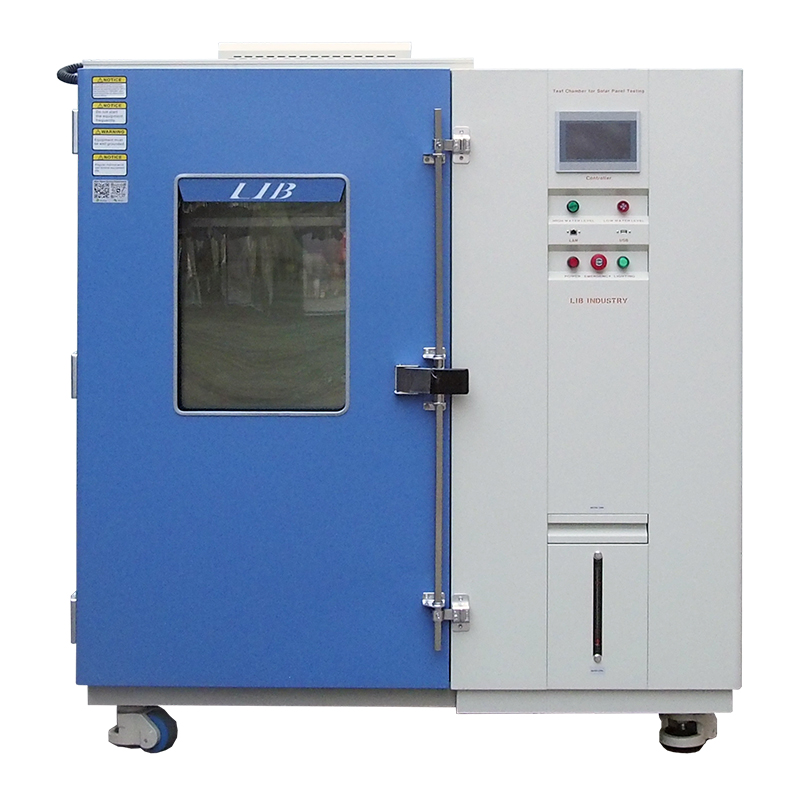
To truly comprehend how solar panels survive decades of harsh outdoor exposure, it is necessary to examine the testing infrastructure that validates their durability. An environmental testing apparatus is a highly controlled, enclosed testing environment capable of manipulating temperature, humidity, and occasionally light spectrums to exact specifications. By compressing years of environmental wear and tear into a manageable testing window, these machines allow engineers to observe long-term material behaviors in real-time.
Unlike compact microelectronics, a modern photovoltaic asset is a massive, cumbersome piece of hardware. Commercial panels frequently exceed two meters in length and weigh over 30 kilograms. Consequently, laboratories must utilize expansive walk-in or drive-in chambers equipped with reinforced racking systems. Walking into one of these cavernous enclosures, you will find multiple full-sized panels mounted simultaneously. This ensures that the testing environment accurately reflects the mechanical and thermal stress the entire module will face in the field, rather than just analyzing a small material coupon.
While often used interchangeably, quality and reliability are distinct concepts on the manufacturing floor. Quality management ensures that a panel is built correctly today—producing the expected wattage right off the assembly line. In contrast, reliability is the empirical measure of how long that quality endures. Reliability testing proves that the panel will resist degradation from relentless sun, freezing rain, and fluctuating humidity over its intended 25-year lifecycle.
The solar industry relies heavily on standardized testing protocols to establish a baseline of durability across all global manufacturers. The most critical of these international benchmarks is the IEC 61215 standard.
Published by the International Electrotechnical Commission, this globally recognized standard dictates the design qualification and type approval of terrestrial photovoltaic modules. It features a rigorous suite of tests evaluating how well a panel's materials and construction withstand prolonged outdoor exposure. Passing this standard is not merely a badge of honor; it is essentially a mandatory prerequisite for entering the global solar market, securing project financing, and obtaining necessary safety certifications.
Industry observers have noted a significant shift as the solar sector moves toward larger 210mm silicon wafers and high-output bifacial architectures. The demands on testing infrastructure have surged accordingly. Recent market analyses indicate a growing consensus that legacy testing protocols are no longer sufficient. Consequently, we see a pronounced industry shift toward extended reliability testing. Manufacturers are now frequently doubling the standard cycle counts required by baseline certifications to secure long-term bankability for these next-generation modules in extreme, unpredictable climates.
A climatic chamber used for solar applications is far more sophisticated than a standard heating or cooling box. It is specifically caLIBrated to meet the exact parameters dictated by the standard. It defines temperature ramp rates, specific relative humidity percentages, and precise dwell times. Advanced programmable logic controllers and precision aerodynamic sensors ensure the internal climate adheres to these stringent profiles without any deviation, preventing skewed data.
Moisture is arguably one of the most insidious threats to solar panel longevity. Water vapor can silently penetrate microscopic vulnerabilities, causing irreversible damage over time.
During the Damp Heat test, the module is placed inside the chamber and subjected to a steady-state, oppressive microclimate of 85°C and 85% relative humidity. According to standard protocols, the panel must endure this environment for a continuous 1,000 hours, which translates to just over 41 days. The testing apparatus must maintain this precise, unyielding climate without fluctuation to accurately simulate decades of exposure in tropical, subtropical, or highly humid coastal environments.
Inside the sealed testing envelope, microscopic water vapor is relentlessly driven into the polymeric backsheets and edge seals. This prolonged exposure is highly effective at uncovering critical material failures. Specifically, it reveals Ethylene Vinyl Acetate (EVA) delamination, where the encapsulant breaks down and causes the panel layers to separate. Furthermore, moisture ingress triggers galvanic corrosion of the silver grid lines and electrical contacts. This process drastically increases series resistance and destroys power output. It can also degrade the anti-reflective coating on the solar glass, significantly reducing light absorption.
Solar panels installed in arid deserts or high-altitude regions experience drastic, punishing temperature shifts between day and night. Testing replicates these harsh diurnal variations to ensure structural integrity.
The Thermal Cycling test requires the chamber's heavy-duty compressors to rapidly shift the internal temperature from a freezing -40°C up to a scorching +85°C, and then back down again. Depending on the specific phase of certification or the manufacturer's internal quality goals, a panel will be subjected to anywhere from 50 to 200 continuous cycles. The chamber must control the ramp rate meticulously, typically not exceeding 100°C per hour. This ensures the temperature changes fast enough to induce mechanical stress, but not so fast that it causes unrealistic thermal shock.
The physics behind this evaluation rely heavily on the Coefficient of Thermal Expansion. A solar panel is a rigid composite of vastly different materials: tempered glass, brittle silicon cells, aluminum frames, and copper interconnect ribbons. Because each material expands and contracts at a different rate, fluctuating temperatures create immense mechanical shear stress. Over hundreds of cycles, this mismatch successfully exposes hidden vulnerabilities such as solder joint fatigue, microscopic cracks in the silicon wafers, and the snapping of interconnect ribbons—all of which would lead to a catastrophic loss of power generation in the field.
While heat and cold are destructive on their own, the combination of moisture and freezing temperatures presents a unique, compounding mechanical threat to solar infrastructure.
The Humidity-Freeze test elegantly combines the distinct challenges of both moisture saturation and thermal expansion. First, the panel is subjected to high heat and humidity to aggressively force moisture into the microscopic voids of the module's polymers and seals. Once the panel is thoroughly saturated, the chamber rapidly drops the temperature to sub-zero levels of -40°C.
When the trapped moisture freezes, it undergoes volumetric expansion, as water expands by approximately 9% when turning to ice. This expansion acts like a microscopic wedge inside the panel's delicate layers. Consequently, this test is vital for identifying hidden weaknesses in edge seals, backsheet adhesion, and junction box potting compounds. Passing this rigorous evaluation ensures that a panel will not shatter, delaminate, or suffer electrical shorts during severe winter storms or brutal freeze-thaw cycles in colder climates.
Beyond the core trio of temperature and humidity tests, advanced testing enclosures can be configured to support a much wider array of specialized reliability assessments.
Potential Induced Degradation occurs when voltage leaks from the solar cells to the grounded aluminum frame, causing a massive, unexpected drop in power output. This phenomenon is heavily exacerbated by high temperatures and high humidity. To test for this, laboratories use climatic chambers in conjunction with high-voltage power supplies. The panel is subjected to 60°C to 85°C and 85% RH while a high voltage, often 1000V or 1500V, is actively applied. This setup accelerates the ion mobility that causes this degradation, allowing engineers to verify the effectiveness of advanced anti-PID cell coatings and encapsulants.
Certain specialized chambers incorporate ultraviolet light banks to perform UV preconditioning. This specific process tests the susceptibility of the panel's polymers to UV degradation and yellowing before they undergo thermal testing. In addition, for panels destined for coastal or marine environments, salt mist chambers are utilized to spray a corrosive saline fog over the modules. This rigorously tests the corrosion resistance of the aluminum frames, mounting hardware, and junction box seals against harsh ocean winds.
The global transition toward renewable energy is underpinned by the assumption that solar installations will operate efficiently for decades. However, this longevity is never guaranteed by manufacturing quality alone; it must be empirically validated. Skipping rigorous evaluation is a high-risk gamble that can lead to catastrophic financial consequences for manufacturers, project developers, and investors alike.
When a PV module fails in a controlled laboratory setting, the financial loss is limited to the prototype and the engineering hours required for root cause analysis. In sharp contrast, when that same module fails in a live, utility-scale solar farm, the financial impact multiplies exponentially. Field failures do not merely result in the cost of replacing the defective hardware.
Consider the logistical nightmare of identifying specific failing panels among hundreds of thousands of identical units. This often requires deploying expensive drone thermography fleets or conducting on-site electroluminescence imaging across hundreds of acres. Once identified, skilled labor must be dispatched to unmount the defective panels, install replacements, and meticulously rewire the strings. Furthermore, the most significant financial blow often stems from the lost energy yield during system downtime and the failure to meet stringent Power Purchase Agreement output guarantees. A systematic failure related to inadequate thermal validation can easily wipe out the profit margins of an entire solar project.
In the business-to-business solar market, brand reputation is paramount. Large-scale utility developers and engineering firms rely heavily on industry rankings to select their module suppliers. To maintain coveted Tier 1 status, a manufacturer must consistently demonstrate that their products are bankable and reliable across multiple large-scale deployments.
If a manufacturer attempts to accelerate their time-to-market by bypassing comprehensive testing, they expose themselves to the risk of mass field failures. A single high-profile failure event, such as widespread backsheet delamination within the first five years, can permanently tarnish a brand's reputation. Once trust is broken in the utility-scale sector, engineering firms will rapidly pivot to competitors who can provide exhaustive reliability data.
Large-scale solar projects dictate hundreds of millions of dollars in capital investment. Institutional investors and banks will not finance a project without comprehensive risk mitigation. Independent engineers demand empirical proof that the chosen panels can withstand the specific environmental stresses of the installation site. Without certified test reports generated from industry-standard testing infrastructure, the modules are deemed unbankable, forcing investors to either deny funding entirely or impose exorbitant interest rates.
Outfitting a solar testing laboratory requires careful consideration of engineering specifications, international standards, and the physical realities of modern photovoltaic technology. Selecting the wrong equipment can lead to invalid test data, compliance failures, and severe operational bottlenecks.
The physical dimensions of solar panels have evolved dramatically over the past decade. With the industry shifting toward larger silicon wafers and high-output designs, modern commercial panels frequently exceed 2.3 meters in length. Consequently, standard reach-in chambers are no longer sufficient for full-scale module certification. Laboratories must invest in large-capacity walk-in or drive-in chambers that not only accommodate multiple oversized panels simultaneously but also allow for adequate aerodynamic airflow around every unit, preventing localized microclimates that invalidate test results.
Dynamic testing places immense strain on the mechanical components of a test chamber. To achieve and maintain precise ramp rates while fully loaded with massive, thermally dense glass and aluminum, the chamber must be equipped with high-capacity refrigeration compressors and robust heating elements. A chamber with an underpowered compressor will fail to reach the -40°C target within the allotted time frame, causing the laboratory to fail strict audit requirements. Advanced Proportional-Integral-Derivative controllers are essential to ensure temperature transitions occur smoothly without overshooting target metrics.
While dynamic tests require raw cooling and heating power, steady-state tests demand absolute precision. Achieving this requires highly sophisticated psychrometric control. If the internal temperature fluctuates by even a few degrees, the relative humidity will shift, potentially causing unwanted condensation to form on the surface of the panel. This condensation creates localized water pooling, which misrepresents the natural moisture ingress process and leads to false failure data. High-quality chambers utilize strategically placed sensors to ensure variance across the entire testing envelope remains within a strict ±2°C and ±3% RH tolerance.
When outfitting a testing facility, investing in a robust, industry-compliant machine is non-negotiable. Compromising on chamber quality will inevitably lead to disrupted testing schedules and questionable data integrity. By integrating specialized, high-capacity equipment designed specifically to handle the thermal mass and dimensional requirements of modern solar panels, manufacturers can streamline their certification processes and confidently bring highly reliable products to the global market.
Completing the full certification is a time-intensive process that generally spans three to five months. Moisture resistance tests alone require 1,000 continuous hours, equating to nearly 42 days of uninterrupted chamber operation. Thermal cycling adds another 30 to 40 days, depending on the specific ramp rates and dwell times used. Because the standard requires multiple panels to undergo different testing sequences in parallel, laboratories often utilize several chambers simultaneously to expedite the overall timeline.
Yes, a high-tier climatic test chamber is specifically engineered to handle both steady-state environments and dynamic temperature shifts. It features both the precise moisture control systems required for high-humidity tests and the heavy-duty refrigeration systems needed to rapidly drop temperatures to -40°C. Investing in a versatile chamber that seamlessly transitions between these distinct testing protocols provides maximum flexibility and operational efficiency.
If a module fails, defined by international standards as a power output degradation of more than 5%, a failure in wet leakage current insulation, or severe visual defects like delamination, the certification process is immediately halted. The manufacturer's engineering team must then conduct a thorough Root Cause Analysis, often tearing down the module to inspect fatigue or degradation. Once the design flaw is corrected, a new batch of prototypes must be produced to restart the testing sequence from the beginning.
For commercial certification of full-sized modules, a walk-in or drive-in chamber is virtually mandatory due to the expansive physical footprint of modern panels. However, smaller reach-in chambers remain highly valuable in research and development labs. They are frequently used to test mini-modules or specific material coupons, such as EVA films and individual solar cells, during the early stages of product development.
No, environmental testing is critical for all photovoltaic technologies, though exact testing parameters may be adapted. Thin-film solar cells, bifacial modules, and emerging technologies like perovskite solar cells all undergo rigorous chamber testing. For next-generation technologies that are notoriously sensitive to moisture and oxygen ingress, aggressive humidity testing is arguably even more critical than it is for traditional crystalline silicon.
Ultimately, a solar panel is only as valuable as its ability to survive the harsh realities of prolonged outdoor exposure. An environmental test chamber acts as the ultimate time machine, empirically proving a panel's 25-year durability in a matter of weeks. By rigorously applying accelerated stress tests, manufacturers actively protect their renewable energy investments and ensure consumer safety on a global scale. Meeting stringent international standards prevents costly, catastrophic failures in large utility projects. As the industry continues to scale, manufacturers and laboratory directors must proactively upgrade their testing equipment to handle modern demands, ensuring that reliable testing continues to drive the global transition to sustainable energy. Contact our technical team today to discuss how our specialized chamber solutions can secure the long-term reliability and bankability of your solar projects.


