
Views: 0 Author: Site Editor Publish Time: 2026-10-30 Origin: Site


Modern engineering relies heavily on the integration of advanced materials to push the boundaries of performance and efficiency. In sectors ranging from aerospace and automotive to renewable energy, there is an ever-growing demand for lighter, stronger, and more resilient structures. Composite materials have emerged as the frontrunners in this technological race due to their exceptional strength-to-weight ratios. These materials are not monolithic. They are engineered from diverse substances like carbon fibers and polymer resins. Because these constituent materials react uniquely to temperature fluctuations, they often face a severe phenomenon known as thermal mismatch.
Over time, this interaction leads to significant structural degradation. This is exactly why utilizing a robust Environmental Test Chamber has become a prerequisite for ensuring safety and longevity in high-stakes applications. Relying on theoretical calculations is no longer enough. Engineers need empirical data to prove that a component will survive its intended environment.
At its core, Temperature Cycling is a meticulously controlled testing procedure. It is designed to subject a material to repeated, alternating extremes of heat and cold over a predefined duration. Unlike static stress tests, this dynamic process emulates the erratic temperature swings a component will encounter throughout its operational lifecycle. Engineers rely on these cycles to observe how physical and chemical attributes of a material evolve under the stress of continuous thermal fatigue.
The imperative for this testing stems from the fundamental architecture of the material itself. Most advanced composites consist of a reinforcing fiber embedded within a polymer matrix. Each of these components possesses a distinct Coefficient of Thermal Expansion. This metric dictates how much a substance expands or contracts under thermal load. When heated, the polymer matrix tends to expand significantly, whereas the carbon or glass fiber remains relatively stable. During cooling, the matrix contracts and exerts intense pressure on the fibers. This repeated, uneven stress concentration inevitably triggers internal shear forces. If left unvalidated, these forces can lead to catastrophic failure during real-world deployment.
Consider the harsh reality of an aerospace component. An airplane wing may sit on a sun-drenched tarmac at 45 degrees Celsius, only to ascend rapidly to cruising altitudes where temperatures plummet to minus 50 degrees Celsius. This cycle repeats across countless flights. Validating material endurance under these conditions is not just a quality control measure. It is a critical safety requirement.
The composite manufacturing landscape is currently undergoing a massive transformation. As global industries move toward more sustainable and lightweight designs, the usage of thermoplastics and bio-based resins is increasing exponentially. This trend is reshaping traditional manufacturing paradigms, but it also introduces new engineering challenges.
These eco-friendly alternatives often exhibit uncharted thermal sensitivities compared to legacy epoxy thermosets. Their molecular structures respond differently to rapid cooling and prolonged heat exposure. Consequently, relying on historical data is no longer a viable strategy for product developers. This shift necessitates even more rigorous testing standards and highly adaptable testing equipment to validate every new matrix formulation before it enters mass production.
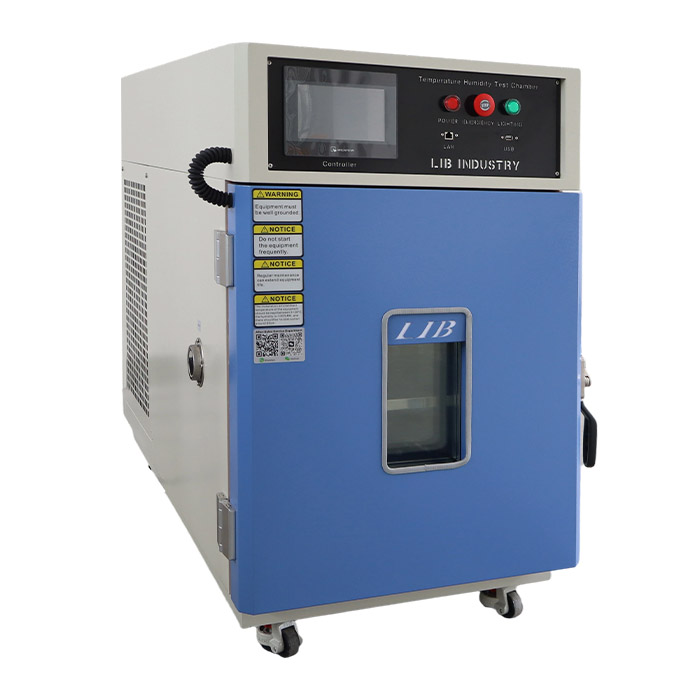
A specialized chamber functions as a sophisticated laboratory asset, capable of artificially replicating specific climatic conditions with high fidelity. By subjecting components or full-scale assemblies to extreme temperatures and humidity, technicians can observe potential degradation in a safe, repeatable setting. The core functionality of these systems relies on a synergy between high-velocity airflow, advanced heating elements, and cascade refrigeration.
It is vital to distinguish these chambers from standard industrial ovens. While an oven serves basic thermal needs, it lacks the integrated, rapid active cooling capabilities essential for simulating violent transition rates. A modern Thermal Cycling Chamber employs precision PID controllers and PT100 sensors to manage these variables. High-end models utilize mechanical cascade refrigeration to achieve temperatures as low as minus 70 degrees Celsius and heating elements that push up to 150 degrees Celsius. They allow for the precise programming of thermal profiles, including critical ramp-up and ramp-down rates ranging from 5 to 15 degrees Celsius per minute.
Environmental testing essentially condenses years of field-level thermal stress into a manageable window of days or weeks. By running continuous, intensive cycles, the equipment uncovers hidden structural weaknesses that would otherwise only manifest after long-term wear. This proactive identification is invaluable in the product development lifecycle. It prevents costly field failures and protects brand integrity.
During these rigorous cycles, technicians typically observe three primary failure modes in a Composite Material.
To acquire valid reliability data, selecting the correct testing methodology is paramount. Both procedures utilize hot and cold extremes, but they serve entirely distinct analytical purposes. Standard cycling involves a gradual, controlled transition aimed at assessing long-term fatigue. Thermal shock is characterized by a near-instantaneous transfer between zones, designed to force immediate failure caused by violent contraction or expansion.
| Feature | Standard Temperature Cycling | Thermal Shock Testing |
|---|---|---|
| Transition Speed | Gradual ramp rates of 5 to 20 degrees Celsius per minute. | Near-instantaneous transfer, typically under 10 seconds. |
| Primary Goal | Simulate long-term operational fatigue and wear. | Identify catastrophic weaknesses and manufacturing defects. |
| Typical Application | Automotive panels, wind turbine blades, consumer electronics. | Aerospace housings, satellite components, military hardware. |
| Stress Type | Progressive shear stress and micro-cracking over time. | Violent expansion and contraction causing immediate rupture. |
Selecting the appropriate setup depends entirely on the end-use of the product. Multifunctional systems are available that can handle both, but understanding the specific failure mechanism you need to observe will dictate your testing protocol.
Beyond reliability validation, high-performance equipment plays an indispensable role in the initial manufacturing stages. The process of Curing is a delicate chemical reaction where liquid resins transition into a solid matrix via cross-linking. Often, once removed from the primary mold, the resin is not fully solidified. This is where a secondary, highly controlled heating cycle becomes critical.
By placing parts within a precision chamber, manufacturers can allow the material to achieve its target glass transition temperature. This maximizes its mechanical properties. This process also facilitates the relief of residual stresses that become trapped during the initial layup. By carefully controlling the ramp-down rate, the internal molecular structure of the polymer matrix can relax. This prevents the warping or premature structural failure often seen in parts cooled too quickly under uncontrolled factory conditions.
Investing in correct testing infrastructure is a significant capital commitment that directly impacts product quality and market readiness. When selecting equipment, engineering teams must move beyond basic temperature ranges and evaluate specific operational requirements.
First, consider the internal volume. A 225-liter benchtop unit is perfect for testing small material coupons and fasteners. However, validating sub-assemblies like drone frames or automotive structural pillars requires a floor model with a capacity of 1000 liters or more. Second, evaluate the required ramp rate. Standard fatigue testing usually requires 5 degrees Celsius per minute, while Environmental Stress Screening demands aggressive rates of 15 degrees Celsius per minute to force latent defects to the surface.
Finally, prioritize humidity control capabilities. Incorporating moisture provides a much more nuanced understanding of how composites behave in real-world environments. Moisture absorption acts as a plasticizer that fundamentally alters the mechanical performance of the resin. Look for systems that offer a stable humidity range of 20 percent to 98 percent relative humidity to ensure comprehensive hygrothermal analysis.
Ultimately, a precision chamber is more than a piece of laboratory hardware. It is a vital bridge between theoretical design and physical reality. By identifying fatigue early, optimizing manufacturing processes, and ensuring compliance with global standards like ASTM D5229, these systems enable engineers to push the boundaries of modern materials.
Do not leave the reliability of your advanced structures to chance. Evaluate your specific thermal stress requirements and invest in validated testing infrastructure. By choosing professional, standardized solutions from industry leaders, you can confidently secure your product lifecycle and maintain a competitive edge in the market.
The duration varies depending on the specific industry standard and the intended lifespan of the material. While some tests may conclude in a few days, others requiring thousands of cycles to simulate decades of usage can take several weeks or even months to complete.
Yes, many modern, programmable systems are highly versatile. They can be used for the controlled post-curing of composites to achieve optimal mechanical properties and subsequently reconfigured to perform rigorous environmental stress tests on the finished product.
Micro-cracking within the polymer matrix is the most frequent early indicator of thermal fatigue. This occurs because the reinforcing fibers and the resin matrix expand at different rates, creating internal stress that fractures the resin and leads to structural delamination if left unchecked.
The transition rate dictates the speed of the internal temperature change. If the rate is too slow, it may fail to simulate real-world thermal stress. If it is too fast, the test transitions into a thermal shock scenario, which targets completely different failure mechanisms. Precise control is essential for accurate data.
While standard temperature cycling provides necessary data, humidity control is highly recommended for comprehensive analysis. Composites often absorb moisture, which alters their mechanical properties. Hygrothermal testing provides a significantly more realistic simulation of environmental degradation.
Standard cycling simulates normal environmental wear over time using moderate temperature transition rates. Environmental Stress Screening is an aggressive manufacturing quality control tool. It uses rapid temperature transitions, often combined with vibration, to force latent manufacturing defects to fail before the product leaves the factory.
Condensation occurs when the surface temperature of the composite drops below the dew point of the air inside the workspace. Advanced testing equipment prevents this by utilizing dry air purge systems or nitrogen injection. These systems rapidly lower the internal dew point, keeping the sample dry during aggressive cooling phases.


