Views: 0 Author: Site Editor Publish Time: 2026-07-03 Origin: Site


Product failures due to water ingress routinely cause massive headaches for global manufacturers. They trigger immediate warranty claims, lead to harsh compliance rejections, and severely damage consumer brand reputation. You simply cannot risk launching outdoor electronics or automotive parts without verifying their weather resistance first. Reliable waterproof testing requires highly controlled, repeatable environments.
These sophisticated enclosures must perfectly mimic real-world moisture exposure according to strict international standards. Without precision instrumentation, your test results mean absolutely nothing in a compliance audit. This guide breaks down the exact mechanical processes behind these crucial evaluations. We explore how different physical spray mechanisms map directly to specific compliance frameworks. Finally, we examine the essential criteria you must prioritize when selecting an IP Rain Test Chamber for your internal testing facility.
1. A rain test chamber relies on precise volumetric flow, pressure regulation, and spatial geometry to replicate specific weather conditions.
2. Different IPX standards (from vertical dripping to high-pressure jets) dictate the mechanical configuration of the chamber.
3. Evaluating an IP rain test chamber requires scrutinizing its PLC control accuracy, water filtration systems, and calibration stability.
4. Facility integration involves strict prerequisites for drainage, water quality, and footprint alignment with your product's maximum payload.
To fully understand waterproof testing, we must look inside the machine. A testing chamber does not simply spray water haphazardly. It functions as a highly calibrated measurement instrument. The internal mechanics work together to ensure every test remains perfectly repeatable.
Inconsistent water pressure ruins test validity. Municipal water lines constantly fluctuate. Testing equipment solves this problem using dedicated internal pumps. These pumps work alongside digital flow meters to maintain a constant, verifiable water volume. They instantly compensate for any pressure drops during the testing cycle. You can always trust the output volume matches the standard requirements exactly. This precise regulation ensures the water hits your product at the exact specified velocity.
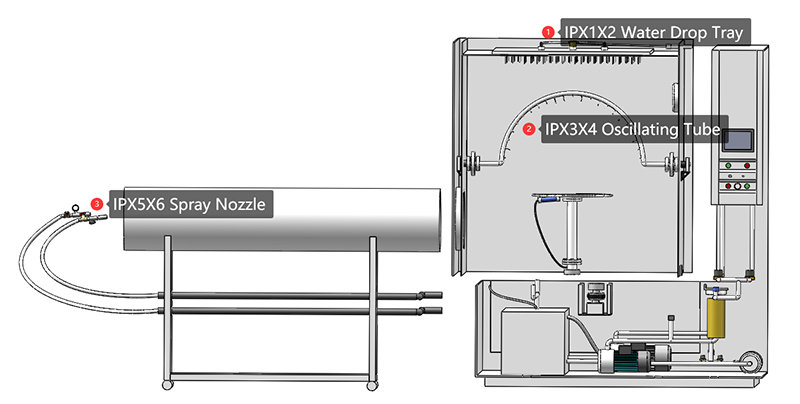
Spatial geometry plays a massive role in moisture simulation. The machine must expose the Device Under Test (DUT) to water from highly specific angles. Pendulum tubes swing in precise arcs to achieve this. These oscillating tubes feature precisely spaced spray nozzles. Meanwhile, motorized turntables slowly rotate the DUT inside the workspace. This constant rotation ensures complete 360-degree exposure. It helps technicians identify microscopic seal weaknesses hidden in blind spots.
Modern testing requires robust documentation. The Programmable Logic Controller (PLC) acts as the central brain of the testing equipment. It dictates the mechanical movements and logs critical data simultaneously. Modern systems track flow rates, test duration, and water temperature in real-time. The PLC compiles these metrics to generate compliant audit trails. You need these unalterable logs to prove compliance to regulatory bodies and safety certification agencies.
Different products require varying levels of weather protection. International standards like IEC 60529 categorize these levels into specific "IPX" ratings. An advanced Rain Test Chamber adapts its mechanical configuration to match these strict guidelines.
| IP Rating | Simulated Environment | Mechanical Configuration | Exposure Angle |
|---|---|---|---|
| IPX1 / IPX2 | Vertical condensation or light rain | Drip box with hypodermic needles | Vertical (0°) to 15° tilt |
| IPX3 / IPX4 | Heavy rain and splashing | Oscillating arc tubes / Spray nozzles | Up to 60° (IPX3) or 180° (IPX4) |
| IPX5 / IPX6 | High-pressure water jets | 6.3mm and 12.5mm specialized nozzles | All applicable angles from 2.5m to 3m |
These entry-level tests simulate vertical rainfall and indoor condensation. The chamber utilizes a specialized drip box mounted at the top. This box contains uniformly spaced hypodermic needles. They release water droplets at a precisely calculated mathematical rate. For IPX2, the turntable tilts the product at a 15-degree angle. This test verifies if sloping surfaces effectively shed water away from sensitive joints.
Outdoor electronics typically demand IPX3 or IPX4 compliance. These tests introduce oscillating arc tubes. For IPX3, the tube sprays water up to a 60-degree angle from the vertical axis. IPX4 pushes this further to a full 180-degree splash simulation. The standard dictates the exact water volume exiting each tiny hole along the oscillating tube. This configuration aggressively tests overlapping seams and rubber gaskets.
Marine equipment and heavy-duty outdoor gear face harsh environments. IPX5 and IPX6 testing simulates high-velocity water jets. The chamber deploys specific jetting mechanisms for this task. IPX5 requires a 6.3mm nozzle diameter, while IPX6 demands a larger 12.5mm nozzle. IEC 60529 strictly mandates the distance between the nozzle and the product. The jet must strike the enclosure forcefully to expose structural flexion and dynamic seal failures.
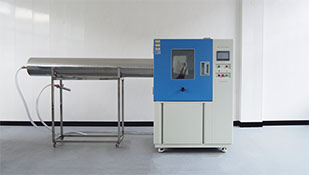
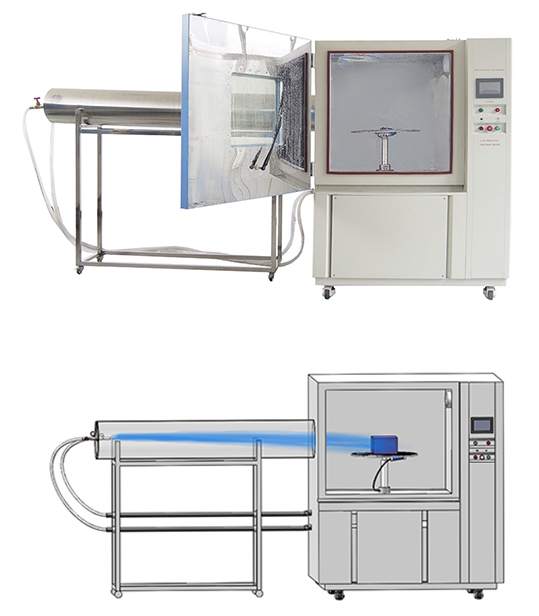
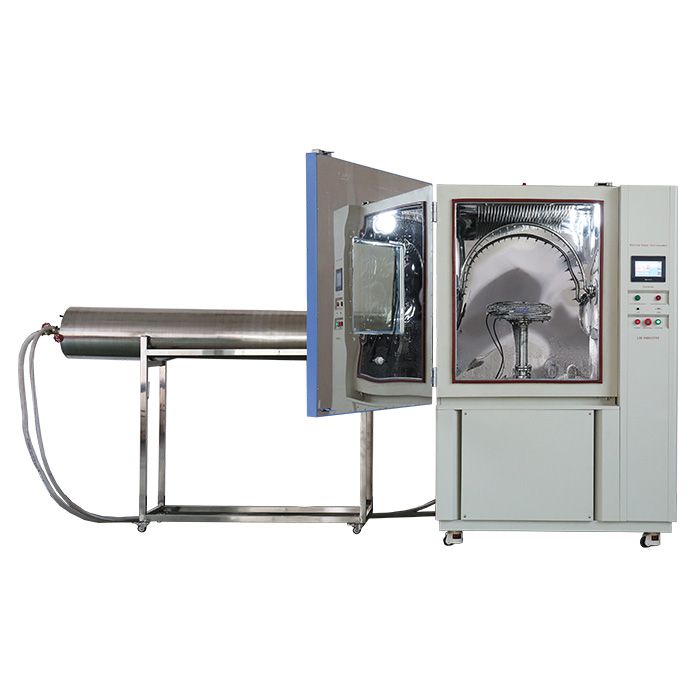
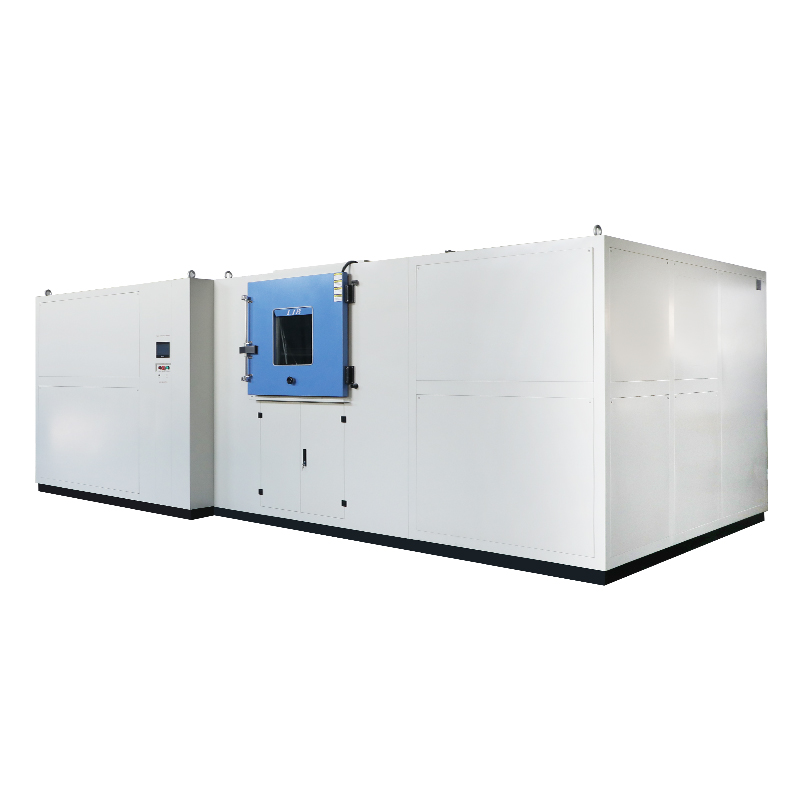
LIB's Popular IEC 60529 IPX1/IPX2/IPX3/IPX4/IPX5/IPX6 Combined Waterproof Test Chamber | Model | RD-800C | RD-1200C |
| Internal Dimensions (mm) | 900*950*950 | 1300*1350*1370 | |
| Overall Dimensions (mm) | 1180*1420*1920 (excluding stainless steel tube) | 1540*1820*2200 (excluding stainless steel tube) | |
| Useful Volume (L) | 810 | 2400 | |
| Drip Tray Size | 600*600 | 1000*1000 | |
| Oscillating Tube Radius | 400mm | 600mm | |
| Water Jetting Tube | |||
| Spraying Hole Diameter | φ0.4mm | ||
| Hole Spacing | 50 mm | ||
| Swing Angle of Oscillating Tube | 0 ~ ±180° (Adjustable) | ||
| Jet nozzles | IPX5: Dia6.3mm, IPX6: Dia12.5mm | ||
| Jet distance | 2.5~3meter | ||
| Turntable Rotation Speed | 1r/min (Adjustable speed) | ||
| Controller | Programmable color LCD touch screen controller, Ethernet connection, USB port | ||
| Water supply system | Water tank, booster pump, Automatic water supply, Water purification system | ||
| Safety Device | Over-temperature Protection; Over-current Protection; | ||
| Water Shortage Protection; Earth leakage Protection; Phase Sequence Protection | |||
| Exterior Material | Steel Plate with protective coating | ||
| Interior Material | SUS304 stainless steel | ||
| Observation Window | Double layer insulating glass with wiper | ||
You must understand the boundaries of standard spray equipment. Immersion testing (IPX7 and IPX8) requires distinct pressurized water tanks. High-temperature pressure washing (IPX9K) involves entirely different equipment configurations. IPX9K tests use 80°C water at extremely high pressures. A standard enclosure cannot safely handle those thermal and kinetic loads. You will need a specialized high-temperature jetting chamber for those specific automotive standards.
| LIB Best-Selling Dust and Water Test Equipment | |||
| 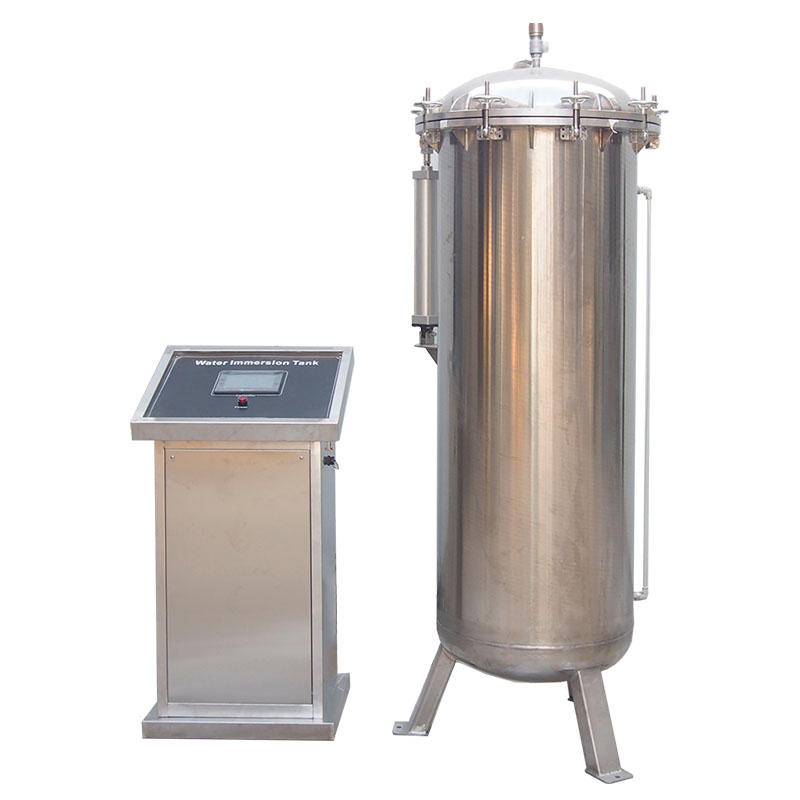 | 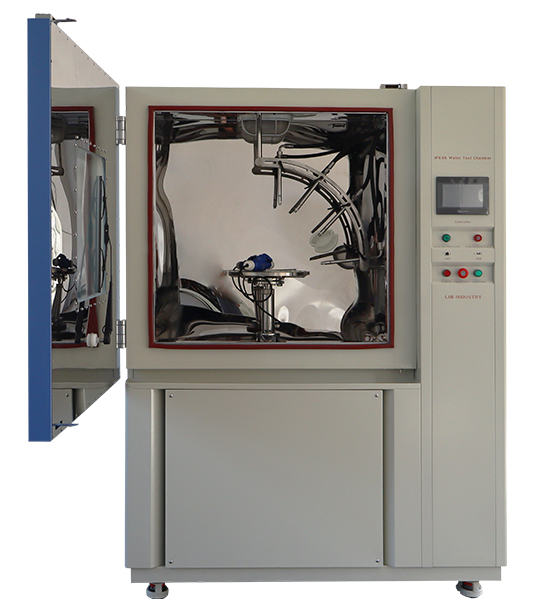 | 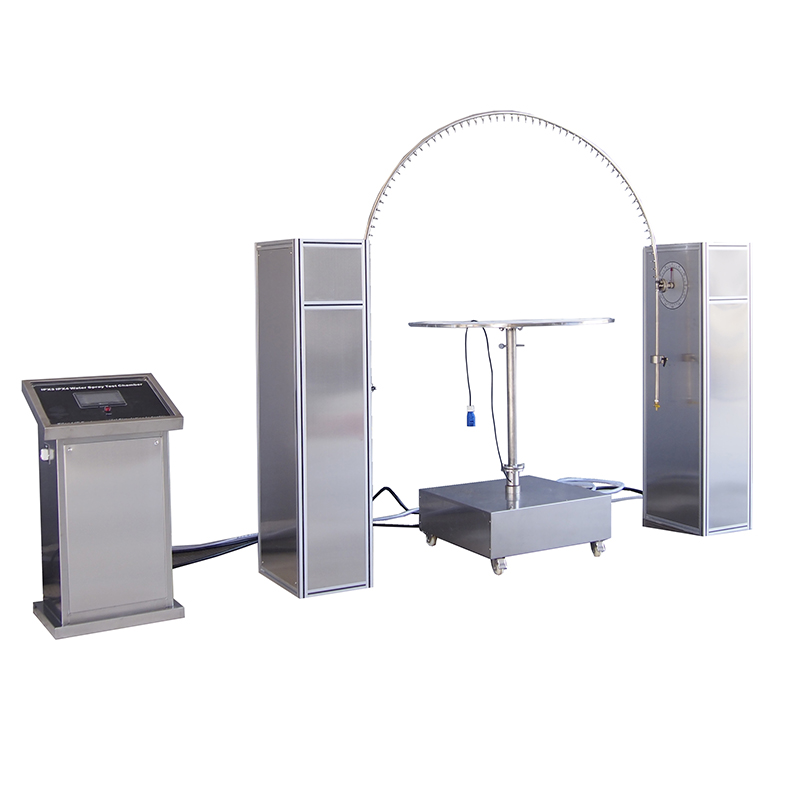 |
Combined Chamber(IPX1 X2 X3 X4 X5 X6) Multi-level IP testing, Space-saving design | IPX7 IPX8 Water Immersion Test Equipment Deep water simulation,Long-duration immersion | IPX9K High Pressure Water Spray Test Chamber 88°C hot water jets, High-pressure spray testing | Whole Set of IP Test Equipment-No Housing Type Easy sample loading, flexable |
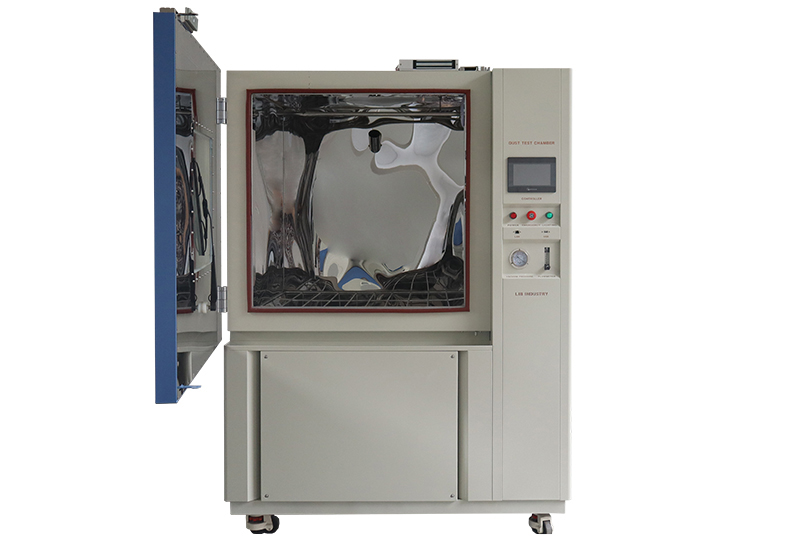 |  |  | |
IP5X/6X Sand and Dust Test Chamber Controlled dust circulation, IEC 60529 compliance | MIL-STD-810 Sand and Dust Test Chamber Harsh dust simulation, Defense and aerospace testing | Harsh water simulation, Defense and aerospace testing | |
Not all testing enclosures deliver the same reliability. When you evaluate an IP Rain Test Chamber, you must look past the basic specifications. Superior engineering directly impacts test repeatability and equipment longevity.
Constant moisture exposure destroys inferior metals quickly. You must insist on SUS304 stainless steel interiors. This high-grade alloy prevents rust and resists pitting. Rust does not just damage the machine itself. Iron oxide particles will contaminate the test water. Contaminated water can stain your product prototypes and alter the physical properties of the spray.
Modern testing facilities prioritize resource efficiency. Advanced chambers feature closed-loop water systems. They capture the runoff, filter it, and pump it back into the reservoir. This integrated filtration prevents microscopic debris from causing nozzle blockages. It also drastically reduces facility water consumption. A high-quality multistage filter keeps the mechanical pathways clear over thousands of testing cycles.
Analog pressure gauges simply cannot provide modern compliance accuracy. You need digital, self-calibrating flow sensors. Digital sensors react instantly to flow anomalies. They communicate directly with the PLC to adjust pump speeds. This closed-loop communication ensures repeatable test conditions every single time. It completely removes human error from the flow regulation process.
Operators must observe the product during the physical test. Enclosures require large, tempered glass viewing windows. Internal wipers and bright LED lighting ensure clear visibility through the heavy spray. Safety mechanisms are equally crucial. Look for automated power-off protections for the DUT. If water breaches the product and causes a short circuit, the chamber must sever power immediately to prevent electrical fires.
Request the sensor calibration certificates before finalizing any purchase.
Verify the internal dimensions allow for the required clearance around your largest product.
Inspect the quality of the door seals to ensure water will not leak onto your laboratory floor.
Ensure the software interface allows easy exportation of test logs to your local network.
Integrating a large water-based testing instrument into a dry laboratory presents unique challenges. You must prepare your facility adequately. Ignoring these implementation realities leads to rapid equipment degradation and invalid test results.
Using standard tap water is a massive mistake. Municipal water contains dissolved minerals like calcium and magnesium. Hard water creates severe mineral scaling on microscopic nozzle apertures. Even a partial blockage changes the spray angle and invalidates your IPX certification. You must utilize deionized or highly purified water inputs. Purified water protects the internal plumbing and ensures completely consistent fluid dynamics.
These machines are heavy, especially when fully loaded with water. You must verify your floor load capacity beforehand. Power supply stability also demands attention. Voltage drops can cause pump speeds to fluctuate momentarily. Furthermore, even closed-loop systems require emergency drainage systems. If a primary reservoir valve fails, your lab floor needs a floor drain to handle the sudden water displacement safely.
Sensors do not stay perfectly accurate forever. Component wear and tear causes inevitable calibration drift. Flow meters degrade over time. Turntable motors lose minor rotational precision. You must acknowledge this reality upfront. Maintaining compliance validity requires annual ISO 17025 calibration. Certified technicians must verify every nozzle diameter, flow rate, and mechanical angle against a master standard.
Connecting the machine directly to an unfiltered municipal water source.
Placing the equipment in a room without adequate ventilation for ambient humidity control.
Failing to clean the internal reservoir regularly, leading to algae growth.
Ignoring minor leaks around the door seals until they cause structural rust.
Choosing the correct equipment model requires a systematic approach. You must align your current product portfolio with the mechanical limitations of the testing enclosure. A thoughtful shortlisting process prevents costly testing bottlenecks later.
You cannot simply buy a chamber that fits your product exactly. International standards dictate strict clearance rules. Here is a basic framework for sizing your machine:
Measure the Maximum DUT: Calculate the exact dimensions and weight of your largest expected product.
Add Standard Clearances: IEC standards require specific distances between the spray nozzles and the product surface (often 200mm to 1000mm depending on the IPX level).
Calculate Payload: Verify the motorized turntable can handle the product's weight without grinding the motor gears.
Determine Final Volume: Select an internal workspace volume that comfortably accommodates both the DUT and the required spray distances.
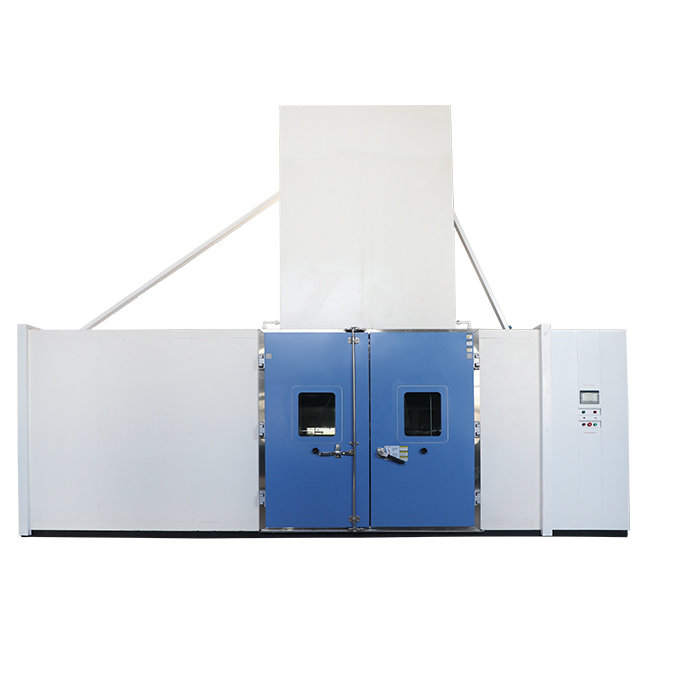
You must decide between an enclosed box and an open-frame system. A standardized box chamber works perfectly for consumer electronics, automotive components, and small appliances. It contains the moisture entirely. However, oversized industrial equipment often requires a custom approach. Modular, open-frame setups allow you to wheel massive generators or telecom racks into a dedicated wet room. Open-frame systems require specialized room waterproofing and heavy-duty floor drainage.
The physical hardware represents only half the equation. You must evaluate the vendor's technical support infrastructure. Comprehensive factory acceptance testing (FAT) ensures the machine meets your exact specifications before it ships. You also need a vendor who provides readily available spare nozzles and filters. Finally, verify their software integration capabilities. The machine's control system must easily export data to your existing quality management systems (QMS).
A rain test chamber is not just a commercial water sprayer. It operates as a highly sophisticated precision measurement instrument. It serves as your primary defense against product liability claims and regulatory failures. By controlling volumetric flow and spatial geometry, it exposes design flaws long before your product reaches the consumer market.
To ensure testing success, prioritize purified water inputs and rigorous maintenance schedules. Always perform a thorough review of your most stringent required IP standard before engaging equipment manufacturers. Accurately map your product dimensions against required nozzle clearances. We highly recommend you consult with a dedicated testing equipment specialist. They will review your specific application requirements and guide you toward a fully compliant, reliable testing solution.
A: Yes, comprehensive chambers integrate multiple mechanisms into one unit. They feature drip boxes at the top and oscillating tubes on the sides. They also include jet nozzles for higher ratings. However, switching between these modes requires careful automated or manual reconfiguration to ensure standard compliance.
A: A closed-loop system consumes very little fresh water per cycle. It captures, filters, and recirculates the test water continuously. You only lose minimal amounts to evaporation and surface adherence on the tested product. This design makes testing highly sustainable and easy to integrate.
A: IEC 60529 serves as the general baseline for electronic enclosure ingress protection. ISO 20653 specifically targets road vehicles. ISO 20653 introduces the "K" ratings, requiring distinct temperature and pressure conditions. An IPX9K test demands entirely different equipment than standard IPX5 or IPX6 tests.
A: You should inspect nozzles monthly for mineral buildup or physical deformation. Most accredited testing laboratories mandate annual recalibration of the entire flow system. Using purified water significantly extends nozzle lifespan. Always keep spare nozzles on hand to prevent unexpected testing downtime.
Contact LIB Industry today to discuss your waterproof testing requirements and discover a reliable IP Rain Test Chamber solution tailored to your standards, products, and laboratory environment.