Views: 0 Author: Site Editor Publish Time: 2026-06-18 Origin: Site


Environmental testing carries incredibly high stakes for product reliability. Selecting the wrong equipment inevitably leads to severe testing bottlenecks, non-compliant data, and premature hardware degradation. Product failures in the field often trace back to inadequate laboratory testing conditions. We cannot treat this selection process as a simple feature comparison. You must strictly align your specific Device Under Test (DUT) characteristics and actual facility infrastructure with rigorous compliance standards. Buying blindly based on maximum specifications wastes capital and complicates daily operations. This guide provides a strategic framework designed for laboratory managers and engineers. We will help you thoroughly evaluate core technical specifications. You will learn to understand crucial environmental parameters. Finally, we will guide you to proactively mitigate common implementation risks before procurement.
1. Temperature Humidity Chamber selection must be driven by specific testing standards (e.g., ASTM, IEC, ICH) and the thermal mass of the load, not just maximum temperature or humidity ranges.
2. A full "Climatic Test Chamber" is unnecessary if your test protocols do not strictly require active moisture control; validating this early saves significant capital.
3. Facility constraints—specifically power availability, cooling water, and floor load capacity—are the most common bottlenecks in chamber deployment.
Start by identifying your baseline testing protocols. Do you need the equipment to satisfy specific regulatory standards? Every standard dictates strict temperature tolerances and specific airflow requirements. You must map these standards directly to your required operational profiles.
Industry standards provide the foundation for your specifications. ICH guidelines dictate strict stability conditions for pharmaceuticals. MIL-STD regulations demand extreme endurance profiles for aerospace components. IEC standards govern environmental stress for consumer electronics. If you fail to account for these baseline rules, your resulting test data loses all validity.
Next, closely analyze your Device Under Test (DUT). This analysis prevents catastrophic sizing errors.
1. Size and volume limitations: Calculate the precise physical footprint of your items. Industry best practices dictate your load should not occupy more than one-third of the internal workspace. We call this the one-third rule. This ratio ensures proper airflow. It guarantees uniform temperature distribution across the entire batch. If your device blocks the air baffle, air finds the path of least resistance. It will bypass the DUT, resulting in a false pass because the product never actually reached the target temperature.
2. Thermal mass and live loads: Does your DUT generate its own heat during testing? We call this a live load. Powered electronics and actively discharging battery cells represent common live loads. They generate exothermic heat. The compressor must overcome this internal heat just to maintain the baseline set point. Heavy metal items also possess high thermal mass. They absorb massive amounts of thermal energy. This absorption noticeably slows down rapid temperature transitions.
Finally, differentiate between basic storage and active stress testing. Some applications require long-term, steady-state stability storage. These tests run at constant parameters for months. They require highly stable, low-velocity airflow. Others demand rapid, highly variable environmental stress screening (ESS). ESS forces rapid temperature changes to expose latent manufacturing defects. Knowing this exact difference dictates the compressor size, heater wattage, and airflow velocity you actually need.
| Standard Framework | Primary Industry Focus | Typical Testing Objective |
|---|---|---|
| ICH Q1A | Pharmaceuticals / Medical | Long-term steady-state stability and shelf-life verification |
| MIL-STD-810 | Defense / Aerospace | Extreme endurance and rapid environmental stress |
| IEC 60068 | Consumer Electronics | General thermal cycling and moisture ingress protection |
| ASTM D4332 | Packaging / Materials | Conditioning containers for physical drop or crush tests |
Before finalizing any physical specifications, strictly validate your actual need for moisture control. You must compare the basic utility of a standard temperature-only model against a fully equipped Climatic Test Chamber. Making the wrong choice here wastes valuable laboratory budget.
Active humidity control requires complex water supply networks. They utilize steam generators or atomizing nozzles. They rely on highly sensitive specialized sensors. Consequently, they inherently demand rigorous, frequent maintenance routines. If your test protocols strictly require only dry thermal cycling, exclude moisture control completely. Assessing this utility ratio early keeps your initial budgets lean. It also significantly reduces mechanical complexity for your internal maintenance team.
However, certain rigorous protocols strictly mandate combined environments. You must deploy climatic test systems when evaluating products for severe environmental vulnerabilities. Testing for heavy metal corrosion, electronic moisture ingress, or complex material degradation requires both parameters. High heat combined with high moisture accelerates physical failure modes quite differently than dry heat alone. Moisture penetrates microscopic cracks in polymers. Heat then causes that trapped moisture to expand, fracturing the material further.
You must also consider the physical phenomenon of condensation. When transitioning rapidly from a cold soak to a hot environment, moisture instantly condenses on cold DUT surfaces. True climatic control helps manage this rapid dewpoint shift. By strictly controlling the moisture levels during transitions, you prevent unintended short circuits in powered electronics. You must carefully align these capabilities with your exact engineering requirements to avoid ruining expensive prototype samples.
Now we define the mechanical heart of your equipment. Focus your evaluation on specific temperature ranges and thermal ramp rates first.
Define your required extremes carefully. Many advanced testing laboratories need broad operational ranges spanning from -70°C to +180°C. Once you establish these mandatory extremes, evaluate the actual change rate. We commonly call this the ramp rate. We measure this metric in degrees per minute (°C/min). Standard IEC 60068-3-5 provides guidelines on how manufacturers should measure this rate. You must carefully distinguish between empty-chamber ramp rates and fully loaded ramp rates. Marketing brochures often highlight empty-chamber speeds because they look impressive. Real-world testing involves your specific DUT thermal mass. This physical mass naturally slows thermal transitions significantly. A stated rate of 5°C/min might drop to 2°C/min once you load your product inside.
Next, review precise operational range capabilities. A standard performance map typically covers 10% to 98% relative humidity (RH) at moderate temperatures. Identify early if you require specialized low-humidity testing. Standard refrigeration coils can only pull moisture down to a certain dewpoint before they freeze solid. Achieving extreme low-dewpoint conditions necessitates specialized desiccant air dryers or dry nitrogen purge systems.
Finally, carefully evaluate internal measurement technologies. You generally must choose between two primary sensor systems:
1. Wet-bulb and Dry-bulb systems: These classic psychrometric setups remain highly accurate. They comply easily with older, strict military standards. They withstand high heat exceptionally well. However, they require frequent fabric wick maintenance. They also demand extremely strict water purity checks to function correctly.
2. Capacitive and Solid-state sensors: These modern electronic sensors offer much lower daily maintenance. They work exceptionally well for continuous, long-term stability testing. Keep in mind they may require specialized laboratory calibration. Extreme high-saturation environments can sometimes cause temporary sensor drift, requiring bake-out recovery periods.
| Sensor Technology | Maintenance Frequency | Ideal Application | Primary Drawback |
|---|---|---|---|
| Wet-Bulb / Dry-Bulb | High (Weekly wick checks) | High heat, MIL-STD testing | Requires highly pure water and clean wicks to remain accurate |
| Solid-State Capacitive | Low (Annual calibration) | Long-term pharma/stability testing | Can experience drift if left in 98%+ RH environments too long |
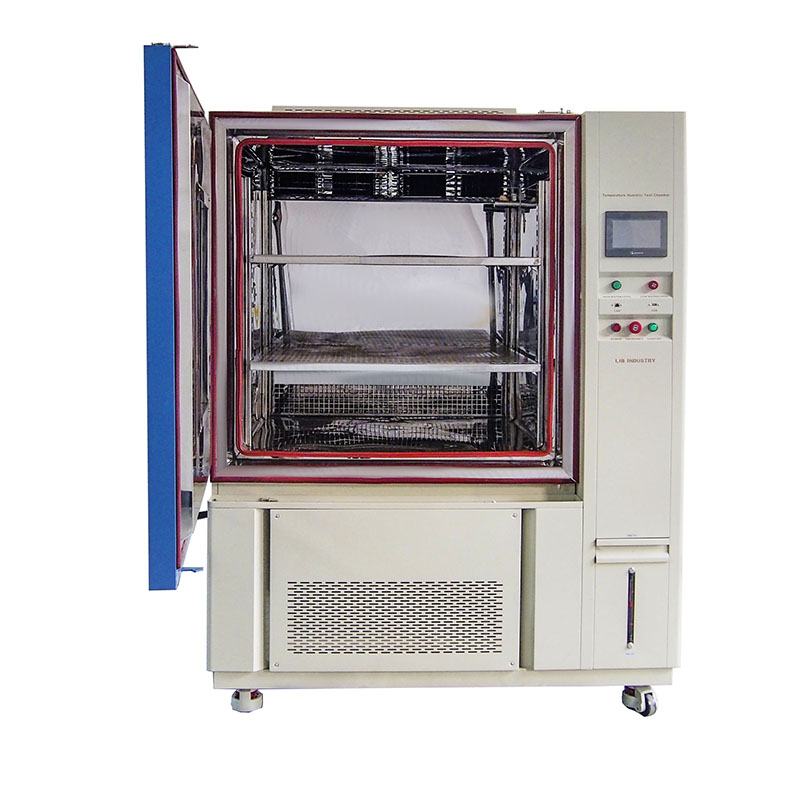 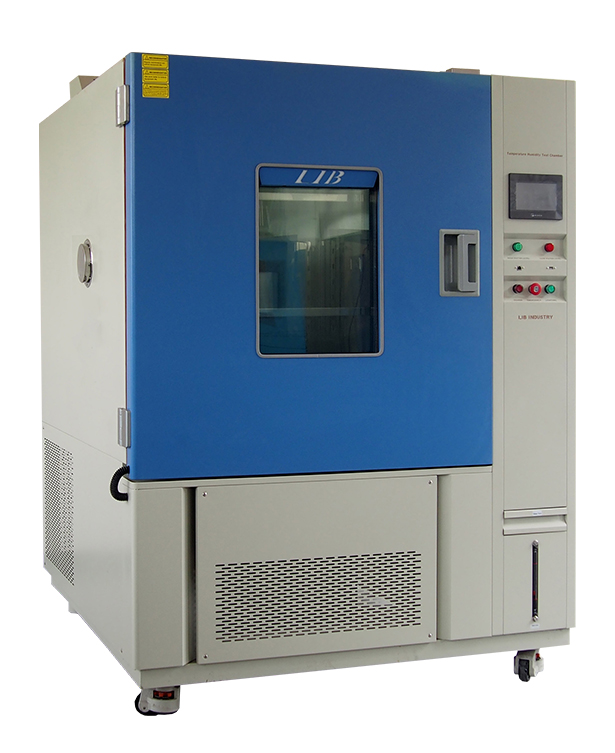 | |||||
Temperature range | -20℃ ~+150 ℃ | ||||
Low type | A: -40℃ B:-70℃ C -86℃ | ||||
Humidity Range | 20%-98%RH | ||||
Temperature deviation | ± 2.0 ℃ | ||||
Heating rate | 3 ℃ / min | ||||
Cooling rate | 1 ℃ / min | ||||
Controller | Programmable color LCD touch screen controller, Multi-language interface, Ethernet , USB | ||||
Refrigerant | R404A, R23 | ||||
Exterior material | Steel Plate with protective coating | ||||
Interior material | SUS304 stainless steel | ||||
Standard configuration | 1 Cable hole (Φ 50) with plug; 2 shelves | ||||
Timing Function | 0.1~999.9 (S,M,H) settable | ||||
Even the most advanced Temperature Humidity Chamber fails immediately if your facility cannot safely support it. Rigorous spatial and structural planning remains absolutely mandatory.
Evaluate your physical laboratory footprint thoroughly. Differentiate between compact benchtop models for small-batch testing and massive floor-standing units. Large reach-in or walk-in units demand substantial clear space. They need ample room for front door swings and wide rear access for routine maintenance. You must rigorously verify your facility floor load-bearing limits. Heavy units equipped with dual cascade compressors easily exceed standard commercial floor ratings. They utilize dense steel construction and heavy internal insulation.
Utility requirements pose another incredibly frequent deployment bottleneck. Pay attention to these two critical categories:
1. Power Requirements: Confirm your facility voltage and phase capabilities immediately. Many industrial-grade units strictly require 3-phase, 480V power. This robust electrical configuration drives heavy-duty heaters and high-horsepower compressors efficiently. Plugging a high-draw unit into inadequate power causes immediate breaker trips and motor damage.
2. Water Supply Integrity: Pay exceptionally close attention to input water purity. You face a strict requirement for deionized (DI) or reverse osmosis (RO) water. Typically, manufacturers require water resistivity between 1 and 5 Megohm-cm. Pure water completely prevents catastrophic mineral buildup inside delicate steam generators.
Lastly, address continuous heat dissipation and environmental impact. Understand exactly how the machinery exhausts its intense internal heat. Does your facility require a standard air-cooled system? Air-cooled units reject significant heat directly into your room. They severely stress your existing HVAC infrastructure, raising ambient room temperatures. Alternatively, a water-cooled condenser runs much quieter. It efficiently exhausts internal heat into facility water lines but requires existing external chiller tower infrastructure.
| Condenser Type | Heat Rejection Method | Acoustic Noise Level | Facility Infrastructure Needed |
|---|---|---|---|
| Air-Cooled | Exhausts hot air directly into the laboratory room | Higher (internal cooling fans run continuously) | Robust room HVAC to handle excess thermal load |
| Water-Cooled | Transfers heat into building water return lines | Lower (eliminates large condenser fan noise) | External process chiller or municipal water hookup |
| LIB popular Temperature Humidity Chambers | |||
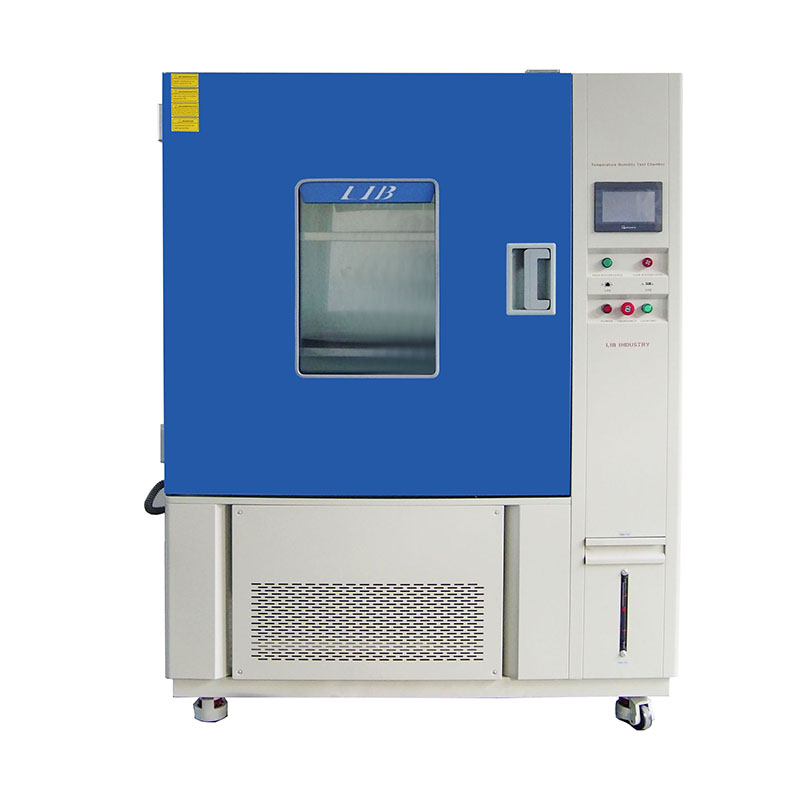
Standing temperature humidity chamber Precise climate simulation, Reliable long-term stability testing |
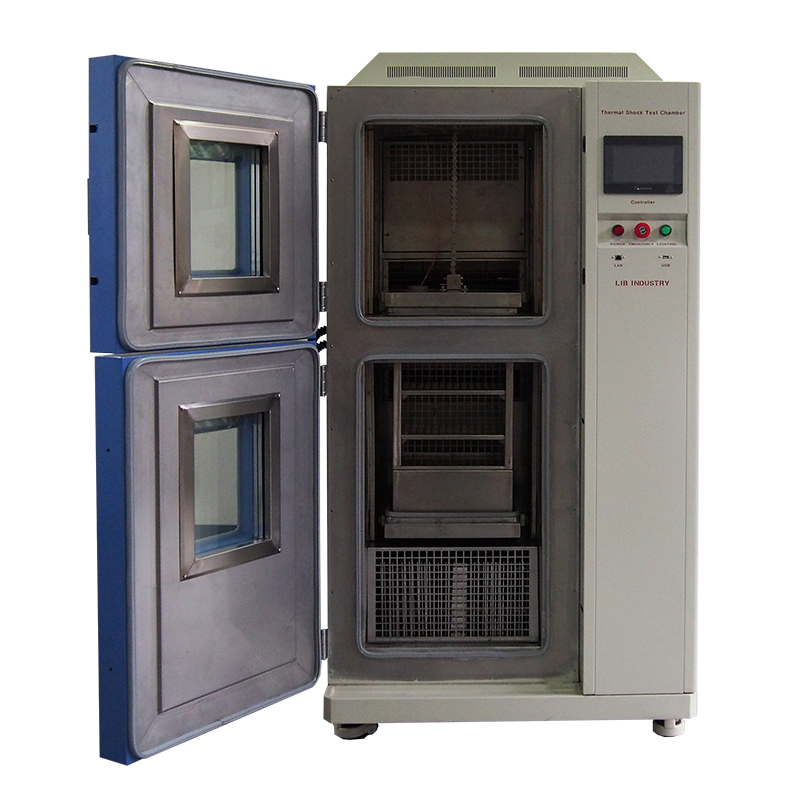
Fast Change Rate Thermal Cycle Chamber Rapid temperature transitions, Accelerated product reliability verification |
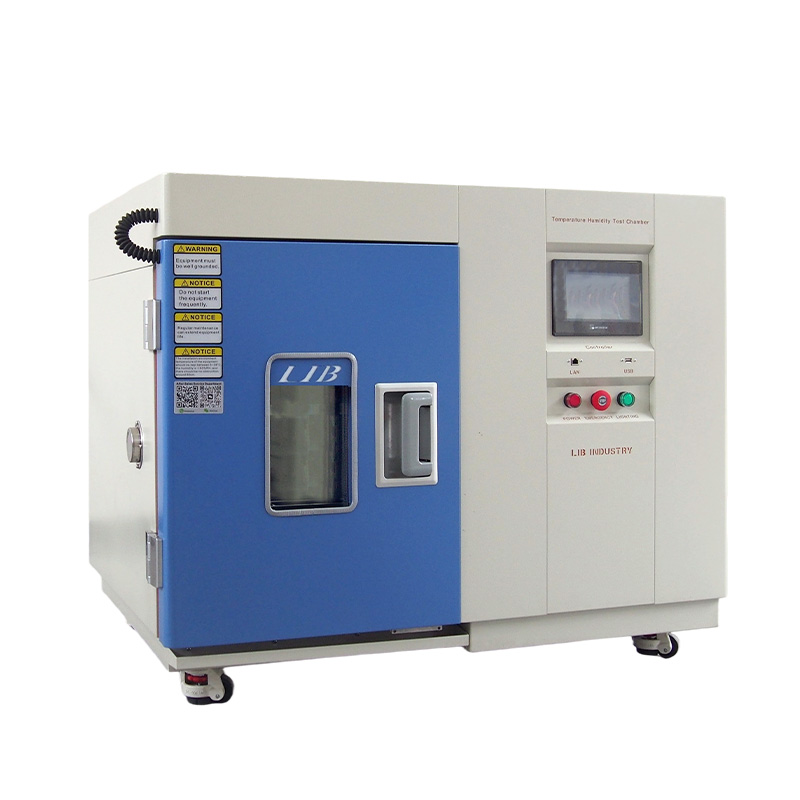
Small temperature humidity chamber Compact footprint design, High-accuracy environmental control |
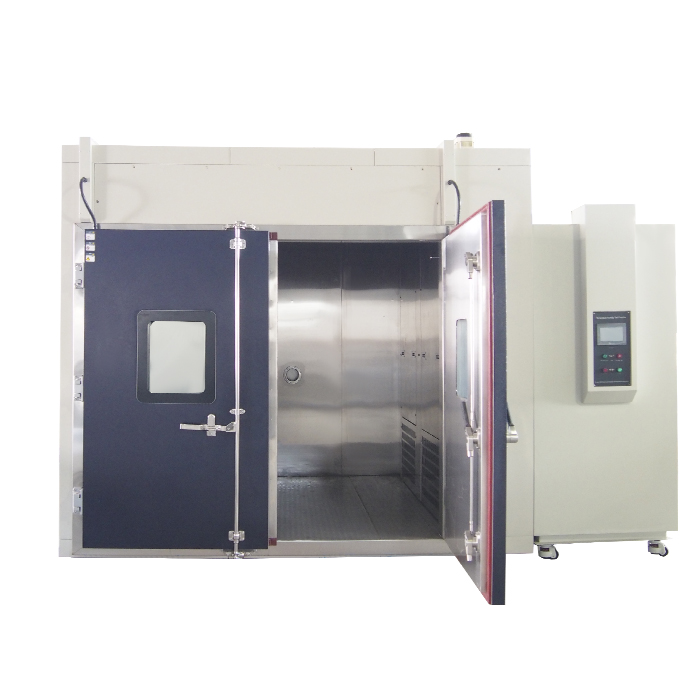
Walk-In temperature humidity chamber Large-capacity testing space, Ideal for oversized products |
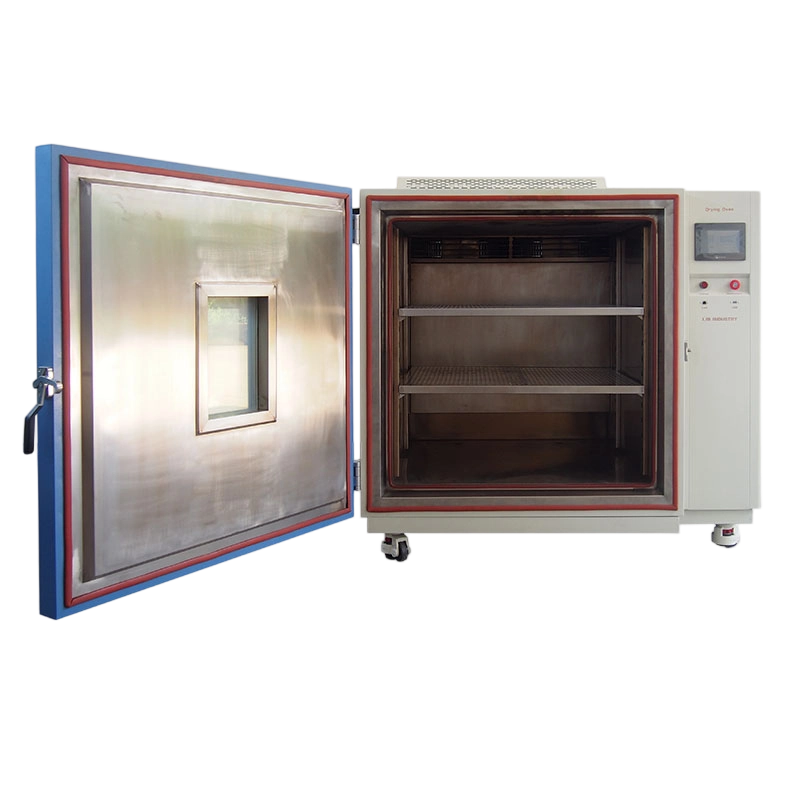
Industrial High-Temperature Vacuum Drying Oven Uniform heat distribution, Efficient material drying |
Extreme thermal stress simulation, Fast failure detection capability |
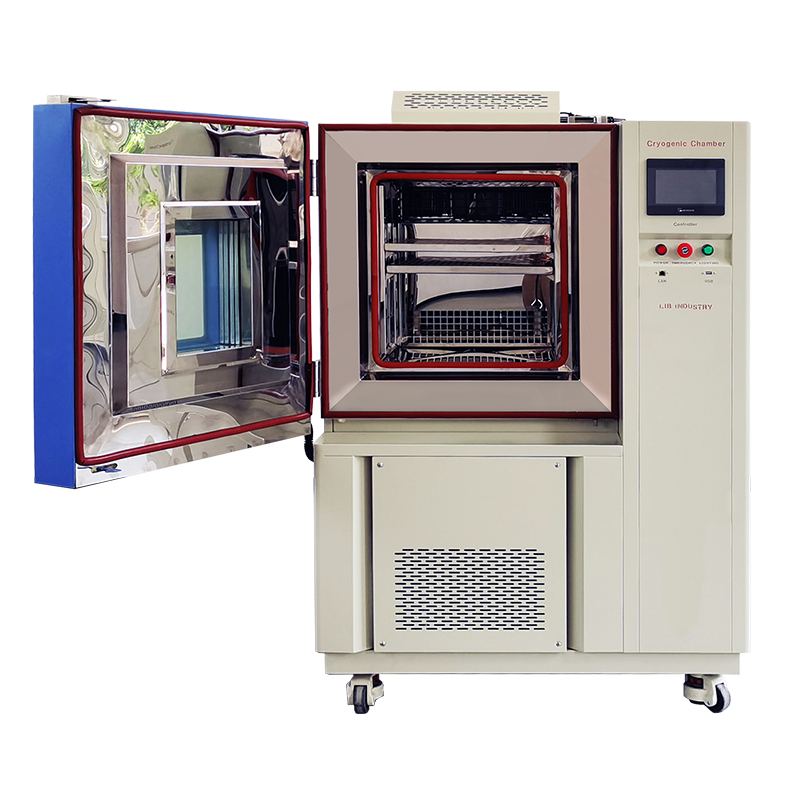
Ultra-low temperature performance, Reliable cold resistance evaluation |
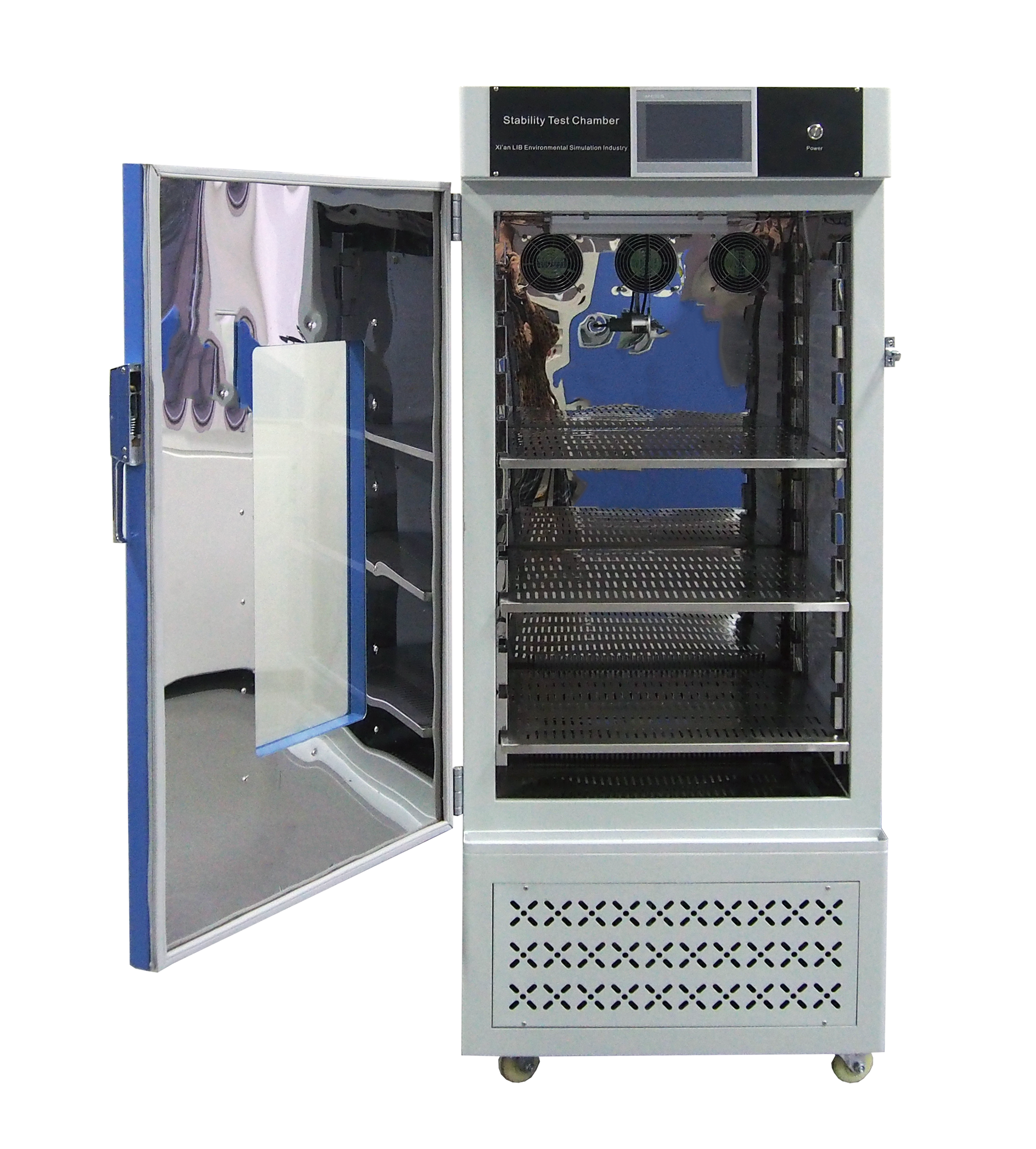
ICH-compliant stability testing, Precise temperature and humidity control |
Choosing a specialized manufacturing vendor involves much more than evaluating basic hardware metrics. Controller logic and digital software capabilities often dictate your daily testing efficiency. If the system is difficult to program, operator errors will ruin your test data.
Evaluate the digital user interface closely. Does it feature intuitive PID (Proportional-Integral-Derivative) control parameters? It must allow intuitive programming for complex, multi-step test profiles. Engineers need systems they can program quickly without referencing thick technical manuals. The system should offer robust digital data logging features. Look for seamless remote connectivity. Modern laboratories demand secure integration with existing laboratory information management systems (LIMS) via Ethernet or secure REST APIs. For pharmaceutical applications, verify that the software complies with 21 CFR Part 11 requirements regarding electronic signatures and secure audit trails.
Service reliability, certified calibration, and comprehensive warranty terms matter immensely. Prioritize vendors offering highly responsive local service teams. Complex refrigeration hardware eventually needs expert mechanical attention. They should provide transparent, structured preventative maintenance (PM) schedules. Ensure they offer ISO 17025 accredited calibration services. This specific accreditation keeps your generated data legally compliant and globally recognized by regulatory bodies.
Finally, consider physical scalability and digital future-proofing. Laboratory testing volumes inevitably grow over time. Modular hardware designs help you expand physical capabilities easily. You avoid replacing core base units entirely. Standardized digital software ecosystems allow you to link multiple testing units onto a single unified monitoring dashboard. This strategic foresight saves countless administrative hours. It reduces new operator training cycles and deeply streamlines your final data compilation.
Choosing the right environmental testing equipment requires a very delicate balance. You must carefully align your exact DUT testing protocols with physical facility limits. A mismatched system causes immense operational friction, invalidates critical data, and demands constant repair.
We advise buyers to consolidate their test standard documents immediately. Calculate your live load wattages carefully. Map out your precise facility utility blueprints before requesting any formal quotes. Do not navigate this complex process alone. Consult directly with a specialized application engineer. They will expertly validate your technical specifications against real-world performance curves. They ensure your final equipment delivers optimal, highly repeatable results.
Focus on these actionable next steps:
Audit your current laboratory power phases and pure water utility access.
Calculate the exact geometric volume and live-load wattage of your largest anticipated DUT.
Compile a master list of specific compliance standards (e.g., IEC, ASTM, MIL-STD) you must strictly satisfy.
Request empirical ramp-rate data demonstrating actual performance under a fully loaded workspace.
A: Humidity chambers transition environments gradually while controlling moisture levels precisely. They simulate long-term environmental exposure over hours or months. Conversely, thermal shock chambers rapidly transfer the DUT between distinct hot and cold zones. They achieve extreme temperature changes in seconds to induce severe mechanical stress, but they do not feature any moisture control.
A: No, standard tap water is strictly prohibited. Tap water contains dissolved minerals like calcium and magnesium. These minerals rapidly create hard scale deposits when heated. Scaling destroys delicate steam heaters, clogs water feed lines, and ruins sensitive psychrometric sensors. Always use highly purified Deionized (DI) or Reverse Osmosis (RO) water systems.
A: Follow the industry-standard one-third rule. Your device should occupy no more than 1/3 of the total internal volume. Additionally, maintain adequate minimum clearance distances from all internal walls. This critical spacing ensures uniform airflow, prevents localized hot spots, and guarantees highly accurate test results.
A: Manufacturer specifications typically reflect an empty workspace. The reality involves thermal mass. When you add product mass, heavy shelves, and test fixtures, the equipment must change the temperature of those dense items alongside the air. This added mass inherently slows down the actual heating and cooling ramp rates.
Contact LIB Industry to learn more about Temperature Humidity Chambers, Climatic Test Chambers, and customized environmental testing solutions for your laboratory, research facility, and product reliability programs.