Views: 0 Author: Site Editor Publish Time: 2026-06-19 Origin: Site


Procurement teams often face confusing terminology when sourcing environmental testing equipment. Vendors frequently use "rain test chamber" and "water spray test chamber" interchangeably during sales pitches. This overlapping jargon creates significant purchasing hurdles for engineering departments. You might find it difficult to determine exactly what machine your laboratory needs.
Selecting the wrong chamber type directly leads to failed compliance audits. You might also over-engineer your testing protocols. Sometimes, companies publish inaccurate product durability claims due to flawed testing data. These misalignments cause severe launch delays. They compromise your quality assurance process entirely.
We will clarify the essential distinctions between these two critical chamber types. You will discover how water pressure and droplet delivery mechanisms separate them. We will also explore the specific IP standards they satisfy. Read on to learn how to precisely match your regulatory requirements to the correct testing equipment.
1. Terminology vs. Function: Rain testing generally mimics environmental weather (gravity-fed drops, low pressure), while water spray testing evaluates pressurized water intrusion (nozzles, velocity, specific angles).
2. Compliance Mapping: A Rain Test Chamber typically aligns with IPX1 and IPX2 (or MIL-STD weather mimicking), whereas a Water Spray Test Chamber is built for IPX3, IPX4, IPX5, and IPX6 standards.
3. Facility Impact: High-pressure spray chambers require more robust water recirculation and filtration systems compared to baseline rain simulation units.
4. Selection Driver: The decision should be driven strictly by the regulatory standards required for your specific product category, not generic vendor classifications.
Understanding the fundamental mechanics of each machine prevents costly specification errors. The engineering behind droplet formation differs vastly from pressurized jet generation. We must look at how each system delivers water to the test subject.
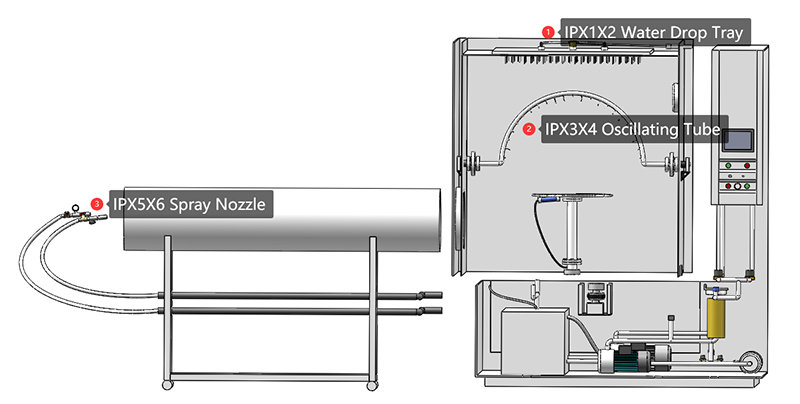
A Rain Test Chamber simulates natural precipitation. It utilizes specific drip tanks. These tanks feature precisely sized hypodermic needles. Engineered orifices also control the downward flow. The system relies almost entirely on gravity.
This gravity-fed design creates a low-velocity water delivery. It mimics gentle or steady rainfall. Technicians often place test subjects on a rotating turntable. They tilt this table at a 15-degree angle. This setup effectively tests vertical water ingress. The droplets fall straight down onto the enclosure. The rotating tilt ensures water hits various vulnerable seams.
Always verify the needle diameter before starting a test cycle. Blocked needles ruin the uniformity of the water drop matrix. Inspect the drip tray daily. Keep the turntable motor lubricated for consistent rotation speeds.
A Water Spray Test Chamber simulates targeted, forceful water exposure. You use it to replicate splashes, jets, and aggressive washdowns. It utilizes oscillating tubes. Sometimes it features handheld spray nozzles or fixed jet nozzles instead.
The system operates under highly regulated pressure metrics. Engineers measure this output in liters per minute and kilopascals. It tests multi-directional water ingress. The forceful kinetic energy challenges seals directly. Gaskets and enclosures face severe mechanical stress from the water velocity.
| Mechanical Feature | Rain Simulation | Water Spray Testing |
|---|---|---|
| Delivery Method | Gravity-fed drip tank | Pressurized nozzles and tubes |
| Water Velocity | Low (natural drop speed) | High (driven by industrial pumps) |
| Impact Angle | Strictly vertical (with 15° tilt options) | Multi-directional (up to 360° oscillation) |
| Primary Target | Top surface pooling and slow seepage | Seam penetration and gasket failure |
Regulatory standards dictate your equipment needs directly. You cannot substitute one chamber for another if the international standards differ. The IEC 60529 framework defines exactly what environmental stress your product must endure.
You need gravity-fed systems for specific lower-tier IP ratings. IEC 60529 outlines IPX1 and IPX2 parameters. These standards demand protection against vertically falling water drops. They simulate indoor environments or mild weather exposure.
Consider the following applications for this testing tier:
Indoor Consumer Electronics: Smart home hubs and desktop appliances.
Basic Medical Devices: Monitors located strictly inside hospital rooms.
Telecom Hardware: Routers housed safely inside controlled server environments.
More rigorous environments demand a completely different machine class. IEC 60529 defines IPX3 and IPX4 ratings. These require protection against spraying and splashing water. The equipment uses oscillating tubes to cover wider angles.
Furthermore, IPX5 and IPX6 ratings escalate the requirements. They mandate protection against low and high-pressure water jets. Technicians use standardized 6.3mm and 12.5mm nozzles for these tests. The water forcefully impacts the enclosure from all directions.
Consider these rugged applications:
Automotive Exterior Components: Headlights and sensor housings.
Outdoor LED Lighting: Street lamps and stadium fixtures.
Ruggedized Industrial Equipment: Construction site power tools.
Marine-grade Enclosures: Shipdeck communication panels.
Enterprise-grade vendors often offer hybrid models. These machines combine IPX1 through IPX6 capabilities. You swap modular nozzles and drip-trays depending on the daily test requirement. They offer excellent versatility.
However, they command a significant premium. You often pay 30-50% more for this flexibility. You must evaluate if your laboratory truly tests across all six IP levels before selecting a combined unit.
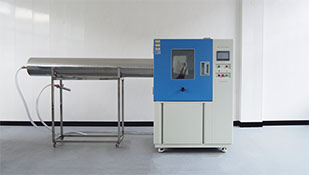
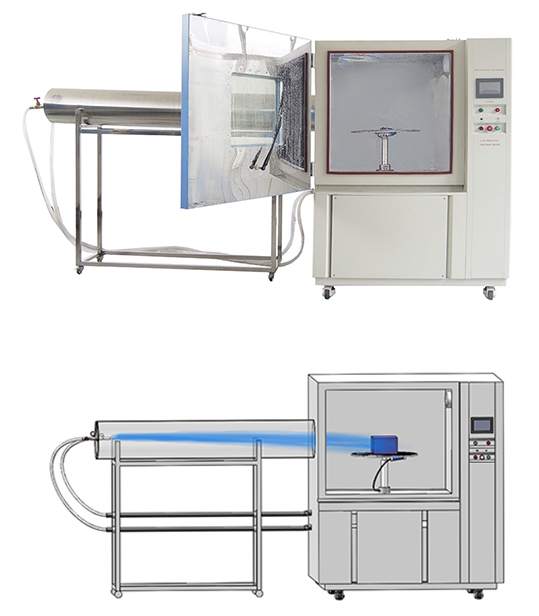
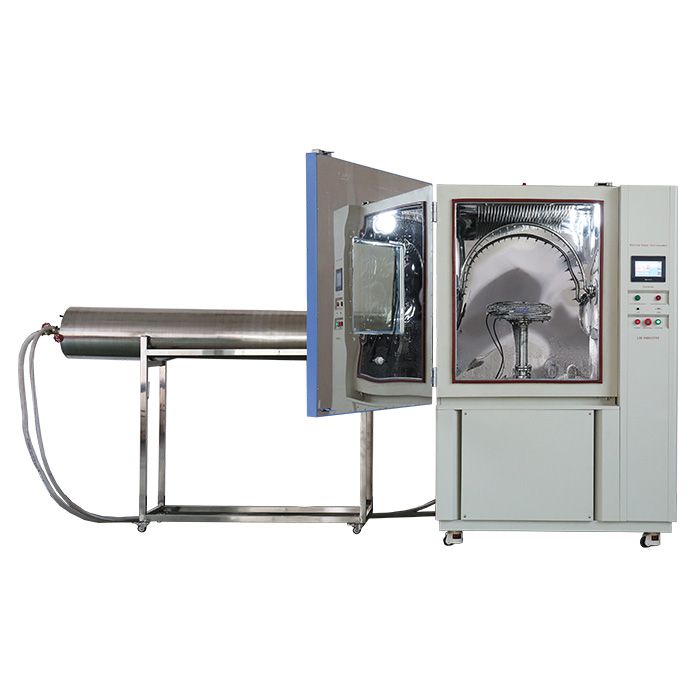
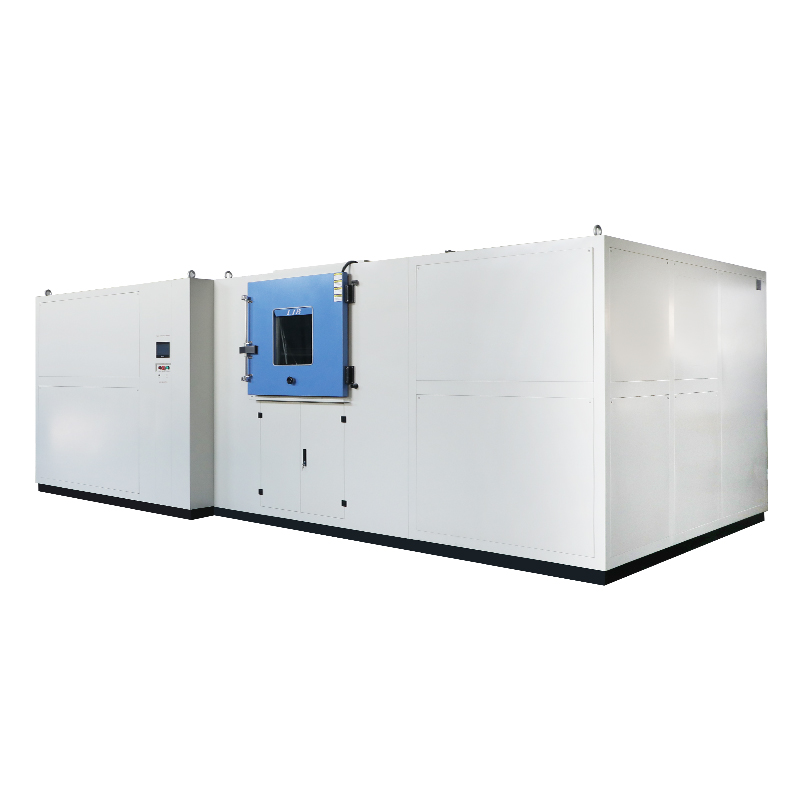
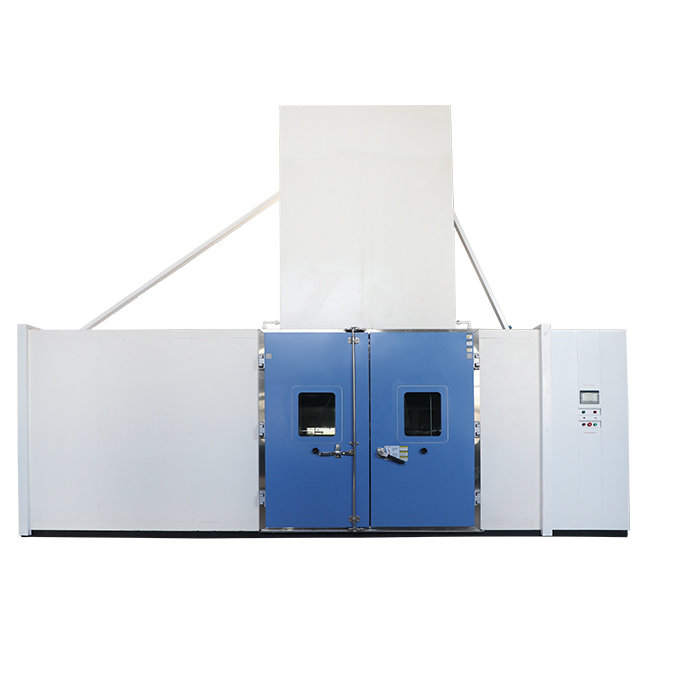
LIB's Popular IEC 60529 IPX1/IPX2/IPX3/IPX4/IPX5/IPX6 Combined Waterproof Test Chamber | Model | RD-800C | RD-1200C |
| Internal Dimensions (mm) | 900*950*950 | 1300*1350*1370 | |
| Overall Dimensions (mm) | 1180*1420*1920 (excluding stainless steel tube) | 1540*1820*2200 (excluding stainless steel tube) | |
| Useful Volume (L) | 810 | 2400 | |
| Drip Tray Size | 600*600 | 1000*1000 | |
| Oscillating Tube Radius | 400mm | 600mm | |
| Water Jetting Tube | |||
| Spraying Hole Diameter | φ0.4mm | ||
| Hole Spacing | 50 mm | ||
| Swing Angle of Oscillating Tube | 0 ~ ±180° (Adjustable) | ||
| Jet nozzles | IPX5: Dia6.3mm, IPX6: Dia12.5mm | ||
| Jet distance | 2.5~3meter | ||
| Turntable Rotation Speed | 1r/min (Adjustable speed) | ||
| Controller | Programmable color LCD touch screen controller, Ethernet connection, USB port | ||
| Water supply system | Water tank, booster pump, Automatic water supply, Water purification system | ||
| Safety Device | Over-temperature Protection; Over-current Protection; | ||
| Water Shortage Protection; Earth leakage Protection; Phase Sequence Protection | |||
| Exterior Material | Steel Plate with protective coating | ||
| Interior Material | SUS304 stainless steel | ||
| Observation Window | Double layer insulating glass with wiper | ||
Sourcing the right chamber involves strict technical evaluation. You must align the hardware dimensions with your actual products. You also need software capable of managing complex testing schedules.
Assess the internal chamber dimensions carefully. Compare them against your largest test subject. Spray testing requires adequate spatial clearance. Oscillating tubes must clear the product seamlessly during rotation. Collisions will interrupt the test and potentially damage the tubes. Ensure at least twenty centimeters of clearance around all product edges.
High-volume R&D labs require automated cycles. They need programmable controls. Modern units feature advanced HMI and PLC interfaces. This allows operators to run consecutive tests efficiently. You avoid manual nozzle recalibration between cycles. Technicians save hours of setup time every week.
Rigorous water testing demands premium construction materials. You must mandate SUS304 or SUS316 stainless steel interiors. High-pressure jets strip away cheap protective coatings rapidly. Bare metal then rusts inside the wet environment. Stainless steel prevents long-term corrosion entirely. It keeps your testing environment pure.
Your testing data must withstand third-party scrutiny. Verify the chamber software outputs comprehensive data logs. Ensure these logs remain compatible with ISO/IEC 17025 accredited reporting standards. Auditors require exact timestamps. They need flow rate verification. Without compliant data exports, your internal testing holds no external regulatory weight.
Installing large environmental testing equipment impacts your laboratory infrastructure. You cannot simply plug these machines into a standard wall outlet. They require dedicated utilities and structural planning.
High-flow spray tests consume massive water volumes. A 12.5mm jet nozzle outputs over 100 liters per minute. You cannot pull this continuously from a municipal tap. Evaluate chambers offering integrated closed-loop recycling systems. These systems capture the runoff. They filter the liquid and pump it back into the holding tank. This manages your utility usage perfectly. It also minimizes complex facility drainage requirements.
Tap water contains various impurities. Minerals build up quickly inside heated or pressurized environments. Assess the onboard filtration system rigorously. We recommend multi-stage reverse osmosis (RO) filtration. It prevents calcification inside highly calibrated spray nozzles. A partially blocked nozzle alters the spray pattern. This instantly invalidates your test results.
| Infrastructure Component | Requirement Level | Implementation Details |
|---|---|---|
| Floor Weight Bearing | High | Must support reinforced water tanks and industrial pumps. |
| Drainage Systems | Critical | Requires high-capacity floor drains for emergency overflow. |
| Water Supply Quality | Strict | Requires inline RO filters to prevent scale buildup. |
| Electrical Supply | Heavy Industrial | Requires dedicated 3-phase power for high-pressure pumps. |
These chambers possess a massive physical footprint. They incorporate integrated water storage tanks. High-pressure commercial pumps add significant bulk. They often require reinforced flooring. Consult your facility manager early. Ensure your laboratory doors accommodate the crated machine dimensions during delivery.
Pressurized spray nozzles wear out over time. The constant kinetic friction of water alters their internal geometry. Flow meters also experience gradual sensor drift. Be fully aware of these degradation patterns. Plan for annual metrology calibration. Technicians must verify flow meters and pressure gauges consistently to maintain ISO compliance.
Vendors routinely exaggerate their equipment capabilities. You must audit their technical claims objectively. Ask targeted engineering questions during the procurement phase to filter out subpar manufacturers.
Ask vendors directly for internal component specifications. Request the make and model of the internal water pumps. Ask about the flow meter origins. Reliable suppliers gladly provide this transparency. They use industry-standard European or Japanese industrial pumps. Avoid vendors using proprietary, hard-to-replace alternatives. When proprietary parts fail, you suffer prolonged equipment downtime.
Distance and angle define compliance testing. Request mechanical proof regarding structural precision. How does the vendor guarantee the exact distance from the spray tube to the test subject? Standard deviations here automatically void compliance tests. The oscillating tube mechanism must demonstrate zero lateral wobble during operation.
Focus strictly on your immediate and mid-term roadmap. If your product lifecycle only dictates an IPX3 rating, buy an IPX3 machine. Avoid up-sells to a comprehensive IPX1-IPX8 hybrid chamber. Do not stretch your budget unless a clear three-year development roadmap justifies the advanced hardware capabilities.
Do not buy complex machinery blindly. Request a live sample test run. Send the vendor your actual product. You can also send a dummy enclosure representing your dimensions. Ask them to film the test cycle. More importantly, ask for the resulting exported data log. Evaluate the software interface firsthand. Confirm the data output meets your internal engineering standards.
| LIB Best-Selling Dust and Water Test Equipment | |||
| 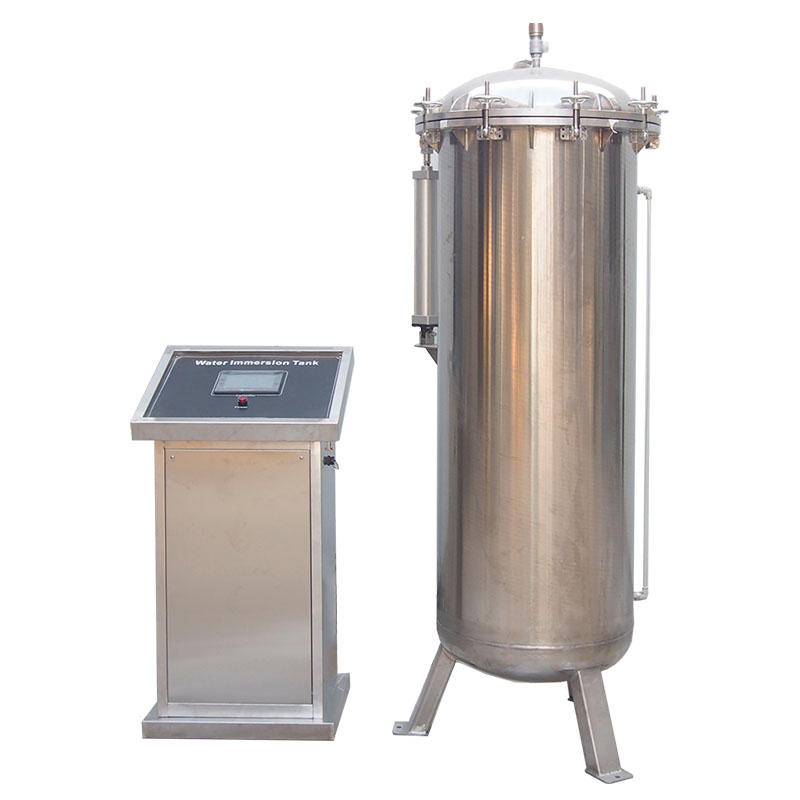 | 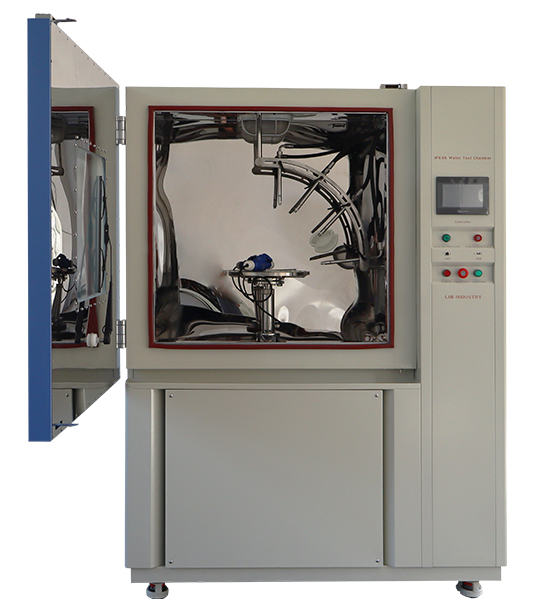 | 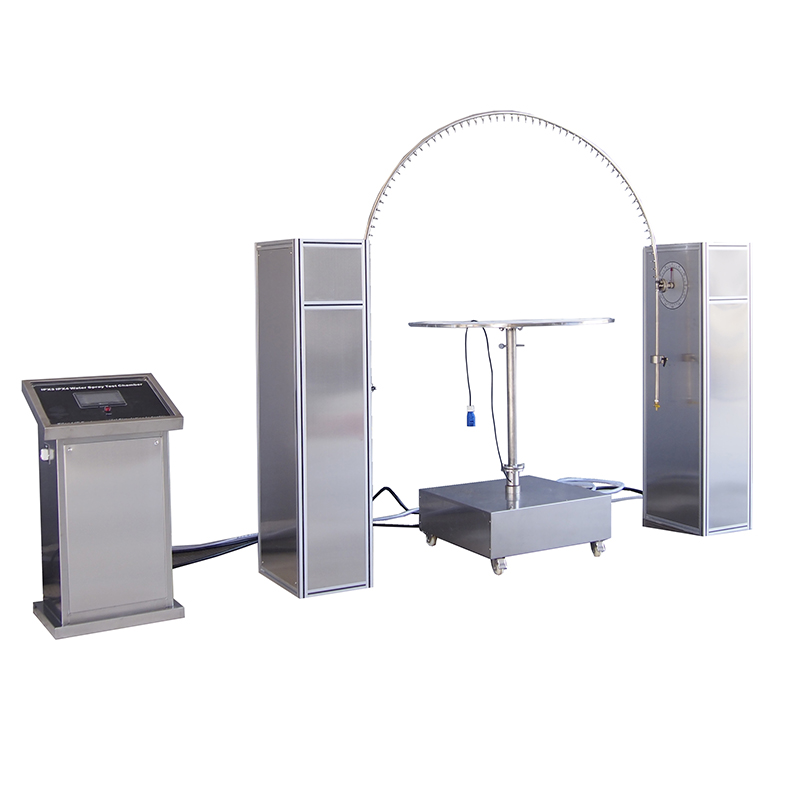 |
Combined Chamber(IPX1 X2 X3 X4 X5 X6) Multi-level IP testing, Space-saving design | IPX7 IPX8 Water Immersion Test Equipment Deep water simulation,Long-duration immersion | IPX9K High Pressure Water Spray Test Chamber 88°C hot water jets, High-pressure spray testing | Whole Set of IP Test Equipment-No Housing Type Easy sample loading, flexable |
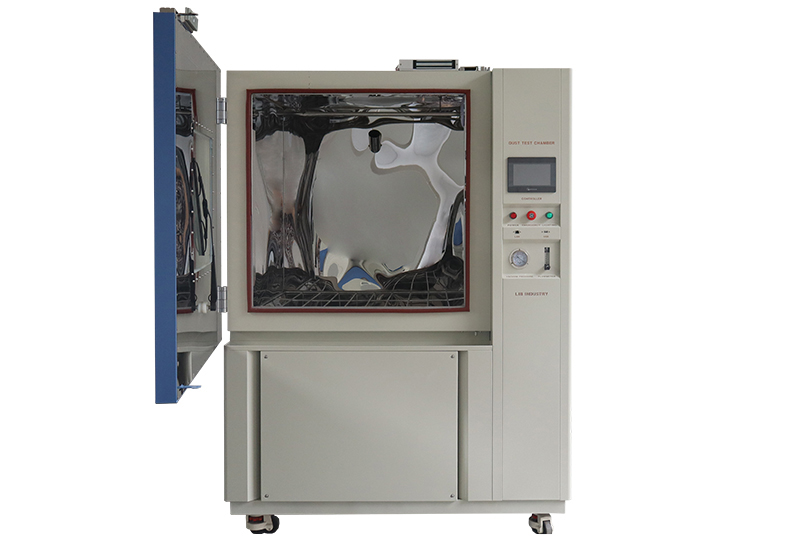 |  |  | |
IP5X/6X Sand and Dust Test Chamber Controlled dust circulation, IEC 60529 compliance | MIL-STD-810 Sand and Dust Test Chamber Harsh dust simulation, Defense and aerospace testing | Harsh water simulation, Defense and aerospace testing | |
You must select your environmental testing equipment based on precise regulatory demands. Choose a gravity-fed machine for low-pressure standards like IPX1 and IPX2. Opt for a pressurized, multi-angled chamber when testing against IPX3 through IPX6 specifications. The mechanics of water delivery dictate the entire machine design.
Your final procurement decision must be reverse-engineered from your end-user industry requirements. Never compromise on material quality or software compliance capabilities. Subpar equipment guarantees failed audits down the line.
Finalize your technical requirements document (TRD) today. Detail your footprint constraints carefully. Specify your water quality provisions. List your required IP ratings clearly. Only after finalizing this document should you contact manufacturers for formal RFQs.
A: Yes, hybrid chambers exist. However, they require physical changeovers. You must swap drip tanks for oscillating tubes manually. They also carry a higher initial cost.
A: Yes. Hard water causes rapid mineral deposits. It blocks seals and clogs nozzles. This alters your spray velocity and pressure. Integrated water purification is strongly recommended for consistent results.
A: IPX focuses strictly on water penetration at specific flow rates. MIL-STD-810 simulates real-world environmental weather. It often combines heavy rain with high winds. This requires specialized wind-driven rain chambers rather than standard ingress units.
A: Industry best practice dictates annual calibration. You must calibrate flow meters yearly. You should also visually inspect and clean the nozzles quarterly. This maintenance maintains strict ISO compliance.
ContactLIB Industry to learn more about Rain Test Chambers, Water Spray Test Chambers, and customized IP testing solutions for your laboratory and certification requirements.