Views: 0 Author: Site Editor Publish Time: 2026-09-17 Origin: Site


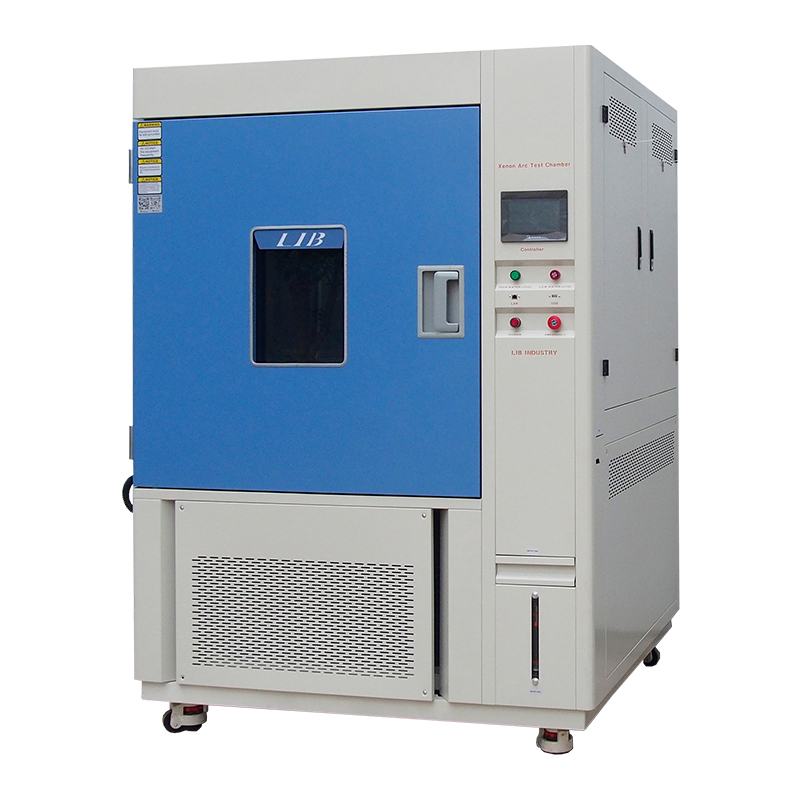
A Xenon Test Chamber evaluates coating color change by using a water-cooled xenon arc lamp to reproduce full-spectrum solar radiation (280–800 nm). Combined with precise temperature and humidity controls, and a rotating specimen rack for uniform exposure, it accelerates the weathering process. This allows technical evaluators to predict color fastness and material degradation in compliance with international standards, though it does not guarantee exact outdoor lifespans.
A customer from the Philippines shared their experience with LIB Industry's Xenon Test Chamber: “It's okay! It's been running smoothly.” This straightforward feedback reflects the chamber's reliable operation during actual testing.
Full-Spectrum Simulation: Xenon arc lamps replicate natural sunlight across the 280–800 nm range to trigger realistic photodegradation in industrial coatings.
Environmental Catalysts: Precise control over heat (35–85 °C Black Panel Temperature) and moisture (50%–98% RH) accelerates the chemical breakdown initiated by the light source.
Uniform Exposure: Rotating specimen racks ensure all samples receive identical light and climate exposure, preventing localized hot spots and test variance.
Standard Compliance: The controlled environment allows evaluations to align with rigorous international weathering standards, including ISO 4892 and ASTM G155.
The primary mechanism for evaluating coating color change relies on highly accurate light simulation. Natural sunlight causes photodegradation, a process that breaks down the chemical bonds in paints, varnishes, and industrial coatings over time. To replicate this complex physical process in a laboratory setting, the Xenon test chamber utilizes a high-intensity, 4500 W water-cooled xenon arc lamp. When equipped with specific interchangeable optical filters, this specialized lamp emits a spectrum from 280 nm to 800 nm. This specific range is critical because it accurately reproduces the full spectrum of natural sunlight, encompassing short-wave ultraviolet (UV), visible light, and infrared radiation.
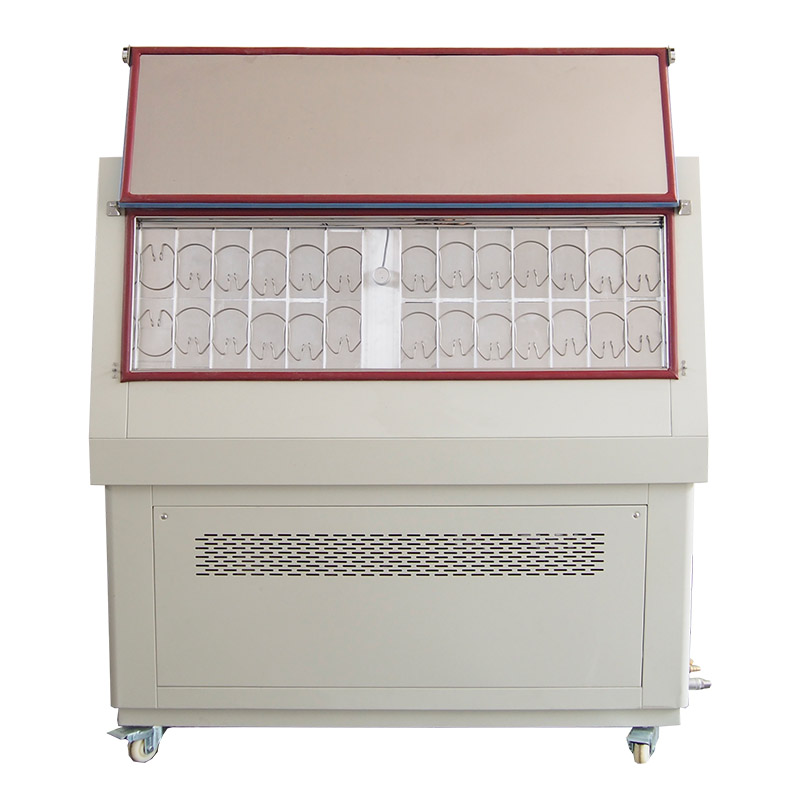
This full-spectrum capability distinguishes the equipment as a comprehensive sunlight simulation chamber. While a UV Test Chamber is highly effective for isolating the effects of short-wave ultraviolet light on material durability, it does not replicate the visible and infrared wavelengths that also contribute heavily to thermal absorption and color degradation in real-world environments.
By delivering an irradiance range of 35 to 150 W/㎡ across the full spectrum, the 4500 W water-cooled xenon arc lamp ensures that the initial light-induced chemical breakdown closely matches actual outdoor exposure. This precise replication of the solar spectrum is the foundational step in evaluating how a coating's pigments and binders will react when exposed to direct sunlight over extended periods, providing technical evaluators with the baseline data required for accurate color fastness testing.
Light exposure alone is insufficient for an accurate coating color fastness test. In natural environments, the degradation initiated by solar radiation is significantly accelerated by the presence of heat and moisture. Therefore, precise environmental control acts as a necessary catalyst within an accelerated aging chamber, working in tandem with the xenon arc lamp to speed up the weathering process.
To simulate the thermal load absorbed by dark coatings under direct sunlight, the equipment monitors and controls the Black Panel Temperature (BPT). Rather than just measuring the ambient air inside the chamber, the BPT reflects the actual temperature a dark-colored specimen reaches when exposed to the light source. The chamber maintains a BPT between 35 and 85 °C with a strict deviation tolerance of ±2 °C. This controlled heat accelerates the chemical reaction rates within the coating polymers, speeding up the color fading, blistering, and chalking processes that would otherwise take months or years to manifest outdoors.
Simultaneously, moisture introduces physical stress and facilitates further chemical breakdown. The chamber controls humidity levels within a precise range of 50% to 98% RH. This moisture penetrates the microscopic pores of the coating surface, causing swelling and mechanical stress. It also acts as a solvent for the photochemical reactions initiated by the xenon light. The precise combination of intense full-spectrum light, elevated black panel temperatures, and high humidity creates a highly volatile environment that rapidly accelerates the weathering cycle, allowing evaluators to gather actionable data in a fraction of the time it would take in the field.
| LIB Popular Xenon arc and Weathering Test Chamber for Aging tests | ||
Full-Spectrum Sunlight Simulation, |
Fast UV Degradation Testing, |
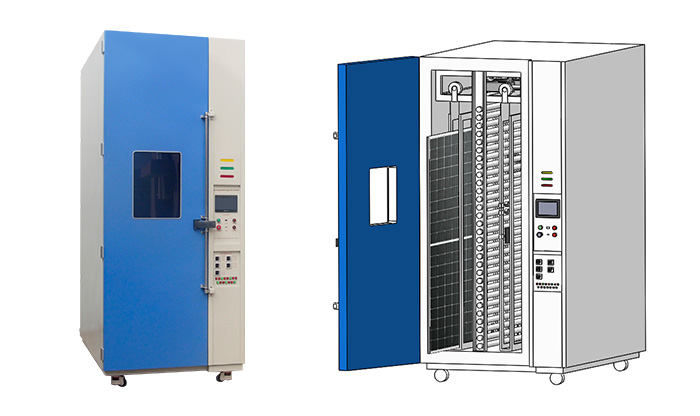
UV Preconditioning Chamber For PV Solar Panel IEC-Compliant PV Preconditioning, |
ASTM B117 Fog Corrosion Salt Spray Test Cabinet ASTM B117 Compliance Testing, Trusted Corrosion Resistance Evaluation |
Cyclic Salt Spray Corrosion Chamber (CCT Chamber) Real-World Corrosion Cycling, |
Salt Fog and SO2 Corrosion Chamber Multi-Environment Corrosion Simulation, Accelerated Industrial Durability Testing |
The combination of intense full-spectrum light, elevated temperatures, and high humidity creates a challenging physical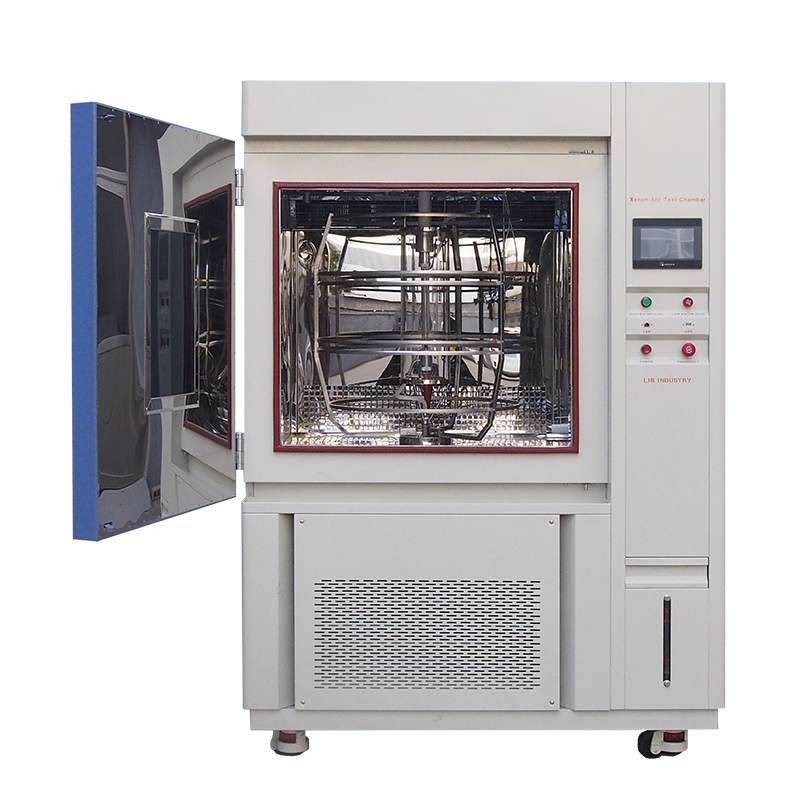 environment inside the testing workspace. If these variables are not applied evenly across all test subjects, the resulting data will be skewed and unreliable. A rotating sample holder solves this mechanical challenge, ensuring that every specimen receives identical environmental exposure for valid, reproducible results.
In the LIB Industry XL-S-750 Xenon test chamber model, the rotating rack is designed to accommodate up to 42 specimens simultaneously. During operation, the standard rotating rack supports up to 7 rotations per minute. This continuous, regulated movement prevents localized hot spots that can easily occur if a sample remains stationary too close to the high-intensity 4500 W light source.
Furthermore, the rotation ensures that humidity and temperature distribution remain consistent across the entire surface area of every test piece. In a static chamber, slight variations in airflow or moisture settling can cause one sample to degrade faster than an identical sample placed just a few inches away. By eliminating these spatial variations within the chamber, the rotation mechanism guarantees that any observed color change is the direct result of the controlled weathering parameters rather than uneven exposure. This mechanical consistency is what separates a valid coating color fastness test from an unreliable simulation.
The strict uniformity provided by the rotating rack is a prerequisite for meeting global testing protocols. Technical evaluators rely on a paint weathering tester not just to degrade materials, but to do so in a standardized, repeatable manner that can be verified across different laboratories and manufacturing facilities. The precise control over the light spectrum, black panel temperature, humidity, and specimen rotation allows the equipment to comply with rigorous international weathering standards based on its design parameters.
The xenon test chamber complies with key industry standards, including ISO 4892, ASTM G155, ASTM D6695, ASTM D7869, ISO 11341, and ISO 16474. These standards dictate specific irradiance levels, temperature cycles, and moisture exposure intervals to ensure that tests conducted in different locations yield comparable results. For example, ISO 4892 outlines the specific methods for exposing plastics and coatings to laboratory light sources, requiring the exact type of full-spectrum simulation and environmental control that the xenon test chamber provides.
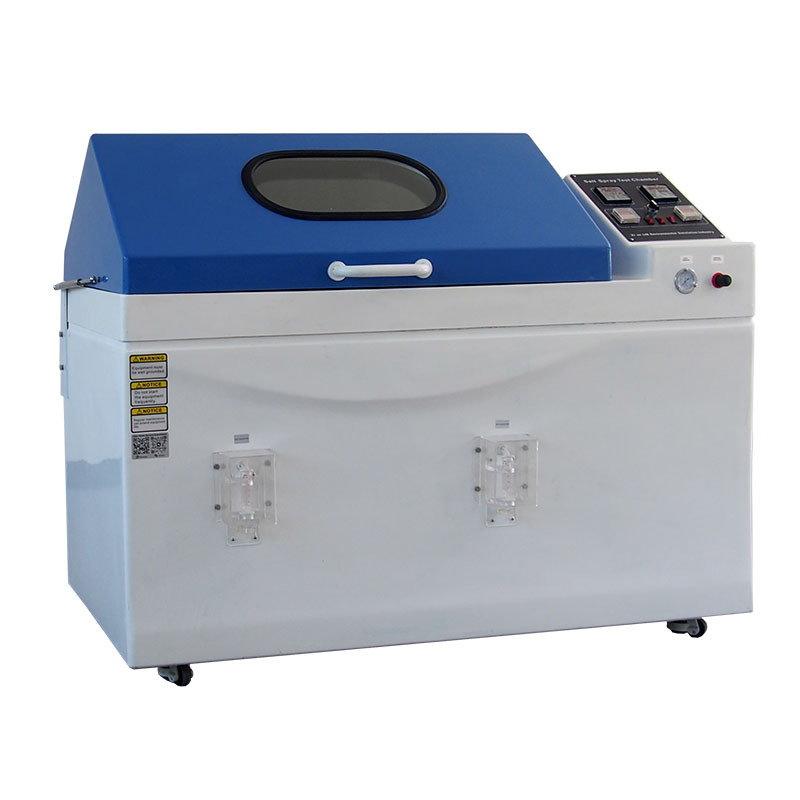
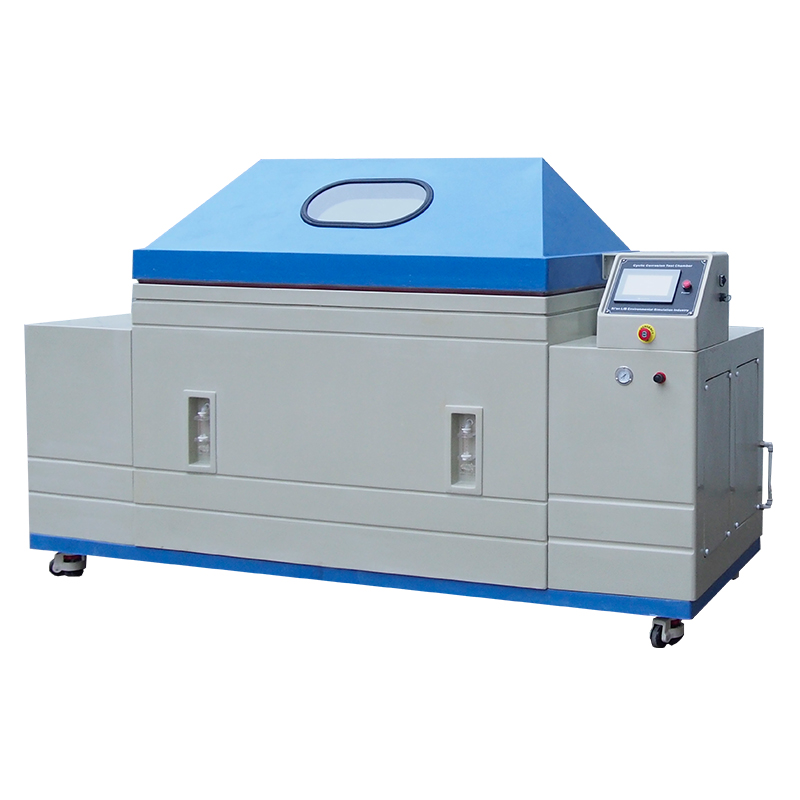
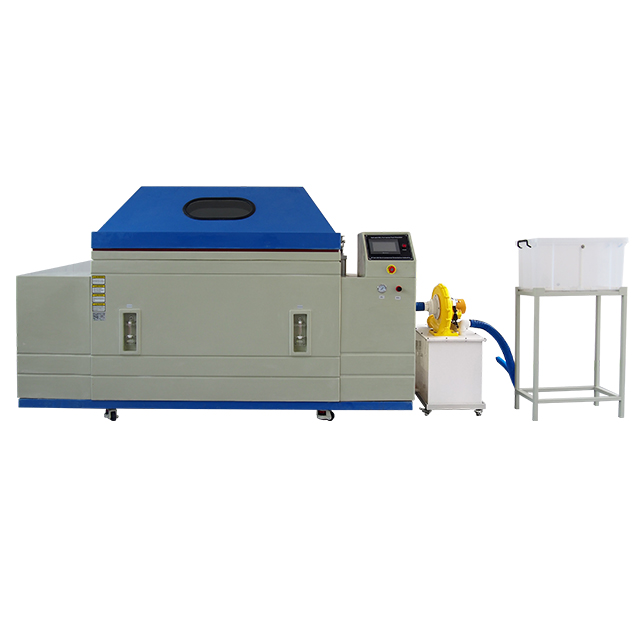
For procurement managers building comprehensive evaluation suites, this standardized lightfastness testing is often paired with a Salt Spray Corrosion Test Chamber to fully validate both the aesthetic durability and the structural protection of industrial coatings. By adhering to these internationally recognized parameters, the xenon test chamber ensures that the resulting color change data is accepted by regulatory bodies, clients, and quality assurance teams worldwide.
While the chamber complies with established standards and provides highly accurate comparative data, it is crucial for procurement managers and technical evaluators to define the boundaries of accelerated testing. The controlled environment of a xenon arc weathering chamber is designed to simulate performance and predict failure modes, but it cannot account for every unpredictable variable present in real-world outdoor environments.
Important limitation: Accelerated weathering tests simulate performance but cannot provide a 1:1 guarantee of exact outdoor lifespans. Evaluators must account for the following constraints:
Variable Outdoor Conditions: Natural weather includes unpredictable fluctuations in biological growth, pollution, acid rain, and extreme weather events that a standardized test cycle does not replicate.
Acceleration Limits: Pushing temperatures or irradiance too high to speed up the test can trigger unnatural chemical degradation pathways that would never occur outdoors, rendering the test data invalid for real-world predictions.
Extreme Temperature Customization: While the chamber can be customized to achieve minimum temperatures down to -70 °C for specialized testing, this requires special design changes, increased refrigeration capacity, and non-standard low- and high-temperature resistant xenon lamps. It is not a standard feature of baseline models.
Comparative vs. Absolute Data: The data generated should be used to compare new coating formulations against a known control standard with a proven outdoor track record, rather than to calculate an exact number of years a product will survive in the field.
Understanding these limitations ensures that the data generated by the chamber is applied correctly during the research and development phase, preventing over-promising on product warranties based solely on laboratory hours.
When equipped with the correct optical filters, a water-cooled xenon arc lamp produces a full-spectrum emission from 280 nm to 800 nm. This specific range includes short-wave ultraviolet (UV), visible light, and infrared radiation, making it the closest artificial match to natural sunlight for evaluating material degradation and color fastness.
Heat and moisture act as powerful catalysts that accelerate the photodegradation process initiated by the light source. By maintaining a Black Panel Temperature between 35 and 85 °C and humidity between 50% and 98% RH, the chamber simulates the thermal and physical stress that coatings experience outdoors, ensuring the accelerated aging process is realistic and effective.
Specimen rotation is vital for test validity and reproducibility. A rack rotating at up to 7 rpm ensures that all samples receive identical exposure to irradiance, heat, and moisture. This continuous movement prevents localized hot spots near the lamp and guarantees that the resulting color change data is uniform across all 42 potential specimen slots.
Yes, but achieving extreme cold is not a standard feature. Customizing a chamber to reach minimum temperatures down to -70 °C requires special design changes. This level of customization necessitates increased refrigeration capacity and the installation of non-standard, low- and high-temperature resistant xenon lamps to function properly in extreme environments.
Download our technical selection guide for weathering test chambers to ensure your coating evaluations align with ISO 4892 and ASTM G155 requirements.
Choosing a xenon test chamber depends on your test standard, irradiance level, temperature and humidity requirements, sample size, and exposure cycle. LIB Industry provides xenon arc and weathering testing solutions for different applications, including a Xenon Test Chamber for full-spectrum sunlight simulation and accelerated coating weathering, a UV Test Chamber for focused UV degradation testing, and specialized weathering configurations for material durability and color fastness evaluation.
Share your required test standard, coating or material type, sample dimensions, chamber capacity, irradiance level, black panel temperature, humidity range, exposure cycle, and any special fixture requirements. Based on these factors, the LIB Industry team can help identify the appropriate xenon arc testing configuration for your application.
LIB Industry Technical Team (info@lib-industry.com) - Technical information, testing methods, product specifications, and application guidance for xenon arc weathering, coating color fastness, accelerated aging, and environmental reliability testing.