
Views: 0 Author: Site Editor Publish Time: 2026-09-23 Origin: Site


Fasteners—such as bolts, screws, nuts, and washers—serve as the invisible backbone of modern infrastructure, automotive manufacturing, and aerospace engineering. A single rusted bolt can cause serious structural failure. Moisture and salt rapidly attack exposed metal components, making corrosion protection critical.
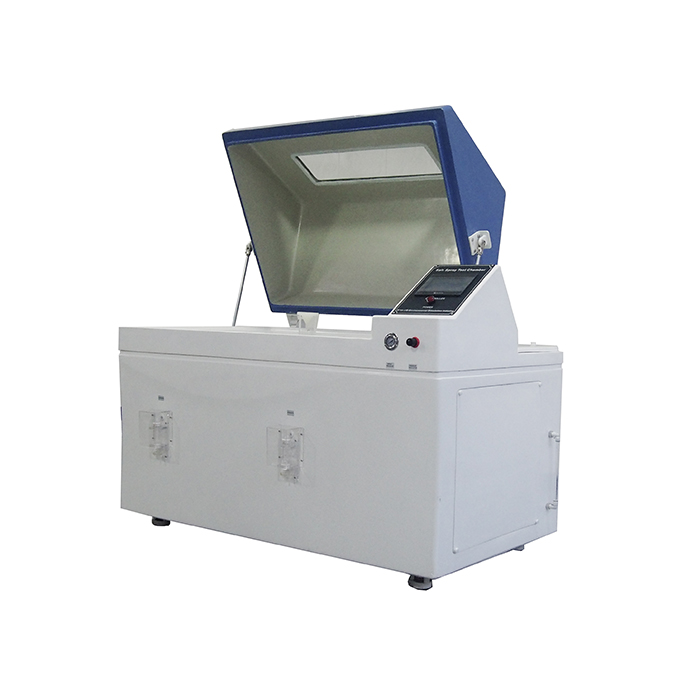
How do manufacturers verify that protective coatings can withstand these harsh conditions? A salt spray corrosion test chamber provides an accelerated and controlled environment for evaluating coating durability, comparing surface treatments, and supporting standardized corrosion testing.
For fastener manufacturers and quality-control laboratories, LIB Industry provides salt spray test chamber solutions designed for corrosion resistance testing under widely used industry standards.
Salt spray corrosion test chambers are essential analytical tools for evaluating fastener coating durability in accelerated corrosive environments.
Compliance with recognized standards helps ensure test consistency across suppliers, laboratories, and production facilities.
Understanding the difference between initial "white rust" and critical "red rust" is important for interpreting coating performance.
Reliable in-house testing can support R&D, batch quality control, supplier verification, and product development.
Despite their small size, the structural integrity of fasteners is critical. Environmental factors continuously attack exposed metal components. Atmospheric moisture, ambient salinity, and temperature fluctuations can gradually reduce coating performance.
To improve corrosion resistance, manufacturers apply protective layers such as zinc plating, galvanization, passivation, or advanced topcoats. However, verifying coating performance requires standardized evaluation.
A salt spray corrosion test chamber creates and maintains a controlled saline fog environment. Engineers can observe coating degradation under repeatable conditions rather than relying only on long-term outdoor exposure.
The fundamental principle behind salt spray testing is accelerated environmental simulation.
In real-world applications, a zinc-plated bolt may take months or years to show serious corrosion. Waiting for long-term field data is impractical for production and R&D.
A salt spray chamber accelerates corrosion by atomizing a 5% sodium chloride solution into a dense fog at a controlled temperature, typically around 35°C.
Continuous exposure to oxygenated saline moisture accelerates electrochemical corrosion reactions, allowing engineers to compare coating performance within a much shorter timeframe.
Testing flat coated panels is common in metallurgy, but fasteners have much more complex geometries.
They include:
Thread roots
Thread crests
Drive recesses
Under-head fillets
Sharp edges
During electroplating, dip-spinning, or mechanical plating, coating thickness may vary across these areas.
Protective material can accumulate in thread roots while remaining thinner on sharp crests. These geometric differences create localized weak points where corrosion may begin earlier.
Testing the finished fastener inside the chamber therefore provides more representative data than testing only flat coated coupons.
Fastener coating requirements have become more demanding in automotive, EV, offshore, wind energy, and industrial applications.
Many modern specifications require substantially longer corrosion resistance than older coating systems could provide.
At the same time, environmental regulations such as RoHS and REACH have encouraged the transition away from hexavalent chromium toward alternatives such as:
Trivalent passivation
Zinc-flake coatings
Zinc-nickel coatings
Advanced multilayer systems
These changes increase the importance of repeatable corrosion testing during R&D and production.
Quality assurance depends on standardized test conditions.
Without defined operating parameters, results from one laboratory cannot be compared reliably with results from another.
ASTM B117 is one of the most widely recognized standards for operating salt spray apparatus.
It defines key environmental conditions required for consistent corrosion testing.
Typical requirements include:
5% sodium chloride solution
Chamber temperature around 35°C
Continuous salt fog exposure
Controlled fog collection rate
Defined specimen placement
The salt fog collection rate is typically maintained between 1.0 and 2.0 mL per hour per 80 cm² of horizontal collection area.
A properly configured ASTM B117 salt spray chamber helps laboratories maintain these controlled conditions.
LIB Industry salt spray test chambers are designed for corrosion testing applications where repeatable temperature, atomization, and salt fog conditions are required.
The NSS salt spray test, or Neutral Salt Spray test, is the most commonly used variation.
The pH of the collected solution is maintained between approximately 6.5 and 7.2.
NSS is widely used for evaluating zinc plating, galvanized coatings, standard fasteners, and organic protective coatings.
Other test methods include ASS and CASS.
| Test Variation | pH Level | Chamber Temp | Primary Applications |
|---|---|---|---|
| NSS (Neutral Salt Spray) | 6.5–7.2 | 35°C | Zinc plating, galvanization, organic topcoats, standard fasteners |
| ASS (Acetic Acid Salt Spray) | 3.1–3.3 | 35°C | Decorative coatings, anodized aluminum, more aggressive corrosion testing |
| CASS (Copper-Accelerated Acetic Acid) | 3.1–3.3 | 50°C | Copper-nickel-chromium coatings and severe corrosion environments |
Executing a valid fastener corrosion test requires careful control of sample preparation, placement, and chamber operating conditions.
Before testing, fasteners should be handled carefully to avoid contamination.
Oils, fingerprints, manufacturing lubricants, and metallic debris can influence corrosion behavior.
Technicians should use suitable gloves and approved cleaning procedures that remove contamination without damaging the protective coating.
Specimen placement is equally important.
Fasteners are generally positioned on suitable racks at an angle of approximately 15 to 30 degrees from vertical. This orientation allows salt fog to settle evenly while preventing excessive solution pooling in threads or recesses.
Once the chamber is sealed, the test cycle begins.
Operators should monitor:
Chamber temperature
Salt solution concentration
Fog fallout rate
Solution pH
Atomizing nozzle condition
Water and solution levels
Long interruptions should be avoided because opening the chamber changes the internal environment.
Modern equipment can automate many of these functions. LIB Industry salt spray chambers incorporate controlled atomization, chamber heating, and programmable operation to support long-duration corrosion testing.
The purpose of the test is to identify when and how the protective coating begins to fail.
This requires distinguishing between different corrosion stages.
For zinc-plated or galvanized fasteners, corrosion commonly appears in two stages.
White rust is associated with oxidation of the sacrificial zinc coating. Powdery white deposits indicate that the zinc layer has begun to degrade while still protecting the underlying steel.
Red rust is associated with oxidation of the base steel or iron.
Its appearance indicates that the protective coating has been consumed, damaged, or penetrated sufficiently for corrosion to reach the substrate.
For many fastener specifications, red rust represents the critical failure point.
Fastener coating performance is often expressed as:
Hours to first white rust
Hours to first red rust
Percentage of red rust after a defined exposure period
Required exposure times depend on the coating system and applicable product specification.
Basic zinc-plated fasteners may be evaluated for relatively short periods, while high-performance automotive or zinc-flake-coated fasteners may require hundreds or more than 1,000 hours of exposure.
Electroplated zinc remains widely used because it combines reasonable corrosion protection with cost efficiency.
Salt spray testing can evaluate both the zinc coating and any additional passivation layer.
High-quality chromate or trivalent passivation systems can significantly extend corrosion resistance compared with untreated zinc.
For harsh environments, standard zinc may not provide sufficient protection.
Manufacturers increasingly use:
Zinc-nickel alloys
Zinc-flake coatings
Multilayer coating systems
Advanced topcoats
Zinc-flake technologies are particularly common for high-strength fasteners because they can provide strong corrosion resistance without relying on conventional electroplating processes that may introduce hydrogen embrittlement concerns.
Salt spray testing helps manufacturers compare these systems and verify that higher-performance coatings meet required durability targets.
Many manufacturers traditionally outsourced corrosion testing to third-party laboratories.
However, in-house testing can provide important operational advantages.
Fastener production typically involves high-volume continuous processes.
Small changes in plating chemistry, coating thickness, passivation, or curing conditions can affect corrosion performance.
An in-house test chamber allows QA teams to sample production batches regularly.
If corrosion performance falls below the required level, manufacturers can identify problems before products are shipped.
Developing new coating systems often requires repeated comparative tests.
In-house equipment allows engineers to evaluate:
Coating thickness
Passivation chemistry
Sealers
Topcoats
Process adjustments
without waiting for repeated external laboratory schedules.
This can shorten development cycles and improve coating optimization.
A salt spray chamber continuously creates a corrosive environment, so the equipment itself must resist chemical attack.
High-quality systems commonly use corrosion-resistant materials such as Glass Fiber Reinforced Plastics (FRP).
This helps prevent the chamber walls from degrading or contaminating the test environment.
Stable chamber conditions are essential for repeatable testing.
Programmable controllers can help manage test duration, temperature, and automatic fluid replenishment.
The atomization system is particularly important.
Quartz glass nozzles provide good chemical resistance and help generate uniform salt fog without introducing corrosion from the nozzle material itself.
LIB Industry salt spray test chambers use corrosion-resistant chamber construction and atomization components designed for demanding laboratory environments.
Fasteners vary considerably in size.
The chamber should provide flexible specimen racks capable of accommodating:
Small screws
Nuts
Washers
Standard bolts
Larger industrial fasteners
Adjustable V-groove and support racks make it easier to maintain suitable spacing and specimen orientation during testing.
A salt spray corrosion test chamber provides fastener manufacturers with a controlled method for evaluating protective coating durability.
By monitoring the progression from coating degradation to white rust and red rust, engineers can compare different coatings, verify production consistency, and identify potential quality problems before products enter service.
Standardized testing based on ASTM B117, NSS, ASS, or CASS procedures also helps improve comparability between manufacturers, suppliers, and laboratories.
For laboratories and manufacturers looking to strengthen their corrosion testing capabilities, LIB Industry offers salt spray test chamber solutions for fastener, coating, automotive, metal, and industrial testing applications.
If you are unsure which salt spray chamber size, test method, or configuration is suitable for your fasteners, contact LIB Industry for technical consultation. Share your sample size, target standard, required test duration, and corrosion method, and our team can help you evaluate a suitable testing solution.
There is no exact mathematical conversion between salt spray hours and outdoor service life.
Real-world corrosion depends on geographic location, humidity, rainfall, UV radiation, industrial pollution, temperature, and mechanical wear.
Salt spray testing is therefore most useful as a comparative laboratory method rather than an exact outdoor lifespan prediction.
It depends on the chamber construction and operating specifications.
NSS commonly operates around 35°C under neutral conditions, while CASS uses a more acidic solution and a higher operating temperature of approximately 50°C.
Equipment intended for CASS must therefore use suitable heat-resistant and chemically resistant materials.
There is no universal test duration.
Basic zinc-plated screws may be tested for 24 to 96 hours, while high-performance automotive or advanced zinc-flake-coated fasteners may require 720, 1,000, or 1,500 hours or more.
The correct duration should follow the applicable product or customer specification.
ASTM B117 defines standardized operating conditions for salt spray apparatus.
Its widespread use makes it easier for manufacturers, suppliers, and laboratories in different locations to conduct tests under comparable conditions.
Atomizing nozzles should be inspected regularly between test cycles.
During extended testing, technicians should also monitor fog collection rates. A noticeable change in collection volume may indicate nozzle blockage, pressure variation, or another atomization issue.
For NSS testing, the collected solution should remain within the specified neutral pH range.
If the solution becomes too acidic, corrosion may accelerate artificially. If it becomes too alkaline, corrosion may slow.
Stable pH therefore helps maintain consistent and comparable test conditions.
Fasteners contain threads, recesses, and undercuts where saline solution can accumulate.
Incorrect horizontal positioning may create excessive pooling and artificially severe localized corrosion.
Angled placement helps salt fog settle more uniformly and allows excess liquid to drain naturally.
Uniform distribution depends on chamber airflow, atomization quality, and fog dispersion.
Collection funnels placed in different areas of the chamber can be used to confirm that fog fallout remains within the required range throughout the test zone.
Traditional salt spray testing exposes specimens to a continuous saline fog.
Cyclic corrosion testing alternates conditions such as salt fog, drying, and high humidity.
These changing cycles can better represent certain real-world environments and are frequently used in automotive corrosion development programs.


