
Views: 0 Author: LIB Team Publish Time: 2026-10-16 Origin: Site


The key difference between a temperature chamber and a Temperature Humidity Chamber is humidity control. One regulates temperature alone. The other manages both temperature and relative humidity. This affects test validity, product reliability, and standards compliance. A product that survives thermal-only testing may fail under combined heat and moisture. Choosing the wrong chamber produces misleading results. The global market was valued at USD 1.04 billion in 2025. It is projected to reach USD 1.40 billion by 2035, showing rising demand for precise temperature and humidity conditions. This article compares capabilities, construction, applications, and selection criteria, helping readers choose with confidence.
Temperature chambers only control heat. Humidity chambers control both temperature and moisture. This difference changes test results.
Products that face moisture need chambers that can control humidity. Testing with temperature alone misses corrosion, swelling, and insulation breakdown. These defects make products wear out faster.
Picking the wrong chamber gives you results that are not true. A product may pass dry heat tests. It can fail when heat and moisture are combined.
Temperature humidity chambers are flexible. They can run heat-only tests and tests that combine temperature and humidity. This flexibility helps protect your future investments.
Match your chamber to the product's service environment, applicable standards, heat load, and future needs. This keeps tests valid.
Check the humidity needs first. Do not buy a temperature-only chamber for humidity tests. It does not have the moisture control systems you need.
Plan building size, utilities, upkeep before purchase. Wrong chamber size wastes time, money.
Check humidity sensors on a regular schedule. They lose accuracy faster than temperature probes do. Plan to caLIBrate them every six to twelve months.
The main technical difference is the humidity system. A temperature chamber has refrigeration, heating, control, air circulation, and sensors. It can only run temperature tests. A temperature humidity chamber adds an extra humidity system. This lets it run both temperature and humidity cycle tests. In short, the difference is "wet." One system stays dry. The other adds moisture on purpose.
LIB Industry's Climatic Test Chamber | Chamber Type | Controlled Parameters | Simulated Environment |
|---|---|---|---|
 | Temperature chamber | Temperature only | Varies temperature alone |
 | Temperature humidity chamber | Temperature and humidity | Varies both temperature and humidity levels |
A temperature-only chamber controls temperature by itself. It does not actively manage moisture. Common temperature ranges go from as low as -70°C to above 180°C. Some models go beyond this range. Custom designs allow even wider ranges. A benchtop temperature chamber, for example, might cover -60°C to +150°C with a stability of about ±0.5°C. Spatial uniformity in temperature-controlled chambers usually ranges from ±1°C in a precision lab oven to ±10°C in a large industrial dryer. Temporal stability at steady state usually falls between ±0.3°C and ±0.5°C. These numbers describe how evenly and how steadily the chamber holds its setpoint. The system controls heat and cold. It ignores water vapor entirely.
A temperature humidity chamber adds relative humidity control. It often uses steam generators, air dryers, or both. Humidity usually spans 10–98% RH. This added loop changes the machine's internal architecture. The chamber now manages two variables at once. It must coordinate heating, cooling, humidification, and dehumidification. These systems interact. A rise in temperature lowers relative humidity unless the controller adds moisture. A drop in temperature raises relative humidity unless the controller removes moisture. The control system must balance both variables continuously.
Humidity chambers have other names. Some call them humidity stability chambers. Others use the term climatic chamber. "Climatic chamber" is the more technical term. It signals that the unit simulates a full climate, not just heat or cold.
The choice depends on whether the product needs thermal-only testing or combined temperature-moisture testing. This decision shapes what failures the test can reveal. Dry heat and temperature-only testing apply temperature extremes and cycling as the main stress. Humidity usually plays no role. The dominant failure mechanisms include thermal expansion, solder-joint cracking, and material embrittlement or softening.
Temperature-humidity testing with controlled RH applies heat plus moisture. The failure mechanisms shift. Corrosion and oxidation appear on metal parts. Insulation degrades and leakage current rises. Materials absorb moisture, swell, or change dimensions. Delamination occurs at material interfaces. Electrical failures become intermittent or functional.
Thermal stress speeds up degradation. Controlled relative humidity changes the way degradation happens. Humidity testing reveals gradual failures that a dry-heat-only test may miss. In temperature-only testing, heat remains the dominant stress. Adding relative humidity introduces moisture-driven pathways that can dominate the failure process. A product that passes a dry thermal cycle may still fail under damp heat.
Test Approach | Main Stress | Humidity Required? | Main Failure Mechanisms |
|---|---|---|---|
Dry heat / temperature-only testing | Temperature extremes and cycling | Usually no | Thermal expansion, solder-joint cracking, material embrittlement/softening |
Temperature-humidity testing with controlled RH | Heat + moisture | Yes | Corrosion, insulation degradation, moisture absorption, swelling, delamination, electrical leakage / intermittent failures |
Standards reflect this split. Temperature-only chambers suit thermal cycling, burn-in, and applications where moisture control is unnecessary. Temperature-humidity chambers support standards that require combined temperature-moisture stress. Examples include IEC 60068-2-38 and pharmaceutical ICH guidelines. They also support IEC 60068-2-1, IEC 60068-2-2, and MIL-STD-810 Method 507. Advanced models integrate light sources for photostability testing per ICH Q1B. Other relevant standards include MIL-STD-202 Method 103, MIL-STD-202 Method 103B, MIL-STD-750 Method 1021, JESD22-A101, and GR-468-CORE.
A temperature chamber vs humidity chamber comparison ultimately comes down to one question. Does the product face moisture in its service life? If yes, a temperature chamber vs temperature humidity chamber decision must favor the humidity-capable unit. If no, a temperature-only system may suffice. This single distinction drives every downstream choice in reliability testing.
A temperature chamber is a test system that controls heat and cold without managing humidity. It makes a dry, closed space where a sample feels heat, cold, or both. The unit has an insulated working chamber, a temperature-control system, sensors, and a control panel. An operator puts the specimen inside. Then the system heats or cools the space to a set value. Sensors check conditions all the time. The controller changes output to keep the target.
The cooling system works a lot like an air conditioner. It uses a compressor, condenser, expansion valve, and evaporator. Single-stage chambers reach as low as -40°C. Double-stage models go down to -70°C. For heat, a mechanical system with heating elements raises the inside temperature. The interior usually uses 304 stainless steel. The outside uses powder-coated steel. Low thermal conductivity insulation sits between the two layers. This design keeps temperature steady. LIB Industry makes temperature and climate chambers, benchtop environmental temperature chambers, and fast-change-rate thermal cycle chambers for these jobs.
Many industries depend on temperature-only chambers for thermal cycling and high-low temperature storage tests. Semiconductor testing uses them for burn-in, thermal cycling, and IC reliability screening. Metal and material testing uses them for thermal expansion studies, heat resistance testing, and cold storage simulation. Aerospace components go through high-altitude thermal simulation and low-temperature operational testing. Battery testing covers thermal runaway studies, storage testing, and temperature cycling. Electronics ESS testing uses fast thermal changes to find early manufacturing defects.
These temperature test chambers serve automotive, electronics, batteries, aerospace, communications, and materials work. Each industry needs thermal stress that can be repeated. A temperature-only chamber gives that stress without moisture variables. Engineers trust these units because the test stays focused on heat and cold alone.
Several standards spell out how temperature test chambers should run. Thermal cycling tests follow MIL-STD-883 Method 1010 and JEDEC JESD22-A104. Thermal shock tests reference MIL-STD-202 Method 107, MIL-STD-883 Method 1011, JEDEC JESD22-A106, and MIL-STD-750 Method 1056. High-temperature storage tests use JEDEC JESD22-A103C, with conditions ranging from +85°C (Condition G) through +300°C (Condition F).
Other programs cite IEC 60068, MIL-STD-810, JEDEC JESD22, and ISO 16750 for thermal cycling. These documents give engineers a shared language for environmental testing. A temperature test chamber that meets these standards supports results that are consistent and can be compared. Buyers should check the chamber's rated range against the exact standard before they buy.
A temperature humidity chamber is a damp-heat aging test chamber. It provides high temperature, low temperature, and humidity functions in one unit. This equipment creates a controlled environment with stable temperature and humidity. It regulates heating elements and a humidity adjustment system together. The chamber contains heaters, refrigerators, and humidity control devices. The controller manages their operating statuses to maintain precise temperature and humidity control.
Humidity chambers are much more complex inside than temperature-only chambers. Cooling uses mechanical compression refrigeration with compressors, condensers, expansion valves, and evaporators. Heating uses low-thermal-mass nichrome wire heaters run by solid-state relays for fast response. Moisture comes from steam generators or ultrasonic atomizers. Dehumidification uses refrigeration coils cooled below the dew point to condense and drain moisture from the chamber. PID controllers manage heating, cooling, humidification, and dehumidification through continuous feedback loops. This keeps exact set points and stops temperature overshoot.
LIB Industry offers temperature and humidity chambers, climate chambers, and walk-in climate chambers as examples of this equipment. A programmable temperature humidity chamber lets operators set complex test profiles. These profiles can change temperature and humidity over time.
Name |  LIB Industry's Best-Selling Temperature and Humidity Test Chamber | ||||
Model | TH-100 | TH-225 | TH-500 | TH-800 | TH-1000 |
Internal Dimension (mm) | 400*500*500 | 500*600*750 | 700*800*900 | 800*1000*1000 | 1000*1000*1000 |
Overall Dimension (mm) | 900*1050*1620 | 1000*1140*1870 | 1200*1340*2020 | 1300*1540*2120 | 1500*1540*2140 |
Interior Volume | 100L | 225L | 500L | 800L | 1000L |
Heat load | 1000W | ||||
Temperature Range | A : -20℃ ~ +150 ℃ | ||||
B : -40℃ ~ +150 ℃ | |||||
C: -70℃ ~ +150 ℃ | |||||
Temperature Fluctuation | ± 0.5 ℃ | ||||
Temperature Deviation | ± 2.0 ℃ | ||||
Humidity Range | 20% ~ 98% RH | ||||
Humidity Deviation | ± 2.5% RH | ||||
Cooling Rate | 1 ℃ / min | ||||
Heating Rate | 3 ℃ / min | ||||
Cooling system | Mechanical compression refrigeration system | ||||
Refrigerating unit | French TECUMSEH compressor | ||||
Heating Element | Nichrome heater | ||||
Controller | Programmable color LCD touch screen controller, Ethernet connection | ||||
Water supply system | Automatic water supply, Water purification system | ||||
Humidifier | External isolation, stainless steel surface evaporation humidifier | ||||
Safety Device | Humidifier dry-combustion protection; over-temperature protection; over-current protection; Refrigerant high-pressure protection; Water shortage protection; Earth leakage protection | ||||
Exterior Material | Steel Plate with protective coating | ||||
Interior Material | SUS304 stainless steel | ||||
Thermal Insulation | Polyurethane foam and insulation cotton | ||||
Observation Window | Interior lighting, double-layer thermo stability silicone rubber sealing | ||||
Standard Configuration | 1 Cable hole with plug; 2 shelves | ||||
Standards | IEC60068 | ||||

The applications of temperature and humidity chambers cover many sectors. Electronics testing includes IC package moisture-sensitivity qualification, PCB laminate damp-heat testing, conformal coating humidity resistance, and connector contact-resistance monitoring. Automotive testing covers door seals, window glass bonding, electrical connector systems, and painted body panels. Pharmaceuticals use ICH Q1A stability testing with controlled steady-state humidity conditions such as 25°C/60%RH and 40°C/75%RH. Packaging testing checks moisture barrier and seal integrity for food, medical device, and hygroscopic products. Textiles also undergo humidity testing.
A constant temperature and humidity test chamber serves these industries well. The Double 85 temperature humidity chamber is designed for steady-state damp-heat testing at 85°C/85%RH. Manufacturers list electronics, photovoltaic products, LED devices, automotive electronics, coatings, plastics, rubber, and material validation as common targets. Stability test chambers are used for product and packaging testing. The pharmaceutical industry is a typical user. All industries use environmental test chamber equipment to determine how products react to temperature and humidity conditions.

Several standards govern temperature and humidity testing. IEC 60068-2-78 covers damp heat, steady state for electronics, electrical components, and industrial equipment. IEC 60068-2-30 addresses damp heat, cyclic for automotive, consumer, aerospace, and industrial products. ISO 16750-4:2023 specifies climatic loads for automotive electrical and electronic components. MIL-STD-810H provides environmental engineering tests for military, aerospace, and defense equipment. JESD22 series supports semiconductor reliability testing for ICs, semiconductor devices, and packages.
Other standards include GB/T 2423.3 for constant damp heat, GB/T 2423.4 for cyclic damp heat, and GB/T 2423.34 for composite temperature/humidity cyclic testing. IEC 60068-2-38 covers composite temperature/humidity cyclic testing. Common steady-state conditions include 30±2°C/93±3% RH, 30±2°C/85±3% RH, 40±2°C/93±3% RH, and 40±2°C/85±3% RH with durations of 12h, 16h, 24h, and 48h. A constant temperature humidity chamber or constant temperature humidity test chamber must meet these specifications. Constant-temperature humidity test chambers and constant temperature and humidity test chambers help manufacturers verify products that face heat and humidity simultaneously.
Chambers that only control temperature can go as low as -70°C and above 180°C. Humidity chambers usually work in a narrower temperature range. Humidity control limits how far they can go. A temperature humidity chamber cannot reach the same extremes because moisture management holds the system back. The refrigeration and heating systems must work together with humidification and dehumidification equipment. This teamwork reduces the temperature range the chamber can reach.
Ramp rates are different too. Temperature test chambers can change quickly because they only manage one variable. A fast-change-rate thermal cycle chamber moves between extremes fast. Humidity chambers ramp more slowly. The controller must steady both temperature and humidity at each setpoint. A fast temperature change shifts relative humidity unless the system makes up for it. This interaction slows down the overall transition rate.
Humidity chambers control relative humidity. Temperature-only chambers do not. This ability defines the main difference between the two systems. A temperature humidity chamber usually spans 10% to 95% RH, with 98% possible through added options. The best solid-state relative humidity sensors reach accuracy of ±1% when caLIBrated properly. In most cases, ±2% is more realistic. Relative humidity control accuracy usually falls within ±2–3% RH. Temperature control accuracy reaches ±0.5°C.
Several factors affect accuracy. Depending on airflow and heat load location, a relative humidity gradient of ±1% to ±6% may occur. Adding control cycle variation of ±2% gives a net total uncertainty of ±4% to ±9% or more at any test location. Engineers must account for these tolerances during temperature-humidity reliability testing. A climate chamber that meets these specifications supports results that can be repeated.
Temperature and humidity test chambers allow simulation of a wide range of environmental conditions. Engineers evaluate product performance and reliability under realistic multi-stress profiles. A four combined environmental test chamber controls temperature and humidity while applying mechanical vibration and altitude or low-pressure conditions. The four environmental factors can be programmed according to the required qualification sequence.
The chambers support simultaneous control of pressure, temperature, and humidity to simulate realistic multi-environment conditions. The system maintains consistent internal conditions to support reliable testing and repeatable results. Users can configure steady-state conditions or dynamic cycling profiles to simulate real-world environmental changes.
This coordinated approach shows that temperature-humidity chambers do not test each stress on its own. They program temperature and humidity together with other environmental factors into one integrated qualification profile. LIB Industry's combined climate and vibration chambers serve as an example of this extended capability. These systems reproduce realistic multi-stress conditions for environmental testing and reliability testing.
LIB Popular Laboratory Environmental Temperature Humidity Test Chambers | ||
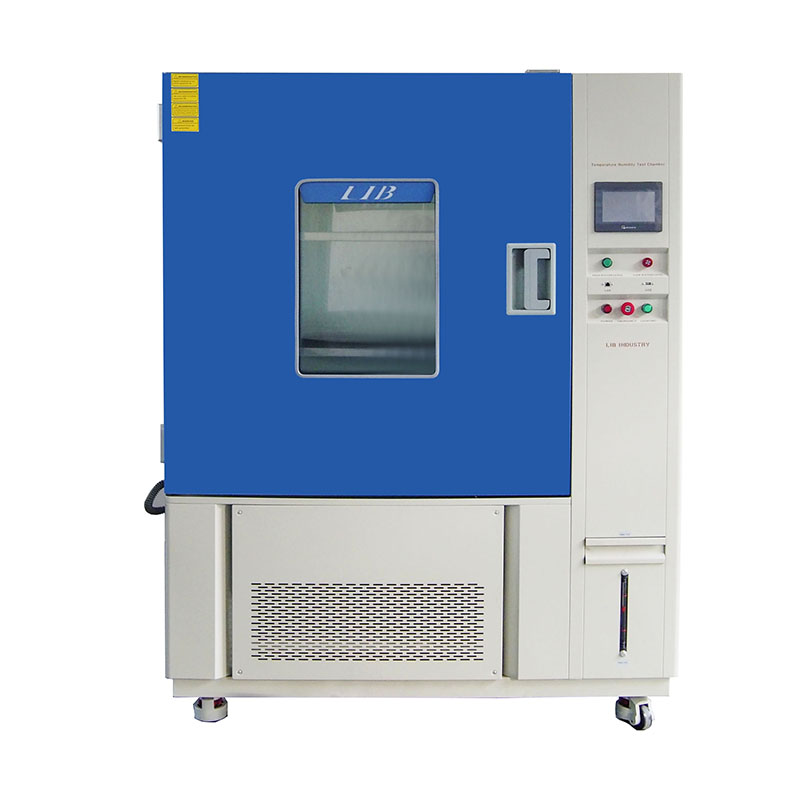 Temperature Humidity Test Chamber Precise climate simulation, Reliable long-term stability testing | 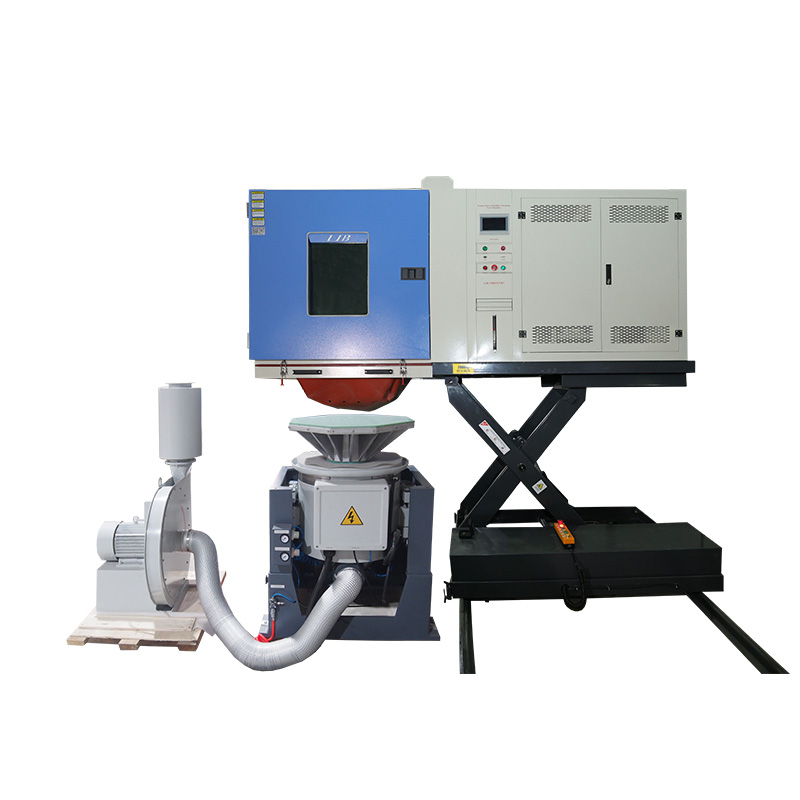 Combined Climate and Vibration Chamber Simulate temperature, humidity, and vibration stresses in one test | 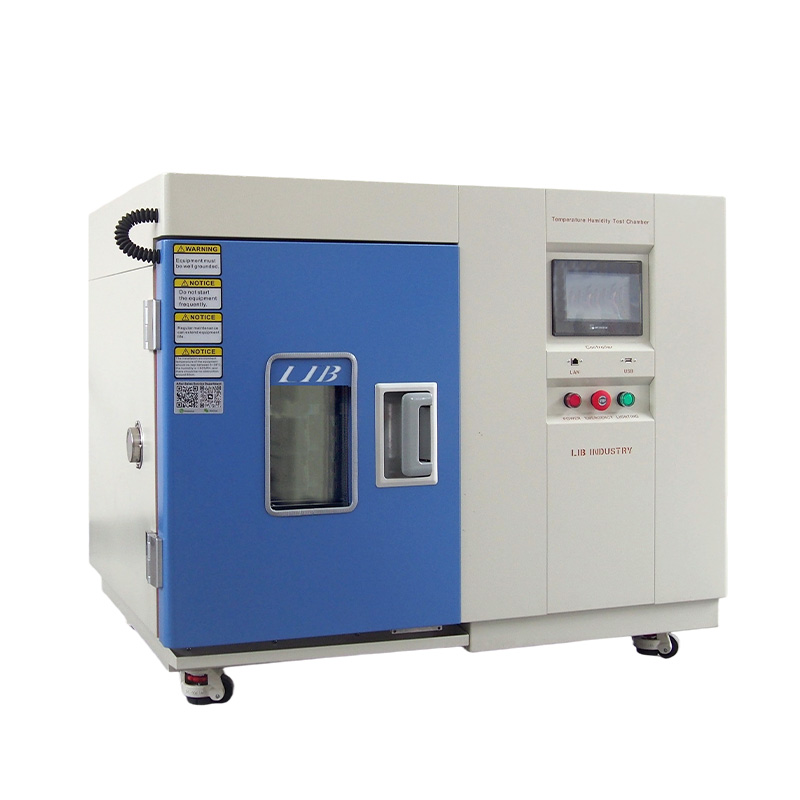 Small temperature humidity chamber Compact footprint design, High-accuracy environmental control |
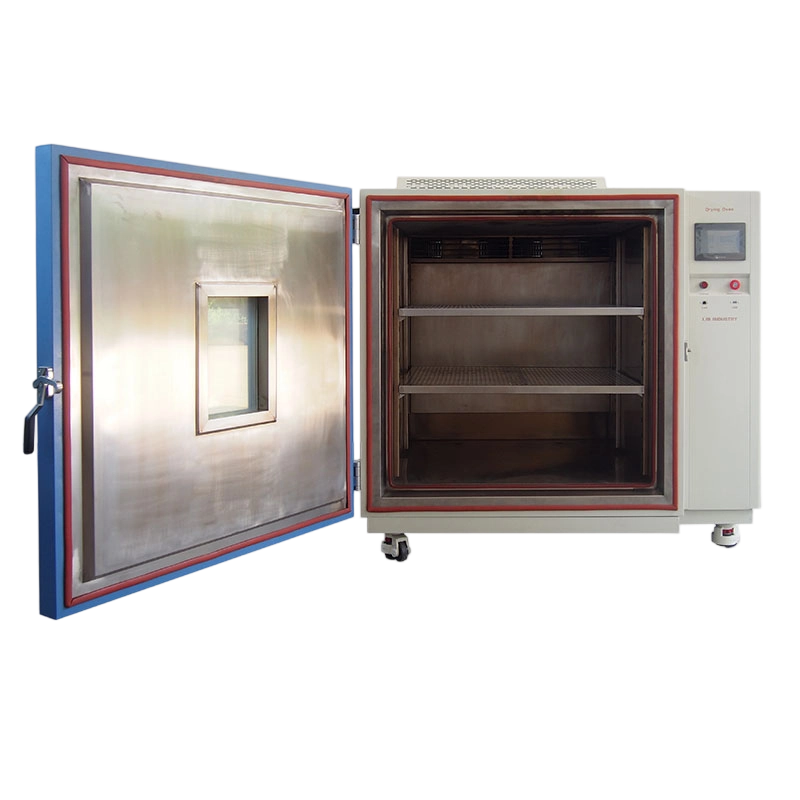 Industrial High-Temperature Vacuum Drying Oven Uniform heat distribution, Efficient material drying | 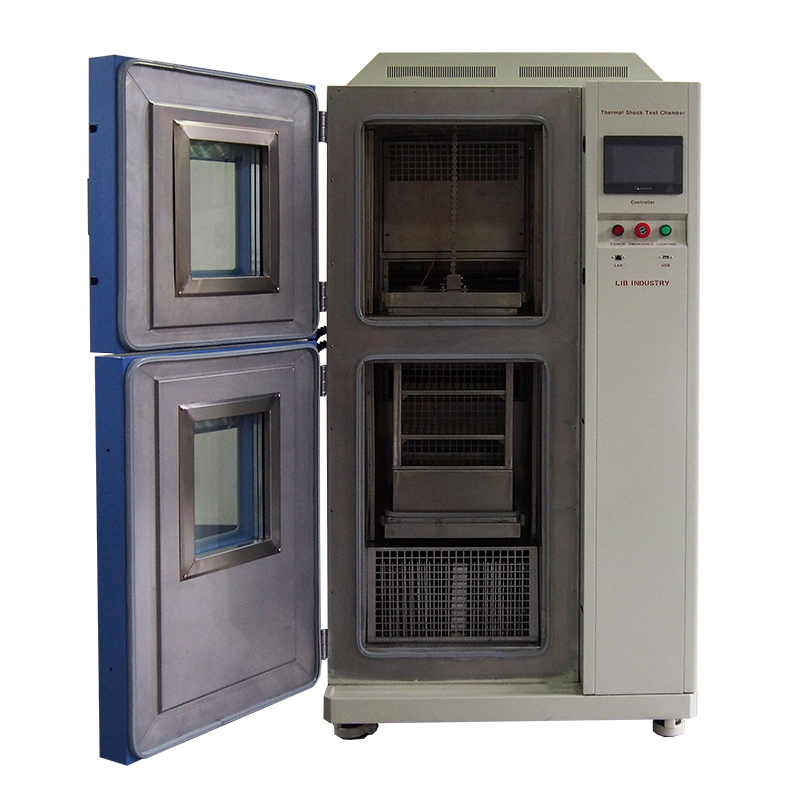 Extreme thermal stress simulation, Fast failure detection capability | 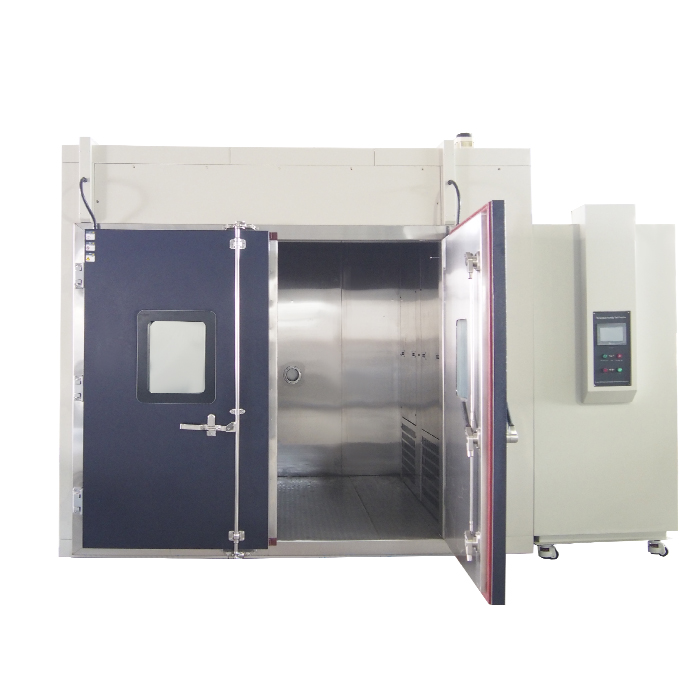
Large-capacity testing space, Ideal for oversized products |
Temperature and humidity chambers have more complex inner workings than temperature-only test chambers. The extra humidity system changes the whole design. A temperature-only chamber needs refrigeration, heating, air circulation, and sensors. A humidity chamber adds a humidity control system and ventilation parts on top of those basics.
Chamber Type | Internal Structural Components |
|---|---|
High-low temperature chamber | Extra equipment; control system (electrical control + temperature control); refrigeration; heating; air circulation; sensors |
Constant temperature and humidity chamber | Refrigeration system; heating system; humidity control system; ventilation system; other components (extra humidity system compared with temperature-only chambers) |
The chamber body must stop moisture from getting in. Insulation materials must handle very hot and very cold temperatures plus high humidity without breaking down. Seals and gaskets must keep vapor from escaping. Stainless steel inner walls resist corrosion from constant moisture. The outer shell protects the insulation layer from the surrounding environment.
Build quality directly affects how repeatable tests are. Poor sealing lets moisture move into the insulation. That causes condensation inside walls and lowers thermal efficiency. Over time, trapped moisture harms the chamber structure. Manufacturers design temperature-humidity chambers with vapor barriers and sealed joints to stop these problems.

Water systems are the core of humidity generation. Steam generators turn water into vapor. Air dryers take out extra moisture when the controller asks for lower humidity. Reservoirs hold the water supply. Drainage systems remove condensed water and waste water.
Water quality matters a lot. Carbon-steel steam generators need water within specific limits. Total hardness should stay near 17 mg/L, and alkalinity should run from 50 to 180 mg/L. Total dissolved solids should range from 50 to 150 mg/L, with pH between 7.5 and 8.5. Silica levels should stay between 0.1 and 1.0 mg/L, while resistivity should range from 2,000 to 6,000 ohm-cm. Reverse osmosis or softening is suggested for carbon-steel systems.
Deionized or distilled water should only be used with stainless-steel systems. High-purity water can pull minerals out of carbon steel and copper. That causes pitting and leaks. High-purity water also needs stainless-steel wetted parts in the chamber, jacket, steam generator, and process piping. An automatic generator blow-down feature rinses away minerals and scale. That extends heating-element life.
Temperature and humidity control needs careful programming. The controller handles heating, cooling, humidification, and dehumidification at the same time. Humidity sensors watch moisture levels all the time. These sensors need regular caLIBration to stay accurate. Drift affects test validity.
Programming gets harder with combined profiles. Operators set temperature ramps, humidity ramps, soak times, and transitions. The system must make all variables work together without overshooting targets. CaLIBration needs grow too. Humidity sensors need checking more often than temperature sensors alone.
LIB Industry designs and builds these systems with customization choices. The company offers consultation, custom design, installation, training, and after-sales support. This full-service approach helps buyers match chamber specs to their real test profiles.
Condensation appears when the air or a surface in the chamber falls below the dew point. Air at 85% RH and 35°C has a dew point around 29°C, so cold spots can cause moisture to form early. If dew point control stops working, moisture stays even after relative humidity goes down. This leads to false failures: uneven leakage currents, insulation-resistance drops, and shorting that comes and goes. Chamber accuracy relies on exact temperature and humidity control, steady ramp rates, and even airflow.
Frost or ice usually builds up on evaporators, air ducts, chamber walls, and sample surfaces during low-temperature testing. Frost lowers airflow efficiency and cooling power, which causes uneven temperature distribution. Moisture entering through door openings, failed defrost cycles, cold spots, and combined high-humidity/low-temperature operation all lead to frost. To prevent it, you should limit door openings, check defrost heaters, fans and drain lines, and clean evaporators.
Water quality causes most operating problems in temperature-humidity testing. Good water types include distilled, deionized, reverse osmosis, or demineralized water. Water with too many minerals causes sediment buildup and scale. Water that is too pure can pull minerals from metal parts and corrode the system. Common failure modes include biofilm in the tank, blocked filters, and corrosion in internal piping.
Maintenance depends on water usage and how the chamber runs. Daily tasks include checking water level, wick saturation, door seals, and internal cleanliness. Weekly tasks cover humidity response, water clarity, alarm logs, and stabilization time. Monthly tasks include cleaning the water tank and humidification tray, checking filters, and flushing the drain system. Idle systems left more than three days should be drained and dried.
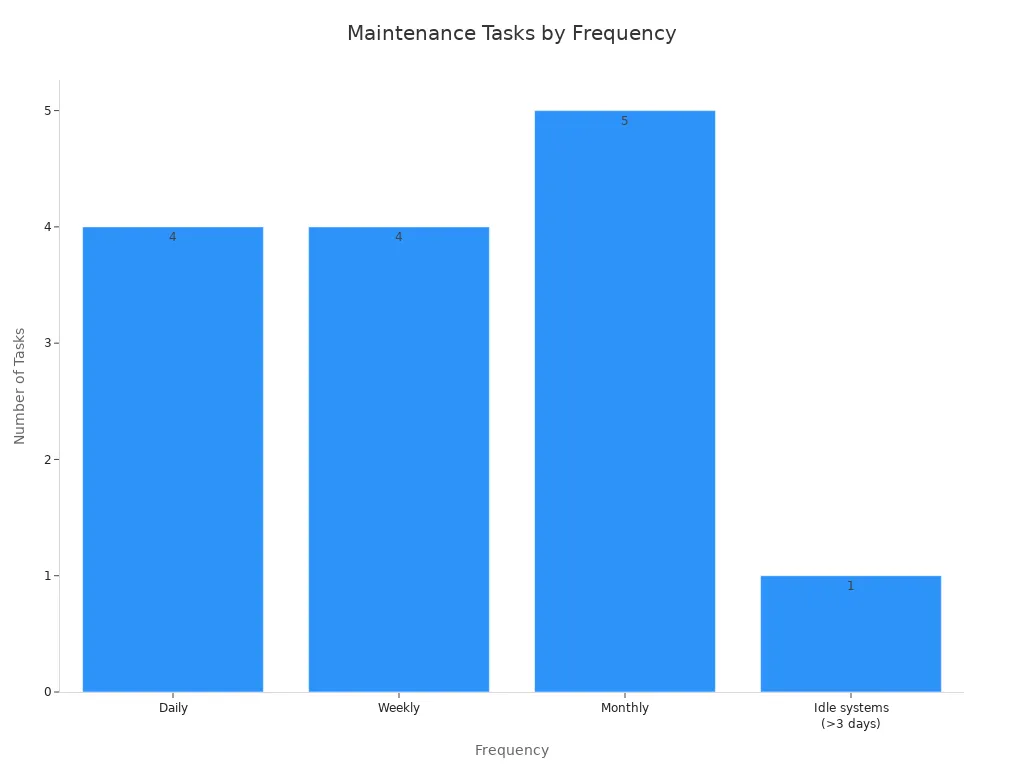
Humidity-capable chambers need more upkeep because they manage both temperature and humidity. When humidity readings become unstable, follow a logical order: check the water system first, inspect the wick, review airflow and load layout, verify caLIBration, then evaluate the controller last. In most cases, the issue is not controller failure but maintenance deviation.
Humidity sensors drift faster than sealed temperature probes because polymer sensing parts sit right out in open air. Chemical contamination, dust buildup, and physical aging reduce accuracy. High-usage laboratories should caLIBrate every six months. Manufacturing facilities with moderate usage caLIBrate every twelve months. Accredited laboratories follow intervals of six to twelve months, matching accreditation requirements. Major repairs demand immediate recaLIBration.
Sensor cleaning also matters. Operators should clean the sensor tip with alcohol and dry it in a 250°F dry chamber for ten minutes. The wet wick directly affects wet-bulb measurement accuracy. A degraded wick is a common hidden cause of unstable humidity readings. Operators should ensure full contact between wick and sensor and replace the wick regularly.
Water quality, wick condition, and caLIBration frequency determine whether a humidity chamber produces trustworthy data.
The selection process starts with the product, not the equipment. Engineers should ask one question first: does moisture appear in the product's service life? Products used outdoors, in vehicles, or in tropical climates typically require humidity testing. Indoor industrial components may only need thermal testing. This single answer narrows the field to a temperature chamber or a humidity-capable unit.
Applicable standards often settle the matter. If the test standard specifies relative humidity at 85% RH or 95% RH, only a climate chamber can meet the specification. A temperature test chamber cannot hold a moisture setpoint at all. Temperature test chambers handle thermal-only profiles. Temperature-humidity chambers handle combined profiles. The table below shows how service environment parameters map to test configurations.
Test Configuration | Distinguishing Parameters | Engineering Purpose |
|---|---|---|
Temperature only | Temperature, no humidity control | Assess thermal performance and temperature resistance |
Temperature + humidity | Temperature plus controlled moisture | Assess climatic reliability, corrosion risk, insulation performance |
Temperature + humidity + vibration + altitude | Combined stresses | Assess synchronized thermal, moisture, low-pressure, and mechanical stresses |
Adding humidity to a temperature test is not merely an extra specification. It changes the required control architecture. The chamber must manage moisture while temperature changes.
If your product only needs exposure to high and low temperatures, a temperature-only chamber is typically the most economical choice. However, if your testing program involves moisture, condensation, corrosion risk, or climate durability, a Temperature & Humidity Chamber is the better long-term investment. The most important selection factor is not the chamber itself, but the environmental conditions your product must withstand throughout its service life.
After defining the service environment, engineers match the chamber to the applicable standard and the heat load from the test sample. The recommended selection sequence runs: test method, DUT, heat load, temperature, ramp requirement, then chamber configuration. Sizing a chamber from DUT wattage alone does not work. Temperature test chambers cannot maintain humidity setpoints. Refrigeration selection also depends on operating temperature, DUT and fixture mass, ramp rate, and chamber design.
Heat load changes everything. Internal heat load adds to the energy the refrigeration system must remove. A chamber for an inactive 2,000 kg product may need a very different refrigeration system than the same product generating several kilowatts of heat. Advertised ramp rates may be based on empty-chamber conditions. Once a large test object enters the workspace, the system must also overcome its thermal mass.
Scenario | DUT | Heat Load | Temperature Range | Ramp Requirement | Key Consideration |
|---|---|---|---|---|---|
A — Passive DUT | 30 kg mechanical component | 0 W live heat | −40°C to +85°C | None specified | Workspace, DUT mass, temperature range |
B — Powered DUT | 30 kg electronics assembly | 300 W | −20°C to +85°C | Not specified | DUT heat generation and operating condition |
C — Same powered DUT, lower temperature | 30 kg electronics assembly | 300 W | −40°C to +85°C | Not specified | Lower temperature changes refrigeration requirement |
D — Powered DUT + rapid change | 30 kg electronics assembly | 800 W | −40°C to +85°C | 5°C/min | Workspace, thermal mass, live heat, loaded ramp performance |
A 300 W DUT is not the same requirement at −20°C and −40°C because those conditions fall into different heat-load ranges. A 1,000 W DUT does not require exactly 1,000 W of cooling capacity. Do not size a chamber by one-to-one wattage comparison. For humidity testing, evaluate the chamber against the actual temperature-humidity test point, such as +40°C / 93% RH, together with the DUT heat load and powered operating state. Do not combine separate datasheet maximums.
A real example shows why this matters. An ITM-LAB GDJS-800L chamber was configured for a battery application with a 100 kg DUT, a specified 3,000 W heat load, and a −40°C to +100°C temperature range. A standard refrigeration configuration was not used. The chamber was equipped with a cascade refrigeration system using two 6 HP Tecumseh compressors. The workspace tells whether the DUT fits. The DUT heat load helps determine what refrigeration configuration the test requires.
Many organizations initially purchase a temperature chamber but later require humidity testing for additional product lines. Selecting a climate chamber from the beginning may reduce future equipment investment. A programmable temperature humidity chamber supports both thermal-only and combined temperature and humidity profiles. This flexibility protects the original purchase.
LIB Industry supports this planning process through consultation, customized design, installation, training, and after-sales support. The company designs and manufactures temperature and humidity test chambers, constant temperature and humidity test chambers, and related environmental test chamber systems. Buyers should verify specifications against their actual test profiles before purchase. A constant temperature and humidity test chamber that matches the real service environment, applicable standards, heat load, and future test roadmap protects test validity and supports long-term compliance in environmental testing.
No. A temperature-only chamber has no steam generators, air dryers, or water systems. It can cycle heat and cold. It cannot hold a moisture setpoint. Test standards needing relative humidity, like 85% RH, require a temperature humidity chamber instead.
Some tests need controlled moisture, including damp heat, condensation, corrosion risk, and climatic durability. Outdoor, vehicle, and tropical products face humidity. Standards like IEC 60068-2-30 ask for cyclic damp heat. A temperature-only unit cannot meet these requirements.
IEC 60068-2-78 handles steady-state damp heat. IEC 60068-2-30 handles cyclic damp heat. JESD22-A101 supports semiconductor reliability testing. Each standard gives exact relative humidity levels. Only a chamber with humidity control can meet these profiles.
Yes. A programmable temperature humidity chamber can run both kinds of profiles. Users can set dry thermal cycles without turning on humidification. So the unit works for temperature-only and combined temperature and humidity tests. Buying a humidity-capable unit avoids future equipment purchases.
Good water prevents corrosion and scaling. A temperature humidity chamber with a carbon-steel steam generator needs controlled hardness, alkalinity, and pH. Deionized or distilled water works for stainless-steel systems. Wrong water causes sediment, pitting, and leaks. Daily checks and regular cleaning keep the system running.
✓ 3-year warranty and lifetime technical support for long-term equipment reliability
✓ 7–15 day delivery with professional installation and commissioning guidance
✓ Wide operating range from -70°C to +150°C, with humidity control from 20% to 98% RH
✓ Reliable control accuracy with ±0.5°C temperature fluctuation and ±2.5% RH humidity deviation
✓ Flexible equipment options including benchtop, reach-in, walk-in, and customized systems
✓ IEC 60068-compliant testing solutions for a wide range of environmental test requirements
Whether you test electronic components, automotive parts, batteries, pharmaceutical products, or industrial materials, the right equipment helps you reproduce environmental conditions and evaluate product durability with confidence.
LIB Industry offers a range of environmental testing equipment, including Temperature and Humidity Test Chambers, Combined Climate and Vibration Chambers, Thermal Shock Test Chambers, and Walk-In Temperature Humidity Chambers. Our team helps you determine the appropriate model and configuration based on your sample dimensions, required test profile, heat load, and applicable standards. Contact LIB Industry to discuss your testing needs and receive a solution tailored to your application.


