


Reliability test is an activity carried out to evaluate the functional reliability of a product during a specified life span under all intended use, transportation or storage environments. It is to expose the product to natural or artificial environmental conditions to experience its effect, to evaluate the performance of the product under the actual use, transportation and storage of the environmental conditions, and to analyze and study the degree of influence of environmental factors and its mechanism of action.
The Purpose and Necessity of Reliability Tests
By using various environmental test equipment to simulate high temperature, low temperature, high temperature and humidity and temperature changes in the climatic environment, accelerate the reaction of the condition of the product in the use environment, to verify whether it meets the expected quality objectives in R&D, design and manufacturing, so as to evaluate the product as a whole to determine the reliability life of the product. Discover product shortcomings through reliability test; Identification of defects in product processing and manufacturing processes; Put forward improvement suggestions and suggestions to help enterprises improve the process level, enhance product life and quality; Provide technical support for the R & D and production of enterprises, so as to create high-quality products and improve the market competitiveness of enterprises.
Salt Fog Test
Salt spray testssimulate the climate of marine or humid areas and are used to assess the resistance of products, materials and their protective layers to salt spray corrosion. There are two kinds of tests: salt spray test and alternating salt spray. It is often used for quality assessment and failure verification under special conditions.

Dustproof and Waterproof Test/IP Grade
Dustproof and waterproof testing is usually called IP rating testing. It is mainly used to evaluate how well electronic products and electrical equipment are protected when they are used outdoors or in harsh environments. The IP code is written as IPXX. The first number shows how well the product prevents solid objects and dust from entering, while the second number shows how well it resists water under different conditions.
Different IP ratings are used for different environments in daily applications. For example, most home appliances are only designed with a basic level such as IP20, which mainly protects against larger solid objects but has no waterproof function. If there is no special requirement, some products may even be marked IPX0, meaning the dust protection level is not defined or not tested.
For indoor lighting, IP20 is very common. It can prevent objects larger than 12 mm from entering but cannot protect against water. This is enough for dry indoor environments like living rooms or offices.
For outdoor lighting, a higher protection level is needed, usually IP44. This level can block small solid particles and also resist water splashes from different directions, making it suitable for semi-outdoor environments.
In places with higher humidity such as bathrooms, kitchens, or covered outdoor areas, IP54 is often used. It provides better dust protection and can also handle light water splashing, making it more suitable for humid environments.
For full outdoor use such as floodlights, IP65 is widely applied. It means the product is completely dustproof and can resist water jets, so it can work safely in rain and dusty conditions.
For underground or buried lighting systems, IP67 is commonly used. This level ensures the product is fully dustproof and can also withstand short-term water immersion, which is important for soil moisture or temporary flooding situations.
For underwater lighting, IP68 is required. It provides long-term water resistance and is designed for continuous operation under water.
In electronic communication products, common protection levels include IP57, IP65, and IP67. IP57 means dustproof and can handle short-term water immersion. IP65 means dustproof and splash-resistant. IP67 means dustproof and can also survive short-term immersion in water.
It is important to understand that a higher IP rating is not always “better.” Different products require different protection levels based on their actual working environment. For example, IP67 does not automatically replace IP65 requirements, because each level is designed for specific test conditions and real-world usage scenarios.

Currently LIB test chambers can perform all these tests.
High and Low Temperature Test
High temperature has many effects on the product, such as aging, oxidation, chemical changes, thermal diffusion, electromigration, metal migration, melting, vaporization deformation, etc., usually every 10 °C rise in the surrounding environment, the product life will be reduced to a quarter; When the ambient temperature rises by 20 °C, the product life will be reduced by half, and the product life follows the "10 °C rule", so the high temperature test is the most commonly used test, used for the screening of components and the whole machine, aging test, life test, accelerated life test, and plays an important role in the verification of failure analysis.
Low temperature has many effects on products, such as embrittlement, icing, viscosity increase, curing, mechanical strength reduction and physical shrinkage, etc., low temperature test is used to assess the adaptability of products stored and used in low temperature environment, often used in the development stage of product type test, component screening test, etc.
Test range: 0°C~ -70°C
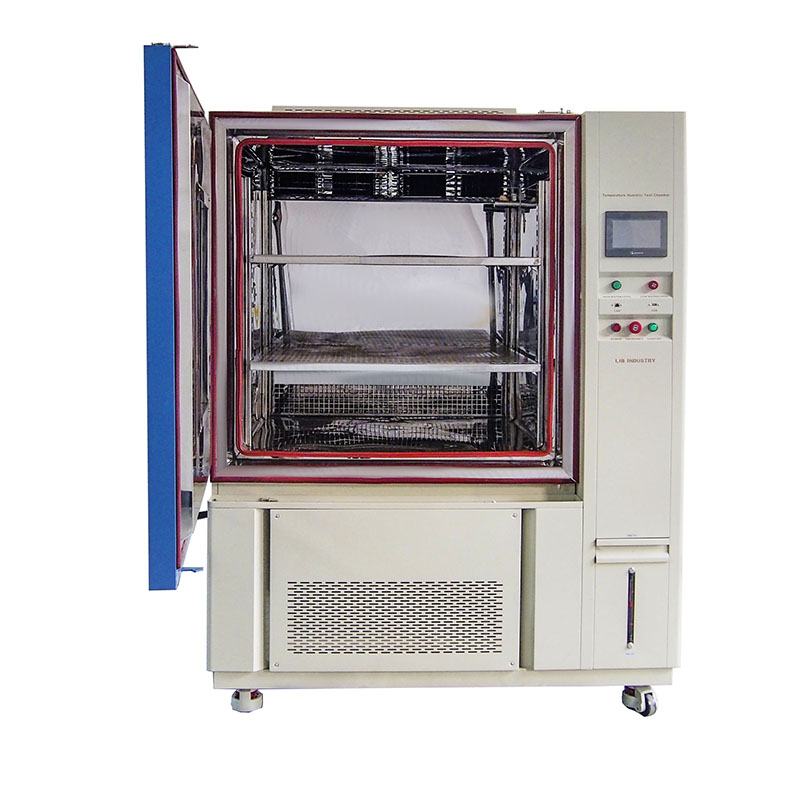  | |||||
Temperature range | -20℃ ~+150 ℃ | ||||
Low type | A: -40℃ B:-70℃ C -86℃ | ||||
Humidity Range | 20%-98%RH | ||||
Temperature deviation | ± 2.0 ℃ | ||||
Heating rate | 3 ℃ / min | ||||
Cooling rate | 1 ℃ / min | ||||
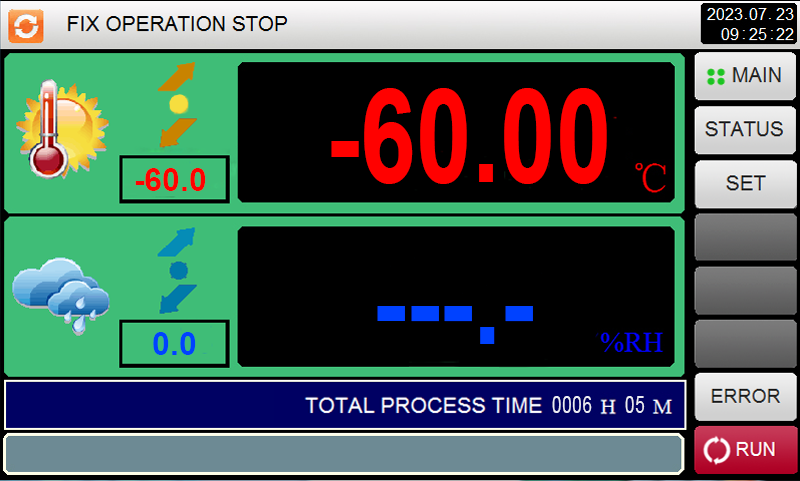
Controller | Programmable color LCD touch screen controller, Multi-language interface, Ethernet , USB | ||||
Refrigerant | R404A, R23 | ||||
Exterior material | Steel Plate with protective coating | ||||
Interior material | SUS304 stainless steel | ||||
Standard configuration | 1 Cable hole (Φ 50) with plug; 2 shelves | ||||
Timing Function | 0.1~999.9 (S,M,H) settable | ||||
|
| 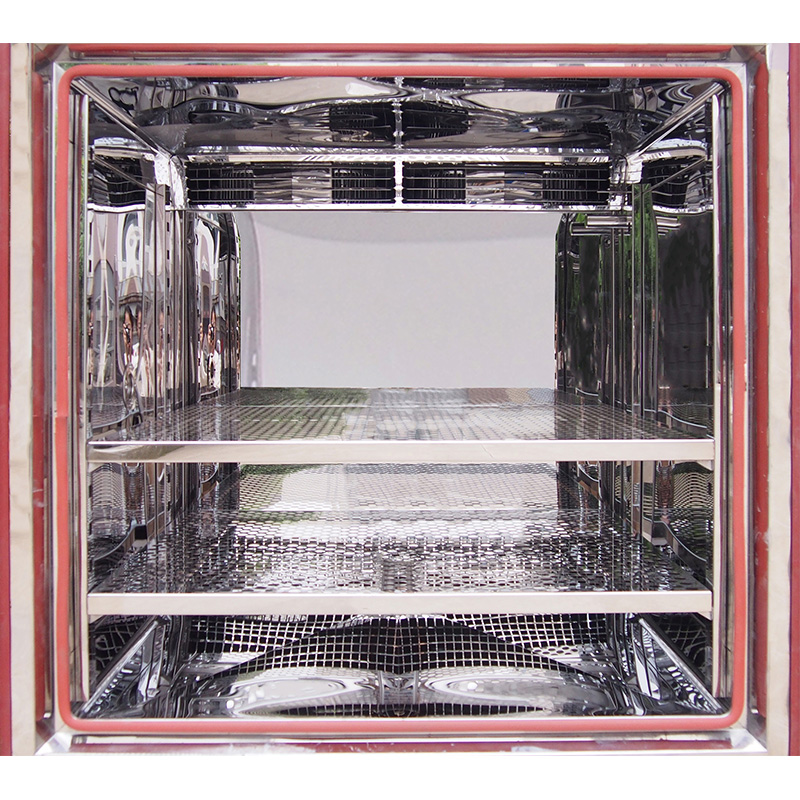 | 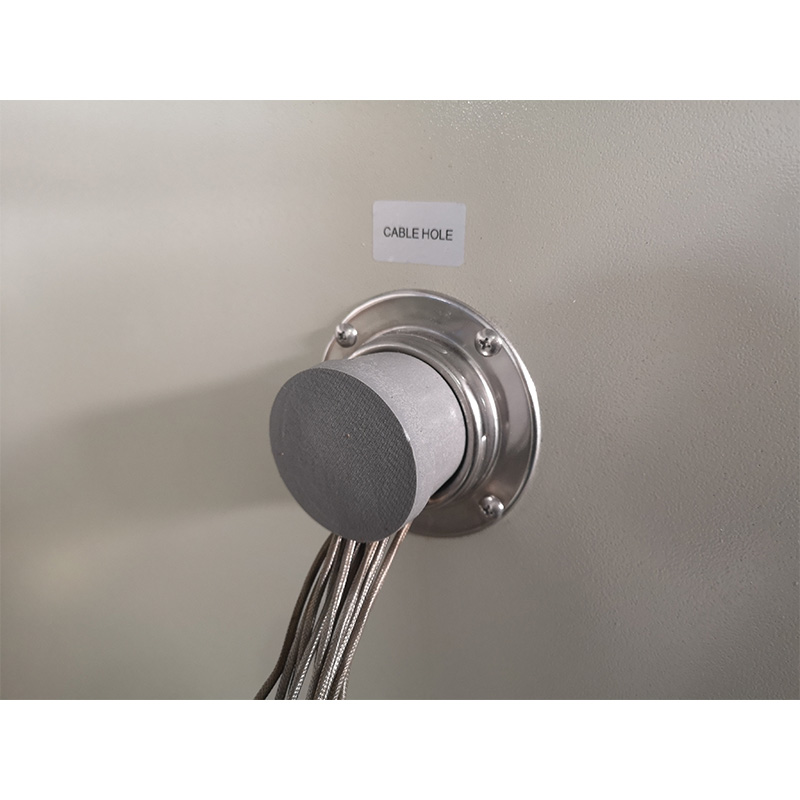 |
Touch screen controller Holds up to 120 test programs with 100 steps each, making it well suited for complex multi‑stage profiles such as temperature–humidity shock or soak cycles. | The compressor The compressor rapidly removes heat from the chamber interior, achieving a cooling rate around 1 °C / 5 °Cper minute. | Robust Anti-Corrosion Workroom The chamber's interior is built from SUS304 stainless steel, offering outstanding resistance to heat and corrosion for long-lasting performance. | Integrated Power Access hole Allows test specimens to stay powered during experiments, enabling performance evaluation under varying temperature and humidity. Standard 50 mm diameter; quantity and size customizable. |

UV Light Aging Test
It is used to simulate the destructive effect of sunlight, humidity and temperature on materials; Material aging includes fading, loss of light, loss of strength, cracking, peeling, chalking and oxidation.
Test range: UVA340/UVB313/UVA351

Thermal Shock Test
The purpose of the temperature shock test is to confirm changes in product characteristics and failure problems due to different coefficients of thermal expansion of dissimilar materials that make up components in a short period of time. These changes can be observed by rapidly alternating exposing components to ultra-high and ultra-low temperature test environments. Thermal and cold shock is different from environmental simulation test, which is to find potential faults that are difficult to find at room temperature through hot and cold temperature shock.
Thermal Shock Test Chamber is a necessary test equipment for metal, plastic, rubber, electronics and other material industries, used to test material structure or composite materials, in an instant through extremely high temperature and extremely low temperature continuous environment to endure the degree, in the shortest time to detect the test sample due to thermal expansion and contraction caused by chemical changes or physical damage.
Test range: temperature: -55~200°C
Conversion time: 5 minutes
Rapid Temperature Change Test
Rapid temperature change is a temperature change that specifies the rate of temperature change, often simulates the regional environment with a large temperature difference between day and night, and can also be used for life test to evaluate the appearance, mechanical properties and electrical properties of components or products.
Test range: Temperature: -70°C~150°C
Temperature change rate 10~25°C/min
Alternating Damp Heat Test
Alternating humid heat is to simulate the environment of tropical rainforests, determine the adaptability of products and materials in temperature changes, use and storage when condensation on the surface of products. It is often used for life test, evaluation test and comprehensive test.
Test range: temperature: -70 °C ~ 180 °C humidity: 5% ~ 98%
Constant Temperature and Humidity Test
The influence of humidity accounts for more than 40% of the cause of product failure, so humidity test is essential in environmental test. It is often used in life test, evaluation test and comprehensive test, and plays an important role in failure analysis. Especially for products containing resin materials, this test is necessary during product development and quality evaluation. The double 85 that is often made refers to a temperature of 85°C and a humidity of 85%RH.
Temperature/humidity environment,
Temperature: -70 °C ~ 180 °C humidity: 5% ~ 98%
Gas Corrosion Test
Gas corrosion is mainly used in contact points and connectors, and the evaluation standard after the test is the change of contact resistance, followed by the change of appearance. The main corrosive gases are sulfur dioxide, hydrogen sulfide, nitrogen dioxide, chlorine, and one or more gases can be selected for test according to the use environment.
Test range: SO2/ H2S/ NO2/Cl2
Concentration: 0.01~100ppm;
Temperature: 0°C~90°C;
Humidity: 10%~98%

Altitude Test
Altitude Test chamber is mainly used in aviation, aerospace, information, electronics and other fields to determine the environmental adaptability and reliability test of instrumentation, electrical products, materials, parts and components and equipment under low pressure, high temperature and low temperature single or simultaneous action.
Test range:
pressure: normal pressure ~ 10KPa
temperature: normal temperature ~ 200 °C
Ozone test
Ozone test is suitable for test the ozone aging resistance and aging crack test of non-metallic materials and organic materials (such as coatings, paints, rubber, plastics, and their products) of rubber products.
Test range: concentration: 0~500pphm
temperature: room temperature ~ 50 °C
|
| ||
Model | OC-250 | OC-500 | |
Internal Dimension (mm) | 600*600*700 | 700*800*900 | |
Overall Dimension (mm) | 960*1150*1860 | 1180*1350*2010 | |
Interior Volume (L) | 250 | 500 | |
Temperature Range | 0℃ ~ +100 ℃ | ||
Temperature Fluctuation | ± 0.5 ℃ | ||
Temperature Deviation | ± 2.0 ℃ | ||
Humidity Range | 30% ~ 98% RH | ||
Humidity Deviation | ± 2.5% RH | ||
Cooling Rate | Ambient ~ 0℃ within 20 min | ||
Ozone Concentration | 1~1000PPHM | ||
Sample Holder Rotate Speed | 0~10 r/min | ||
Airflow Rate | 0 ~ 60L/min | ||
Clamps Tensile Stretch | 5%~35% | ||
Controller | Programmable color LCD touchscreen controller, Ethernet connection, PC Link | ||
Standard | ISO1431;ASTM 1149;IEC 60903 | ||


Highly Accelerated Stress Test(HAST)
The Highly Accelerated Stress Test adopts high pressure and high humidity conditions to assess the comprehensive impact of electronic devices such as semiconductor integrated circuits packaged in plastic packaging, and is to evaluate the ability of electronic products to withstand humidity and heat by highly accelerated test methods, and is often used for product development, quality evaluation, and failure verification.
Test range:
temperature: 105~142.9 °C
humidity: 75%~100%
pressure: 0.02~0.186Mpa
LIB test chambers
With over 10 years of experience, LIB INDUSTRY provides excellent services to many component suppliers with the testing and certification they need to enter global markets .Many major suppliers of components rely on LIB INDUSTRY as their trusted partner to ensure the overall safety and performance of their products. We provide a lot of test chambers and Turn-key solutions to assess whether their components meet industry standards and regulatory requirements in almost every major market in the world. We have relevant experts and service center around the world to provide local support for your needs.
What kind of environmental test do you need for you products? Please contact LIB Industry now.


