Views: 0 Author: LIB Team Publish Time: 2026-10-23 Origin: Site


Dust exposure can reduce product reliability across automotive, electronics, renewable energy, and industrial applications. A dust test chamber helps manufacturers evaluate enclosure protection, identify potential sealing weaknesses, and verify product performance under controlled conditions before products enter the market.
Real customer feedback also shows the importance of reliable dust testing equipment. Vicki, a customer in the United States who purchased LIB Industry's DI-2000 Dust Test Chamber, shared her feedback after using the equipment:“The test chamber is working well so all good. ” This positive feedback reflects the test chamber's performance in the customer's application. This guide examines which products need dust testing, the applicable standards, and how to select suitable equipment.
Reliable Product Validation: Dust testing helps identify risks such as electrical faults, mechanical wear, overheating, and reduced sealing performance.
Wide Industrial Applications: Automotive components, electronic devices, outdoor equipment, renewable energy systems, and aerospace products commonly require dust resistance evaluation.
Standardized IP Testing: IEC 60529 defines IP5X and IP6X dust protection classifications, providing repeatable methods for evaluating enclosure performance.
Flexible Testing Equipment: Standard and walk-in dust test chambers accommodate different specimen dimensions, testing conditions, and industrial requirements.
Improved Development Efficiency: In-house environmental testing helps manufacturers evaluate design changes, strengthen quality control, and reduce dependence on external laboratories.
Dust is more than a surface contamination problem. For electronic and mechanical products, prolonged exposure can affect performance, operational stability, and service life. When fine particles enter moving mechanisms, they may accumulate around bearings, gears, cooling fans, and other precision components. Depending on their composition and concentration, these particles can increase friction, accelerate wear, and interfere with normal operation.
Dust accumulation can also influence thermal management. Many electronic products rely on ventilation openings, cooling fans, and heat sinks to dissipate heat. When dust obstructs these pathways, operating temperatures may increase, potentially reducing component efficiency and reliability.
Electrical equipment faces additional challenges. Dust containing moisture or conductive contaminants may contribute to leakage currents, corrosion, and electrical faults. These risks are particularly important for products exposed to humidity, industrial pollution, or outdoor operating conditions. For manufacturers, identifying dust-related weaknesses during development is considerably more manageable than addressing recurring failures after installation.
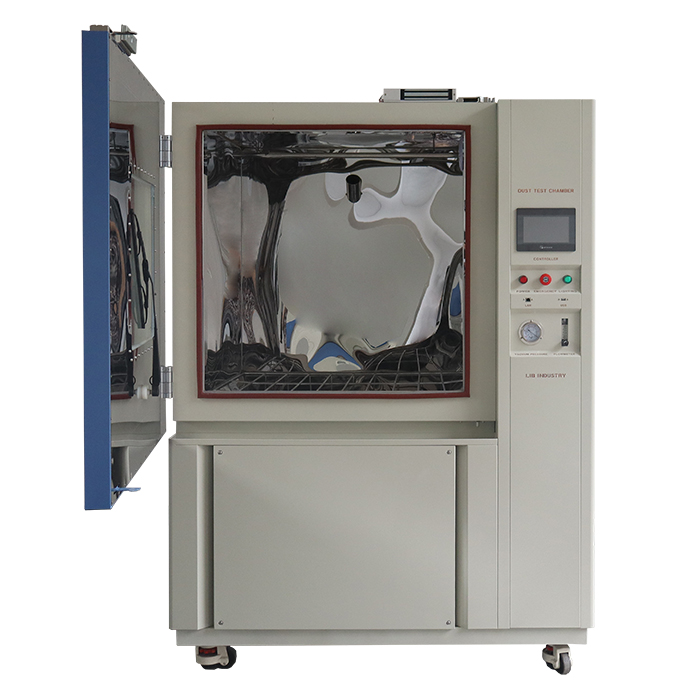
A dust test chamber creates controlled particulate exposure conditions to evaluate how products respond to dusty environments. Depending on the applicable standard, the equipment may use circulating talcum powder or other specified test dust. The chamber controls relevant parameters such as dust circulation, exposure duration, airflow, and pressure conditions.
Engineers use these controlled environments to examine enclosure sealing, component functionality, and potential dust accumulation. For example, an electrical control enclosure may be tested to determine whether fine particles can penetrate its gaskets, cable entries, or ventilation openings.A mechanical assembly may undergo a different procedure to evaluate wear or functional performance under blowing dust conditions. These tests help identify possible design improvements before mass production. By incorporating dust testing into product development, manufacturers can improve validation efficiency and reduce the likelihood of dust-related failures in service.
| Name | Dust Test Chamber | |||
| Model | DI-800 | DI-1000 | DI-1500 | DI-2000 |
| Internal Dimension (mm) | 800*1000*1000 | 1000*1000*1000 | 1000*1500*1000 | 1000*2000*1000 |
| Overall Dimension (mm) | 1040*1450*1960 | 1330*1450*1960 | 1330*1950*1990 | 1330*2450*1990 |
| Useful Volume (L) | 800 | 1000 | 1500 | 2000 |
| Temperature Range | Ambient ~ +50℃ | |||
| Humidity Range | < 30% RH | |||
| Normal Wire Diameter | 50um | |||
| Nominal Width of a Gap Between wires | 75um | |||
| Fight Time | 0 ~ 99H59M | |||
| Blowing Time | 0 ~ 99H59M | |||
| Specimen Power Outlet | Dust-proof socket 16A | |||
| Vacuum System | Equipped with a pressure gauge, air filter, pressure regulator, connecting tube | |||
| Controller | Programmable color LCD touch screen controller, Ethernet connection | |||
| Door Lock | Electromagnetic lock | |||
| Safety Device | Over-temperature Protection; Over-current Protection; | |||
| Earth Leakage Protection;Phase Sequence Protection | ||||
| Exterior Material | A3 Steel Plate with protective coating | |||
| Interior Material | SUS304 stainless steel | |||
| Observation Window | Interior lighting, double-layer thermo stability silicone rubber sealing | |||
| Standard Configuration | Sample shelf, dust wiper, talcum powder(5kgs) | |||
Ingress Protection ratings provide a standardized method for classifying the protection offered by electrical enclosures.
The IEC 60529 standard defines protection levels against solid objects and water.
For dust protection, two important classifications are IP5X and IP6X.
| IP Rating | Protection Level | Testing Criteria | Typical Applications |
|---|---|---|---|
| IP5X | Dust Protected | Limited dust ingress may occur, but it must not interfere with satisfactory operation or impair safety. | Electrical cabinets, industrial controls, lighting equipment, electronic enclosures |
| IP6X | Dust Tight | No dust ingress is permitted under the specified test conditions. | Automotive electronics, outdoor communication equipment, sensors, high-protection electrical enclosures |
Both classifications require appropriate testing procedures and controlled laboratory conditions.
IP5X does not necessarily mean that an enclosure is completely sealed. Instead, it evaluates whether any dust entering the product affects its required protection.
IP6X establishes a higher level of protection by requiring the enclosure to remain dust-tight under the applicable test conditions.
Depending on the enclosure category and test procedure, negative pressure may be applied during testing.
For reliable evaluation, the test equipment must support the required dust circulation and pressure conditions.
Manufacturers supplying products to international markets often need documented evidence of environmental performance. Automotive suppliers, electrical equipment manufacturers, and industrial customers may specify particular ingress protection ratings in their procurement requirements.
A suitable IP Dust Test Chamber helps manufacturers conduct controlled evaluations against applicable standards. However, equipment testing and independent certification are not identical. A manufacturer may conduct internal validation using suitable test equipment, while formal certification or third-party test reports may be required for certain contracts or markets. Establishing a consistent testing process improves traceability and supports product qualification.LIB Industry provides dust testing solutions for applications involving IEC 60529, ISO 20653, and other relevant environmental testing methods, helping manufacturers evaluate different enclosure protection requirements.
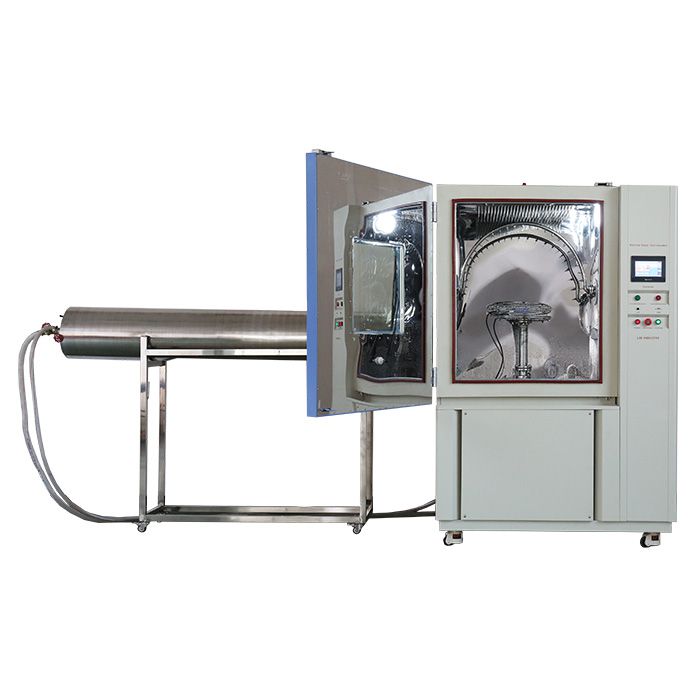
| LIB Popular Dust and Water Test Equipment | |||
| 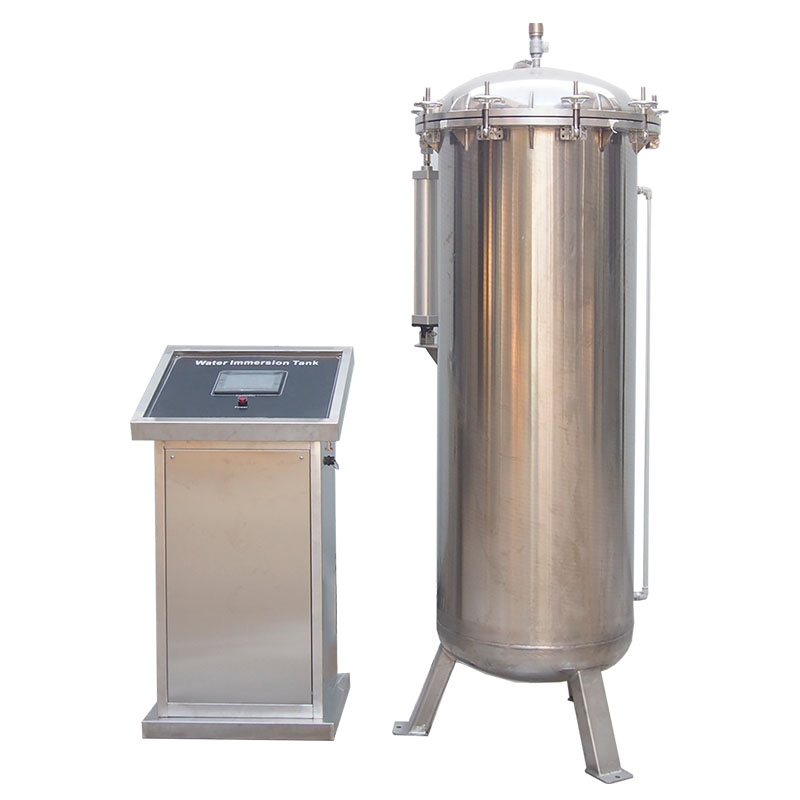 | 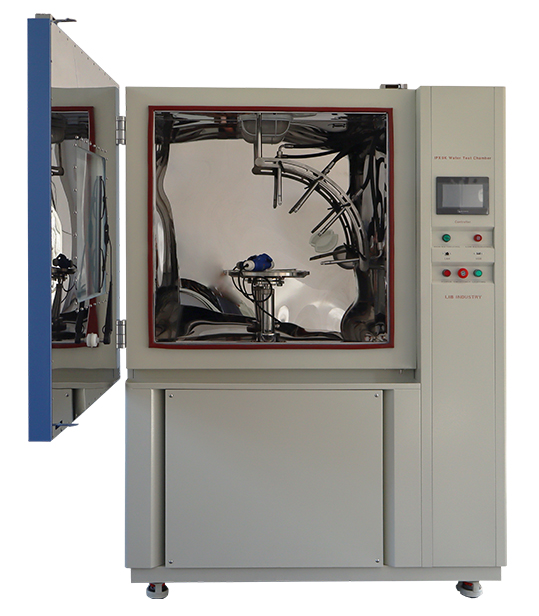 | 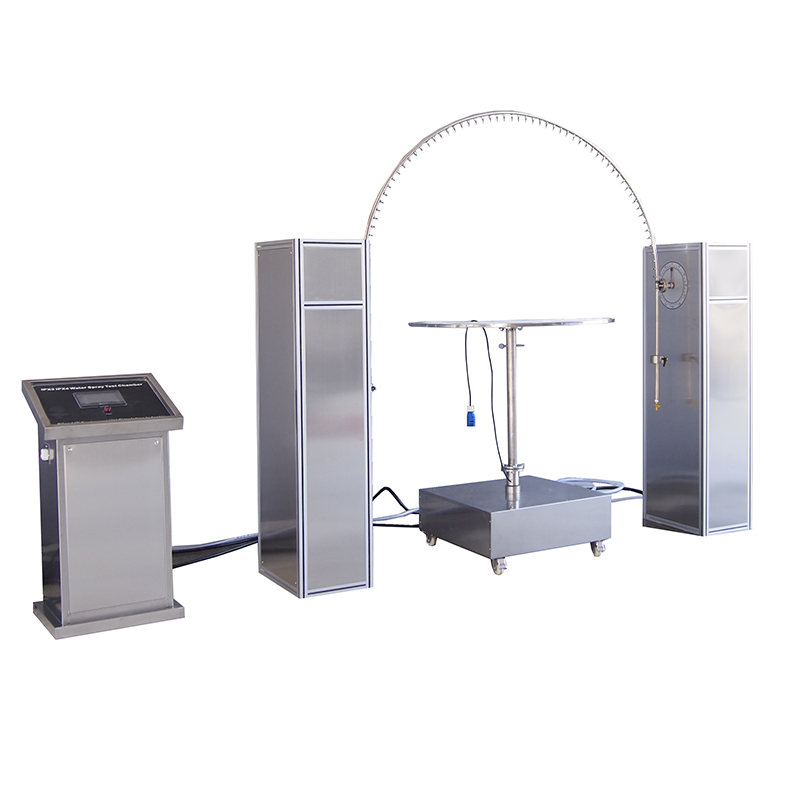 |
Combined Chamber(IPX1 X2 X3 X4 X5 X6) Multi-level IP testing, Space-saving design | IPX7 IPX8 Water Immersion Test Equipment Deep water simulation,Long-duration immersion | IPX9K High Pressure Water Spray Test Chamber 88°C hot water jets, High-pressure spray testing | Whole Set of IP Test Equipment-No Housing Type Easy sample loading, flexable |
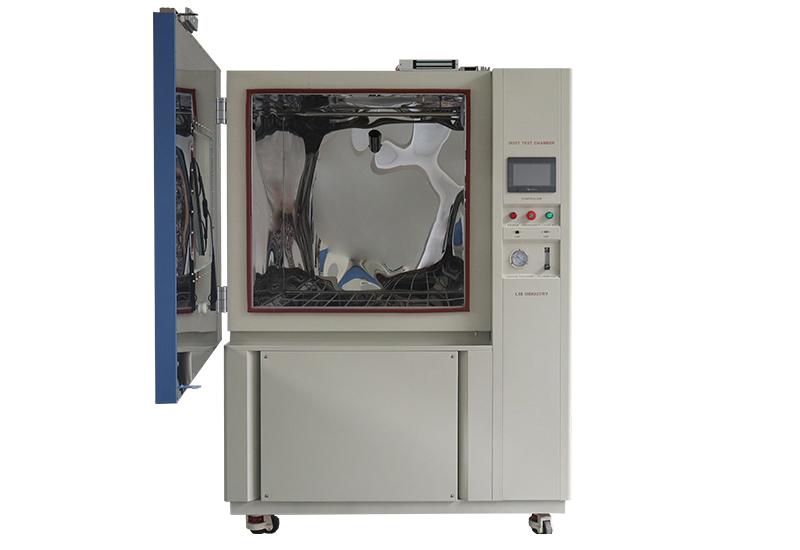 | 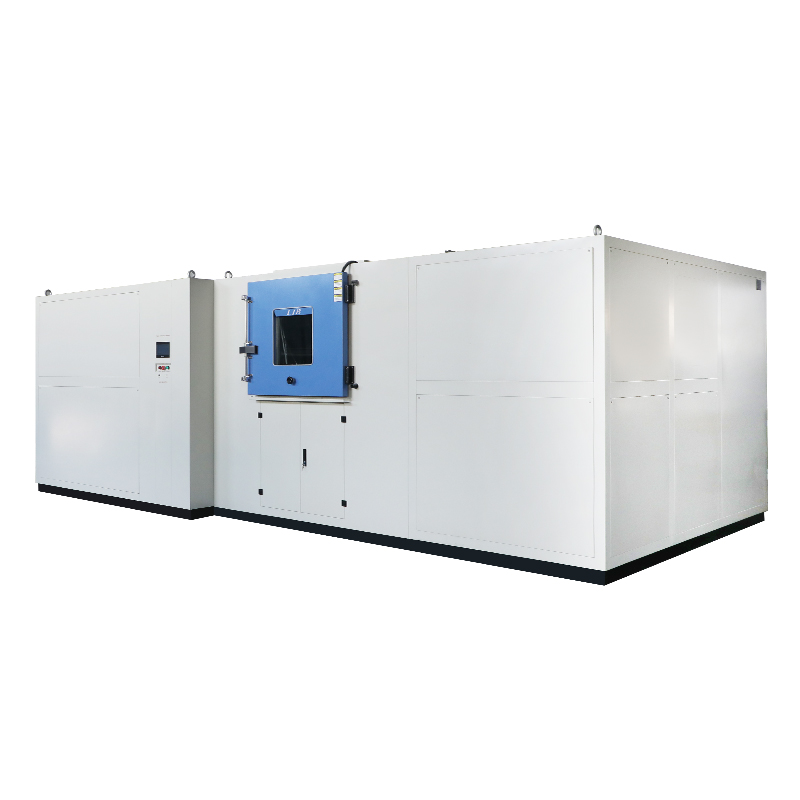 | 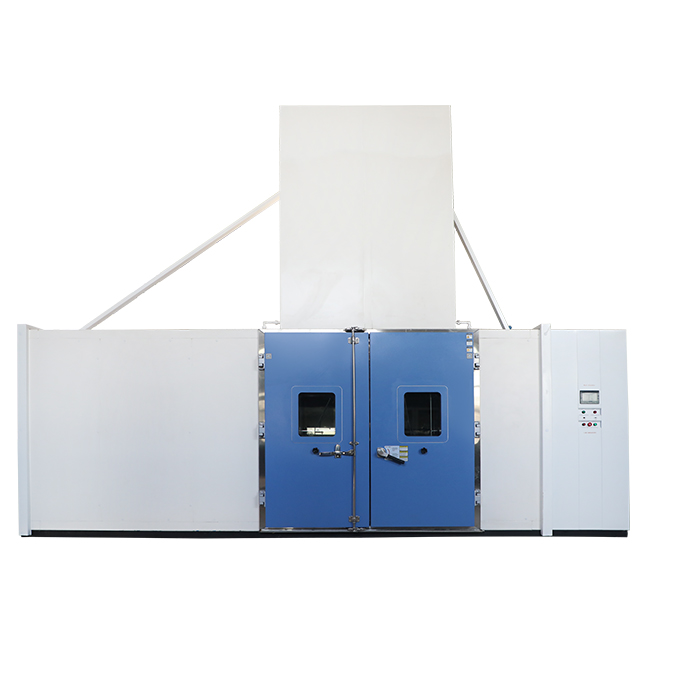 | |
IP5X/6X Sand and Dust Test Chamber Controlled dust circulation, IEC 60529 compliance | MIL-STD-810 Sand and Dust Test Chamber Harsh dust simulation, Defense and aerospace testing | Harsh water simulation, Defense and aerospace testing | |
Modern electronic products contain increasingly compact circuit boards, connectors, sensors, and integrated components. As component density increases, protection against environmental contamination becomes more important. Dust entering an electronic enclosure can accumulate around circuit boards, connectors, and cooling systems. In dry conditions, some particles may primarily affect mechanical or thermal performance. However, moisture and conductive contaminants can increase the likelihood of electrical leakage, corrosion, and insulation problems.
Certain combinations of moisture, contamination, and electrical bias may also contribute to electrochemical migration between conductive traces. For this reason, manufacturers must consider both enclosure sealing and the actual operating environment. Dust testing is particularly useful for evaluating protective housings, connector interfaces, ventilation openings, and gasket designs. It should be complemented by other environmental evaluations when humidity, temperature changes, or electrical contamination risks are also relevant.
Consumer and industrial electronic products face different environmental challenges. Consumer devices may encounter household dust, lint, outdoor particles, and contamination around charging ports, speakers, or ventilation openings. Testing helps manufacturers evaluate whether enclosure designs provide suitable protection for their intended use. Industrial electronics often operate in more demanding environments.
Programmable logic controllers, motor drives, electrical cabinets, and automation equipment may be installed in factories, workshops, agricultural facilities, or mining operations. These locations can expose equipment to continuous airborne particles and mechanical contamination.Depending on the product, engineers may need to evaluate both dust ingress protection and functional performance during prolonged exposure. A properly selected dust test chamber provides repeatable conditions for comparing enclosure designs and identifying potential weaknesses.
Automotive components operate under changing environmental conditions that include road dust, vibration, temperature fluctuations, and moisture. Fine particles can accumulate around connectors, electrical housings, sensors, and mechanical interfaces. Engine control systems, electrical connectors, lighting assemblies, and other vehicle components therefore require appropriate environmental validation.
Automotive engineers may use a Sand and Dust Test Chamber to evaluate resistance to particulate exposure.
The selected testing method depends on the component and relevant requirements.
For example, ISO 20653 addresses degrees of protection for electrical equipment used in road vehicles.
Other automotive testing programs may incorporate dust exposure methods from additional standards or manufacturer-specific specifications.
The expansion of electric vehicles and advanced electronic systems has increased the importance of environmental protection.
Battery system enclosures, charging components, electronic control units, and power electronics contain interfaces that must be protected against contamination. Although dust exposure does not automatically cause serious electrical failures, uncontrolled ingress can affect cooling systems, insulation surfaces, and long-term component reliability.
Controlled testing allows manufacturers to examine these risks during design validation.
Automotive lighting systems contain lenses, reflectors, electronic drivers, and sealing structures that must withstand outdoor conditions. When dust enters a headlight housing, particles may accumulate on internal optical surfaces or electrical components. This can affect light distribution, appearance, and long-term reliability. Testing helps engineers evaluate vulnerable locations such as lens joints, ventilation membranes, rear covers, and electrical connections. Similar considerations apply to exterior cameras and sensor enclosures.
Modern vehicles may use cameras, radar units, and LiDAR systems as part of advanced driver assistance technologies.These components require protection against environmental exposure to maintain dependable operation.It is important to distinguish internal dust ingress from external surface contamination. An enclosure dust test evaluates the protective structure, while additional procedures may be necessary to assess dirt accumulation on external optical surfaces. Together, these evaluations help automotive suppliers develop more reliable components.
Solar energy installations are frequently exposed to airborne dust, particularly in dry and windy regions. Dust accumulation can affect different parts of a photovoltaic system in different ways. On solar panels, surface contamination may reduce the amount of sunlight reaching the cells, potentially lowering energy generation. For solar tracking systems, particulate contamination can influence the operation of gears, bearings, and actuators.
Electrical equipment such as photovoltaic inverters faces additional risks. Inverters contain electronic power conversion components, connectors, and thermal management systems. Dust entering their enclosures may interfere with cooling or contribute to electrical contamination. Dust testing helps manufacturers examine the effectiveness of protective housings, gaskets, ventilation structures, and cable entry points. For outdoor renewable energy equipment, the required protection level depends on installation conditions and relevant product specifications. Manufacturers may combine dust resistance evaluations with temperature, humidity, and water ingress testing to develop a more complete understanding of environmental durability.
Outdoor telecommunications systems depend on stable operation across different climates and installation locations.
Communication cabinets, network equipment, amplifiers, and power supply enclosures may be installed on rooftops, towers, roadside structures, or remote infrastructure sites.
These locations can expose equipment to wind-driven dust, moisture, and temperature changes.
Fine particles may enter through poorly protected cable openings, ventilation structures, or deteriorated enclosure seals.
Over time, accumulated dust can obstruct cooling components and increase maintenance requirements.
Standardized dust testing helps manufacturers evaluate enclosure protection before installation.
For outdoor communication systems, testing should consider the operating environment, maintenance accessibility, and required IP classification.
By identifying vulnerable interfaces during development, manufacturers can improve equipment durability and reduce the likelihood of contamination-related service interruptions.
Aerospace and defense equipment may operate in environments containing high concentrations of airborne dust and sand.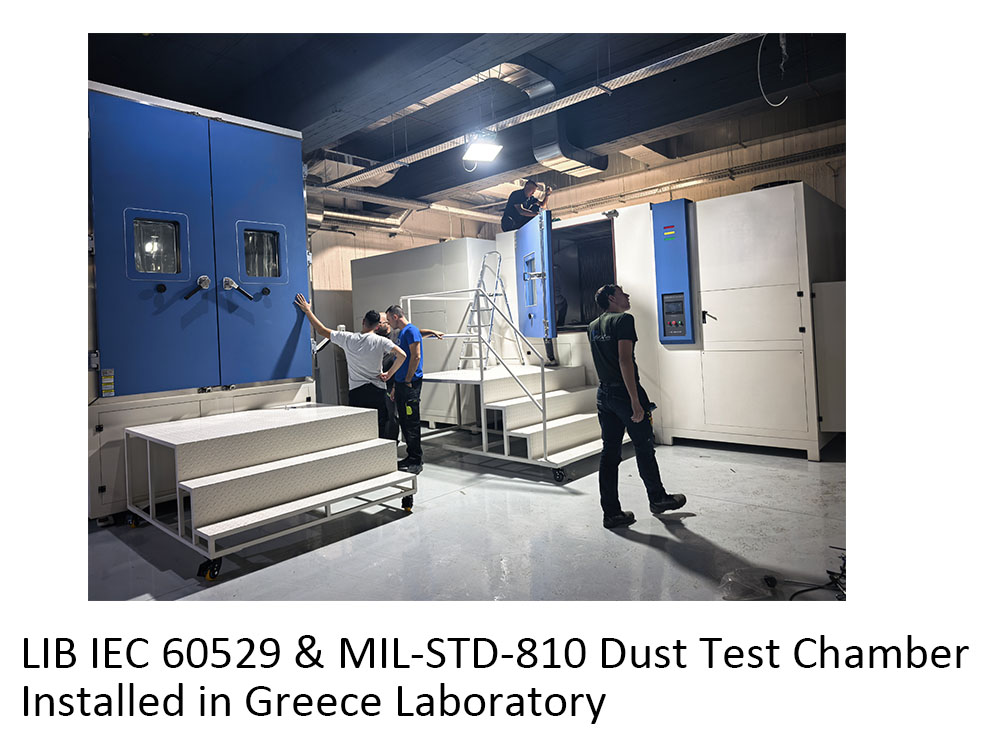
Such conditions can affect mechanical components, optical surfaces, ventilation systems, and electronic equipment.
MIL-STD-810 provides environmental engineering guidance and laboratory test methods for evaluating equipment under defined conditions.
Its sand and dust testing methods distinguish between different exposure mechanisms.
Blowing dust testing primarily addresses the effects of fine particulate exposure, including penetration, accumulation, and potential functional interference.
Blowing sand testing evaluates the effects of larger particles moving at higher velocities.
These particles may cause surface abrasion, erosion, and damage to exposed components.
Unlike conventional IP5X and IP6X enclosure testing, blowing sand procedures require different airflow conditions, particle specifications, and testing configurations.
Therefore, laboratories should select equipment according to the exact method and test parameters rather than assuming one dust chamber can perform every procedure.
Aerospace and defense applications include a wide range of products requiring environmental protection.
Examples include avionics enclosures, communication devices, navigation equipment, optical instruments, and ruggedized electronic controls.
Depending on their deployment environments, these products may encounter fine dust, wind-driven sand, or repeated exposure to airborne contaminants.
For instance, an external communication device may require evaluation of its enclosure seals, buttons, connectors, and protective covers.
An optical instrument may need additional testing to determine whether blowing particles affect its exposed surfaces.
Environmental testing helps engineers identify vulnerabilities before equipment is deployed.
LIB Industry offers sand and dust testing equipment with configurations intended for different industrial and environmental testing requirements, including selected MIL-STD-810 methods.
When choosing a system for aerospace or defense applications, manufacturers should verify the specific test procedure, airflow requirements, dust characteristics, and specimen dimensions.
Standard laboratory dust test chambers are well suited for many small and medium-sized products.
However, some industrial applications require testing larger equipment or complete assemblies.
Testing individual components does not always reveal problems that occur after those components are integrated into a larger system.
For example, an electrical cabinet may contain cable entries, cooling interfaces, access doors, and multiple sealing locations.
Testing only one connector cannot establish the dust protection performance of the complete cabinet.
Similarly, large automotive assemblies, industrial machinery, and outdoor electronic systems may require evaluation in their assembled configurations.
A Walk-in Dust Test Chamber provides a larger testing space for these applications.
Walk-in systems can accommodate oversized products while maintaining controlled dust exposure conditions.
LIB Industry provides customizable walk-in dust chambers for large industrial equipment, automotive assemblies, electrical cabinets, and other applications requiring greater specimen capacity.
The final chamber dimensions and testing configuration should be determined by the specimen size, weight, applicable standard, and required test arrangement.
Large dust testing systems require careful consideration of airflow, dust distribution, and structural capacity.
Unlike smaller chambers, walk-in equipment must circulate particles throughout a larger internal volume.
An appropriately designed circulation system helps maintain the dust exposure conditions required by the selected procedure.
Additional features may include reinforced floors, large access doors, specimen loading ramps, and sealed electrical interfaces.
These features support the installation and testing of heavy or oversized products.
Some systems also include vacuum control, programmable operating cycles, and dust recovery equipment.
For powered products, suitable cable connections may allow engineers to monitor functional performance during exposure.
However, the equipment configuration must match the actual testing standard.
Uniform dust circulation, high-velocity blowing dust, and blowing sand exposure involve different engineering requirements and should not be treated as interchangeable test conditions.
When selecting a walk-in chamber, manufacturers should confirm whether the proposed system can maintain the required environmental conditions with the intended specimen installed.
Selecting a dust test chamber requires careful evaluation of product dimensions, testing standards, and laboratory operating requirements.
A suitable system should provide the necessary testing capability without unnecessary complexity.
1. Chamber Size and Specimen Capacity
The chamber must accommodate the test specimen while allowing sufficient space for the required dust circulation.
Manufacturers should consider the specimen's dimensions, weight, mounting position, and any external connections.
Standard chamber sizes may be sufficient for electronic components, while larger assemblies may require custom equipment.
2. Dust Type and Concentration
Different standards specify different testing media and conditions.
IEC 60529 dust ingress testing uses specified talcum powder conditions, including a nominal dust quantity of 2 kg per cubic meter of test chamber volume.
Other environmental testing methods may require different particulate materials, concentrations, or airflow characteristics.
The chamber must be configured to meet the requirements of the selected standard.
3. Vacuum and Pressure Control
Certain dust ingress tests require controlled negative pressure inside the specimen enclosure.
Where vacuum testing is specified under IEC 60529, the pressure differential is subject to defined limits, including a maximum depression of 2 kPa.
The required air extraction rate and test duration depend on the applicable procedure.
A suitable chamber should provide the necessary vacuum regulation and measurement capabilities when these tests are required.
4. Programmable Operation
A programmable control system helps laboratories manage test duration, dust circulation, and other operating parameters.
Clear interfaces and repeatable test programs can reduce setup errors and improve daily testing efficiency.
Some LIB Industry dust testing systems incorporate touchscreen controls and adjustable operating parameters to support different testing requirements.
5. Dust Recovery and Maintenance
Dust circulation equipment requires regular cleaning and maintenance.
Features such as dust recovery systems, accessible filters, sealed observation windows, and appropriate interior materials can simplify routine operation.
Effective maintenance also helps reduce contamination between different testing procedures.
6. Compatibility With Multiple Standards
Manufacturers may need to evaluate products against IEC 60529, ISO 20653, IEC 60068-2-68, or selected MIL-STD-810 procedures.
Before purchasing a chamber, confirm which standards are supported by the proposed equipment configuration.
Optional accessories or dedicated systems may be necessary for more demanding blowing dust or sand erosion tests.
Technical specifications are important, but equipment suitability also depends on supplier support and configuration capabilities.
Manufacturers should evaluate whether the equipment supplier can provide clear technical documentation, appropriate configuration options, and after-sales assistance.
For laboratories handling multiple product types, customization can be particularly valuable.
LIB Industry manufactures environmental testing equipment for different industrial applications, including dust ingress protection testing and larger-scale environmental simulation.
Its dust testing solutions include standard chambers and customized walk-in configurations designed for various specimen sizes and testing requirements.
When discussing an equipment project, buyers should provide the required testing standards, specimen dimensions, sample weight, and any special operating conditions.
This information allows the supplier to evaluate chamber size, dust circulation requirements, vacuum capabilities, and other relevant features.
Selecting equipment based on actual application requirements helps improve testing efficiency and supports more consistent laboratory results.
Dust exposure is an important environmental factor affecting the performance of electronic, automotive, industrial, and outdoor equipment.
From compact circuit boards to large electrical assemblies, different products require different levels of dust protection and environmental validation.
Standard dust test chambers support enclosure protection evaluations such as IP5X and IP6X, while specialized sand and dust systems address more demanding particulate exposure conditions.
For large products and integrated systems, walk-in dust chambers provide additional testing space and configuration flexibility.
Investing in suitable environmental testing equipment helps manufacturers identify potential design weaknesses, improve quality control, and support reliable product development.
By working with an experienced equipment manufacturer such as LIB Industry, businesses can evaluate dust testing solutions that match their product requirements, laboratory conditions, and applicable standards.
A standard dust test chamber primarily evaluates enclosure protection against fine particles, including IP5X and IP6X testing under IEC 60529.
A sand and dust test chamber may support additional environmental simulations involving blowing dust or larger sand particles.
Blowing sand tests often require higher airflow velocities and different particle specifications to evaluate abrasion and erosion.
The exact capabilities depend on the equipment configuration and applicable testing standard.
Yes. Walk-in dust chambers can be customized according to specimen dimensions, weight, and testing requirements.
Possible configurations include reinforced floors, larger access doors, loading ramps, sealed cable interfaces, and specialized airflow systems.
These features make walk-in chambers suitable for large electrical cabinets, automotive assemblies, renewable energy equipment, and industrial machinery.
The required test duration depends on the procedure specified under IEC 60529.
For specimens tested using the vacuum method, the duration is linked to the required air extraction conditions.
In certain cases, the test may be completed after the specified volume of air has been drawn through the enclosure.
Other test arrangements may require an extended exposure period, such as eight hours.
Manufacturers should follow the applicable standard and product-specific requirements rather than applying one fixed duration to every specimen.
The dust material depends on the testing standard.
IEC 60529 uses specified talcum powder for IP5X and IP6X dust ingress evaluations.
Other environmental tests may use standardized road dust, silica-based materials, or specified sand particles.
Different dust types have different particle sizes, densities, and abrasive characteristics.
Using the correct test medium is essential for obtaining meaningful and repeatable results.
IP6X testing may require negative pressure inside the specimen enclosure, depending on the applicable test category.
For the vacuum procedure under IEC 60529, the pressure difference must not exceed the specified limit of 2 kPa.
The air extraction rate and exposure duration must also follow the relevant requirements.
A dust test chamber equipped with appropriate vacuum control can support these procedures when configured correctly.
Temperature changes can influence enclosure materials, sealing performance, and mechanical dimensions.
In dusty outdoor environments, products may experience elevated temperatures alongside airborne particles.
Some environmental testing programs therefore incorporate temperature conditioning or combined exposure procedures.
Such tests can help manufacturers investigate whether thermal expansion or material changes affect protection performance.
However, temperature-controlled dust testing is not automatically required for every IP5X or IP6X evaluation.
The selected procedure should reflect the intended operating environment and applicable standards.
Are you looking for a reliable dust test chamber to evaluate automotive components, electronic devices, industrial equipment, or outdoor products? LIB Industry offers IP5X/IP6X dust test chambers, sand and dust testing systems, and customized walk-in solutions for different testing applications.Why Choose LIB Industry for Dust Testing?
✓ 3-year warranty and lifetime technical support to support long-term equipment reliability
✓ Fast delivery in 7–15 days for selected models, helping reduce project lead times
✓ Multiple chamber sizes from 800 L to 2000 L, with customized walk-in systems available for larger specimens
✓ IP5X and IP6X testing solutions designed for dust ingress protection evaluation in accordance with applicable standards
✓ Flexible customization options based on specimen dimensions, weight, vacuum requirements, and testing procedures
✓ Reliable performance and after-sales support, backed by real customer feedback. Vicki from the United States, who purchased the DI-2000
Explore LIB Industry's range of IP5X/IP6X Dust Test Chambers, MIL-STD-810 Sand and Dust Test Chambers , and customized walk-in dust testing systems. Our team can recommend a suitable configuration based on your specimen size, test requirements, and applicable standards.
Contact LIB Industry today to submit your inquiry and request a quotation. Share your product specifications and testing requirements with our team to receive professional equipment recommendations, configuration assistance, and pricing information for your project.