Views: 0 Author: LIB Team Publish Time: 2026-09-03 Origin: Site


A test engineer loads a batch of new circuit boards into a chamber, sets the profile to -20°C, and waits. Ten minutes later the temperature reading drifts, the heater fights the compressor, and the whole test has to restart. This is a common problem in small labs, especially when the test load is heavy and the target temperature is low.
One Australian electronics customer, Kidest Rga Riki Kincaid, shared:“I would be happy to recommend LIB industry to other Australian customers.”
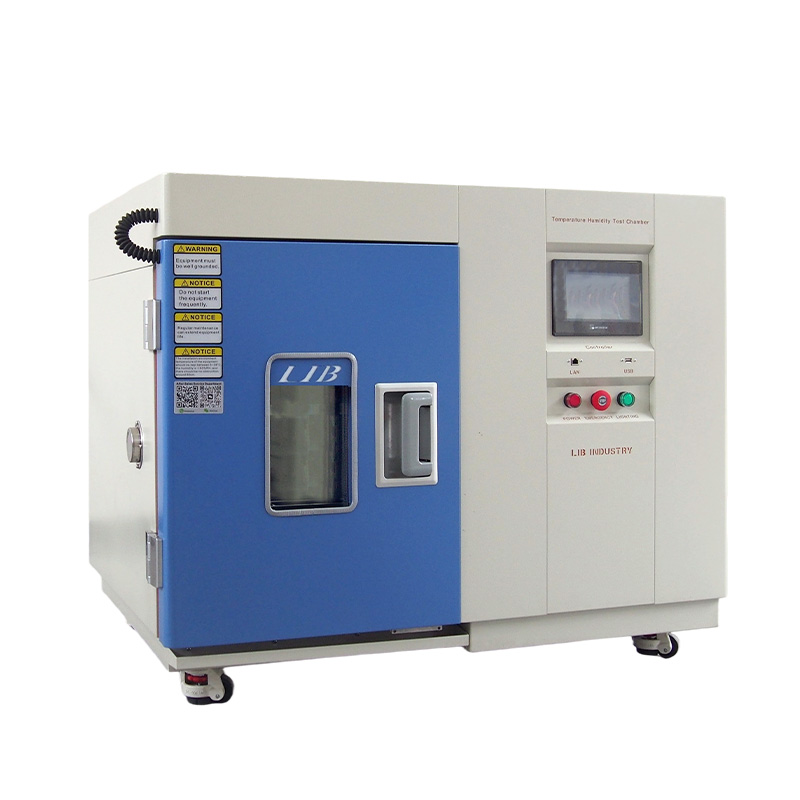
This article looks at how much heat load LIB Industry's Small Laboratory Benchtop Environmental Temperature Test Chamber can really handle, how the equipment keeps temperature and humidity stable under load, and which international standards govern its test methods.
Heat load is the amount of heat a working sample releases while the chamber tries to hold a set temperature. A powered PCB, a running battery pack, or an active sensor module all generate heat, and the chamber's cooling system must remove that heat fast enough to keep the reading stable. This becomes hard once the target temperature drops, because the colder the chamber, the less spare cooling capacity is left to absorb extra heat from the sample. Most manufacturers can only guarantee stable heat load performance down to around 25°C. Below that point, temperature control usually becomes unstable or the manufacturer stops publishing a heat load rating altogether. LIB Industry's small benchtop chamber is built differently. It holds a heat load of 20000 W at -20°C, and this rating applies at any combination of temperature and humidity inside the equipment's working range, not just at one fixed point. Even under low temperature combined with high humidity, a condition that usually causes frost buildup and control drift, the equipment keeps its set point stable without manual adjustment.
The chamber reaches this level of stability through a closed-loop control system built around PT100 Class A sensors, which read temperature with a resolution of 0.001°C. These sensors feed data into a PID control loop that continuously balances the compressor-based cooling system against rapid electric heaters, so the chamber corrects small deviations before they grow into a swing. Under normal operation the unit holds temperature fluctuation within ±0.5°C and keeps relative humidity deviation under ±2.5% RH. Centrifugal fans and internal baffles move air evenly through the chamber, which stops hot or wet pockets from forming around the test sample and keeps the reading on the sensor the same as the reading on the product being tested.
All temperature and humidity cycles run inside LIB Industry's benchtop chamber follow the IEC 60068 test method family, the standard most widely used for environmental testing of electronic and electrical products. Cold testing follows IEC 60068-2-1, dry heat testing follows IEC 60068-2-2, and combined temperature-humidity cyclic testing follows IEC 60068-2-30. For steady-state damp heat testing, the chamber follows IEC 60068-2-78. Running tests against these clauses means the resulting data can be used directly in product qualification reports without extra conversion or explanation.
| Test | IEC Clause | Temperature / Humidity | Dwell or Duration | Rate |
|---|---|---|---|---|
| Cold test | IEC 60068-2-1 | -65°C to +5°C | 2 / 16 / 72 / 96 h | ≤1°C/min, ±3°C |
| Dry heat test | IEC 60068-2-2 | 30°C to 1000°C | 2 / 16 / 72 / 96 h | ≤1°C/min, ±2°C or ±2% |
| Damp heat, steady-state | IEC 60068-2-78 | 40±2°C, 93 (+2/-3)% RH | 4 / 10 / 21 / 56 days | Recovery 1-2 h |
| Damp heat, cyclic | IEC 60068-2-30 | 40±2°C or 55±2°C, 93±3% RH dwell | 2-56 days at 40°C, 1-6 days at 55°C | ±2°C high temperature |
| Temperature change | IEC 60068-2-14 | High 30-1000°C, low -65 to +5°C | 2 cycles | 1±0.2, 3±0.6 or 5±1°C/min |
An engineering team from Apple recently used LIB Industry's Small Laboratory Benchtop Environmental Temperature Test Chamber to run performance tests on a batch of electronic components, and the feedback after testing was clear: the chamber met every standard they checked against and did it without slowing down their schedule. Safety was the first concern raised, and the chamber passed on that front, since it is built to CE, IEC, and CSA safety requirements, giving the team confidence to leave it running unattended overnight. Test accuracy was the second concern, and the ±0.5°C fluctuation and ±2.5% RH deviation held steady through repeated cycles, which meant the team could trust the data without running extra verification passes. Cost was also part of the decision. A benchtop chamber with this level of precision costs far less than a full walk-in unit, so the lab gained lab-grade accuracy without the lab-grade price tag.
Beyond the base unit, LIB Industry offered free custom fixture design at no extra charge, building racks and probe mounts sized specifically for the client's components. The chamber ships with a 3-year full warranty and lifetime technical support, and LIB Industry's engineers provided on-site training so the client's own staff could run and maintain the unit independently. For powered testing, the chamber can be built with cable pass-through holes and optical viewing ports, letting the team run live electrical tests and visual inspections without opening the chamber door and breaking the environmental seal.
| LIB Popular Laboratory Environmental Temperature Test Chambers | ||
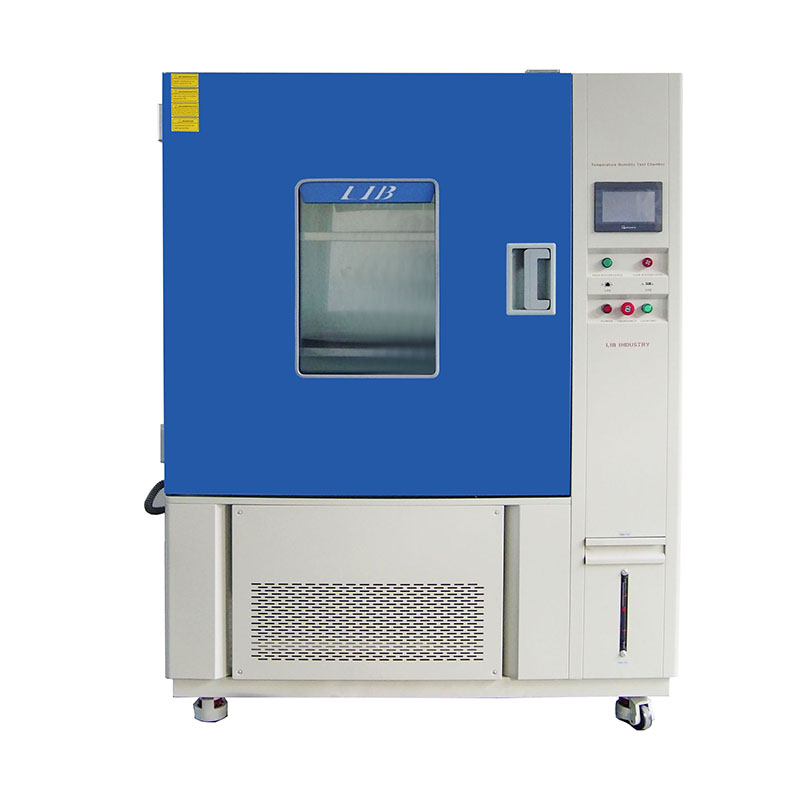
Precise climate simulation, Reliable long-term stability testing |
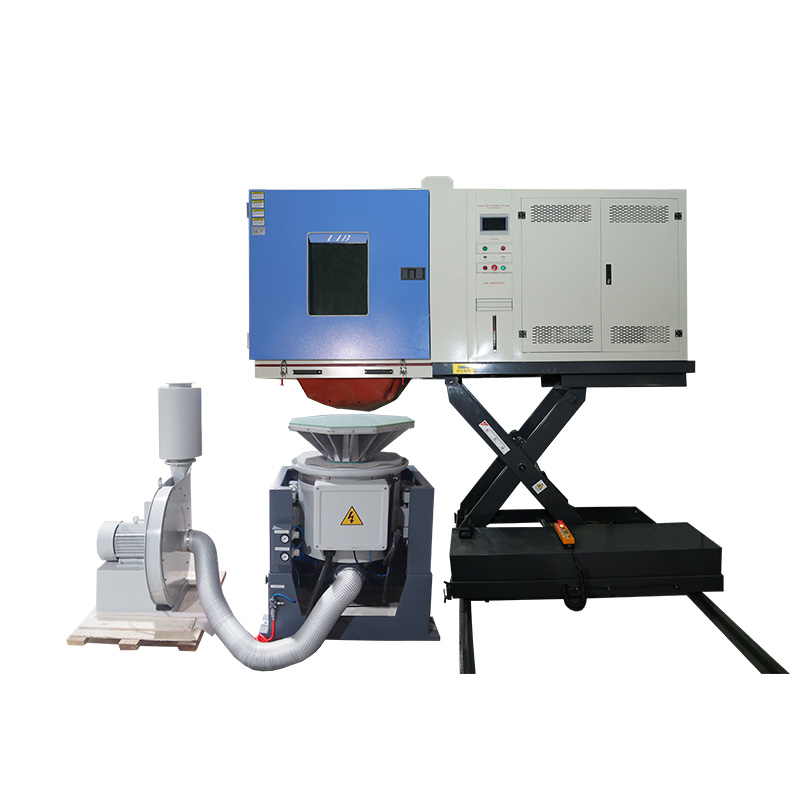
Combined Climate and Vibration Chamber Simulate temperature, humidity, and vibration stresses in one test |
Small temperature humidity chamber Compact footprint design, High-accuracy environmental control |
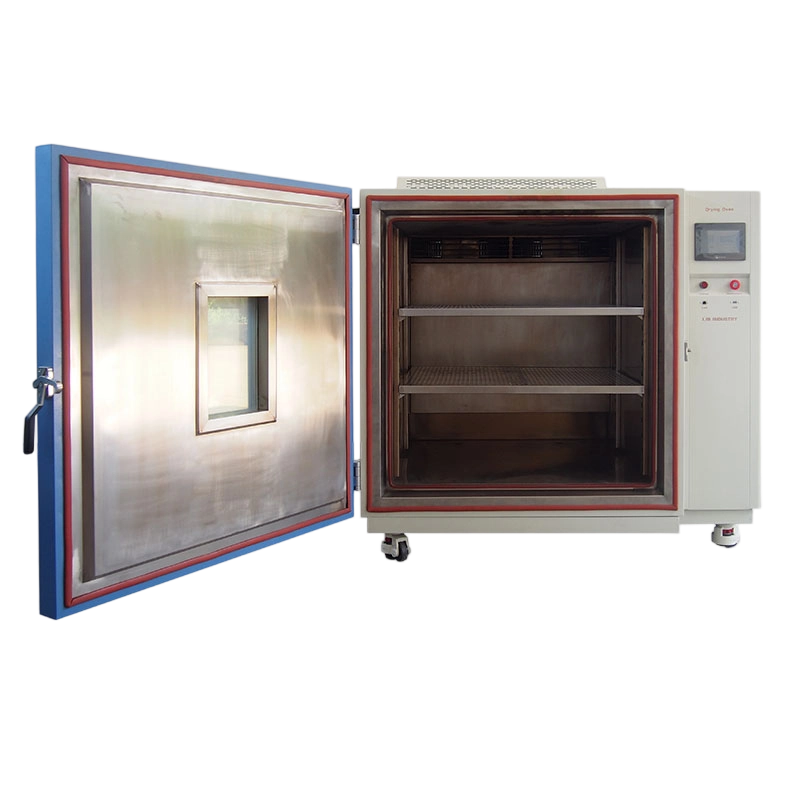
Industrial High-Temperature Vacuum Drying Oven Uniform heat distribution, Efficient material drying |
Extreme thermal stress simulation, Fast failure detection capability |
Large-capacity testing space, Ideal for oversized products |
A small laboratory benchtop chamber and a reach-in chamber both control temperature and humidity, but they serve different stages of testing. The table below lays out the main differences.
| Feature |
Small Laboratory Benchtop Environmental Temperature Test Chamber |
|
|---|---|---|
 |  | |
| Typical volume | 50 L to 80 L | 150 L to 1,000 L+ |
| Footprint | Fits on a desk or bench, under 1 m² | Requires dedicated floor space |
| Sample size | Small components, PCBs, sensors | Full assemblies, larger units |
| Sound level | 65 dBA or lower | Often above 65 dBA |
| Best use case | R&D, engineering desks, early-stage qualification | Batch QA testing, production lines |
| Mobility | Can be moved between benches | Floor-standing, horizontally movable |
For a lab running frequent, small-batch tests during product development, a benchtop unit keeps the test right next to the engineer's desk and cuts the time spent walking samples back and forth. For a QA department running larger batches or full assemblies on a regular schedule, a reach-in chamber offers the volume needed for higher throughput. Many labs end up using both: a benchtop unit for daily engineering checks and a reach-in chamber for final batch qualification.
Q1: What is the lowest temperature the chamber can reach?
The low-temperature version reaches -86°C, while the standard configuration covers -20°C up to 150°C, both with the full rated heat load.
Q2: How is the chamber shipped, and how long does delivery take?
The chamber is crated and shipped by sea or air depending on the destination, with typical delivery taking a few weeks after order confirmation. LIB Industry coordinates customs documentation for international clients.
Q3: What happens if a part needs replacing after installation?
LIB Industry maintains a global spare-parts network, and replacement components typically arrive within 7 to 15 days, backed by 24/7 English-speaking technical support.
Q4: Does LIB Industry provide installation and training?
Yes. LIB Industry offers on-site training for new clients and remote support for caLIBration and preventive maintenance throughout the chamber's service life.
Q5: Can the chamber be customized for a specific test setup?
Yes, custom fixtures, cable pass-through holes, and optical viewing ports can all be added at no extra cost, based on the client's test requirements.
If you're in the market for a constant climate chamber, whether it's a Constant Climate Chamber, a Combined Climate and Vibration Chamber, Small Laboratory Benchtop Environmental Temperature Test Chamber, or a Walk-In Temperature Humidity Chamber, don't hesitate to reach out. We're ready to discuss your workspace size, temperature and humidity range, caLIBration requirements, and loading conditions, and help you find the right constant climate chamber solution for your laboratory.
LIB Industry Technical Team, Technical information, testing methods, product specifications, and application guidance for constant climate chamber and caLIBration equipment.