Views: 0 Author: LIB Team Publish Time: 2026-10-09 Origin: Site


What happens to a circuit board that moves from a freezing night at minus 75°C to a blazing engine bay at 220°C in just 3 seconds? Many products crack, peel, or stop working. A thermal shock test finds these failures in your lab before your customers find them in the field.

This article explains the temperature range, sizes, specifications, applications, and advantages of the LIB Industry Air To Air Hot Cold Thermal Shock Test Machine, together with customization cases, common questions, and service strength.
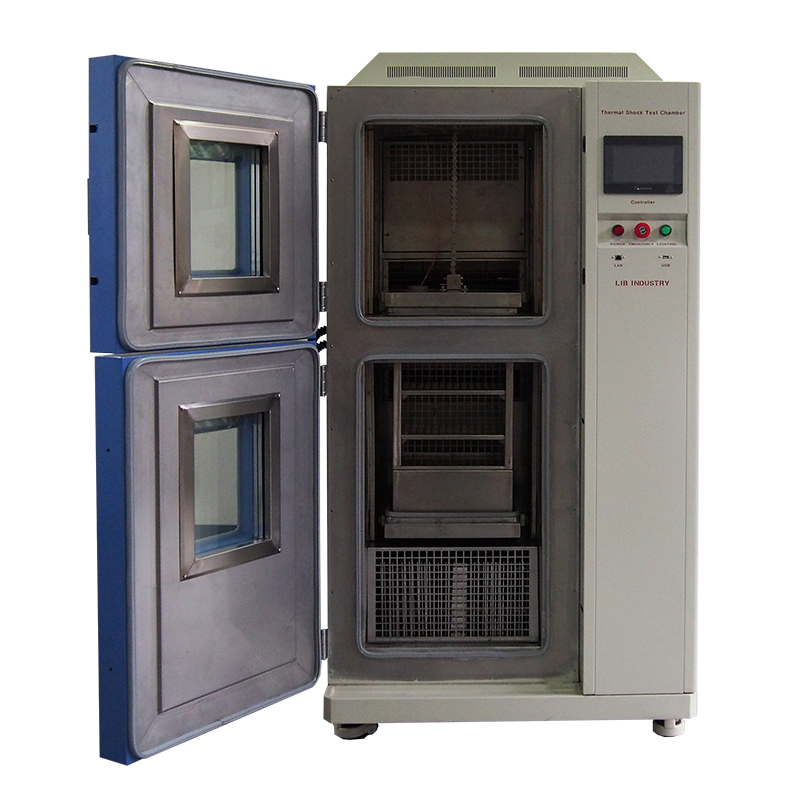
The hot zone heats up to 220°C and the cold zone cools down to minus 75°C. A basket carries your samples between the two zones in 3 seconds or less. Thermal shock tests can run from minus 70°C to 200°C.
The hot zone heats up to 220°C and the cold zone cools down to minus 75°C. A basket carries your samples between the two zones in 3 seconds or less. Samples are exposed to test temperatures from minus 65°C to 200°C.
Choose your size first. LIB Industry offers four standard models of the Air To Air Hot Cold Thermal Shock Test Machines:
① TS-162 has a 22L workspace and holds up to 20 kg. It suits chips, sensors, and small modules.
② TS-340 has a 72L workspace and holds up to 30 kg. It suits control boards and connectors.
③ TS-500 has a 211L workspace and holds up to 50 kg. It suits power modules and larger batches.
④ TS-1000 has a 505L workspace and holds up to 60 kg. It suits big loads and heavy parts.
| Model | TS-162 | TS-340 | TS-500 | TS-1000 | |
|---|---|---|---|---|---|
| Internal size (mm) | 300 x 300 x 250 | 450 x 450 x 360 | 650 x 650 x 500 | 850 x 850 x 700 |  |
| Overall size (mm) | 1560 x 870 x 1545 | 1710 x 1020 x 1845 | 1910 x 1220 x 2265 | 2110 x 1420 x 2665 | |
| Volume | 22L | 72L | 211L | 505L | |
| Loading capacity | 20 kg | 30 kg | 50 kg | 60 kg |
2. Temperature performance
① Pre-heat zone: up to 220°C. It heats from ambient to 200°C within 30 minutes.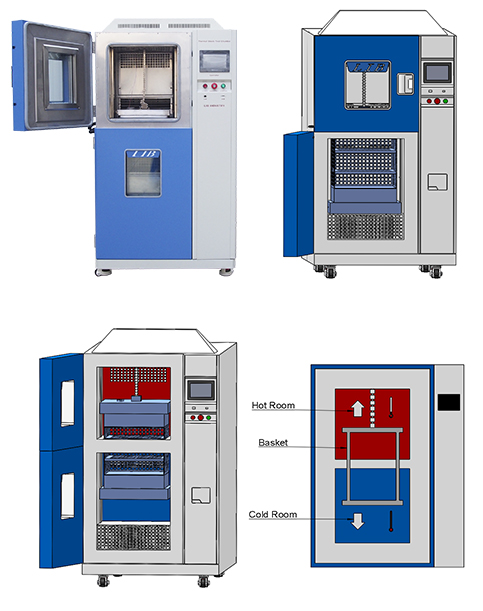
② Pre-cool zone: down to minus 75°C. It cools from ambient to minus 70°C within 30 minutes.
③ High temperature exposure range: ambient plus 20°C to 200°C.
④ Low temperature exposure range: minus 65°C to minus 5°C.
⑤ Temperature fluctuation: ≤ ±0.5°C.
⑥ Temperature deviation: ≤ ±2°C.
⑦ Transfer time: ≤ 3 seconds.
⑧ Recovery time: within 5 minutes.
3. Build and control
① Cooling system: mechanical compression refrigeration.
② Interior: SUS304 stainless steel with a mirror finish.
③ Exterior: A3 steel plate with a protective coating.
④ Viewing window: interior lighting, with double layer heat stable silicone rubber sealing.
⑤ Controller: programmable color LCD touchscreen with PID control, plus Ethernet and USB ports.
4. Safety protection
① Over temperature protection.
② Over current protection.
③ Refrigerant high pressure protection.
④ Earth leakage protection.
5. The equipment follows these standards:
① IEC 60068-2-14 Test N for rapid change of temperature.
② MIL-STD-810 Method 503 for temperature shock.
③ JESD22-A106 for thermal shock of electronic parts.
A vertical fan system keeps the temperature even, so every sample gets the same shock. The USB port exports test data and temperature curves for your reports. The Ethernet port lets you watch and run tests from your computer without entering the lab.
A customer in Thailand bought a 2000L Air To Air Hot Cold Thermal Shock Test Machine for electronics testing. They test circuit boards, power modules, and connectors in large batches. A big load fits in one basket, so one test run covers far more parts than a small unit would.
A typical test profile works like this:
① Hold samples at minus 55°C for 30 minutes.
② Move them to the hot zone in 3 seconds.
③ Hold them at 125°C for 30 minutes.
④ Repeat for 500 cycles to expose weak solder joints and cracked components.
The same method serves automotive parts, aerospace equipment, medical devices, and military grade components.
LIB Industry builds this equipment in two designs. The 2-zone Air To Air Hot Cold Thermal Shock Test Machine design moves samples by basket between a hot zone and a cold zone. The 3-zone design keeps samples still in one test zone while hot and cold air is sent in. Both designs share the same core strengths.
1. Cooling system
① A French TECUMSEH compressor with mechanical compression refrigeration cools the cold zone down to minus 75°C.
② The cold zone cools from ambient to minus 70°C within 30 minutes.
③ The hot and cold zones are kept ready at preset temperatures, so you never wait for a ramp before the next cycle.
2. Other advantages
① Fast transfer: the basket moves samples between zones in under 3 seconds, and temperature recovery takes 5 minutes or less.
② Independent zones: the hot zone and cold zone each have their own temperature control, which gives fast recovery and stable temperature.
③ Strong build: the interior is SUS304 stainless steel with a mirror finish that resists rust and moisture. The exterior is A3 steel plate with a protective coating.
④ Even temperature: a fan driven vertical air circulation system gives every sample the same shock.
⑤ Easy control: a 7 inch touchscreen controller supports PID control, multilingual screens, and multi step programs. The USB port exports test data and temperature curves.
⑥ Energy saving: high density polyurethane insulation reduces heat loss during frequent cycles.
⑦ Heavy load support: the 3-zone design includes SUS304 perforated shelves that hold up to 50 kg per layer. Extra shelves and special shelf sizes are available.
3. Here is how the two designs compare.
| Item |
|
|
|---|---|---|
 |  | |
| How samples are shocked | A basket moves samples between the hot zone and the cold zone | Samples stay in one test zone while hot and cold air is sent in by pneumatic dampers |
| Transfer time | 3 seconds or less | No sample movement |
| Temperature range | Hot zone up to 220°C, cold zone down to minus 75°C | Test exposure from 220°C down to minus 65°C |
| Preheat and precool | Ambient to 200°C or minus 70°C within 30 minutes | Up to 220°C or down to minus 70°C within 30 minutes |
| Temperature fluctuation | ≤ ±0.5°C | ±0.5°C |
| Temperature deviation | ≤ ±2°C | ≤ ±3°C |
| Recovery time | ≤ 5 minutes | ≤ 5 minutes |
| Sample handling | Basket with chain drive and guide rails for smooth movement | Adjustable perforated shelves, up to 50 kg per layer |
| Best for | Fast, true thermal shock on chips, boards, and modules | Heavy, large, or delicate samples that should not be moved |
| Space | Two chamber structure | Single chamber structure, smaller outer size |
Every test has its own sample size and standard. LIB Industry builds the Air To Air Hot Cold Thermal Shock Test Machine around your needs.
| Custom Option | What It Does | |
|---|---|---|
 | Air to liquid | Moves samples from air into a liquid bath for liquid shock standards such as MIL-STD-883 Method 1011 |
 | Horizontal basket | Slides samples sideways, good for long or flat parts |
 | Double door | Makes loading and unloading of large or heavy samples easier |
Nidec in Japan ordered a customized T-1000B and a TR3-500B split type, three units in total, between 2020 and 2022. Repeat orders show how well custom builds fit real test work.
| LIB popular Temperature Humidity Chambers | |||
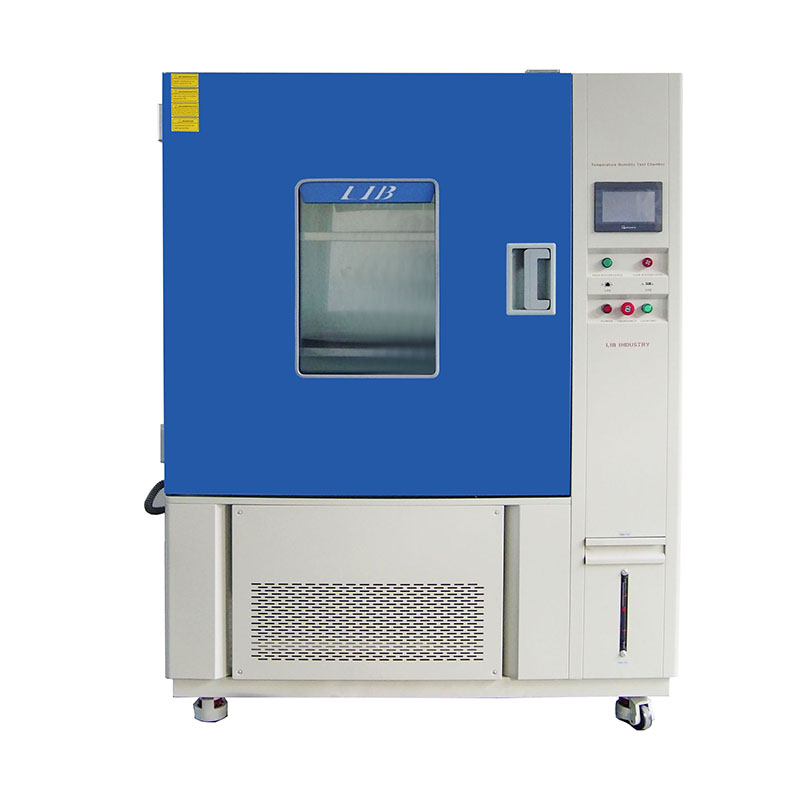
Standing temperature humidity chamber Precise climate simulation, Reliable long-term stability testing |
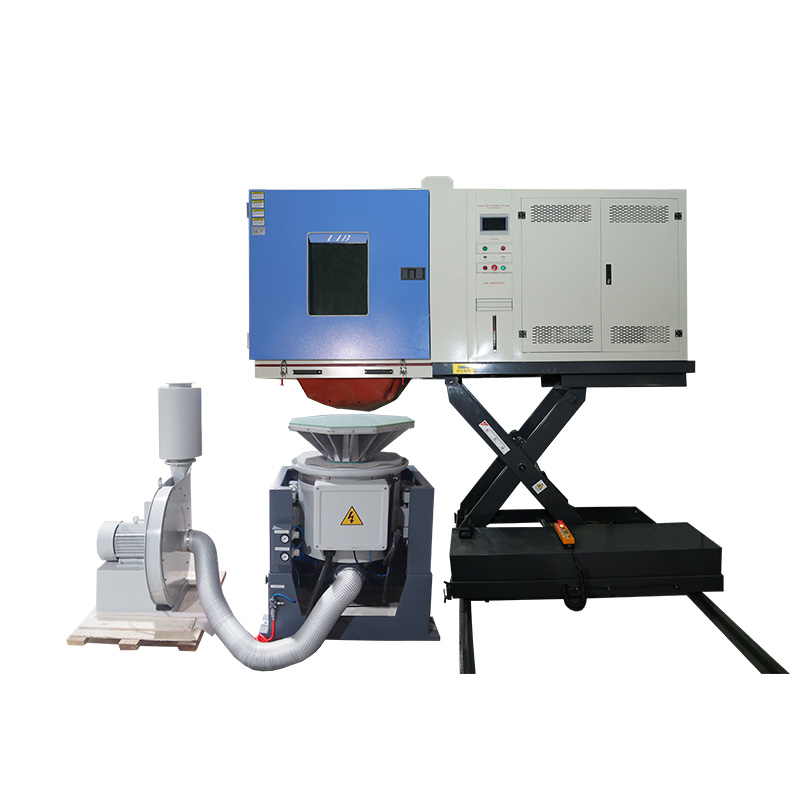
Combined Climate and Vibration Chamber Simulate temperature, humidity, and vibration stresses in one test |
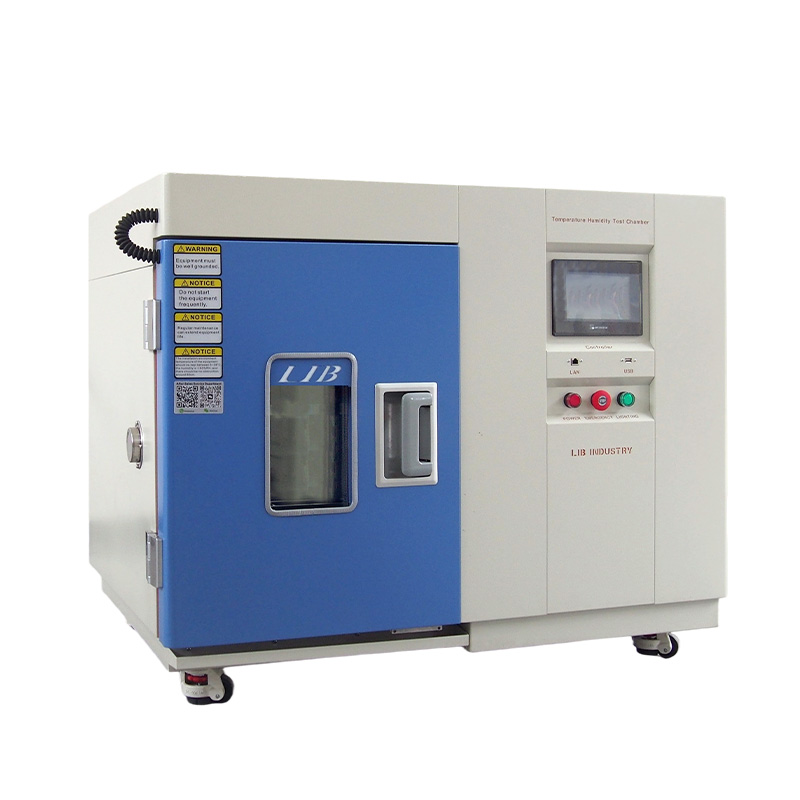
Small temperature humidity chamber Compact footprint design, High-accuracy environmental control |
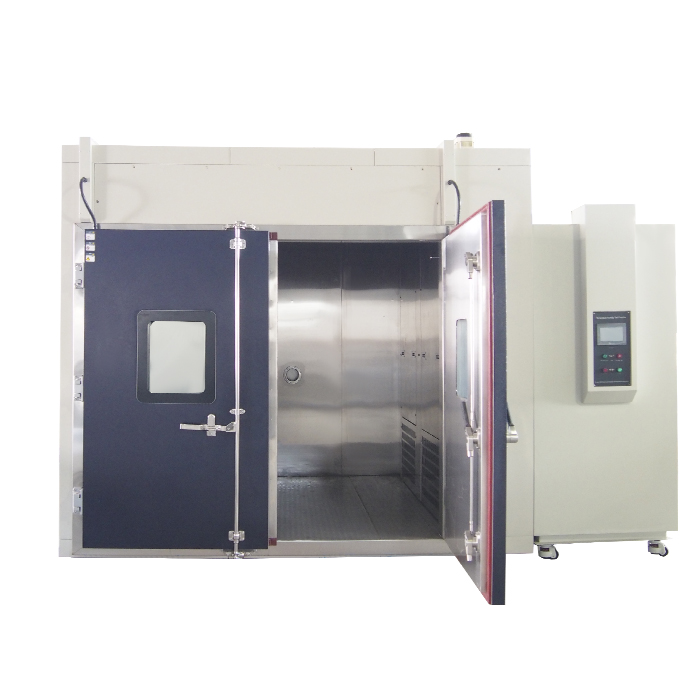
Walk-In temperature humidity chamber Large-capacity testing space, Ideal for oversized products |
Industrial High-Temperature Vacuum Drying Oven Uniform heat distribution, Efficient material drying |
Extreme thermal stress simulation, Fast failure detection capability |
Ultra-low temperature performance, Reliable cold resistance evaluation | |
1. What temperature range does it provide?
The hot zone reaches 220°C and the cold zone reaches minus 75°C. Shock tests run from minus 70°C to 200°C.
2. How fast does the sample move?
The basket transfers samples in 3 seconds or less. Temperature recovery takes 5 minutes or less.
3. Which standards does it support?
IEC 60068-2-14, MIL-STD-810 Method 503, and JESD22-A106. Air to liquid builds cover MIL-STD-883 Method 1011.
4. How accurate is the temperature?
Fluctuation is within ±0.5°C and deviation is within ±3.0°C.
5. What warranty do I get?
LIB Industry gives a 3 year warranty and lifetime maintenance.
Since 2012, LIB Industry has served customers in more than 60 countries through 29 distributors and 4 overseas service centers. World famous companies trust the temperature series:
①CERN in Switzerland bought the T-150A and TH-100C.
② Mercedes Benz in Germany bought the T-350C.
③ Baker Hughes in England bought the T-4500B.
④ Nidec in Japan bought the T-1000B and TR3-500B.
⑤ The University of Sydney in Australia bought the T-500B.
The company follows ISO 9001 quality management and runs continuous operation tests before delivery. Service covers installation, commissioning, calibration, operator training, spare parts, and on site engineer support.
If you are looking for thermal shock test equipment, LIB Industry can supply a 2-Zone Thermal Shock Test Chamber, a Thermal Test Chamber, or an Humidity Chamber for heavy samples such as EV battery modules or dense PCB assemblies. Contact us anytime. We will talk through your sample size, weight, material, required temperature range, recovery time, and test standards, then help you choose the right thermal shock solution for your laboratory.
LIB Industry Technical Team (info@lib-industry.com), technical information, testing methods, product specifications, and application guidance for thermal shock and environmental test equipment.