Views: 0 Author: Site Editor Publish Time: 2026-03-11 Origin: Site


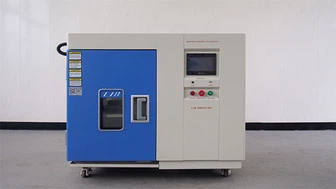
A Temperature Humidity Chamber is a precision environmental test device used to reproduce controlled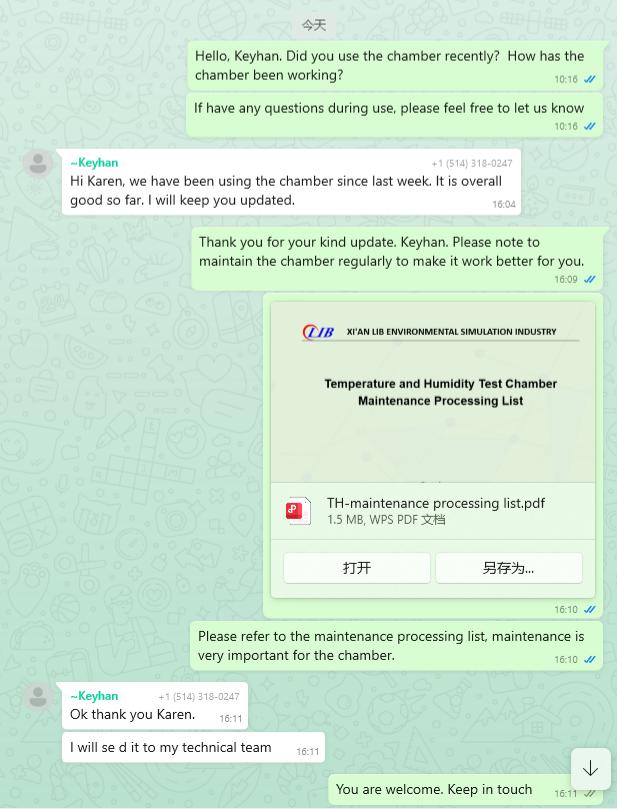
relative humidity chamber temperature and moisture conditions for product performance and reliability assessment. It supports industries including electronics, automotive, aerospace, renewable energy, and battery manufacturing by helping evaluate product behavior under various environmental stresses. Through laboratory simulations of real-world climate conditions, engineers can identify potential defects, enhance product reliability, and optimize designs before products enter large-scale production.
Recently, our Canadian customer, Keyhan Laboratory, reported that the LIB Temperature Humidity Chamber has been operating smoothly since last week. They praised its stable performance, ease of use, and consistent test results. Regular maintenance, as suggested in our processing list, helps the chamber maintain reliability and extend its lifespan.
With precise control of temperature and humidity, LIB Temperature Humidity Chambers enable laboratories to conduct a wide range of environmental tests—from high/low temperature aging to humidity freeze cycles—helping engineers accelerate product validation, improve quality, and ensure durability under harsh conditions.
Before operating a Temperature Humidity Chamber, it is important to understand how the equipment functions in a controlled relative humidity chamber. The chamber controls temperature and humidity through integrated environmental control systems.
The chamber maintains stable conditions through integrated systems:
Temperature control system: Heating and refrigeration units enable precise temperature management.
Humidity generation system: Maintains relative humidity from 20% to 98% RH.
Air circulation system: Multi‑directional fans ensure uniform airflow, keeping internal variation under ±1.5 °C.
Programmable controller: Store up to 120 test protocols with 100 steps each.
Environmental sensors: PT100 Class A probes for ±0.001 °C resolution; humidity sensors accurate to ±2.5 % RH.
These systems work together to create stable, repeatable test conditions for reliable results.
Unlike basic equipment operation, using a Temperature Humidity Chamber requires attention to environmental uniformity, humidity control, and system stability. The following steps focus specifically on proper chamber operation.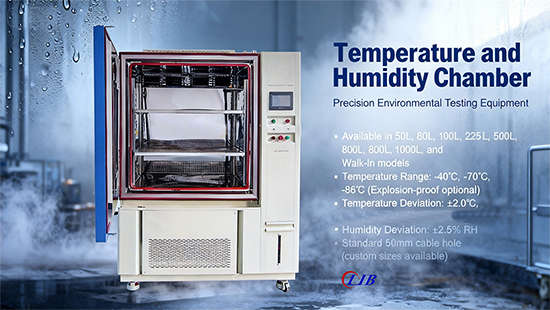
Humidity control is a key feature of a Temperature Humidity Chamber
and an important function of a relative humidity chamber. Before starting the test, ensure the water tank is filled with purified or distilled water, the humidifier and water supply pipeline are working properly, and the drainage system is clear.
Calibrate humidity sensors so that relative humidity remains stable within ±2.5 % RH throughout the test. Proper preparation ensures consistent humidity control and reliable test results.
Air circulation is crucial for maintaining uniform temperature and humidity.
When placing samples inside the chamber:
Leave 5–10 cm space between items.
Avoid blocking air outlets or return vents.
Do not place samples against chamber walls.
Ensure even airflow across all test specimens.
With correct placement, the chamber can maintain temperature uniformity within ±1.5 °C and consistent humidity across all samples, eliminating hot or cold spots.
A Temperature Humidity Chamber uses a programmable controller that allows engineers to set precise environmental cycles in a controlled relative humidity chamber.
Common settings include:
Target temperature (from –70 °C to +150 °C)
Relative humidity (20–98 % RH)
Temperature ramp rate (heating at 3 °C/min, cooling at 1 °C/min)
Humidity stabilization time (typically 15–30 minutes)
Test duration or number of cycles
For example, a Humidity Freeze Test may alternate between high humidity (~95 % RH) and freezing temperatures (–40 °C) to simulate harsh environmental conditions.
Before starting the official test cycle, the chamber should reach stable conditions.
Operators should confirm:
Temperature has reached the setpoint, remaining within ±0.5 °C
Relative humidity is stable within ±2.5 % RH
Air circulation is functioning normally
Stabilization ensures the test begins under accurate and repeatable conditions.
During operation, monitor the chamber to ensure stable performance.
Important factors include:
Temperature fluctuations staying within ±0.5 °C
Humidity consistency within ±2.5 % RH
Air circulation performance
Condensation inside the chamber
Modern LIB Temperature Humidity Chambers include real-time data logging, enabling engineers to track trends and verify stability throughout the test cycle.
A Temperature Humidity Chamber supports multiple environmental test methods commonly used across industries, including applications that require a relative humidity chamber. Each test can be performed with precise control of temperature (±0.5 °C) and humidity (±2.5 % RH) to ensure reliable results.
| Test Name | Purpose | Typical Conditions |
|---|---|---|
| High/Low Temperature Aging Test (IEC60068) | Evaluate product durability under prolonged extreme temperatures | –70 °C to +150 °C |
| Thermal Abuse Test (IEC 62133) | Battery safety evaluation | Up to +85 °C or higher |
| Humidity Freeze Test (IEC 61215) | Test product durability under condensation and freezing | –40 °C, up to 95 % RH |
| Damp Heat Test (IEC 61215, IEC60068 ) | Assess corrosion resistance and moisture protection | +85 °C, 85 % RH |
| Low Temperature Test (IEC60068) | Verify operation under extreme cold | As low as –70 °C |
The High/Low Temperature Aging Test evaluates product durability under prolonged exposure to extreme temperatures, ranging from –70 °C to +150 °C. The chamber maintains stable conditions over long durations, allowing engineers to simulate months or years of real-world thermal stress within hours.
The Thermal Abuse Test is commonly used for battery safety evaluation. Batteries are exposed to elevated temperatures, typically up to +85 °C or higher, to observe potential failure risks. The chamber ensures uniform temperature distribution within ±1.5 °C, preventing localized overheating during testing.
The Humidity Freeze Test simulates condensation followed by freezing conditions. Relative humidity can reach 95 % RH, while temperatures drop to –40 °C, mimicking harsh climate cycles. Consistent airflow ensures uniform conditions across all test samples for reliable durability assessment.
The Damp Heat Test exposes products to high temperature and high humidity to evaluate corrosion resistance and moisture protection. Typical conditions include temperatures of +85 °C combined with 85 % RH,maintained for long durations without drift, allowing accurate assessment of material and product longevity.
The Low Temperature Test ensures products operate reliably under extremely cold conditions, as low as –70 °C.
The chamber maintains precise temperature stability and even airflow, so all samples experience identical conditions, verifying cold-start performance and operational reliability.
LIB environmental testing equipment is designed to provide reliable, high-performance environmental simulation for a wide range of industries.
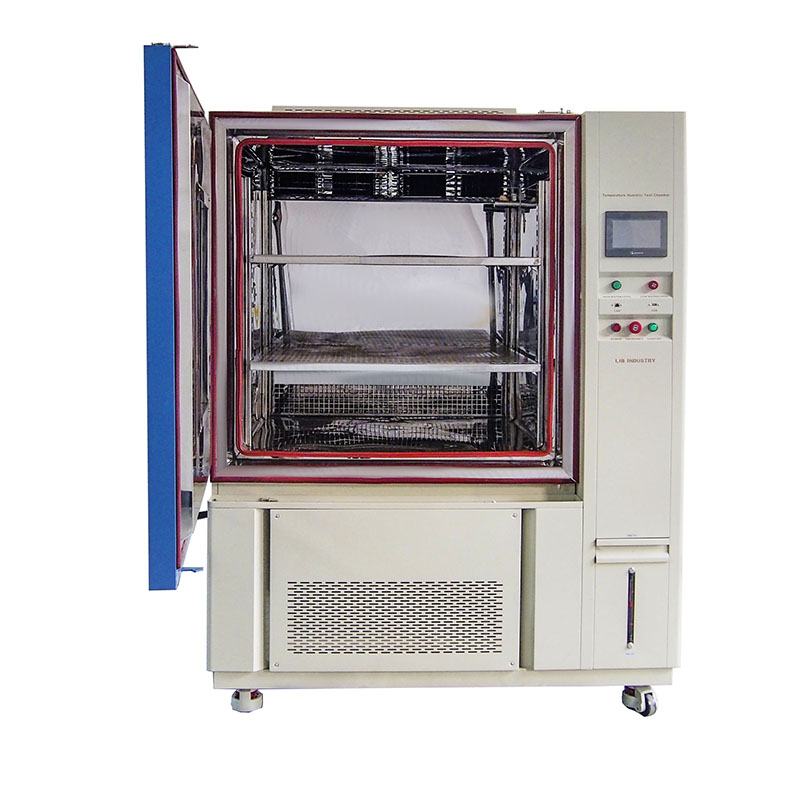 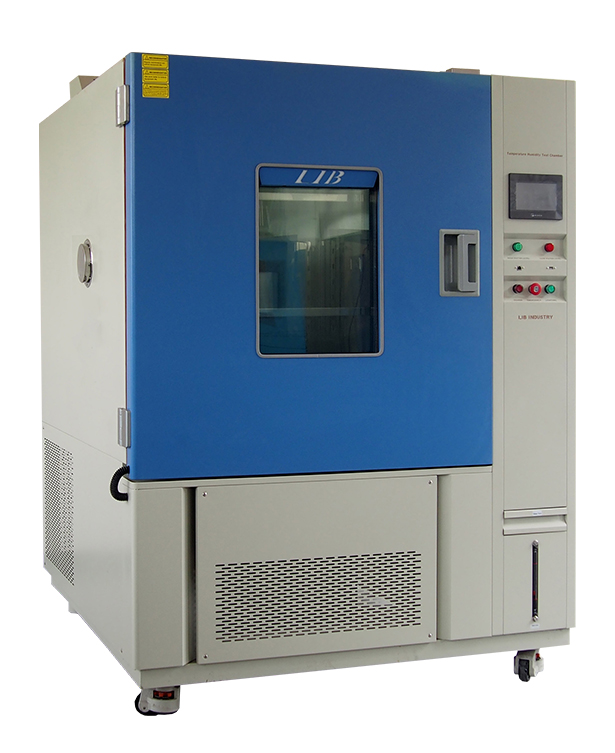 | |||||
Temperature range | -20℃ ~+150 ℃ | ||||
Low type | A: -40℃ B:-70℃ C -86℃ | ||||
Humidity Range | 20%-98%RH | ||||
Temperature deviation | ± 2.0 ℃ | ||||
Heating rate | 3 ℃ / min | ||||
Cooling rate | 1 ℃ / min | ||||
Controller | Programmable color LCD touch screen controller, Multi-language interface, Ethernet , USB | ||||
Refrigerant | R404A, R23 | ||||
Exterior material | Steel Plate with protective coating | ||||
Interior material | SUS304 stainless steel | ||||
Standard configuration | 1 Cable hole (Φ 50) with plug; 2 shelves | ||||
Timing Function | 0.1~999.9 (S,M,H) settable | ||||
|
| 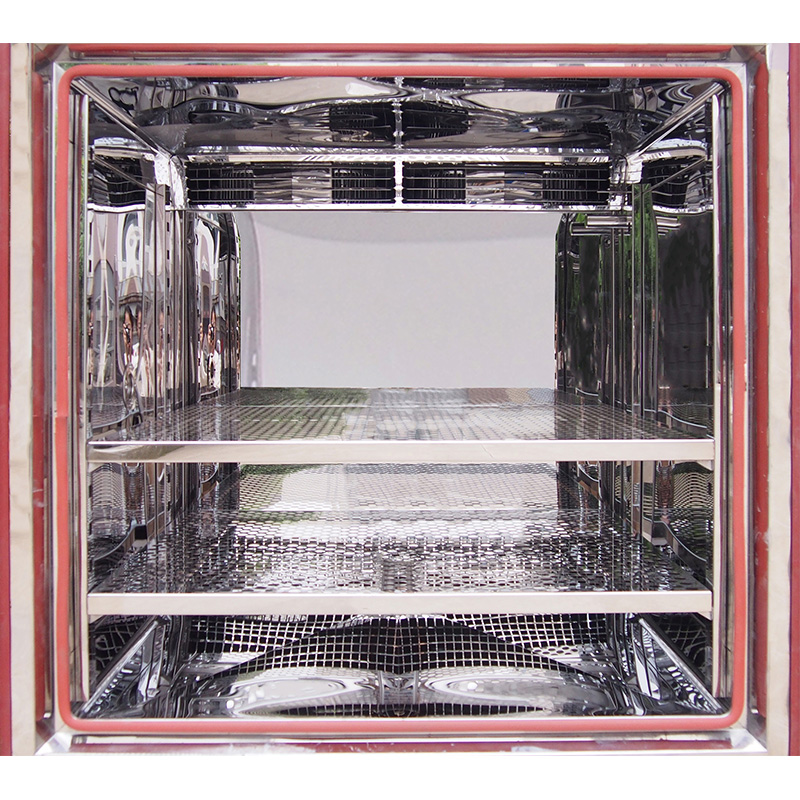 | 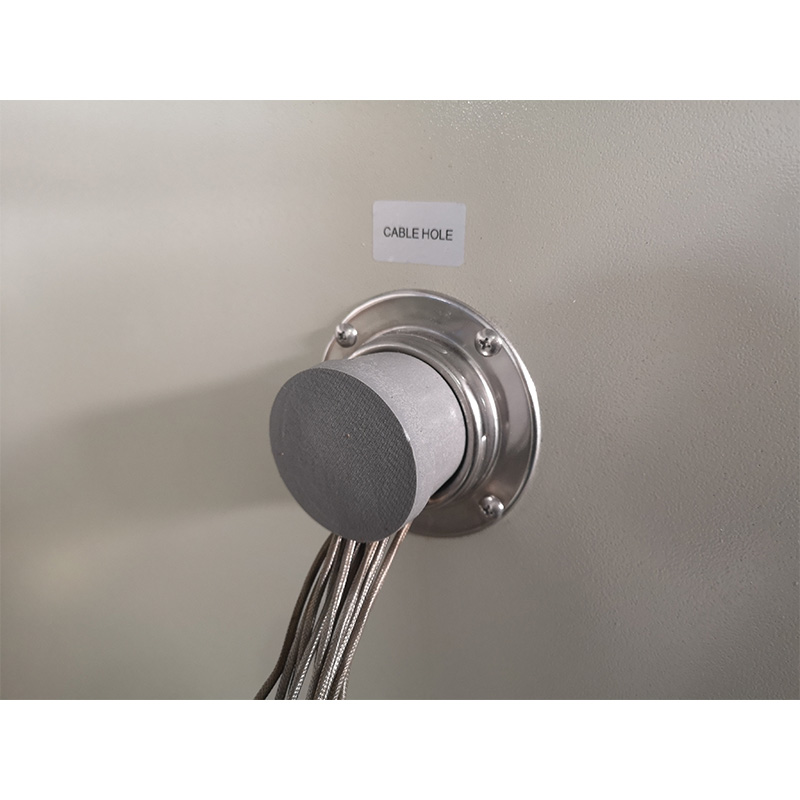 |
Touch screen controller | The compressor | Robust Anti-Corrosion Workroom | Integrated Power Access hole |
LIB chambers cover a broad testing range from –70 °C to +150 °C and 20% to 98% relative humidity, making them suitable as a controlled relative humidity chamber, enabling simulation of extreme climate conditions. This allows engineers to replicate real-world environments from arctic cold to tropical heat and humidity in one chamber.
Advanced control systems maintain temperature within ±0.5 °C and relative humidity within ±2.5 % RH. This makes the system a reliable relative humidity chamber for controlled environmental testing. This precision ensures that test results are consistent and repeatable, even during long-duration or complex environmental cycles.
Optimized air circulation ensures uniform conditions across all samples, keeping temperature variation under ±1.5 °C and humidity stable throughout the chamber. This eliminates hot/cold spots and ensures each sample experiences the same test conditions.
LIB chambers are constructed with SUS304 stainless steel interiors and A3 coated steel exteriors, resistant to corrosion and mechanical wear. High-quality refrigeration systems and robust components allow long-term operation without performance degradation.
The programmable controller supports complex cycles, including temperature-humidity ramping, humidity freeze tests, and long-term aging tests. Engineers can store up to 120 test programs with 100 steps each, enabling fast switching between different test protocols while maintaining precision and repeatability.
|
|
| |
|---|---|---|---|
 |  |  | |
| Name | Small Climatic Test Chamber | Standing Climatic Test Chamber | Walk-In Climatic Test |
| Capacity | TH-50: 800x1050x950 mm TH-80: 900×1100×1000mm | Capacity: 100L; 225L; 500L; 800L; 1000L | >20m³ |
| Throughput | Ideal for small components, sensors, boards | Subassemblies or mid-volume batches | Bulk testing of items or vehicles as a whole |
LIB provides different types of environmental test chambers tailored to the size of the test specimens.
Operating a Temperature Humidity Chamber involves preparing the humidity system and checking the controlled relative humidity chamber settings, arranging samples properly, setting environmental parameters, stabilizing conditions, and monitoring environmental performance during testing.
Environmental tests include High/Low Temperature Aging Test, Thermal Abuse Test, Humidity Freeze Test, Damp Heat Test, and Low Temperature Test.
Industries such as electronics, automotive, renewable energy, aerospace, and battery manufacturing rely on Temperature Humidity Chambers.
Proper operation ensures stable environmental conditions and accurate testing results.
Learning how to correctly operate a Temperature Humidity Chamber is essential for reliable environmental testing. Whether conducting High/Low Temperature Aging Tests, Thermal Abuse Tests, or Damp Heat Tests, the Temperature Humidity Chamber provides a controlled environment for evaluating product durability.
With advanced design and precise environmental control, LIB Temperature Humidity Chambers provide reliable testing for modern laboratory needs. LIB Industry provides environmental testing solutions for different applications, including a Temperature Humidity Test Chamber for controlled temperature and humidity testing, a Combined Climate and Vibration Chamber for combined environmental and mechanical stress testing, and a Thermal Shock Test Chamber for rapid temperature change testing. Contact LIB Industry today to schedule a demo, discuss customization, or learn how our chambers can improve your testing efficiency.
LIB Industry Technical Team (info@lib-industry.com) – Technical information, testing methods, product specifications, and application guidance for environmental chambers and reliability testing.