
Views: 0 Author: Site Editor Publish Time: 2026-04-30 Origin: Site


Material failure carries massive stakes in today's competitive manufacturing landscape. Surface cracking, severe embrittlement, and rapid color fading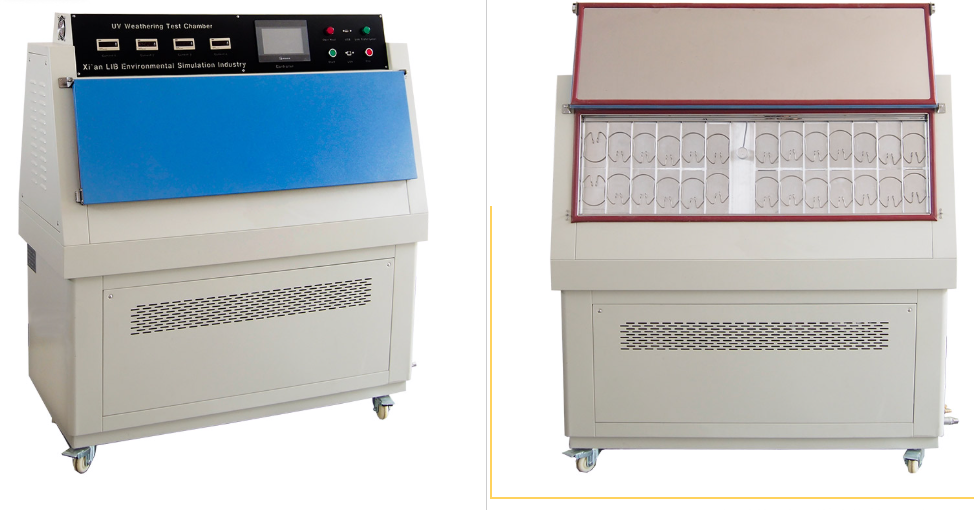 quickly lead to costly warranty claims. These visible failures also cause irreversible brand damage over time. You cannot afford to wait years for natural outdoor testing results.
Recent real-world feedback from a customer in Serbia highlights the reliability of LIB UV testing chamber in daily operation. The customer stated: “So far, they didn’t have any problem with UV chamber and we tested without any problems. Yes, thank you, I know that support from your side is excellent and I am grateful.” This direct feedback from their Quality Department reflects stable system performance, successful test execution, and strong satisfaction with LIB‘s technical support.
This guide helps you look far beyond basic spec sheets. We will evaluate equipment based on scientific test credibility and strict standards compliance. You will learn how to select the correct light spectrums for your materials. We also cover how to build a robust maintenance workflow for reliable operations.
① There is no universal "1 hour equals 1 month" formula; credible testing requires control samples and accelerated life testing (ALT) models.
② Choosing between UVA and UVB lamps dictates whether you are optimizing for realistic weathering or rapid vulnerability screening.
③Equipment longevity and test accuracy rely on "hidden metrics" like closed-loop irradiance control and Black Panel Temperature (BPT) capabilities.
④ True cost extends beyond the initial $3,000–$15,000 purchase price to include calibration, bulb replacement cycles, and strict environmental setup requirements.
Engineers consistently ask one primary question when evaluating laboratory equipment. They want to know the exact conversion rate between test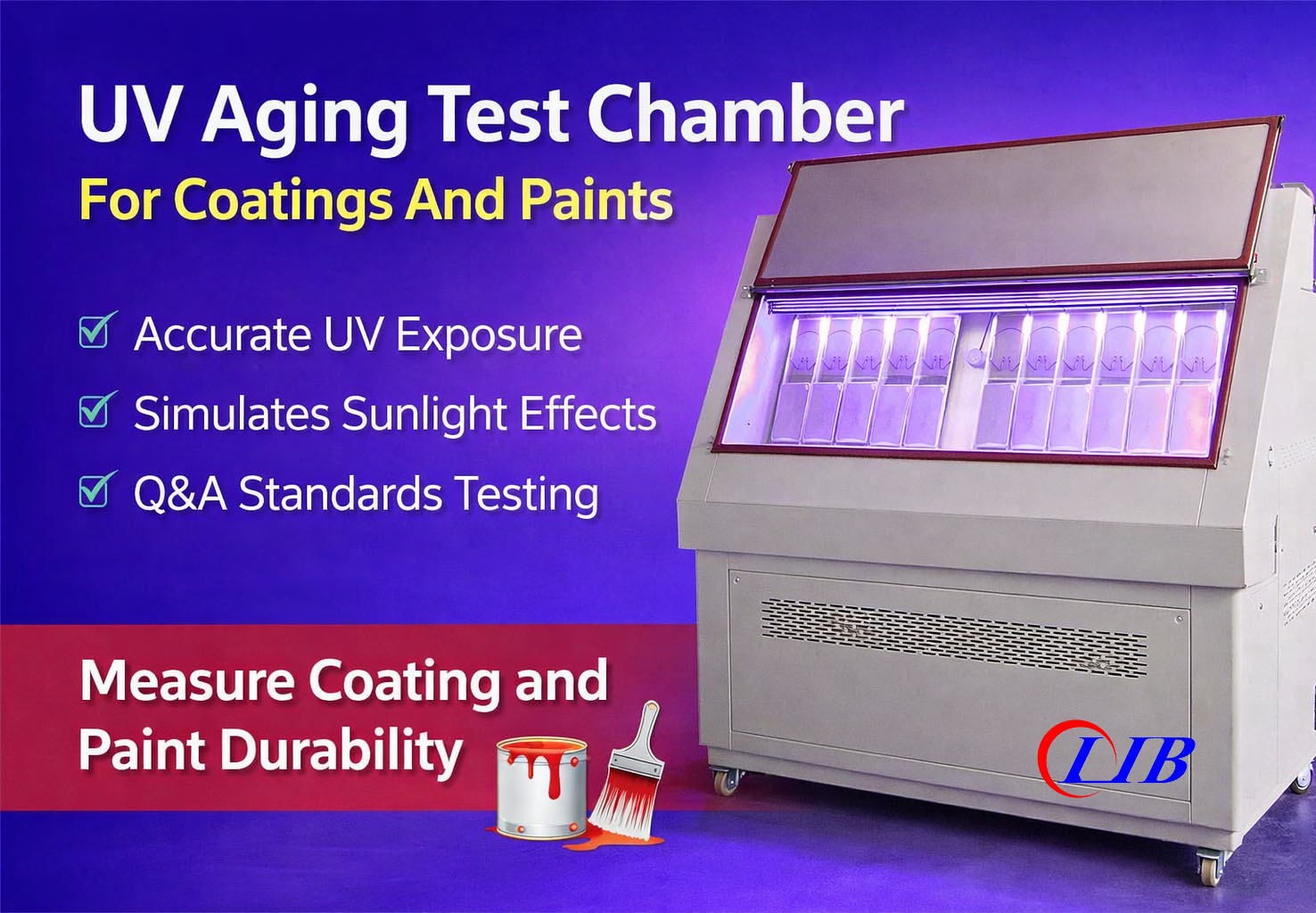 hours and outdoor years. You must understand the reality behind this assumption before proceeding.
Manufacturers cannot legally or scientifically guarantee a direct conversion rate. You will never find a certified formula stating "1,000 test hours equals 5 years outdoors." Sunlight intensity varies wildly across different geographical climates. Local weather patterns introduce unpredictable moisture variables. Material composition also reacts uniquely to artificial acceleration. These overlapping variables make absolute time conversions highly inaccurate.
You should adopt relative performance evaluation instead of chasing absolute timeframes. We call this the benchmark approach. It stands as an industry best practice for weathering tests.
Select a "Control Sample" material. This material must possess a known field-service lifespan.
Place both the new material and the control sample inside the machine.
Expose them simultaneously to the exact same environmental stresses.
Measure when the new material fails relative to the control sample.
This relative comparison provides highly actionable data. It tells you if your new formulation outperforms the legacy product.
Extreme acceleration is possible in highly specialized scenarios. Certain solar testing setups compress 20 years of photovoltaic module exposure into 6 months. However, this requires advanced mathematical extrapolation. You must use complex stress models like the Arrhenius equation. These methods rely on highly specific, non-standard configurations. They do not apply to everyday routine testing.
Buyers should prioritize chambers offering precise replication of historical benchmark data. Avoid vendors making arbitrary "time-compression" claims. Consistent repeatability matters much more than unproven speed. Your equipment must replicate previous test runs perfectly.
Hardware choices dictate the success of your laboratory protocols. The lamps and moisture systems you select must match your business use cases. Let us examine the primary options available.
Fluorescent ultraviolet lamps come in two distinct categories. They serve entirely different engineering purposes.
UVA-340 Lamps: These provide the most realistic simulation of short-wave sunlight. They cover the 295–365 nm spectrum perfectly. The cutoff aligns precisely with natural sunlight. They represent the best choice for evaluating colorfastness and exterior coatings. Plastics testing heavily relies on UVA exposure. Degradation happens slower, but the results remain highly accurate.
UVB-313 Lamps: These emit short-wave, high-energy ultraviolet radiation. Much of this energy falls below the natural sunlight cutoff. They work best for rapid quality control screening. Highly durable materials often require UVB testing to force failures. Automotive exterior parts frequently undergo UVB exposure. Risk factor: UVB lamps can cause unnatural degradation. They sometimes trigger chemical reactions never seen in real-world environments.
Feature | UVA-340 Lamps | UVB-313 Lamps |
|---|---|---|
Spectrum Range | 295 nm to 365 nm | Peaks at 313 nm |
Realism Level | Extremely High (Matches Sunlight) | Low (Unnatural Energy Levels) |
Testing Speed | Moderate | Very Fast |
Primary Application | Colorfastness, General Plastics | Rapid QC, High-Durability Materials |
Light alone rarely destroys outdoor products. Water causes massive physical damage over time. A reliable UV Test Chamber must simulate varied moisture attacks.
Condensation: Dew causes more outdoor damage than rain. Condensation cycles simulate dew and long-term high humidity. Heated water generates vapor inside the test space. This vapor condenses on the relatively cooler test specimens. It remains on the samples for hours. This prolonged moisture absorption stands as the leading cause of micro-cracking.
Water Spray: Spray systems simulate heavy rain wash-off. They recreate mechanical erosion effectively. More importantly, cold water spray introduces sudden thermal shock. Hot materials contract violently when sprayed. This physical stress exposes structural weaknesses quickly.
Buyer Takeaway: Ensure your equipment matches the specific failure mode you are trying to induce. You need condensation for chemical breakdown and spray for thermal shock.
LIB Popular Fastness Test Instruments | ||
|
|
|
Procurement teams often focus solely on physical capacity. This represents a critical mistake. You must elevate your buying criteria above basic dimensions. Focus heavily on internal data integrity.
① Closed-Loop Irradiance Control: Unregulated fluorescent lamps degrade steadily over time. Their output drops as they age. This fluctuation completely skews test results. Closed-loop sensors solve this problem. These optical sensors monitor light output continuously. They automatically adjust electrical power to maintain consistent irradiance. This technology guarantees uniform exposure from day one until lamp replacement.
② Black Panel Temperature (BPT/BST) Control: Temperature massively accelerates light-induced damage. Photochemical degradation rates double with every 10°C increase. Precise BPT control remains absolutely non-negotiable. It ensures accurate chemical reaction rate simulation. Unregulated temperatures invalidate your testing data completely.
③ Calibration Infrastructure: Sensors drift over time. Look for machines supporting easy, standardized calibration. Technicians must calibrate lamps and temperature sensors regularly. Uncalibrated machines lead to immediate compliance failures during quality assurance audits. Ensure the software logs all calibration events automatically.
Regulatory compliance demonstrates institutional trustworthiness. Your laboratory must align with recognized international methodologies. Modern equipment should support standard protocols natively.
Your machine must support programmed cycles for major standards. These frameworks dictate alternating exposure periods. They define exact irradiance levels and temperature setpoints.
ASTM G154: Standard Practice for Operating Fluorescent Ultraviolet Lamp Apparatus. This serves as the foundational benchmark for non-metallic materials.
ISO 4892-3: Plastics - Methods of exposure to laboratory light sources. This standard governs global polymer testing.
Testing Standard | Primary Material Focus | Key Mandates |
|---|---|---|
ASTM G154 | Coatings, Adhesives, Plastics | Defines alternating UV and condensation cycles. |
ISO 4892-3 | Polymers and Synthetic Resins | Focuses on specific spectral distributions (UVA/UVB). |
IEC 61215 | Photovoltaic (PV) Modules | Mandates rigorous preconditioning protocols. |
Standard baselines only provide minimum safety guarantees. High-durability industries push these boundaries further. Aerospace and solar energy sectors demand more. They require chambers capable of extended, uninterrupted cycling. Some tests run continuously for over 2,000 hours. These rigorous applications require AI-logged data tracking. Detailed digital reporting proves compliance during strict vendor audits.
| Model | UV-SI-260 UV Test Chamber | 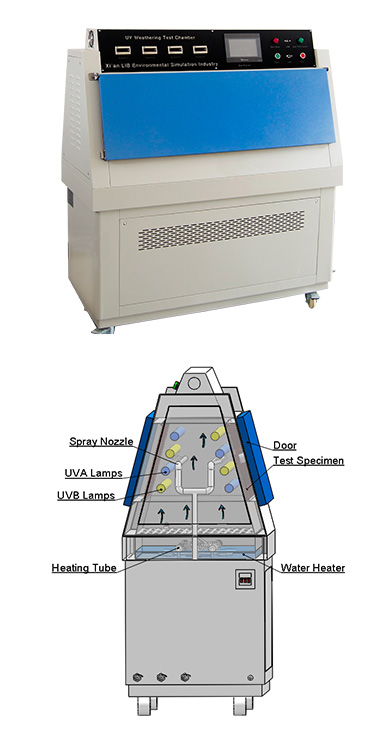 |
| Internal Dimension (mm) | 450*1170*500 | |
| Overall Dimension (mm) | 610*1330*1470 | |
| Specimen Holder Size(mm) | 75*150 | |
| Specimen Capacity | 52 Pieces | |
| Irradiation Source | Fluorescent UV lamps (8) - 40 W | |
| Temperature Range | Ambient ~ 90 ℃ ±2℃ | |
| Black Panel Temperature (BPT) | 35 ~ 80 ℃ | |
| Humidity Range | ≥95% RH | |
| Bandwidth | 290 ~ 400nm | |
| Irradiance Control | 0.3~20 W/㎡ | |
| Water Spray Cycle | 1~9999H59M (Adjustable) | |
| Distance of Specimen and lamp | 50mm | |
| Controller | Programmable color LCD touch screen controller, Ethernet connection | |
| Water Supply System | Automatic water supply, Water purification system | |
| Safety Device | Over-temperature Protection; Over-current Protection; | |
| Water Shortage Protection; Earth leakage Protection; Phase Sequence Protection | ||
| Exterior Material | Steel Plate with protective coating | |
| Interior Material | SUS304 Stainless Steel |
Xenon arc lamp with optical filters provides stable full-spectrum light (UV + visible) closely matching natural sunlight.
Designed to meet ASTM G155 requirements with controlled irradiance and temperature accuracy for consistent testing results.
Real-time feedback system stabilizes light intensity and black panel temperature, reducing drift caused by lamp aging.
Supports UV exposure, condensation, and spray cycles to simulate real-world light–heat–moisture aging conditions.
Ensures consistent test conditions across long-term operation and multiple test batches.
Automatic recording and export of irradiance, temperature, and cycle data for traceability and audit use.
Custom test profiles with adjustable irradiance, temperature, and spray parameters for different material standards.
A: A standard test usually runs between 500 and 2,000 hours. The exact duration depends heavily on the specific material and governing standard. These accelerated hours serve as a benchmark. They help predict months or years of real-world environmental exposure.
A: You should replace them usually between 1,600 and 4,000 hours of active use. Replacement becomes necessary when irradiance drops below acceptable standard thresholds. Machines equipped with closed-loop sensor systems can safely extend the usable life of these lamps.
A: UV testing focuses strictly on damaging short-wave radiation. It proves highly effective for testing physical degradation and polymer breakdown. Xenon Arc testing simulates the entire full sunlight spectrum. It includes visible and infrared light. This makes Xenon essential for testing visual color fading.
If you are looking for a reliable ASTM G155 UV test solution, LIB Industry can help you design a professional and efficient testing system tailored to your material standards and application needs. Contact LIB Industry today to get technical consultation, configuration support, and a customized quotation.


