Views: 0 Author: Site Editor Publish Time: 2026-07-22 Origin: Site


Sunlight breaks things down faster than most engineers expect. A plastic housing left outdoors for six months can crack, a coating can chalk and fade, and a textile can lose half its tensile strength — all from UV exposure and moisture cycling that a lab can now compress into a matter of weeks.
This article explains what materials LIB Industry UV Weathering Test Chamber can test, which standards it satisfies, how it works, and how to choose between a UV chamber and a full-spectrum xenon arc chamber for your specific application.
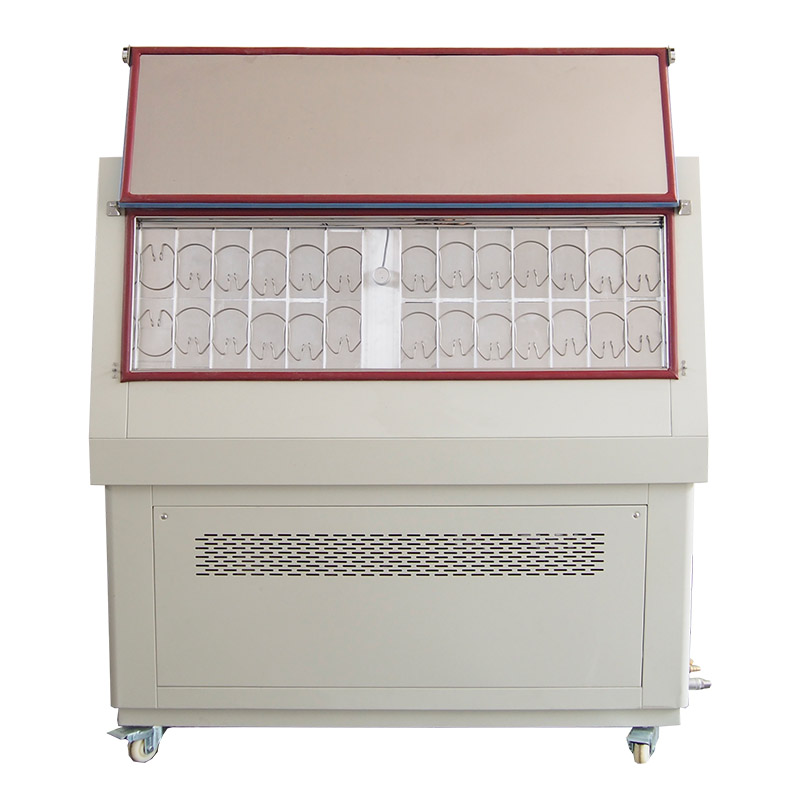
UV Weathering Test Chambers are built for materials that degrade primarily from short-wavelength UV exposure rather than the full solar spectrum. This includes coatings and paints, plastics and polymers, rubber and elastomers, textiles and geotextiles, adhesives and sealants, roofing membranes, and printed materials. Common failure modes tracked in testing include gloss loss, color change (chalking), cracking, embrittlement, and loss of mechanical strength. Because the UV chamber isolates the UV-B and UV-A bands where most photochemical degradation begins, it's especially efficient for materials where UV is the dominant aging factor rather than heat or infrared exposure.
LIB Industry UV Weathering Test Chamberis built to meet ASTM G154, ASTM D4329, ISO 4892-3, and SAE J2020, among other referenced procedures. The chamber uses fluorescent UV lamps — typically UVA-340 or UVB-313 types — to output radiation concentrated in the 300–400 nm band, closely matching the short-wavelength portion of sunlight that drives the fastest polymer degradation. A programmable controller alternates UV exposure with condensation cycles, where a heated water reservoir generates 100% relative humidity condensation on the sample surface, simulating dew. Black panel temperature sensors monitor surface heat during the UV phase, typically held at 60°C ±3°C, while condensation cycles run near 50°C, replicating the day-night aging pattern materials experience outdoors.
Standard UV weathering test methods follow a cyclic pattern: a UV exposure segment (commonly 4 or 8 hours) followed by a condensation segment (typically 4 hours), repeated continuously for the duration of the test — which can run from 100 hours for quick screening to over 2,000 hours for accelerated service-life prediction. Operators can program irradiance levels, cycle duration, and black panel temperature through a color touchscreen controller, storing multiple test profiles for repeat use. Samples are mounted on rotating specimen racks to ensure uniform UV exposure across every test panel, and irradiance is checked with a calibrated UV radiometer to keep output within ±5% of the target value throughout the test run.
When Xi'an Jiaotong University's materials lab needed to run long-duration UV aging tests on coating and polymer samples, they selected LIB Industry's UV Weathering Test Chamber for their performance validation program. After months of continuous cyclic testing, the research team reported strong satisfaction with the chamber's consistency and reliability. Several factors stood out:
High safety compliance: the chamber meets CE, IEC 61010, and CSA safety requirements, with over-temperature, low-water, and earth-leakage protection built into every unit.
Stable light source output: the UVA/UVB lamp system holds irradiance fluctuation within ±5% across full test cycles, so long-duration data stays comparable from week to week.
Precise, repeatable testing: black panel temperature control within ±2°C and closed-loop PID regulation kept every test cycle within specification, run after run.
Cost-effective operation: lower energy draw than full-spectrum xenon systems, since UV lamps consume less power and require less frequent replacement.
Customizable 3D specimen holders: the university's team was able to mount irregularly shaped samples on a custom rotating rack rather than being limited to flat panels.
Flexible programming: up to 100+ stored test programs let the lab switch between ASTM G154 cycles and custom research protocols without manual reconfiguration.
The university's feedback confirmed what LIB Industry designs for: a chamber that a research team can rely on for months of unattended, standards-compliant testing.
| Model | UV-SI-260 UV Weathering Test Chambers | 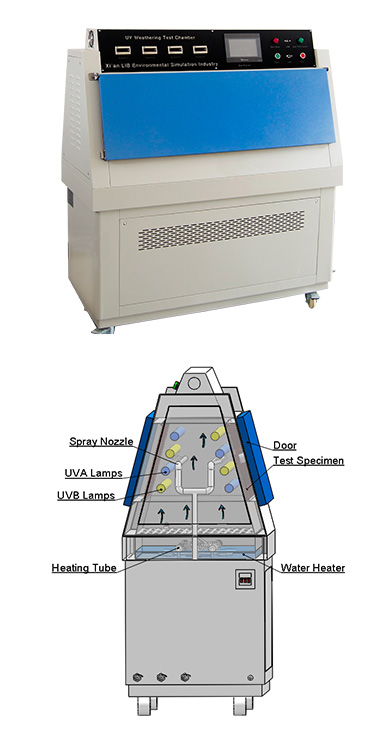 |
| Internal Dimension (mm) | 450*1170*500 | |
| Overall Dimension (mm) | 610*1330*1470 | |
| Specimen Holder Size(mm) | 75*150 | |
| Specimen Capacity | 52 Pieces | |
| Irradiation Source | Fluorescent UV lamps (8) - 40 W | |
| Temperature Range | Ambient ~ 90 ℃ ±2℃ | |
| Black Panel Temperature (BPT) | 35 ~ 80 ℃ | |
| Humidity Range | ≥95% RH | |
| Bandwidth | 290 ~ 400nm | |
| Irradiance Control | 0.3~20 W/㎡ | |
| Water Spray Cycle | 1~9999H59M (Adjustable) | |
| Distance of Specimen and lamp | 50mm | |
| Controller | Programmable color LCD touch screen controller, Ethernet connection | |
| Water Supply System | Automatic water supply, Water purification system | |
| Safety Device | Over-temperature Protection; Over-current Protection; | |
| Water Shortage Protection; Earth leakage Protection; Phase Sequence Protection | ||
| Exterior Material | Steel Plate with protective coating | |
| Interior Material | SUS304 Stainless Steel |
Both chambers accelerate weathering, but they simulate different parts of sunlight and suit different materials.
| Feature |
|
|
|---|---|---|
| Spectral range | 300–400 nm (UV-focused) | 280–800 nm (full spectrum) |
| Light source | UVA-340 / UVB-313 fluorescent lamps | Water-cooled xenon arc lamp |
| Best for | Plastics, coatings, textiles where UV drives degradation | Materials also affected by visible/IR light: automotive parts, outdoor coatings, building materials |
| Governing standards | ASTM G154, ISO 4892-3, SAE J2020 | ASTM G155, ISO 4892-2 |
| Irradiance control | UV band only, ±5% | Full spectrum, BPT-linked, ±3% (per ASTM G155) |
| Operating cost | Lower — lamps use less power, longer service life | Higher — xenon lamps draw more power, shorter service life |
| Typical applications | Screening tests, R&D, fast material comparison | Full-service-life simulation, product certification |
Choosing between them comes down to what's degrading your product outdoors. If failures are driven mainly by UV — fading, chalking, embrittlement in polymers and coatings — a UV Weathering Test Chamber gives faster, lower-cost results. If your product also needs to withstand visible light heating and infrared exposure, such as automotive exteriors or building façades, a Xenon Arc Test Chamber under ASTM G155 gives a more complete simulation of real sunlight.
| LIB Popular Weathering Test Chamberfor Aging tests | ||
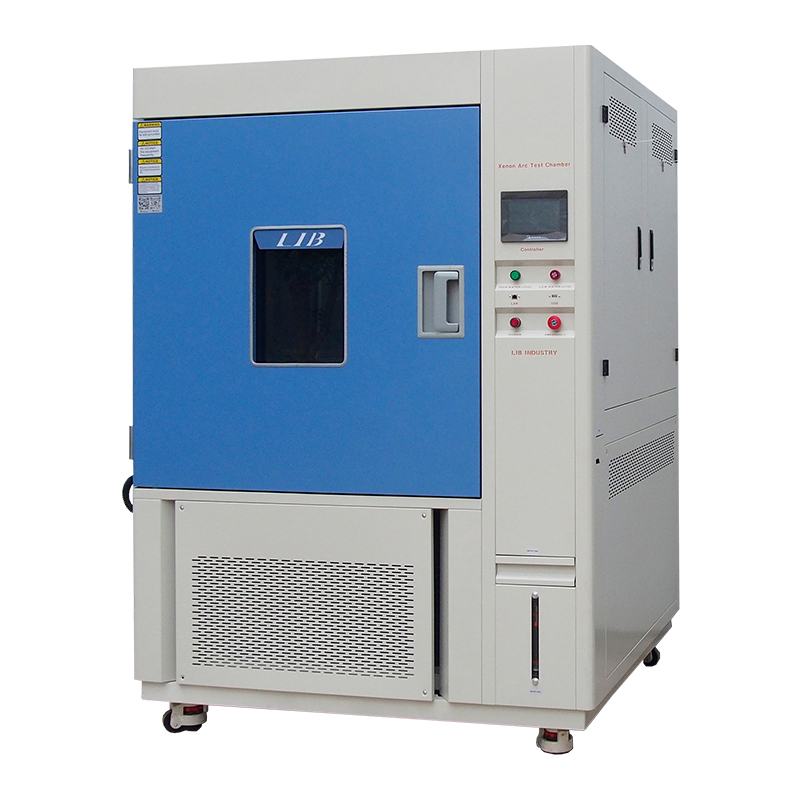
Full-Spectrum Sunlight Simulation, |
Fast UV Degradation Testing, |
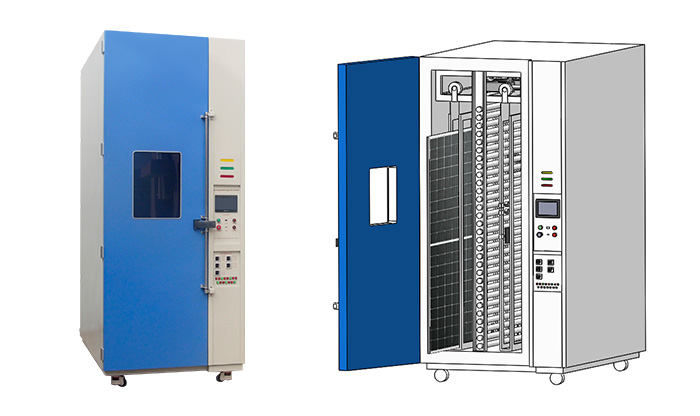
UV Preconditioning Chamber For PV Solar Panel IEC-Compliant PV Preconditioning, |
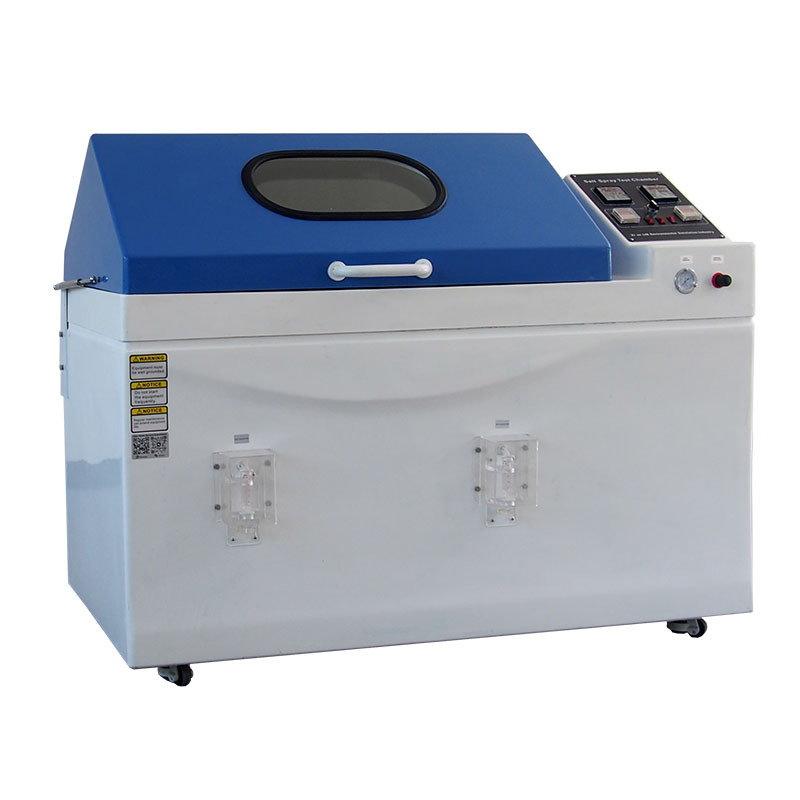
ASTM B117 Fog Corrosion Salt Spray Test Cabinet ASTM B117 Compliance Testing, Trusted Corrosion Resistance Evaluation |
Cyclic Salt Spray Corrosion Chamber (CCT Chamber) Real-World Corrosion Cycling, |
Salt Fog and SO2 Corrosion Chamber Multi-Environment Corrosion Simulation, Accelerated Industrial Durability Testing |
Q1: How long does a typical test cycle run?Test duration depends on the material and standard, ranging from 100 hours for quick screening to 2,000+ hours for long-term service-life prediction. Cycles typically alternate 4–8 hours of UV exposure with 4 hours of condensation.
Q2: Can the chamber test non-standard or irregularly shaped samples?Yes. LIB Industry offers customizable 3D specimen holders and adjustable rotating racks, so labs aren't limited to flat panel samples.
Q3: What after-sales service does LIB Industry provide?Every chamber comes with a 3-year warranty and lifetime service support, backed by a 24/7 English-speaking after-sales team for calibration, troubleshooting, and spare parts.
Q4: How fast can LIB Industry ship a chamber?Standard units ship within 7–15 days, with custom configurations available on request based on specimen size and test program requirements.
Q5: Is calibration support included?Yes. Each chamber ships with a calibrated UV radiometer, and LIB Industry's team can assist with on-site or remote calibration verification to keep irradiance within ±5% throughout the equipment's service life.
Contact LIB Industry to develop a professional and efficient solution tailored to your specific standards and stringent requirements.