Views: 0 Author: LIB Team Publish Time: 2026-09-21 Origin: Site


A product that passes lab testing but fails within its first year in the field is one of the most expensive mistakes a manufacturer can make, and in most cases the root cause traces back to temperature swings or moisture the product was never actually tested against. Getting that testing right before a product ships is far cheaper than a recall after it does.
That kind of long-term reliability is exactly what one Canadian government customer confirmed after years of daily use. As they put it: "The climatic chamber is still working well, and we are performing regular inspections to ensure that everything works properly." A comment like that, from a team running scheduled maintenance checks rather than emergency repairs, says as much about equipment quality as any spec sheet does.
This article explains what a heat cold and humidity test climatic chamberis, the standards it must meet, why a Canadian government testing department trusts three units of this equipment for its stability and after-sales support, and how to choose between a reach-in and a walk-in model.
What the Equipment Actually Does
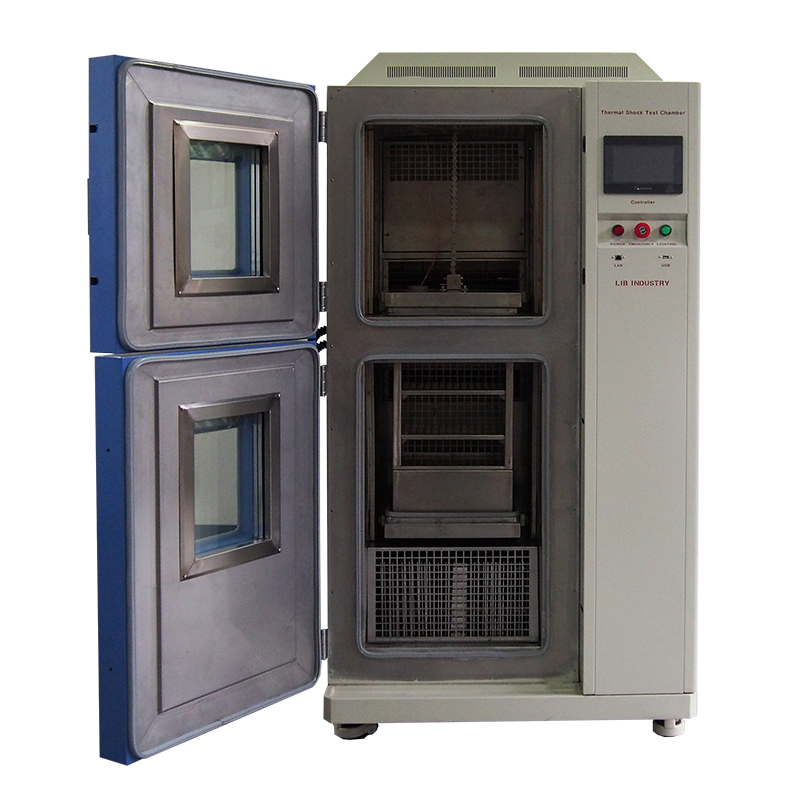
A heat cold and humidity test climatic chamber reproduces combined thermal and moisture stress in a sealed, controlled space so engineers can see how a material, component, or finished product behaves before it ever leaves the factory. Typical working ranges run from -70°C up to +150°C for temperature and 20% to 98% RH for humidity, with the equipment able to hold either variable steady for weeks or cycle between extremes in minutes. Instead of waiting months for real-world weather to reveal a weakness, this equipment compresses years of environmental exposure into a controlled, repeatable test window.
LIB Industry's Strength as a Reliable Supplier
LIB Industry builds this equipment around measurable engineering performance rather than marketing claims. PT100 Class A sensors give 0.001°C resolution, temperature stability holds within ±0.5°C, and internal uniformity stays under ±1.5°C across the full chamber, so a sample in the corner sees the same conditions as one in the center. Ramp performance reaches 3°C per minute on heating and 1°C per minute on cooling, completing a -40°C to +85°C transition in under 45 minutes. Each unit stores 120 test programs with 100 steps apiece, recycles up to 80% of condensate water, and cuts energy draw by 20% to 30% through 100 mm polyurethane insulation and variable-speed fans, all while running under 65 dB(A).
Standards This Equipment Meets
| Standard | What It Applies To | |
|---|---|---|
| IEC 60068-2-1 | Cold testing of electronic and electrical products |
|
| IEC 60068-2-2 | Dry heat testing of components and finished goods | |
| IEC 60068-2-14 | Temperature change and thermal shock testing | |
| IEC 60068-2-30 | Cyclic damp heat testing for humidity resistance | |
| IEC 60068-2-78 | Steady-state damp heat testing for long-duration aging | |
| GB/T 2423 series | China's national equivalent environmental test methods | |
| ISO 16750 | Environmental testing for automotive electrical parts |
A materials testing department within the Canadian government uses this equipment to qualify products against IEC 60068 before they reach the field. Their cyclic damp heat testing under IEC 60068-2-30 follows a fixed 24-hour profile: temperature rises from 25°C to 55°C over three hours at 95% RH, holds at 55°C and 93% RH for twelve hours, then falls back to 25°C over three to six hours before a low-temperature dwell completes the cycle, repeated for two, six, or twelve full cycles depending on the product category. For longer aging studies under IEC 60068-2-78, the department holds samples at a steady 40°C and 93% RH for periods of four, ten, twenty-one, or fifty-six days.
What keeps this department satisfied goes beyond the numbers on a data sheet. The equipment carries CE certification and meets IEC electrical safety requirements, so operators run high-humidity, high-temperature cycles without added risk. Structural changes and rack configurations are engineered free of charge to match each customer's product line, and every unit ships with a three-year warranty backed by ongoing technical support that does not expire when the warranty does. On-site training means new staff learn the controller and safety procedures directly from LIB Industry engineers rather than a manual. The SUS304 stainless steel interior resists corrosion through years of repeated humidity cycling, keeping accuracy consistent long after installation. Test precision stays repeatable across runs, and the combination of build quality and price keeps the department's cost per test low relative to comparable systems on the market.
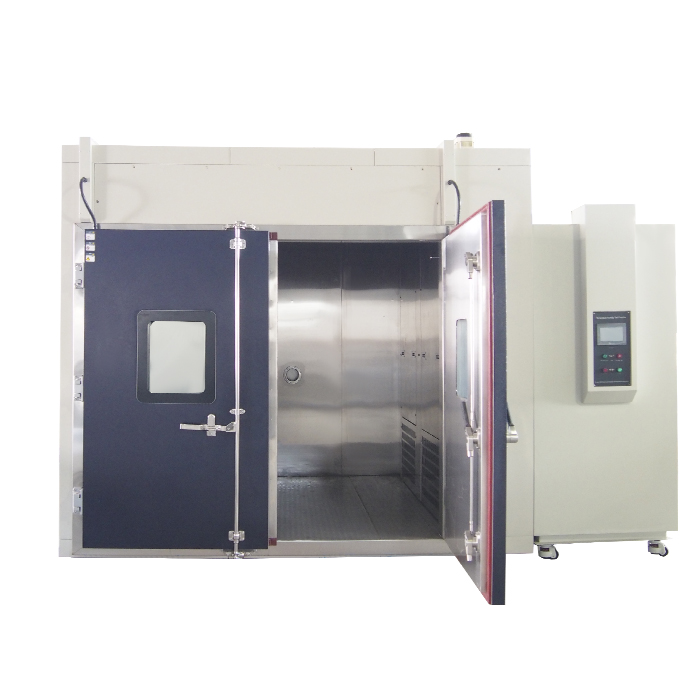
The relationship has grown accordingly. The department first purchased two reach-in units for component-level testing, and after several years of reliable results, recently added a walk-in unit to handle larger assemblies that would not fit in a reach-in chamber.
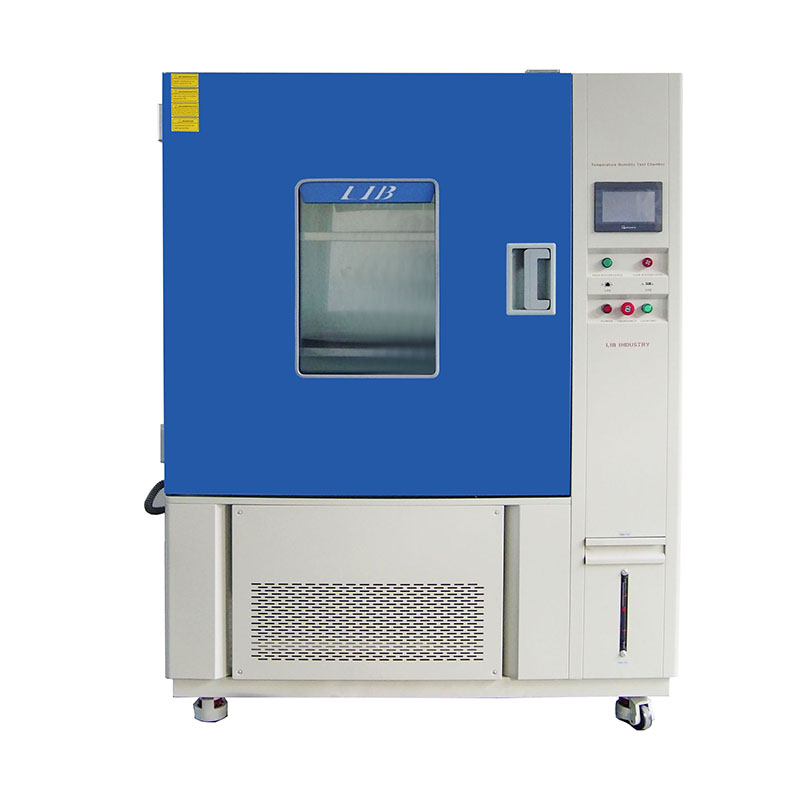
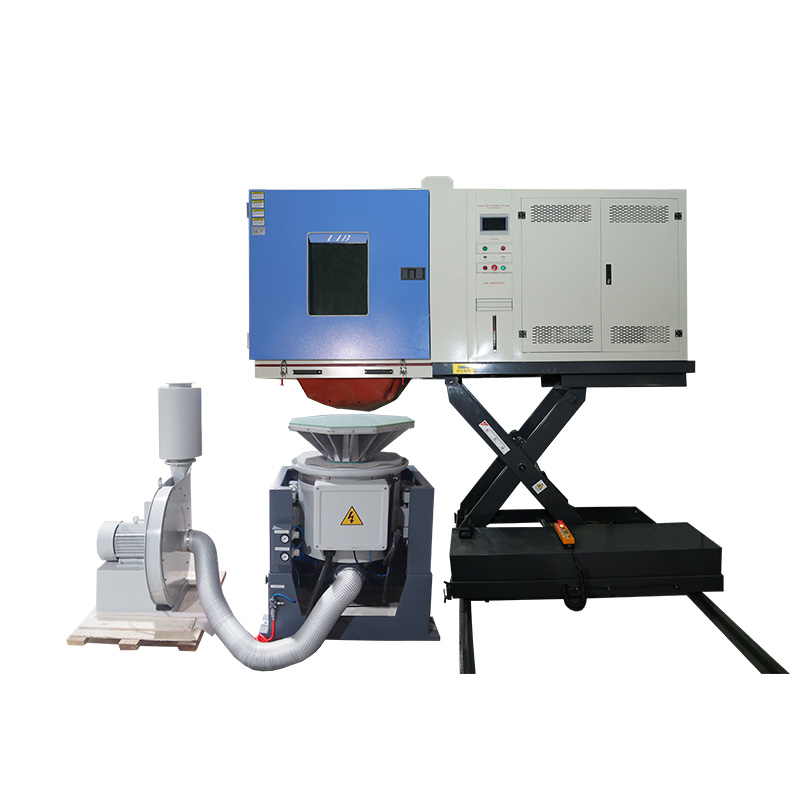
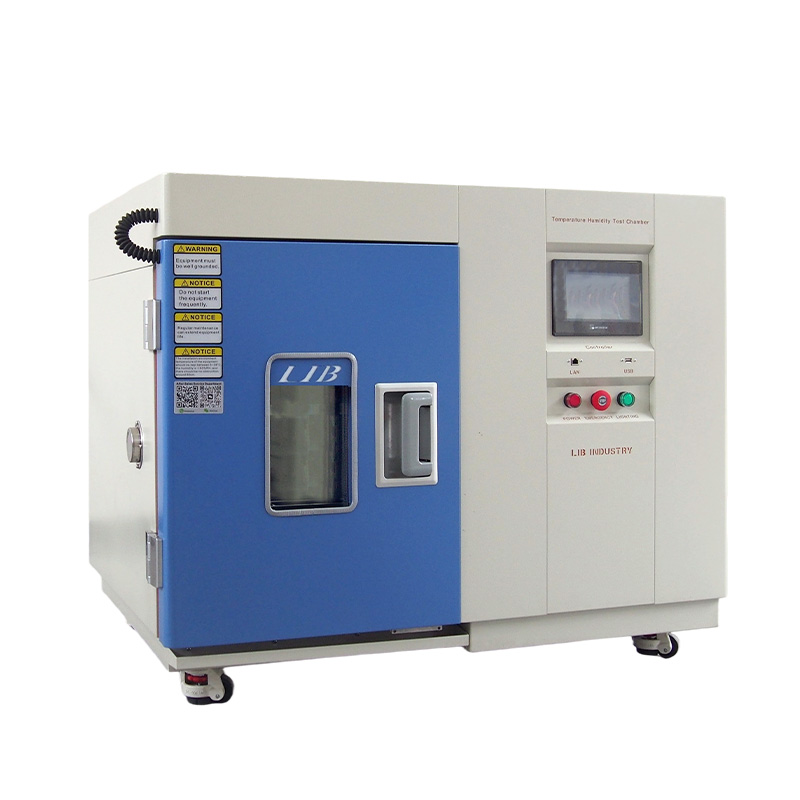
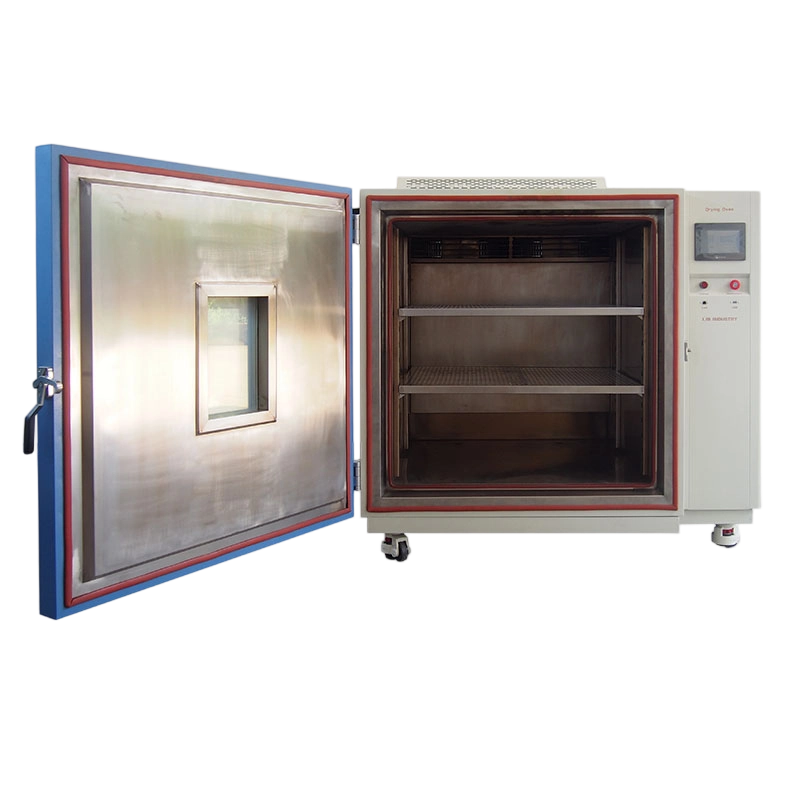
| LIB Popular Laboratory Environmental Temperature Humidity Test Chambers | ||
Precise climate simulation, Reliable long-term stability testing |
Combined Climate and Vibration Chamber Simulate temperature, humidity, and vibration stresses in one test |
Small temperature humidity chamber Compact footprint design, High-accuracy environmental control |
Industrial High-Temperature Vacuum Drying Oven Uniform heat distribution, Efficient material drying |
Extreme thermal stress simulation, Fast failure detection capability |
Large-capacity testing space, Ideal for oversized products |
Reach-in and walk-in equipment serve the same testing purpose but fit different production scales, and the difference matters when specifying a purchase.
| Factor |
|
|
|---|---|---|
| Internal volume | Roughly 100 to 2,000 liters | Custom-built, often 10 to 100+ cubic meters |
| Temperature range | -70°C to +150°C | -20°C to +150°C, or -40°C/-70°C on request |
| Humidity range | 20% to 98% RH | 20% to 98% RH |
| Airflow uniformity | ±1.5°C with centrifugal fan circulation | ±2°C, managed through zoned ducting for larger volumes |
| Typical governing standards | IEC 60068-2 series, GJB 150 | IEC 60068-2 series, GJB 150, MIL-STD-810 |
| Best suited for | Components, small assemblies, PCBs | Full vehicles, pallets of goods, large equipment |
Reach-in equipment fits labs testing individual parts or small assemblies where floor space is limited and a smaller footprint keeps energy costs down. Walk-in equipment fits organizations testing complete products such as vehicles, large machinery, or palletized shipments, where staff need to physically enter the space to load, monitor, or adjust samples during a test. Departments that outgrow reach-in capacity, as the Canadian government team did, typically add a walk-in unit rather than replace their existing reach-in systems, since the two serve complementary roles.
Q1: How long does delivery take?
Standard reach-in equipment typically ships within four to six weeks of order confirmation, while custom walk-in builds run eight to twelve weeks depending on internal dimensions and rack configuration.
Q2: How is the equipment shipped internationally?
Reach-in units ship fully assembled in standard shipping containers, while walk-in units are shipped in prefabricated panel sections and assembled on-site by LIB Industry technicians or a trained local team under remote guidance.
Q3: Does LIB Industry install the equipment and train our staff? Yes. Installation support and on-site operator training are included, covering program setup, safety interlocks, and routine maintenance.
Q4: What does the warranty cover? Every unit includes a three-year warranty on parts and labor, with continued technical support available after the warranty period ends.
Q5: Can dimensions and racking be customized? Yes, internal dimensions, rack load capacity, cable ports, and door configuration are all engineered to order at no additional design cost.
Tell us your test specimen, required temperature and humidity range, sample size, and test standards. LIB Industry can help you select the right chamber for your testing needs.