Views: 0 Author: Site Editor Publish Time: 2026-06-26 Origin: Site


Verifying product reliability before market launch remains non-negotiable for engineers and QA managers. You cannot risk premature field failures when real-world climates inevitably stress your hardware. Environmental stress screening demands precise, repeatable simulation of highly specific atmospheric conditions. LIB Temperature Humidity Chamber solves this problem directly. It creates tightly controlled artificial climates. These robust systems test hardware limits, accelerate aging processes, and ensure strict regulatory compliance across global markets.
Understanding the internal mechanics of these systems proves critical. You must know how they generate heat, maintain cooling, and inject moisture. This knowledge helps you specify the precise equipment necessary for your facility. By mastering these foundational concepts, you can perfectly match chamber capabilities to your unique testing footprint and production standards.
1. Temperature humidity chambers rely on integrated thermodynamic systems: refrigeration for cooling, electrical resistance for heating, and steam or atomization for moisture.
2. Achieving precise humidity profiles depends on managing the psychrometric relationship between dry-bulb and wet-bulb temperatures.
3. Selecting the right environmental test chamber requires matching internal capacity (from benchtop to walk-in) with your required temperature ramp rates and live-load heat dissipation.
4. Water purity and preventative maintenance are the most significant factors in long-term sensor accuracy and chamber uptime.
A modern Environmental Test Chamber functions as a highly tuned thermodynamic engine. It relies on four primary sub- systems to manipulate the internal climate. These systems work continuously to correct deviations and maintain tight setpoint tolerances.
Chambers utilize electrical resistance heaters to elevate internal temperatures rapidly. Manufacturers typically construct these elements from bare nichrome wire. Engineers position the heaters directly within the recirculation airflow plenum. This placement ensures rapid heat transfer. The system relies on rapid-pulsing solid-state relays (SSRs) to govern the electrical current. SSRs pulse power in micro-bursts. They allow the controller to maintain exceptionally tight temperature tolerances without accidentally overshooting the target setpoint.
Removing heat requires sophisticated mechanical refrigeration. The specific cooling architecture depends heavily on your lowest required temperature.
Single-stage systems: These rely on a single compressor circuit. They effectively pull chamber temperatures down to approximately -30°C or -40°C. They suit standard industrial testing well.
Cascade systems: These specialized setups use two interconnected compressors. They utilize different refrigerants across two separate loops. The high-stage compressor cools the condenser of the low-stage compressor. This thermal cascade effect allows the chamber to reach ultra-low temperatures, often hitting -70°C or even lower.
Injecting moisture into the air requires overcoming significant physical challenges. The equipment must distribute vapor evenly without causing localized condensation on your products.
Steam Generators: These boil water in an external or internal tank. They introduce pure water vapor directly into the airflow. Steam proves excellent for demanding high-temperature and high-humidity testing protocols.
Atomizers and Foggers: These devices spray a microscopic mist of water. The ambient air absorbs this mist rapidly. They offer high energy efficiency. However, they strictly require highly purified water to prevent severe mineral buildup on internal components.
Water Baths: This older but reliable method passes conditioned air over a heated water pan. It operates reliably for long durations. Yet, it responds much slower when you command rapid humidity setpoint changes.
Pulling moisture out of the air proves just as critical as adding it. Test protocols often demand low-humidity environments to simulate arid climates.
Cooling Coils: The system lowers the internal evaporator coil temperature below the current dew point. The surrounding air sheds moisture. This moisture condenses on the cold coils and drains away safely.
Desiccant Dryers: Standard mechanical cooling cannot achieve ultra-low humidity conditions. Desiccant systems become strictly required for targets like 5% relative humidity at very low temperatures. These honeycomb wheels pull moisture chemically from the air.
Engineers often face a crossroads when specifying testing equipment. You must decide whether to procure a thermal-only unit or invest in a combined climate system. This decision fundamentally impacts both your testing capabilities and your facility management.
Thermal-only testing focuses purely on dynamic thermal cycling, severe thermal shock, and extreme temperature limits. It exposes weaknesses in material expansion and contraction. It serves best for base materials testing, metal fatigue studies, and evaluating highly sealed components. In these scenarios, external moisture ingress remains physically impossible or entirely irrelevant to the product's ultimate field performance.
Combined testing introduces complex psychrometric stress. It becomes absolutely essential for assessing long-term corrosion resistance. You must use humidity to verify packaging seal integrity over time. For electronics reliability, moisture testing helps engineers prevent disastrous short circuits caused by hidden condensation. Pharmaceutical and food industries rely heavily on these combined environments to execute mandatory shelf-life studies.
Adding humidity control significantly increases the complexity of your equipment. It introduces stringent maintenance requirements involving continuous water supply lines and gravity drainage. The capital cost of the chamber rises proportionally. You should actively avoid over-specifying your equipment. If your current compliance standards only dictate simple thermal data collection, purchasing a combined unit introduces unnecessary mechanical complexity.
| Testing Scope | Primary Applications | Facility Requirements | Equipment Complexity |
|---|---|---|---|
| Thermal-Only | Material stress, thermal shock, basic cycling | Power, standard ventilation | Moderate (Refrigeration + Heaters) |
| Combined (Temp + Humidity) | Corrosion, electronics reliability, shelf-life | Power, pure water supply, active drainage | High (Vaporizers, Wet-Bulb Sensors) |
Matching the internal capacity of the chamber to your daily workload dictates operational efficiency. Engineers must balance their physical floor space constraints against their desired testing throughput.
Benchtop units offer compact testing solutions. They fit directly onto laboratory work surfaces.
Use Case: They excel at testing small electronics components. R&D labs and startup facilities utilize them for low-volume product screening.
Limitations: Their small chassis inherently limits compressor size. They provide lower overall cooling capacities. You will experience noticeably slower temperature ramp rates when loading them with active, heat-dissipating electronic components.
Reach-in units represent the undisputed workhorses of modern manufacturing. They typically feature internal volumes ranging from 10 to 30 cubic feet.
Use Case: They serve as the industry standard for production QA environments. They comfortably accommodate heavier product loads. Many feature internal dimensions tailored to accept standard 19-inch testing racks.
Advantage: They strike an optimal balance. They provide excellent airflow uniformity, manageable utility requirements, and a reasonable physical footprint.
These massive structures simulate climates on an industrial scale. They function essentially as specialized rooms within your factory.
Use Case: They accommodate large sub-assemblies. Automotive manufacturers drive full vehicles inside them. Aerospace companies test massive satellite components within their insulated walls.
Implementation Risk: They require intensive facility planning. You must install reinforced flooring to handle immense weight. They demand massive electrical power draws. Facilities must route dedicated exhaust ducting and high-capacity water lines prior to installation.
| LIB Popular Temperature Humidity Chambers | |||
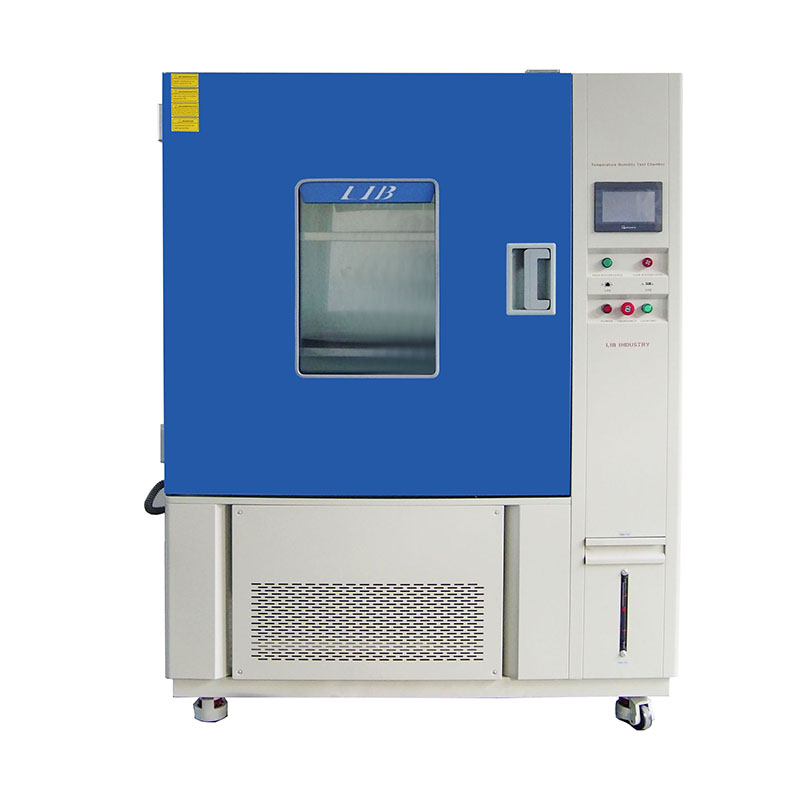
Standing temperature humidity chamber Precise climate simulation, Reliable long-term stability testing |
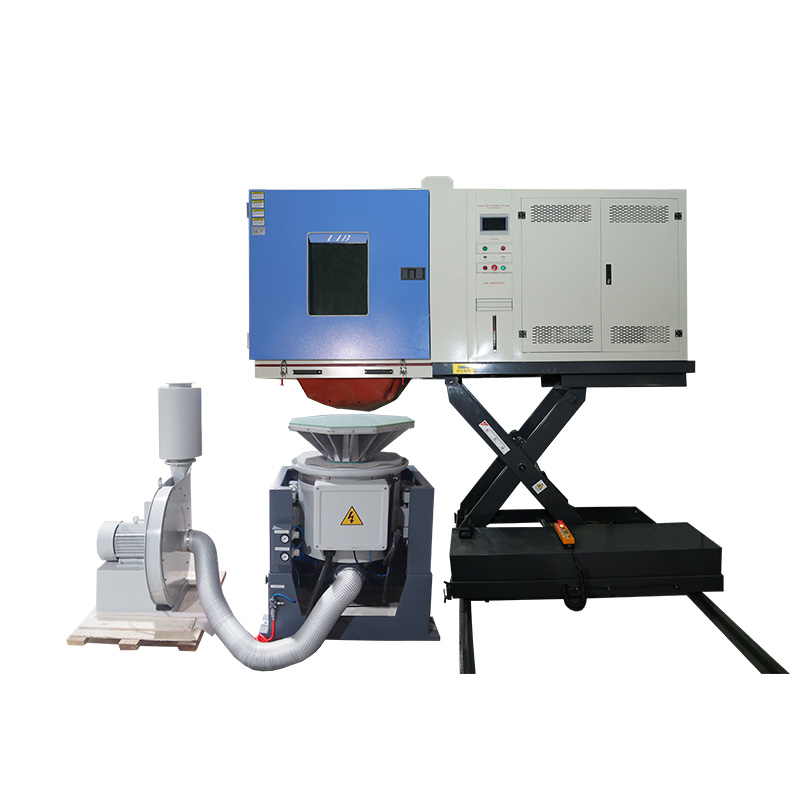
Combined Climate and Vibration Chamber Simulate temperature, humidity, and vibration stresses in one test |
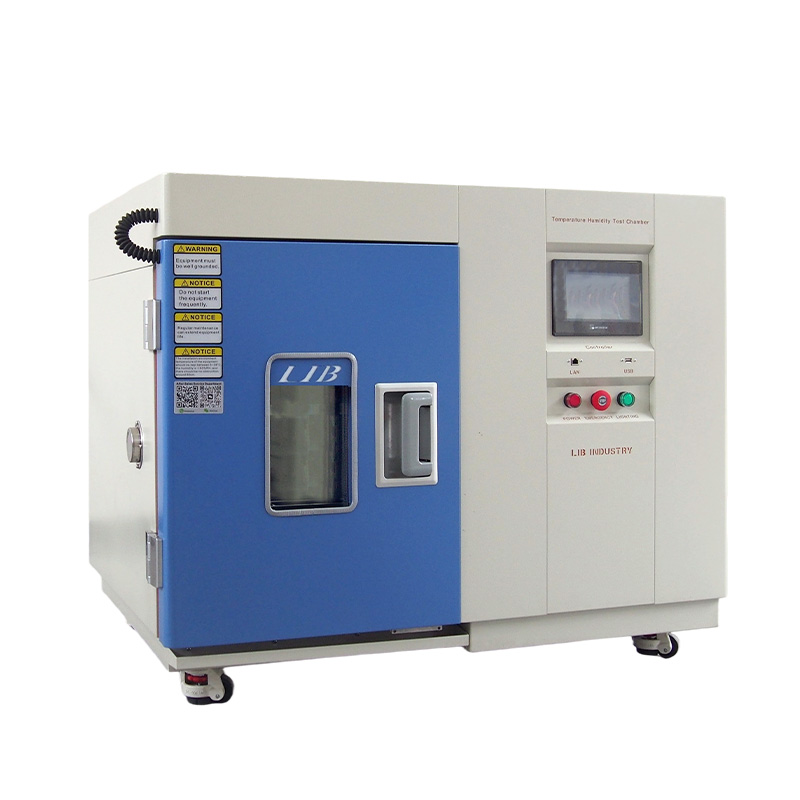
Small temperature humidity chamber Compact footprint design, High-accuracy environmental control |
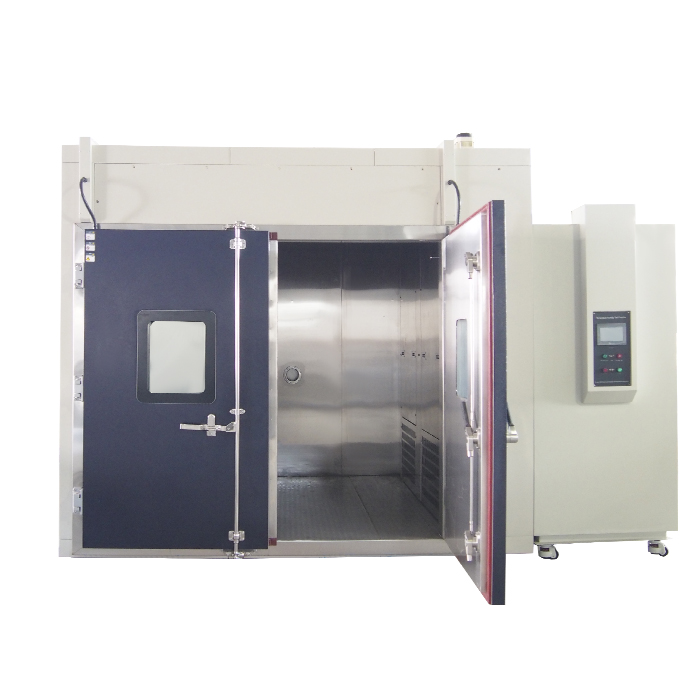
Walk-In temperature humidity chamber Large-capacity testing space, Ideal for oversized products |
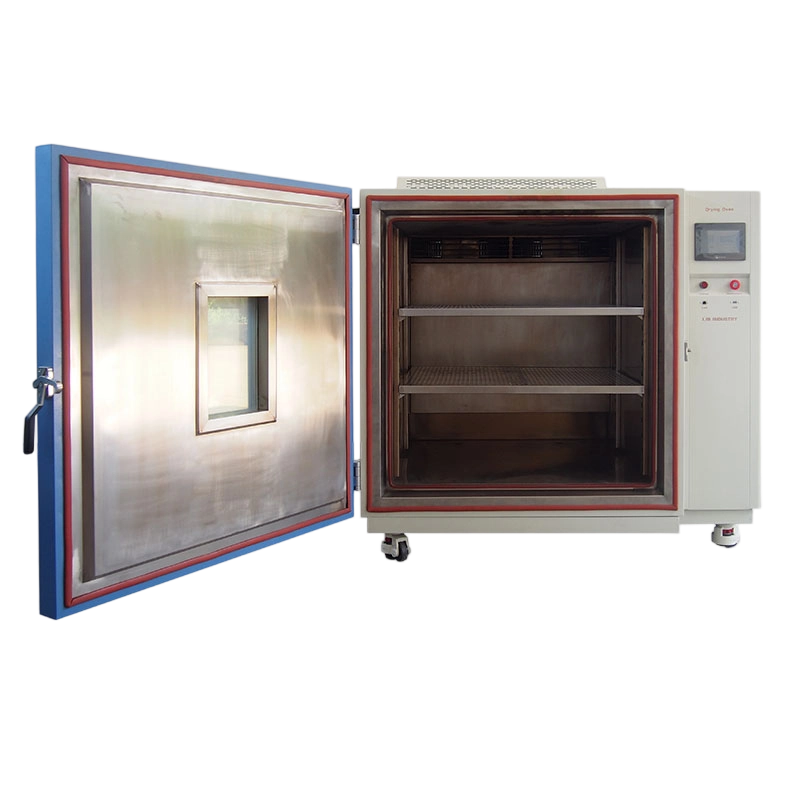
Industrial High-Temperature Vacuum Drying Oven Uniform heat distribution, Efficient material drying |
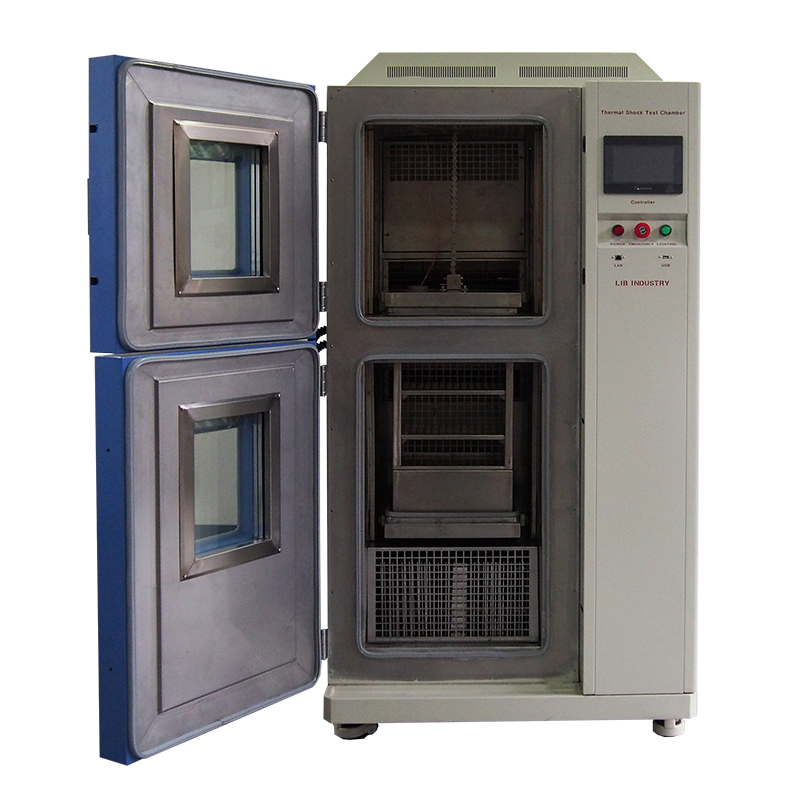
Extreme thermal stress simulation, Fast failure detection capability |
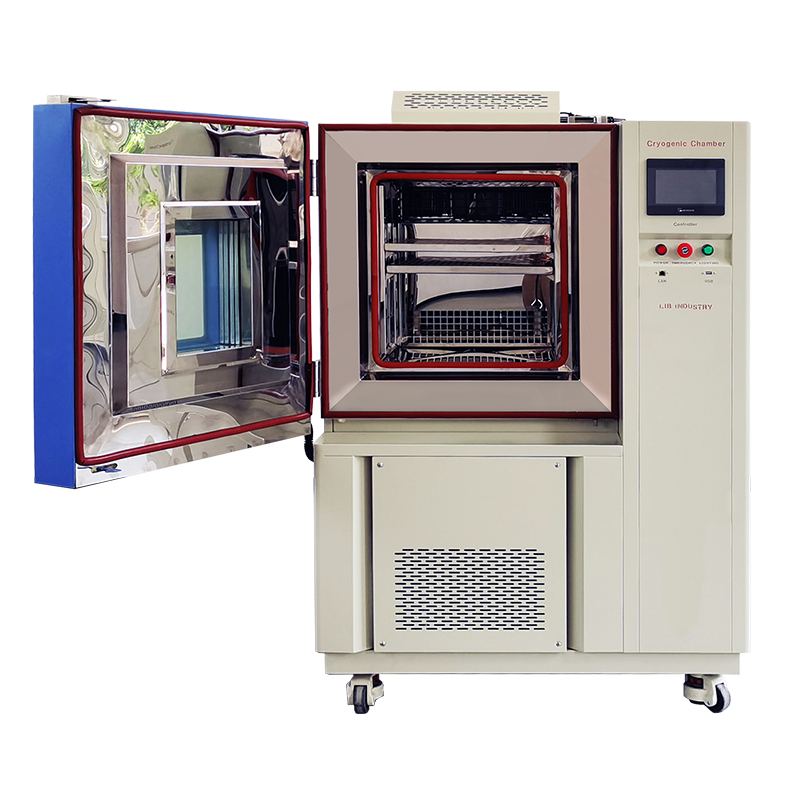
Ultra-low temperature performance, Reliable cold resistance evaluation |
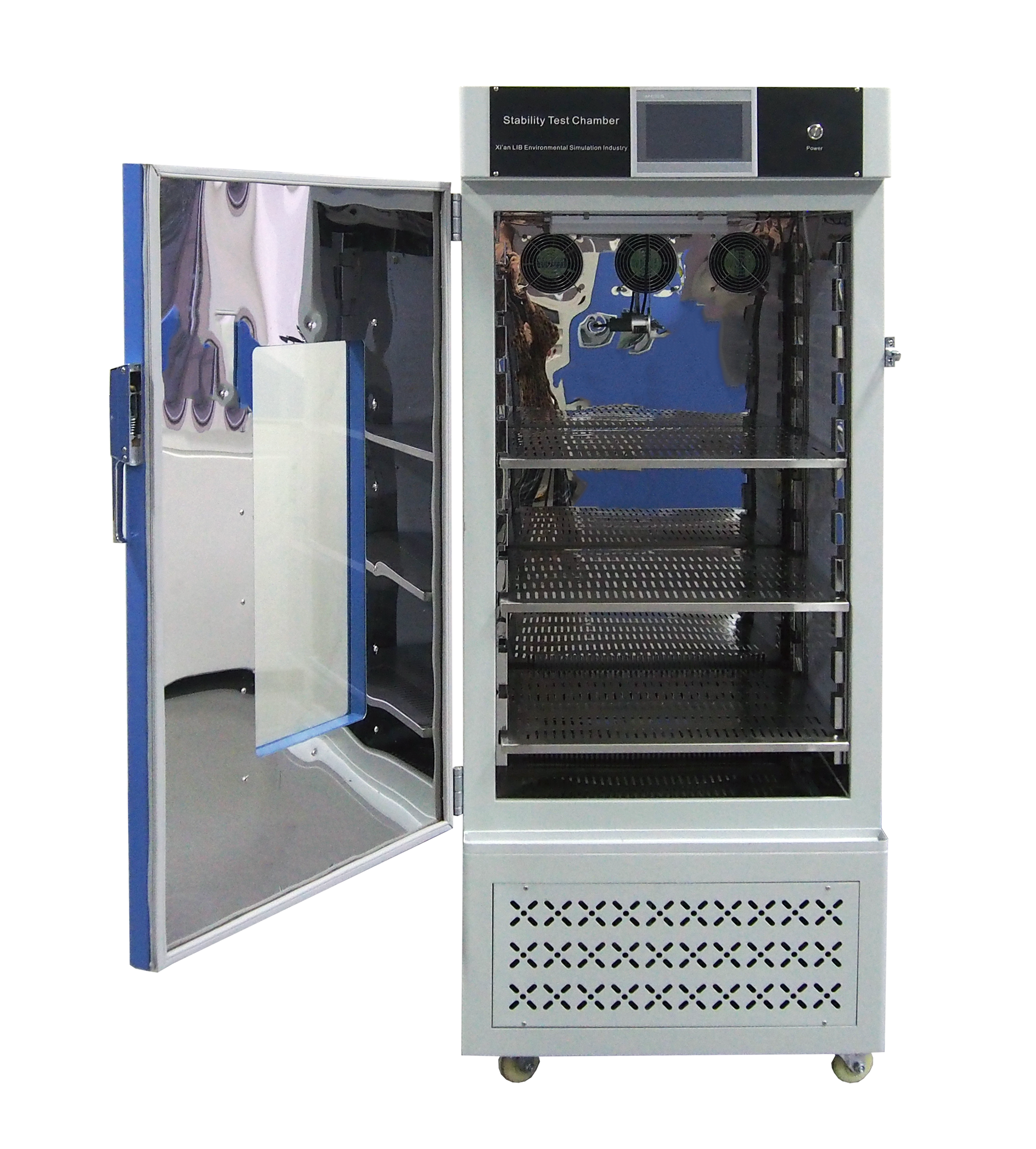
ICH-compliant stability testing, Precise temperature and humidity control |
Buying a chamber based solely on its minimum and maximum temperature rating is a common mistake. True performance depends heavily on dynamic variables. You must evaluate how the machine reacts to physical stress.
1. Calculate Your Live Load Capacity: Your powered-on product generates heat. We call this a "live load." The chamber's refrigeration system must constantly battle this emitted heat. It must overcome the live load while still possessing enough excess cooling capacity to pull the air temperature down precisely. Underestimating your live load results in stalled tests.
2. Determine Ramp Rates (°C/minute): The ramp rate defines the speed at which the internal air transitions between temperature extremes. Sluggish chambers waste valuable production time. Faster transition rates demand significantly larger refrigeration compressors. They also require higher electrical amperages. You must match your chosen ramp rate to specific testing standards.
3. Verify Airflow and Uniformity: You must ensure the climate remains identical in the distant corners of the chamber as it does in the dead center. Poor airflow causes severe testing discrepancies. Uniformity proves hyper-critical for batch testing. Every single unit on the test rack must experience the exact same thermal stress to ensure valid QA data.
4. Assess Controller Capabilities: The software acts as the brain of the machine. Look for advanced PID (Proportional-Integral-Derivative) controllers. They offer precise calculations to prevent setpoint overshoot. Demand features like encrypted data logging and secure remote monitoring. Modern controllers often include pre-programmed profiles for complex, standardized testing protocols (such as MIL-STD, IEC, or ICH guidelines).
Temperature & Humidity Chambers "Simulate real-world temperature and humidity conditions with exceptional accuracy, helping manufacturers improve reliability, meet IEC 60068 requirements, and accelerate product qualification." | 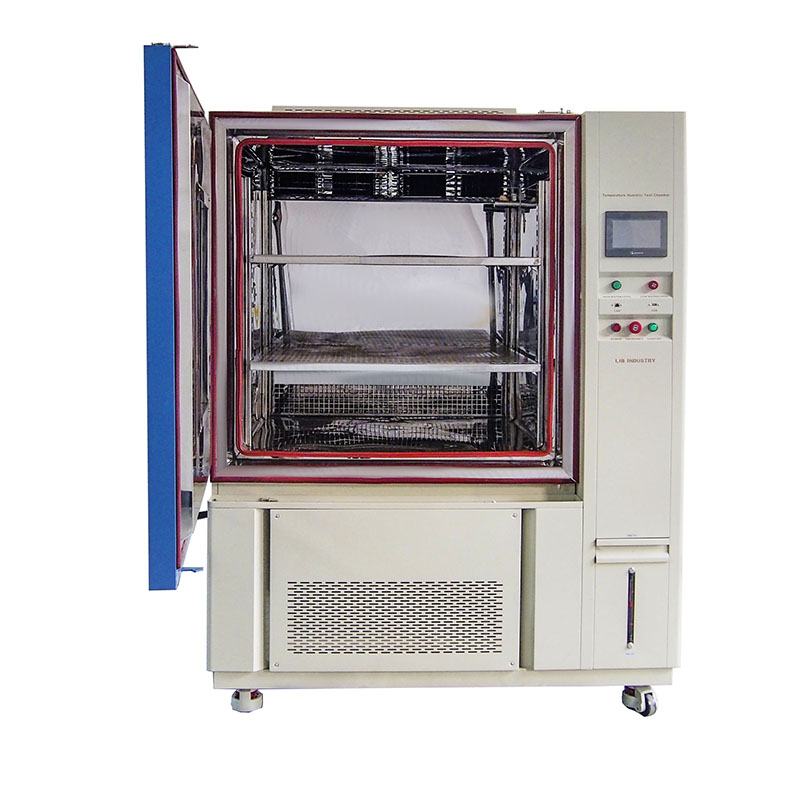 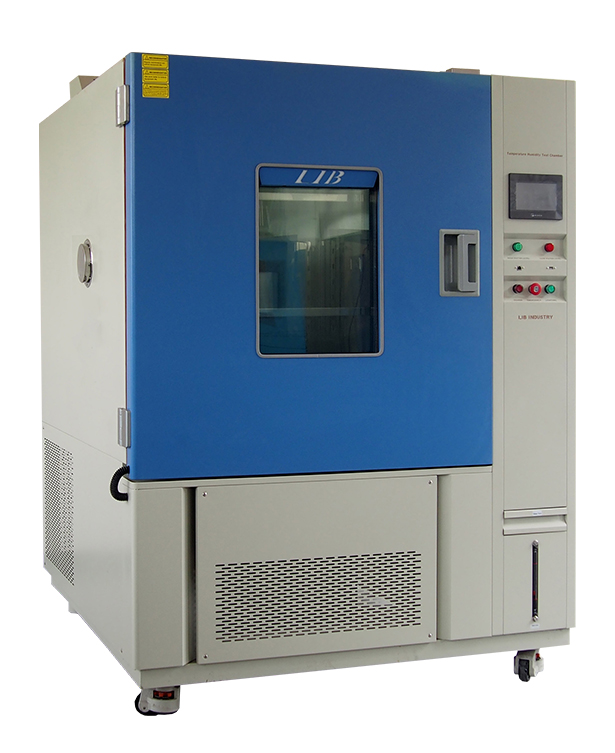 | ||||
Temperature range | -20℃ ~+150 ℃ | ||||
Low type | A: -40℃ B:-70℃ C -86℃ | ||||
Humidity Range | 20%-98%RH | ||||
Temperature deviation | ± 2.0 ℃ | ||||
Heating rate | 3 ℃ / min | ||||
Cooling rate | 1 ℃ / min | ||||
Controller | Programmable color LCD touch screen controller, Multi-language interface, Ethernet , USB | ||||
Refrigerant | R404A, R23 | ||||
Exterior material | Steel Plate with protective coating | ||||
Interior material | SUS304 stainless steel | ||||
Standard configuration | 1 Cable hole (Φ 50) with plug; 2 shelves | ||||
Timing Function | 0.1~999.9 (S,M,H) settable | ||||
Best Practice: Always request a performance calculation from the manufacturer. Provide LIB Industrywith your product's total mass, its physical dimensions, and its active wattage dissipation. They can mathematically model whether a specific compressor size will meet your requested transition speeds.
Failing to prepare your facility guarantees project delays. Environmental chambers consume substantial resources. They interact heavily with your building's existing utility infrastructure. LIB Industry offers turnkey solutions covering everything from design to transportation and installation. 3-year quality guarantee and lifelong service commitment.
Humidity chambers demand exceptional water purity. Feeding standard tap water into a chamber causes immediate destruction. The inherent minerals quickly coat internal heating elements in thick, insulating scale. Hard water totally destroys sensitive wet-bulb humidity sensors. Deionized (DI) or reverse osmosis (RO) water remains strictly mandatory. Facilities typically aim for water purity showing between 1 and 2 megohm-cm resistivity.
Chambers pull massive electrical currents during peak transition phases. You must verify your facility's available amperage before ordering equipment. Check your local voltage phases. Large reach-in and walk-in chambers frequently require three-phase 480V power. Furthermore, large compressors generate intense ambient heat. Upgrading to water-cooled condensers requires verifying your facility's chilled water loop availability and flow rates.
Condensation generation represents a continuous physical byproduct of humidity testing. You must plan for dedicated gravity drains located near the chamber footprint. Running pumps introduces unnecessary failure points. Additionally, air-cooled models reject massive amounts of hot air into the surrounding room. Your facility HVAC must manage this extreme heat rejection, or you risk thermal shutdown of the equipment.
| Utility Requirement | Typical Specification Standard | Common Installation Mistake |
|---|---|---|
| Electrical Power | Single-phase (small) / Three-phase (large) | Underestimating peak amperage draw during rapid cooling. |
| Water Supply | RO or DI water (1 - 2 megohm-cm) | Using unfiltered tap water, leading to scaled heaters. |
| Drainage System | Floor-level gravity drain | Routing drains uphill without an auxiliary condensation pump. |
| Heat Rejection | Dedicated HVAC exhaust or Chilled Water | Placing air-cooled units in unventilated, tight spaces. |
A temperature humidity chamber represents a highly complex integration of applied thermodynamics, precise psychrometrics, and advanced software control. These systems act as the primary gatekeepers for global product reliability. They ensure your components survive the harshest environments imaginable.
Selecting the right unit pushes you far beyond simply checking a spec sheet for maximum and minimum temperature ranges. It requires a brutally realistic assessment of your product's mass and its active heat dissipation. You must acknowledge your facility's strict utility limitations before purchasing equipment.
1. Calculate your exact live-load heat dissipation early in the procurement process.
2. Verify your facility can supply purified RO or DI water reliably.
3. Match your chamber's physical footprint to your required batch testing volume.
4. Consult directly with an environmental testing engineer. Have them review your specific global test standards (IEC, MIL-STD) to finalize the necessary cooling capacities.
A: No standard chamber reaches absolute zero humidity. Standard mechanical refrigeration systems can reliably reach and hold approximately 10-20% relative humidity. If your testing requires deep dry conditions (down to 1-5% RH), you must specify specialized desiccant dryer systems to chemically pull trace moisture from the internal air.
A: Dry-bulb represents the actual ambient air temperature inside the chamber. Wet-bulb represents the temperature read by a sensor covered in a continuous, water-soaked cotton wick. The chamber's PID controller mathematically calculates the exact relative humidity percentage based directly on the temperature difference between these two specific sensors.
A: Industry standards typically mandate formal ISO 17025 accredited calibration on an annual basis. However, high-compliance sectors like aerospace, military defense, and pharmaceuticals often demand strict bi-annual calibration schedules. This prevents subtle sensor drift from invalidating months of critical, expensive product testing data.
A: Several common mechanical issues prevent high humidity. You likely have a saturated or dirty wet-bulb wick that requires immediate replacement. Other culprits include a failing steam generator heater, unusually low facility water supply pressure, or a degraded door gasket allowing dry ambient room air to infiltrate the sealed testing space.
Ready to take your product reliability testing to the next level? Contact LIB Indsutry now. LIB Industry provides not only high‑performance temperature humidity chambers but also complete turnkey solutions — from initial design and manufacturing to transportation, installation, and lifelong technical support. Our experts are here to help you select the right chamber size, cooling capacity, and control system that perfectly match your testing standards and facility constraints.