Views: 0 Author: LIB Team Publish Time: 2026-09-20 Origin: Site


Xenon test chambers simulate full-spectrum sunlight, temperature fluctuations, and moisture to evaluate the long- term durability of paints, plastics, and automotive exterior trim. For reliable accelerated weathering tests, technical and procurement teams must match chamber capabilities—such as xenon lamp power, black panel temperature, humidity control, and specimen capacity—with the requirements of relevant ASTM and ISO standards.
“We found your instrument quality wise as good as ATLAS and prices were competitive.”— Indian Customer, Xenon Weatherometer Evaluation
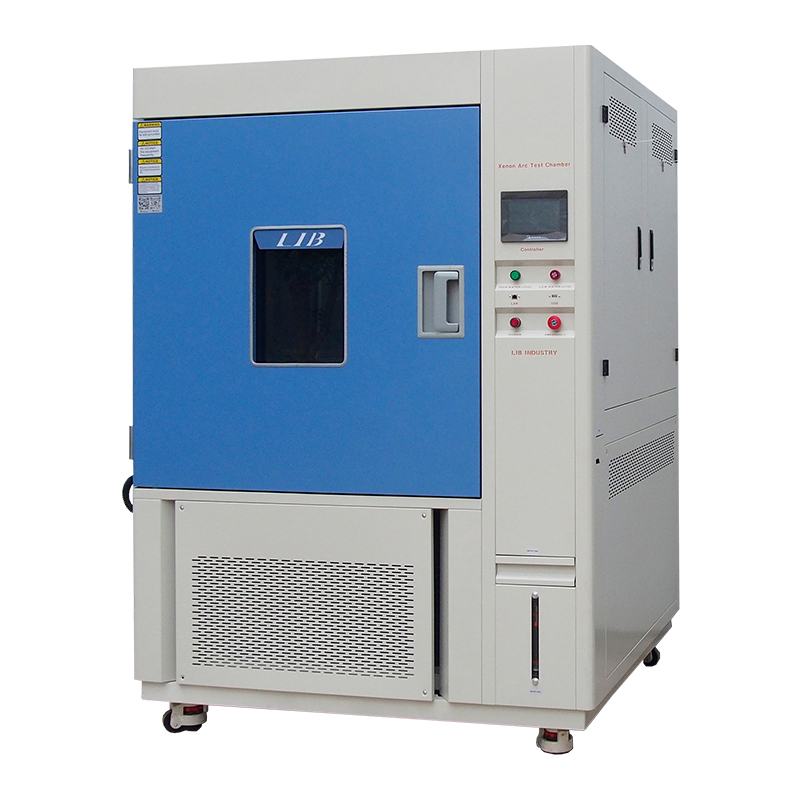
For manufacturers seeking standardized and configurable weathering equipment, LIB Industry provides xenon accelerated weathering test chambers designed for paint, plastic, coating, and automotive component testing.
Full-Spectrum Simulation: Xenon chambers use a 4500 W water-cooled xenon lamp to reproduce the 280–800 nm spectrum and simulate natural sunlight.
Precise Environmental Control: Equipment regulates black panel temperatures between 35 and 85 °C with ±2 °C accuracy and maintains humidity from 50% to 98% RH.
Standard Compliance Targets: LIB Industry xenon systems are engineered around test requirements including ASTM G155, ASTM D6695, ASTM D7869, ISO 11341, and ISO 16474.
Flexible Specimen Handling: Standard rotating racks accommodate up to 42 specimens up to 3 cm thick, while customized configurations can support bulky samples up to 11 cm thick.
Application Versatility: Xenon weathering chambers are suitable for paints, coatings, plastics, automotive exterior trim, and other materials exposed to long-term sunlight and environmental aging.
Paints, polymers, and automotive components face continuous degradation from environmental exposure. The 280–800 nm range includes ultraviolet radiation responsible for polymer degradation, visible light that contributes to pigment fading and color shift, and infrared radiation that generates heat and thermal stress.
When combined with moisture, condensation, and temperature cycling, these environmental factors can cause chalking, embrittlement, cracking, discoloration, and loss of mechanical properties. Manufacturers across different Industries use accelerated weathering equipment to reproduce these stresses in controlled laboratory environments.
A reliable paint weathering test requires more than simple UV exposure. Fluorescent UV chambers are useful for reproducing specific ultraviolet damage mechanisms, but they do not reproduce the broader visible and infrared portions of natural sunlight. Xenon arc testing provides a wider spectral simulation, making it particularly useful where color stability, coating appearance, and full-spectrum degradation are important.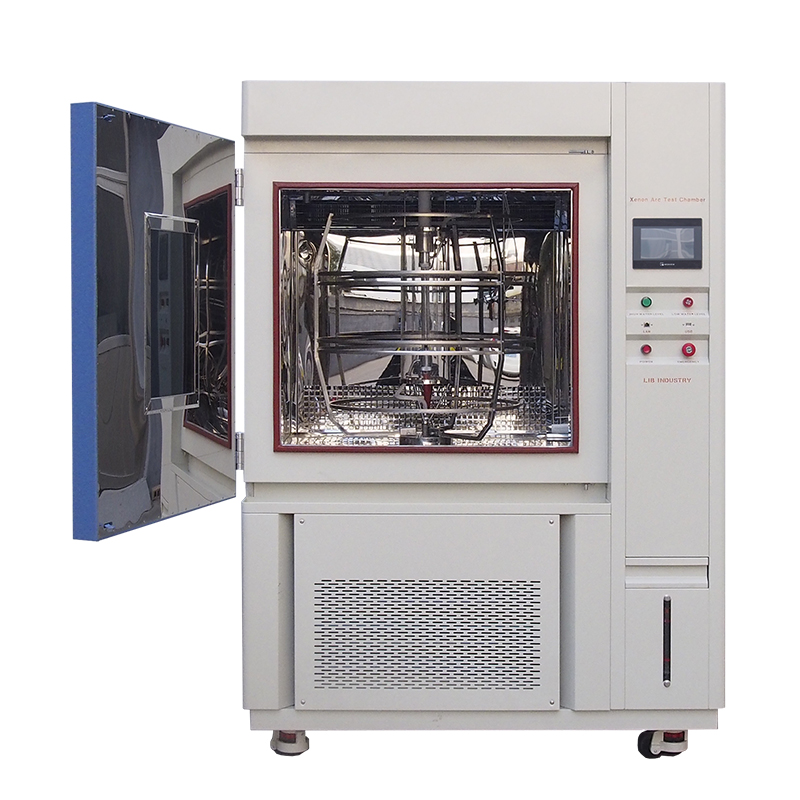
For this reason, LIB Industry xenon test chambers are designed to combine solar-spectrum exposure with controlled temperature and humidity conditions. This gives laboratories a repeatable environment for evaluating coating durability, plastic aging, and exterior material performance.
Similarly, a plastic aging test must account for the combined effects of light, heat, and moisture. Plastics can experience oxidation, surface deterioration, fading, and internal structural changes when exposed to fluctuating environmental conditions.
Because accelerated weathering tests may run continuously for hundreds or thousands of hours, stable control and monitoring are essential. LIB Industry systems support automated environmental control and Ethernet-based monitoring, helping laboratories track test parameters during long-duration weathering programs.
A xenon test chamber must maintain consistent control over irradiance, temperature, and moisture to reproduce environmental exposure accurately.
The Xenon Accelerated Weathering Test Chamber from LIB Industry uses a 4500 W water-cooled xenon arc lamp as its primary light source.
Water cooling helps dissipate the thermal energy generated by the lamp and supports stable operation during long exposure cycles. The xenon lamp reproduces the 280–800 nm spectral range, covering ultraviolet, visible, and infrared wavelengths relevant to accelerated material weathering.
The lamp is designed for an operational lifespan of up to 1600 hours before replacement or maintenance may be required.
Beyond irradiance, temperature control strongly influences the rate of material degradation. Dark materials absorb considerably more radiation than light-colored surfaces, which means chamber air temperature alone does not accurately represent specimen surface conditions. For this reason, xenon chambers use black panel temperature sensors to monitor the thermal conditions experienced by dark exposed surfaces.
Key specifications include:
Light Source: 4500 W water-cooled xenon arc lamp.
Spectral Range: 280–800 nm.
Lamp Lifespan: Up to 1600 hours.
Black Panel Temperature: 35–85 °C.
Temperature Accuracy: ±2 °C.
Humidity Range: 50%–98% RH.
Specimen Capacity: Up to 42 standard samples.
Standard Sample Thickness: Up to 3 cm.
Customized Sample Thickness: Up to 11 cm.
Humidity control is equally important because moisture significantly accelerates coating and polymer degradation. High-humidity conditions can reproduce dew, condensation, and prolonged moisture exposure that contribute to blistering, swelling, surface deterioration, and coating adhesion failure.
By integrating light, heat, and moisture control in one chamber, LIB Industry xenon weatherometers can support repeatable testing conditions across a wide range of materials.
The technical configuration of a xenon weathering chamber must correspond to the requirements defined by relevant international standards. For paint, plastic, coating, and automotive material testing, these standards specify parameters such as irradiance, black panel temperature, relative humidity, water spray duration, and exposure cycles. LIB Industry xenon chambers are engineered around the operational requirements of several widely used weathering standards.
ASTM G155 defines practices for operating xenon arc light apparatus for exposure testing of non-metallic materials. It is one of the most widely referenced xenon weathering standards and provides the foundation for many material-specific test methods.
ASTM D6695 focuses on xenon arc exposure testing for paints and related coatings. It is particularly relevant to manufacturers evaluating coating durability, fading, gloss retention, chalking, and other weathering-related performance changes.
ASTM D7869 addresses xenon arc exposure testing with enhanced light and water exposure for transportation coatings. This makes it especially relevant to automotive manufacturers, coating suppliers, and laboratories conducting accelerated exterior durability evaluations.
ISO 11341 specifies artificial weathering and exposure to filtered xenon arc radiation for paints and varnishes.
ISO 16474 covers laboratory light-source exposure methods for paints and varnishes and includes requirements relating to artificial weathering equipment. When selecting a chamber, buyers should verify that the required irradiance, temperature, humidity, water spray, and specimen configuration can reproduce the specific cycle required by the chosen standard.
Important limitation regarding standard compliance:
LIB Industry Xenon Test Chamber is engineered to operate within parameters associated with ASTM G155, ASTM D6695, ASTM D7869, ISO 11341, and ISO 16474. However, compliance should be evaluated against the exact test method and customer application. Independent third-party certification audits are not included in the standard technical documentation.
Environmental control alone does not guarantee a valid weathering test. Specimen geometry and mounting also affect exposure consistency.
Standard coating panels and plastic plaques are relatively easy to mount. Automotive exterior parts, however, may include thick or irregular components such as mirror housings, grille inserts, decorative trim, and bumper-related components.
To improve exposure uniformity, LIB Industry xenon test chambers use rotating specimen racks positioned around the central xenon lamp.
As the rack rotates, samples receive more consistent irradiation and environmental exposure, reducing differences caused by fixed positioning inside the chamber.
The standard rotating rack accommodates up to 42 specimens and supports samples up to approximately 3 cm thick. This configuration is suitable for many common paint panels, coating coupons, plastic plaques, and flat test samples.
For thicker automotive exterior trim or three-dimensional parts, LIB Industry can provide customized rack configurations capable of accommodating samples up to approximately 11 cm thick.
This customization allows laboratories to test larger components closer to their actual manufactured form rather than reducing every evaluation to thin laboratory coupons.
Selecting weathering equipment involves more than comparing chamber dimensions or lamp wattage. Laboratories must consider control stability, specimen capacity, test-standard compatibility, customization requirements, and long-duration operating conditions.
LIB Industry provides environmental simulation equipment for multiple industrial testing scenarios, including accelerated weathering applications for coatings, plastics, automotive components, and related materials.
Key advantages include:
Xenon arc systems designed for full-spectrum 280–800 nm exposure.
4500 W water-cooled xenon lamp configuration.
Black panel temperature control from 35 to 85 °C.
Relative humidity control from 50% to 98% RH.
Rotating sample rack supporting up to 42 specimens.
Customized racks for thicker or irregular samples.
Equipment configurations aligned with commonly used ASTM and ISO weathering procedures.
CE and RoHS-compliant standard and customized chamber configurations.
For laboratories with specialized specimen dimensions or non-standard test scenarios, LIB Industry can also evaluate chamber configuration requirements before equipment selection.
| LIB Popular Xenon arc and Weathering Test Chamber for Aging tests | ||
Full-Spectrum Sunlight Simulation, |
Fast UV Degradation Testing, |
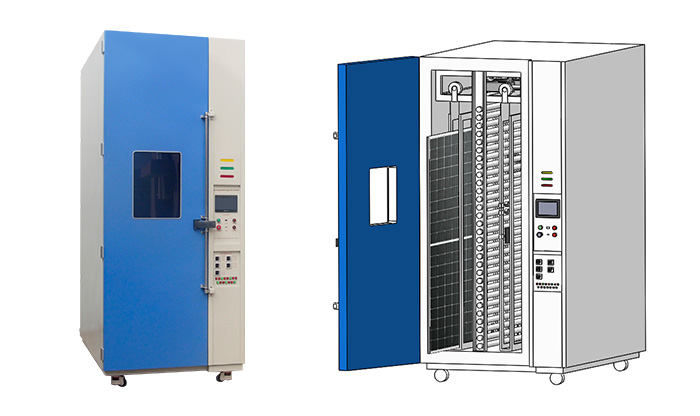
UV Preconditioning Chamber For PV Solar Panel IEC-Compliant PV Preconditioning, |
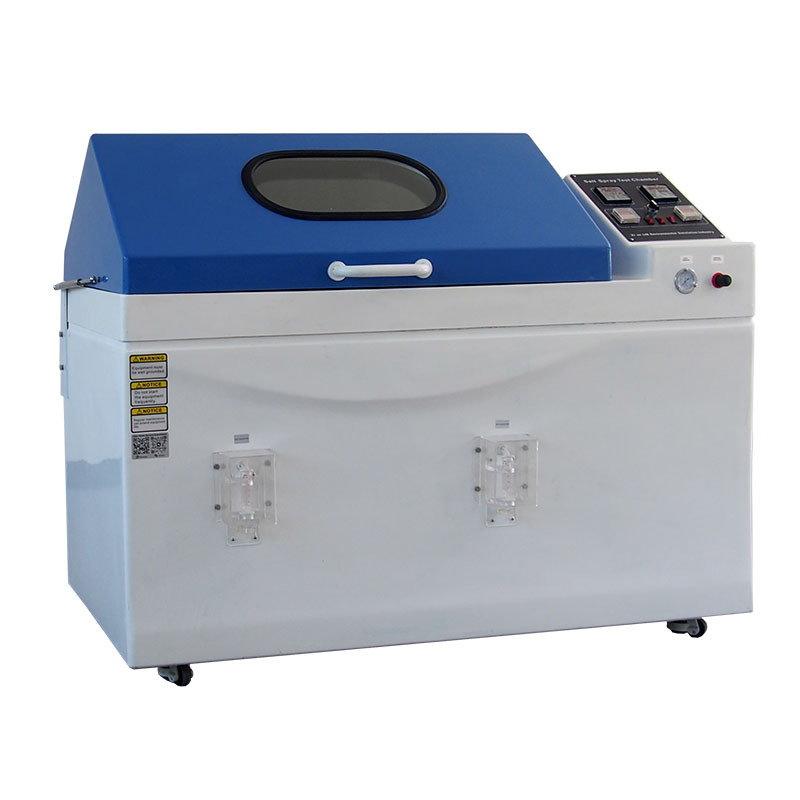
ASTM B117 Fog Corrosion Salt Spray Test Cabinet ASTM B117 Compliance Testing, Trusted Corrosion Resistance Evaluation |
Cyclic Salt Spray Corrosion Chamber (CCT Chamber) Real-World Corrosion Cycling, |
Temperature and Humidity Test Chamber Precision Environmental Control, Reliable Testing Performance |
Xenon arc weathering tests use different standards depending on the material and application. Common protocols include ASTM G155, ASTM D6695, ASTM D7869, ISO 11341, and ISO 16474. LIB Industry xenon chambers are engineered to reproduce the environmental parameters required for these types of accelerated weathering procedures. Users should always confirm the exact cycle and parameter requirements of the selected standard before testing.
Lamp life depends on wattage, cooling method, operating irradiance, and maintenance conditions. The 4500 W water-cooled xenon arc lamp used in the LIB Industry xenon weathering chamber has an operational lifespan of up to approximately 1600 hours.
Yes. Standard rotating racks support up to 42 specimens and samples up to approximately 3 cm thick.
For automotive exterior trim and other bulky components, LIB Industry offers customized specimen racks that can accommodate samples up to approximately 11 cm thick.
The LIB Industry xenon weatherometer provides black panel temperature control from 35 to 85 °C with an accuracy of ±2 °C. Relative humidity can be controlled between 50% and 98% RH, allowing laboratories to reproduce different combinations of heat, moisture, condensation, and accelerated weathering exposure.
Typical applications include paints, coatings, plastics, polymer materials, automotive exterior trim, and other products exposed to outdoor sunlight and environmental aging. Manufacturers can explore additional application scenarios through the LIB Industry section.
Selecting the correct accelerated weathering equipment requires matching the test chamber to the material, specimen dimensions, target standard, exposure cycle, temperature range, humidity requirements, and irradiance conditions.
Whether your laboratory is conducting a paint weathering test, plastic aging test, coating durability evaluation, or automotive exterior trim test, the chamber must maintain repeatable environmental conditions throughout the entire test duration.
LIB Industry supplies both standard and customized xenon weathering chamber configurations designed for these applications. The equipment is CE and RoHS compliant and can be configured according to different specimen sizes and testing requirements.
You can review the full range of LIB Industry Products to compare available environmental simulation equipment.
If you are unsure which xenon test chamber configuration matches your ASTM or ISO test method, specimen size, or material application, contact LIB Industry for a technical consultation.
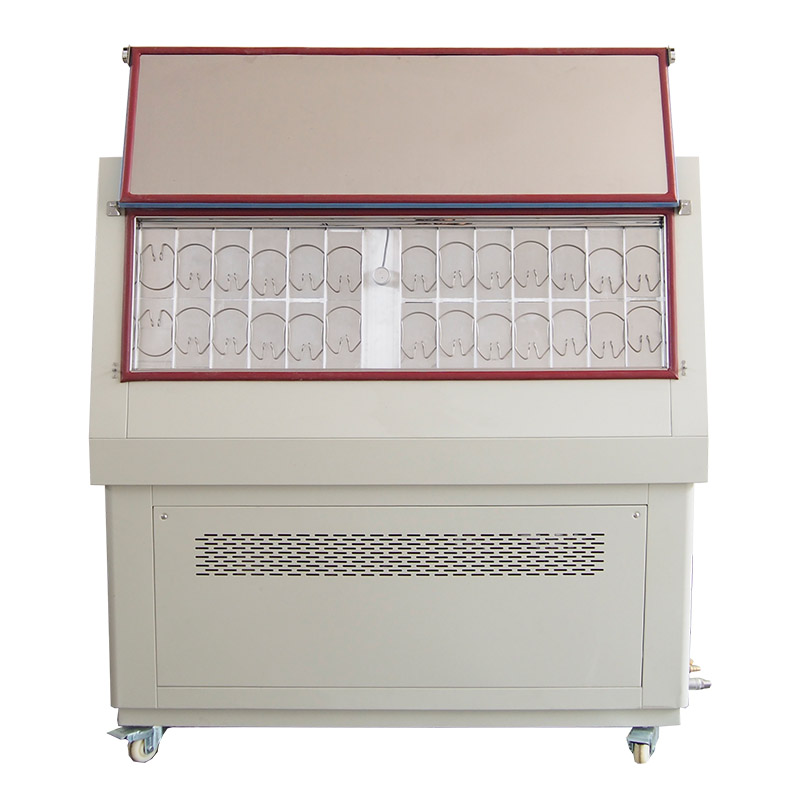
LIB Industry provides accelerated weathering solutions for different applications, including a Xenon Test Chamber for full-spectrum sunlight simulation, a Fluorescent UV Test Chamber for accelerated UV degradation testing, and a UV Preconditioning Chamber for PV Solar Panel for photovoltaic module preconditioning.
Our team can review your testing conditions, specimen dimensions, temperature and humidity requirements, and target standards to help you identify a suitable xenon weathering solution for your laboratory or production quality-control program.
LIB Industry Technical Team (info@lib-industry.com) — Technical information, testing methods, product specifications, and application guidance for xenon arc testing, accelerated weathering, UV degradation, and material durability evaluation.