A luminaire may pass every test in the laboratory and still fail within a few years of installation. Real-world sites are far harsher than a controlled lab: extreme temperatures, humidity, coastal salt fog, rain, dust, sunlight, UV radiation and corrosive gases all attack a fixture at the same time. Over the years they cause lens yellowing, housing corrosion, seal failures, LED driver faults and cracked glass.
Environmental testing lets manufacturers find these weaknesses before the product leaves the factory. This article explains which environmental tests matter most for lighting, which international standards they follow, and how to choose the right test chamber for each one.
Street lights, floodlights, tunnel lights and marine fixtures live outdoors for a decade or more. They go through hot summers, freezing winters, damp nights, sudden rainstorms and years of sun. Hidden weaknesses in solder joints, LED drivers, seals and lenses often appear only after repeated heat–cold–humidity cycling.
Testing under controlled, accelerated conditions helps lighting manufacturers, testing laboratories and outdoor lighting suppliers to:
① identify potential failure risks early;
② improve the durability of housings, lenses and seals;
③ enhance the reliability of drivers and light sources;
④ verify compliance with international standards;
⑤ shorten product development and validation cycles.
Lighting products are typically evaluated against the following standards:
Standard | Scope |
|---|---|
IEC 60529 | Degrees of protection (IP code) provided by luminaire enclosures |
IEC 60598 | General safety requirements and tests for luminaires; IP rating is tested per IEC 60529 |
IEC 60068-2 series | Basic environmental test methods referenced by luminaire product specifications |
ASTM B117 / ISO 9227 | Salt spray (fog) corrosion of housings, brackets, fasteners and coatings |
ISO 4892-2 / ASTM G155 | Xenon-arc weathering of plastics, lenses and coatings |
ISO 4892-3 / ASTM G154 | Fluorescent UV exposure of plastics and non-metallic materials |
ISO 16750-4 | Climatic loads on road-vehicle electrical and electronic equipment (vehicle-mounted lighting) |
UL 1598 | Safety of luminaires for the North American market |
UL 8750 | Safety of LED equipment (light sources, drivers, modules) for lighting products |
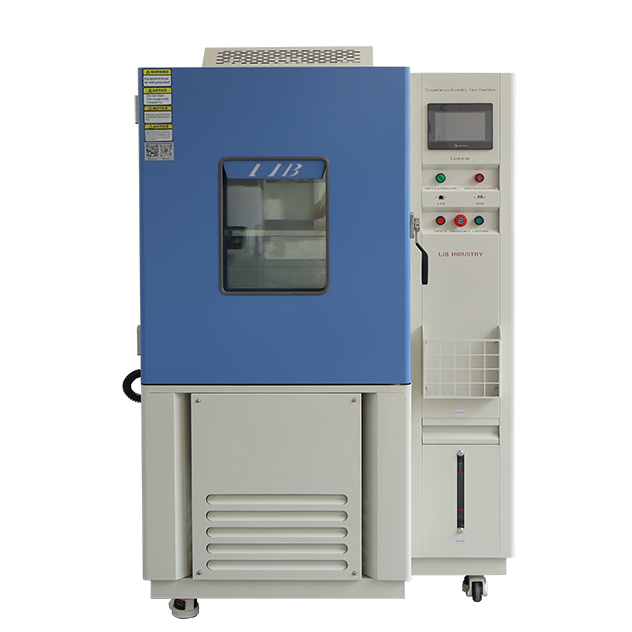
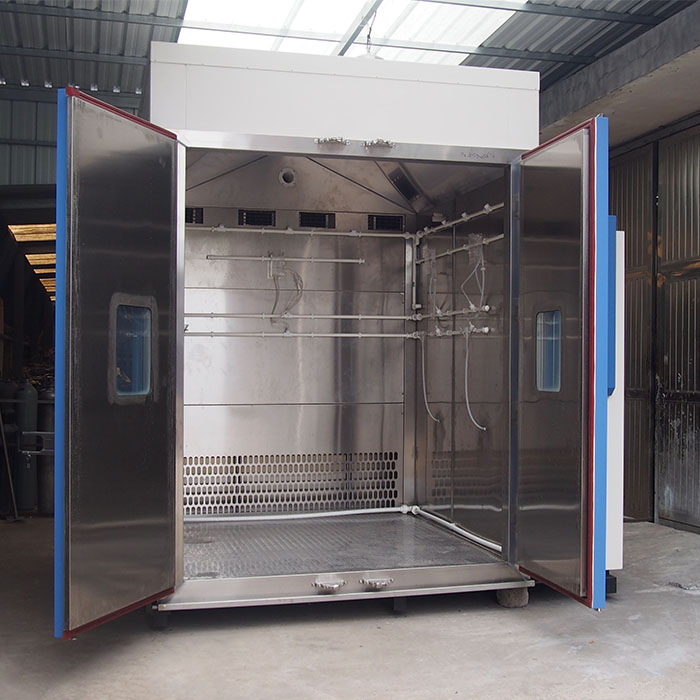
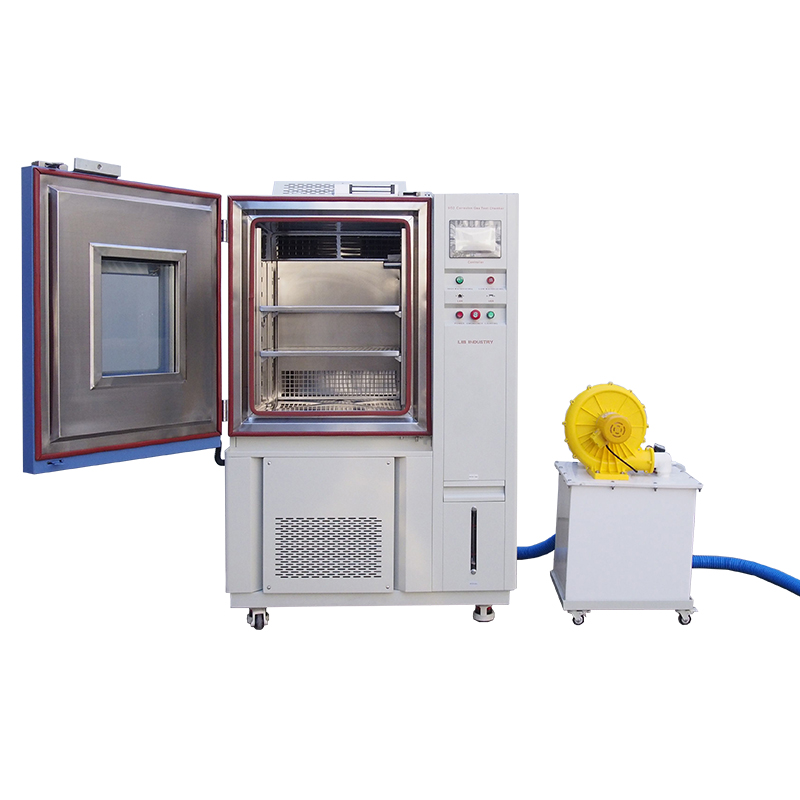
Cold, dry heat, steady-state and cyclic damp heat, temperature step, temperature cycling and condensation tests show how luminaires, LED modules and drivers hold up under sustained heat, cold and moisture. They follow IEC 60068-2, ISO 16750-4 and UL 8750.
LIB Industry's Temperature and Humidity Test Chambers cover -70°C to +150°C and 20% to 98% RH, with temperature fluctuation held within ±0.5°C and humidity uniformity within ±3% RH. Walk-in chambers are available for large fixtures such as street lights, while LED bulbs and small luminaires can be tested in 50 L or 80 L benchtop chambers.
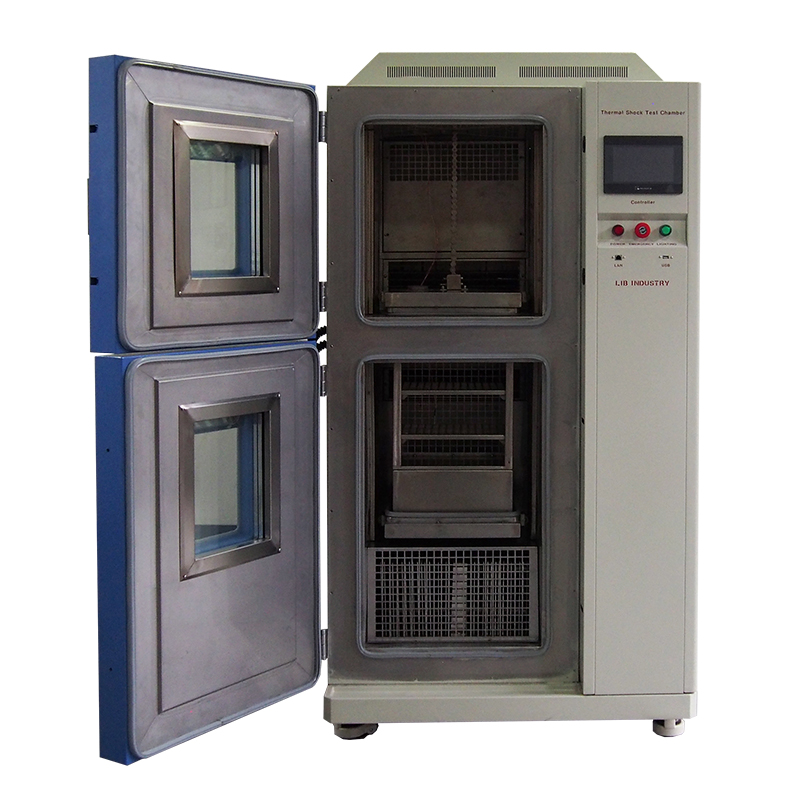
Outdoor lights can go from a hot afternoon to a cold rain in minutes. Such rapid swings of the Thermal Shock Test Chamber can crack lenses and glass covers, break solder joints and damage seals. Thermal shock chambers move the sample quickly between hot and cold zones, in as little as 3 seconds, across a range of -65°C to +200°C, with temperature recovery within 5 minutes. The tests cover temperature change, rapid temperature change, and the thermal shock tests for tempered and curved borosilicate glass defined in UL 1598.
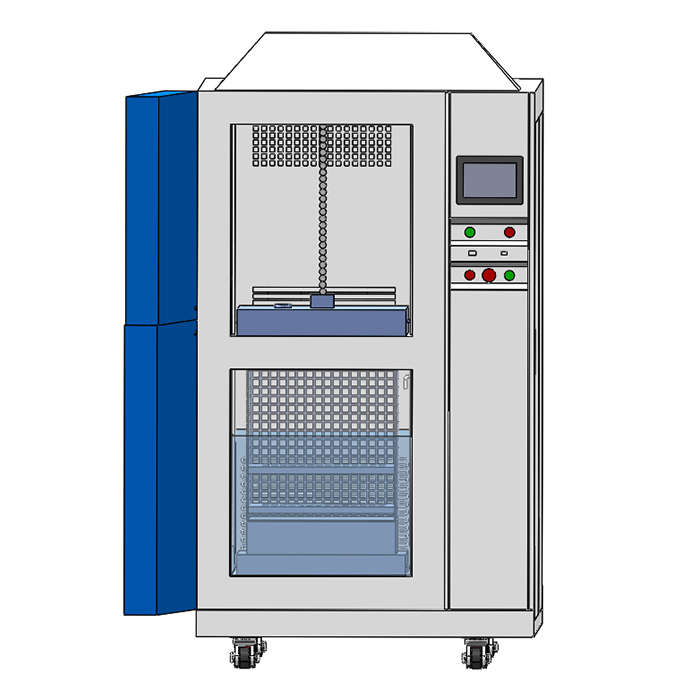
A hot street light hit by a rainstorm, or a vehicle headlamp driving through a cold puddle, faces a sudden hot-to-cold plunge. Per ISO 16750-4, the operating luminaire is heated, then automatically lowered into a temperature-controlled water bath within seconds. A PID controllerof the Cold Water Shock Test Chamber keeps the water temperature precise, and an SUS304 stainless-steel tank with physically separated water and electrical systems keeps operation safe under continuous wet–dry cycling.
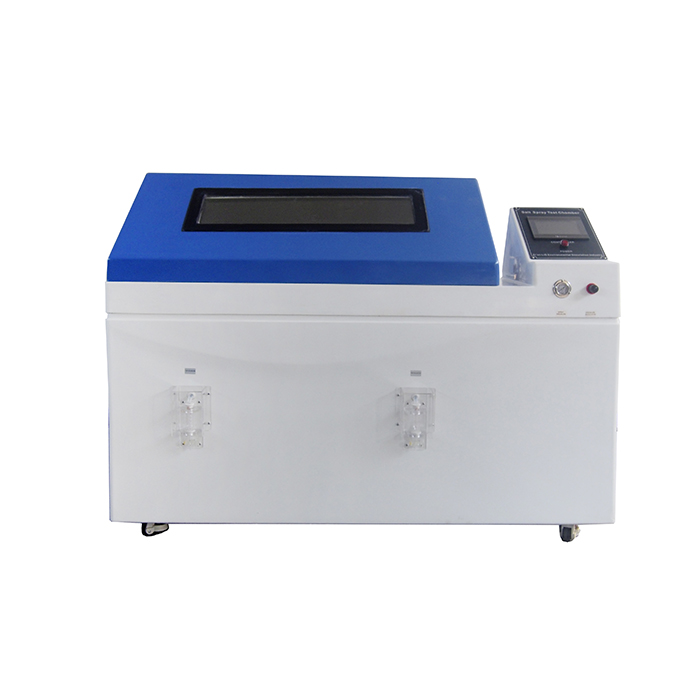
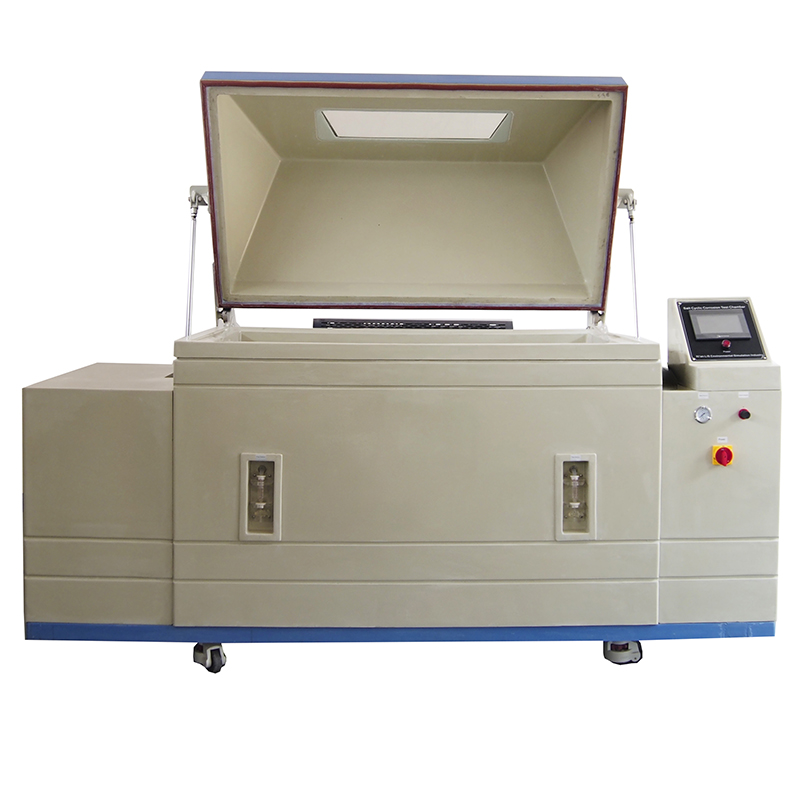
Salt spray testing (NSS, AASS and CASS) of the Salt spray test Chamber checks how housings, brackets, screws and coatings resist rust in seaside air, sea breeze and de-icing salt. A typical neutral salt spray runs at 35°C with 5% NaCl solution and a deposition rate of 1–2 ml/80 cm²/h.
Because outdoor lights never face constant salt fog, Cyclic Salt Mist Test Chamber repeats salt spray, drying, humidity soak and ambient phases. This matches real-world rust on housings and fasteners much better than a single continuous test, following IEC 60068-2 Test.
From light drizzle on a garden light to powerful jets on a street light or a washdown, lighting faces many levels of water exposure:
IPX1–IPX2: vertical and 15° tilted dripping water;
IPX3–IPX4: oscillating spray and splashing water;
IPX5–IPX6: water jets from 6.3 mm and 12.5 mm nozzles, at 12.5 L/min and 100 L/min (±5%);
IPX7–IPX8: temporary and continuous immersion (1 m for 30 minutes for IPX7; depth and duration for IPX8 are customised);
IPX9 / IPX9K: 80°C, high-pressure water at 8000–10000 kPa and 14–16 L/min from four angles, for food plants, car washes and farms.
A combined IPX1–IPX6 chamber with a rotating turntable lets engineers cover everything from gentle dripping to powerful jets without changing equipment.
Roads, deserts, factories and construction sites fill the air with fine dust. Dust chambers circulate standardised talcum powder through a 75 µm sieve. A vacuum extraction system enables both IP5X limited-ingress testing and IP6X dust-tight testing according to IEC 60529. Road-vehicle lighting may also be tested to IP5KX and IP6KX under ISO 20653.
 |  |  |  |
Automotive Lighting Environmental Test |  | 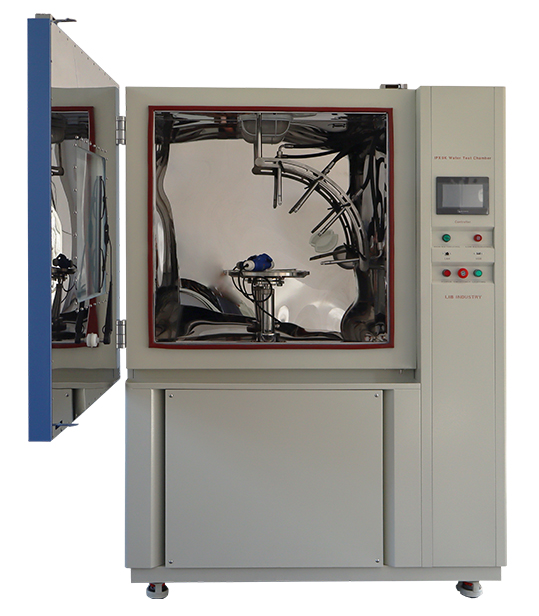 |  |
IEC 60529 IPX1/2/3/4/5/6 Combined Waterproof Test Chamber | IPX7 IPX8 Water Immersion Tank | IPX9K high pressure and high temperature water spray test chamber | IP6X IP5X Ingress Test Chamber Dust Test Machine |
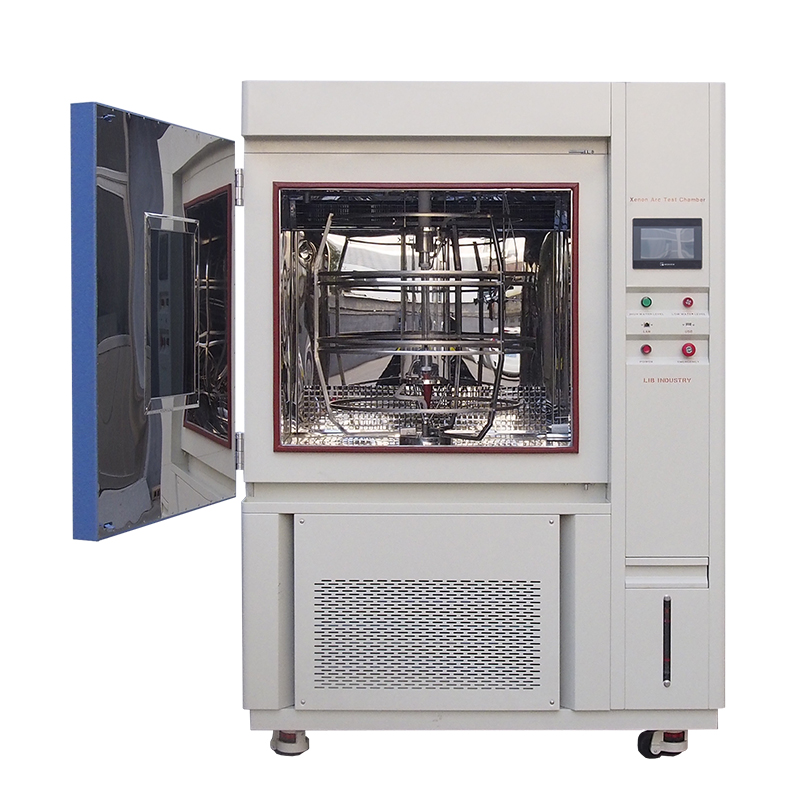
Long-term sunlight turns lenses yellow, fades housing colours, cracks plastics and damages coatings. Xenon-arc chambers combine full-spectrum light, heat and moisture to simulate years of outdoor exposure in a much shorter time. Daylight, window-glass and UV filters represent different real-world conditions, from indoor lighting behind glass to fully exposed outdoor fixtures. Relevant standards include IEC 60068, ISO 4892-2, ASTM G155 and UL 1598.
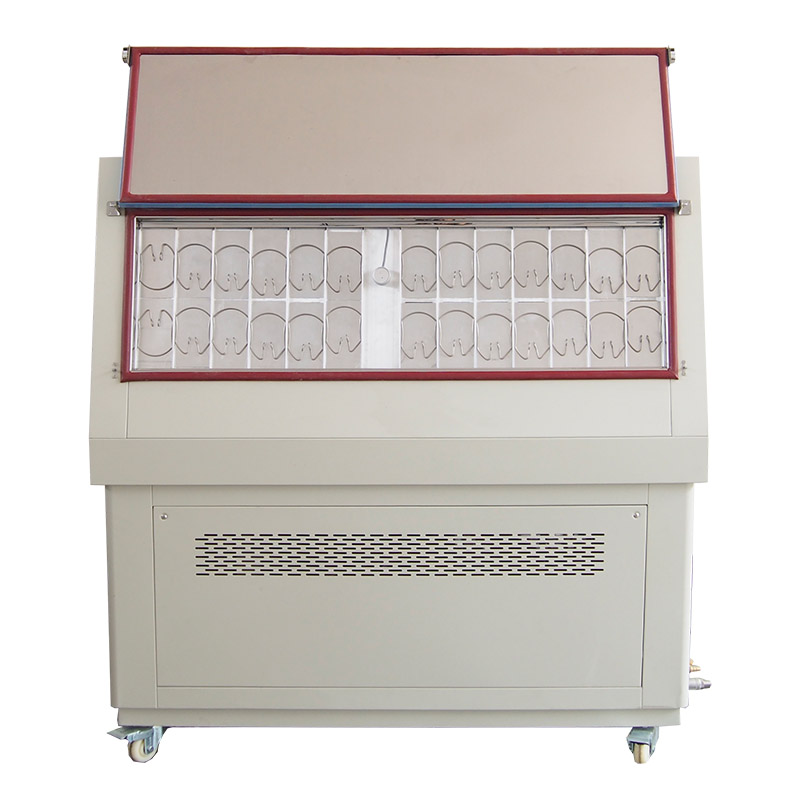
UV light makes plastic lenses yellow, fades and cracks housings and ages rubber seals. UV chambers use UVA-340 and UVB-313 lamps to cover the key 290–400 nm range, switching between UV, condensation and water-spray cycles according to ISO 4892-3 and ASTM G154. UL 8750 also requires polymeric enclosures for outdoor use to comply with UV light exposure requirements.
Polluted air rarely contains just one gas. Industrial and city air contain SO₂, H₂S, NO₂ and Cl₂ at the same time, which can slowly corrode contacts, plated parts and circuit boards near factories, highways or the coast. Single-gas tests (SO₂ or H₂S, per IEC 60068-2-42) check resistance to one corrosive gas. Mixed flowing gas tests (IEC 60068-2-60) control temperature, humidity and four gases simultaneously to reproduce complex atmospheric corrosion that a single-gas test cannot fully capture.
LIB Industry's test chambers support lighting manufacturers and laboratories around the world. The three projects below show how a customer's specimen size and test requirements translate into a complete test solution.

Requirement. In November 2021, Swedish lighting company Flux AB contacted LIB while setting up its own test laboratory. The customer first asked for a quotation on dust and water testing chambers: "Can you please make a quote on IP56X dust chamber and also IPX1-4 water chamber for a general specimen size 900mm × 900mm × 200mm." Later, the customer clarified its maximum specimen size: "We use maximum specimen size 600L*600W*300H." These dimensions helped LIB select suitable chambers.
LIB Industry's solution.
① DI-1000 Dust Test Chamber: IP5X/IP6X dust testing to IEC 60529 (1000 L chamber volume, 75 µm dust particle size, 1.5 m/s air velocity).
② RD-1200C Rain Test Chamber: IPX5/IPX6 water jet testing to IEC 60529 (water flow rates of 12.5 L/min ±5% and 100 L/min ±5%).
③ TH-500 Temperature and Humidity Chamber: 500 L chamber volume, temperature range of -20°C to +150°C, humidity range of 20%–98% RH.
LIB handled the whole project: inquiry, test solution, design confirmation, production, inspection report, packing and shipping, on-site installation and training.
Result. The equipment is easy to operate, and Flux AB has been satisfied with its performance.

Requirement. In April 2020, Signify (formerly Philips Lighting), a global lighting company, contacted LIB about dust testing equipment. The original inquiry read: "looking for an IP5X and IP6X machine for LED luminaire." In 2023, Signify expanded its reliability testing capabilities and needed equipment for rapid temperature changes, humidity testing, dust ingress testing and salt spray corrosion testing, to evaluate product durability under different environmental conditions.
LIB Industry's solution.
① THR5-1000B Rapid Temperature Change Humidity Test Chamber (2023): 1000 L volume, temperature change rates of 5/10/15/20°C/min, temperature range of -40°C to +150°C, for rapid temperature cycling and humidity reliability testing.
② DI-1000 Sand and Dust Test Chamber (2 units, 2024): IP5X/IP6X dust ingress testing of LED lighting products (1000 L volume, 75 µm particle size, 1.5 m/s air velocity).
③ S-016 Salt Spray Test Chamber (2024): 1030 L volume, ambient to +60°C, salt fog deposition of 1–2 ml/80 cm²·h, continuous and periodic spray modes, to evaluate the corrosion resistance of housings, metal components and surface coatings.
Result. With rapid temperature change, dust and salt spray equipment added, Signify expanded its laboratory capabilities. The equipment supports temperature cycling, humidity, dust ingress and corrosion resistance testing, helping assess LED product durability under different environmental conditions.

Requirement. On September 23, 2022, Magna engineers emailed LIB to inquire about an IP test chamber for automotive parts waterproof testing. They specified: "The general size of the automotive headlight is 6cm × 6cm × 6cm, and the weight is less than 10 pounds." After further discussion, Magna purchased the RD-1200C on October 31, 2022.
LIB Industry's solution.
① RD-1200C Rain Test Chamber: IPX5/IPX6 water jet testing to IEC 60529 (water flow rates of 12.5 L/min ±5% and 100 L/min ±5%), backed by a 3-year warranty and lifetime technical support.
Result. The RD-1200C gave Magna a waterproof testing solution matched to its specimen size and weight. Beyond single chambers, LIB also provides complete environmental testing solutions for automotive lighting and components, covering temperature and humidity, dust, water ingress, salt spray and UV aging tests, as well as full IP testing laboratory planning and setup.
A good test programme starts with the right equipment and ends with reliable support. When selecting a chamber supplier, consider:
Standards coverage: does the chamber meet IEC, ISO, ASTM and UL requirements?
Customisation: can chamber size, sample shelves, cable holes and fixtures be adapted to your luminaires?
Quality control: is each chamber tested and commissioned before shipment?
Certification: CE, RoHS and CSA certification for your target markets.
After-sales service: installation, operator training, warranty and technical support.
Since 2012, LIB has specialised in designing and manufacturing environmental test chambers for street lights, floodlights, LED lighting, light sources and drivers, lenses and glass covers, and outdoor lighting fixtures. LIB equipment serves lighting manufacturers, certification bodies and testing laboratories in more than 60 countries.
LIB provides one-stop solutions, including chamber design, customisation, installation, commissioning, operator training and global after-sales support. Every chamber comes with a 3-year warranty, lifetime technical service and 24/7 English support.
Tell us your luminaire type, specimen size and target standards, and our engineers will recommend a suitable test solution.