


Imagine your product being exposed to damp tropical air, long-term high humidity storage, or sudden moisture changes during transportation—conditions that quietly challenge its reliability and lifespan. Humidity test chambers make these real-world environments measurable and controllable, allowing manufacturers to uncover hidden risks, validate durability, and ensure consistent performance under moisture stress.
This reliability is reflected in real customer experience. A laboratory in Canada using the TH-1000C humidity chamber shared their feedback: “Hi Karen, we have been using the chamber since last week. It is overall good so far. I will keep you updated.” Such early-stage confidence highlights the stability and performance users expect from a professional humidity testing solution. Let's explore an overview of the Humidity Test Chamber together.

Unlocking the Mysteries of Humidity Test Chambers
Humidity test chambers are specialized environments designed to replicate various climatic conditions, enabling manufacturers and researchers to evaluate how their products perform under different levels of humidity and temperature. These chambers are essential tools in quality control, ensuring that products can withstand the rigors of real-world use.
Benefits of Using a Humidity Test Chamber
Humidity test chambers offer a multitude of benefits for manufacturers and researchers across various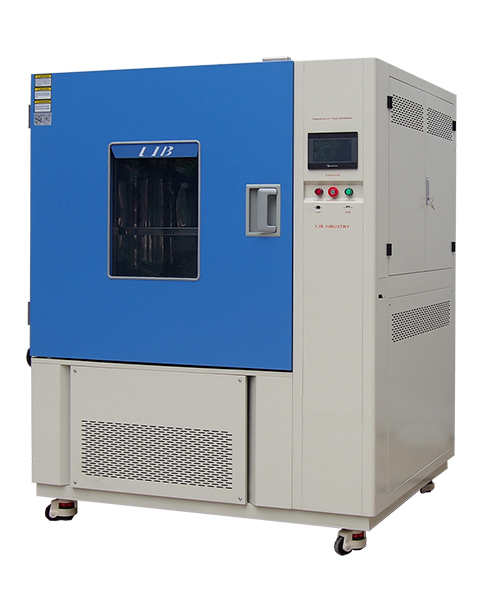 industries. Here's a breakdown of some key advantages:
Accurate Simulation of Environmental Conditions: These chambers can recreate a wide range of humidity levels, from very dry to extremely humidity. This allows manufacturers to test their products in conditions that mimic real-world use, such as tropical climates or cold storage facilities. By identifying potential weaknesses in these simulated environments, they can improve product design and performance.
Ensures Product Reliability and Quality: By subjecting products to various humidity levels, manufacturers can identify potential issues like:
● Corrosion of electronic components
● Warping or cracking of materials
● Mold or mildew growth
● Changes in product functionality
Exploring the Varieties: Types of Humidity Test Chambers
In the world of humidity testing, there's a chamber for every need! Here's a deeper dive into the different types of chambers available:

1. Constant Climate Chambers:
Function: These chambers maintain a consistent temperature and humidity level throughout the test.
Ideal For: Testing product performance under stable environmental conditions. This is useful for products like electronics, pharmaceuticals, and food items that need to function reliably in specific environments.
Benefits:
Precise control over temperature and humidity.
Repeatable testing conditions.
Good for long-term stability studies.
2.Thermal Cycling Test Chambers:
● Function: These chambers simulate extreme fluctuations in temperature. The chamber rapidly cycles between high and low settings, mimicking the harsh environmental changes a product might encounter during transportation or storage.
● Ideal For: Testing the durability of products intended for use in diverse climates. This is important for products like building materials, outdoor gear, and military equipment.
● Benefits:
◎ Identifies weaknesses caused by rapid environmental changes.
◎ Accelerates aging process for long-term product evaluation.
◎ Provides valuable insights into material stress tolerance.
3.Walk-in Chambers:
● Function: These are large chambers that can accommodate entire products or even people for environmental testing.
● Ideal For: Testing large-scale products like vehicles, furniture, or industrial equipment. They can also be used for environmental simulations for research or training purposes.
● Benefits:
◎ Accommodates oversized products for comprehensive testing.
◎ Allows for testing in real-world use scenarios (e.g., walking into a walk-in chamber set to a specific climate).
◎ Can be customized with features like lighting or vibration for complex testing needs.

By understanding these different types of humidity test chambers, manufacturers can choose the one that best suits their specific testing requirements and product needs.
Applications of Humidity Test Chamber
Humidity chambers are versatile tools used across various industries to simulate real-world environmental conditions and assess product performance. Here's a breakdown of some key application areas:
From circuit boards to entire systems, electronic devices must be tested for resistance to moisture and temperature fluctuations to ensure they function reliably in various environments.
Electronics & Electrical:
● Testing circuit board performanceunder high humidity conditions to prevent corrosion and ensure functionality.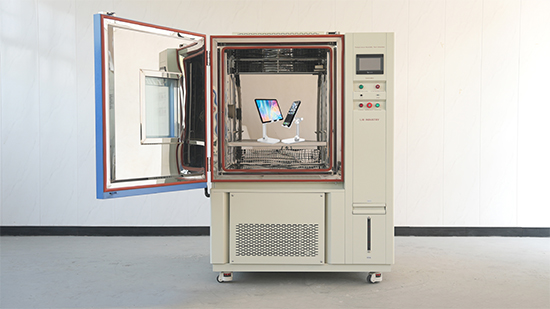
● Evaluating the lifespanof electronic components by simulating long-term exposure to varying humidity levels.
● Identifying potential for condensationand its impact on delicate electronic components.
Automotive Marvels:
● Ensuring the reliabilityof electrical components by subjecting them to temperature and humidity extremes, mimicking real-world driving conditions.
● Testing the integrity of interior materialslike leather or fabrics to prevent warping, cracking, or mold growth due to humidity.
● Evaluating the performance of car cooling and heating systemsin different humidity levels.
Pharmaceutical Precision:
● Maintaining the stability and potencyof medications by testing their shelf life under various humidity conditions.
● Ensuring the integrity of packaging materialsto prevent degradation or contamination due to moisture.
● Simulating storage and transportation environmentsto guarantee the safety and efficacy of pharmaceuticals.
Aerospace and Defense:
● Testing the functionality of avionics and other sensitive equipmentin high-altitude, low-humidity environments encountered during flight.
● Evaluating the performance of materialsused in aircraft and spacecraft construction to ensure they can withstand extreme temperature and humidity fluctuations.
● Simulating harsh environmental conditionsfor military equipment to guarantee its reliability in diverse deployment scenarios.
These are just a few examples, and humidity chambers find applications in many other industries as well. They are a vital tool for ensuring product quality, reliability, and safety across a wide range of applications.
How to Choose the Right Humidity Test Chamber
Choosing the right humidity test chamber involves understanding your specific testing needs and evaluating several key factors. Here's a breakdown to help you navigate the selection process:
| Name | Humidity Test Chamber | ||||
| Temperature Range | A : -20℃ ~ +150 ℃ | ||||
| B : -40℃ ~ +150 ℃ | |||||
| C: -70℃ ~ +150 ℃ | |||||
| Temperature Fluctuation | ± 0.5 ℃ | ||||
| Temperature Deviation | ± 2.0 ℃ | ||||
| Humidity Range | 20% ~ 98% RH | ||||
| Humidity Deviation | ± 2.5% RH | ||||
| Cooling Rate | 1 ℃ / min | ||||
| Heating Rate | 3 ℃ / min | ||||
| Cooling system | Mechanical compression refrigeration system | ||||
| Refrigerating unit | French TECUMSEH compressor | ||||
| Heating Element | Nichrome heater | ||||
| Controller | Programmable color LCD touch screen controller, Ethernet connection | ||||
| Water supply system | Automatic water supply, Water purification system | ||||
| Humidifier | External isolation, stainless steel surface evaporation humidifier | ||||
| Safety Device | Humidifier dry-combustion protection; over-temperature protection; over-current protection; Refrigerant high-pressure protection; Water shortage protection; Earth leakage protection | ||||
| Exterior Material | Steel Plate with protective coating | ||||
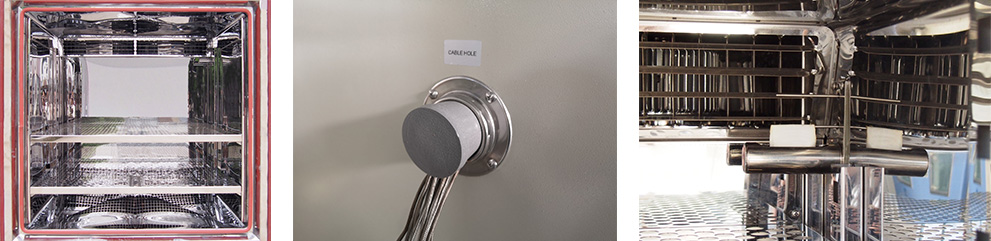
| Interior Material | SUS304 stainless steel | ||||
| Thermal Insulation | Polyurethane foam and insulation cotton | ||||
| Observation Window | Interior lighting, double-layer thermo stability silicone rubber sealing | ||||
| Standard Configuration | 1 Cable hole with plug; 2 shelves | ||||
1. Define Your Testing Requirements:
● Temperature & Humidity Range: What are the minimum and maximum temperature and humidity levels your product will encounter during use or storage? Chambers come with varying ranges, so choose one that encompasses your needs.
● Ramp Rates: How quickly do you need the temperature and humidity to change within the chamber? Rapid cycling chambers are ideal for simulating extreme fluctuations, while constant climate chambers prioritize stable conditions.
● Product Size & Quantity: How big are the products you'll be testing, and how many will you test at a time? Consider chamber dimensions and choose one that comfortably accommodates your needs.
● Testing Standards: Are there any industry-specific testing standards or regulations your product needs to comply with? Ensure the chamber meets those requirements.
2. Consider Additional Features:
● Data Logging & Programming: Do you need to record and analyze test data for future reference? Chambers with data logging and programming capabilities can automate test cycles and provide valuable insights.
● Durability & Construction Materials: The chamber should be built with robust materials to withstand frequent use and potential exposure to harsh conditions.
● Safety Features: Look for safety features like alarms or over-temperature cut-offs to ensure safe operation.
● User Interface & Ease of Use: A user-friendly interface with clear controls and displays will simplify operation and minimize errors.
3. Budget & Brand Reputation:
● Cost: Humidity test chambers can vary significantly in price depending on size, features, and brand. Determine your budget and prioritize features that align with your needs.
● Brand Reputation: Research different manufacturers and consider factors like customer service, warranty options, and brand reputation for quality and reliability.
4. Additional Tips:
● Consult with a Manufacturer: Discussing your specific needs with a qualified humidity chamber manufacturer can help you find the perfect fit for your application.
● Read Reviews & Comparisons: Researching online reviews and product comparisons can provide valuable insights from other users.
By carefully considering these factors, you can make an informed decision and select the right humidity test chamber to ensure accurate, reliable, and efficient product testing.
Common Issues and Troubleshooting Tips
Humidity test chambers are complex pieces of equipment, and like any machinery, they can encounter problems. Here's a breakdown of some common issues you might face, along with some troubleshooting tips:
1. Inaccurate Humidity Levels:
● Problem: The chamber isn't reaching or maintaining the desired humidity level.
● Possible Causes:
◎ Water Supply Issues: Check if the water supply is connected properly and there's sufficient water pressure. Ensure you're using the correct water type (e.g., distilled or deionized) as per the manufacturer's instructions.
◎ Clogged Components: Mineral buildup or debris can block water lines, spray nozzles, or the humidifier. Regular cleaning and maintenance can help prevent this.
◎ Sensor Malfunction: A faulty humidity sensor can provide inaccurate readings. Consult the manual for calibration procedures or consider contacting a service technician.
◎ Air Leaks: Leaks in the chamber door or seals can allow humid or dry air to escape, affecting overall humidity levels. Inspect seals for damage and ensure proper door closure.
2. Temperature Fluctuations:
● Problem: The chamber temperature deviates significantly from the set point.
● Possible Causes:
◎ Faulty Temperature Sensor: Similar to humidity sensors, a malfunctioning temperature sensor can provide inaccurate readings. Refer to the manual for calibration procedures or seek professional help.
◎ Defective Heating or Cooling Element: Issues with heating coils or cooling components can affect temperature control. Consult a qualified technician for diagnosis and repair.
◎ Blocked Airflow: Restricted airflow within the chamber can lead to uneven temperature distribution. Ensure proper air circulation and avoid placing
◎ bjects too close to vents or the evaporator coil.
3. Chamber Not Reaching Set Point Quickly:
● Problem: The chamber takes an excessively long time to reach the desired temperature and humidity levels.
● Possible Causes:
◎ Oversized Chamber for Testing Needs: A chamber that's significantly larger than the products being tested will take longer to reach set points due to the larger volume of air that needs to be conditioned.
◎ Excessive Load in the Chamber: A large number of test items can add thermal mass and slow down temperature and humidity changes. Consider reducing the number of items tested at once or using a larger chamber.
◎ Improper Initial Conditions: If the starting temperature or humidity in the chamber is far from the desired set point, it will take longer to reach the target conditions.
| ||
| Robust Workroom | Cable Hole for sample power | Temperature and Humidity Sensor |
4. General Troubleshooting Tips:
● Consult the Manual: Your chamber's manual is a valuable resource. It will provide specific troubleshooting steps for common issues and maintenance procedures.
● Check for Error Codes: Many chambers display error codes that can pinpoint the source of the problem. Refer to the manual to decipher these codes.
● Perform Regular Maintenance: Regular cleaning, filter replacements, and calibration (as recommended by the manufacturer) can help prevent problems and ensure optimal performance.
● Seek Professional Help: If you've tried troubleshooting the issue yourself and are unsuccessful, contacting a qualified service technician is recommended for proper diagnosis and repair.
By following these tips, you can effectively troubleshoot common humidity test chamber issues and ensure your equipment operates efficiently for reliable product testing.
Looking for a reliable humidity test chamber backed by real laboratory experience? Contact LIB Industry today to discuss your testing requirements and find a solution built for accuracy, stability, and long-term performance.


