


In today's highly competitive market, products must undergo rigorous environmental testing to meet strict industry standards and customer expectations. Before entering the market, manufacturers need to ensure that their products can withstand different temperature and humidity conditions during transportation, storage, and real-world use.
Temperature and humidity chambers provide a reliable solution for this purpose. By simulating a wide range of environmental conditions in a controlled laboratory setting, these chambers allow engineers to evaluate product durability, performance, and shelf life in a much shorter time. Instead of waiting months or years for natural environmental exposure, accelerated testing helps identify potential weaknesses quickly and efficiently.
LIB temperature and humidity chambers are designed to deliver stable, accurate, and repeatable test results. With precise environmental control and advanced programmable systems, they help manufacturers verify product reliability, improve quality, and shorten development cycles.
What are Temperature Humidity Chambers?
Temperature humidity chambers, also known as climatic chambers or environmental test chambers, are advanced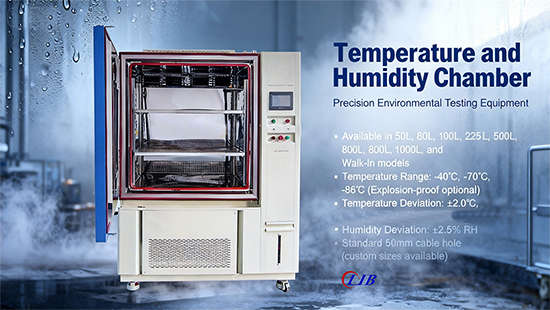 equipment designed to simulate and control specific combinations of temperature and humidity levels. These chambers play a pivotal role in the testing, research, electronics, pharmaceuticals, and different industries, ensuring their performance and durability under various environmental conditions.
Basic Operating Principles of Temperature Humidity Chambers
Temperature humidity chambers are like miniature weather machines. Imagine a sealed compartment equipped with powerful heating and cooling systems. By precisely controlling these elements, the chamber can create a wide range of temperatures, mimicking various environment temperatures. This ability to control both temperature and humidity is what makes these chambers so versatile. Let's delve into some of the key applications:
● Product Testing: Temperature humidity chambers allow manufacturers to simulate everything from the heat of a car dashboard to the dampness of a beach bag. This rigorous testing helps identify potential weaknesses and ensures the product's durability in various real-world environments.
● Material Research: Not just for finished products, temperature humidity chambers are crucial for material research. By exposing new materials to a range of conditions, scientists can assess their performance, identify potential degradation points, and develop hardier and more resilient materials for future applications.
● Stable Control Systems: Certain products, like pharmaceuticals and electronics, are highly sensitive to environmental fluctuations. Temperature humidity chambers play a vital role in stability testing, ensuring these products maintain their potency and functionality under various storage and transportation conditions.
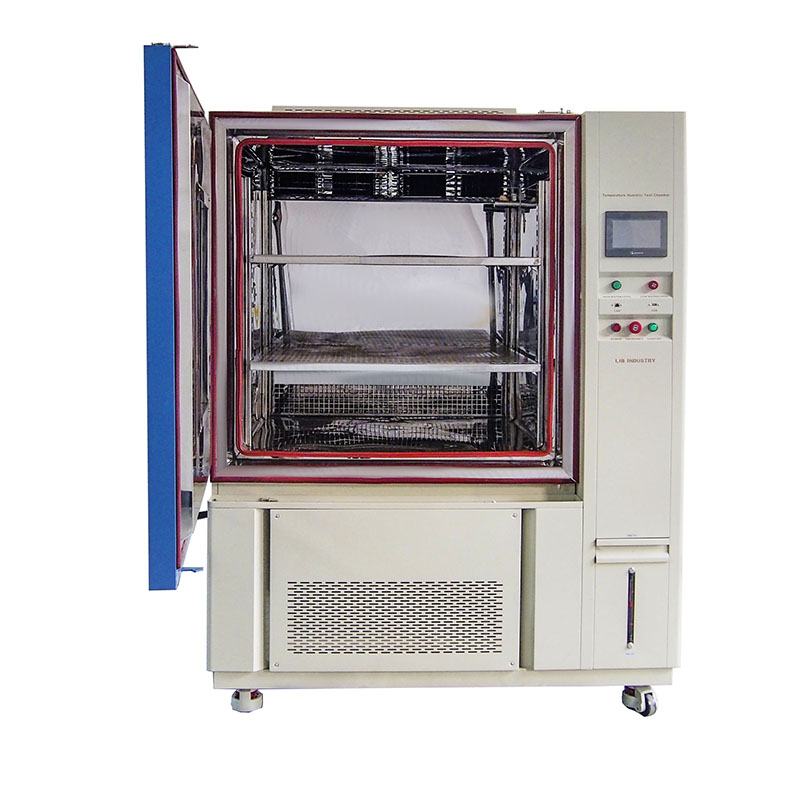 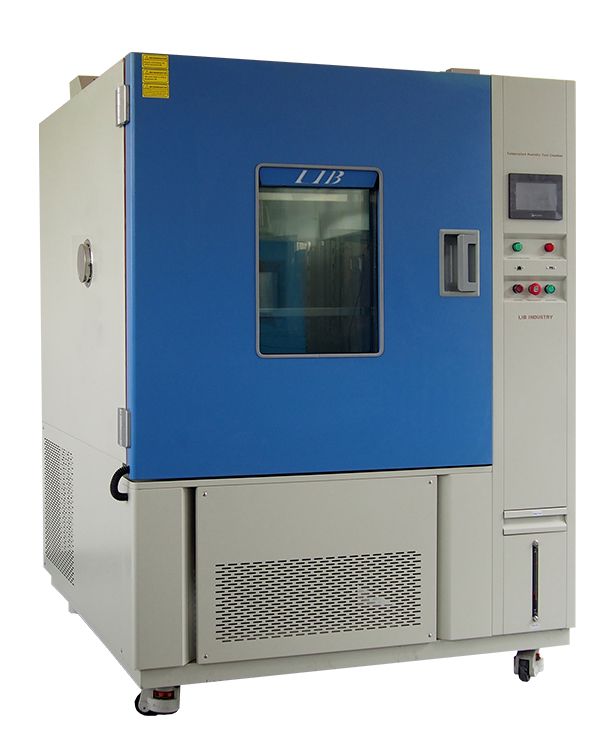 | |||||
Temperature range | -20℃ ~+150 ℃ | ||||
Low type | A: -40℃ B:-70℃ C -86℃ | ||||
Humidity Range | 20%-98%RH | ||||
Temperature deviation | ± 2.0 ℃ | ||||
Heating rate | 3 ℃ / min | ||||
Cooling rate | 1 ℃ / min | ||||
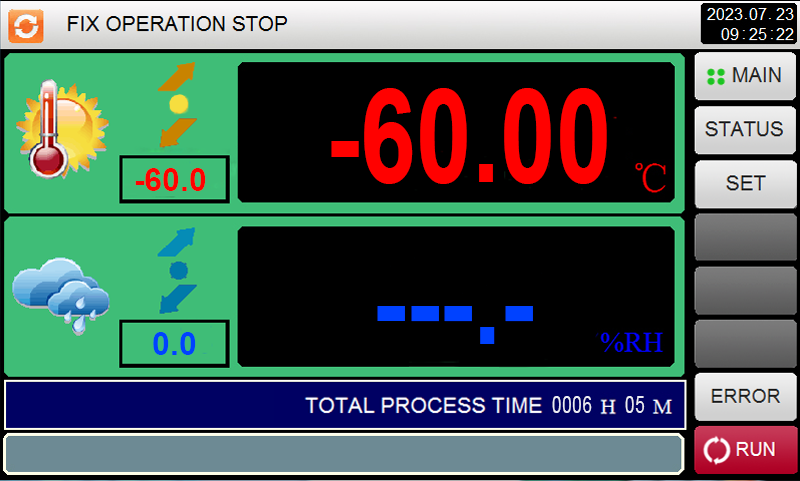
Controller | Programmable color LCD touch screen controller, Multi-language interface, Ethernet , USB | ||||
Refrigerant | R404A, R23 | ||||
Exterior material | Steel Plate with protective coating | ||||
Interior material | SUS304 stainless steel | ||||
Standard configuration | 1 Cable hole (Φ 50) with plug; 2 shelves | ||||
Timing Function | 0.1~999.9 (S,M,H) settable | ||||
|
| 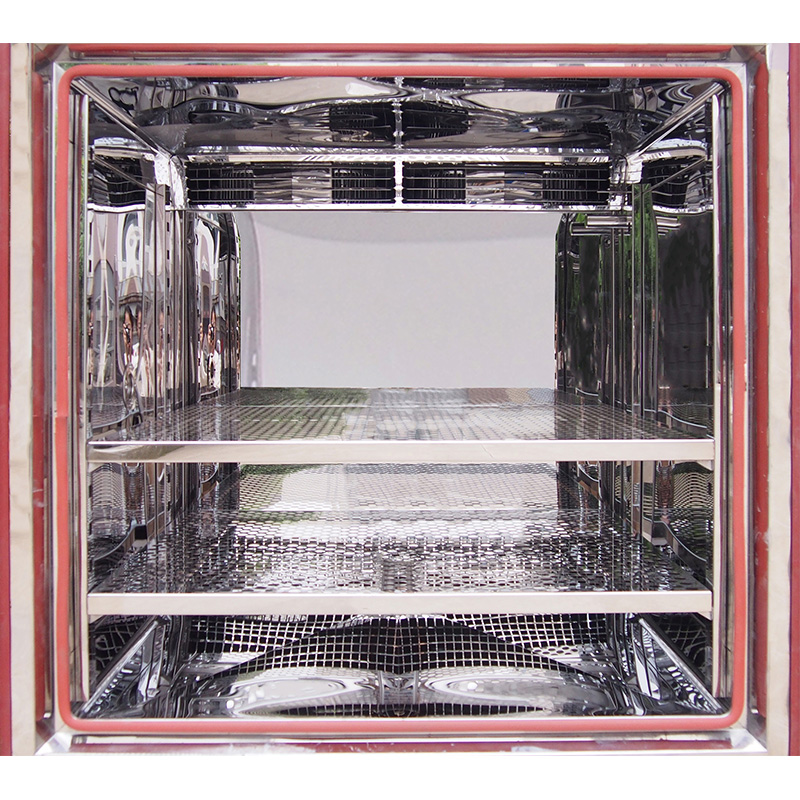 | 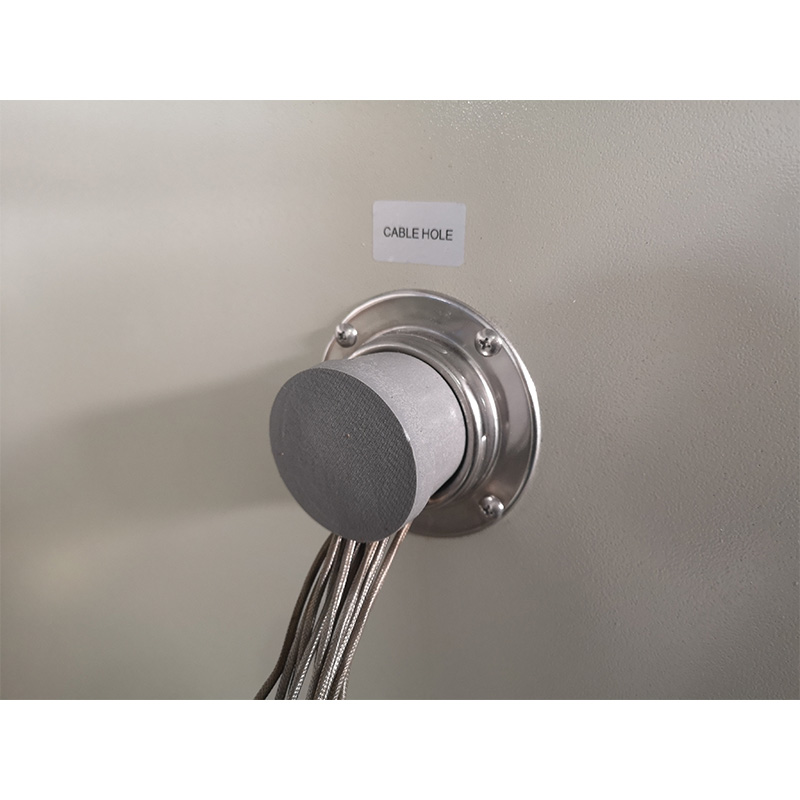 |
Touch screen controller Holds up to 120 test programs with 100 steps each, making it well suited for complex multi‑stage profiles such as temperature–humidity shock or soak cycles. | The compressor The compressor rapidly removes heat from the chamber interior, achieving a cooling rate around 1 °C / 5 °Cper minute. | Robust Anti-Corrosion Workroom The chamber's interior is built from SUS304 stainless steel, offering outstanding resistance to heat and corrosion for long-lasting performance. | Integrated Power Access hole Allows test specimens to stay powered during experiments, enabling performance evaluation under varying temperature and humidity. Standard 50 mm diameter; quantity and size customizable. |

Not all temperature humidity chambers are created equal! From compact benchtop models for small products to walk-in chambers for large-scale testing, manufacturers can choose the right chamber to mimic real-world stresses and ensure their products are built to last.
Let's explore the most common categories
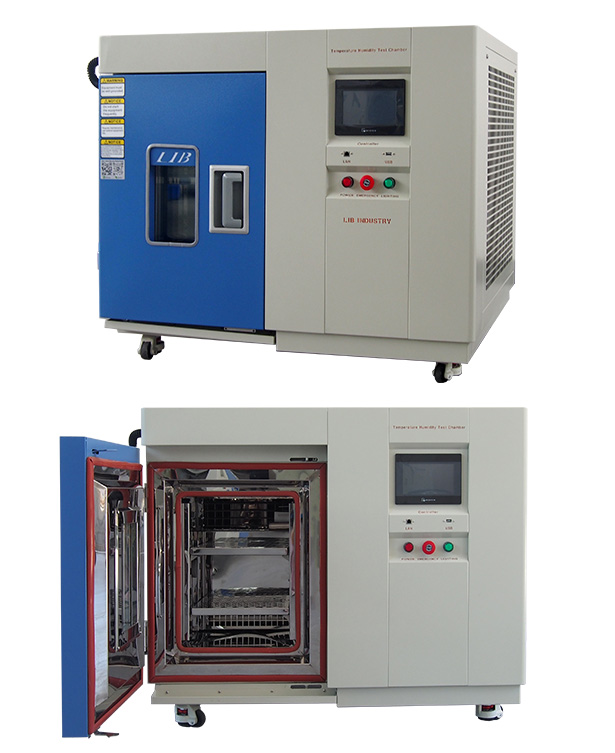
1.Benchtop Chambers: Compact and ideal for lab environments, they are perfect for testing smaller products and offer comprehensive temperature and humidity ranges, making them suitable for simulating every different conditions.
| Name | Benchtop Temperature Chamber |
| |
| Model | TH-50 | TH-80 | |
| Internal dimension (mm) | 320x350x450 | 400x400x500 | |
| Overall dimension (mm) | 800x1050x950 | 900×1100×1000 | |
| Temperature range | -20℃ ~+150 ℃ | ||
| Low type | Ⅰ: -40℃ Ⅱ: -70℃ Ⅲ: -86℃ | ||
| Temperature fluctuations | ± 0.5 ℃ | ||
| Humidity Range | 10%/20%~95% | ||
| Temperature deviation | ± 2.0 ℃ | ||
| Heating rate | 3 ℃ / min | ||
| Cooling rate | 1 ℃ / min | ||
| Temperature Sensor | PTR Platinum Resistance PT100Ω/MV A-class | ||
| Temperature Resolution | ± 0.001 ℃ | ||
2.temperature humidity test Chambers: The option provides precise control over both temperature and humidity, allowing for the recreation of a wider range of real-world environments.
3.Cryogenic Chambers: Venturing into the realm of ultra-low temperatures, cryogenic chambers achieve temperatures as low as -196°C (-321°F), ideal for testing materials and electronics meant for aerospace or medical applications.
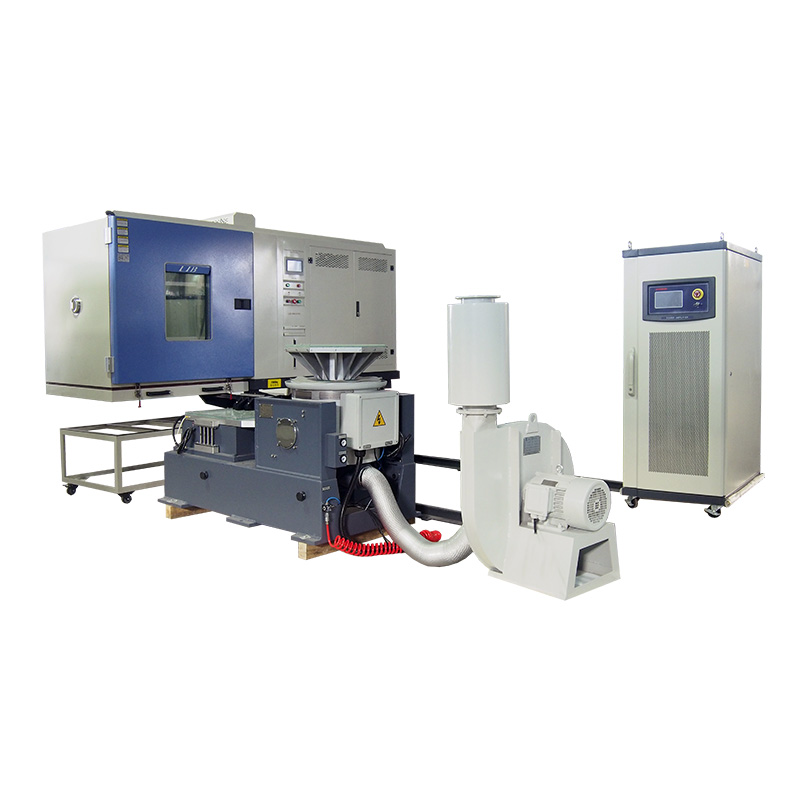
4.Vibration Test Chambers: They can simulate factors like vibration, temperature, and humidity, providing a comprehensive evaluation of a product's resilience.
| Name | Vibration test chambers |
|
Model | THV-1000 | |
Internal Dimension (mm) | 1000*1000*1000 | |
Overall Dimension (mm) | 1800*4600*2600 | |
Temperature Range | -50℃ ~ +150 ℃ | |
Tempe. Fluctuation | ± 0.5 ℃ | |
Tempe. Deviation | ± 2.0 ℃ | |
Humidity Range | 30% ~ 98% RH | |
Humidity Deviation | ± 2.5% RH | |
Cooling Rate | 5 ℃ / min | |
Heating Rate | 5 ℃ / min | |
Dynamic diameter | ¢240mm | |
Blower | 4Kw blower, including muffler. | |
Max load | 500kgs | |
Exterior Material | Steel Plate with protective coating | |
Interior Material | SUS304 stainless steel | |
Standard Configuration | Cable hole with plug; 2 shelves |

Design and Features
Temperature humidity chambers are like miniature weather simulators, and their ability to precisely control environments relies on a combination of thoughtful design and key features.
● Material Selection: The chamber's interior typically utilizes corrosion-resistant stainless steel for durability and easy cleaning.
● Insulation and Seals: Maintaining consistent temperature and humidity requires exceptional insulation. Chambers often employ thick layers of high-quality insulation materials, like polyurethane foam, to minimize heat transfer.
● Control Systems: The brains of these chambers are sophisticated control systems with PID microprocessors that precisely regulate temperature and humidity. Sensors constantly monitor conditions, while heaters, coolers, humidifiers, and dehumidifiers adjust the environment as needed. Easy-to-use touchscreens provide user-friendly control and real-time monitoring of all chamber parameters.
Safety Features
Beyond mimicking real-world environments, temperature humidity chambers prioritize safety and reliability. Here are some key features that ensure smooth operation:
● Maintenance: Chambers prioritize easy cleaning and user-replaceable parts to minimize downtime and maintenance hassles. This keeps your chamber running smoothly and your focus on testing.
● Troubleshooting: When things go awry, built-in diagnostics help pinpoint the problem. User manuals and technical support are also at your disposal, ensuring you get your chamber back up and running quickly.
● Long-term Reliability: Built to last, temperature humidity chambers are constructed with durable materials and high-quality components. This minimizes breakdowns and ensures consistent performance for years to come. Extended warranties offer additional peace of mind by safeguarding against unexpected repairs.
Conclusion
Temperature humidity chambers come in diverse types and configurations, each tailored to specific testing needs across various industries. Understanding their operating principles, design features, and safety measures is crucial for selecting the right chamber and maximizing its effectiveness. Whether for routine quality control or cutting-edge research, these chambers provide invaluable insights into product performance under controlled environmental conditions, thereby giving innovation and ensuring product excellence. As technology advances, these chambers also do, incorporating smarter controls, enhanced safety features, and energy efficiency, making them a popular tool in today's competitive and environmentally conscious industry.
Contact LIB Industry to learn more about the more knowledge about the Temperature humidity chambers.


