Views: 0 Author: Site Editor Publish Time: 2026-04-17 Origin: Site


Temperature humidity chambers are essential tools in environmental testing, designed to simulate real-world climate conditions. They help manufacturers and laboratories evaluate how products respond to temperature and humidity changes, ensuring reliability, safety, and long-term performance across different industries.
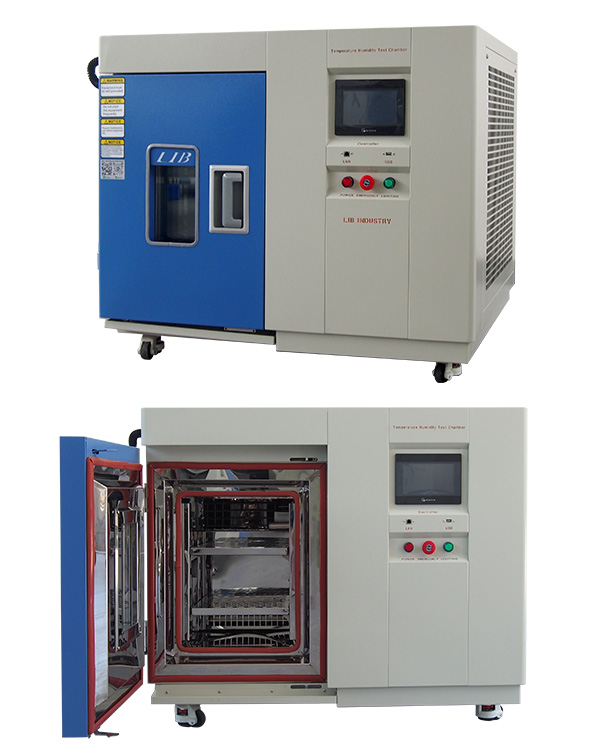
A recent positive feedback from a customer in Uzbekistan further confirms the stable performance of LIB equipment. The customer shared: “Dear Ms Karen, Thanks for asking! At the moment, instrument is working properly and smoothly. If we have any question on it, we will let you know.” This reflects the dependable operation of the LIB Benchtop Temperature Humidity Chamberin daily testing applications, giving users confidence in both performance and after-sales support.
This article summarizes the key uses of benchtop temperature humidity chambers, including reliability testing, material stability, and packaging evaluation, and explains how to choose the right model for efficient and accurate environmental testing.
Benchtop temperature humidity chambers are essential for accurate environmental testing of small samples, ensuring product safety and durability.
These chambers support various industries, including electronics and pharmaceuticals, by providing reliable testing for material stability and packaging performance.
Choosing the right chamber involves assessing temperature and humidity ranges, sample sizes, and available laboratory space to ensure effective testing.
Energy-efficient models reduce operating costs and support eco-friendly practices, making them a smart choice for labs of all sizes.
Advanced features like programmable controllers and precise environmental control enhance testing efficiency and accuracy.
You use a benchtop temperature humidity chamber to perform reliability testing on products and components. This application helps you understand how items respond to different environmental conditions. Many industries rely on this type of testing to ensure product safety and durability.
Some of the most common industries that use benchtop environmental chambers for reliability testing include:
Automotive
Aerospace
Electronics
Pharmaceuticals
Medical Technology
Plastics Manufacturing
You can run several types of tests in these chambers. For example, battery testing checks safety and long-term durability. Temperature cycling evaluates how products handle repeated changes in temperature and humidity. Stability testing helps you determine shelf life and packaging performance. These tests help you meet quality standards and improve product performance.
Material stability is another key application for a benchtop environmental chamber. You can simulate a wide range of temperature and humidity conditions to see how materials react. This process helps you select the right materials for your products and ensures they perform well in real-world environments.
Application Area | Description | |
|---|---|---|
Pharmaceutical Industry | You can evaluate the effectiveness, shelf life, and degradation of drugs and vaccines under controlled conditions. |  |
Material Testing | You test products for performance, reliability, and stability, which supports better product design. | |
Weather Resistance | You identify issues like deformation or discoloration by exposing materials to different environments. |
By using environmental test chambers, you gain valuable data for research and development. This information supports quality control and helps you create products that last longer.
You also use benchtop temperature humidity chambers to test packaging performance. This application is important for industries that need to protect products during shipping and storage. You can expose packaging materials to extreme temperatures and humidity levels. This process helps you find weaknesses and improve packaging design.
Tip: Testing packaging in humidity test chambers and temperature test chambers ensures your products arrive safely and meet regulatory requirements.
You improve quality and reduce product loss by identifying packaging failures before products reach customers. This application is essential for industries like pharmaceuticals, electronics, and food.
You depend on benchtop environmental chambers to test electronics for durability and reliability. These chambers let you simulate a wide range of temperature and humidity conditions. For example, you can set temperatures from -70°C to 150°C and humidity from 20% to 98% RH. This helps you check how circuit boards and semiconductors handle rapid changes and harsh environments. You can program test cycles and monitor results with touchscreen controllers. This application ensures your products meet industry standards and deliver high quality.
Condition | Range | Benchtop Temperature Humidity Chamber |
|---|---|---|
Temperature | -70°C to 150°C |  |
Humidity | 20% to 98% RH |
You use a benchtop temperature humidity chamber to test pharmaceuticals and medical devices for safety and stability. These chambers help you follow strict guidelines, such as ICH Q1A for accelerated stability testing at 40°C and 75% RH. You can also simulate long-term storage at 25°C and 60% RH or run freeze-thaw cycles for biologics. This application supports package integrity validation and ensures your products meet FDA and ISO standards. Chamber uniformity and calibration traceability help you maintain data integrity and regulatory compliance.
You rely on benchtop environmental chambers to test automotive parts like rubber seals, plastics, and electronics. You check durability under extreme temperatures and humidity. This application helps you improve performance and quality by finding weak points before products reach the market.
Automotive Component | Purpose of Testing |
|---|---|
Rubber Seals | Durability under extreme conditions |
Plastics | Performance in heat and moisture |
Electronics | Reliability in automotive applications |
You use environmental test chambers in academic and industrial labs for many research projects. These chambers support material aging studies, thermal cycling tests, and shelf-life assessments. You can test polymers, electronics, and pharmaceuticals. User-friendly interfaces make it easy for students and researchers to run tests and collect data. This application helps you advance science and improve product quality.
Note: Benchtop environmental chambers serve many sectors, including electronics, pharmaceuticals, automotive, defense, medical, telecommunications, solar energy, and aerospace.
When you start choosing the right benchtop environmental chamber, you need to define testing requirements for your products and processes. You must assess temperature and humidity performance, sample size, and available laboratory space. Each factor plays a key role in the quality and reliability of your test results.
You should begin by looking at the temperature and humidity range you need for your testing. Not all temperature test chambers or humidity test chambers offer the same capabilities. You must match the chamber's range to your product's operational, storage, or transportation needs. Use the table below to guide your selection:
Factor | Description |
|---|---|
Operational Requirements | Define the product's operational, storage, or transportation temperatures. |
Humidity Range | Determine the required humidity range throughout the product’s lifecycle. |
Control Accuracy | Ensure the chamber has a buffer beyond your range for testing efficiency and future needs. |
You also need to consider the environment where you will place the chamber. Testing chambers generate heat, so you should allow 18 to 36 inches of clearance for proper airflow. The room should have an average ambient temperature of 23°C (70°F). Make sure your building's heating and cooling systems can keep the room at a stable temperature. This helps you assess temperature and humidity performance accurately and ensures consistent results.
You must define testing requirements for sample size and product loading. The chamber should fit all your samples without overcrowding. If you overload the chamber, you may not get uniform conditions, which can affect the quality of your test. Measure your largest sample and check the chamber's internal dimensions before you buy. You should also think about available laboratory space. Benchtop models save space, but you still need enough room for safe operation and maintenance.
|  |  | |
|---|---|---|---|
 |  |  | |
| Name | Small temperature humidity chamber | Standing temperature humidity chamber | Walk-In temperature humidity chamber |
| Capacity | TH-50: 800x1050x950 mm TH-80: 900×1100×1000mm | Capacity: 100L; 225L; 500L; 800L; 1000L | >20m³ |
| Throughput | Ideal for small components, sensors, boards | Subassemblies or mid-volume batches | Bulk testing of items or vehicles as a whole |
| Energy Saving | Automatic Moisture Circulation in Humidity System
| Automatic Moisture Circulation in Humidity System
| Automatic Moisture Circulation in Humidity System
|
| Operational Cost | Lowest | Medium | Highest |
| Standards Coverage | Full IEC / ISO / ASTM compliance | ||
| Noise Level | ≤ 65 dBA | ||
Tip: Always check the manufacturer's guidelines for maximum sample load. This helps you maintain performance and avoid damaging the chamber.
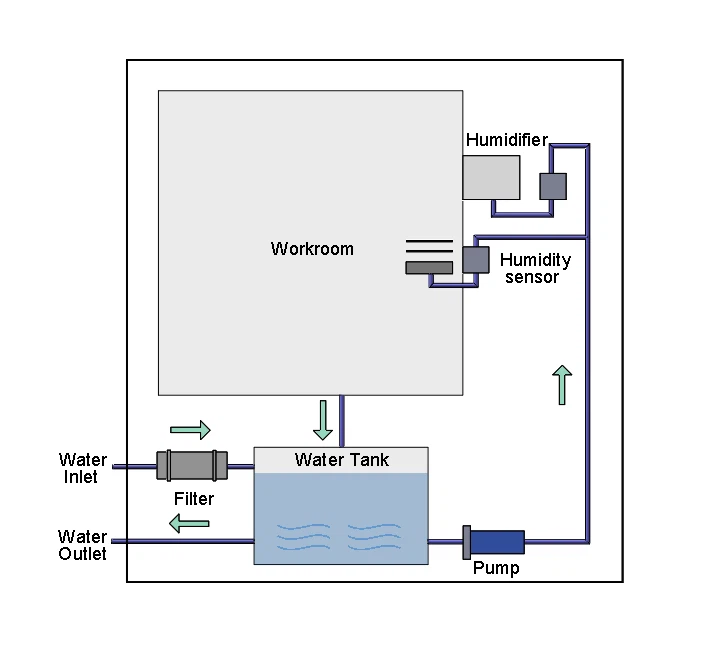
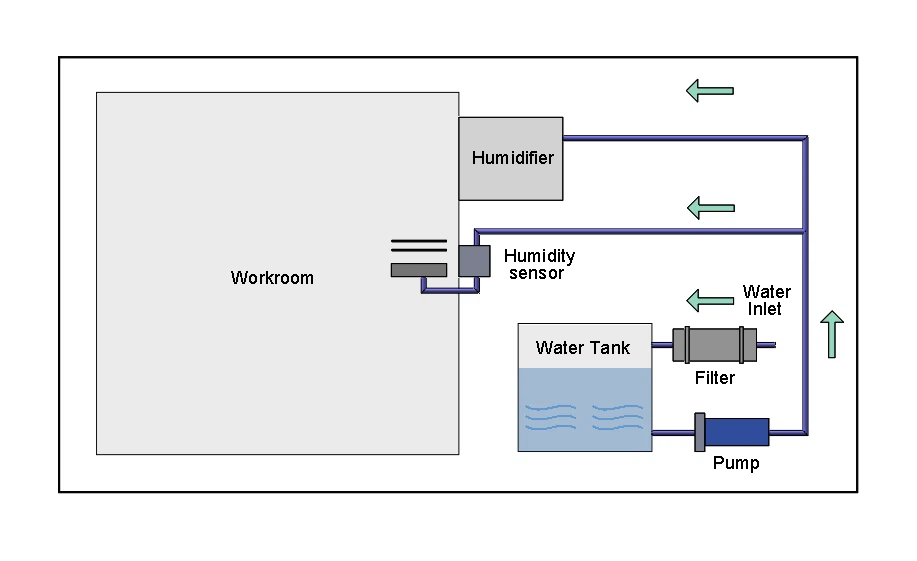
Energy efficiency matters when you choose a benchtop temperature humidity chamber. Efficient models use less power and reduce operating costs. Many chambers now recycle water in their humidity systems, reusing up to 60% of condensate. This feature supports eco-friendly operation and lowers utility bills.
Data management is another key factor. You need reliable data transmission for tracking test results and meeting regulatory standards. Look for chambers with digital controllers, USB ports, or network connectivity. These features make it easy to store, export, and analyze your testing data. Good data management helps you improve quality and document compliance.
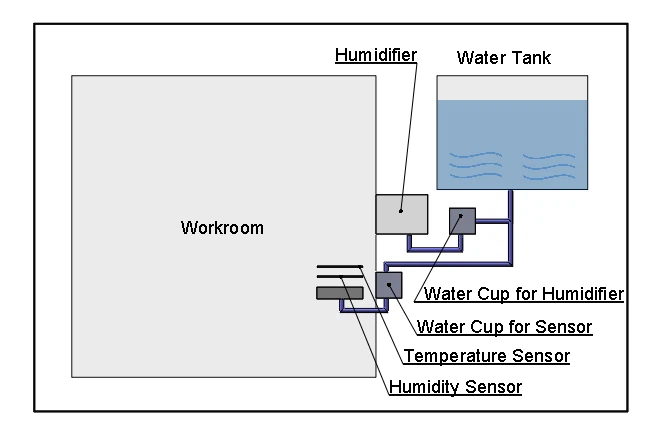
Repeatability and consistency are essential for high-quality testing. You want every test to produce reliable results, no matter when you run it. Modern benchtop environmental chamber designs use precise heating, cooling, and humidification systems. Compressor-based cooling provides rapid low-temperature conditions. Electric heaters allow for high-temperature exposure. Centrifugal fans circulate air, keeping temperature and humidity uniform across all samples.
Method | Description |
|---|---|
Precise Environmental Simulation | Integrated heating, cooling, and humidification systems create stable conditions. |
Compressor-based Cooling System | Delivers rapid low-temperature environments. |
Electric Heaters | Provide high-temperature exposure. |
Centrifugal Fans | Maintain uniform temperature and humidity, eliminating gradients. |
Humidity Control | Closed-loop water recycling system for eco-friendly operation. |
Uniformity and stability in the chamber directly affect your test results. If the chamber cannot keep conditions steady, you may see variable results that are hard to interpret. Non-uniform conditions can create hot or cold spots, which may damage your samples or lead to poor performance data. Always choose a chamber that offers strong uniformity and stability to ensure the integrity of your testing.
Note: Reliable environmental test chambers help you achieve repeatable, high-quality results for small samples and components.
By focusing on these factors, you can succeed in choosing the right benchtop environmental chamber for your needs. You will improve your ability to assess temperature and humidity performance, meet your testing requirements, and ensure the quality of your results.
| Name | small humidity chamber |
| |
| Model | td-50 | td-80 | |
| Internal dimension (mm) | 320x350x450 | 400x400x500 | |
| Overall dimension (mm) | 800x1050x950 | 900×1100×1000 | |
| Temperature range | -20℃ ~+150 ℃ | ||
| Low type | Ⅰ: -40℃ Ⅱ: -70℃ Ⅲ: -86℃ | ||
| Temperature fluctuations | ± 0.5 ℃ | ||
| Humidity Range | 10%/20%~95% | ||
| Temperature deviation | ± 2.0 ℃ | ||
| Heating rate | 3 ℃ / min | ||
| Cooling rate | 1 ℃ / min | ||
| Temperature Sensor | PTR Platinum Resistance PT100Ω/MV A-class | ||
| Temperature Resolution | ± 0.001 ℃ | ||
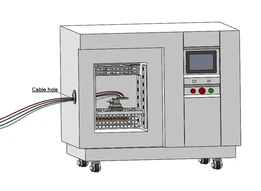
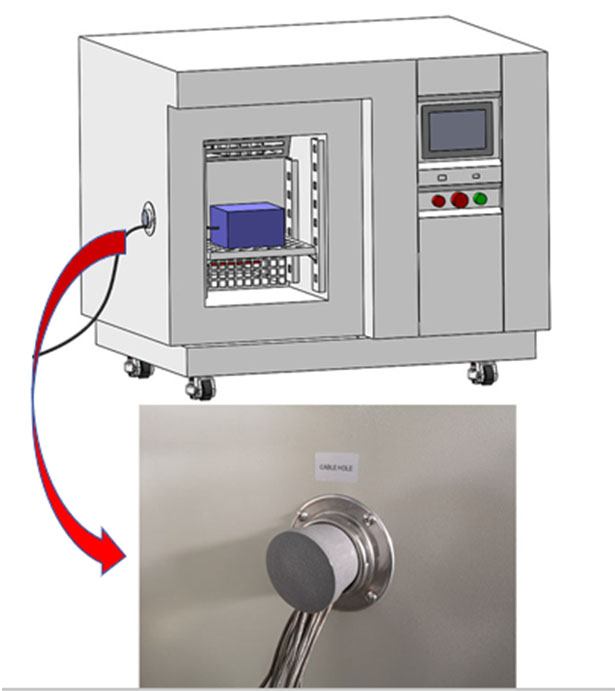 | 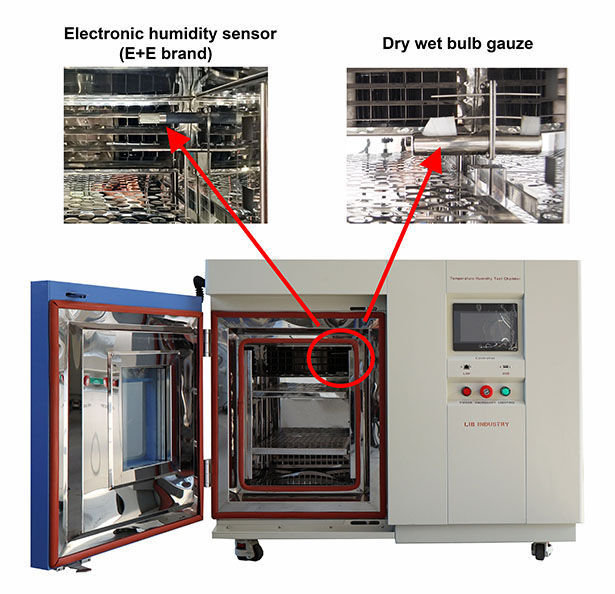 | 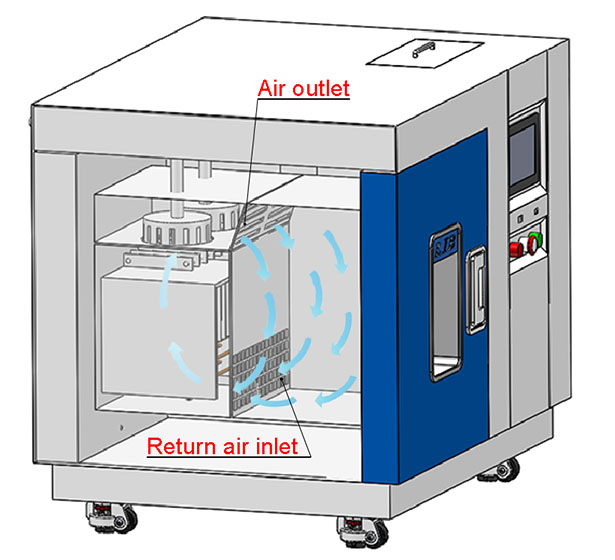 |
Power Supply Cable Hole | Temperature and Humidity Sensor | Air circulation |
First, it provides highly precise environmental control, ensuring stable and uniform temperature and humidity conditions throughout the chamber. This improves test accuracy and repeatability, especially for small samples that require consistent exposure.
Second, its compact benchtop design saves valuable laboratory space while still delivering full performance capability. It is ideal for research labs, quality control departments, and companies with limited floor space but high testing demands.
Third, LIB chambers are designed with user-friendly operation and intelligent programmable control systems. Users can easily set test parameters, monitor real-time conditions, and export data, which significantly improves testing efficiency and reduces manual workload.
Finally, the system is built for energy efficiency and long-term reliability, helping reduce operational costs while maintaining stable performance over continuous testing cycles.
Overall, LIB Benchtop Temperature Humidity Chamber combines precision, efficiency, and convenience, making it a reliable solution for environmental testing applications across multiple industries.
You can place small samples or components inside most benchtop chambers. Typical chamber volumes range from 1 to 8 cubic feet. Always check the chamber's internal dimensions before you start your test.
You achieve accurate results by following manufacturer guidelines. Place samples with enough space between them. Use digital controllers to monitor conditions. Repeat your test to confirm consistency.
You find benchtop chambers useful in electronics, pharmaceuticals, automotive, and research labs. These chambers support testing for product reliability and material stability. You can also use them for packaging performance studies.
You can run several tests at the same time if your chamber has enough space. Stack chambers or use multiple units to increase your testing capacity. This approach helps you finish projects faster.
You clean the chamber regularly and check seals for leaks. Inspect water recycling systems and digital controllers. Schedule routine maintenance to keep your chamber ready for every test.
This article highlights the key applications, benefits, and selection considerations of benchtop temperature humidity chambers, showing how they support efficient and accurate environmental testing for small samples and laboratory use.
ContactLIB Industry for more information or a customized solution for your testing needs.