Views: 0 Author: Site Editor Publish Time: 2026-06-15 Origin: Site


Purchasing a material testing system represents a major strategic acquisition. You rely on this equipment to simulate harsh environmental conditions accurately. Selecting the wrong specification leads to strict industry standard non-compliance. This mismatch generates skewed degradation data. It also results in completely wasted testing cycles. Vendor spec sheets often obscure critical maintenance bottlenecks. They hide true hardware limitations behind complex jargon.
This guide provides an objective, engineering-focused evaluation framework. We will help you shortlist the right Weathering Test Chamber. You will learn to match your operational realities precisely against technical specifications. You can confidently base your final decisions on material standards and hardware architectures. Understanding these technical nuances prevents critical failures during long-term testing protocols.
1. Hardware dictates capability: Choose between rotating rack and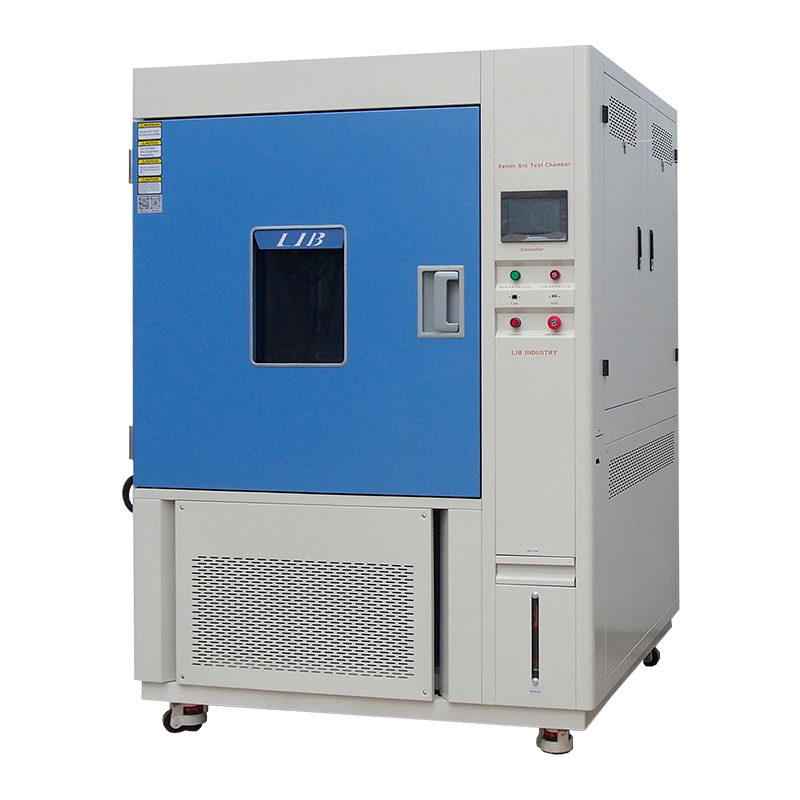 flat array architectures based on
your sample geometry and uniformity requirements.
2. Standards drive specifications: Your chamber must explicitly align with specific optical filter and irradiance control requirements mandated by ISO, ASTM, or SAE.
3. Spectrum matching is non-negotiable: Precise replication of full-spectrum sunlight (daylight or window-glass filtered) separates reliable chambers from sub-standard units.
You must establish clear testing objectives before evaluating any hardware. Testing goals vary wildly across different engineering disciplines. A thorough internal audit clarifies your exact equipment needs.
Determine the primary function of your testing protocols. R&D teams often require highly flexible equipment. They test experimental materials under extreme, non-standard conditions. Supplier quality verification demands strict reproducibility. You need consistent results to validate inbound raw materials. Strict regulatory compliance requires absolute adherence to standardized testing parameters. Regulatory testing leaves zero room for hardware deviation. You must provide traceable, repeatable data to external auditors.
Different materials exhibit unique failure modes under solar radiation. You must define the exact degradation mechanisms you plan to simulate. Polymers typically suffer from surface chalking and structural embrittlement. Textiles primarily experience rapid color fading. Automotive interiors face complex cracking and severe warping due to high temperatures. Your chosen equipment must recreate the exact environmental stressors triggering these specific failures.
Sample volume dictates the physical size of your necessary equipment. You must calculate the exact number of samples tested annually. Follow these steps to determine your throughput needs:
1. Count your average monthly sample volume across all product lines.
2. Multiply this baseline figure by your average testing cycle duration.
3. Factor in a twenty percent buffer for unexpected re-tests.
4. Measure your available laboratory floor space precisely.
This calculation prevents you from purchasing an undersized unit. It also stops you from over-allocating valuable laboratory real estate. Balancing sample capacity against footprint optimizes your testing facility.
Hardware architecture directly influences exposure uniformity and sample accommodation. You must choose between two dominant structural designs. Each design serves distinct geometric testing requirements.
This legacy design remains the gold standard for many industries. The mechanism relies on a single, powerful central light source. Samples revolve around this lamp continuously.
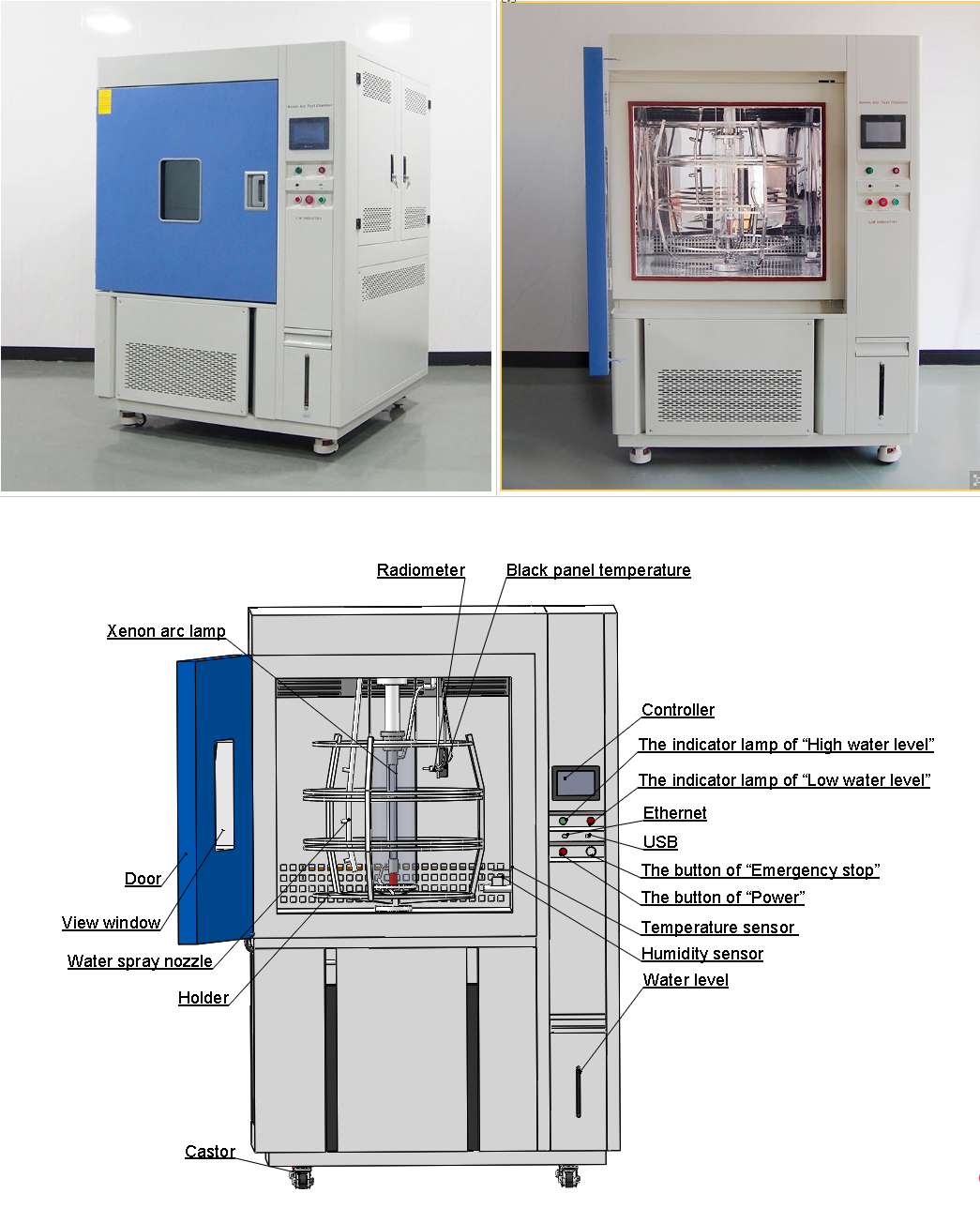
Mechanism: Test specimens mount vertically on a cylindrical carousel. This carousel rotates at a controlled speed around the central burner. The rotation ensures equal distance and identical light dosage for every single sample. It eliminates uneven exposure caused by stationary positioning.
Best for: This architecture excels at standardized testing of flat panels. It handles high-capacity batch testing efficiently. Many older, established testing standards explicitly require this rotating design. If you test simple geometries like paint plaques or textile swatches, this remains your best option.
Limitations: You will struggle to test bulky, 3D components. The vertical mounting system cannot secure heavy or awkwardly shaped parts. The physical space between the carousel and the lamp restricts maximum sample depth.
Modern testing often requires exposing fully assembled products. Flat array systems abandon the carousel in favor of a horizontal sample bed.
Mechanism: Samples rest horizontally on a flat slide-out tray. A ceiling array of multiple lamps sits directly above them. Reflectors bounce the light downward onto the sample bed. This creates a uniform exposure plane across the horizontal surface.
Best for: You can test fully assembled 3D parts effortlessly. Automotive dashboards, consumer electronics, and footwear fit perfectly. The flat bed accommodates varying sample sizes simultaneously. It also allows for highly specialized, top-down water spray patterns simulating natural rain.
Limitations: Irradiance uniformity requires intensive maintenance. You must keep the overhead reflectors spotlessly clean. Calibrating multiple lamps across a flat plane proves more complex than managing a single central bulb.
| Feature | Rotating Rack | Flat Array |
|---|---|---|
| Sample Orientation | Vertical (Rotating) | Horizontal (Stationary) |
| Ideal Geometry | Flat panels, swatches | 3D parts, assemblies |
| Light Source | Single central lamp | Multiple overhead lamps |
| Standard Compliance | Excellent for legacy standards | Ideal for modern 3D standards |
You cannot compromise on precise technical controls. A reliable Xenon Test Chamber must deliver exact environmental replication. Pay strict attention to the following engineering parameters.
Raw light does not mimic natural sunlight accurately. You need specialized optical filters to trim the spectrum. Your equipment must support easily interchangeable filter systems. Daylight filters simulate direct outdoor sunlight exposure. Window Glass filters replicate sunlight passing through standard commercial glazing. Extended UV filters simulate extreme aerospace or high-altitude conditions.
Look for guaranteed Spectral Power Distribution (SPD) compliance. The manufacturer must provide spectral graphs proving exact standard alignment. Degraded filters shift the spectrum and ruin your data. Ensure the system makes filter replacement simple.
Lamps lose intensity as they age. Your system must compensate for this inevitable degradation automatically. Evaluate the internal feedback loop system carefully. The unit must feature a closed-loop irradiance control mechanism. It requires an integrated radiometer measuring actual light output in real-time.
You can choose between narrow-band and broad-band control. Narrow-band radiometers measure specific wavelengths like 340nm or 420nm. Broad-band systems measure total UV energy between 300-400nm. The logic controller must automatically increase electrical power to the lamp. This maintains a perfectly flat irradiance curve throughout the bulb's entire lifecycle.
Temperature accelerates photo-degradation exponentially. You must control sample surface temperatures independently from ambient air. Assess the core cooling mechanisms carefully. Systems use either air-cooled or water-cooled lamp technologies. Each approach offers different thermal management capabilities.
Verify the precise control ranges for Relative Humidity (RH). Many materials swell and contract under fluctuating moisture levels. The equipment must monitor and control RH dynamically. Evaluate the precision of front and back sample spray systems. Programmable spray cycles are mandatory for simulating dew and heavy rainfall events accurately.
Model | XL-S-750 |
|
Internal Dimension (mm) | 950*950*850 mm | |
Overall Dimension (mm) | 1400*1400*1950 mm | |
Specimen Holder Size(mm) | 95*180 | |
Specimen Capacity | 42pcs | |
Chamber Type | Rotating Holder | |
Irradiation Source | 1 piece of 4500w water-cooled xenon arc lamp | |
Irradiance Range | 35~150 W/㎡ | |
Bandwidth Measurement | 300nm~400nm (340nm or 420nm) | |
Chamber Temperature Range | Ambient ~ 100 ℃ ±2℃ | |
Black Panel Temperature | BPT 35 ~ 85 ℃ ±2℃ | |
Humidity Range | 50% ~ 98% RH | |
Humidity Deviation | ± 5% RH | |
Water Spray Cycle | 1~9999H59M (Adjustable) | |
Controller | Programmable color LCD touch screen controller | |
Water supply system | Automatic water supply, Water purification system | |
Radiometer | UV Radiometer, Tolerance: ±5% | |
Cooling System | Mechanical compression refrigeration system | |
Safety Device | Over-temperature Protection; Over-current Protection; Water Shortage Protection; Earth leakage Protection; Phase Sequence Protection | |
Exterior Material | Steel plate with protective coating | |
Interior Material | SUS304 Stainless steel |
Testing without standard alignment renders your data completely useless. Commercial laboratories require verifiable proof of methodology. You must guarantee your testing protocols match international consensus.
A commercial-grade system must guarantee verifiable compliance with international test methods. You cannot rely on vague manufacturer promises. Demand specific certification mapping from the vendor. The hardware must hit exact tolerances for irradiance, temperature, and humidity simultaneously.
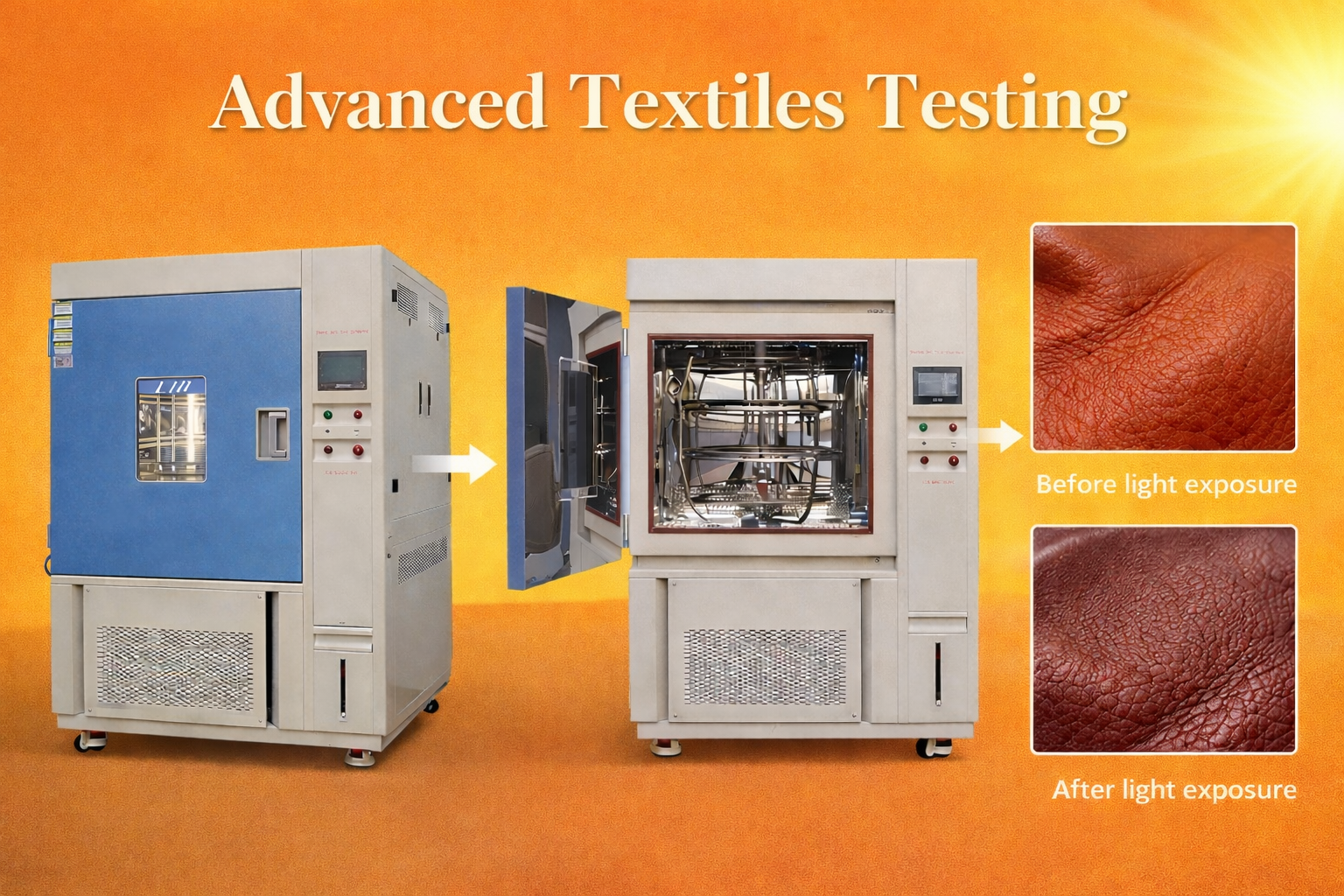
Different materials fall under entirely different regulatory bodies. You must map your specific materials to their corresponding documents:
1. Plastics and Coatings: You will primarily use ASTM G155 and ISO 4892-2. These dictate specific daylight filter combinations and moisture cycles.
2. Textiles: Colorfastness relies on AATCC TM16.3 and ISO 105-B02. These standards require highly specific window glass filtration and precise ambient humidity control.
3. Automotive: Exterior testing utilizes SAE J2527. Interior component testing demands SAE J2412. Automotive standards often require complex light-and-dark cycling with severe temperature shifts.
Quality management systems require comprehensive proof of execution. Ensure your chosen machine offers extensive digital data logging. You need minute-by-minute records of temperature, irradiance, and humidity. Traceable calibration certificates for all onboard radiometers are strictly mandatory. Look for equipment offering secure, tamper-proof audit trails to satisfy external inspectors.
Many engineers confuse different accelerated aging technologies. You must understand the fundamental physical differences between light sources. Choosing the wrong spectrum ruins your entire testing strategy.
Ensure a full-spectrum machine is actually what you need. Fluorescent UV systems generate short-wave light exclusively. They completely lack visible light and infrared heat. Full-spectrum arcs generate everything from short-wave UV through visible light and deep into the infrared spectrum. You must align the light source with your specific failure mode.
You need full-spectrum sunlight simulation to test comprehensive weathering. This technology is mandatory if you are measuring colorfastness and visual fading. Visible light causes dye degradation. Infrared energy creates significant thermal-light degradation on the sample surface. If your product lives outdoors and appearance matters, you must use this technology.
You should choose fluorescent UV if you only care about short-wave physical degradation. This includes mechanical cracking, severe embrittlement, and structural polymer breakdown. Fluorescent systems ignore visible light entirely. They do not provide strict color-fading data. They excel purely at destroying polymer backbones rapidly.
Use a simple decision matrix to finalize your technology track. If color retention serves as your primary performance metric, full-spectrum simulation is strictly mandatory. If you only need to prove structural integrity under extreme UV radiation, a fluorescent device suffices. Do not mix these distinct technological approaches.
Selecting the right equipment requires balancing complex engineering parameters. You must weigh sample geometry to choose between rack and array architectures. Strict adherence to standardized testing methodologies dictates your optical filter and irradiance specifications. You must maintain a clear-eyed view of your facility's utility capabilities regarding high-voltage power and purified water.
Take direct action before requesting a formal vendor quotation. Compile a comprehensive list of your required international test standards. Measure your average sample dimensions accurately to determine capacity needs. Audit your available laboratory utilities thoroughly. Finally, request concrete vendor demonstration data proving irradiance uniformity across their entire sample area. This disciplined approach guarantees a successful hardware acquisition.
| LIB Popular Weathering Test Chamberfor Aging tests | ||
Full-Spectrum Sunlight Simulation, |
Fast UV Degradation Testing, |
UV Preconditioning Chamber For PV Solar Panel IEC-Compliant PV Preconditioning, |
ASTM B117 Fog Corrosion Salt Spray Test Cabinet ASTM B117 Compliance Testing, Trusted Corrosion Resistance Evaluation |
Cyclic Salt Spray Corrosion Chamber (CCT Chamber) Real-World Corrosion Cycling, |
Multi-Environment Corrosion Simulation, Accelerated Industrial Durability Testing |
A: They usually last between 1200 to 1500 hours before irradiance drop-off requires replacement. This exact lifespan depends heavily on your specific intensity settings and operating temperatures.
A: Water-cooled lamps operate at higher wattages and are typical in rotating racks, requiring complex water maintenance. Air-cooled lamps are simpler to operate, highly efficient, and common in flat-array and modern rack systems.
A: No. Tap water leaves mineral deposits on test samples and delicate optical filters, completely ruining test validity. High-purity RO/DI water is strictly required for all internal systems.
A: Yes. It achieves this through continuous, uninterrupted exposure and elevated temperatures. However, exact acceleration factors vary heavily by specific material chemistry and cannot be universally quantified.
Contact LIB Industry today for expert consultation, technical specifications, pricing, and customized testing solutions.