


In the rapidly changing industrial environment, product reliability has become an essential concern for manufacturers across various sectors. Even tiny dust particles can enter sensitive components, interfere with performance, accelerate wear, and cause potential failures over time. Dust test chambers provide a precise and controlled environment for evaluating how products withstand dust exposure, helping manufacturers identify weaknesses, optimize designs, improve durability, and ensure stable performance in demanding applications.
Our dust test chambers have received positive feedback from satisfied customers, including a U.S.-based lighting manufacturer, who commented that their chamber “was working well.” This highlights the reliability and consistent performance of our equipment in real-world testing. Such experiences demonstrate how our chambers enable manufacturers to accurately assess dust resistance, identify potential product weaknesses, and make informed improvements—ensuring durability, safety, and quality before products reach the market.

Revolutionizing Product Testing with Dust Chambers
In the relentless pursuit of creating better, longer-lasting products, manufacturers face a constant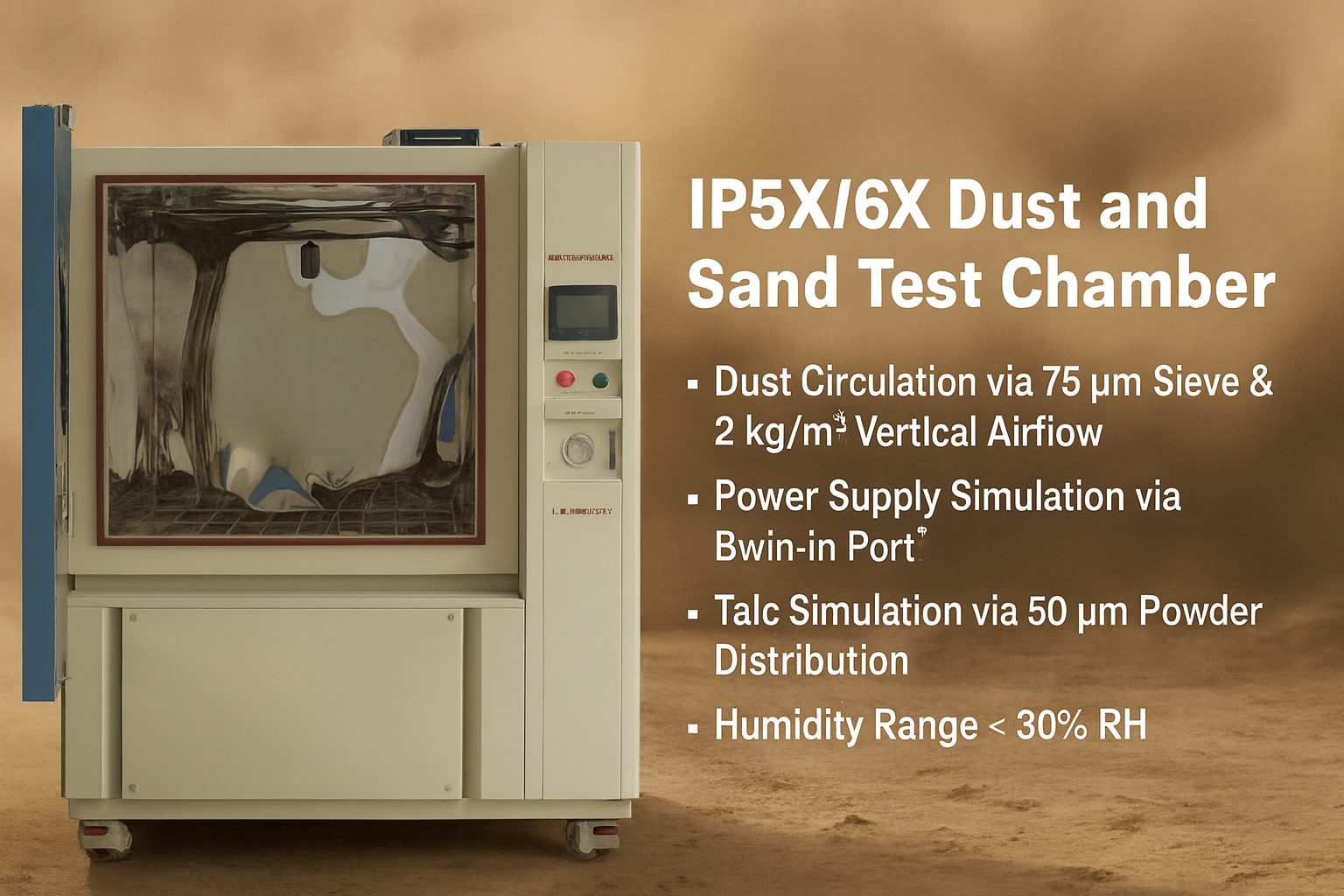 barrage of enemies. Dust, though seemingly innocuous, can wreak havoc on a product's performance and lifespan. But fear not, the days of guesswork are over. Enter the world of dust chambers: a revolutionary tool that is transforming the way we test product durability.
Unveiling the science behind dust exposure tests goes beyond just dust quantity. It focuses on tricky aspects like particle size (think inhalable microscopic particles), composition (silica dust vs. flour dust make a big difference!), and replicating real-world conditions with wind, humidity, and temperature. It's not just about how much dust accumulates, but also how it behaves. Tests can analyze how strongly dust sticks and how it impacts materials, revealing potential weaknesses and long-term effects on product durability.
Beyond the Surface: The Mechanics of Dust Test Chambers
Dust chambers are no longer just fancy boxes filled with dirt. They've become a powerful tool for manufacturers to ensure the durability and reliability of their products in real-world conditions. Let's delve deeper and explore the core components that bring these chambers to life:
Delving into the Core Components:
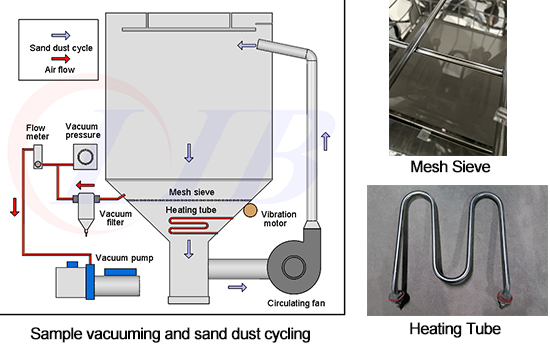
● Dust Generation: Ditching the sand pile, modern dust chambers employ sophisticated methods like vibratory feeders and pneumatic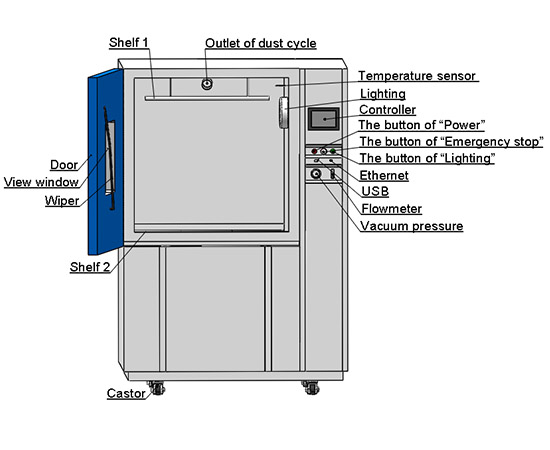 systems. These precisely control the creation and distribution of dust clouds, ensuring a consistent and measurable environment for testing.
● Airflow Choreography: But simply creating dust isn't enough. Powerful fans take over, meticulously choreographing an even spread of dust particles throughout the chamber, mimicking real-world wind speeds.
● The Unsung Hero: Filtration: Containment is key! HEPA filters, the unsung heroes, silently stand guard within the chamber. They meticulously trap dust particles, keeping the testing environment clean while allowing exhausted air to escape.
● Environmental Orchestration: The story goes beyond dust. Modern chambers are environmental masters, using heaters, coolers, and humidifiers to recreate scorching deserts or humid jungles, all alongside the dust exposure.
● Data Acquisition Symphony: Dust chambers are more than just windy sandboxes. They're data hubs, packed with sensors that monitor everything from dust levels to humidity. This data symphony provides researchers with key insights into product performance under pressure.
Deep Analysis of the Function of Each Component
It's not just about throwing dust around. The magic happens when dust generation systems (vibratory feeders, pneumatic systems) work together with air circulation fans to create a specific dust concentration and mimic real-world wind conditions. HEPA filters then play a critical role by trapping dust inside the chamber, while temperature and humidity controls recreate extreme environments alongside dust exposure. Finally, sensors act like a central nervous system, collecting data from all components to provide a complete picture of how the product performs under these demanding conditions.
Diverse Uses of Dust Test Chambers
Dust chambers have transcended their role as simple dust boxes. They've become a versatile tool across various industries, ensuring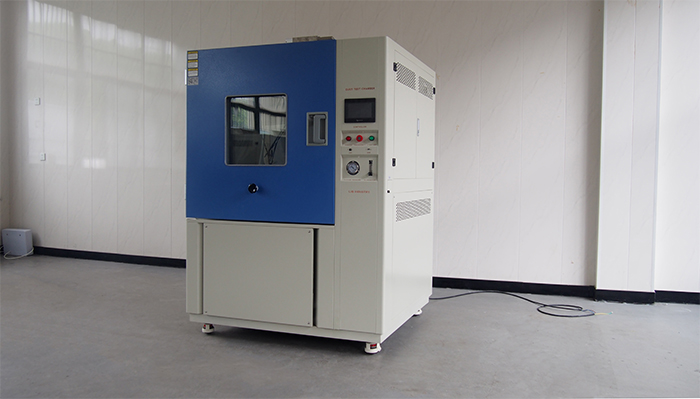 product durability and functionality in real-world environments:
● Electronics: Dust chambers help electronics manufacturers test their products for dust buildup that could lead to overheating and failure.
● Automotive: Dust storms can wreak havoc on car performance. Chambers help test everything from headlights and air filters to engine components, ensuring they function properly in dusty conditions.
● Aerospace: Space may be a vacuum, but rockets and satellites encounter dust during launch and re-entry. Dust chambers simulate these harsh environments, testing the durability of critical aerospace components.
● Construction Materials: Building materials like bricks and sealants need to withstand harsh environments. Dust chambers can simulate dust storms or construction sites, testing their durability and weather resistance.
Crafting the Perfect Environment: Setting Up Dust Test Chambers
Dust chambers are no longer dusty boxes, but intricate tools for crafting the perfect testing environment. This guide unlocks the secrets to setting up, operating, and optimizing these powerful chambers:
● Choosing the Right Chamber: Consider factors like chamber size, dust generation capabilities, and desired environmental controls (temperature, humidity) to match your specific testing needs.
● Calibration is Key: Ensure dust generation systems, temperature and humidity controls, and sensors are all precisely calibrated for accurate and reliable test results.
● Safety First: HEPA filters need regular maintenance to ensure proper dust containment and protect the surrounding environment. Proper safety protocols should also be established for handling dust materials.
Technical Insights and Operational Guidelines:
● Dust Selection: The type of dust used (e.g., silica, talcum powder) should reflect the real-world conditions your product will encounter.
● Test Profile Development: Define the desired dust concentration, exposure time, temperature, and humidity levels to replicate a specific environment.
● Data Acquisition and Analysis: Modern chambers offer comprehensive data on dust concentration, temperature, and humidity. Analyze this data to identify product weaknesses and optimize performance.
How to Optimize the Use of Dust Test Chambers:
● Standardization is Key: Following industry standards for dust testing ensures consistent and reliable results that can be compared with competitors' products.
● Beyond Basic Testing: Don't just test for dust resistance; combine dust exposure with vibration or other environmental stresses to simulate real-world scenarios.
● Continuous Improvement: Regularly review your testing protocols and dust selection to ensure they remain relevant to the evolving needs of your product and industry.
By following these guidelines, you can transform your dust chamber from a simple testing tool into a powerful asset for developing superior products built to last.
Tailored Solutions: Selecting the Ideal Dust Test Chamber
Not all dust chambers are created equal. This guide empowers you to navigate the world of dust chambers and select the ideal one for your specific testing needs:
● Product and Industry: Consider the product you're testing and the real-world dust environments it might encounter. Different industries have specific dust exposure concerns.
● Test Requirements: Define the parameters crucial for your test, such as desired dust concentration, exposure time, and temperature/humidity ranges.
● Budget and Space Constraints: Dust chambers come in various sizes and capabilities. Consider your budget and available laboratory space.
Customizing Features to Meet Specific Needs
● Chamber Size: Choose a chamber size that can comfortably accommodate your test product while allowing for proper air circulation.
● Dust Generation Systems: Select a chamber with a dust generation system (vibratory feeder, pneumatic system) that can produce the desired dust concentration and particle size.
● Environmental Controls: Consider the temperature and humidity ranges needed to replicate your target environment. Some chambers offer rapid temperature change capabilities.
● Additional Features: Look for features like programmable test cycles, data acquisition systems, and easy-to-clean interiors for added convenience and efficiency.
How to Choose the Best Dust Test Chamber for You
● Research Reputable Manufacturers: Look for companies with a proven track record and expertise in dust testing chambers.
● Consider After-Sales Support: Reliable after-sales support is crucial for ensuring your chamber operates smoothly and parts are readily available.
● Get a Quote and Compare Options: Obtain quotes from multiple manufacturers, comparing features, specifications, and pricing to find the best fit for your needs.
Specifications and What to Look For
● Chamber Volume: Measured in cubic feet (cu.ft.) and determines the size and type of products you can test.
● Dust Concentration Control Range: Expressed in milligrams per cubic meter (mg/m³). Choose a chamber that can achieve the desired dust concentration for your test.
● Temperature and Humidity Control Ranges: Look for a chamber that can replicate the temperature and humidity extremes your product might encounter.
● Material Compatibility: Ensure the chamber's interior materials are compatible with the dust types you plan to use.
Remember: The ideal dust chamber is an investment that will pay off in the long run. By carefully considering your needs and researching your options, you can find the perfect chamber to ensure the durability and performance of your products.
Proven Results: Real-Life Applications of Dust Test Chambers
Dust chambers aren't just fancy science experiments; they have real-world applications that impact our daily lives. Here's how these chambers translate to tangible benefits:
● Safer Electronics: chambers help ensure electronics like smartphones and laptops can withstand dust exposure, preventing overheating and malfunctions. This translates to reliable communication and entertainment, even in harsh environments.
● Durable Vehicles: Dust storms can wreak havoc on cars. By simulating these conditions in chambers, manufacturers ensure everything from air filters and radiators to engine components function flawlessly, keeping you safe on the road.
● Space-Ready Technology: Rovers exploring Mars face a constant barrage of dust. Dust chambers help test the durability of critical spacecraft components, ensuring they can withstand the harsh Martian environment and transmit vital data back to Earth.
● Long-Lasting Furniture: Dust bunnies may be a nuisance, but dust can also damage furniture. Dust chambers help test the resilience of furniture materials like leather and wood finishes, ensuring your favorite couch or chair looks good for years to come.
● Weatherproof Buildings: Dust storms can test the integrity of buildings. Chambers help simulate these conditions, ensuring construction materials like bricks and sealants are strong and weatherproof, protecting your home from the elements.
● Functional Outdoor Gear: A dusty backpack on a hike can be uncomfortable and ineffective. Dust chambers help test the performance of outdoor gear like tents and backpacks, ensuring they remain functional and comfortable in dusty environments.
 | Temperature Range | Ambient ~ +50℃ | |
Humidity Range | < 30% RH | ||
Normal Wire Diameter | 50um | ||
Nominal Width of a Gap Between wires | 75um | ||
lectromagnetic lock | Specimen Power Outlet | Dust-proof socket 16A | |
Heating Element | Nichrome heater | ||
Vacuum System | Equipped with a pressure gauge, air filter, pressure regulator, connecting tube | ||
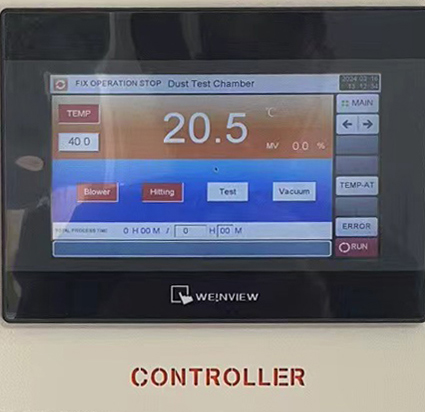 | Controller | Programmable color LCD touch screen controller,Ethernet connection, PC Link | |
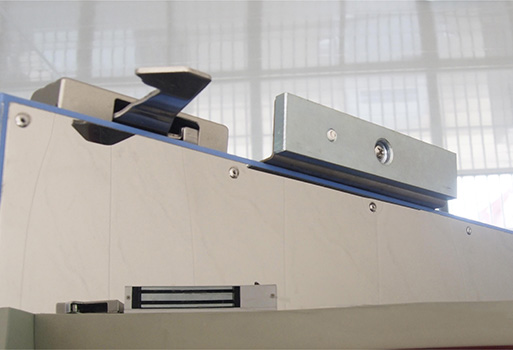
Door Lock | Electromagnetic lock | ||
Maximum Noise | 65 dBA | ||
By subjecting products to controlled dust exposure, manufacturers can identify weaknesses and develop superior products. Dust chambers translate into:
● Enhanced Product Durability: Products last longer, saving you money and reducing waste.
● Improved Product Performance: Products function reliably in real-world conditions.
● Increased User Safety: Products are rigorously tested for safety hazards like overheating or malfunctions.
Dust chambers are a testament to human ingenuity. They play a vital role in ensuring the quality, durability, and safety of the products we rely on every day.
Discover how LIB Industry can help you enhance product durability and performance. Contact us today to explore tailored dust testing solutions.


