Views: 0 Author: LIB Team Publish Time: 2026-11-19 Origin: Site


A paint film on a steel door looks perfect at delivery. Eighteen months later, it feels rough and powdery. A dashboard panel turns dull after two hot summers. An outdoor cable jacket cracks at the first cold snap. Sunlight is behind all of this, and short-wave UV does most of the harm even though it is only a small part of the solar spectrum.
This article explains what UV 340 bulbs are, how the upgraded lamp differs from earlier UVA-only lamps and other fluorescent UV lamps, which standards call for them, and how to choose and maintain the right bulbs for your UV accelerated weathering tester.
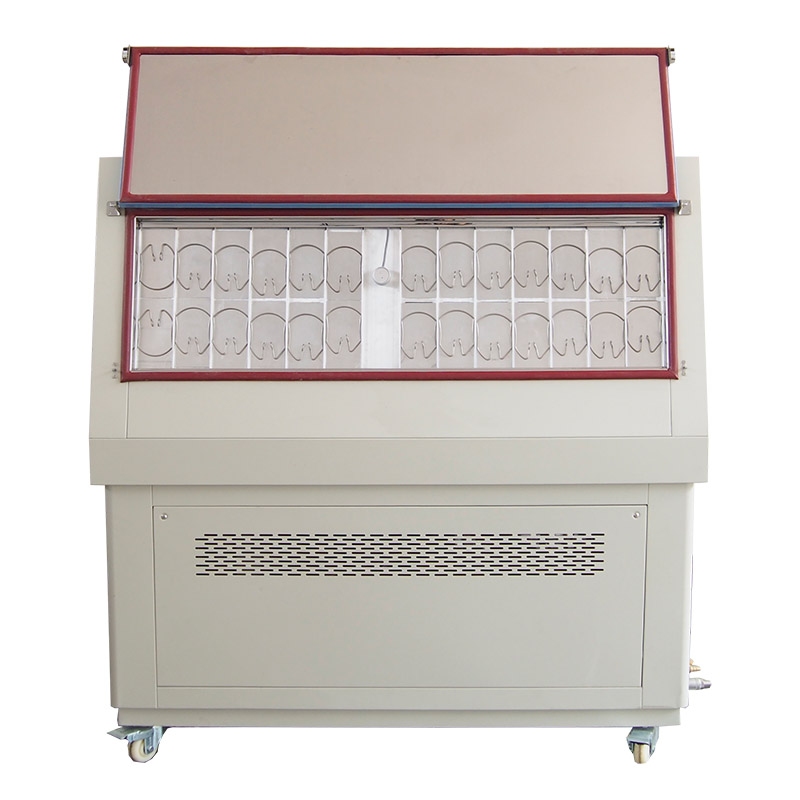
LIB Industry supplies UV Accelerated Weathering Tester for plastics, coatings, rubber, textiles, and automotive parts. Todorovic, a customer from Serbia, recently shared his experience with the LIB UV-SI-260 UV Weathering Test Chamber.
He shared: "These test chambers are used by colleagues from our Quality Department. So far, they haven't had any problems with the UV chamber, and we have completed our tests without any issues. I know that the support from your side is excellent, and I am grateful for it." Todorovic's feedback highlights the smooth operation of the UV-SI-260 in daily testing and his satisfaction with LIB Industry's customer support. We appreciate his trust and look forward to providing reliable testing solutions and continued technical support.
A UV accelerated weathering tester does three jobs: it shines UV light, heats the specimen, and adds moisture. Of the three, the light source has the biggest effect on whether your results mean anything. If the lamp spectrum is wrong, even a perfectly controlled chamber will age your samples in the wrong way. Natural weathering takes years to show chalking, cracking, yellowing and gloss loss. Accelerated testing shortens that wait to weeks, but only if the bulbs reproduce the part of sunlight that actually damages your material.
A conventional UVA-340 lamp is a 40 W fluorescent lamp whose output peaks at 340 nm. Its spectrum closely follows direct sunlight in the short-wave UV range from about 295 to 365 nm, and it cuts off sharply below 295 nm, where sunlight at the ground has no energy. That is why UVA-340 has long been the most common choice for general outdoor weathering tests.
Our current lamp is an upgrade that replaces the earlier UVA-only tube. It still centers on the UVA-340 band, but it now also includes a UVB band. Both bands are present in the same lamp, with UVA making up the larger share and UVB a smaller one. In practice this gives you:
Sunlight-like UVA output for realistic, well-correlated aging.
A controlled UVB contribution that speeds up degradation in materials sensitive to shorter wavelengths, so tests finish sooner.
One lamp type instead of switching between UVA and UVB tubes for different jobs.
Other lamp types have different jobs:
| ① UVB-313: peaks near 313 nm and contains wavelengths shorter than natural sunlight. It ages materials faster, but it can cause failures that never happen outdoors. |
|
| ② UVB-351: designed for materials used behind window glass, such as interior trim and films. |
| ③ UVA-340 (conventional): the closest match to outdoor sunlight, and the safest choice when you want results that correlate with real exposure. |
|
 | ④ Upgraded UV 340 (UVA + UVB) of the UV Accelerated Weathering Tester: UVA-340 as the main band, with a smaller UVB share for faster, more efficient screening. |
1. Check the spectrum. Ask for the spectral power distribution curve. A good UV 340 lamp should peak at 340 nm and show almost no output below 295 nm. With the upgraded lamp, also confirm the UVA/UVB proportion and that the UVB portion stays within the stated range. Low-quality lamps often leak shorter wavelengths, which makes samples degrade faster and distorts ranking between formulas.
2. Check stability over time. Fluorescent lamps lose output as they age. Good lamps hold a stable spectrum for a long time, so results from the first month and the fifth month can be compared fairly. Cheap bulbs may drift early, forcing you to replace them often or to accept unreliable data.
3. Match the lamp to your test chamber. The bulb length, power, and base must fit your tester. Most standard chambers use 40 W tubes. Equally important, the chamber must have an irradiance sensor and controller so that output is held at the set level while the lamps age.
4. Match the lamp to your standard. Most standards that use fluorescent UV specify the lamp type, usually UVA-340 or UVB-313. If your standard names a specific lamp, check whether the upgraded lamp is accepted before you report compliance. If strict conformity matters, confirm with us or with your auditor first. For internal R&D, ranking and screening, the upgraded lamp gives you faster results.
| Standard | Applies To |
|---|---|
| ASTM G154 | Fluorescent UV exposure of nonmetallic materials |
| ASTM D4587 | Paints and related coatings |
| ASTM D4329 | Plastics |
| ISO 4892-3 | Plastics |
| ISO 16474-3 | Paints and varnishes |
| SAE J2020 | Automotive exterior materials |
Here is ASTM G154 Cycle 1, which is widely used for plastics and coatings.
Cut samples into flat panels and mount them on the specimen holders. A typical chamber holds up to 52 panels.
Install the lamps and set the irradiance to 0.89 W/m² per nm at 340 nm.
Run 8 hours of UV at a black panel temperature of 60 °C.
Run 4 hours of condensation at 50 °C.
Repeat the cycle for the required time, often 500 to 2,000 hours.
Measure gloss with ASTM D523 and color change with ASTM D2244, then compare with an untested control panel.
ISO 4892-3 Cycle 1 uses the same 8 hours of UV and 4 hours of condensation, but sets irradiance at 0.76 W/m² per nm at 340 nm. Always follow the exact cycle named in your specification.
1. Rotate and replace on schedule. Lamps in different positions age at different rates. Follow the rotation and replacement intervals in your standard and in the lamp supplier’s instructions, and log operating hours for every lamp.
2. Replace as a set. Mixing new and old lamps creates uneven exposure across the specimen area.
3. Keep records. Note the lamp type, batch, installation date and operating hours in each test report. This is especially important when comparing results from the upgraded lamp with earlier UVA-only data.
4. Clean the chamber. Dust and water deposits on the lamp surface or sensor reduce irradiance and can cause control errors.
5. Use purified water. Mineral deposits from spray water can leave marks on specimens and damage nozzles.
| Item | Upgraded UV 340 | UVA-340 | UVB-313 | Xenon Arc |
|---|---|---|---|---|
|  | |||
| Light source | Fluorescent UV lamp | Fluorescent UV lamp | Fluorescent UV lamp | Xenon arc lamp |
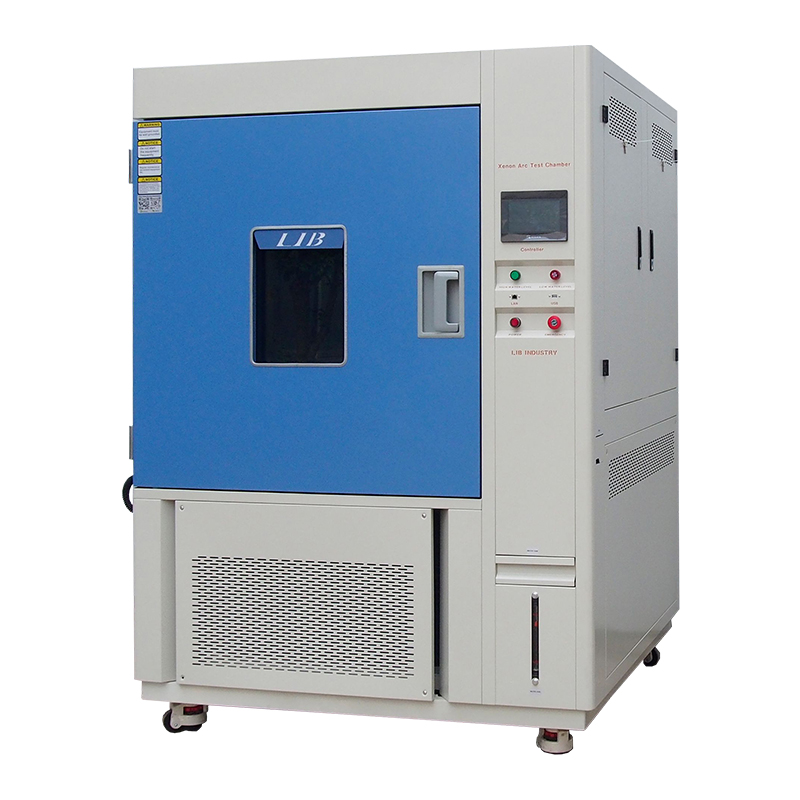
| UV Accelerated Weathering Tester | Xenon arc Test Chamber | |||
| Spectrum | UVA-340 main band plus a smaller UVB share | Close to sunlight, 295–365 nm | Shorter wavelengths, harsher | Full sunlight, 290–800 nm |
| Typical use | Efficient screening with realistic UVA | General outdoor weathering | Very fast screening | Color and full-spectrum matching |
| Correlation to outdoors | Good, with faster aging | Good for most polymers and coatings | Lower, risk of unrealistic failures | Very good for color-sensitive products |
| Relative cost | Low | Low | Low | Higher |
Choose the upgraded UV 340 lamp when you want fast, low-cost screening of gloss, cracking and chalking with a realistic UVA base. Choose conventional UVA-340 when your standard names it explicitly. Choose UVB-313 only when your standard requires it or when you need a quick, severe comparison. Choose xenon arc when visible light and heat also affect your product, such as dyed textiles and colored coatings. Many labs use UV lamps for screening and xenon arc for final approval.
| LIB Popular Xenon arc and Weathering Test Chamber for Aging tests | ||
Full-Spectrum Sunlight Simulation, |
UV Accelerated Weathering Tester Fast UV Degradation Testing, |
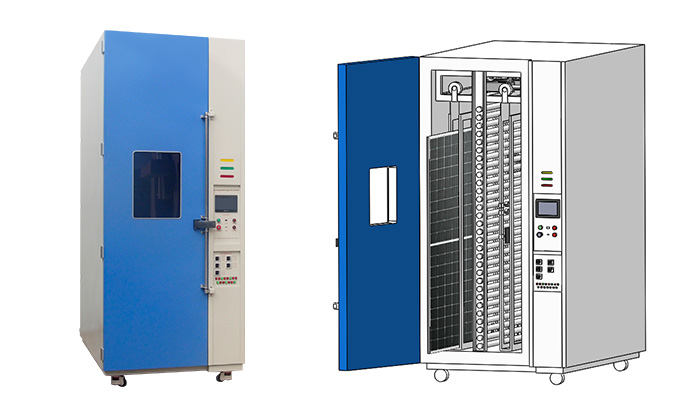
UV Preconditioning Chamber For PV Solar Panel IEC-Compliant PV Preconditioning, |
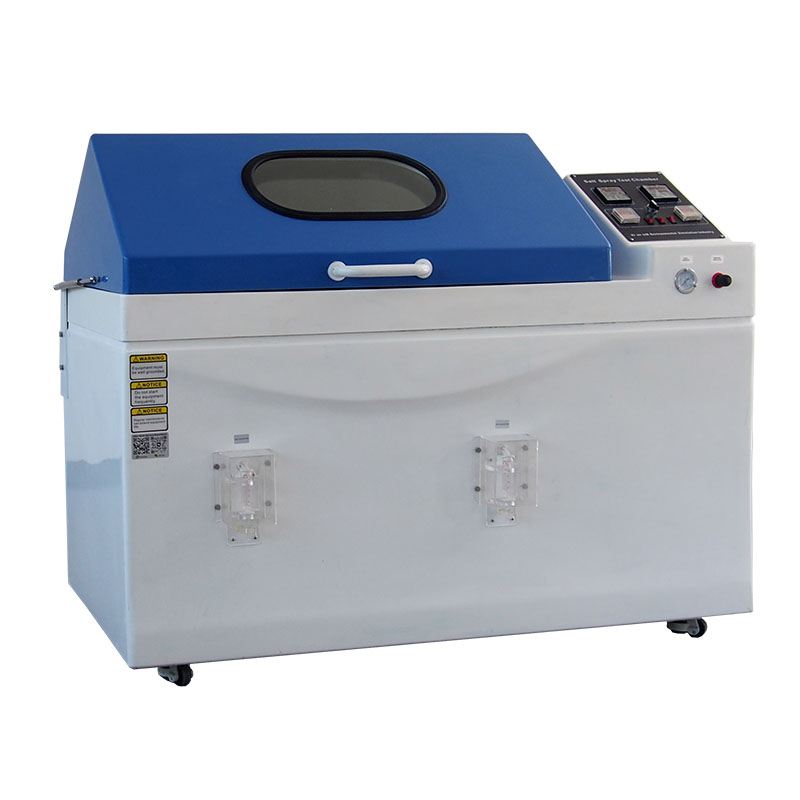
ASTM B117 Fog Corrosion Salt Spray Test Cabinet ASTM B117 Compliance Testing, Trusted Corrosion Resistance Evaluation |
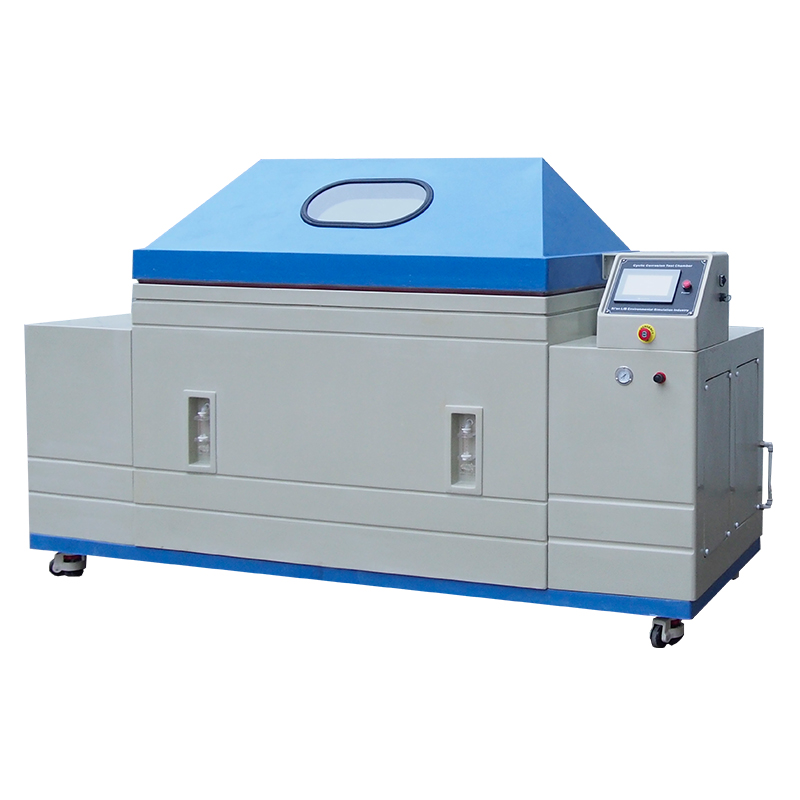
Cyclic Salt Spray Corrosion Chamber (CCT Chamber) Real-World Corrosion Cycling, |
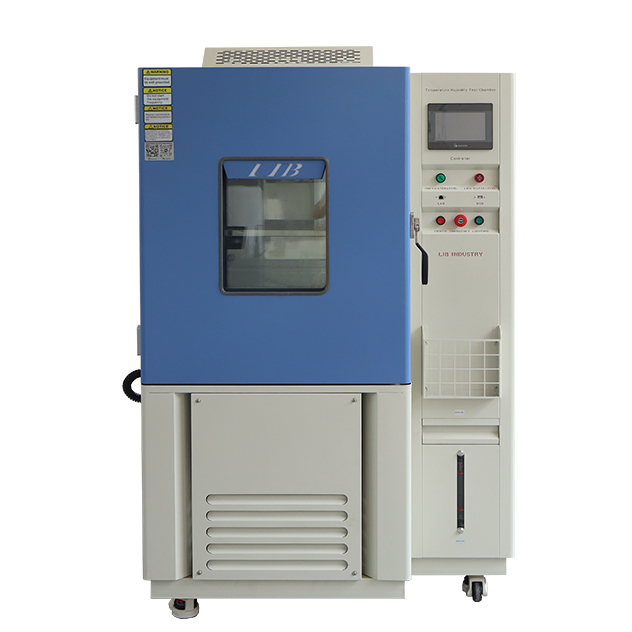
Temperature and Humidity Test Chamber Precision Environmental Control, Reliable Testing Performance |
1. Stable light source. The chamber uses 40 W fluorescent lamps, including the upgraded UV 340, UVB-313 and UVB-351, with a stable spectrum for up to 5,000 hours.
2. Accurate control. A dedicated radiometer and real-time sensors hold irradiance steady, from 0.15 to 5 W/m² at 340 nm or 313 nm, throughout the test.
3. Large capacity. One shelf holds 52 flat specimens, so you can compare many formulas in the same run.
4. Full environment simulation. Temperature reaches 90 °C ±2 °C, humidity reaches 95% RH or higher, and ten spray nozzles add rain-like conditions.
5. Easy to operate. A programmable touch-screen controller stores test profiles based on international standards, with PC connection and USB data export.
6. Proven in the field. Customers such as Todorovic in Serbia use the UV-SI-260 for routine weathering tests and have reported good results.
7. Worry-free support. Every equipment includes a 3-year warranty and lifetime service. Customization is available, and shipping takes 7 to 15 days.
| Model | UV-SI-260 UV Weathering Tester | 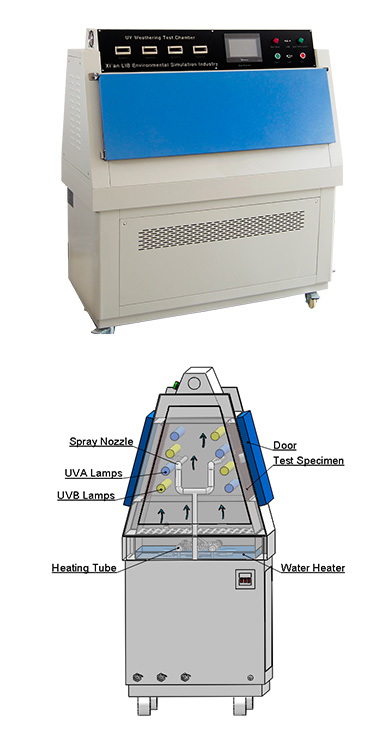 |
| Internal Dimension (mm) | 450*1170*500 | |
| Overall Dimension (mm) | 610*1330*1470 | |
| Specimen Holder Size(mm) | 75*150 | |
| Specimen Capacity | 52 Pieces | |
| Irradiation Source | Fluorescent UV lamps (8) - 40 W | |
| Temperature Range | Ambient ~ 90 ℃ ±2℃ | |
| Black Panel Temperature (BPT) | 35 ~ 80 ℃ | |
| Humidity Range | ≥95% RH | |
| Bandwidth | 290 ~ 400nm | |
| Irradiance Control | 0.3~20 W/㎡ | |
| Water Spray Cycle | 1~9999H59M (Adjustable) | |
| Distance of Specimen and lamp | 50mm | |
| Controller | Programmable color LCD touch screen controller, Ethernet connection | |
| Water Supply System | Automatic water supply, Water purification system | |
| Safety Device | Over-temperature Protection; Over-current Protection; | |
| Water Shortage Protection; Earth leakage Protection; Phase Sequence Protection | ||
| Exterior Material | Steel Plate with protective coating | |
| Interior Material | SUS304 Stainless Steel |
Q1: Can I use UV 340 lamps for both plastics and coatings?
Yes. UVA-340 lamps are specified in ASTM G154, ASTM D4329 and ISO 4892-3 for plastics, and in ASTM D4587 and ISO 16474-3 for coatings. The upgraded lamp suits the same materials for screening and ranking. Check your standard before using it for formal compliance reports.
Q2: What is new about the upgraded UV 340 lamp?
It replaces the UVA-only tube. The main output is still the UVA-340 band, but it now also includes a UVB band in a smaller proportion. This speeds up aging while keeping the spectrum close to sunlight.
Q3: What is the difference between UVA-340 and UVB-313?
UVA-340 follows the sunlight spectrum from about 295 to 365 nm. UVB-313 emits shorter, higher-energy wavelengths that age materials faster but less realistically.
Q4: How long do UV 340 bulbs last?
Lamps can keep a stable spectrum for up to 5,000 hours in a well-controlled chamber, but you should follow the replacement interval in your test standard.
Q5: Why do my results change after I replace the lamps?
Different lamp types or batches, mixed old and new lamps, or missing irradiance calibration can all cause shifts. Replace lamps as a set and calibrate the sensor. If you have switched from UVA-only lamps to the upgraded lamp, rerun a reference sample so that old and new data can be compared.
If you're looking for reliable weathering and environmental testing equipment, LIB Industry offers a range of solutions, including UV Accelerated Weathering Testers, Xenon Arc Test Chambers, UV Preconditioning Chambers, Temperature and Humidity Test Chambers, and Thermal Shock Test Chambers.
Contact LIB Industry to discuss your testing standards, materials, UV lamp requirements, and test cycles. Our team will help you find the right equipment for your laboratory.