


With the development of society and economy, people's pursuit of a better life continues to improve, and cosmetics have become an indispensable consumer product for people. When people choose cosmetics, in addition to paying attention to safety, they also put forward higher requirements for their efficacy.
Cosmetics are compound mixtures made by rationally blending and processing various raw materials. Cosmetics have a wide variety of raw materials and different properties. According to the raw material properties and uses of cosmetics, it can be roughly divided into two categories: matrix raw materials and auxiliary raw materials. The former is a class of main raw materials of cosmetics, accounting for a large proportion in cosmetic formulas, and is a substance that plays a major functional role in cosmetics. The latter is responsible for the forming, stabilizing or imparting color, fragrance and other properties of cosmetics, which are not used in large amounts in cosmetic formulations, but are extremely important.
Cosmetics are chemical mixtures made of natural, synthetic or extracted substances with different effects as raw materials and processed by heating, stirring and emulsification and other production processes. Cosmetics need to be tested in an environmental environment before being put into production to ensure their stability in their use and storage state.
LIB's Hot and Cold Test Chambers have earned widespread praise from customers for their precision, durability, and versatility. Our chambers provide stable, high-precision environments that simulate real-world conditions, ensuring reliable stability testing for creams, lotions, makeup, and cosmetic packaging. Users consistently highlight the chamber’s ease of operation, long-term reliability, and the ability to handle complex multi-stage temperature and humidity cycles.
Stability Test for Cosmetics
Because cosmetic products typically have short development timelines, conducting long-term real-time stability studies is often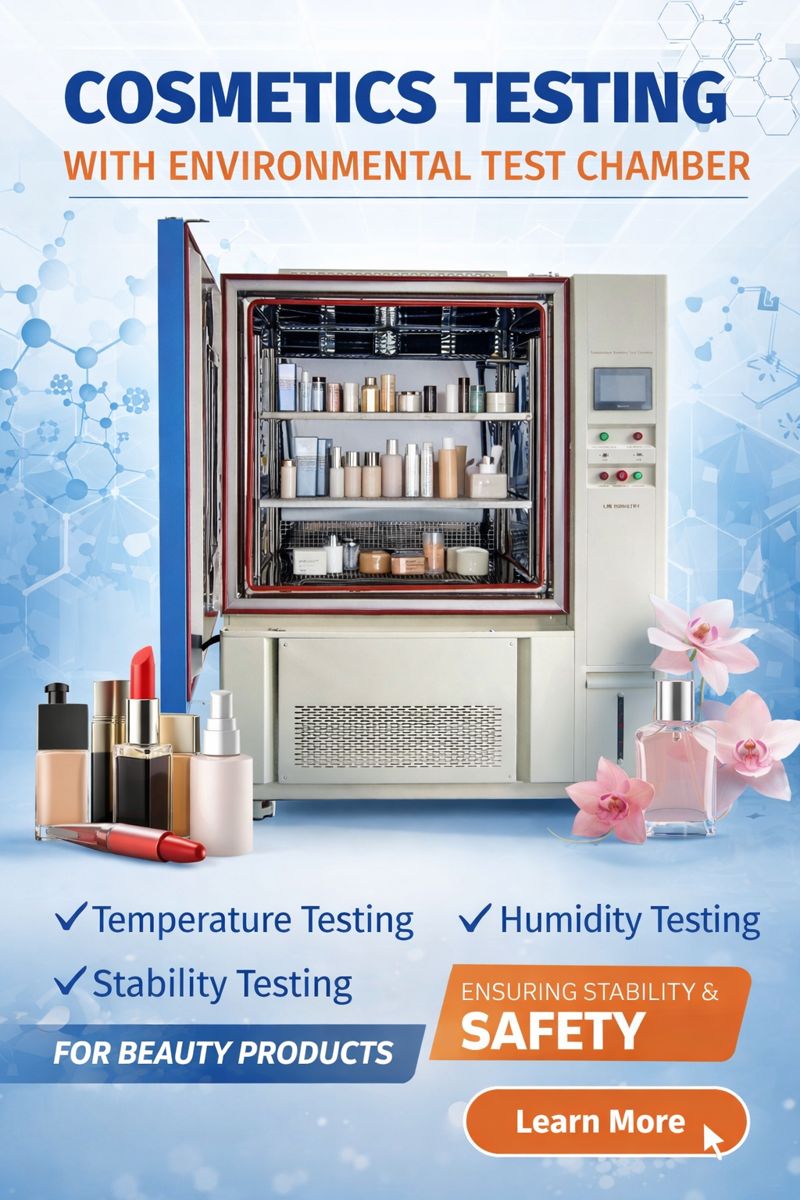 impractical. In addition, the wide variety and complex compositions of cosmetic formulations make it difficult to establish universal stability testing standards. As a result, cosmetic manufacturers usually develop their own accelerated stability testing programs to evaluate product quality in a cost-effective and efficient manner.
Accelerated stability studies for cosmetics commonly involve storing products under elevated temperature conditions, such as 37°C, 40°C, or 45°C, for periods ranging from one to three months, depending on the formulation type and testing objectives. These accelerated conditions are widely accepted internationally as reliable methods for predicting product shelf life across many industries. Stability protocols are generally designed to monitor product properties that may change during storage and potentially affect the product's appearance, safety, effectiveness, or overall performance.
In general, stability testing is recommended under the following circumstances:
1. During new product development, stability testing helps identify the most suitable formulation that meets the required physical, chemical, and performance specifications.
2. When modifying an existing product formulation, such as changing ingredients, adjusting raw material concentrations, or sourcing materials from different suppliers, additional stability studies are necessary to evaluate possible impacts on product quality.
3. When introducing new packaging materials or container types, compatibility testing between the cosmetic formulation and the packaging should be conducted to ensure product integrity and safety.
4. When manufacturing conditions are altered, including changes in production procedures, equipment replacement, or relocation to a new manufacturing facility, stability testing should still be performed because these changes may influence product consistency and quality.
High Temperature and Low Temperature Storage Stability Test
To ensure cosmetic products remain stable during storage and use, high- and low-temperature stability testing should be considered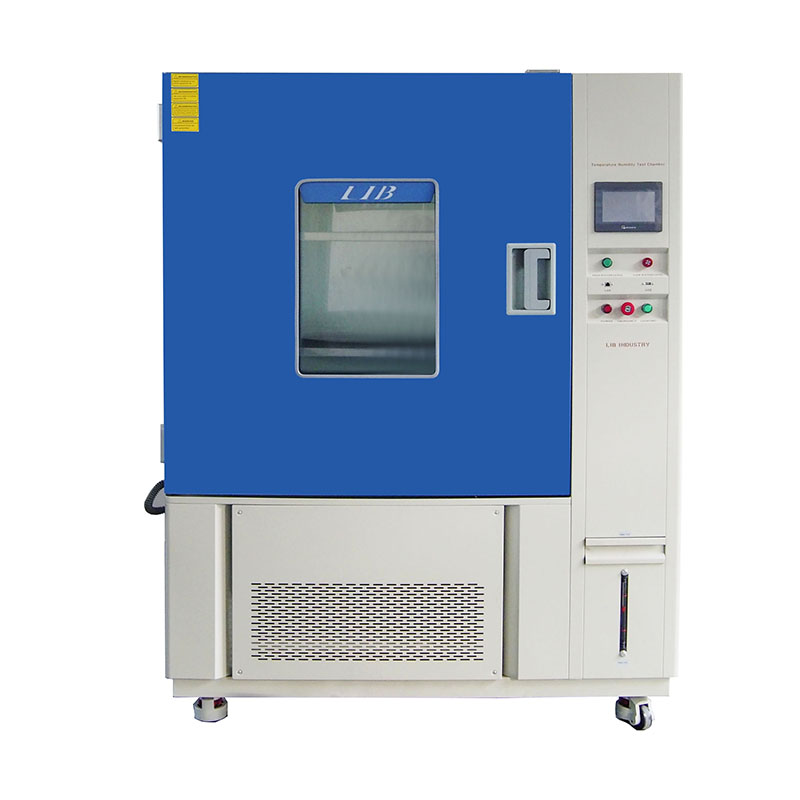 during formulation design. These tests help prevent issues such as oil leakage, water separation, coarse particles, and emulsion breakdown.
Testing conditions should simulate actual storage environments and may even be more severe than real conditions. For example, skincare products designed for extremely cold regions may require stricter low-temperature testing beyond standard requirements to verify formulation and raw material stability.
Key observation items include appearance changes such as discoloration, separation, sedimentation, cracking, bubbles, agglomeration, or fungal growth, as well as odor changes during storage and use. The high temperature and low temperature storage stability test in the laboratory can be carried out by the following methods:
| Testing Conditions | Time |
| Room temperature 25°C | 3 years product shelf life test |
| Accelerated test | Generally 40°C or 37°C, 50°C, 3-6 months |
| Low temperature test | 5°C 3-6 months |
| Temperature cycle test | Three cycles of -10°C to 40°C; 48-hour a cycle |
| Light test | Xenon Arc Weathering Test |
|
| 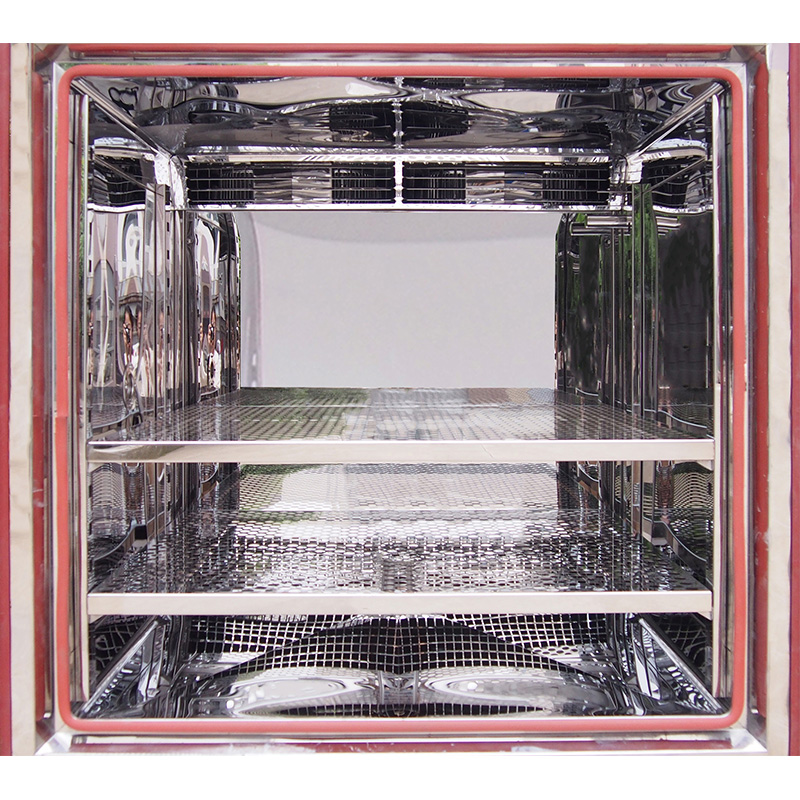 | 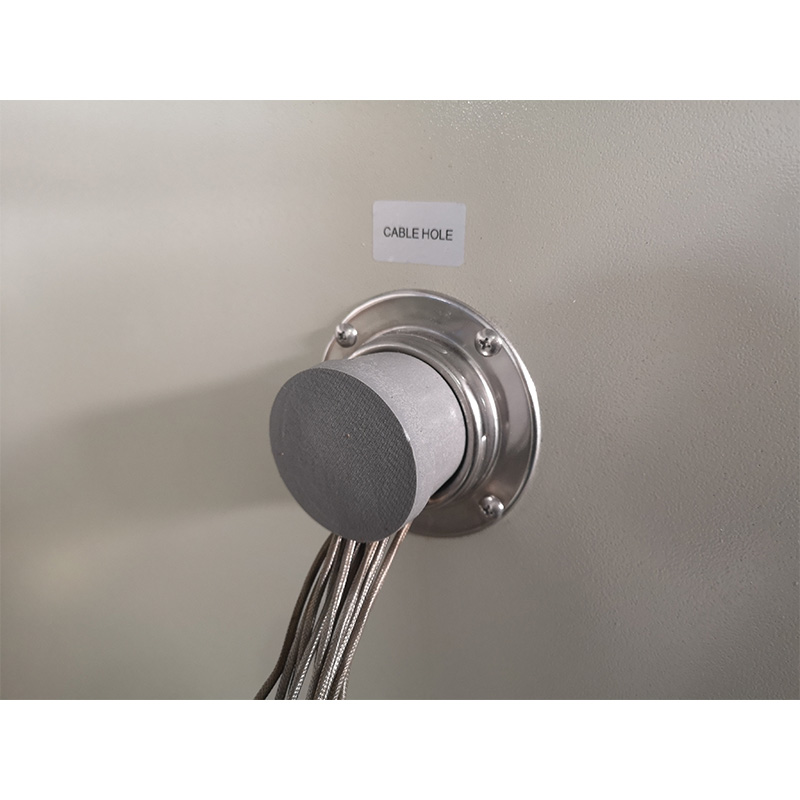 |
Touch screen controller | The compressor | Robust Anti-Corrosion Workroom | Integrated Power Access hole |

① Place it in a 40°C-50°C electric constant temperature incubator for 30-50 days, and observe after returning to room temperature
② Within 24 hours, frequently change back and forth between 0°C-50°C, repeat the operation for 15-30 days, and observe after returning to room temperature
③ Cycle storage at -5°C and 40°C for 3 times, each time for 24 hours, that is, store at -5°C for 24 hours, store at room temperature for 24 hours, and then store in a 40°C incubator for 24 hours, cycle 3 times in order to observe its stability
④ Store at -5°C for 1 week to observe its stability
temperature and humidity test chamber provide a high-precision test environment for durability testing of cosmetics, chemical, pharmaceutical and electronic products
LIB has a wide selection of standard and custom Hot And Cold Chamber. They are available to suit many types of environmental test conditions. Our test chambers are available in a variety of sizes and configurations, from 50 litre to 3000 litre, including bench, floor and walk-in. It can perfectly perform a series of environmental tests such as high temperature test, cold test and constant temperature test, thermal shock test. Our LIB stability chambers have basic performance and good reliability for long-term continuous operation. The test chamber also has the advantages of easy operation and easy maintenance.

Xenon Arc Weathering Test for Cosmetics Packaging Materials
The main purpose of xenon arc aging test for cosmetic bags is to evaluate the durability and stability of cosmetic bags after long-term use. Cosmetic bags usually use plastic materials, which are easily affected by factors such as oxidation, ultraviolet rays, and heat, resulting in color changes, aging appearance, and reduced functionality. The xenon arc aging test can simulate these factors and accelerate the aging process of the test samples, so as to evaluate the performance and life of the cosmetic bag more quickly and accurately.
● working principle
The main working principle of the xenon lamp aging test for cosmetic bags is to use the high-intensity radiation and ultraviolet radiation of the xenon lamp to simulate the light and oxidation factors in the daily use environment. The test samples are placed in the aging test equipment, and the actual use conditions are simulated by xenon lamp radiation and ultraviolet radiation, such as sunlight exposure and air oxidation in indoor and outdoor environments. By controlling parameters such as temperature, humidity and ultraviolet radiation intensity in the test equipment, the aging process under different usage environments can be simulated.
● operation method
Design test plan: According to the characteristics and requirements of cosmetic bag materials, design a test plan that meets the actual needs, including the determination of test time, temperature, humidity and ultraviolet radiation and other parameters.
Install the test equipment: choose the appropriate xenon arc and ultraviolet radiation test chamber (LIB UV and Xenon Arc Accelerated Weathering Test Chamber), and set the parameters and working mode.
Prepare cosmetic bag samples: According to the designed test plan, prepare the cosmetic bag samples to be tested, and place the sample holder in the test equipment.
Test: Expose the cosmetic bag samples in the test equipment to xenon lamp irradiation and ultraviolet irradiation, control the test time, temperature, humidity and ultraviolet irradiation parameters according to the designed test plan, and record the test data.
Analyze test results: Analyze the aging of cosmetic bags based on test data, including color changes, appearance aging, and functional degradation.
Report writing: According to the test results, write a test report, including test purpose, test method, test result and conclusion, etc., to facilitate subsequent data analysis and technical improvement. At the same time, maintain and maintain the test equipment to ensure its long-term stable operation.
The xenon lamp tube in LIB Xenon Arc test chamber can simulate the solar spectrum, so that the cosmetic bag is exposed to the light environment similar to the sun in the test. At the same time, the ultraviolet irradiation device can simulate ultraviolet radiation in sunlight to test the ultraviolet protection performance of materials. By testing the cosmetic bag samples under different conditions of time, temperature, humidity and ultraviolet radiation, the actual use environment can be simulated, the performance and stability of the material after long-term use can be evaluated, and a scientific basis can be provided for the quality and performance of the product.
The xenon lamp aging test for cosmetic bags is used to evaluate the resistance of bag materials to light and weather aging under simulated sunlight exposure. The test helps assess the durability, color stability, and overall performance of cosmetic bags during long-term use. Test results can support the optimization of material formulations and manufacturing processes, helping manufacturers improve product quality, reliability, and service life. In addition, the testing process contributes to product safety assurance and helps protect consumer interests. During testing, all procedures should strictly follow the established test plan, with accurate control and recording of parameters such as temperature, humidity, and irradiance. Regular maintenance and calibration of the test equipment are also essential to ensure reliable and consistent test results. The final test report should clearly document the testing conditions, procedures, and evaluation results to support future analysis and product improvement.
Summary
Cosmetics have a long history of use and are widely used in daily life by the majority of beauty lovers. It is very important to understand the raw materials and stability related tests of cosmetics. LIB has more than 10 years of experience in this field, come and choose the environmental test chamber suitable for cosmetic testing.
Choose LIB Industry for reliable, precise, and customizable environmental testing solutions. Contact us today to find the ideal test chamber for your cosmetic products and packaging, and ensure quality and safety that your customers can trust.


