Views: 0 Author: Site Editor Publish Time: 2026-03-20 Origin: Site


The primary function of a salt spray test is to reproduce a controlled saline atmosphere that allows engineers, researchers, and quality inspectors to assess the corrosion resistance of materials, finishes, and protective coatings. Using a Salt Spray Corrosion Test Chamber, manufacturers can accelerate corrosion processes in a standardized environment, helping identify potential failures and evaluate long-term durability more efficiently than traditional outdoor exposure testing.
A Salt Spray Corrosion Test Chamber is used to simulate aggressive environments that products may face in marine, coastal, automotive, industrial, and infrastructure applications. Instead of waiting months or years for rust, blistering, pitting, coating delamination, or underfilm corrosion to appear outdoors, a Salt Spray Corrosion Test Chamber creates repeatable salt fog conditions that allow engineers to compare product durability in a measurable way. This is the core purpose of salt spray testing: faster corrosion evaluation, more consistent data, and better decisions in product design, supplier qualification, and quality control.
In practical terms, the purpose of a Salt Spray Corrosion Test Chamber is not just to “make rust happen.” Its real function is to help engineers understand relative corrosion resistance. LIB Salt Spray Corrosion Test Chambersupports coating comparison, material selection, process validation, product improvement, and compliance with industry standards. For this reason, the Salt Spray Corrosion Test Chamber is widely used in automotive, aerospace, fastener manufacturing, electronics, marine hardware, building products, and industrial finishing.
A recent customer from Mexico, Christian Hernandez, shared positive feedback after using the LIB S-150 Salt Spray Test Chamber. He noted that the chamber has been working wonderfully in daily testing, with only a minor issue related to saline solution leakage that was quickly resolved. After receiving the maintenance manual, he also expressed interest in preventive maintenance, highlighting both the chamber's stable performance and the importance of simple routine care. This real-world experience reflects how a reliable Salt Spray Corrosion Test Chamber supports consistent testing and user confidence.
This article will explain how salt spray testing works, what it evaluates, and how it helps engineers, laboratories, and quality teams make faster and more accurate decisions about materials, coatings, and product durability.
The main purpose of salt spray testing is acceleration. In real service conditions, corrosion develops slowly and unpredictably because weather, humidity, pollutants, temperature changes, and material differences all affect the outcome. A Salt Spray Corrosion Test Chamber removes much of that uncertainty by creating a stable and repeatable exposure environment. This makes it easier to compare one coating or one product design against another.
A Salt Spray Corrosion Test Chamber is important because corrosion is expensive. It can damage appearance, reduce structural integrity, impair electrical conductivity, weaken fastening systems, and shorten product life. By using a Salt Spray Corrosion Test Chamber, manufacturers can identify potential problems before products are released to the market.
The purpose of a Salt Spray Corrosion Test Chamber can be summarized in five key points:
Accelerate corrosion under controlled conditions
Compare coatings, platings, and materials
Support product development and design validation
Improve quality control and production consistency
Help meet international and industry corrosion standards
Because of these functions, a Salt Spray Corrosion Test Chamber is often considered one of the most important tools in corrosion testing labs.
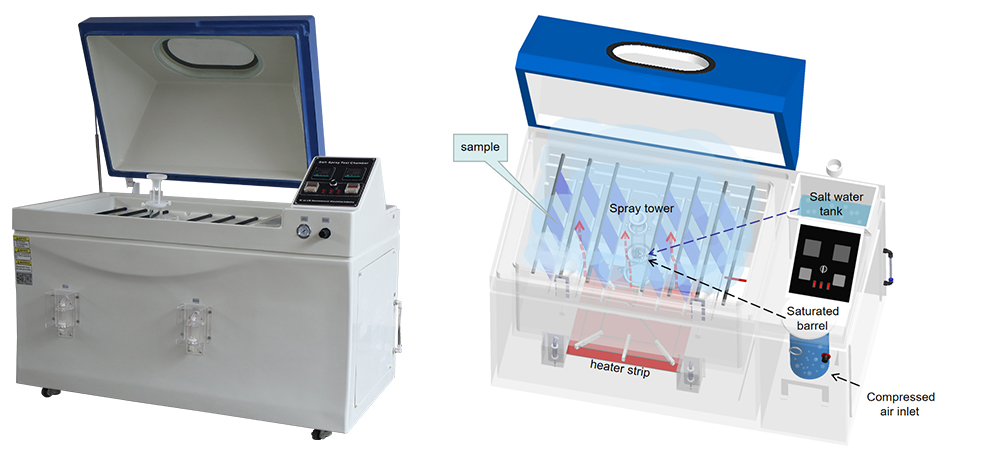
A Salt Spray Corrosion Test Chamber works by atomizing a salt solution into a fine mist, or salt fog, and circulating that fog around test samples. The chamber maintains controlled environmental conditions such as temperature, humidity, spray deposition, and exposure time. This allows the Salt Spray Corrosion Test Chamber to reproduce corrosion stress in a standardized form.
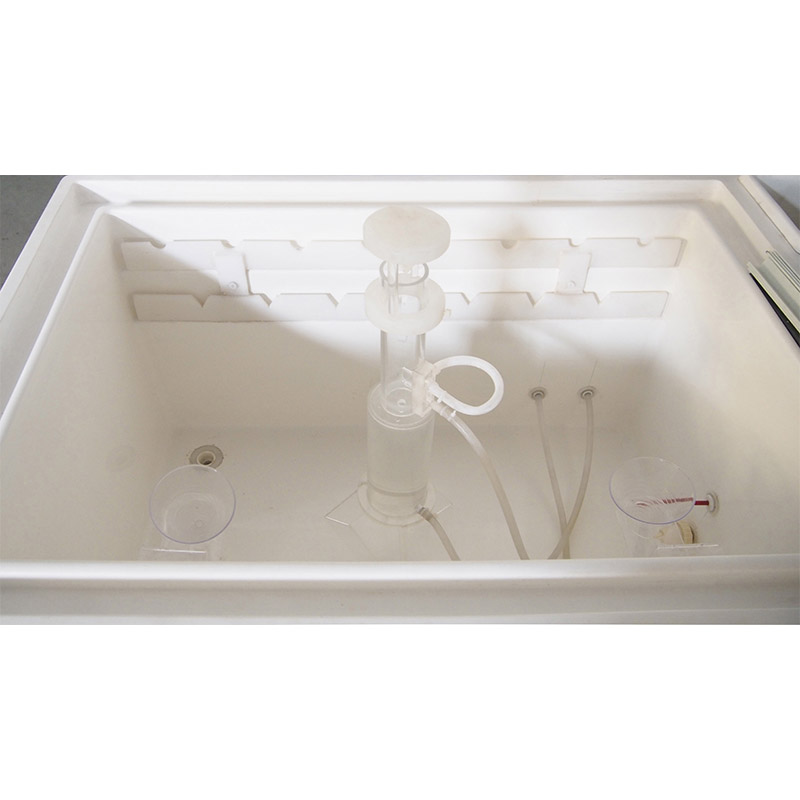
A typical Salt Spray Corrosion Test Chamber includes the following systems:
Salt solution tank
Spray nozzles or atomizing tower
Saturated air barrel or preheating system
Chamber body made from corrosion-resistant materials
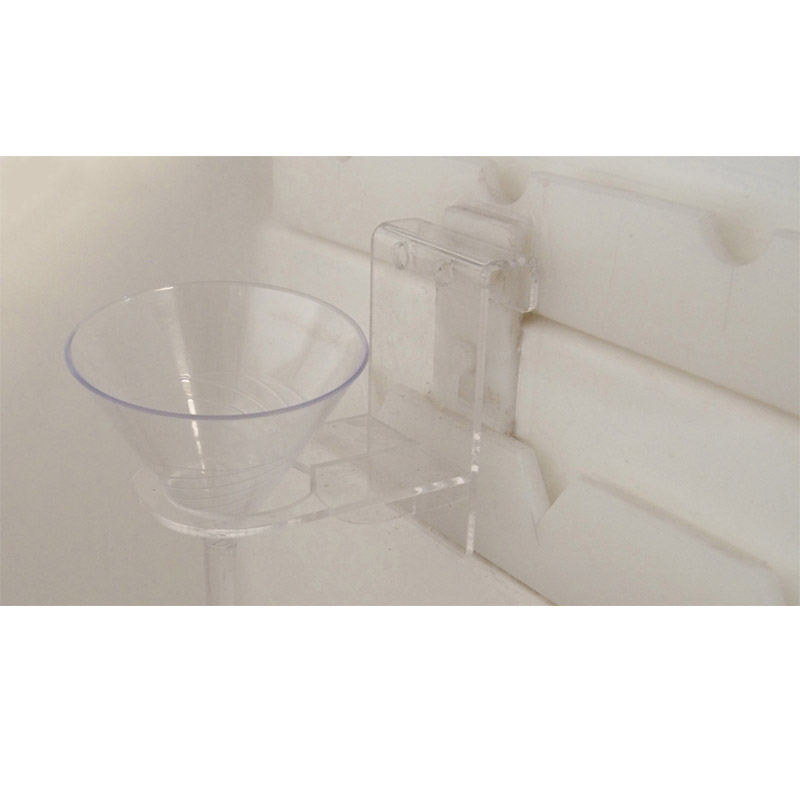
Sample holders for panels, fasteners, or components
Fog collection system
Controller for setting test parameters
Safety protections for water shortage, overheating, and electrical faults
Robust Workroom | Salt Fog Deposition | 1~2ml / 80cm2 · h | ||
Spray Type | Continuous / Periodic | |||
Heating Element | Nichrome heater | |||
Salt Fog Collected | Fog collector and fog measure cylinder | |||
Salt Fog collector | Controller | PID controller | ||
Material | Glass fiber reinforced plastics | |||
Standard Configuration | 8 round | |||
The purpose of a Salt Spray Corrosion Test Chamber depends on precision. If spray output is uneven or temperature drifts too far, the test loses value. That is why a good Salt Spray Corrosion Test Chamber emphasizes uniform salt fog deposition, stable chamber temperature, accurate control, and repeatability across long testing periods.
》》》For more technical information and details about our Salt Fog Corrosion Test Chamber, please feel free to email us at info@lib-industry.com.
A Salt Spray Corrosion Test Chamber is used to test a broad range of materials and finished products. The purpose is to determine how they resist corrosion under controlled chloride exposure.
Common test samples inside a Salt Spray Corrosion Test Chamber include:
Electroplated steel parts
Zinc-coated hardware
Painted metal panels
Powder-coated products
Aluminum components
Stainless steel parts
Automotive brackets and underbody parts
Marine hardware
Connectors and enclosures
Structural fasteners
Consumer product metal parts
For example, a Fastener Salt Corrosion Rating Test is often carried out in a Salt Spray Corrosion Test Chamber to compare the corrosion resistance of screws, bolts, nuts, washers, clips, and coated fastening systems. This type of evaluation is highly relevant because fasteners are small components with major reliability consequences.
In painted and coated substrates, the Filiform Corrosion Salt Test is also important. This test helps identify thread-like underfilm corrosion that grows beneath coatings, especially when adhesion or pretreatment is insufficient. A Salt Spray Corrosion Test Chamber plays an essential role in exposing these coating weaknesses.
The purpose of a Salt Spray Corrosion Test Chamber becomes clearer when different testing methods are compared. Many buyers searching for this equipment are not only asking what the chamber is, but also what it can do. The answer depends on the methods it supports.
Test Method | Main Purpose | Typical Application |
|---|---|---|
Neutral Salt Spray | General corrosion screening | Basic coating and plating comparison |
Acidified Salt Spray | More severe corrosion exposure | Decorative coatings and special finishes |
Copper-Accelerated Salt Spray | Accelerated test for plated surfaces | Decorative metallic coatings |
Salt Spray Corrosion Test | Standardized salt fog exposure | Quality control and material ranking |
Cyclic Corrosion Test | Simulates alternating wet, dry, humidity, and temperature conditions | Automotive and outdoor service simulation |
Salt Fog and SO2 Test | Combines chloride fog with sulfur dioxide atmosphere | Industrial and polluted environment evaluation |
Fastener Salt Corrosion Rating Test | Compares corrosion resistance of fasteners | Hardware and assembly qualification |
Filiform Corrosion Salt Test | Evaluates underfilm thread-like corrosion | Painted or coated metal substrates |
| Name | Salt Spray Test Chamber | Salt Cyclic Corrosion Test Chamber | Salt and SO₂ Corrosion Test Chamber |
|---|---|---|---|
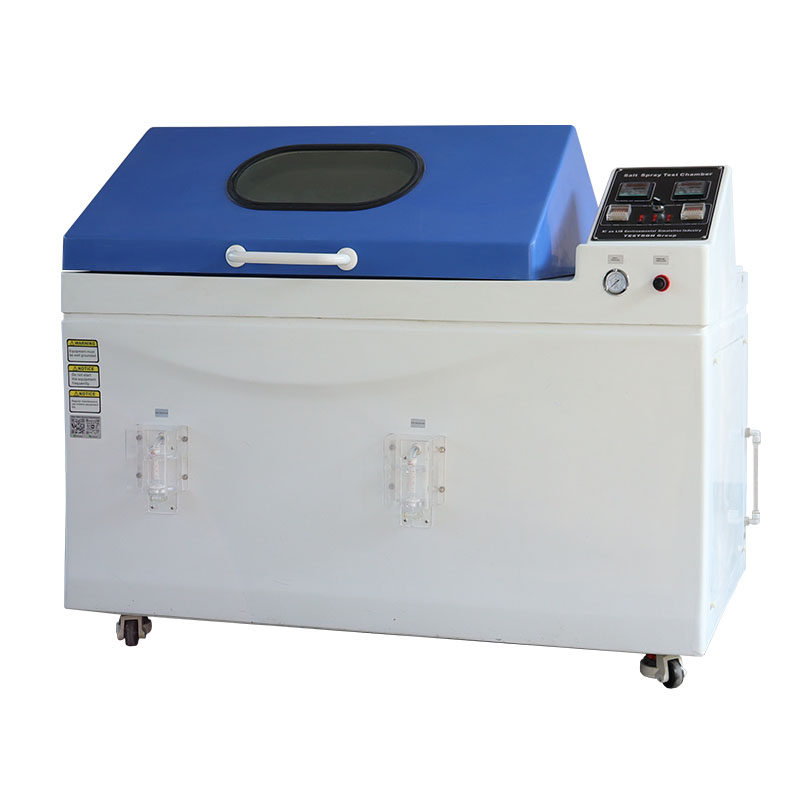 | 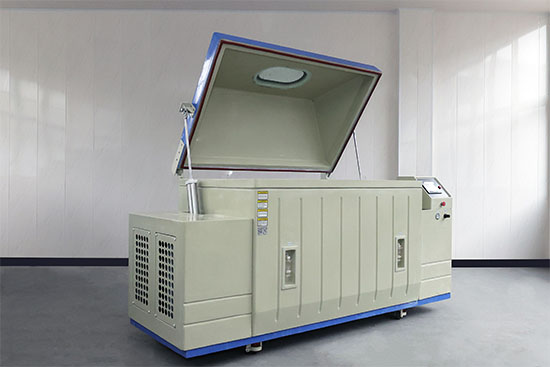 | 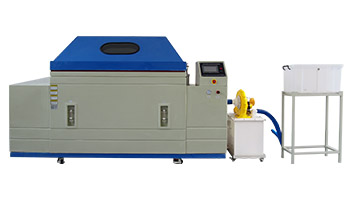 | |
| Model | S-150, S-250, S-750; S-010, S-016, S-020 | SC-010, SC-016, SC-020 | SSC-010, SSC-016, SSC-020 |
| Test Standard | ASTM B117; ISO 9227 (NSS, NASS, CASS) | ASTM B117; ISO 9227; IEC 60068-2-52 | ASTM B117; ISO 9227; IEC 60068-2-52; ASTM G85 (A4) |
| Function | Salt fog spray; Temperature (Ambient ~ +60°C) | Salt fog spray; Temperature (+10°C ~ +90°C); Humidity (30% ~ 98% RH) | Salt fog spray; Temperature (+10°C ~ +90°C); Humidity (30% ~ 98% RH); SO₂ gas |
A modern Salt Spray Corrosion Test Chamber may support only continuous salt fog, or it may be designed for more advanced corrosion programs. This is why understanding the purpose of salt spray testing must include related methods such as Cyclic Corrosion Test, Salt Fog and SO2 Test, and Filiform Corrosion Salt Test.
》》》To receive comprehensive or customized solutions and pricing for the Salt Fog Test Chamber, please contact us at info@lib-industry.com.
In product development, a Salt Spray Corrosion Test Chamber is used to compare design options before commercialization. If a company is choosing between two coatings, different pretreatment methods, or several plating systems, the Salt Spray Corrosion Test Chamber provides measurable corrosion data within a relatively short timeline.
This makes the Salt Spray Corrosion Test Chamber valuable for:
Coating optimization
Surface treatment comparison
Material substitution projects
Supplier benchmarking
Prototype validation
Failure analysis
For example, if an engineer wants to know whether zinc plating, zinc flake coating, or powder coating provides better protection for a bracket, the Salt Spray Corrosion Test Chamber can help rank their relative performance. If a fastener supplier wants to validate a new anti-corrosion finish, a Fastener Salt Corrosion Rating Test performed in a Salt Spray Corrosion Test Chamber provides direct comparison data.
The same is true for the Filiform Corrosion Salt Test, where underfilm corrosion resistance can influence coating system selection for painted aluminum or coated steel.
A common search intent behind the term Salt Spray Corrosion Test Chamber is comparison. Many buyers want to know whether a standard chamber is enough, or whether they need a more advanced Cyclic Corrosion Test system.
The difference is significant. A basic Salt Spray Corrosion Test Chamber mainly provides continuous or periodic salt fog exposure. This is effective for standardized screening and routine quality checks. However, real-world environments are rarely constant. Products may experience wetting, drying, humidity, heat, and pollutant cycles.
That is why the Cyclic Corrosion Test has gained importance. A Cyclic Corrosion Test uses repeated changes in environmental conditions to better simulate real field exposure.
Comparison Point | Standard Salt Spray | Cyclic Corrosion Test |
|---|---|---|
Exposure Mode | Continuous salt fog | Salt spray plus humidity, drying, temperature cycles |
Realism | Moderate | Higher |
Programming Complexity | Lower | Higher |
Common Use | Routine screening | Automotive, transportation, coated assemblies |
Chamber Type | Basic Salt Spray Corrosion Test Chamber | Advanced programmable Salt Spray Corrosion Test Chamber |
The purpose of salt spray remains the same in both cases: accelerate corrosion and reveal weaknesses. But an advanced Salt Spray Corrosion Test Chamber that supports Cyclic Corrosion Test can often provide data that better reflects service conditions.
If the purpose of salt spray testing is to produce reliable and useful corrosion data, then selecting the right Salt Spray Corrosion Test Chamber is critical. Buyers should compare features carefully.
Use the checklist below:
Chamber volume and sample capacity
Temperature and humidity control range
Salt fog deposition uniformity
Continuous or periodic spray capability
Support for Salt Spray Corrosion Test
Support for Cyclic Corrosion Test
Support for Salt Fog and SO2 Test
Control system and programming flexibility
Safety protections and maintenance convenience
Data recording capability
Here is a simple comparison guide:
Selection Factor | Why It Matters |
|---|---|
Chamber size | Determines how many samples can be tested |
Spray uniformity | Affects result consistency |
Temperature stability | Improves repeatability |
Cyclic function | Enables more realistic exposure |
SO2 function | Supports polluted-atmosphere testing |
Sample holders | Helps test different specimen types |
Safety systems | Protects equipment and users |
Data logging | Supports documentation and analysis |
A high-quality Salt Spray Corrosion Test Chamber should match both your current testing needs and future expansion into more advanced corrosion methods.
The main purpose of a salt spray is to accelerate corrosion in a controlled environment so engineers can evaluate how materials, coatings, and finished products resist chloride-rich exposure. This is typically done in a Salt Spray Corrosion Test Chamber.
A Salt Spray Corrosion Test Chamber shortens the testing cycle and provides repeatable conditions. Outdoor exposure takes much longer and is affected by uncontrollable weather and environmental variation.
A Salt Spray Corrosion Test usually uses continuous or periodic salt fog exposure. A Cyclic Corrosion Test adds alternating humidity, drying, and temperature stages to better simulate real service environments.
A Fastener Salt Corrosion Rating Test is used when comparing the corrosion resistance of screws, bolts, nuts, washers, clips, and other fastening systems with different coatings or surface treatments.
A Salt Fog and SO2 Test is used to simulate environments where salt and sulfur dioxide act together, such as polluted industrial atmospheres. It is more complex than standard salt fog testing.
Looking to improve your corrosion testing capabilities? Contact LIB Industry today to get expert advice and find the right Salt Spray Corrosion Test Chamber for your application.