Views: 0 Author: LIB Team Publish Time: 2026-05-07 Origin: Site


Corrosion is one of the most common failure mechanisms for metals, coatings, and surface treatments used in automotive, marine, electronics, and construction industries. However, real-world corrosion can take months or even years to appear, making product validation slow and unpredictable.
In real customer applications, LIB ASTM B117 Fog Corrosion Salt Spray Test Cabinet has demonstrated strong stability and reliability. For example, a Canadian customer shared feedback at the beginning of the year: “Hi Belle, For now, we are satisfied with previous product and we don't need more chambers. if something comes up will contact you.” This reflects a positive user experience and indicates that the LIB corrosion test system continues to operate reliably in practical laboratory use without additional replacement or expansion needs.
This article explains how long testing takes in an ASTM B117 Fog Corrosion Salt Spray Test Cabinet, how accelerated salt spray testing compares with natural corrosion, and how LIB’s system ensures stable and repeatable results under international standards.
The standard ASTM B117 Salt Spray Test defines a continuous salt fog exposure method, not a fixed test duration. Common testing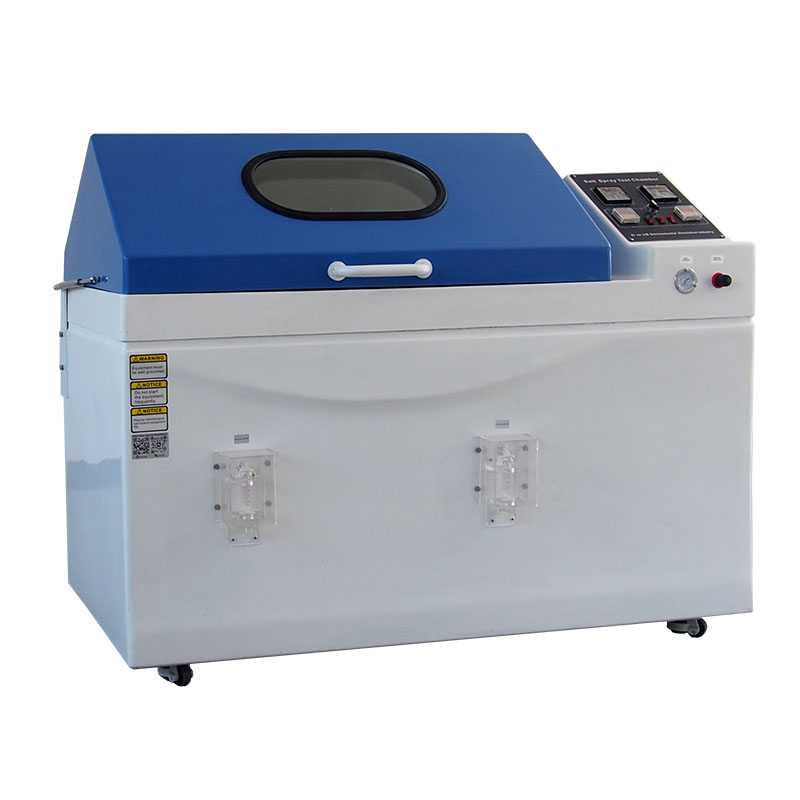 times include:
① 24–96 hours: basic corrosion resistance screening
② 240–500 hours: standard industrial coating validation
③ 1000+ hours: high-performance automotive or marine coatings
Test duration depends on material type, coating thickness, and required corrosion resistance level. The chamber runs continuously under controlled conditions until the target exposure time is reached.
Natural outdoor corrosion is extremely slow and variable:
① Coastal environment: corrosion may take 1–5 years
② Industrial atmosphere: 3–10 years
③ Mild indoor conditions: even longer or unpredictable
In contrast, an ASTM B117 Fog Corrosion Salt Spray Test Cabinet compresses this into days or weeks, providing accelerated and controlled corrosion simulation. This significantly reduces product development cycles and speeds up certification decisions.
The ASTM B117 method simulates key real-world corrosion factors:
① Continuous salt fog deposition (5% NaCl solution)
② Stable temperature at 35 ± 2°C
③ Controlled spray rate of 1–2 mL / 80 cm² / hour
④ Constant humidity exposure in a closed chamber
This environment replicates marine air, coastal salt mist, and industrial corrosion conditions in a controlled laboratory setting.
LIB's system is designed to ensure stable, repeatable corrosion testing through precise environmental control.
Main working mechanism:
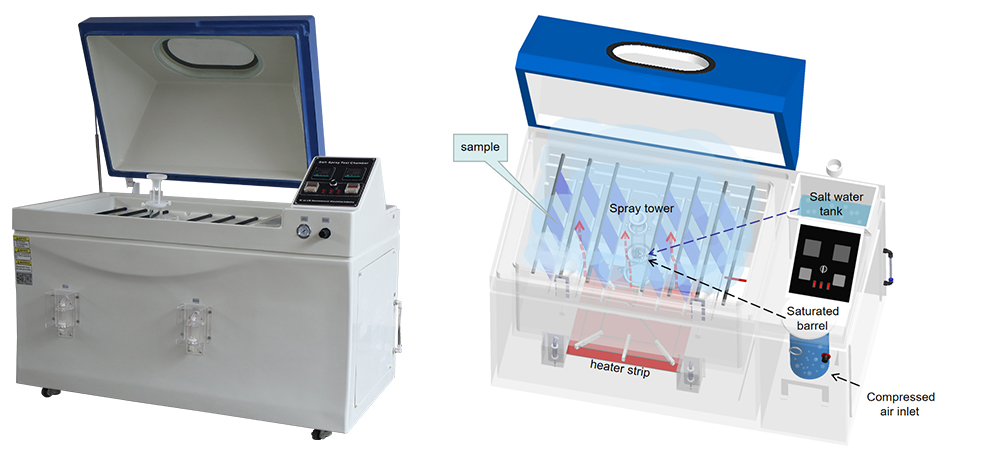
① Quartz spray nozzle atomizes 5% NaCl solution into fine fog
② Spray pressure maintained at 83 kPa for stable deposition
③ Temperature control system keeps chamber at 35 ± 2°C
④ Saturated air preheating system stabilizes humidity conditions
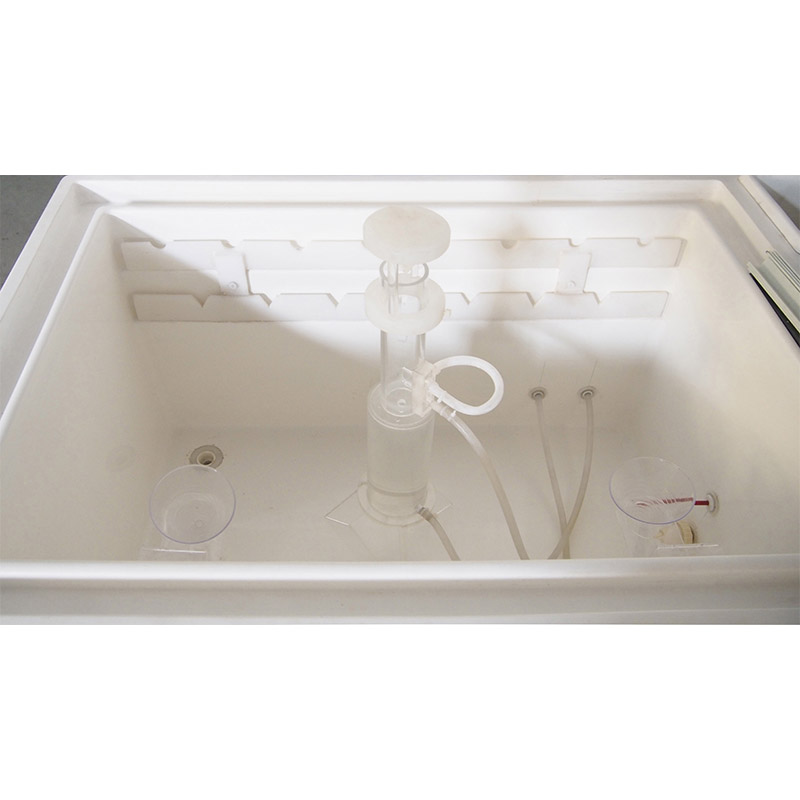
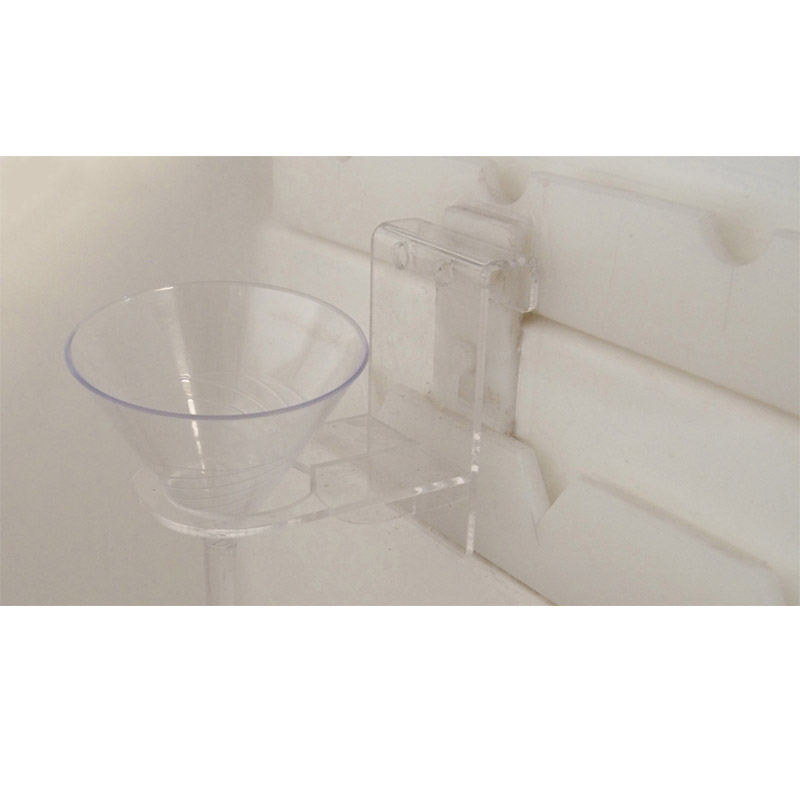
⑤ Fog collector monitors deposition rate continuously
The combination of controlled fog generation and thermal stability ensures every test cycle matches ASTM B117 requirements with high repeatability.
ature |
|
|
|---|---|---|
Environment | Continuous salt fog | Alternating salt, humidity, drying, temperature |
Complexity | Lower | Higher |
Test realism | Moderate | Higher |
Typical use | General coating screening | Automotive, transportation, outdoor products |
Chamber requirement | Standard Salt Spray Corrosion Test Chamber | Advanced programmable Salt Spray Corrosion Test Chamber |
The most widely used corrosion test standard is:
ASTM B117 – Standard Practice for Operating Salt Spray (Fog) Apparatus
① Salt solution: 5% NaCl
② pH range: 6.5–7.2
③ Temperature: 35 ± 2°C
④ Spray deposition: 1–2 mL / 80 cm² / hour
⑤ Exposure mode: continuous fog spray
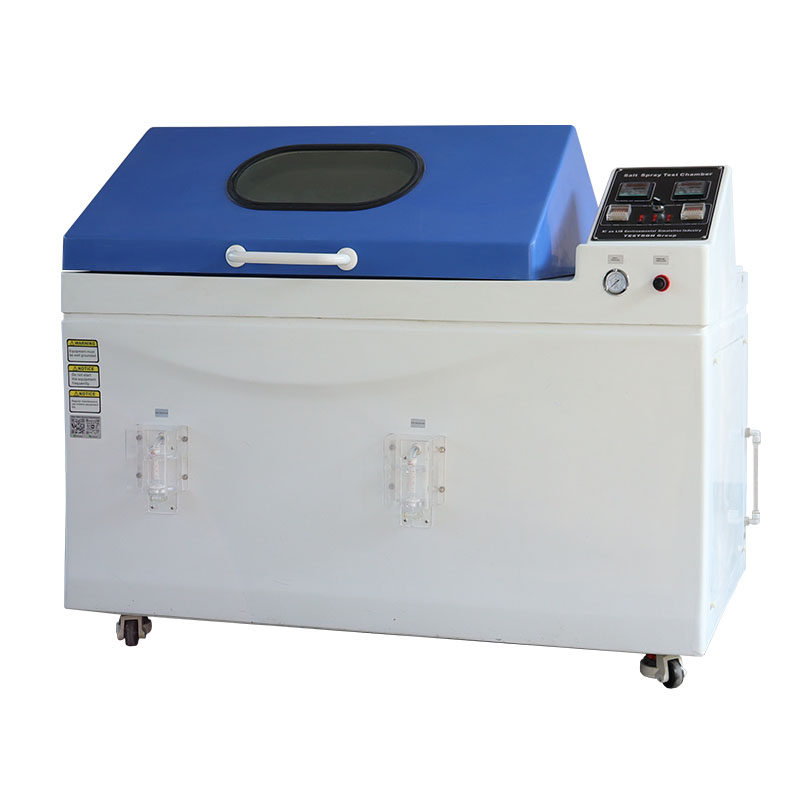
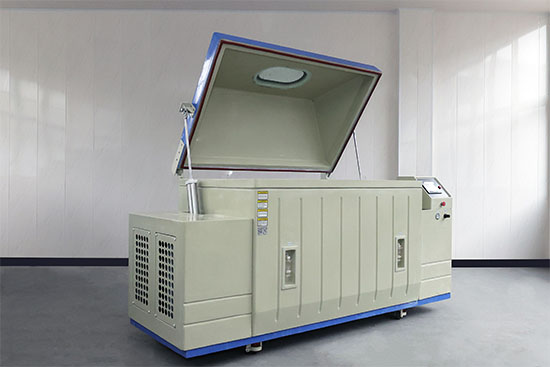
Based on this standard, LIB's S-250 model ASTM B117 Fog Corrosion Salt Spray Test Cabinet executes stable long-term corrosion cycles automatically.
Robust Workroom | Salt Fog Deposition | 1~2ml / 80cm2 · h | ||
Spray Type | Continuous / Periodic | |||
Heating Element | Nichrome heater | |||
Salt Fog Collected | Fog collector and fog measure cylinder | |||
Salt Fog collector | Controller | PID controller | ||
Material | Glass fiber reinforced plastics | |||
Standard Configuration | 8 round | |||
① Stable fog generation system
Quartz nozzle ensures non-blocking spray performance for up to 4000 hours.
② High-precision temperature control
Maintains ±0.5°C fluctuation for consistent corrosion conditions.
③ Automatic water replenishment system
Ensures continuous testing without manual interruption.
④ Uniform salt deposition control
Spray tower design guarantees even fog distribution across specimens.
⑤ Corrosion-resistant chamber structure
Glass fiber reinforced body ensures long service life in high-salt environments.
The system is designed for long-duration operation, supporting hundreds to thousands of test hours without interruption.
Yes. LIB provides: On-site installation support, Operator training, ASTM B117 testing guidance, Remote technical assistance。
The chamber is securely packaged for international transport. LIB offers: Reinforced export packaging, Global delivery support, Optional on-site commissioning
Routine maintenance includes:,Nozzle cleaning or replacement, Salt solution tank cleaning, Sensor calibration checks. All maintenance tasks are simple and quick.
Yes. It supports continuous or periodic spray modes for flexible corrosion testing scenarios.
LIB ASTM B117 Fog Corrosion Salt Spray Test Cabinet provides a stable, accurate, and efficient solution for accelerated corrosion testing, fully compliant with ASTM B117 standards, helping manufacturers shorten validation time, improve coating reliability, and ensure consistent product performance.
Contact LIB Industry for technical consultation, quotation, or customized salt spray corrosion testing solutions.