


Products used in everyday life are constantly exposed to changing environmental conditions, such as temperature, humidity, sunlight, and other factors that can gradually affect their performance and service life. Environmental test chambers recreate and accelerate these conditions in a controlled laboratory environment, allowing manufacturers to evaluate how products respond to both normal and extreme conditions. By simulating long-term environmental exposure in a much shorter period, these chambers help engineers identify potential weaknesses, estimate product durability, and verify reliability before products reach the market. This makes environmental testing an essential tool for improving product quality, extending service life, and reducing the risk of premature failure.
Trusted by laboratories and manufacturers worldwide, LIB Industry environmental test chambers are widely recognized for their accuracy, stability, and ease of operation. Customers consistently highlight the chamber's reliable temperature and humidity control, uniform test conditions, and robust construction, which make it ideal for long-term reliability testing. This test chamber enables users to confidently reproduce harsh environmental conditions and obtain repeatable, meaningful test results that support product development and quality assurance.
General Introduction of Environmental Test Chambers
Environmental test chambers are designed to evaluate whether a specimen can maintain its integrity and functionality under controlled environmental conditions. A typical system consists of two core elements: the simulated environment and the testing space. The “environment” refers to a wide range of externally applied conditions—mechanical, climatic, biological, and others—that a sample may be exposed to over a defined period. The test chamber itself is an enclosed unit engineered to reproduce these conditions accurately and consistently. Common applications include climatic testing such as high and low temperature exposure, humidity control, light aging, and alternating temperature-humidity cycling.
These chambers are widely used in reliability and durability assessments across multiple industries, including electronic component testing, chemical and advanced material stability studies, automotive design and manufacturing validation, semiconductor wafer processing and packaging, pharmaceutical stability research (including chemical drugs, traditional Chinese medicine, and biologics), as well as microbiological testing in cosmetics and food products. Third-party testing laboratories also rely heavily on such equipment.
Product failures are often linked to external environmental stresses that were not fully anticipated during the design phase. Factors such as temperature fluctuations, humidity variations, vibration, and other real-world operating conditions can significantly impact performance. In addition, products must also withstand environmental challenges encountered during packaging, transportation, and storage, all of which may contribute to degradation or reduced service life if not properly accounted for during development.
When items are placed outdoors, they are likely to be affected by the natural environment such as wind, sun, altitude, humidity, cold, shock, salt spray, sand and dust. For different natural environments, there are different testing standards and different types of environmental test chambers.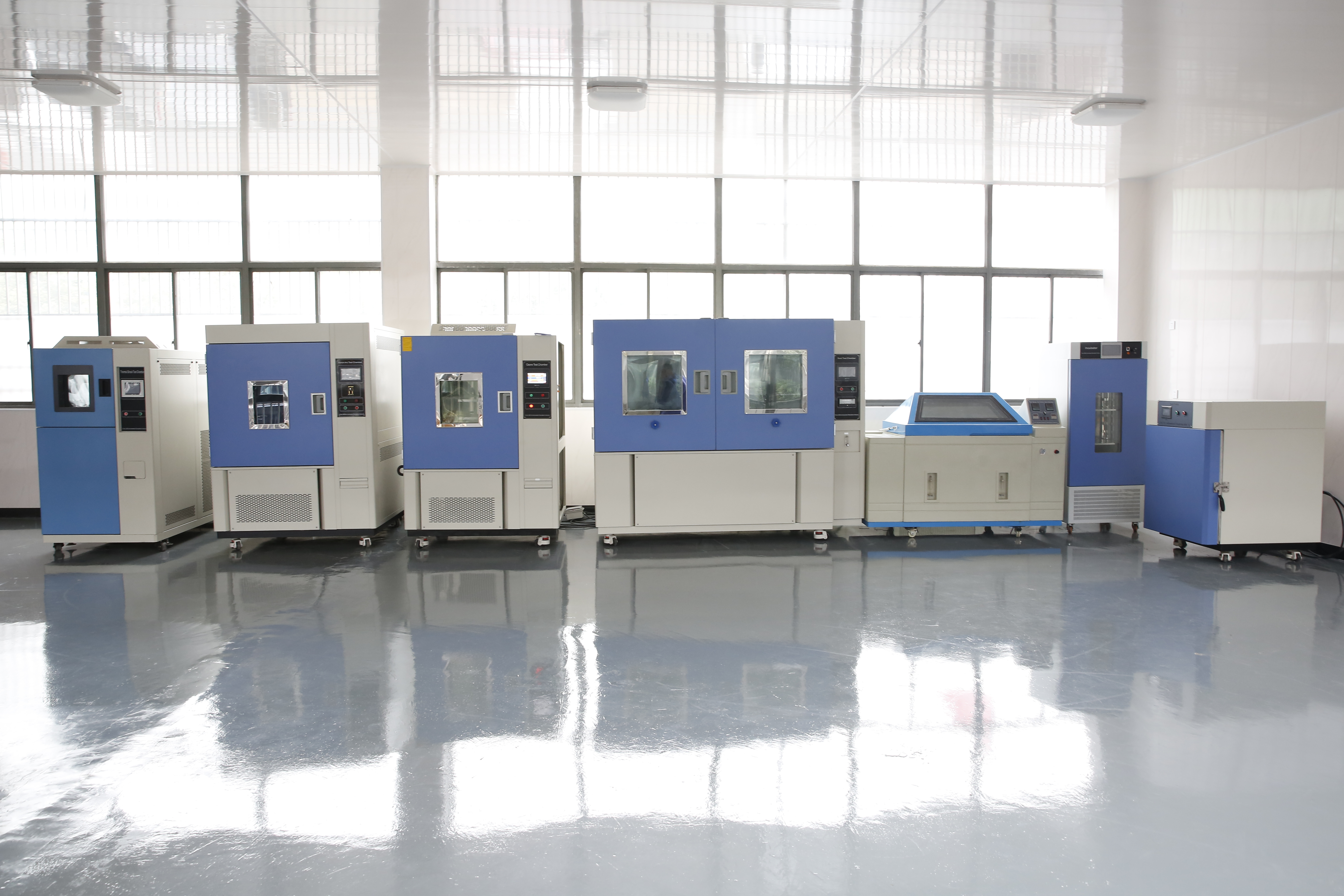
Common environmental test chambers mainly include:
1.temperature and humidity test chamber,
2.thermal shock test chamber,
3.salt spray test chamber,
4.xenon accelerated weathering test chamber,
5.UV weathering test chamber,
6.sand and dust test chamber,
7.water spray test chamber,
8.ozone test chamber,
9.noxious gas test chamber
How Environmental Test Chambers Work?
The working principle of the environmental test chamber can be mainly explained by the two physical parameters of temperature and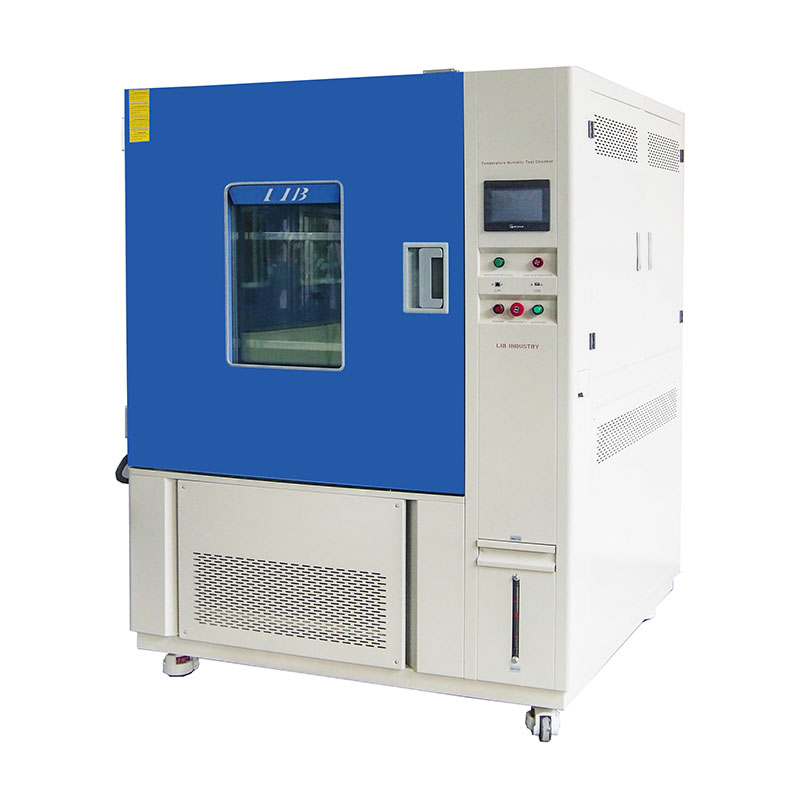 humidity.
The environmental test chamberconsists of two parts: temperature regulation (heating and cooling) and humidification. Through a rotating fan installed on the top of the chamber, air is discharged into the chamber, which circulates the gas and balances the temperature and humidity in the working room. The data collected by the built-in temperature and humidity sensor of the chamber is transmitted to the controller for editing and processing to achieve the purpose of adjusting temperature and humidity.
1.Temperature control
To control the temperature, the test chamber must be able to perform two functions: heating and cooling. In addition, it must be possible to regulate the temperature inside the chamber evenly. Specific air distribution technology in the environmental test chamber guarantees a high temperature uniformity throughout the test chamber, ensuring that all components and surfaces are at the same temperature.
The mechanical cooling system of the environmental test chamber is composed of a closed circuit system, and the main components are: compressor, condenser, expansion valve, evaporator.
2.Humidity control
To regulate humidity, the test chamber must be capable of both adding and removing moisture, while ensuring uniform humidity distribution throughout the working space.
Humidification is typically achieved using an electric steam humidifier. Steam is introduced into the airflow through distribution ports located behind the air circulation fan, allowing rapid and even mixing. The humidification process is managed by an independent control algorithm to enhance accuracy, stability, and operational reliability.
Dehumidification is performed through a refrigeration-based condensation system. This method relies on cooling surfaces to a temperature below the dew point so that moisture in the air condenses and is removed. The evaporator, which serves as the coldest component inside the chamber, plays a key role in this process. By continuously cooling and collecting condensed water, the system effectively reduces humidity levels and maintains precise environmental conditions within the chamber.
What Tests Can be Performed by the Environmental Test Chamber?
We use different types of environmental test chambers for various testing purposes. In environmental reliability evaluation, four major testing methods are commonly applied.
1. Constant Temperature and Humidity Test
This type of chamber maintains temperature, humidity, or other environmental parameters at a stable set value for a defined period. It is used to evaluate product lifespan and long-term stability under controlled conditions. The test results provide reliable data for performance assessment over time.
It can simulate product adaptability under various conditions such as high temperature and high humidity, high temperature and low humidity, or simple high/low temperature environments. It is widely used across industries including electronics, food, automotive, rubber and plastics, metals, chemicals, and construction materials.
2. Thermal Cycling Test
In thermal cycling tests, products are exposed to alternating high and low temperature environments in a repeated sequence. The transitions are relatively gradual, allowing stress accumulation and observable changes in product properties over time. This method helps assess durability under repeated environmental fluctuations.
3. Thermal Shock Test
Thermal shock testing exposes products to rapid and extreme temperature changes within a very short time. Unlike gradual cycling, this method pushes the material or component to its limits, revealing potential weaknesses caused by sudden thermal stress and helping determine failure thresholds.
4.Salt spray test
Also known as salt spray corrosion test, it is a well-known corrosion test. By this test, you can discover the usability of your product in real environment.
Thermal cycle test and thermal shock test, while similar, are not the same. Thermal cycle test is a slower process than thermal shock test. While both provide two environments for a product, thermal cycle test is slower than thermal shock test. Thermal cycle test will provide manufacturers with accurate results when controlling specific temperature and humidity. Thermal shock test, on the other hand, will give you data on the durability of the product when it is switched between two extreme environments.
Temperature Deviation and Fluctuation
For high and low temperature test chambers, in addition to the temperature range mentioned at the beginning, we will also focus on the following key indicators.
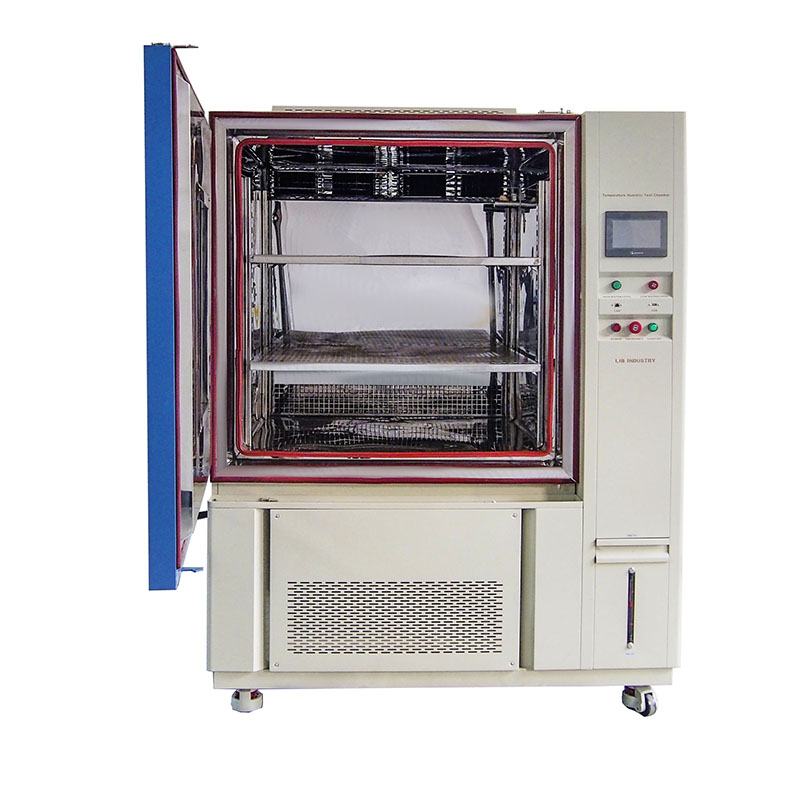 | |||||
Temperature range | -20℃ ~+150 ℃ | ||||
Low type | A: -40℃ B:-70℃ C -86℃ | ||||
Humidity Range | 20%-98%RH | ||||
Temperature deviation | ± 2.0 ℃ | ||||
Heating rate | 3 ℃ / min | ||||
Cooling rate | 1 ℃ / min | ||||
Controller | Programmable color LCD touch screen controller, Multi-language interface, Ethernet , USB | ||||
Refrigerant | R404A, R23 | ||||
Exterior material | Steel Plate with protective coating | ||||
Interior material | SUS304 stainless steel | ||||
Standard configuration | 1 Cable hole (Φ 50) with plug; 2 shelves | ||||
Timing Function | 0.1~999.9 (S,M,H) settable | ||||

Temperature change rate: The value of the temperature rise/fall inside the test chamber per minute.
Temperature deviation: After the device reaches the set value and stabilizes, record the temperature value of each measuring point and the temperature value indicated by the device, once per minute, a total of 30 times. The deviation of the maximum/minimum value from the set value in the process is the expected value.
Temperature fluctuation: Using the data collected during the above temperature deviation process again, the maximum temperature difference of each collection point in the working space within 30 minutes.
Temperature uniformity: The above data is also used, and the arithmetic mean value of the maximum space temperature difference between 30 test points per minute within 9 minutes is taken.
Although the temperature uniformity can indicate the quality of the temperature balance of the chamber, the factors of temperature fluctuation at each point are basically removed due to the multiple average method used in the calculation.
However, for the temperature performance index of the test chamber, it is not enough to only mark the temperature uniformity. There must also be a temperature fluctuation index, that is, the temperature change of each point with time, in order to fully describe the temperature change field in the test chamber, especially when the temperature fluctuation is larger.
How to Choose the Most Suitable Chamber?
1.Size
When putting the specimen into the environmental chamber for testing, in order to ensure that the conditions around the test product can meet the environmental test conditions specified in the test specification, the volume of the working chamber should be at least 3 to 5 times the product profile volume.
2.Temperature range
The higher the upper temperature limit, the greater the temperature difference between the inside and outside of the chamber, the more uneven the flow field inside the chamber, and the smaller the volume of the usable working chamber. On the other hand, the higher the upper limit temperature, the higher the heat resistance requirement for the insulation material in the inter layer of the chamber wall. The higher the requirement on the airtightness of the chamber, the higher the manufacturing cost of the chamber.
At present, the temperature test chamber generally ranges from -70°C to +180°C. These temperature ranges generally meet the temperature testing needs of most military and civilian products.
3.Humidity range
Most environmental chambers use the wet and dry bulb method when measuring humidity. Most of the humidity indicators given by the environmental test chamber are 20%~98%RH.
4.Cooling
If the test chamber has a refrigeration system, the refrigeration system needs to be cooled. There are two types of test chambers: air-cooled and water-cooled.
Which Industries are the Environmental Test Chambers Used for?
1.Aerospace
Environmental test chambers are used in the aerospace industry to simulate and reproduce typical environmental conditions during landing, take-off and flight phases to ensure qualified, reliable and high standards of product performance and quality.
2.Automobile
Regulations in the automotive industry are constantly being updated and safety requirements are constantly increasing. In addition to the fundamental issue of driver and passenger safety, there is also the issue of complying with emissions regulations to protect the environment.
3.Electronics
Environmental test for electronic equipment is to reduce the risk of product failure. Test is essential to ensure a long service life and maintains its original performance.
4.Batteries
The battery test environmental chamber is specially designed for lithium-ion battery testing. The purpose of the test is not only to check battery life, but also to check the level of safety under certain environmental conditions.
5.Other
In addition to all those mentioned above, environmental test chambers can also be used in the food industry, building industry, energy industry, pharmaceutical industry, etc.
How to Maintain the Environmental Test Chamber?
Usually, the working conditions of the environmental test chamber in hot summer can reach 50°C. In this environment, the use of the test chamber will be affected, such as: the cooling ability becomes weaker, the working condition becomes worse, and the alarm protection of overpressure and overcurrent increases, etc. . Therefore, in order to prolong the service life of the test chamber, ensure the accuracy and stability of the equipment during operation, and prevent the test chamber from malfunctioning, which will affect the normal test and test results, the maintenance of instruments and equipment at high temperature in summer is very important.
LIB INDUSTRYis a professional manufacturer and designer of Environmental Test Chambers in China. Since we have too much experience in dealing with environmental test chambers, we will summarized for you on how to maintain the machines:
1. Check the working environment temperature of the equipment
When the equipment is running in summer, the operator should always check the temperature around the equipment. The normal operating temperature range is +5°C~+30°C. It is recommended that the laboratory be equipped with air conditioning facilities.
2. Maintain a ventilated and safe environment
The working environment should be well ventilated. There should be no dust and debris around the environmental test chamber. It is forbidden to store flammable, explosive, strong radiation and strong corrosive items and materials. Beware of fire and ensure that the equipment is well grounded. The surroundings of the test chamber must not be subject to strong vibration and the influence of electromagnetic fields.
3. Regularly check the system settings
Equipment management personnel need to regularly check whether the environmental temperature control system (such as air conditioners, exhaust fans and other equipment) is normal to ensure that the performance meets the requirements of the summer test, regularly inspect the water circulation cooling equipment such as water towers and pumps, and shorten the maintenance cycle.
4. Regular cleaning and dust removal
Clean the inside and outside of the chamber at regular intervals to keep the inside and outside of the test chamber clean. The dust on the air-cooled condenser should be removed regularly, and the water-cooled water tower and filter should be cleaned regularly to ensure good heat exchange efficiency.
5. Ensure the stability of the power supply voltage
Power distribution personnel need to ensure that the power supply voltage is within the rated range, and beware of overload and short circuit; the screws of the circuit connection parts are regularly checked and tightened.
Summary
The high temperature in summer can easily affect the environmental test chamber, so the operator needs to carefully follow the operation process to carry out the test. If there is a problem with the test chamber, you should contact the after-sales service team of LIB INDUSTRY for inspection and maintenance in time, so as to ensure the normal test and prolong the life of the test equipment.


