Views: 0 Author: Site Editor Publish Time: 2026-03-25 Origin: Site


Dust protection plays an important role in the reliability evaluation of products used in electronics, automotive, and industrial applications. The penetration of fine dust particles may lead to electrical faults, component degradation, or reduced sealing performance. Therefore, dust ingress testing is widely used to verify product durability and confirm stable operation under dusty environmental conditions.
Our IP6X Dust Resistant Sand and Dust Test Chamber has been widely used by customers around the world. For example, Robert from the UAE, who frequently uses LIB's Rain and Dust Chambers, recently calibrated his DIM-2000 & RIM-0120 units and confirmed that “all is functioning well,” demonstrating the chamber's consistent performance and reliability in real operational conditions.
Original feedback email from our UAE customer on LIB dust test chambers:

This article introduces the LIB IP6X Dust Resistant Sand and Dust Test Chamber. It explains its design, working principles, applications, compliance with international standards, and real-world case studies, highlighting why LIB chambers are trusted by manufacturers for precise, repeatable dust protection testing.
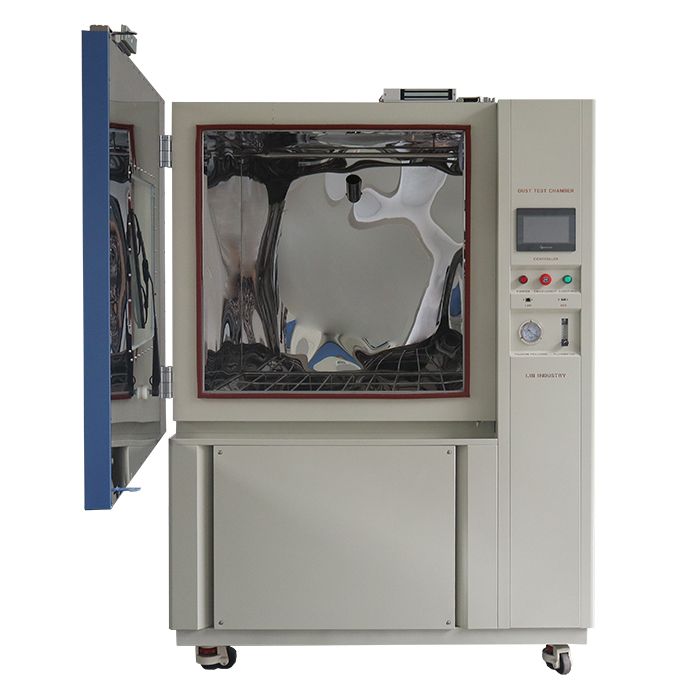
What it is: The IP6X chamber creates a controlled dust-laden environment to evaluate product seals, durability, and resistance to solid particle ingress.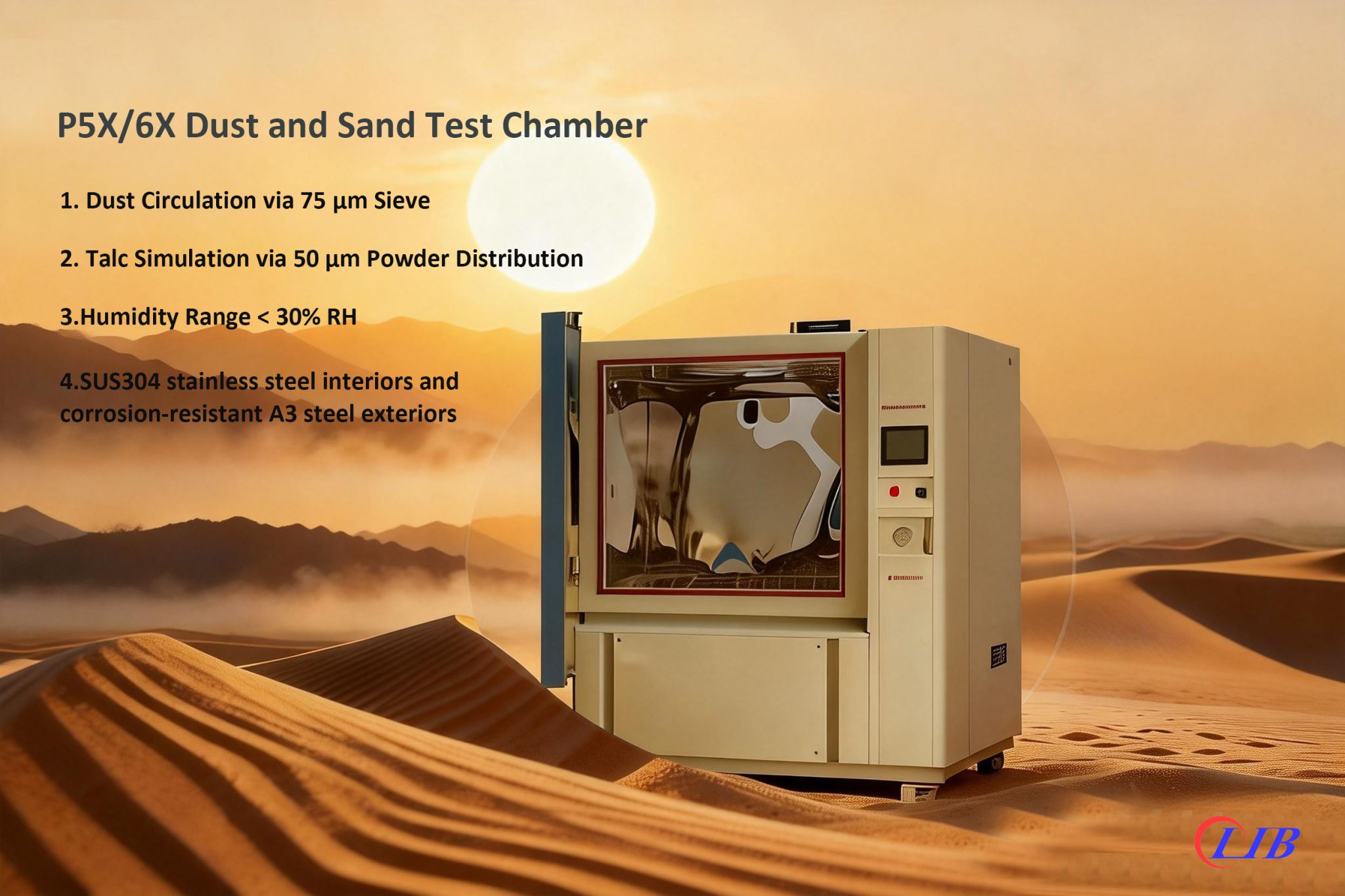 IP6X indicates a completely dust-tight enclosure according to IEC 60529. The chamber can maintain dust concentrations of 2–4 kg/m³ at ambient to +50 °C temperatures.
Why it matters: Products in outdoor, automotive, and industrial applications face dust, sand, and fine particles that can damage electronics, cause corrosion, or compromise mechanical performance. Testing ensures the product meets IP5X/IP6X requirements under IEC60529, ISO20653, ASTM, and MIL standards.
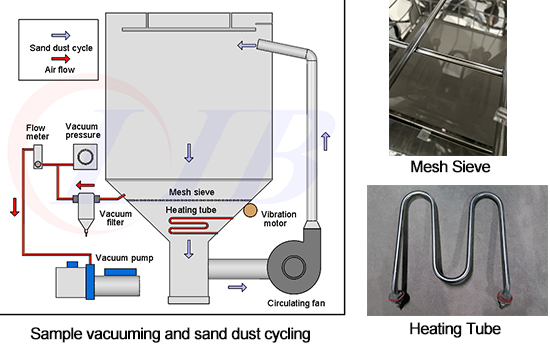
How it works: Dust is sprayed into the workroom through a vertical circulation system equipped with a 50 μm mesh sieve and a heating tube to prevent caking. The chamber allows precise vacuum pressure and airflow control using a flowmeter and pressure gauge, ensuring uniform dust distribution.
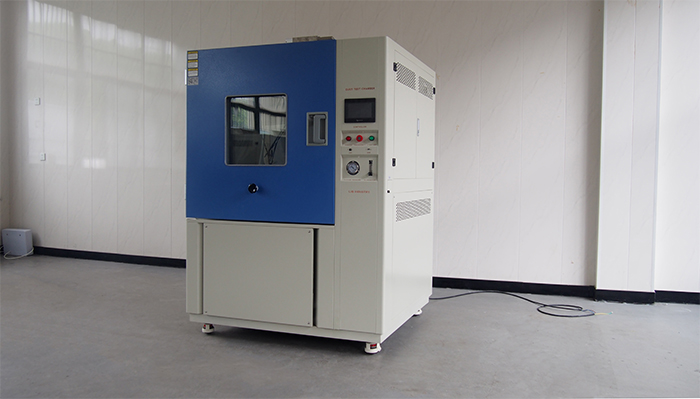
What it is: The chamber is available in standard volumes of 200 L, 800 L (DI-800), 1000 L (DI-1000), and custom configurations. Workrooms are constructed of SUS304 stainless steel, and the external panels are 4 mm A3 steel with a 2 mm protective coating.
Why it matters: Manufacturers often test products ranging from handheld electronics to industrial machinery. Customizable sizes allow testing without multiple chambers, saving costs and setup time.
How it works: Products can be mounted on holders rated for 50 kg, in various orientations, and the chamber can be moved easily with castors and adjustable height, supporting flexible testing setups.
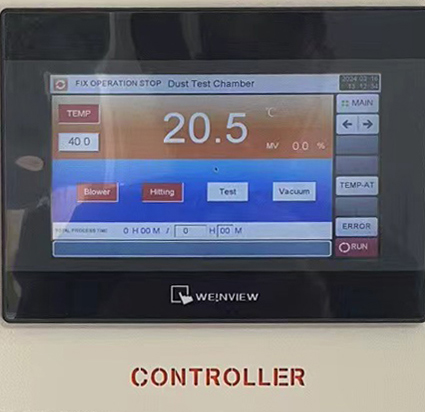
What it is: A PID programmable color touchscreen controller supports 120 programs with 100 segments each, with multiple language options. A view window with wiper and built-in LED lighting enables clear real-time monitoring.
Why it matters: Complex tests require precise control over dust levels, exposure time, and airflow. Real-time observation helps detect issues during testing and improve product design.
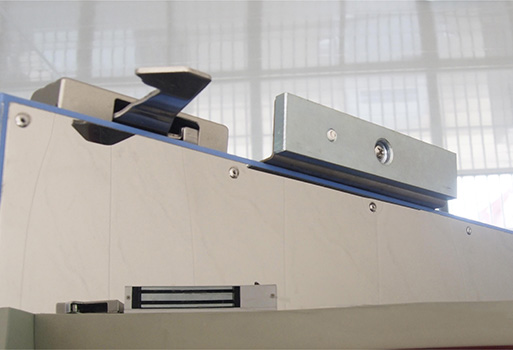
How it works: Test parameters such as dust concentration, blowing time (0–99 H 59 M), and environmental conditions (5–35 °C, ≤85% RH) can be programmed. Electromagnetic door locks prevent accidental opening, ensuring safety and test integrity.
Typical Standards & Tests:
IEC60529: IP5X/IP6X dust ingress tests.
ISO20653: Dust resistance for automotive electrical components.
Method: Test specimens are mounted and exposed to a 50 μm dust environment at 2–4 kg/m³ for up to 99 h 59 min at ambient temperature, simulating real-world dust exposure.
Scope: Engine parts, sensors, exterior lights, and connectors.
Typical Standards & Tests:
IEC60068-2-68: Dust and sand exposure tests.
ASTM D5185: Dust accumulation and penetration testing.
Method: The chamber sprays fine dust in a vertical airflow, ensuring uniform contact with the surface. Temperature and airflow can be monitored to replicate real driving conditions.
Scope: Valves, control panels, and construction equipment.
Typical Standards & Tests:
MIL-STD-810H: Dust and sand exposure tests for defense applications.

Method: The sample undergoes continuous dust circulation with heating tubes preventing caking, simulating long-term operation in desert or dusty environments.
Test Objective: Verify ingress protection of outdoor LED lamps.
Standard: IEC60529, IP6X rating.
Cycle:
Preparation: Lamp mounted in chamber on holder; dust concentration set to 2–4 kg/m³.
Exposure: Ambient temperature to +50 °C, dust blown into workroom via vertical circulation. Duration: 6 hours continuous.
Observation: Built-in lighting and wiper allow real-time monitoring; vacuum pressure and airflow measured to ensure uniformity.
Evaluation: After exposure, lamps inspected for dust ingress and functional performance. Pass requires zero dust penetration inside the enclosure.
Outcome: DI-800 maintained stable dust concentration and environmental conditions throughout the test. Lamps remained fully operational, demonstrating compliance with IP6X.
LIB Advantages Demonstrated:
IP6X Dust Resistant Sand and Dust Test Chamber | 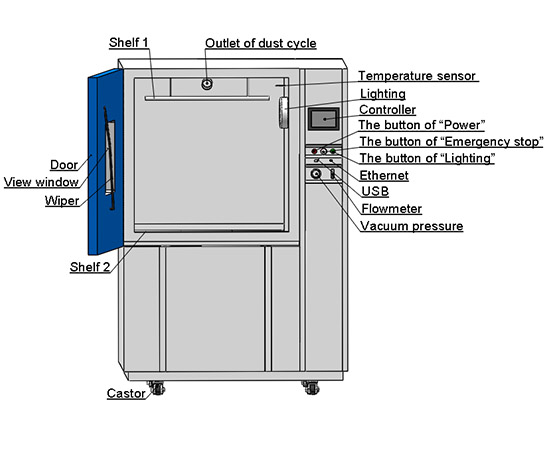 | ||
 | Temperature Range | Ambient ~ +50℃ | |
Humidity Range | < 30% RH | ||
Normal Wire Diameter | 50um | ||
Nominal Width of a Gap Between wires | 75um | ||
lectromagnetic lock | Specimen Power Outlet | Dust-proof socket 16A | |
Heating Element | Nichrome heater | ||
Vacuum System | Equipped with a pressure gauge, air filter, pressure regulator, connecting tube | ||
 | Controller | Programmable color LCD touch screen controller,Ethernet connection, PC Link | |
Door Lock | Electromagnetic lock | ||
Maximum Noise | 65 dBA | ||
Precise Environmental Control: The DI-800 maintained a stable dust concentration of 2–4 kg/m³ and consistent ambient to +50 °C temperature throughout the 6-hour test, ensuring reproducible and reliable results.
Real-Time Monitoring: Built-in lighting and a wiper-enabled view window allowed operators to observe the lamp’s response continuously, preventing unnoticed test deviations.
Uniform Dust Distribution and Safety: The vertical circulation system with vacuum and airflow monitoring ensured even dust coverage while electromagnetic door locks protected operators and preserved test integrity.
Q1: What dust particle size is used?
A: Nominal diameter is 50 μm; the mesh sieve prevents larger particles from falling into the workroom.
Q2: Can temperature testing be combined?
A: No. The chamber operates at ambient to +50 °C and is designed for dust-only testing.
Q3: How long can tests run?
A: Up to 99 hours 59 minutes continuously.
Q4: What safety measures are included?
A: Over-current, earth leakage, phase sequence, and over-temperature protections, plus an electromagnetic door lock.
Q5: What products can be tested?
A: Electronics, automotive components, industrial machinery, lighting, and other dust-sensitive equipment.
LIB Environmental is a professional and credible manufacturer of climatic and environmental testing chambers in China. Equipped with a professional factory, we offer IP6X/IP5X ingress test chambers with competitive pricing.
Contact LIB Industry today to explore our dust-resistant sand and dust test chambers and ensure your products meet the highest IP standards.