Views: 0 Author: Site Editor Publish Time: 2026-05-11 Origin: Site


Modern laboratories are becoming smaller, faster, and more automated. Engineers no longer want to walk across the factory to use a large environmental chamber for every temperature cycle test. In electronics, mobile devices, sensors, batteries, and pharmaceutical development, researchers need a compact environmental test chamber that fits directly beside the workstation while still delivering stable and repeatable temperature and humidity control.
A customer from Greece recently shared positive feedback about two LIB Small Laboratory Benchtop Environmental Temperature Test Chamber after installation and operation. According to the customer, “everything is running smoothly regarding the two chambers, customers have no problem so far.” The customer also mentionedthat the manuals would be shared with end users for maintenance support. This feedback reflects the stable operation, user-friendly design, and reliable after-sales service that laboratories expect from compact environmental testing equipment.
This article explains why small laboratory benchtop environmental temperature test chambers were developed, how LIB maintains temperature deviation within ±2 °C and fluctuation within ±0.5 °C, and how LIB’s compact chambers support smartphone environmental testing according to international standards such as IEC 60068-2-1, IEC 60068-2-2, and IEC 60068-2-78.
Traditional environmental chambers above 100 L often occupy more than 2–3 m² of laboratory floor space. In electronics R&D laboratories, university labs, and semiconductor development centers, space is limited and equipment density is high. Engineers needed a smaller environmental testing solution that could be installed directly on a workbench.
LIB's Small Laboratory Benchtop Environmental Temperature Test Chamber solves this problem with compact models such as the T-50 and TH-80. The TH-50 occupies only 800 × 1050 mm, while the T-80 requires just 900 × 1100 mm. Compared with large floor-standing chambers, the benchtop design saves installation space, reduces laboratory congestion, and improves workflow efficiency.
These chambers are widely used in PCB testing, semiconductor reliability testing, battery research, medical electronics development, and university material research laboratories.
Modern products such as smartphones, wearable electronics, automotive sensors, and communication modules require rapid environmental validation before market release. Traditional large chambers usually test multiple products together, which increases waiting time and slows prototype evaluation.
Small laboratory benchtop environmental temperature test chambers were developed to support faster single-product or small-batch testing. Engineers can immediately perform thermal cycling, high-temperature storage, low-temperature storage, and humidity testing beside the development workstation.
Compared with standard 100 L environmental chambers, benchtop chambers provide shorter setup times, lower energy consumption, and faster product turnaround. This is especially important in consumer electronics, where development cycles may last only 3–6 months.
Large environmental chambers often generate sound levels above 75 dBA because of powerful compressors and airflow systems. In office laboratories or precision testing rooms, excessive noise affects communication, concentration, and sensitive measurements.
LIB's small laboratory benchtop environmental temperature test chamber operates at ≤65 dBA, which is similar to a standard office air conditioner. This allows environmental testing directly inside engineering offices, electronic laboratories, and research workspaces.
The euipment is commonly used in smartphone development, camera module testing, IoT sensor validation, aerospace electronics testing, and pharmaceutical stability studies where quiet operation and close-range monitoring are important advantages over traditional 100 L systems.
Environmental testing accuracy depends on stable temperature control, uniform airflow distribution, and responsive sensor feedback. LIB combines compressor cooling systems, electric heating systems, PT100 Class A sensors, and intelligent PID control algorithms to maintain chamber stability throughout testing cycles.
| Name | Small Laboratory Benchtop Environmental Temperature Test Chamber |
| |
| Model | TH-50 | TH-80 | |
| Internal dimension (mm) | 320x350x450 | 400x400x500 | |
| Overall dimension (mm) | 800x1050x950 | 900×1100×1000 | |
| Temperature range | -20℃ ~+150 ℃ | ||
| Low type | Ⅰ: -40℃ Ⅱ: -70℃ Ⅲ: -86℃ | ||
| Temperature fluctuations | ± 0.5 ℃ | ||
| Humidity Range | 10%/20%~95% | ||
| Temperature deviation | ± 2.0 ℃ | ||
| Heating rate | 3 ℃ / min | ||
| Cooling rate | 1 ℃ / min | ||
| Temperature Sensor | PTR Platinum Resistance PT100Ω/MV A-class | ||
| Temperature Resolution | ± 0.001 ℃ | ||
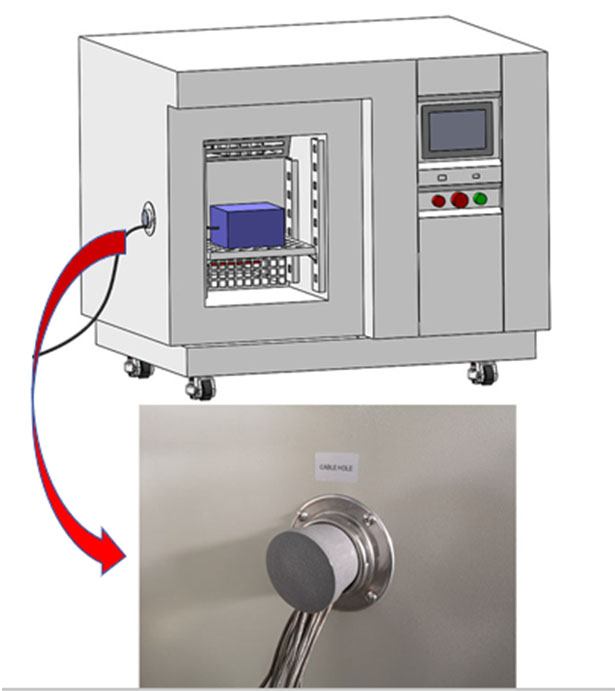 | 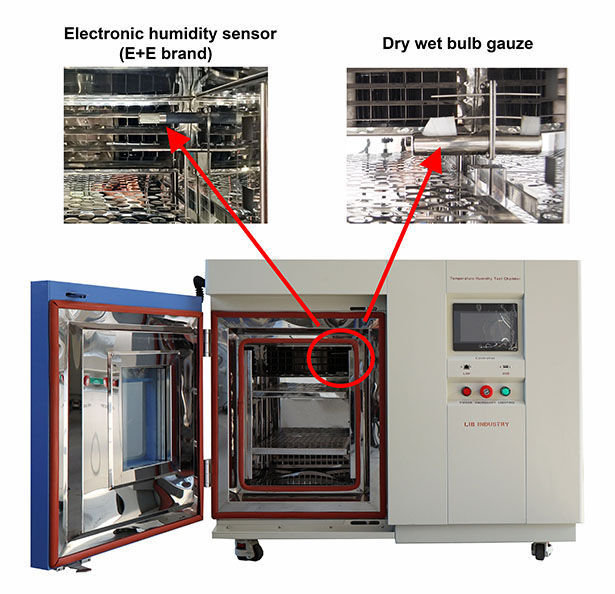 | 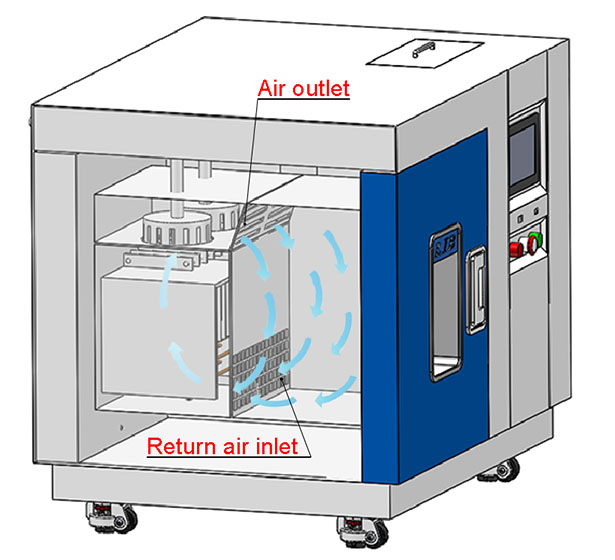 |
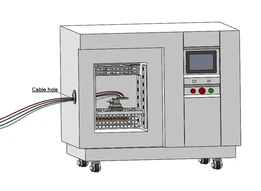
Power Supply Cable Hole | Temperature and Humidity Sensor | Air circulation |
LIB chambers use PT100 Class A platinum resistance sensors with 0.001 °C sensing accuracy. These sensors continuously monitor chamber temperature and immediately send feedback signals to the controller.
The PID controller automatically adjusts heating and cooling output according to real-time temperature changes. This minimizes overshoot and stabilizes chamber temperature fluctuation within ±0.5 °C while maintaining temperature deviation within ±2 °C.
Centrifugal fans and precision air baffles distribute conditioned air evenly throughout the chamber interior. This eliminates hot and cold zones and improves temperature uniformity across all test samples.
The chamber combines compressor refrigeration with rapid electric heating. Cooling rates reach approximately 1 °C/min, while heating rates reach 3 °C/min, allowing fast environmental cycling with stable control.
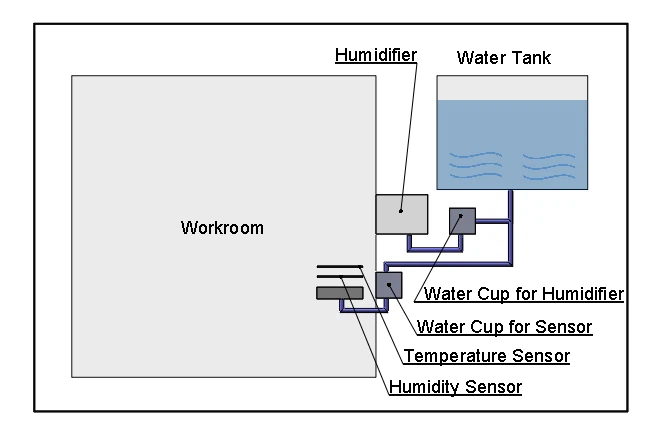
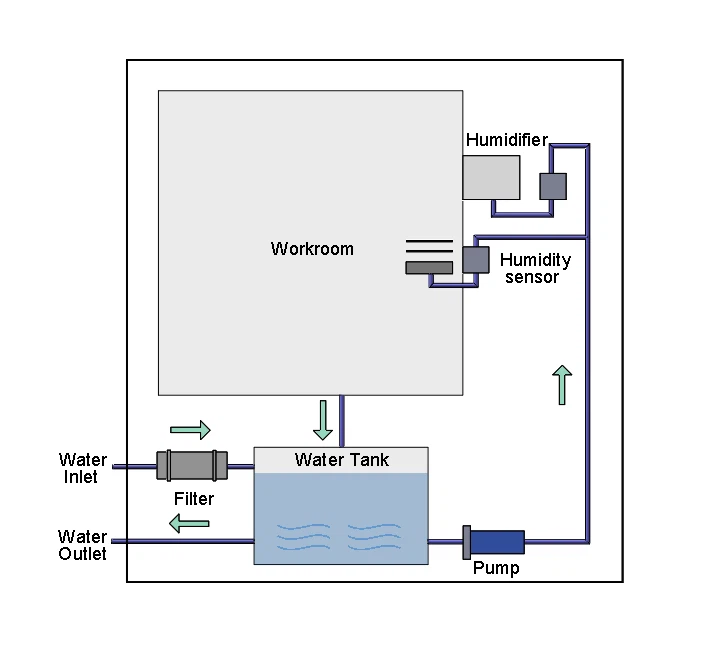
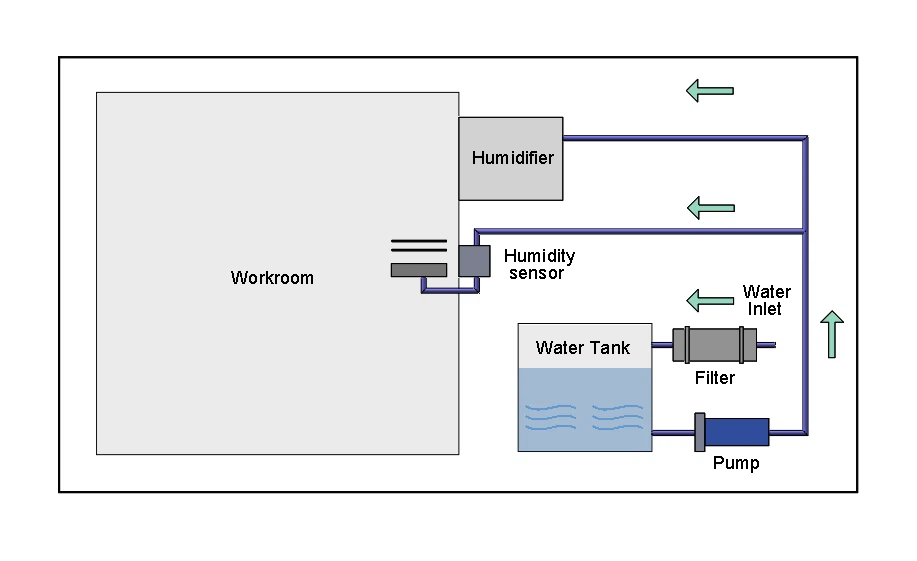
For humidity testing, LIB uses a closed-loop humidification and condensate recovery system. Relative humidity can be controlled from 20 % RH to 98 % RH with deviation controlled within ±2.5 % RH.
One of the most common applications for Small Laboratory Benchtop Environmental Temperature Test Chamber is smartphone reliability and environmental durability testing. Smartphone manufacturers commonly follow IEC 60068 environmental testing standards to verify device performance under high temperature, low temperature, and humidity exposure conditions.
① IEC 60068-2-1 Low Temperature Test
② IEC 60068-2-2 Dry Heat Test
③ IEC 60068-2-78 Damp Heat Steady State Test
④ JESD22-A101 Humidity Testing
⑤ IEC 60529 Environmental Verification
These standards evaluate battery stability, touchscreen performance, PCB reliability, charging systems, camera modules, and sealing performance under harsh environments.
① Place smartphone samples inside the chamber.
② Lower chamber temperature to –20 °C for low-temperature storage testing.
③ Increase temperature to +70 °C for high-temperature operational testing.
④ Maintain humidity at 85 % RH under +40 °C for humidity resistance evaluation.
⑤ Perform multiple temperature cycling sequences for 24–96 hours.
⑥ Inspect display performance, charging function, battery stability, and electronic reliability after testing.
LIB TH-50 and TH-80 benchtop chambers are widely used for compact electronics testing because they combine small size, stable environmental control, and programmable automation.
 |  |  | |
|---|---|---|---|
 |  |  | |
| Name | Small temperature humidity chamber | Standing temperature humidity chamber | Walk-In temperature humidity chamber |
| Capacity | TH-50: 800x1050x950 mm TH-80: 900×1100×1000mm | Capacity: 100L; 225L; 500L; 800L; 1000L | >20m³ |
| Throughput | Ideal for small components, sensors, boards | Subassemblies or mid-volume batches | Bulk testing of items or vehicles as a whole |
| Energy Saving | Automatic Moisture Circulation in Humidity System
| Automatic Moisture Circulation in Humidity System
| Automatic Moisture Circulation in Humidity System
|
| Operational Cost | Lowest | Medium | Highest |
| Standards Coverage | Full IEC / ISO / ASTM compliance | ||
| Noise Level | ≤ 65 dBA | ||
The chamber fits directly on laboratory benches and minimizes occupied workspace compared with standard 100 L environmental chambers.
Operating noise remains ≤65 dBA, allowing testing inside offices and precision research laboratories.
Temperature fluctuation remains within ±0.5 °C, while deviation remains within ±2 °C for repeatable testing results.
The 7-inch touchscreen controller supports 120 programmable profiles with 100 steps each for automated temperature and humidity cycling.
USB and Ethernet connectivity support real-time monitoring, report export, and remote data collection for quality control documentation.
LIB Small Laboratory Benchtop Environmental Temperature Test Chamber support temperature ranges from –86 °C to +150 °C depending on model configuration.
Yes. The chamber supports combined temperature and humidity testing from 20 % RH to 98 % RH.
Yes. LIB chambers are designed for long-duration reliability testing and continuous environmental cycling applications.
Yes. LIB provides lifetime technical support, remote troubleshooting, installation guidance, and English-speaking service engineers worldwide.
The chamber is packaged using reinforced export wooden cases with shockproof internal protection for sea freight, air freight, and rail transportation.
LIB normally delivers replacement parts within 7–15 days depending on destination region and inventory availability.
Time to Upgrade Your Compact Environmental Testing Capability?
Contact LIB Industry today to learn how our small laboratory benchtop environmental temperature test chambers can improve your R&D efficiency, accelerate product validation, and deliver stable environmental testing directly at your workbench.