Views: 0 Author: Site Editor Publish Time: 2026-03-16 Origin: Site


Modern products are expected to operate reliably in a wide range of environments—from freezing winter temperatures to tropical humidity and intense summer heat. For manufacturers in industries such as electronics, automotive, renewable energy, and materials science, understanding how products respond to these environmental stresses is critical. A Temperature Humidity Chamber provides a controlled laboratory solution that allows engineers to simulate real-world climate conditions and evaluate product durability before market release.
Real-world user feedback highlights the importance of stable environmental testing systems. A recent message from Thomas Meyers, Electronics Design Engineer from Belgium, confirms the reliability of LIB's climate chamber in practical applications. In his words: “We are mainly using the temperature features of the climate chamber, and they are working great. So we are satisfied at the moment.” This feedback demonstrates how LIB chambers provide dependable temperature performance for professional engineering laboratories.

To achieve this level of reliability, LIB designs advanced Temperature Humidity Chambers capable of accurately reproducing temperature fluctuations, humidity cycles, and environmental stresses in a laboratory environment. With precise control systems and robust environmental simulation capabilities, LIB chambers help engineers perform accelerated life testing, reliability verification, and product validation efficiently and consistently.
A Temperature Humidity Chamber is a testing system designed to reproduce environmental conditions such as temperature changes, humidity fluctuations, and climate cycles. The main purpose of a Temperature Humidity Chamber is to evaluate how materials, components, and finished products perform under various environmental stresses.
In real-world conditions, products may be exposed to heat, cold, moisture, or freezing climates. A Temperature Humidity Chamber recreates these conditions in a controlled laboratory environment so manufacturers can detect potential weaknesses before products reach consumers.
Typical environmental tests conducted in a Temperature Humidity Chamber include:
High/Low Temperature Aging Test
Thermal Abuse Test
Humidity Freeze Test
Damp Heat Test
Low Temperature Test
Through these tests, companies can assess durability, reliability, and safety.
A modern Temperature Humidity Chamber is built with several integrated systems that allow it to maintain stable environmental conditions.
The temperature control system allows the Temperature Humidity Chamber to simulate both high and low temperatures. It usually includes heating elements, refrigeration compressors, and precise temperature sensors. These components ensure accurate thermal conditions throughout the chamber.
Humidity is controlled through humidification and dehumidification mechanisms. This system regulates moisture levels inside the Temperature Humidity Chamber, enabling tests under dry, humid, or condensation conditions.
Airflow systems ensure uniform temperature and humidity distribution throughout the chamber. Proper circulation is essential for accurate and repeatable testing results.
Most modern Temperature Humidity Chamber equipment includes a programmable controller that allows users to set complex environmental testing cycles, monitor data, and automate long-duration experiments.
Different industries require specialized testing systems. Several types of Temperature Humidity Chamber configurations are designed to meet specific testing needs.
The High Low Temperature Humidity Chamber is the most widely used environmental testing equipment. It simulates a broad range of temperature and humidity conditions, allowing manufacturers to test how products perform in both hot and cold environments.
Typical uses include:
Electronic device testing
Automotive component validation
Aerospace material testing
Consumer electronics reliability testing
The High Low Temperature Humidity Chamber is essential for product reliability verification.
The Aging Environmental Battery Temperature Humidity Chamber is designed specifically for battery reliability testing. With the rapid growth of electric vehicles and energy storage systems, battery safety testing has become increasingly important.
This specialized Temperature Humidity Chamber is commonly used for:
Battery aging tests
Thermal Abuse Test
Environmental stress screening
Lithium battery safety testing
Manufacturers use these chambers to ensure battery stability under extreme conditions.
An Endurance Test Temperature Humidity Chamber is designed for long-term environmental testing. This type of Temperature Humidity Chamber can run continuously for extended periods to simulate years of environmental exposure within a shorter testing cycle.
Typical endurance testing includes:
Continuous humidity exposure
Long-duration temperature cycling
Reliability testing for electronic components
Product lifespan verification
The Endurance Test Temperature Humidity Chamber helps manufacturers predict product life expectancy.
The UL 1703 IEC 61464 Photovoltaic Panel Temperature Humidity Chamber is designed for photovoltaic module testing. Solar panels must withstand harsh outdoor environments for decades.
To ensure reliability, manufacturers perform accelerated environmental testing using this specialized Temperature Humidity Chamber.
Key tests include:
Damp Heat Test
Humidity Freeze Test
Thermal cycling tests
Long-term climate exposure tests
These tests verify whether photovoltaic modules meet global certification requirements.
A Cryogenic Thermal Cycling Temperature Humidity Chamber is used for extremely low temperature testing and rapid temperature cycling. This type of Temperature Humidity Chamber is particularly important in aerospace, defense, and semiconductor industries.
Applications include:
Aerospace component testing
Semiconductor reliability testing
Military equipment validation
This chamber simulates extreme environments where products must withstand rapid temperature transitions.
The Temperature Humidity Chamber plays a critical role in multiple industries where environmental durability is essential.
Electronic products are sensitive to temperature and humidity changes. Manufacturers use a Temperature Humidity Chamber to test circuit boards, smartphones, sensors, and semiconductors.
Tests such as the Humidity Freeze Test and Low Temperature Test ensure devices function reliably in various climates.
Vehicles operate in diverse environments, from freezing winters to extremely hot summers. Automotive engineers use a Temperature Humidity Chamber to test components such as electronic control units, sensors, batteries, and interior materials.
The High/Low Temperature Aging Test helps ensure automotive components remain stable under long-term temperature stress.
Solar panels and energy storage systems must endure outdoor environments for many years. A Temperature Humidity Chamber allows manufacturers to simulate tropical humidity, freezing conditions, and long-term weather exposure.
The UL 1703 IEC 61464 Photovoltaic Panel Temperature Humidity Chamber is widely used for photovoltaic reliability testing.
Battery performance and safety are critical for electric vehicles and portable electronics. The Aging Environmental Battery Temperature Humidity Chamber enables manufacturers to perform tests such as the Thermal Abuse Test and environmental stress screening.
These tests help prevent battery failures and improve energy storage reliability.
Equipment | Function | Typical Application |
|---|---|---|
Temperature Humidity Chamber | Simulates temperature and humidity conditions | Electronics, batteries |
Thermal Shock Chamber | Simulates rapid temperature changes | Aerospace and automotive |
Industrial Oven | Performs high-temperature drying or aging | Materials processing |
Climate and Vibration Chamber | Combines environmental and mechanical testing | Automotive and aerospace |
Among these systems, the Temperature Humidity Chamber remains the most commonly used environmental testing equipment.
LIB environmental chambers are engineered to provide stable environmental simulation and high testing accuracy. Compared with conventional environmental chambers, LIB Temperature Humidity Chambers offer several measurable technical advantages.
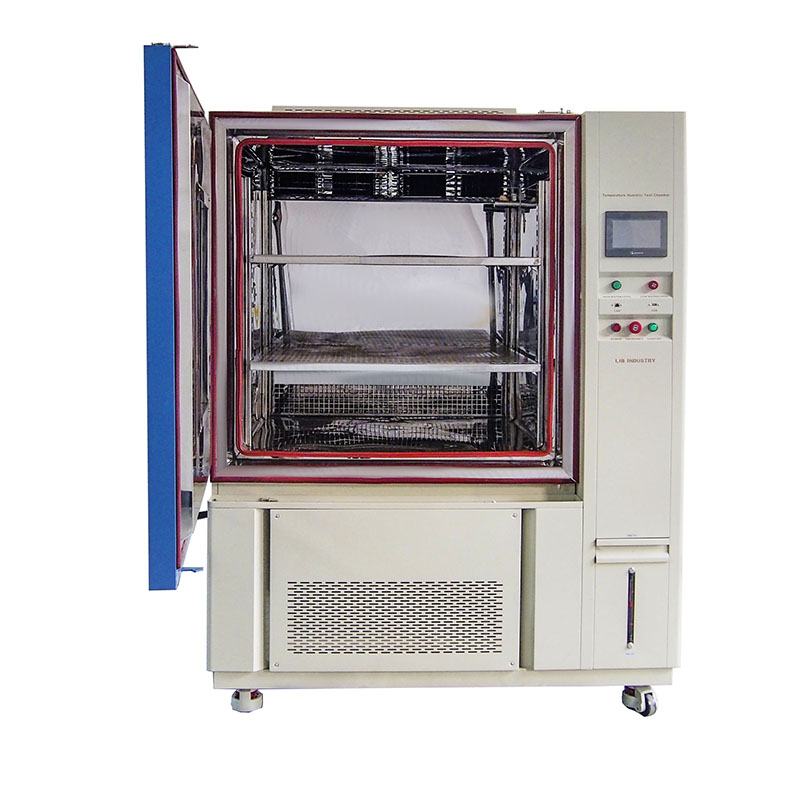 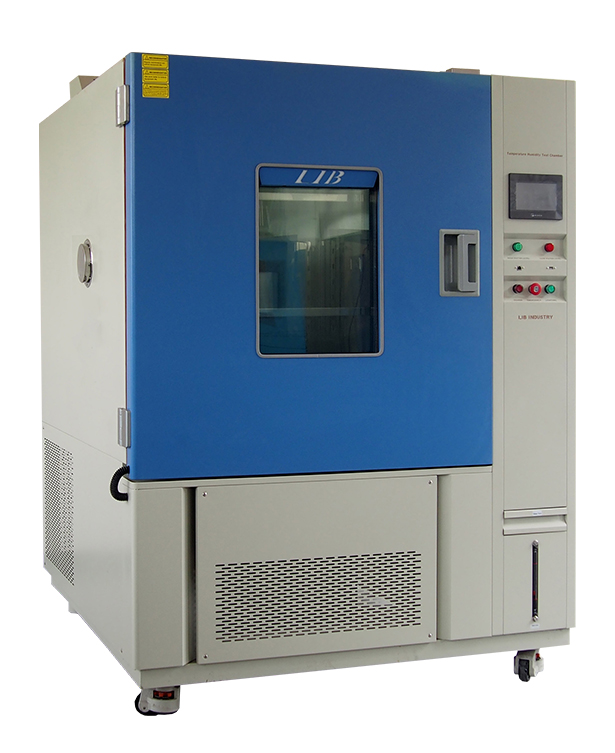 | |||||
Temperature range | -20℃ ~+150 ℃ | ||||
Low type | A: -40℃ B:-70℃ C -86℃ | ||||
Humidity Range | 20%-98%RH | ||||
Temperature deviation | ± 2.0 ℃ | ||||
Heating rate | 3 ℃ / min | ||||
Cooling rate | 1 ℃ / min | ||||
Controller | Programmable color LCD touch screen controller, Multi-language interface, Ethernet , USB | ||||
Refrigerant | R404A, R23 | ||||
Exterior material | Steel Plate with protective coating | ||||
Interior material | SUS304 stainless steel | ||||
Standard configuration | 1 Cable hole (Φ 50) with plug; 2 shelves | ||||
Timing Function | 0.1~999.9 (S,M,H) settable | ||||
|
| 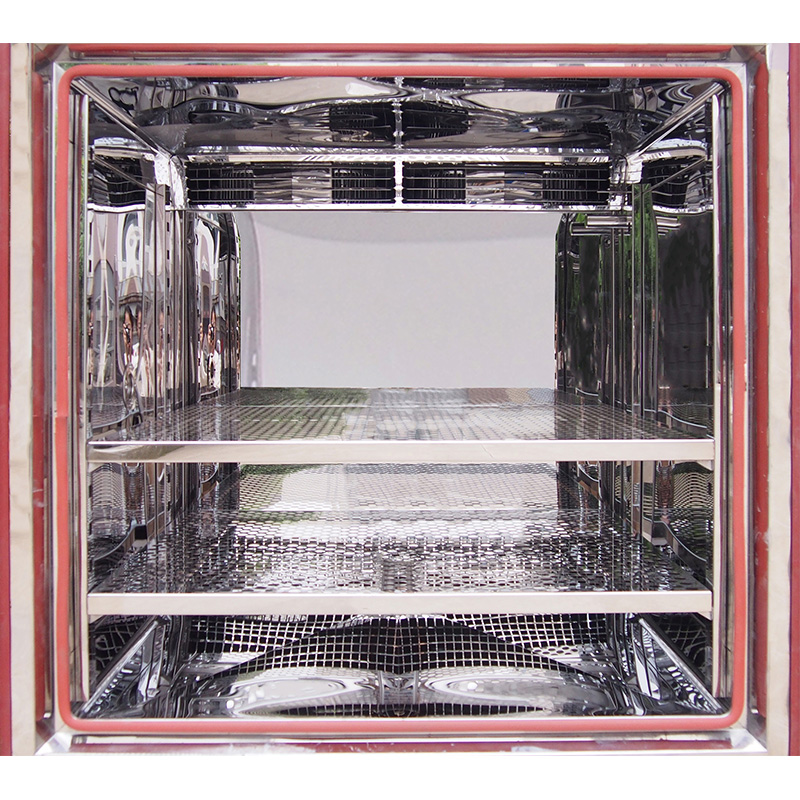 | 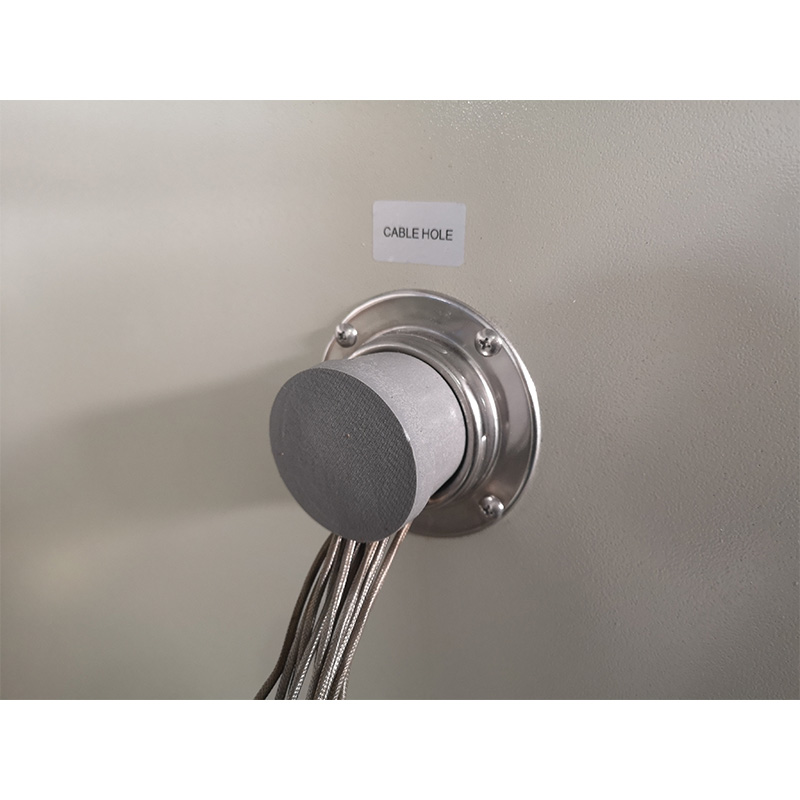 |
Touch screen controller Holds up to 120 test programs with 100 steps each, making it well suited for complex multi‑stage profiles such as temperature–humidity shock or soak cycles. | The compressor The compressor rapidly removes heat from the chamber interior, achieving a cooling rate around 1 °C / 5 °Cper minute. | Robust Anti-Corrosion Workroom The chamber's interior is built from SUS304 stainless steel, offering outstanding resistance to heat and corrosion for long-lasting performance. | Integrated Power Access hole Allows test specimens to stay powered during experiments, enabling performance evaluation under varying temperature and humidity. Standard 50 mm diameter; quantity and size customizable. |
LIB chambers typically support a temperature range of -70°C to +150°C and humidity control from 20%RH to 98%RH, enabling simulation of extreme climate environments such as tropical humidity, desert heat, and freezing temperatures.
Advanced control systems allow LIB chambers to achieve temperature stability of ±0.5°C and humidity stability of ±2–3%RH, ensuring precise and repeatable environmental testing results.
Optimized airflow design enables chamber temperature uniformity typically within ±2°C, ensuring consistent environmental exposure for all samples inside the chamber.
LIB chambers support heating and cooling rates ranging from 3°C/min to 15°C/min, enabling efficient thermal cycling and accelerated reliability testing.
LIB Temperature Humidity Chambers are designed for continuous operation and can run long-duration tests for hundreds or even thousands of hours, making them suitable for endurance testing and life cycle simulations.
A Temperature Humidity Chamber is used to simulate environmental conditions such as temperature changes and humidity levels. It helps manufacturers evaluate product reliability, safety, and durability under controlled laboratory conditions.
Many industries rely on the Temperature Humidity Chamber, including:
Electronics manufacturing
Automotive engineering
Renewable energy
Aerospace
Battery production
Common environmental tests include:
High/Low Temperature Aging Test
Thermal Abuse Test
Humidity Freeze Test
Damp Heat Test
Low Temperature Test
These tests ensure products can operate safely and reliably in real-world environments.
A modern Temperature Humidity Chamber can maintain highly stable temperature and humidity conditions, ensuring accurate and repeatable testing results.
When selecting a Temperature Humidity Chamber, manufacturers typically consider factors such as temperature range, humidity range, chamber volume, test standards, and required testing cycles. Choosing the right Temperature Humidity Chamber ensures reliable environmental simulation and accurate product validation.
Contact LIB Industry today to discover how our advanced Temperature Humidity Chambers can improve your environmental testing accuracy and product reliability.