
Views: 0 Author: Site Editor Publish Time: 2026-05-05 Origin: Site


Engineering and quality assurance teams frequently conflate thermal cycling with thermal shock during test equipment selection. This common misunderstanding inevitably leads to misaligned procurement and severely flawed testing methodologies. Over-speccing a machine wastes valuable facility resources, while under-speccing fails to induce the exact failure modes required for strict industry compliance. You need precise mechanical stress to uncover structural weaknesses, but relying on the wrong chamber type skews your entire reliability profile. This article provides a hard-line, comprehensive comparison between these two critical environmental testing systems. You will discover their distinct mechanical architectures, targeted failure mechanisms, and specific facility installation requirements. Ultimately, this guide will empower testing engineers to finalize their technical parameters and select the optimal testing framework with absolute confidence.
A recent real-world feedback from a customer in Saudi Arabia further highlights the reliability of LIB Temperature Humidity Test Chamber in practical operation. The client stated: “Good evening. Dear Karen, I truly appreciate your continued support. It's been a while since our last operation, and everything went well at that time. If we encounter any issues, I will be sure to contact you.” This feedback reflects stable long-term performance and strong technical support experience, reinforcing the dependable operation of LIB temperature and thermal testing systems in daily industrial use.
① Transition Speed is the Divider: Thermal shock chambers transfer products between extreme temperatures in seconds (<10s), while temperature/humidity chambers rely on moderate, gradual ramp rates (e.g., 3°C to 15°C per minute).
② Chamber Architecture: Humidity and climatic chambers use a single-zone environment. Thermal shock testing requires complex dual-zone (elevator basket) or tri-zone (pneumatic damper) configurations.
③ Different Failure Modes: Choose temperature/humidity for long-term fatigue, moisture expansion, and stress relaxation. Choose thermal shock for acute material rupture and immediate thermal expansion mismatches.
④ Facility Impact: Fast-ramp testing often requires external cooling assists (LN2/CO2) and significantly higher electrical draws compared to steady-state climatic testing.
Let us examine the physical construction of these machines. A standard Temperature Humidity Test Chamber features a single-chamber design. The internal environment gradually shifts around the stationary product placed inside. It focuses heavily on uniform air dispersion. It maintains highly precise steady-state setpoints over long durations. The walls utilize thick insulation to prevent ambient interference, ensuring the single zone remains utterly stable.
Conversely, a thermal shock chamber utilizes a complex multi-zone design. It employs a mechanical carriage or pneumatic basket. This basket physically moves the specimen between a dedicated hot zone and a cold zone. Some shock chambers use a fixed test zone with high-velocity air dampers instead. We call this a tri-zone configuration. In a tri-zone system, the product remains stationary while the machine rapidly blasts pre-conditioned hot or cold air into the central chamber.
Feature | Temperature Humidity Chamber | |
|---|---|---|
Zone Configuration | Single-zone (stationary product) | Dual-zone (moving basket) or Tri-zone (dampers) |
Airflow Dynamics | Gentle, uniform dispersion | High-velocity, aggressive blasts |
Primary Mechanism | Gradual atmospheric change | Instantaneous physical transfer |
Transition speed fundamentally defines the equipment category. Ramp rate applies strictly to standard climatic chambers. It measures how many degrees the chamber changes per minute. It often takes minutes or even hours to reach target temperatures. A standard ramp rate might hover around 3°C to 5°C per minute.
Transfer time applies specifically to thermal shock testing. Specimens move mechanically between thermal extremes in under 3 to 5 seconds. This instantaneous shift induces massive stress. You must also account for recovery time. Recovery time represents a critical metric for thermal shock. It indicates how fast the chamber regains its target extreme after introducing the room-temperature mass of the specimen. Industry standards typically require the chamber to achieve full recovery in under five minutes.
Thermal shock systems generally do not regulate moisture. They focus entirely on rapid temperature transitions and intense heat transfer. If your testing protocol requires evaluating moisture ingress alongside temperature shifts, you need highly specific equipment. A Climatic Aging Temperature Humidity Test Chamber becomes strictly required. This machine introduces controlled vapor to accelerate degradation. It manages dry-bulb and wet-bulb ratios meticulously to simulate years of real-world weather exposure.
LIB Popular Themal Test Instruments | ||
|
|
|
You deploy steady-state and cyclic chambers to uncover progressive degradation. Targeted failure mechanisms include moisture absorption, volumetric expansion, and long-term mechanical fatigue. Polymeric materials absorb ambient moisture over time. This absorption changes their mechanical properties and electrical resistance.
Dwell time plays a massive role in this testing phase. In testing physics, dwell periods allow the internal core of the sample load to reach thermal equilibrium. This stabilization ensures stress relaxation naturally occurs within the material structure. We use this deliberate, slow-cycling approach for specific applications:
Evaluating printed circuit board (PCB) delamination and conductive anodic filament (CAF) growth.
Benchmarking pharmaceutical stability and validating expiration dates.
Accelerating automotive rubber aging and seal degradation.
Executing dual-85 (85°C / 85% RH) THB testing with active electrical bias.
You deploy thermal shock machines to break things quickly. Targeted mechanisms revolve around immediate physical rupture. We look for cracking, material shearing, and rapid thermal expansion mismatch. Different materials expand at different rates. When you bond aluminum to plastic and freeze it instantly, the coefficient of thermal expansion (CTE) mismatch rips the bond apart.
Typical applications for this aggressive methodology include:
Testing aerospace components against sudden, extreme altitude drops.
Evaluating automotive engine bay parts exposed to abrupt environmental shifts.
Simulating a scorching hot brake caliper suddenly submerging in freezing puddle water.
Detecting poor solder joints in consumer electronics prior to mass production.
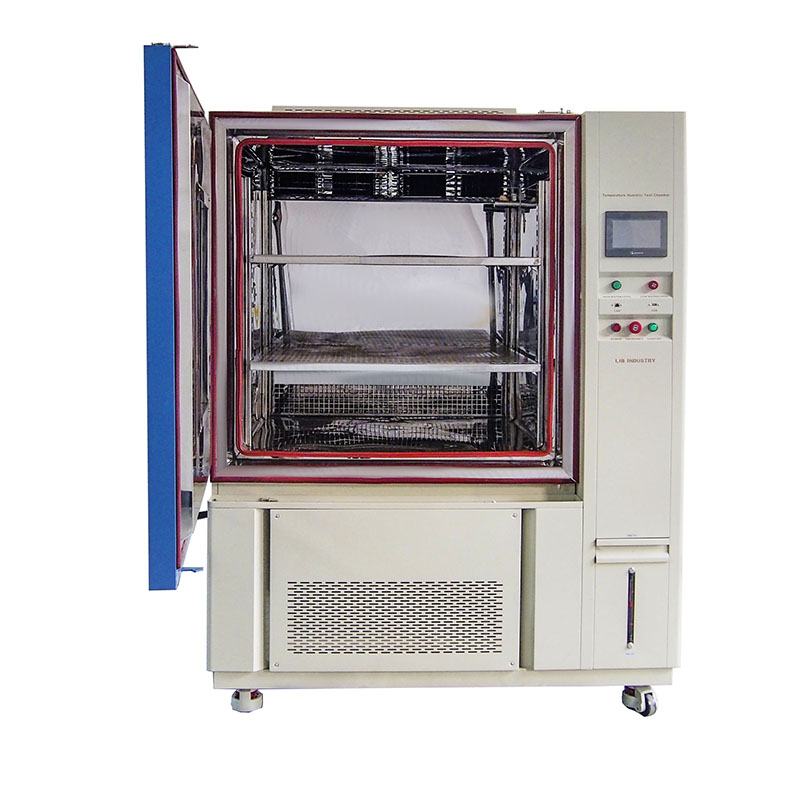 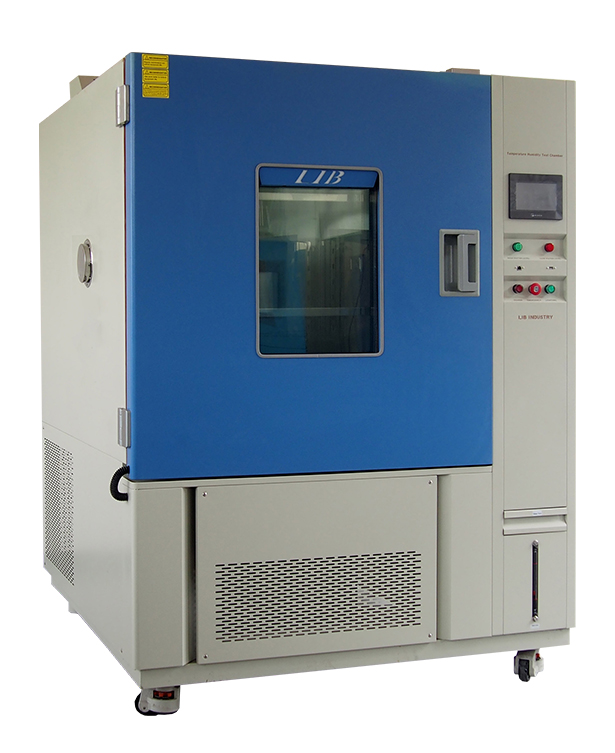 | |||||
Temperature range | -20℃ ~+150 ℃ | ||||
Low type | A: -40℃ B:-70℃ C -86℃ | ||||
Humidity Range | 20%-98%RH | ||||
Temperature deviation | ± 2.0 ℃ | ||||
Heating rate | 3 ℃ / min | ||||
Cooling rate | 1 ℃ / min | ||||
Controller | Programmable color LCD touch screen controller, Multi-language interface, Ethernet , USB | ||||
Refrigerant | R404A, R23 | ||||
Exterior material | Steel Plate with protective coating | ||||
Interior material | SUS304 stainless steel | ||||
Standard configuration | 1 Cable hole (Φ 50) with plug; 2 shelves | ||||
Timing Function | 0.1~999.9 (S,M,H) settable | ||||
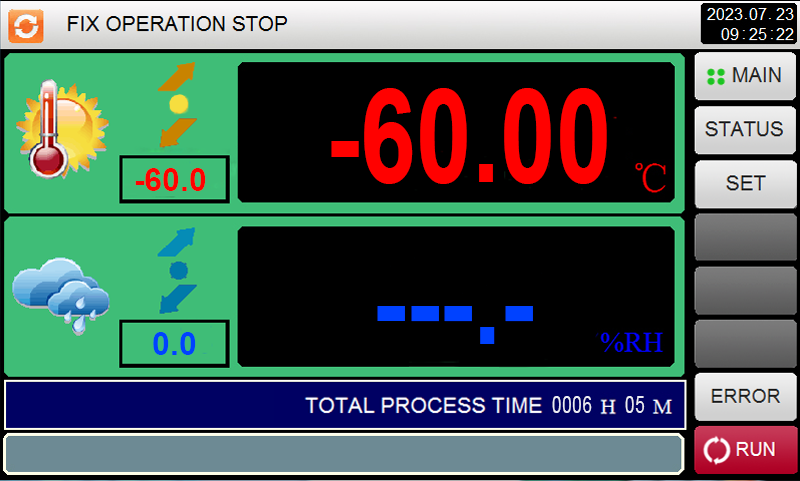 |  | 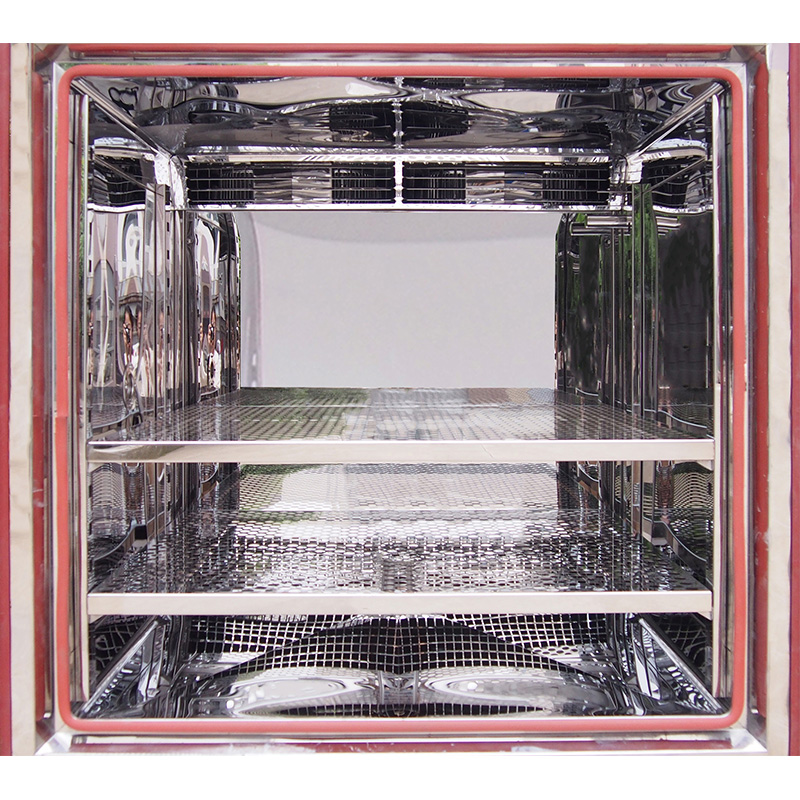 | 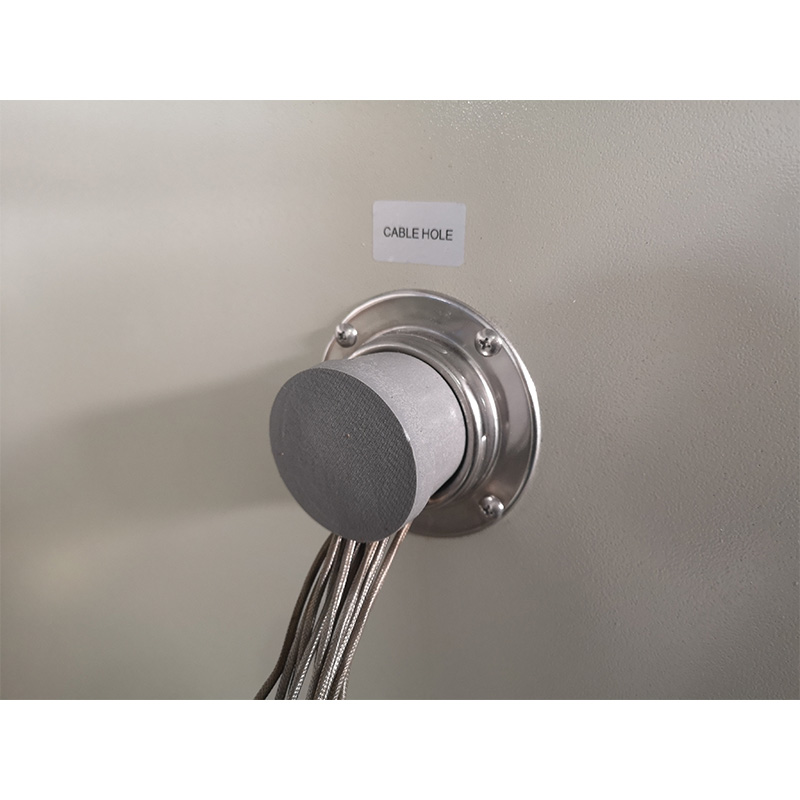 |
Touch screen controller Holds up to 120 test programs with 100 steps each, making it well suited for complex multi‑stage profiles such as temperature–humidity shock or soak cycles. | The compressor The compressor rapidly removes heat from the chamber interior, achieving a cooling rate around 1 °C / 5 °Cper minute. | Robust Anti-Corrosion Workroom The chamber's interior is built from SUS304 stainless steel, offering outstanding resistance to heat and corrosion for long-lasting performance. | Integrated Power Access hole Allows test specimens to stay powered during experiments, enabling performance evaluation under varying temperature and humidity. Standard 50 mm diameter; quantity and size customizable. |
① High-Precision Environmental Control
The LIB Temperature Humidity Chamber adopts an advanced closed-loop control system, ensuring highly stable regulation of both temperature and humidity. This guarantees consistent test conditions throughout long-term operation, improving data reliability and repeatability.
② Wide Environmental Simulation Range
The system supports a broad range of temperature and humidity conditions, from low to high temperatures and from dry to high humidity environments. It enables accelerated aging tests that closely replicate real-world climatic stresses across multiple industries.
③ Excellent Uniformity of Air Distribution
Optimized airflow design ensures uniform temperature and humidity distribution inside the chamber, minimizing local deviations and ensuring all specimens are exposed to identical test conditions.
④ Stable Performance for Long-Term Operation
Built with industrial-grade refrigeration and heating components, the chamber is designed for continuous and long-duration testing, reducing downtime and improving laboratory efficiency.
⑤ Strong Compatibility with International Standards
The system supports major testing standards such as ASTM, ISO, and IEC, and enables automated test cycles to meet global compliance and quality assurance requirements.
⑥ Intelligent Control and Data Management
Equipped with a programmable touchscreen controller and data logging system, the chamber supports remote monitoring and easy export of test data, enhancing digital laboratory management.
⑦ Energy-Efficient and Low-Maintenance Design
Optimized insulation and refrigeration architecture reduce energy consumption while maintaining performance stability, and the system is designed to minimize routine maintenance requirements.
A: No. Even high-ramp rate humidity chambers max out at around 15°C to 20°C per minute. This gradual change differs fundamentally from the physics of a true thermal shock system. Shock testing requires sub-10-second instantaneous transfers between extreme thermal zones to induce sudden material rupture.
A: Thermal cycling focuses purely on temperature changes over a specific time period. It tests mechanical fatigue caused by thermal expansion. Climatic aging introduces controlled relative humidity into the environment. This accelerates moisture-induced degradation, such as corrosion, anodic filament growth, or material swelling, alongside the thermal stress.
A: Active electronics generate internal heat while powered on. This excess heat actively fights the chamber's refrigeration system. It directly slows down the pull-down rate. If your compressor is undersized, a live load can completely prevent the chamber from reaching its lower setpoint, ruining the test parameters.
If you are selecting or upgrading environmental test equipment, LIB Industry provides professional temperature humidity chambers and thermal shock testing solutions tailored to your application needs. Contact LIB Industry today to get technical consultation, product recommendations, or a customized testing solution for your laboratory.


