Views: 0 Author: LIB Team Publish Time: 2026-03-18 Origin: Site


Selecting the appropriate Salt Spray Corrosion Test Chamber capacity is essential for corrosion laboratories, manufacturers, and quality control teams. The chamber size directly affects how many specimens can be tested in each cycle and how efficiently testing resources are used. If the chamber is undersized, testing capacity may be restricted, requiring additional test runs and extending the overall project timeline. A chamber that is too large can waste floor space, consume more utilities, and increase operating cost without delivering proportional value. For that reason, selecting the right Salt Spray Corrosion Test Chamber size should never be based on volume alone. It should be based on specimen dimensions, sample throughput, test method, laboratory workflow, and future expansion needs.
LIB Salt Spray Corrosion Test Chamber is designed to expose materials and finished products to a controlled corrosive salt fog environment. But from a buying perspective, size influences almost everything: how many samples can be loaded, whether samples can be positioned correctly, how evenly the fog circulates, how efficiently the chamber is used, and whether the equipment fits the intended testing program. This is especially important when the chamber will be used not only for a standard Salt Spray Corrosion Test, but also for a Cyclic Corrosion Test, a Salt Fog and SO2 Test, or application-specific work such as a Fastener Salt Corrosion Rating Test or Filiform Corrosion Salt Test.
In a recent case (January 27, 2026), a customer from Argentina in the coatings industry shared positive feedback after installing a LIB Salt Spray Test Chamber. The system was successfully set up and put into initial operation, and the customer confirmed that “it works perfectly.” This real-world validation highlights what users value most—reliable performance from day one, stable operation, and confidence in every test cycle.

This article explains how to choose the right Salt Spray Corrosion Test Chamber size based on real application needs, including specimen dimensions, sample quantity, test methods, and future expansion. It provides a practical framework to help you make a cost-effective and technically sound decision.
Many buyers initially focus on test standards, spray type, or temperature control when choosing a Salt Spray Corrosion Test Chamber. Those factors are important, but size has an equally direct effect on test quality and lab productivity.
A Salt Spray Corrosion Test Chamber that is undersized creates several problems:
Samples may be packed too closely together
Fog distribution may be partially blocked
Large specimens may not fit at the correct angle
Multiple test runs may be needed for one project
Turnaround time becomes slower
Comparative testing becomes less efficient
On the other hand, an oversized Salt Spray Corrosion Test Chamber may lead to:
Higher purchase cost
More laboratory floor space required
Greater water and utility demand
Lower utilization rate for small test programs
Unnecessary overhead for small-batch labs
That is why chamber size should be selected strategically. The best Salt Spray Corrosion Test Chamber is not simply the biggest one. It is the model that gives enough usable interior space for proper specimen placement while maintaining operational efficiency.
The first step in selecting a Salt Spray Corrosion Test Chamber is to evaluate the actual size of the products or test panels you plan to load.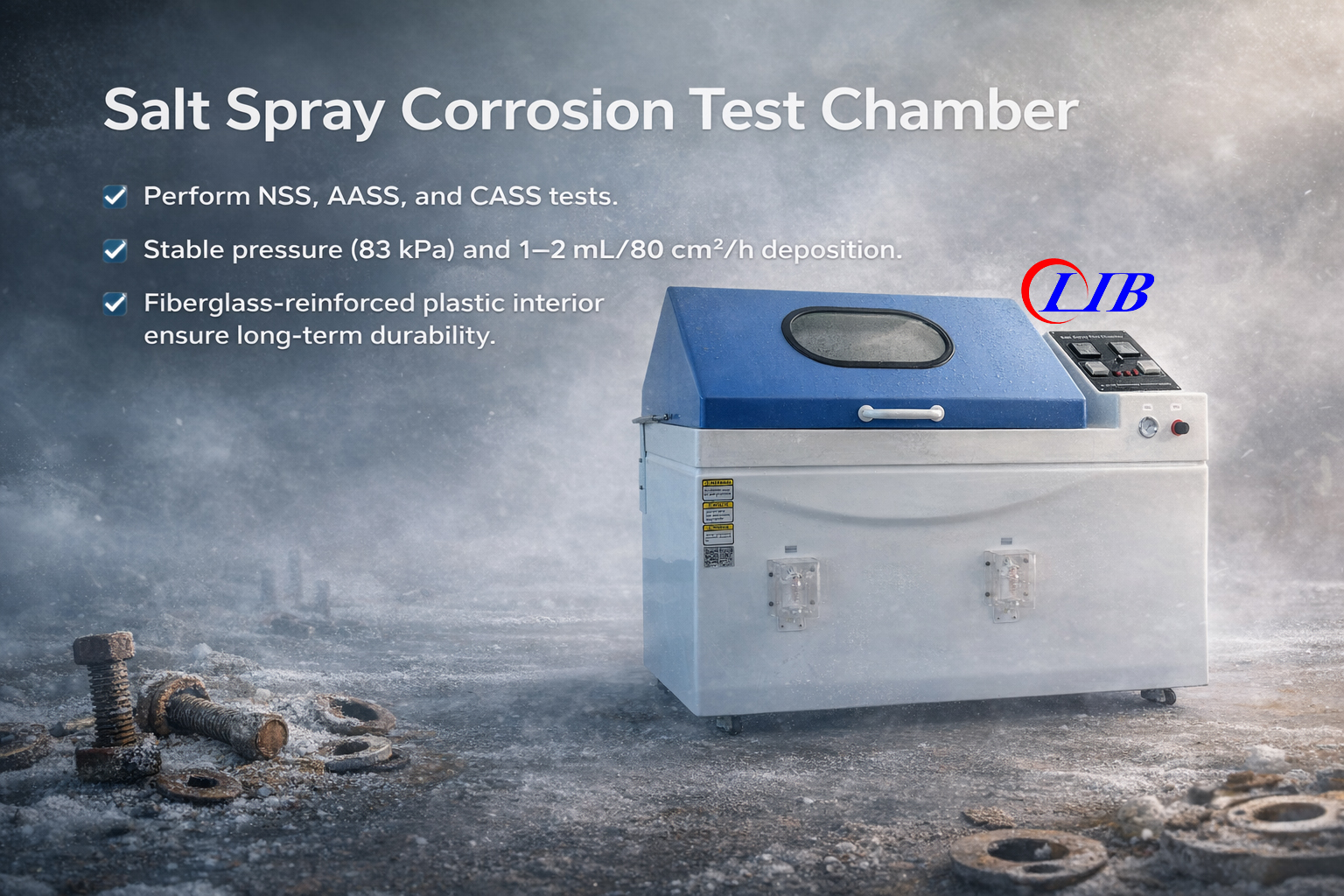 Buyers often focus on chamber volume in liters, but internal dimensions are usually more important than total capacity.
For example, a Salt Spray Corrosion Test Chamber may have enough listed volume on paper, but if the internal height, width, or depth does not suit the specimen geometry, the chamber will still be the wrong choice. Long brackets, wide coated panels, assembled hardware sets, or irregular automotive parts often require more usable length or height than expected.
Before choosing a Salt Spray Corrosion Test Chamber, ask these questions:
What are the maximum dimensions of the largest test sample?
Will samples be flat panels, fasteners, or assembled components?
Must the sample be mounted at a specific angle?
How much spacing is needed to avoid shielding effects?
Will accessories such as holders or racks reduce usable space?
These questions are especially important for a Filiform Corrosion Salt Test, where coated panels need proper spacing and positioning, and for a Fastener Salt Corrosion Rating Test, where many small parts may need to be organized in a repeatable layout.
A modern Salt Spray Corrosion Test Chamber is available in multiple capacities to match different testing needs. In general, small chambers are used for R&D and routine spot checks, medium chambers suit multi-sample testing and supplier qualification, and large chambers are preferred for production validation, automotive components, or bulky assemblies.
The table below shows a practical size-selection framework.
Chamber Category | Typical Use Case | Main Advantage | Main Limitation |
|---|---|---|---|
Small-capacity Salt Spray Corrosion Test Chamber | R&D, low sample count, small hardware | Lower footprint and cost | Limited throughput |
Medium-capacity Salt Spray Corrosion Test Chamber | General QC, coatings comparison, supplier validation | Balanced capacity and efficiency | May be tight for large assemblies |
Large-capacity Salt Spray Corrosion Test Chamber | Automotive parts, high-volume labs, large panels | High throughput and large specimen compatibility | Higher space and utility demand |
Advanced programmable Salt Spray Corrosion Test Chamber | Multi-method corrosion programs | Supports complex testing such as Cyclic Corrosion Test | Higher investment |
A buyer choosing a Salt Spray Corrosion Test Chamber should match chamber class to real testing demand rather than simply selecting the smallest or cheapest model.
The second major factor is sample quantity. Many users buy a Salt Spray Corrosion Test Chamber based on the largest single sample, but overlook how many samples must be tested at the same time.
That is a mistake because a Salt Spray Corrosion Test Chamber is often used for comparison work. A lab may need to test:
Different coating formulations
Multiple suppliers
Several pretreatment options
Control samples and test samples together
Replicates for consistency
Different fastener finishes in the same run
If the chamber cannot hold all relevant specimens in one cycle, the data becomes harder to compare because the samples are no longer exposed under exactly the same batch conditions. This is one reason why a medium or large Salt Spray Corrosion Test Chamber may deliver better value than a very small unit, even for modest labs.
For a Fastener Salt Corrosion Rating Test, the required capacity can grow quickly because each finish, plating, or coating may need multiple screws, bolts, washers, and nuts arranged in an organized pattern. A Salt Spray Corrosion Test Chamber that seems large enough for a few components may become too small once comparative sets are added.
Not every Salt Spray Corrosion Test Chamber is used in the same way. The intended test method affects the ideal chamber size.
| Name | Salt Spray Test Chamber | Salt Cyclic Corrosion Test Chamber | Salt and SO₂ Corrosion Test Chamber |
|---|---|---|---|
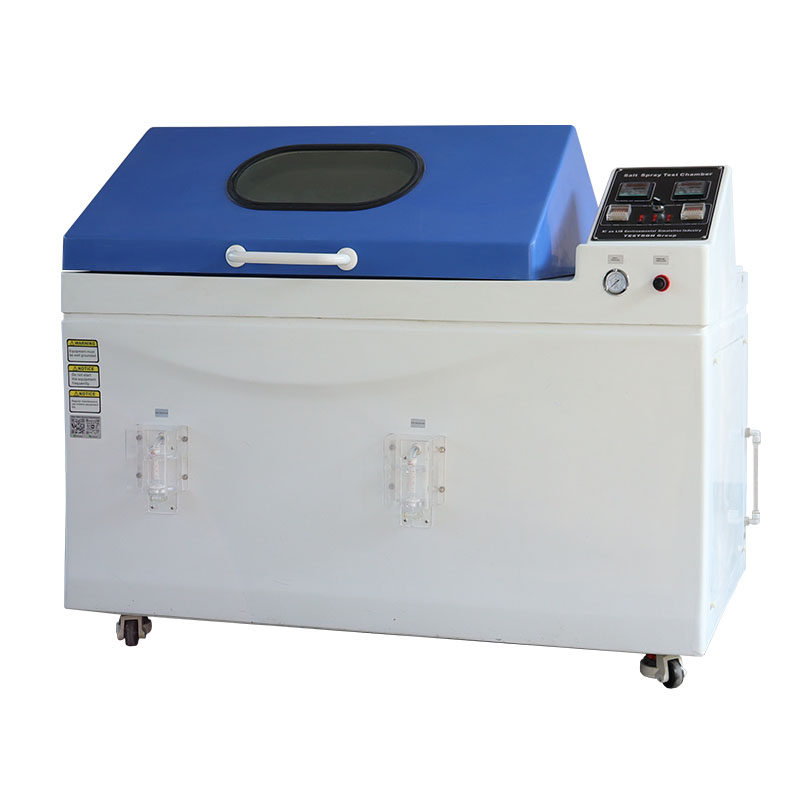 | 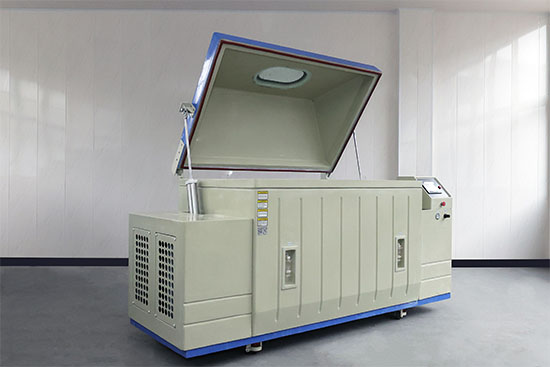 | 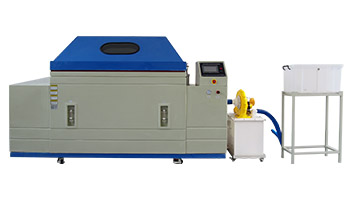 | |
| Model | S-150, S-250, S-750; S-010, S-016, S-020 | SC-010, SC-016, SC-020 | SSC-010, SSC-016, SSC-020 |
| Test Standard | ASTM B117; ISO 9227 (NSS, NASS, CASS) | ASTM B117; ISO 9227; IEC 60068-2-52 | ASTM B117; ISO 9227; IEC 60068-2-52; ASTM G85 (A4) |
| Function | Salt fog spray; Temperature (Ambient ~ +60°C) | Salt fog spray; Temperature (+10°C ~ +90°C); Humidity (30% ~ 98% RH) | Salt fog spray; Temperature (+10°C ~ +90°C); Humidity (30% ~ 98% RH); SO₂ gas |
A basic Salt Spray Corrosion Test Chamber used mainly for a standard Salt Spray Corrosion Test typically focuses on continuous or periodic spray. In these cases, size selection is driven mostly by sample dimensions and quantity.
However, if the chamber will be used for a Cyclic Corrosion Test, the size decision becomes more strategic. A Cyclic Corrosion Test often supports broader product validation programs, including automotive parts, coated assemblies, electronics housings, and multi-stage durability studies. In these cases, buyers often choose a larger Salt Spray Corrosion Test Chamber because cyclic testing is usually more complex, more valuable, and more likely to involve mixed specimen types.
The same logic applies to a Salt Fog and SO2 Test. A Salt Fog and SO2 Test is usually selected for industrial, high-pollution, or advanced materials applications. If your lab plans to run this type of program, a standard entry-level Salt Spray Corrosion Test Chamber may be too limited, not only in function but also in practical working volume.
The best way to choose a Salt Spray Corrosion Test Chamber size is to link it directly to your application. The examples below show how this works in practice.
Application Scenario | Recommended Size Strategy | Why |
|---|---|---|
Small fasteners and plated hardware | Small to medium Salt Spray Corrosion Test Chamber | High part count, but individual specimens are compact |
Painted test panels | Medium Salt Spray Corrosion Test Chamber | Panels need spacing and angled placement |
Automotive brackets and assemblies | Medium to large Salt Spray Corrosion Test Chamber | Larger parts and higher throughput |
Multi-supplier coating validation | Medium to large Salt Spray Corrosion Test Chamber | Better same-batch comparison |
Cyclic Corrosion Test programs | Medium to large programmable Salt Spray Corrosion Test Chamber | More complex testing and future expansion |
Salt Fog and SO2 Test work | Larger advanced Salt Spray Corrosion Test Chamber | Added system complexity and industrial-use focus |
Filiform Corrosion Salt Test on coated panels | Medium Salt Spray Corrosion Test Chamber | Requires orderly panel spacing and observation |
Fastener Salt Corrosion Rating Test for multiple finishes | Medium Salt Spray Corrosion Test Chamber | Supports repeatable comparative loading |
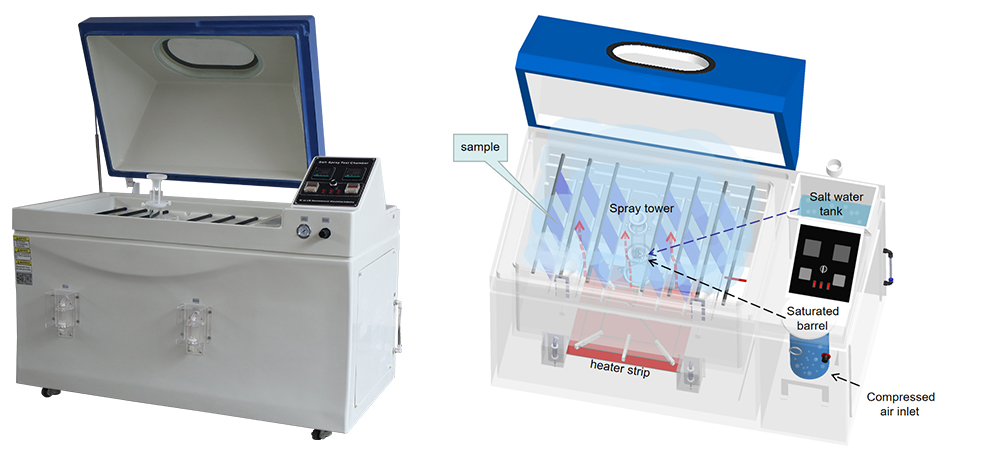
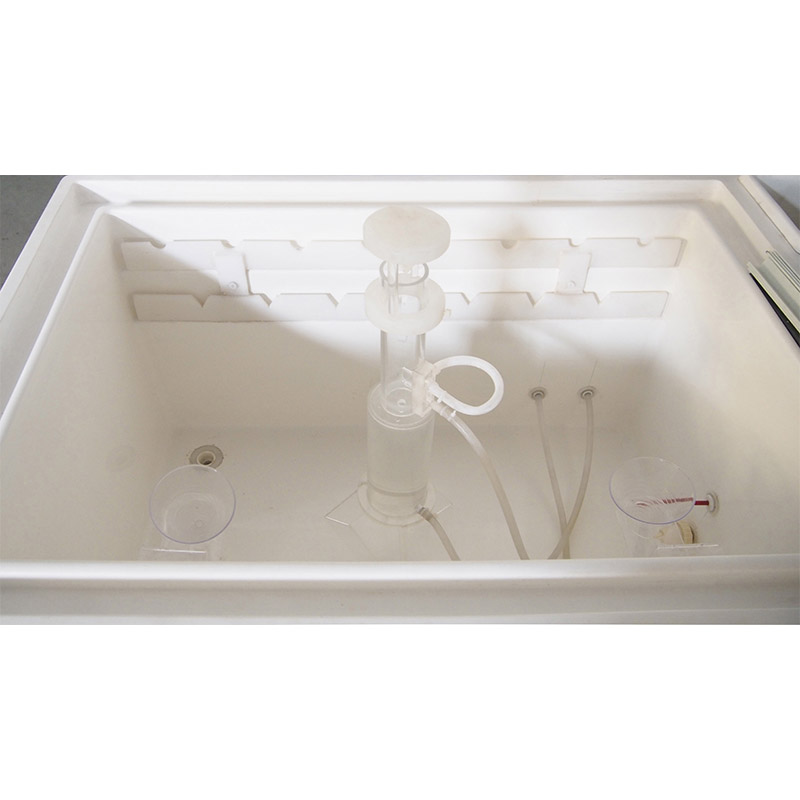
Robust Workroom | Salt Fog Deposition | 1~2ml / 80cm2 · h | ||
Spray Type | Continuous / Periodic | |||
Heating Element | Nichrome heater | |||
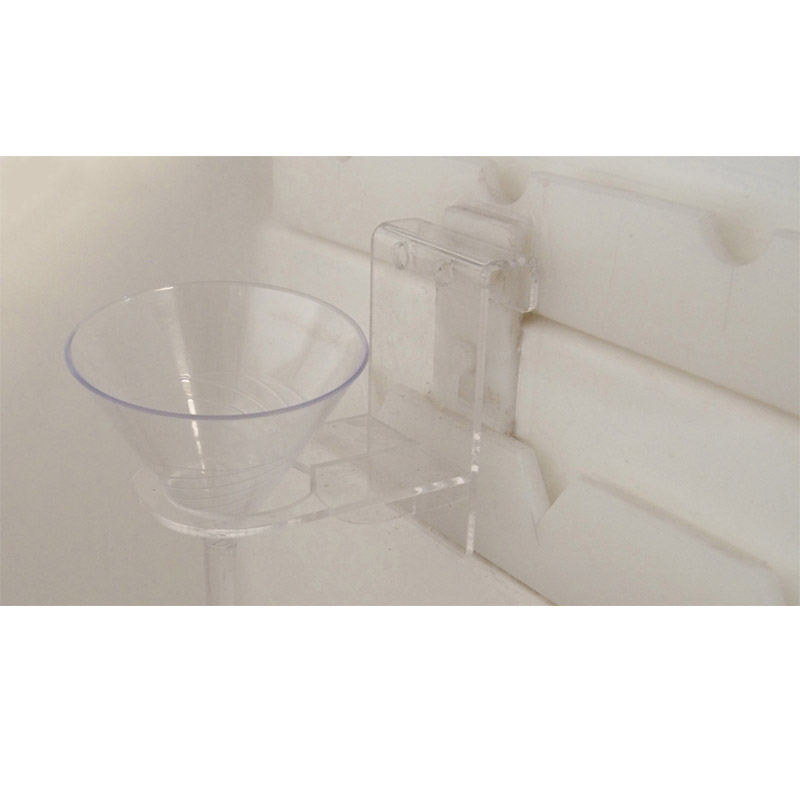
Salt Fog Collected | Fog collector and fog measure cylinder | |||
Salt Fog collector | Controller | PID controller | ||
Material | Glass fiber reinforced plastics | |||
Standard Configuration | 8 round bars and 7 V-shaped grooves | |||
LIB Salt Spray Corrosion Test Chamber should always be sized around the real use case, not an abstract specification sheet.
A fresh trend in the market is that buyers are no longer selecting a Salt Spray Corrosion Test Chamber based on size alone. They are linking chamber size with functionality. This is important for search intent because users looking for “how to choose the right salt spray test chamber size” often also want to know whether the chamber supports future testing needs.
Today, a Salt Spray Corrosion Test Chamberis increasingly expected to do more than standard fog exposure. Buyers want:
Programmable control
Better throughput
Multi-phase corrosion simulation
Support for Cyclic Corrosion Test
Capability for Salt Fog and SO2 Test
Stable deposition for long runs
Better sample flexibility for Fastener Salt Corrosion Rating Test
Better panel handling for Filiform Corrosion Salt Test
This means that the “right size” Salt Spray Corrosion Test Chamber is now the one that balances capacity, flexibility, and test complexity.
Use this checklist before purchasing a Salt Spray Corrosion Test Chamber:
Measure your largest specimen
Count how many samples must be tested in one cycle
Confirm required specimen angles and spacing
Identify whether you need only a standard Salt Spray Corrosion Test
Confirm whether you also need Cyclic Corrosion Test
Check whether Salt Fog and SO2 Test is part of your plan
Decide whether fastener testing or panel testing will dominate
Allow margin for future product growth
Compare internal dimensions, not just chamber liters
Match the chamber footprint to your lab space
If you follow this process, your Salt Spray Corrosion Test Chamber selection will be far more accurate and cost-effective.
The most important factor is usable internal space. A Salt Spray Corrosion Test Chambermust fit your largest specimen, maintain proper sample spacing, and support the number of samples needed per test cycle.
Not always. A larger Salt Spray Corrosion Test Chamber gives more flexibility, but it also increases cost and space requirements. The best approach is to choose a chamber with reasonable growth margin, not unnecessary oversizing.
No. For a Salt Spray Corrosion Test Chamber, internal dimensions are often more important than listed volume because specimen geometry and holder layout determine real usability.
A Fastener Salt Corrosion Rating Test often works well in a small or medium Salt Spray Corrosion Test Chamber, depending on how many coating types and replicates you need to compare in one batch.
In many cases, yes. A Cyclic Corrosion Test usually supports broader validation programs and mixed specimen sets, so a medium or large programmable Salt Spray Corrosion Test Chamber is often a better fit.
If you're looking for a dependable salt spray corrosion testing solution—whether you need a standard Salt Spray Corrosion Test Chamber, a programmable Cyclic Corrosion Test Chamber, a Salt Fog and SO₂ Test Chamber, or a customized system for fastener or filiform corrosion testing—don't hesitate to contact LIB Industry.
Contact LIB Industry today to discuss your specific testing requirements and find the ideal chamber size and configuration for your products. With a 3-year warranty, lifetime technical support, 24/7 English-language service, fast spare parts delivery, and customized testing solutions, LIB Industry helps manufacturers achieve reliable, repeatable, and efficient corrosion testing for every application.
LIB Industry Technical Team – Technical information, salt spray corrosion test methods (ASTM B117, ISO 9227, IEC 60068-2-52, ASTM G85), product specifications, customization, and application guidance for salt fog, cyclic corrosion, and SO₂ testing equipment.