


Every year, material aging causes millions of dollars in economic losses worldwide. Textiles, coatings, plastics, rubber, and other organic materials inevitably deteriorate when exposed to sunlight, ultraviolet radiation, high temperatures, rain, and humidity. Discoloration, cracking, peeling, chalking, strength reduction, and oxidation not only affect product appearance but also compromise safety and performance. For manufacturers, understanding and controlling light-induced aging is essential to ensuring product reliability and market competitiveness.
Many customers who have implemented LIB light aging test chambers have reported highly stable irradiance control, accurate temperature and humidity regulation, and excellent repeatability in testing results. Users particularly appreciate the intelligent programmable controller, uniform light distribution, and durable chamber construction, which allow them to conduct long-term weathering tests with confidence. These positive experiences highlight the importance of selecting professional testing equipment as the foundation of reliable durability evaluation.
The Purpose of Light Aging Test
(1) In order to comply with relevant quality and technical standards;
(2) Avoid losses caused by aging;(3) To enhance the reputation of the product;
(4) Check the quality of the supplier's products;
(5) Improve the weather resistance of products;
(6) Significantly reduce material costs;
(7) Expand the variety of products;
(8) To facilitate access to new markets;
(9) Win the competition;
How to Perform Light Aging Test?
Outdoor Natural Weathering Test
Outdoor weathering tests come closest to replicating how materials age under real-world conditions. Depending on how a product will actually be used, different outdoor exposure sites can be selected—for instance, Q-PANEL in the United States operates two well-known testing grounds in Florida and Arizona. Florida has a subtropical climate marked by intense solar radiation, high heat, and high humidity. These demanding conditions make it an excellent site for exposure testing, particularly for moisture-sensitive materials like coatings, building materials, and plastics. Florida's climate is also especially well-suited for evaluating mold resistance.
Arizona subjects materials to even tougher conditions. Unlike Florida, Arizona is defined by strong UV exposure, extreme heat, wide swings between day and night temperatures, and low humidity—the hallmarks of a desert climate. Annual solar irradiance in Arizona runs about 20% higher than in Florida, and peak temperatures can exceed Florida's by roughly 15°C. Under these harsher conditions, most materials degrade considerably faster than they would in Florida. This is especially evident in coating discoloration, thermal aging and physical property changes in plastics, the fading of plastic coatings, and reduced tensile strength in textiles.
Because both sites drive faster degradation than milder climates would, the terms "Florida weatherability" and "Arizona weatherability" have become standard benchmarks in durability testing.
Sun exposure is something materials encounter constantly in everyday use. Over time, polymer-based products such as coatings and plastics tend to develop discoloration, chalking, blistering, cracking, and flaking when exposed to sunlight for extended periods—all of which compromise both mechanical performance and appearance. For this reason, developers of coatings, plastics, and light-exposed automotive interior components need to simulate real-world sun exposure through photoaging tests to properly evaluate their products. To speed up this evaluation process, artificially accelerated photoaging methods are commonly used when testing new materials.
Laboratory Accelerated Aging Test
Natural aging tests can take several years to yield results, placing heavy demands on time, scheduling, and budget. Compounding this, climate conditions vary widely from place to place, so identical materials tested in different locations can produce widely divergent results—undermining the repeatability and reproducibility of the data. As a result, laboratory-based accelerated aging has become the preferred approach: it shortens test cycles considerably, delivers more consistent results, and works well for quality control and material stability assessment. Because testing happens entirely indoors, it isn't constrained by natural climate variables—only controlled, human-defined factors need to be considered—and the entire process can be carried out within a single test chamber. Artificial accelerated aging methods generally fall into three categories: carbon arc lamp simulation, UV-accelerated aging, and xenon arc lamp aging. Carbon arc lamp chambers were the earliest of these technologies, but due to high maintenance costs, the inability to calibrate output, and a limited simulated spectral range, they've largely fallen out of use today.
Three Light Aging Test Methods
Light aging (weathering) test methods generally fall into three main categories: carbon arc lamp testing, fluorescent UV lamp testing, and xenon arc lamp testing.
1. Carbon Arc Lamp Method
This category includes two variants: the ultraviolet carbon arc lamp and the sunshine (daylight) carbon arc lamp.
Ultraviolet Carbon Arc Lamp
This type of equipment works by applying a suitable voltage across the upper and lower carbon electrodes inside the instrument. As current passes through, the resulting arc discharge releases substantial energy, producing a continuous ultraviolet spectrum.
Sunshine Carbon Arc Lamp
This variant differs in that the carbon rods are doped with specific metallic elements, allowing the emitted spectral energy to more closely resemble natural sunlight. However, this method has notable drawbacks: the short-wave UV output is disproportionately intense compared to what actually reaches the earth's surface, creating a mismatch with real-world conditions. Additionally, the long-wave UV and visible light components still deviate considerably from the true solar spectrum. For these reasons, sunshine carbon arc lamps have seen limited adoption in practice.
2. Fluorescent UV Lamp Method
Fluorescent UV lamp devices operate through low-pressure mercury vapor arc discharge, which excites fluorescent compounds to emit ultraviolet radiation. This process generates a continuous spectrum within a relatively narrow wavelength band. Electrically, these lamps share similarities with standard cold-cathode fluorescent lighting tubes, but they are engineered to emit a much higher proportion of UV radiation relative to visible or infrared light.
A key limitation is that fluorescent UV lamps can produce radiant energy not naturally present at the earth's surface, which may accelerate material degradation in ways that don't reflect real-world aging. Conversely, because these lamps lack sufficient long-wavelength UV output, materials that are particularly sensitive to longer UV wavelengths may show less degradation than they would under actual sunlight exposure.
Among commonly used fluorescent UV lamps are UVA-340, UVA-351, and UVB-313:
The UVA-340 lamp produces a spectrum that most closely matches the UV portion of natural sunlight, making it well-suited for tests aiming to replicate realistic outdoor lighting conditions.
The UVB-313 lamp emits UV radiation considerably more intense than what's found in natural sunlight, making it better suited for comparative screening or accelerated failure testing rather than realistic simulation.
3. Xenon Arc Lamp Method
Xenon arc lamp systems are widely regarded as the most effective devices for replicating the full solar spectrum, since they can generate ultraviolet, visible, and infrared radiation simultaneously. The spectral energy distribution of xenon arc lamps in the UV and visible ranges bears the closest resemblance to natural sunlight among all available test methods. Because of this fidelity, xenon arc irradiation has become the most widely adopted technique for simulating photostability and light-aging performance testing.
Model | XL-S-750 |
|
Internal Dimension (mm) | 950*950*850 mm | |
Overall Dimension (mm) | 1300*1420*1800 mm | |
Sample holder | Adjustable speed, 1r /min | |
Chamber Type | Rotating Holder | |
Irradiation Source | 1 piece of 4500w water-cooled xenon arc lamp with inner quartz and outer borosilicate filter | |
Irradiance Range | 150 W/㎡ | |
Bandwidth Measurement | 300~400 nm | |
Chamber Temperature Range | -40~ 100 ℃ ±2 ℃ | |
Black Panel Temperature | BPT 35 ~ 85 ℃ ±2 ℃ | |
Humidity Range | 30 % ~ 98 % RH | |
Water Spray Cycle | 1~9999 H 59 M (Adjustable) | |
Controller | Programmable color LCD touch screen controller | |
Radiometer | UV Radiometer, Tolerance: ±5 % |

|
|
|
| Controller | Specimen holder | Rain spray system |


Xenon arc lamp device is a device filled with high purity xenon arc discharge lamp as the light source, the lamp tube is made of a transparent quartz glass tube, each end is sealed with a metal electrode, when the electrode is added to the appropriate high voltage and filtered by the filter plate will produce a spectrum closer to the sunlight.
The unfiltered xenon arc light in the xenon arc lamp device is not a good model of the natural exposure of the Earth's surface, and the spectrum of the sample is generally simulated by several optical filters. When using borosilicate glass internal and external filters (daylight filters), the spectral energy distribution emitted by the xenon arc lamp device is similar to the outdoor natural sunlight, and when the external filter is changed to sodium-calcium glass (window glass filters), it is close to the natural sunlight filtered by the glass window. When the inner filter is changed to quartz glass (extended UV filter), the spectrum has shorter shortwave UV rays that are not present in outdoor sunlight.
The three different types of lighting conditions each have their own advantages and disadvantages. The choice of which test method should be based on the characteristics of the product itself and the external environment during actual use. Carrying out artificial accelerated light aging test can have a more accurate and in-depth understanding of product performance and lifespan, and promptly eliminate products with poor quality or poor light resistance. In addition, when choosing different types of lighting conditions for testing, you must first understand the structure of the sample and the purpose of the test, such as whether you want to simulate the actual lighting conditions or do destructive lighting conditions, or want to do full-spectrum lighting The conditions still want to focus on simulating the ultraviolet light conditions, so that the correct photoaging conditions and testing equipment can be selected accordingly.
The Equipment Needed to Perform the Tests
1.UV Accelerated Weathering Test Chamber
In the 1970s, ultraviolet accelerated aging test chambers appeared. We know that ultraviolet rays in sunlight, especially peaks below 360 nm in the spectrum, are the main cause of material aging.LIB’s UV accelerated weathering test chamber emits ultraviolet spectrum through ultraviolet lamps to simulate the ultraviolet part of sunlight to accelerate the aging of materials. The peak wavelength of its fluorescent UVB lamp (UVB-313) is around 313 nm, and its energy is almost entirely concentrated between 280 and 360 nm. The wavelength range of the energy distribution is shorter than that of sunlight, which can speed up the experiment to the greatest extent.
For UVA-340 lamps, the ray wavelengths are mainly concentrated between 295 and 360 nm, and the short-wave radiation of UVA-340 lamps is very similar to direct sunlight below 325 nm. According to different aging requirements for materials, customers can choose different UV lamps. In addition, the LIB’s UV accelerated weathering test chamber also has a high-precision photometric control system, which allows users to choose the desired illuminance level. With the help of the system, the light intensity can be controlled. Continuous monitoring, automatic and precise maintenance. When choosing a UVA-340 lamp with an intensity of 0.68 W/m2/nm and a wavelength of 340, it can match the intensity of sunlight at noon in summer.
At the same time, LIB's UV accelerated weathering test chamber can also simulate the influence of rain and dew, which can be achieved in two ways: condensation and water spray. Condensation is consistent with natural humidity. Through the accelerated test process by increasing the temperature, the condensation product produced is pure water-no water stains or impurities are produced on the sample. Spraying simulates mechanical erosion due to steady temperature fluctuations and rain wash-off.
International standards applicable to UV accelerated aging testing mainly include ISO 4892-1:1999 "Plastic Laboratory Light Source Exposure Test Method Part 1: General Rules"; ISO 4892-3:1994 "Plastic Laboratory Light Source Exposure Test Method Part 3: Fluorescent UV Lamp"; ASTM G-151 "Test Standard for Non-metallic Materials Laboratory Light Source Exposure Accelerated Test Device"; ASTM G-154 "Ultraviolet Fluorescent Light Source Exposure Test Method for Non-metallic Materials", etc.
Model | UV-SI-260 |
UV Tester |
Internal Dimension (mm) | 450*1170*500 | |
Overall Dimension (mm) | 680*1300*1500 | |
Specimen Holder Size (mm) | 75*150 | |
Specimen Capacity | 56 Pieces | |
Irradiation Source | Fluorescent UV lamps (8) - 40 W | |
Temperature Range | Ambient ~ 90 ℃ ±2℃ | |
Black Panel Temperature (BPT) | 35 ~ 80 ℃ | |
Humidity Range | ≥95% RH | |
Bandwidth | 290 ~ 400 nm | |
Irradiance Control | 0.3~20 W/㎡ | |
Water Spray Cycle | 1~9999H59M (Adjustable) | |
Distance of Specimen and lamp | 50 mm |

|
|
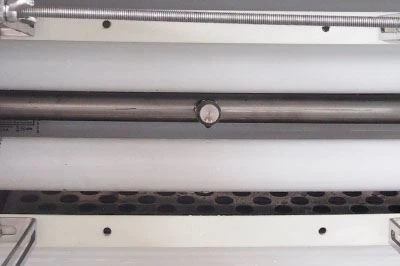
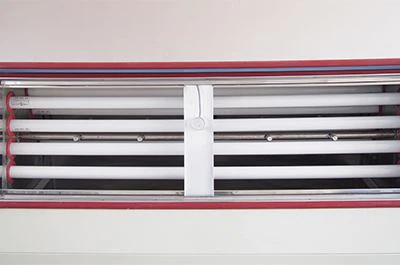
| Water Spray nozzles | UVA/B Lamps |
|
|
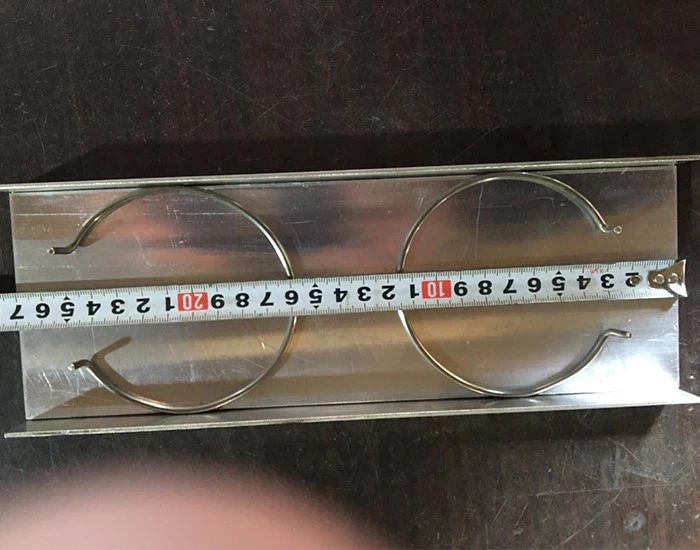
Specimen Holder Flat specimen holders, aluminum panels with rings. Each specimen size is 75 mm * 150 mm, can hold 56 pieces. Special sample holder can be customized | Black Panel The blackboard thermometer is composed of a stainless steel flat plate with a length of 150 mm, a width of 70 mm, and a thickness of 1 mm. |

2.Xenon Arc Accelerated Weathering Test Chamber
In the 1950s, the first xenon arc lamp simulated accelerated aging tester appeared in the world. Xenon arc lamps use the full sunlight spectrum as the light source, and the use of properly filtered xenon arc lamps is the best way to test the sensitivity of products to long-wave ultraviolet and visible light in direct sunlight or sunlight through glass. It can not only simulate the light resistance of indoor materials, but also simulate the climate environment. At present, the most widely used xenon lamp aging machine has two categories: rotating drum testing machine and testing machine with static sample placement. The rotating drum is designed so that a light tube is placed in the center of the container, surrounded by a rotating sample holder, which rotates around the light source. Such sample placement systems are often described as "rotating drums".
In the aging test chamber where the sample is statically placed, the tested sample is left still, and the aging is strictly controlled through various control methods, including xenon lamps that simulate the complete sunlight spectrum, a variety of filter systems and ISO 9000 Standard calibration, black panel temperature control system, test methods meeting ISO and ASTM requirements, three-dimensional sample holder and water spray function.
Due to the variety of xenon arc testing chambers that can be selected at present, most standardization organizations (including ISO and ASTM) tend to develop performance-based testing methods and methods. These methods define the test conditions (such as irradiation, spectrum, temperature, humidity, etc.) and acceptable performance ranges.
Contact LIB
Which Light Aging Test chambers do you need? LIB can provide you with:
the best Light Aging Test chamber, the most professional solution, the most desirable service according to your testing requirements and standards. Ready to improve your material durability testing? Contact LIB Industry today for a customized Light Aging Test Chamber solution tailored to your standards and application. Let our experts help you select the right system and achieve accurate, reliable results.


