


The industry primarily encompasses industrial organizations, manufacturing facilities, and military supply units that support national defense programs and provide the armed forces with weapons, equipment, and other defense-related supplies. Key categories of defense products include:
| weapons industry | aviation industry | shipbuilding industry |
| electronics industry | nuclear industry | aerospace industry |
LIB's Altitude, Temperature & Humidity Test Chambers have received outstanding feedback from defense clients worldwide. Customers consistently praise the chambers for their precision, durability, and ability to replicate real-world military conditions. These chambers allow operators to simulate extreme altitudes, rapid pressure changes, high temperatures, and cyclic environmental conditions with full control, making them ideal for evaluating the reliability and safety of military equipment.
Features of Defense Products
The main task of the defense industry is to produce weapons and other military products. Weaponry is a special consumer product, and its direct use is to meet the needs of the military, which determines that the national defense industry has different characteristics compared with the civilian industry:
① The country plays an important role. The country is the maker of the production plan of the defense industry, and also the consumer of the products of the defense industry. The products of the defense industry are generally ordered and consumed directly by the military.
② Capital and technology intensive. The establishment of the national defense industry and the production of weapons and equipment require huge investment. In the national defense industry, there are generally the most advanced science and technology and more outstanding scientific and technological personnel.
③ Product cost is high and expensive.
④ The alternation of peace and war has a direct impact on the planning and production of the defense industry. In peacetime, the demand for military products is small, but in wartime, the demand is large.
⑤ High confidentiality and stricter management.
⑥ Most of the main enterprises are distributed in strategically deep areas to ensure wartime security.
Reliability testing is an activity to evaluate the functional reliability of defense products in all environments such as expected use, transportation or storage during the specified life span. It is to expose the product to natural or artificial environmental conditions, to evaluate the performance of the product under the environmental conditions of actual use, transportation and storage, and to analyze the degree of influence of environmental factors and its mechanism of action. Defense products are critical to users, so environmental testing is also essential. This passage mainly introduce the following tests.
LOW PRESSURE (ALTITUDE) TEST
Use low pressure (altitude) tests to determine if materiel can withstand and/or operate in a low pressure environment and/or withstand rapid pressure changes.
Application
Use this method to evaluate materiel likely to be:
a. stored and/or operated at high ground elevation sites.
b. transported or operated in pressurized or unpressurized areas of aircraft.
c. exposed to a rapid or explosive decompression and, if so, to determine if its failure will damage the aircraft or present a hazard to personnel.
d. carried externally on aircraft.
Having selected this method and relevant procedures, it is necessary to complete the tailoring process by selecting specific parameter levels and special test conditions/techniques for these procedures based on requirements documents, Life Cycle Environmental Profile, Operational Environment Documentation, and information provided with this procedure. From these sources of information, determine the functions to be performed by the materiel in low pressure environments or following storage in low pressure environments.
Determine the test parameters such as test pressure and temperature, rate of change of pressure (and temperature if appropriate), duration of exposure, and test item configuration.
Test Pressure and Temperature Determination
The selection of test pressures and temperatures shall be based on the expected operational, transportation, or flight environment of the test item.
a. Ground Environment Conditions
When actual field measurement data are unavailable, reference environmental data for suitable elevations and geographic regions may be obtained from STANAG 2895. For NATO ground operations, the maximum operational elevation currently considered is 4,570 m, corresponding to an atmospheric pressure of approximately 57 kPa.
b. Cargo Aircraft Pressure Conditions
The pressure conditions applied during testing depend on the intended transportation profile and the type of aircraft used. Cargo transport aircraft differ in service ceiling capabilities and pressurization system designs. In some aircraft, the cargo compartment remains at ambient external pressure until a certain altitude is reached, after which the system maintains a controlled internal pressure level, commonly referred to as the “cabin altitude.”
Testing should reflect the most realistic transport conditions expected for the equipment. Unless the materiel is specifically designed for a dedicated aircraft platform with special cabin pressure requirements, the following conditions are recommended:
(1) Procedures I and II:
Use a cabin altitude of 4,572 m (15,000 ft), equivalent to a standard atmospheric pressure of 57.2 kPa (8.3 psia).
(2) Procedures III and IV:
Use an initial cabin altitude of 2,438 m (8,000 ft), corresponding to 75.2 kPa (10.9 psia), followed by decompression to a final cabin altitude of 12,192 m (40,000 ft), corresponding to 18.8 kPa (2.73 psia).
c. Cargo Aircraft Temperature Conditions
Temperatures associated with low-pressure transport environments may vary significantly depending on the aircraft environmental control system and cargo compartment design. Test temperatures should therefore be established using measured operational data or reliable national and military environmental references.
Test Facility
The test facility shall be capable of accurately controlling and maintaining the specified pressure and temperature conditions throughout the test duration to ensure repeatable and reliable simulation of the intended environment.
LIB Altitude Test Chamber
Step 1. Place the test item in its storage or transport configuration and install it in the testchamber.
Step 2. If appropriate, stabilize the test item to the required temperature.
Step 3. Adjust the chamber air pressure to that which corresponds to the required test altitude,at an altitude change rate as specified in the test plan.
Step 4. Maintain the conditions for a minimum of one hour unless otherwise specified in the test plan.
Step 5. Adjust the chamber air to standard ambient conditions at the rate specified in the test plan.
Step 6. Visually examine the test item to the extent possible and conduct an operational check.
TEMPERATURE AND HUMIDITY TEST
High temperature testing is conducted to collect data for assessing the safety, structural reliability, and operational performance of materiel exposed to elevated temperature environments. This method is applicable to products and equipment expected to operate, be stored, or be transported in regions where ambient temperatures exceed standard climatic conditions.
Effects of High Temperature Exposure
Exposure to excessive heat can cause temporary degradation or permanent damage to materiel due to changes in material characteristics, dimensions, or mechanical properties. Elevated temperatures may affect the functionality, durability, and overall reliability of components and systems. Typical issues caused by high temperature conditions may include deformation, softening, loss of strength, reduced electrical performance, seal deterioration, lubricant breakdown, or failure of sensitive electronic parts.
The following examples represent common high-temperature-related concerns that should be considered when determining whether this test method is suitable for the materiel under evaluation. These examples are provided as guidance only and are not intended to represent a complete list of potential effects.
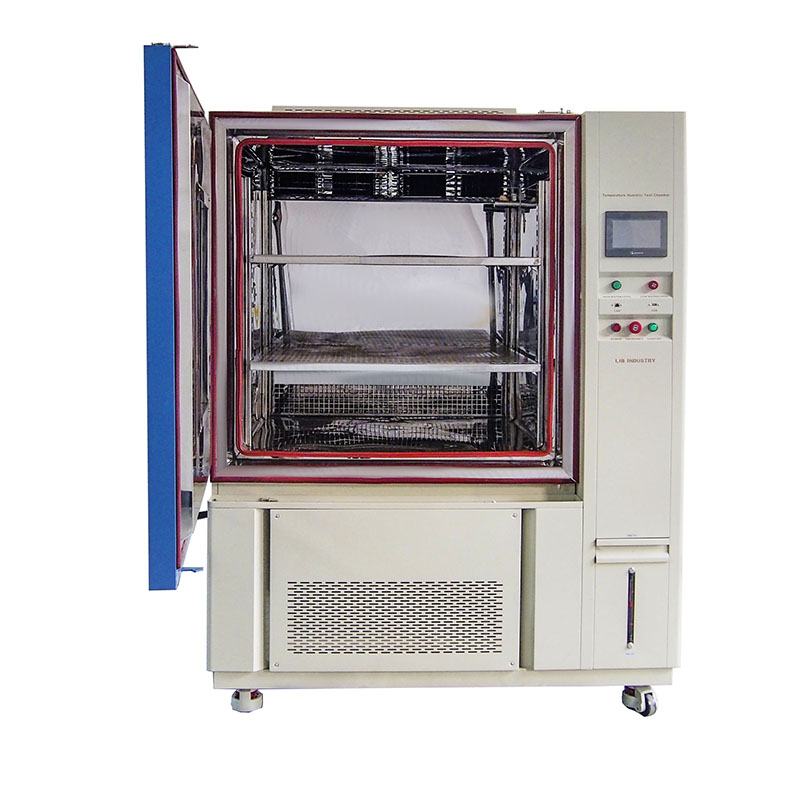 | |||||
Temperature range | -20℃ ~+150 ℃ | ||||
Low type | A: -40℃ B:-70℃ C -86℃ | ||||
Humidity Range | 20%-98%RH | ||||
Temperature deviation | ± 2.0 ℃ | ||||
Heating rate | 3 ℃ / min | ||||
Cooling rate | 1 ℃ / min | ||||
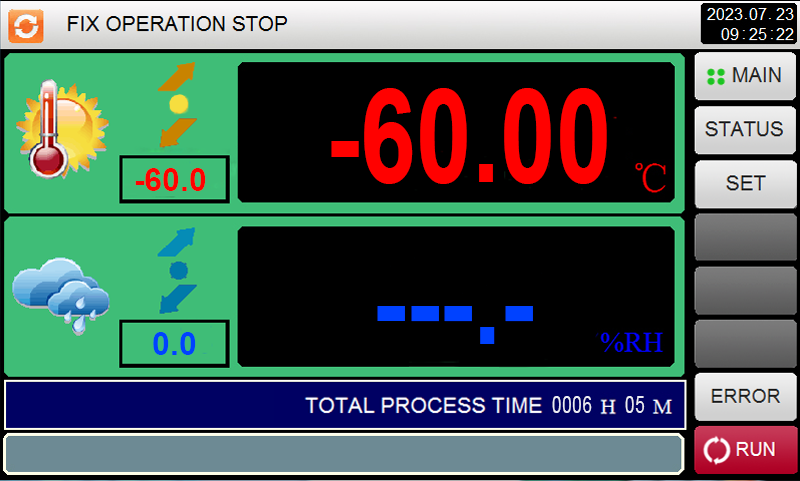
Controller | Programmable color LCD touch screen controller, Multi-language interface, Ethernet , USB | ||||
Refrigerant | R404A, R23 | ||||
Exterior material | Steel Plate with protective coating | ||||
Interior material | SUS304 stainless steel | ||||
Standard configuration | 1 Cable hole (Φ 50) with plug; 2 shelves | ||||
Timing Function | 0.1~999.9 (S,M,H) settable | ||||
|
| 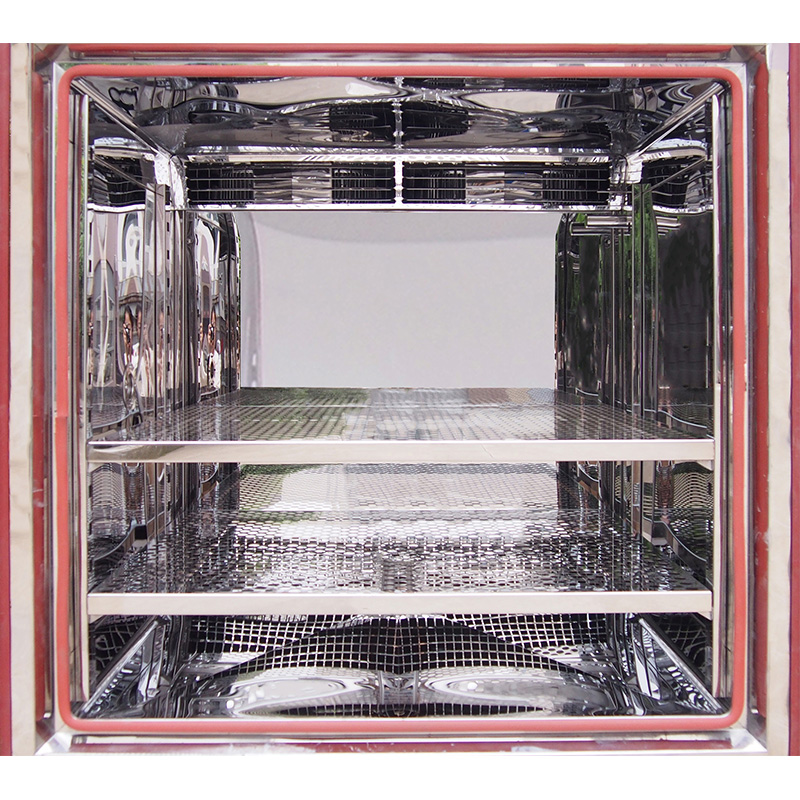 | 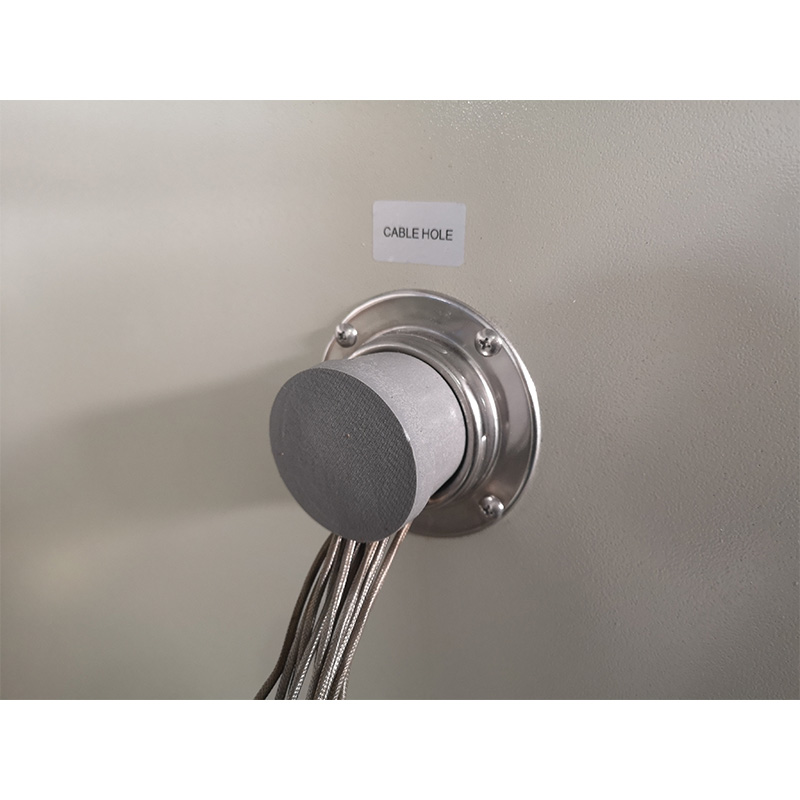 |
Touch screen controller | The compressor | Robust Anti-Corrosion Workroom | Integrated Power Access hole |

a. Parts bind from differential expansion of dissimilar materials.
b. Lubricants become less viscous; joints lose lubrication by outward flow of lubricants.
c. Materials change in dimension, either totally or selectively.
d. Packing, gaskets, seals, bearings and shafts become distorted, bind, and fail causing mechanical or integrity failures.
e. Gaskets display permanent set.
f. Closure and sealing strips deteriorate.
g. Fixed-resistance resistors change in values.
h. Electronic circuit stability varies with differences in temperature gradients and differential expansion of dissimilar materials.
i. Transformers and electromechanical components overheat.
j. Operating/release margins of relays and magnetic or thermally activated devices alter.
k. Shortened operating lifetime.
l. Solid pellets or grains separate.
m. High pressures created within sealed cases (projectiles, bombs, etc.).
n. Accelerated burning of explosives or propellants.
o. Expansion of cast explosives within their cases.
p. Explosives melt and exude.
q. Discoloration, cracking or crazing of organic materials.
r. Outgassing of composite materials.
Test duration.
For constant temperature exposure, soak the test item until its temperature has stabilized and maintain the test temperature at least two hours following stabilization. For cyclic exposure, determine the test duration based on an estimate of the number of cycles required to satisfy the design requirements and the guidance below. The duration of high temperature exposure may be as significant as the temperature itself.
Because Procedures I and II could expose the test items to cyclic temperatures, the number of cycles is critical. (Cycles are 24-hour periods unless otherwisespecified.)
a. Procedure I - Storage. The number of cycles for the storage test is set at a minimum of seven to coincide with the one percent frequency of occurrence of the hours of extreme temperatures during the most severe month in an average year at the most severe location. (The maximum temperature occurs for approximately one hour in each cycle.) When considering extended storage, critical materials, or materials determined to be very sensitive to high temperature, increase the number of cycles to assure the design requirements are met.
b. Procedure II - Operation. The minimum number of cycles for the operational exposure test is three.
This number is normally sufficient for the test item to reach its maximum response temperature. A maximum of seven cycles is suggested when repeated temperature response is difficult to obtain.
Humidity.
Generally, relative humidity (RH) control during high temperature tests is not necessary. In special cases, extremely low RH may have a significant effect on some materiel during high temperature testing. If the materiel has special characteristics that could be affected by extremely low RH, use the values for RH shown in tables 501.4-I and -II.
LIB temperature and humidity test chamber

a. Temperature. Unless otherwise specified in the test plan, if any action other than test item operation (such as opening the chamber door) results in a significant change of the test item temperature (more than 2℃ (3.6℉)) or chamber air temperature, re-stabilize the test item at the required temperature before continuing the test. If the operational check is not completed within 15 minutes, reestablish test item temperature/RH conditions before continuing.
b. Rate of temperature change. Unless otherwise specified, use a rate of temperature change not exceeding 3℃ (6℉) per minute to prevent thermal shock.

These cycles were obtained from AR 70-38, 1 August 1979, and essentially conform to those in MIL-HDBK-310 and NATO STANAG 2895. These values represent typical conditions throughout a typical day in this climatic category. "Induced Conditions" are air temperature levels to which materiel may be exposed during storage or transit situations that are aggravated by solar loading.
Humidity control during high temperature testing is generally not necessary. Use these values only in special cases.
Data were originally recorded in ℉ and converted to ℃. Hence, table data conversion may not be consistent.
Procedure
Step 1. Place the test item in its storage configuration.
Step 2. Adjust the chamber environment to the appropriate test conditions for the start of the test period and maintain for the specified time following temperature stabilization of the test item.
Step 3.
a. For cyclic storage, expose the test item to the temperature (and humidity, if applicable)conditions of the storage cycle for at least seven cycles (if 24-hour cycles are used, this would be a total of 168 hours) or as specified in the test plan. If noted in the test plan, record the thermal response of the test item.
b. For constant temperature storage, maintain the test temperature at least two hours following test item temperature stabilization (see Part One, paragraph 5.4). The additional two hours will help ensure unmeasured internal components actually reach stabilization. If not possible to instrument internal components, base any additional soak time on thermal analysis to ensure temperature stabilization throughout the test item.
Step 4. At the completion of the constant temperature soak or the last cycle, adjust the chamber air temperature to standard ambient conditions and maintain until the test item temperature is stabilized.
Step 5. Conduct a visual examination and operational checkout of the test item and record the results for comparison with pretest data.
Summary
Much of the information referenced above is derived from MIL-STD-810, an environmental engineering and testing standard developed by the United States Department of Defense. The standard is designed to evaluate the ability of military and commercial equipment to operate reliably under a variety of harsh environmental conditions.
MIL-STD-810 includes test methods covering numerous environmental stresses such as extreme temperatures, humidity, vibration, mechanical shock, altitude, dust, rain, and other operational environments that equipment may encounter during transportation, storage, or field use. Compliance with this standard during product development helps verify that the equipment can maintain its functionality, structural integrity, and performance under demanding conditions.
Products tested in accordance with MIL-STD-810 are generally recognized for enhanced durability, reliability, and environmental resistance. As a result, customers and end users often regard MIL-STD-810 compliant products as more dependable for use in challenging or mission-critical applications.
| Altitude | Temperature | Humidity | Vibration |
| Thermal Shock | Rain | Sand & Dust | Salt Fog/Spray |
| Materials Testing | Immersion | Solar Radiation | Mechanical Testing |
These are the tests included in the standard. All of them are tests for defence product.To improve your product reliability and durability, which test and the chamber do you need? LIB will provide you with the professional solution. Contact LIB Industrynow.


