


Corrosion remains a major factor leading to material degradation and failure, especially in demanding environments such as coastal areas, industrial facilities, and regions exposed to de-icing salts. To assess the resistance of materials and protective coatings under such conditions, salt spray chambers are commonly adopted as a reliable accelerated corrosion testing method. By simulating a controlled, salt-rich atmospheric environment, these chambers allow manufacturers to estimate long-term durability in a shortened timeframe, evaluate and compare different materials or surface finishes, and verify compliance with relevant international testing standards prior to product release.
A salt spray chamber is a specialized piece of equipment used to simulate the corrosive effects of salt-laden environments on materials and products. It creates a controlled atmosphere where a salt solution is atomized into a fine mist and sprayed onto test specimens. This accelerated corrosion testing helps determine the durability and performance of materials, coatings, and components in harsh conditions.
What it is Used For
Salt spray chambers are mainly designed to evaluate how well materials and surface treatments resist corrosion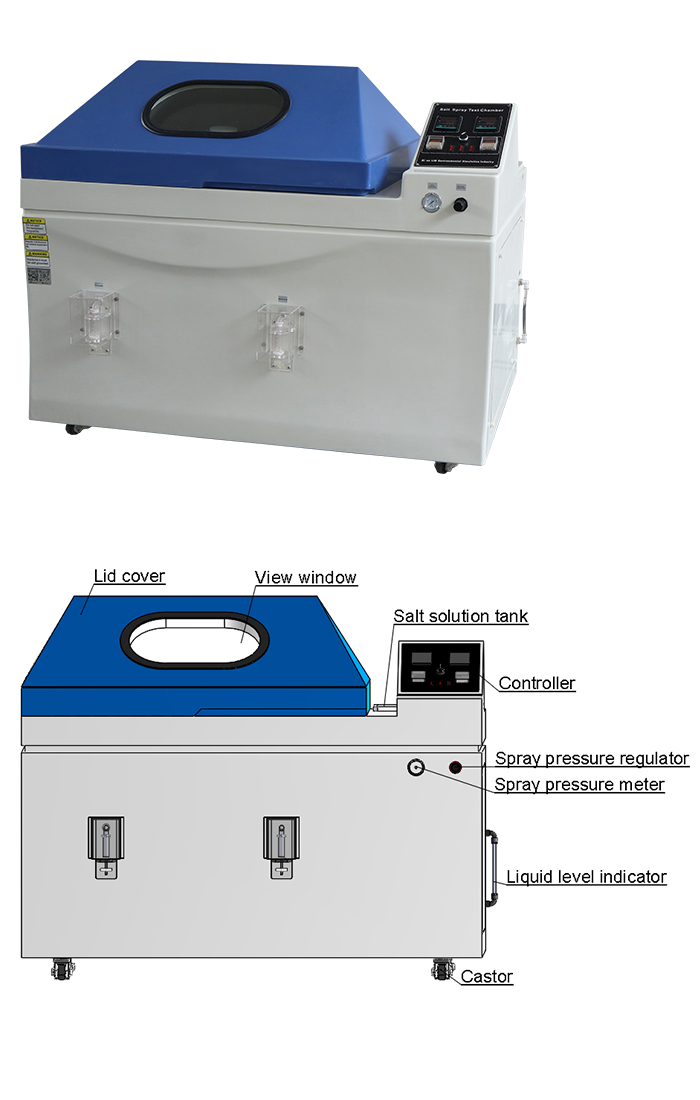 over time.
By reproducing a controlled salt-rich environment, they enable manufacturers to examine:
● Material durability: The ability of metals, plastics, and composite materials to withstand prolonged exposure to saline conditions.
● Coating protection performance: How effectively paints, coatings, and surface treatments prevent rust and degradation.
● Overall product reliability: The expected performance of products when used in challenging environments such as coastal regions or areas where road salt is common in winter.
These testing systems are widely adopted across industries including automotive, aerospace, marine engineering, and construction to support product quality assurance and long-term durability validation.
Design and Structure
Materials Used
A salt spray chamber is designed with carefully selected materials to ensure it can operate continuously in a highly corrosive testing environment while maintaining durability and stable performance over time.
Structural and functional materials
The chamber body is usually constructed from corrosion-resistant materials such as stainless steel or PVC. These materials help prevent structural damage caused by prolonged exposure to salt mist and humid conditions.
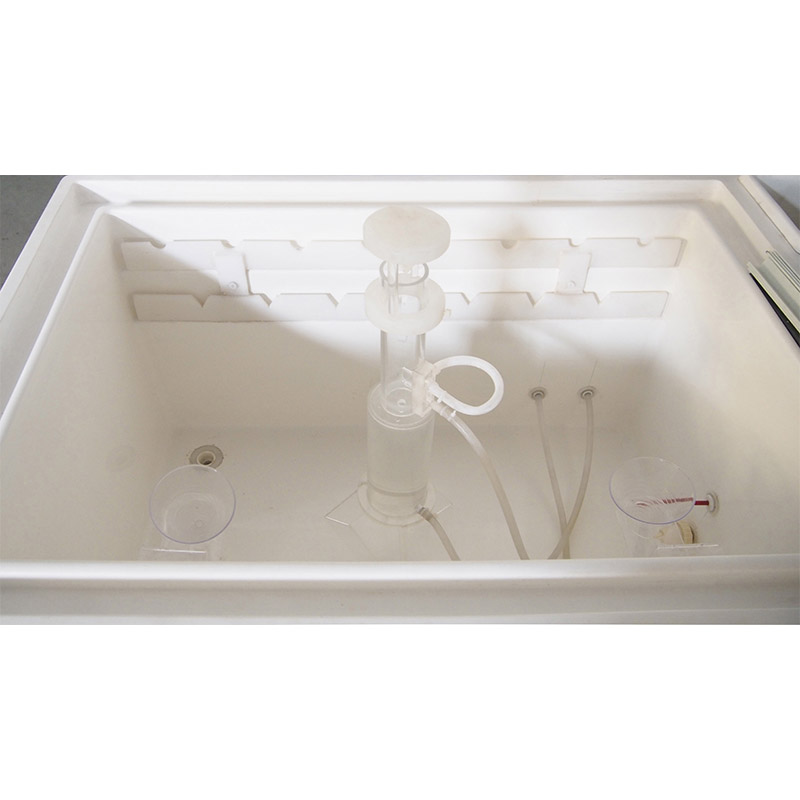
The spray system, including nozzles, pumps, and pipelines, is commonly made of stainless steel or other corrosion-resistant alloys. This ensures stable spray distribution and reduces the risk of clogging or wear during long-term operation.
Heating and temperature control components are manufactured using materials that can resist both high temperature and corrosion, allowing the chamber to maintain consistent internal test conditions.
Electrical parts are typically placed inside sealed control cabinets to protect them from salt fog, moisture, and condensation, ensuring safe and reliable operation.
Specimen racks are also made of stainless steel to avoid rust formation that could interfere with test accuracy.
Overall, material selection plays a key role in ensuring the reliability, service life, and testing precision of the chamber.
Dimensional specifications of salt spray chambers
The size of a salt spray chamber varies depending on testing requirements, sample dimensions, and laboratory capacity. In general, these chambers are available in different volume ranges to meet diverse applications.
Small-scale models usually range from 100 to 500 liters and are suitable for basic laboratory testing or small component evaluation.
Medium-sized chambers typically fall between 600 and 1500 liters and are widely used in quality control and production testing environments.
Large industrial chambers exceed 1500 liters and are designed for testing large parts or handling higher sample volumes.
Internal dimensions determine how many specimens can be tested at once and ensure proper spray circulation around all samples.
External dimensions refer to the full footprint of the equipment, including control systems and auxiliary units, which must be considered during laboratory installation planning.
Door size is also an important factor, as it affects how easily samples can be placed into and removed from the chamber.
The design of specimen racks, including spacing and adjustability, directly influences testing efficiency and sample arrangement flexibility.
In summary, both material selection and dimensional design are essential to ensure that a salt spray chamber operates effectively, delivers accurate results, and adapts to different testing needs.
Control Systems
The control system is the brain of a salt spray chamber, overseeing the precise operation of various components to create and maintain the desired testing environment.
Key Components of a Control System
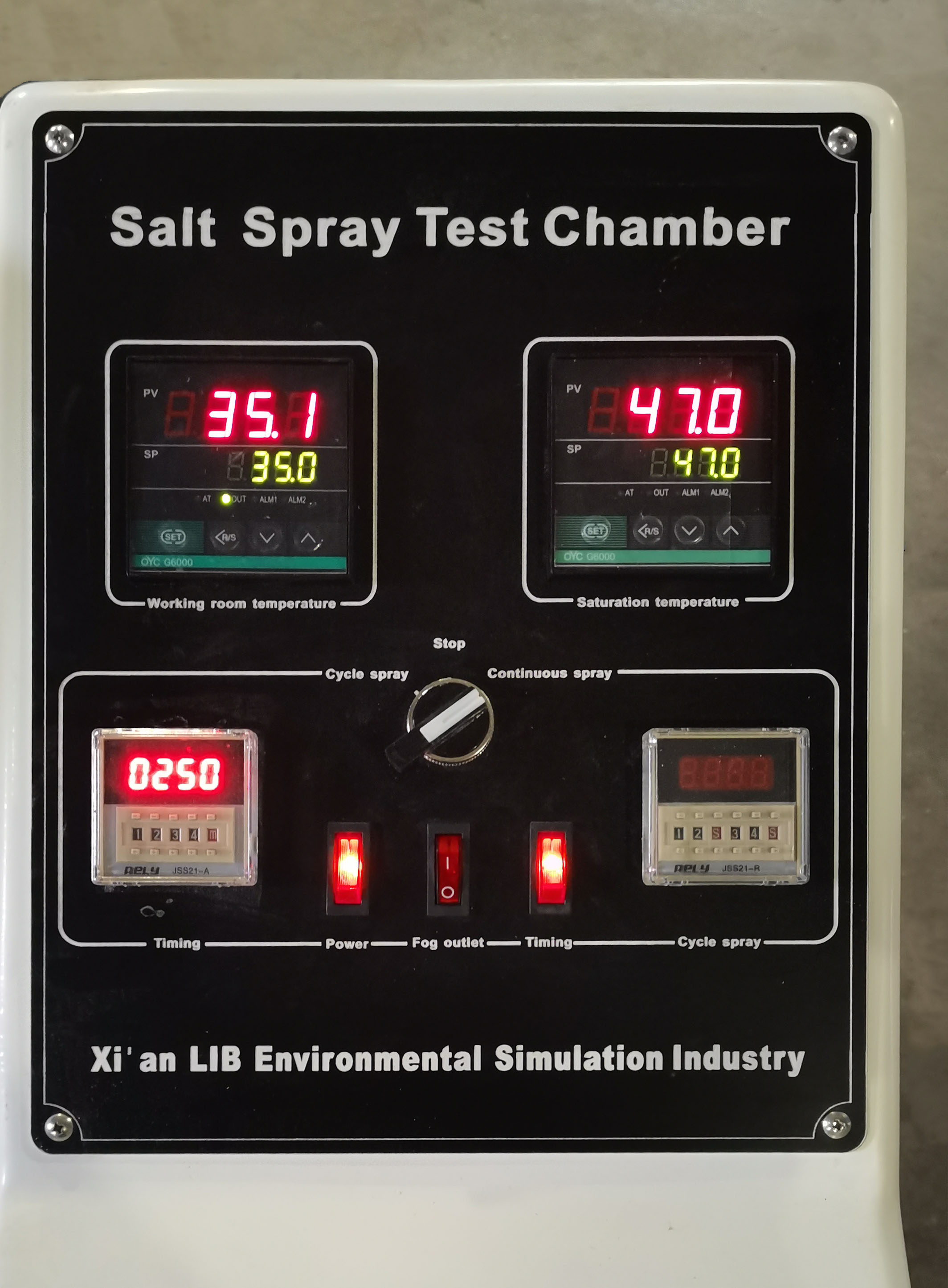 ● Temperature Control: Maintains the chamber at a specific temperature, typically 35°C (95°F), which is crucial for consistent salt spray formation.
● Humidity Control: Ensures a high humidity level within the chamber, usually 95-100%, to simulate a corrosive environment.
● Spray Rate Control: Regulates the amount of salt solution atomized and dispersed into the chamber, ensuring even coverage of test specimens.
● Timer: Controls the duration of the test cycle.
● Safety Interlocks: Prevents unauthorized access during testing and ensures safe operation.
● Data Logging: Records test parameters such as temperature, humidity, and spray rate for analysis and documentation.
● Alarm System: Alerts operators to deviations from set parameters or equipment malfunctions.
Modern Control Systems
Advancements in technology have led to sophisticated control systems for salt spray chambers:
● Microprocessor-based controllers: Offer precise control over test parameters and data logging capabilities.
● Touchscreen interfaces: Provide user-friendly operation and real-time monitoring of chamber conditions.
● Remote monitoring: Allows for remote access to chamber data and control functions.
● Self-diagnostic features: Help identify potential issues and minimize downtime.
A well-designed control system is essential for producing accurate and reliable test results. By maintaining precise control over the testing environment, it ensures that the salt spray chamber operates efficiently and effectively.
Safety Systems
Salt spray chambers pose potential hazards due to the corrosive nature of the environment and the high temperatures involved. To mitigate these risks, several safety features are incorporated:
● Emergency Shut-Off: A quick-acting mechanism to terminate the testing process in case of an emergency.
● Interlocking Doors: Prevents the chamber from operating while the door is open, protecting personnel from exposure to the corrosive environment.
● Over-Temperature Protection: Shuts down the heating system if the chamber temperature exceeds safe limits.
● Ventilation: Adequate ventilation systems to remove corrosive fumes and maintain a safe working environment.
● Grounding: Proper grounding of electrical components to prevent electric shock.
● Emergency Eyewash and Shower: Available in close proximity to the chamber for immediate first aid in case of accidental exposure.
● Personal Protective Equipment (PPE): Required for operators, including gloves, goggles, and protective clothing.
By incorporating these safety features, salt spray chambers can be operated safely and effectively, minimizing the risk of accidents and injuries.
Application of Salt Spray Chamber
Salt spray chambers are widely used across various industries to evaluate the corrosion resistance of materials and coatings. Here are some key applications:
Automotive Industry
● Testing the durability of car bodies, undercarriage components, and exterior parts.
● Evaluating the effectiveness of anti-corrosion coatings and treatments.
Aerospace Industry
● Assessing the corrosion resistance of aircraft components exposed to harsh environmental conditions.
● Testing the durability of coatings used on aircraft parts.
Marine Industry
● Evaluating the corrosion resistance of marine equipment, such as hulls, propellers, and hardware.
● Testing the effectiveness of anti-corrosion coatings for marine applications.
Construction Industry
● Testing the durability of building materials and coatings exposed to coastal environments.
● Evaluating the corrosion resistance of metal components used in construction.
Other Industries
● Electronics: Testing the corrosion resistance of electronic components and enclosures.
● Furniture: Evaluating the durability of outdoor furniture finishes.
● Metal finishing: Assessing the performance of various coatings and plating processes.
By subjecting materials and coatings to accelerated corrosion conditions, salt spray chambers help manufacturers and engineers make informed decisions about product design, material selection, and quality control.
Types of Salt Spray Tests
Salt spray tests are classified based on the specific types of environmental conditions they replicate and the materials they are designed to examine. The most common types include standard salt spray tests, continuous salt spray, and cyclic corrosion testing.
Continuous Salt Spray
Continuous salt sprayis a type of corrosion testing where test specimens are exposed to a constant, uninterrupted spray of salt solution within a controlled environment. This method is often used to evaluate the overall corrosion resistance of materials and coatings under accelerated conditions.
Robust Workroom | Temperature Range | Ambient ~ +60 ℃ | |||||
| Temperature Fluctuation | ± 0.5 ℃ | ||||||
| Temperature Deviation | ± 2.0 ℃ | ||||||
| Humidity Range | 95% ~ 98% RH | ||||||
| Salt Fog Deposition | 1~2ml / 80cm2 · h | ||||||
| Spray Type | Continuous / Periodic | ||||||
| Salt Fog Collected | Fog collector and fog measure cylinder | ||||||
Salt Fog collector | Air Preheating | Saturated air barrel | |||||
| Spraying System | Atomizer tower and Spray nozzles | ||||||
| Controller | PID controller | ||||||
| Safety Device | Humidifier Dry-combustion Protection; Over-temperature Protection; Over-current Protection; Water Shortage Protection; Earth leakage Protection | ||||||
| Material | Glass fiber reinforced plastics | ||||||
| Standard Configuration | 6 round bars and 5 V-shaped grooves | ||||||
Cyclic Corrosion Testing
Cyclic corrosion testing (CCT)is a more advanced and realistic approach to simulating real-world corrosion conditions compared to continuous salt spray testing. It involves exposing test specimens to a series of different environments in a repetitive cycle.
How the Salt Spray Chamber Works
Testing Protocols
A salt spray testing protocol outlines the specific procedures for conducting a corrosion test. It encompasses selecting the appropriate salt spray test type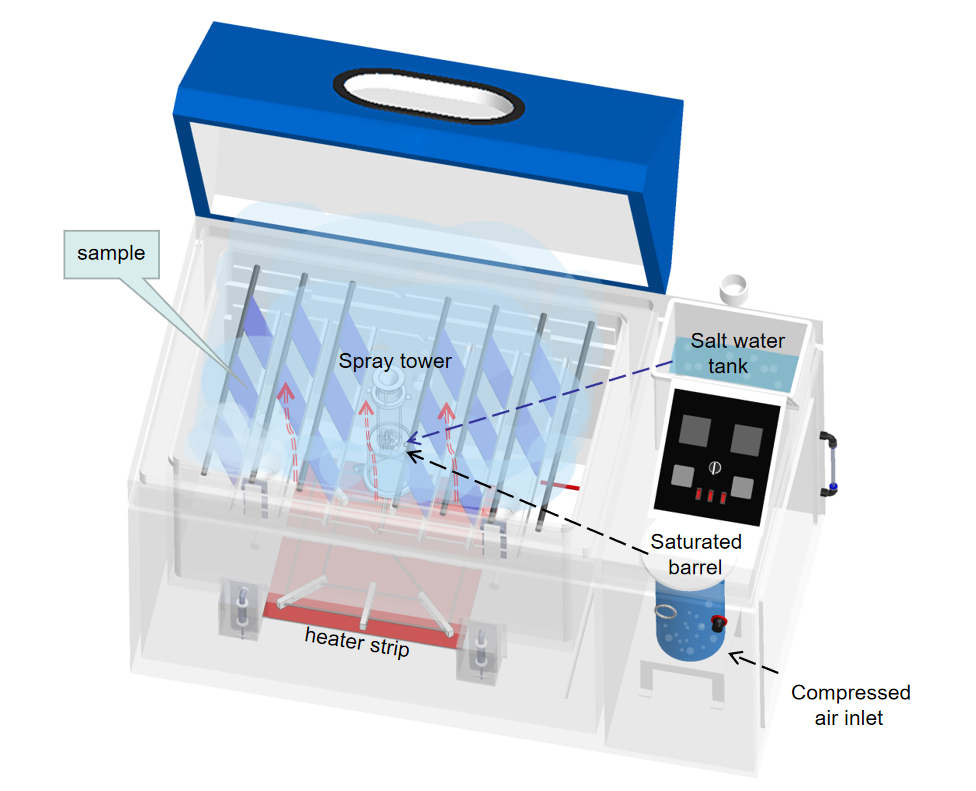 (NSS, AASS, CASS) based on relevant standards like ISO 9227 or ASTM B117. The protocol details specimen preparation, including cleaning and drying, and establishes the necessary chamber conditions for temperature, humidity, and salt solution concentration. It defines the exposure duration and outlines the evaluation methods for assessing corrosion damage, such as visual inspection or weight loss measurement. Finally, the protocol mandates detailed documentation of test parameters, observations, and results.
Sample Preparation
Proper sample preparation is crucial for obtaining accurate and reliable results in salt spray testing. The following steps are typically involved:
Cleaning
● Removal of contaminants: Oils, grease, fingerprints, and other contaminants must be removed from the test specimen's surface.
● Cleaning methods: Detergents, solvents (like acetone or alcohol), or chemical degreasers can be used, depending on the material.
● Drying: Specimens should be thoroughly dried after cleaning to prevent water spots or residues.
Masking (if necessary)
● Protecting specific areas: If only certain parts of the specimen need to be exposed to the salt spray, masking can be used to protect other areas.
● Masking materials: Adhesive tapes or other suitable materials can be used for masking.
Specimen Identification
● Clear labeling: Each specimen should be clearly identified with a unique number or code.
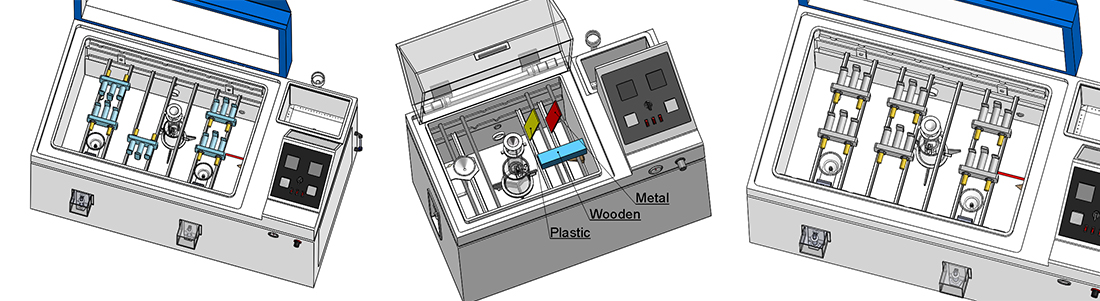
● Placement: Specimens should be placed in the chamber in a way that allows for even salt spray exposure to all surfaces.
Specimen Mounting
● Rack placement: Specimens are typically mounted on racks within the chamber.
● Spacing: Adequate spacing between specimens is essential to prevent salt solution dripping from one specimen to another.
By following these steps, you can ensure that the test results accurately reflect the corrosion resistance of the material or coating.
Testing Duration
The duration of a salt spray test is influenced by several factors.Material and coating properties, the desired level of corrosion damage, specific test standards, and industry-specific requirements all contribute to determining the appropriate exposure time. Different materials and coatings exhibit varying degrees of corrosion resistance, necessitating tailored test durations. Additionally, the severity of corrosion damage sought will impact the length of the test. Adherence to standardized test protocols and consideration of industry-specific guidelines are crucial in selecting the correct exposure time.
Environmental Conditions
The environmental conditions within a salt spray chamber are carefully controlled to simulate a corrosive atmosphere. These conditions are critical for accurate and repeatable test results.
Key Environmental Factors:
● Temperature: Typically maintained at 35°C (95°F) to ensure consistent salt spray formation and evaporation.
● Humidity: High humidity levels, usually around 95-100%, are necessary to create a corrosive environment.
● Salt Solution Concentration: A standard 5% sodium chloride solution is commonly used, though this can vary depending on the specific test standard.
● Air Supply: A constant supply of clean, filtered air is required to maintain the chamber atmosphere and prevent condensation.
● Spray Pattern: The salt solution is atomized into a fine mist and dispersed evenly throughout the chamber.
Maintaining precise control over these environmental factors is essential for generating reliable and comparable test results.
Data Interpretation and Analysis
Data interpretation and analysis are crucial for extracting meaningful insights from salt spray test results.By examining corrosion severity, patterns, and time to failure, alongside comparative data, researchers can assess material and coating performance. Statistical analysis, visual inspection, and weight loss measurements are common techniques to quantify and qualify corrosion damage. Ultimately, correlating test results with real-world conditions enables informed decisions on material selection, product design, and corrosion prevention strategies.
Corrosion Rate Calculation
Corrosion rate calculation is a crucial aspect of salt spray testing to quantify the rate at which a material corrodes. It involves determining the weight loss of the test specimen over a specific exposure period. By dividing the weight loss by the exposed surface area and the exposure time, the corrosion rate can be calculated. This value provides a numerical representation of the material's resistance to corrosion and facilitates comparisons between different materials or coatings.
Conclusion
Salt spray testing is a critical tool for evaluating the corrosion resistance of materials and coatings. By simulating harsh environmental conditions, it provides valuable insights into product durability and performance. Accurate test results depend on careful sample preparation, precise control of environmental factors, and rigorous data analysis. While salt spray testing offers valuable information, it's important to consider its limitations and combine it with other corrosion testing methods for a comprehensive assessment of material behavior.
Looking for a reliable salt spray chamber tailored to your testing requirements? Contact LIB Industry today to discuss your application, standards compliance, and chamber configuration. Our experts are ready to help you select the right corrosion testing solution to ensure product quality, durability, and confidence in real-world performance.


